
REVIEW · SHIBUYA, SHINJUKU AND HARAJUKU WALKS
Tokyo: Street Kart Experience in Shibuya
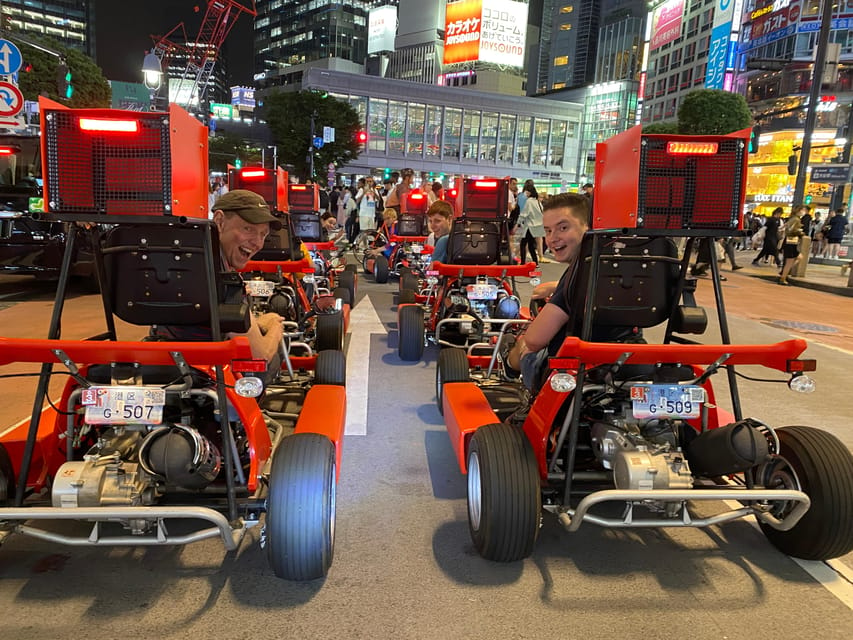
Shibuya Crossing on a kart feels like a movie scene. This one-hour street kart experience lets you drive the same chaotic intersection you see in clips, then roll onward through Tokyo’s fashion districts with a tight group and an English-speaking guide. It’s loud, fast in short bursts, and photo-friendly in the way only Tokyo can manage.
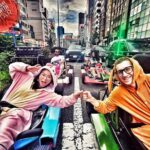
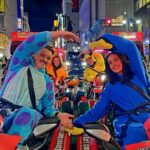
I love the safety-first setup. You get clear instructions, proper gear like goggles and a raincoat if needed, and a guide who keeps the group together while you focus on driving. I also love how much of the experience is designed for memories, not just motion, with costumes and lots of guide-taken photos delivered at the end.
One thing to consider: you must handle driving paperwork before you go, and the ride has strict rules like no cellphones during the activity. If you forget documents or you’re counting on filming the whole time yourself, plan differently.
In This Review
- Key points I’d put on your planning list
- First, the vibe: why Shibuya Crossing by kart is such a good idea
- Where you meet: a semi-underground shop with mirrors
- Gear and rules: the stuff you’ll notice right away
- The safety briefing: why the rules make it feel easier
- The route that hits the best Tokyo energy: Shibuya, then Harajuku and Omotesando
- How the photography works when your phone stays off
- Costumes: the fun tax you actually pay off
- Price and value: why $74 can feel fair for this kind of ticket
- The booking follow-up you should not ignore
- Driving documents: the part that can make or break your day
- Who this tour suits best, and who should skip it
- Timing tip: night energy versus daylight clarity
- Should you book this Street Kart Experience in Shibuya?
- FAQ
- How long is the Tokyo Street Kart Experience in Shibuya?
- How much does the Street Kart Experience cost?
- What’s included in the tour price?
- Is an action camera included?
- Do I need an International Driving Permit to drive in Japan?
- What documents do I need to bring?
- Where do I meet the group?
- Are cellphones allowed during the ride?
- Who should not do this experience?
Key points I’d put on your planning list
- Drive through Shibuya Crossing multiple times, with turns from different directions so it really feels like the city is watching you back
- Small group limit of 6, which makes it easier to stay together and safer on busy streets
- Guide-taken photos included, so you do not need to worry about juggling your phone at speed
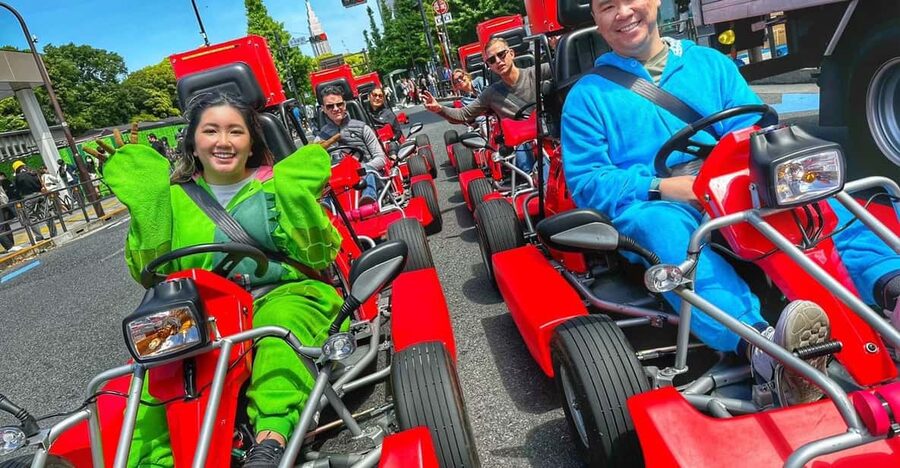
- Costumes plus goggles and rain gear, meaning you start the ride ready, even if the weather changes
- Hard rules for phone and shoes, so read them early and save yourself a scramble
Other routes through the west side of Tokyo, compared
- Tokyo: Shinjuku Food Tour (13 Dishes at 4 Local Eateries)
★ 5.0 · 6,603 reviews - Tokyo Bar Hopping Tour in Shinjuku (All-You-Can-Drink + Dinner)
★ 5.0 · 3,587 reviews - Official Street Go-Kart in Shibuya
★ 5.0 · 3,435 reviews - Tokyo: Shinjuku Food Tour (15 Dishes and 4 Eateries)
★ 4.9 · 2,033 reviews
First, the vibe: why Shibuya Crossing by kart is such a good idea
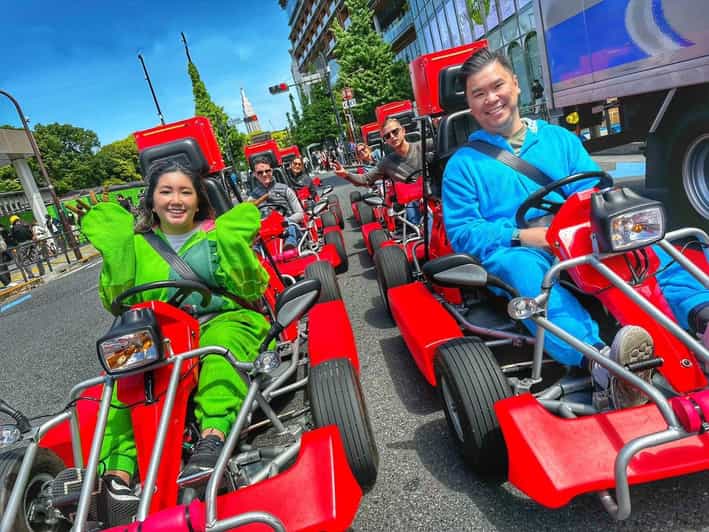
Tokyo’s Shibuya Crossing is famous for a reason. It’s a controlled chaos machine, and being in it on foot is already intense. On a kart, it turns from spectacle into participation.
This tour works because it gives you a simple arc: you practice the basics, then you hit the crossing, then you keep going into neighborhoods where Tokyo’s style shows up fast. You are not just passing through landmarks. You are moving through the city’s everyday stage set.
The best part for me is that you get a guide who treats this like a real driving activity, not a free-for-all. That matters in Shibuya, where people cross in every direction like it’s choreography.
Where you meet: a semi-underground shop with mirrors
You meet at the shop in a semi-underground garage. The building has an entrance from the street, and you will see an outside staircase on the side leading into the location.
Look for the neon logo on the outside wall. Inside, the garage has wall to wall mirrors, which makes the place feel bright and a bit like a fun house, even before you gear up. There is also a hot pot restaurant on the second floor of the same building, so if you see people heading upstairs, you’re in the right complex.
This meeting point detail is more than trivia. Tokyo can be a maze, so having something visual like the neon logo and the mirror garage helps you arrive calm instead of late.
Gear and rules: the stuff you’ll notice right away
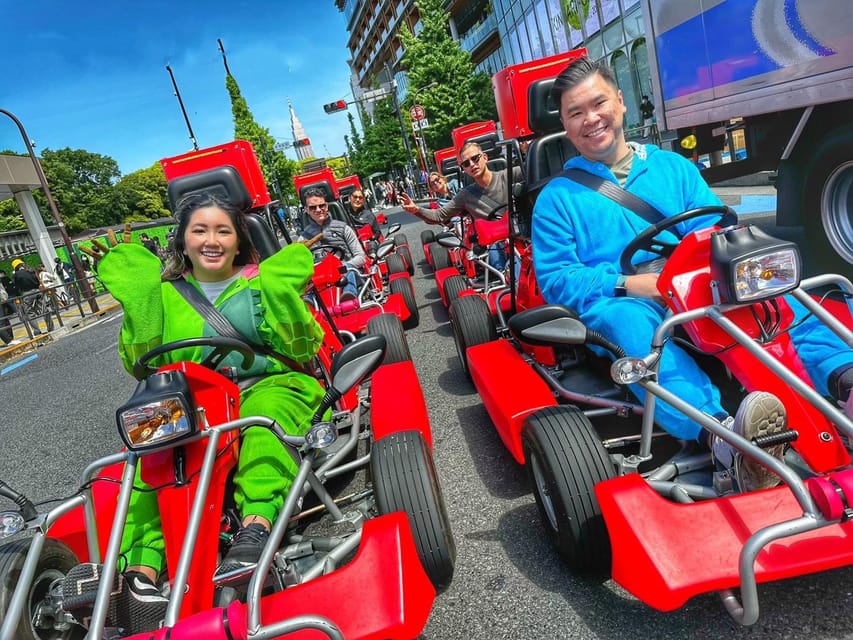
The experience includes your kart, gasoline, costumes, and key safety gear like goggles. You also get a raincoat for rainy days, which is smart because weather in Tokyo can flip without much warning.
You should also know what is not allowed, because it affects how you experience the ride:
- No cellphones
- No slippers
- No high-heeled shoes
- No alcohol or drugs
That no-phone rule is a big deal. It means your best chances for photos come from the guide, not from you trying to film while driving. If you want your own video, you will need to handle an optional action camera setup, which is not included.
Different circuits, same licence rules. Compare the karts
- Flagship 2-Hours Official Street Go-Kart Tour – Tokyo Bay Shop★ 5.0 · 4,974 reviews
- Official Street Go-Kart in Shibuya★ 5.0 · 3,435 reviews
- Tokyo: Street Kart Experience in Shibuya★ 4.9 · 1,484 reviews
- Shibuya Official Street Go-Kart in Shibuya Annex★ 5.0 · 972 reviews
- Tokyo: Asakusa, Skytree & Akhihabara Go-Kart City Experience★ 4.7 · 761 reviews
The safety briefing: why the rules make it feel easier
The tour is built around a guide who stays focused on safety during the whole activity. You get all the safety information you need before you roll out, and the guide is professionally trained to lead you on busy roads.
Small group size helps here. Limited to 6 participants, you are less crowded, and the guide can manage spacing. That spacing is the difference between feeling like you are just along for the ride and feeling like you can actually control your moment.
Also, the guide takes photos during the tour. That likely means they are watching both the driving flow and the photo opportunities, which helps explain why the group stays together so consistently.
The route that hits the best Tokyo energy: Shibuya, then Harajuku and Omotesando
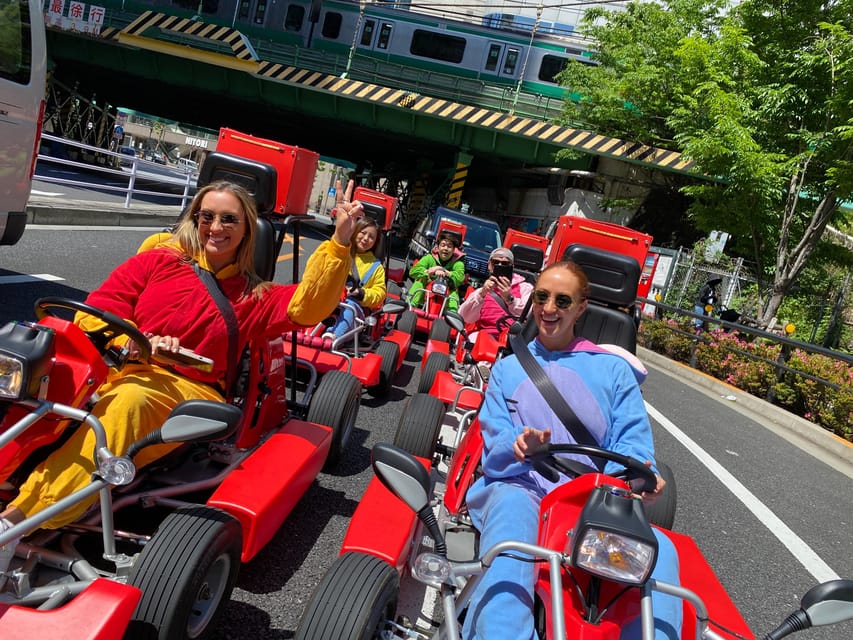
Your first big stop is the famous Shibuya Crossing. You drive through it from multiple directions, not just one pass. That repetition is what makes the experience feel surreal, like you are becoming part of the intersection’s routine rather than briefly photographing it.
After you finish the crossing loops, you head out toward Harajuku and Omotesando. These areas are Tokyo fashion hotspots, so the mood shifts from icon-level chaos to style street energy. Even if you are not shopping, the streets give you color, signage, and people-watching from a new angle.
What I like about this route plan is how it balances two kinds of Tokyo:
- A global headline moment at Shibuya
- A neighborhood personality test in Harajuku and Omotesando
And because it is only one hour long, you get variety without turning the day into a long logistics puzzle.
How the photography works when your phone stays off
Your guide takes as many photos as possible and gives you the photo data at the end of the tour. This is part of why the experience works even if you are nervous about driving.
From a practical standpoint, you do not need to worry about:
- holding a phone in your hand
- dropping gear
- trying to capture a perfect shot while steering through busy streets
Instead, you show up dressed for your costume moment, follow the guide’s pace, and let the guide do the camera work.
If you want to record video yourself, there is an option for an action camera rental. Action cameras and related storage or mounts are not included, but the fact that an option exists tells you the business expects people to want their own footage. Just plan for extra cost if you go that route.
Costumes: the fun tax you actually pay off
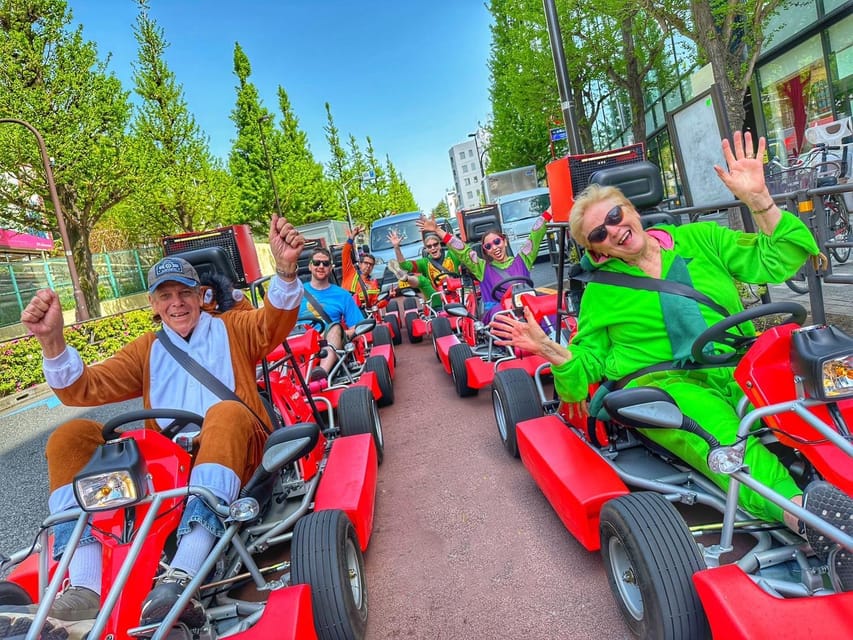
Costumes are included, and that matters more than it sounds. In a place like Shibuya, costumes add a layer of playful recognition. People on the sidewalks can react to you, and the whole thing becomes a street event, not just a transportation activity.
You’ll also look better in the guide photos. Even if you are not a “photo person,” the costume choice turns your photos into something you would actually keep, rather than generic vacation snaps.
Price and value: why $74 can feel fair for this kind of ticket
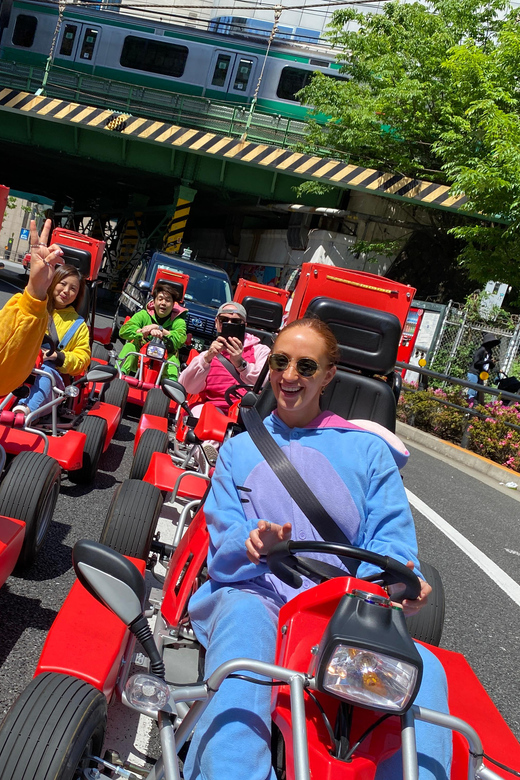
At $74 per person for a 1-hour experience, you might wonder what you are really paying for. This is not a museum ticket, and it is not a long guided bus ride.
You are paying for several things that reduce your stress and increase the payoff:
- A professionally run guide with English-speaking support
- The kart plus gasoline
- Costumes and safety gear like goggles
- Raincoat support
- Guide-taken photos included in the experience
If you compare it to paying for a self-guided driving adventure or trying to replicate this with rentals, you are basically buying convenience plus a controlled safety system. Also, the small group limit means your money buys a quieter experience, not a crowded one where you cannot hear instructions.
The booking follow-up you should not ignore
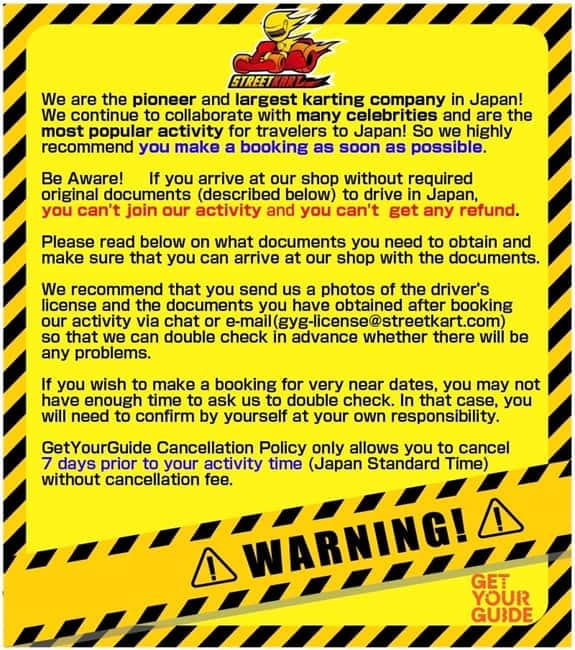
After booking, Street Kart emails you to guide you on the required documents. That is useful because the driving paperwork is the real pre-trip task.
Before you arrive, confirm you understand:
- what ID you will carry physically
- what format your permit should be
- whether your license needs translation instead of an IDP
Tokyo has rules here, and this tour is strict because it has to be. The email support is meant to keep you from getting stuck at the last minute.
Driving documents: the part that can make or break your day
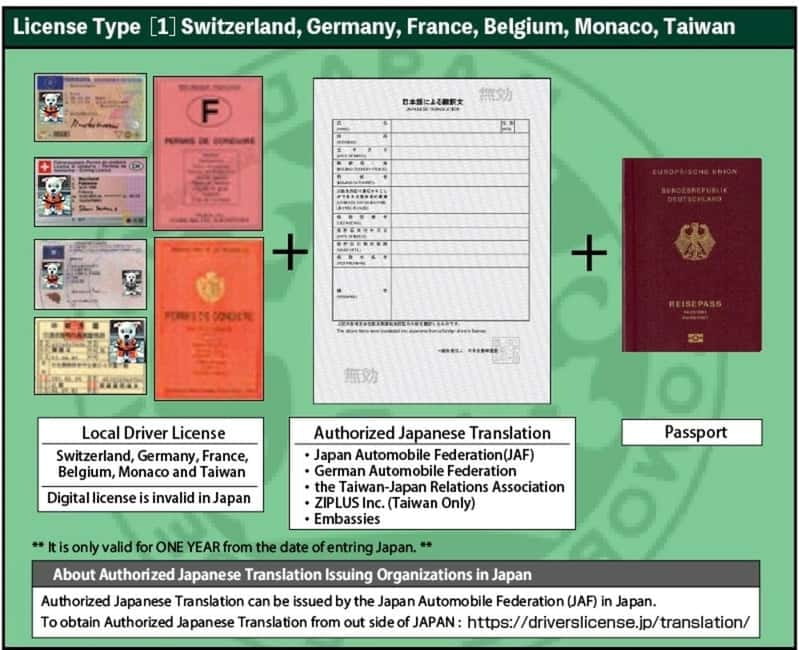
This activity requires special documents to drive in Japan. For most countries, you need an International Driving Permit (IDP) issued in a specific booklet format compliant to the 1949 Geneva Convention.
Key points that matter for planning:
- An IDP can only be issued by the same country that issued your domestic license.
- You cannot obtain it online while traveling.
- You must carry the physical IDP and your physical passport.
Some countries follow a different process. If your license is issued in Switzerland, Germany, France, Taiwan, Belgium, or Monaco, you need a Japanese translation from the Japan Automobile Federation (JAF), not an IDP.
If your license is from a country not covered by the 1949 Geneva Convention (example countries listed include China, Indonesia, Mexico, Qatar, Saudi Arabia), driving is not permitted.
This is the one place where your homework pays off. If you do the documents early, the tour feels fun and straightforward. If you treat it like an afterthought, you risk losing the day.
Who this tour suits best, and who should skip it
This experience is not for everyone. It is not suitable for:
- children under 18
- pregnant women
- people with mobility impairments
- wheelchair users
- people with back problems
- hearing-impaired people
It also has practical constraints based on gear and movement, plus the requirement to drive under safety rules.
Who it suits best:
- You want a high-impact Tokyo experience without spending all day commuting
- You like photos and want the guide to do the heavy lifting
- You are comfortable following instructions and staying with the group
- You want a safe-feeling thrill in one of the world’s most famous streetscapes
If you are visiting solo, you can meet other people within a small group of up to 6. If you are with friends, it is still social, but you keep a manageable size instead of a big crowd.
Timing tip: night energy versus daylight clarity
The supplied details do not lock the schedule to night only, but the overall experience tends to feel best when Tokyo lights up. Driving through Shibuya when the city is dark and lit gives extra theater to the whole setup.
If you have flexibility, choose a time that matches your style. Night can be more cinematic. Day can be clearer for seeing streets and reading the city around you.
Should you book this Street Kart Experience in Shibuya?
Yes, if you want a one-hour Tokyo highlight that mixes a famous location with real driving, not just sightseeing. The biggest reasons to book are the small group, the included safety setup, and the guide-taken photos that save you from juggling your phone at speed.
I would book especially if:
- Shibuya Crossing is on your must-do list
- you want a fun souvenir package without arranging your own photo session
- you are willing to do the driving document work before you leave home
I would hesitate if:
- you do not want to follow strict rules like no cellphones during the ride
- you might arrive without the correct IDP or passport paperwork
- you fall into one of the listed unsuitability categories
If you can handle the documents and you like guided thrills, this is the kind of Tokyo activity you talk about later, because it feels different from every other city day.
FAQ
How long is the Tokyo Street Kart Experience in Shibuya?
The duration is 1 hour.
How much does the Street Kart Experience cost?
The price is $74 per person.
What’s included in the tour price?
Included are the kart, gasoline, an English-speaking guide, costumes, guide photos taken during the activity, a raincoat for rainy days, and goggles.
Is an action camera included?
No. Action camera rental is optional, and a micro-SD and camera mount are optional extras (mount rental and micro-SD purchase).
Do I need an International Driving Permit to drive in Japan?
For most countries, yes. You need an IDP issued in the booklet format compliant with the 1949 Geneva Convention.
What documents do I need to bring?
You must carry your physical International Driving Permit (or, for certain countries, your physical domestic license plus an official Japanese translation) and your physical passport.
Where do I meet the group?
You meet at the shop in a semi-underground garage in a building with an entrance from the street. Look for an outside staircase on the side and a neon logo on the wall outside.
Are cellphones allowed during the ride?
No. Cellphones are not allowed during the activity.
Who should not do this experience?
It is not suitable for children under 18, pregnant women, people with mobility impairments, wheelchair users, people with back problems, and hearing-impaired people.
Karts, Circuit by Circuit
West Tokyo on Foot: Seven More

Newest Tokyo write-ups from the Loving Japan desk
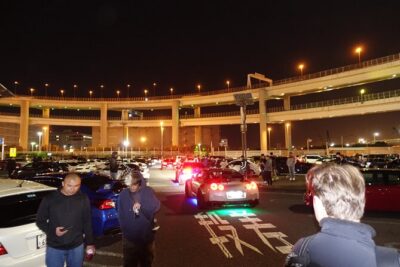
Shibuya, Shinjuku and Harajuku Walks, side by side.
 ★ 5.0Shinjuku Food Tour (13 Dishes at 4 Local Eateries)From $866,603 reviews
 ★ 5.0Tokyo Bar Hopping Tour in Shinjuku (All-You-Can-Drink + Dinner)From $1063,587 reviews
 ★ 5.0Official Street Go-Kart in ShibuyaFrom $763,435 reviews
 ★ 4.9Shinjuku Food Tour (15 Dishes and 4 Eateries)From $852,033 reviews
 ★ 4.9Shinjuku Local Bar and Izakaya Guided Walking TourFrom $341,794 reviews
 ★ 5.0Tokyo Shinjuku Chopsticks Making ClassFrom $201,763 reviews
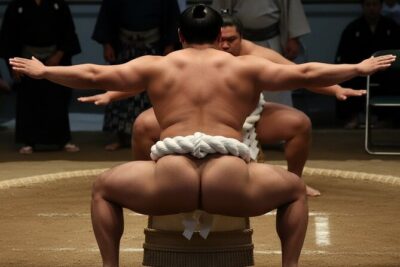 ★ 5.0Tokyo Shinjuku Sumo Show & Experience with PhotoFrom $791,750 reviews
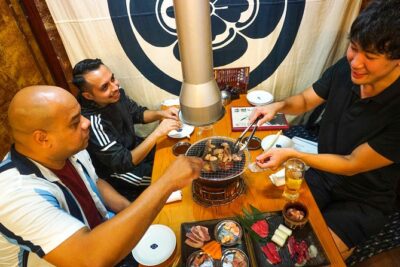 ★ 5.0Tokyo Night Foodie Tour in Shinjuku – Seasonal Sushi, Wagyu BeefFrom $1111,161 reviews
Filed on these lists too