
REVIEW · SHIBUYA, SHINJUKU AND HARAJUKU WALKS
Shinjuku Golden Gai Food Tour
Tokyo at night has a secret menu, and Golden Gai is it. I especially like that this tour gives you two included drinks while you bounce between classic alley eats and tiny bar nightlife. I also like the way it threads Kabukicho and Omoide Yokocho into the story, not just the stomach. One drawback to plan for is that Golden Gai is tight, so the final bar stop can feel crowded depending on where the group lands.
I like tours that make you feel competent fast, and this one starts with a clear meeting point at Tajimaya Coffee before heading into Memory Lane style streets. You get an English-speaking local guide, a small maximum group size, and a simple format: walk, snack, learn, drink, then finish in Golden Gai where you can keep going on your own.
If you’re the type who wants a long, sit-down meal with guaranteed space, this is not that. It is a walking night tour, built for people who want variety, culture context, and easy access to places you’d probably miss wandering solo.
In This Review
- Key takeaways before you go
- Entering Kabukicho at 5:00 pm, where the night really starts
- Tajimaya Coffee meet-up, how the evening gets set up
- Omoide Yokocho and the Memory Lane feeling in your first bites
- Kabukicho context, the red-light district angle you cannot skip
- The 4 food stops, what you’ll actually taste
- Hanazono Shrine stop, a calm pause in the middle of noise
- Golden Gai and Araku Bar, the night-night finale you can continue
- Price and value at $217, what you’re really paying for
- Guides and group vibe, what to look for during the walk
- Who this Shinjuku night food tour suits best
- Should you book Shinjuku Golden Gai Food Tour?
- FAQ
- What time does the Shinjuku Golden Gai Food Tour start?
- Where do I meet and where does the tour end?
- How long is the tour?
- What’s included in the price?
- Is hotel pickup or drop-off included?
- Are there dietary options for vegetarians or pescatarians?
- How many people are in a group?
- Is the tour age restricted?
- What happens if the weather is bad?
Key takeaways before you go
- Start in Kabukicho, end in Golden Gai so you see the area’s full nightlife arc in one smooth loop.
- 4 food stops plus 2 drinks included, which is the real value lever at this price.
- Omoide Yokocho Memory Lane is framed as living history, with bars dating back to the late 1950s era in the street’s look and feel.
- Golden Gai’s 200-plus tiny venues makes a guide worth it, because navigation is the hard part here.
- Diet flexibility for vegetarian and pescetarian is explicitly supported, so you won’t have to wing it.
- Max 10 people keeps the walking pace friendly and the restaurant pressure more manageable.
Other routes through the west side of Tokyo, compared
- Tokyo: Shinjuku Food Tour (13 Dishes at 4 Local Eateries)
★ 5.0 · 6,603 reviews - Tokyo Bar Hopping Tour in Shinjuku (All-You-Can-Drink + Dinner)
★ 5.0 · 3,587 reviews - Official Street Go-Kart in Shibuya
★ 5.0 · 3,435 reviews - Tokyo: Shinjuku Food Tour (15 Dishes and 4 Eateries)
★ 4.9 · 2,033 reviews
Entering Kabukicho at 5:00 pm, where the night really starts
This tour is timed for the fun hour. You meet at 5:00 pm and head into Shinjuku while the streets are fully awake and the food places are ready for arrivals. The setting matters here, because Kabukicho is noisy, neon, and a little intimidating if you’re trying to figure it out alone.
You start at Nishishinjuku, at the address given for Shinjuku Suisans Building, then move quickly to the first local-street vibe stop. The point is simple: get your bearings fast, then let the guide do the “which alley, which door, which counter” work.
Also, the tour is described as having a moderate physical fitness level. You should expect real walking, uneven crowds, and stairs or tight corners typical of older Tokyo entertainment districts. If that sounds like your idea of a great night, you’ll be comfortable. If you hate crowds or short lines, you may feel more stressed than you planned.
Tajimaya Coffee meet-up, how the evening gets set up
The meeting stop is Tajimaya Coffee, and you’ll spend about 5 minutes there to kick things off. This is a good design choice, because it gives your guide a moment to check your group, confirm you’re together, and set expectations before the street noise hits.
You’re also using a mobile ticket, so you’re not digging through paper in the middle of Shinjuku. That small thing helps, because you want your first interaction with the guide to be calm, not frantic.
From there, you head straight into the alley-street experience at Omoide Yokocho. Think of Tajimaya Coffee as your pre-game, a quick landing strip before the night tour begins.
Omoide Yokocho and the Memory Lane feeling in your first bites
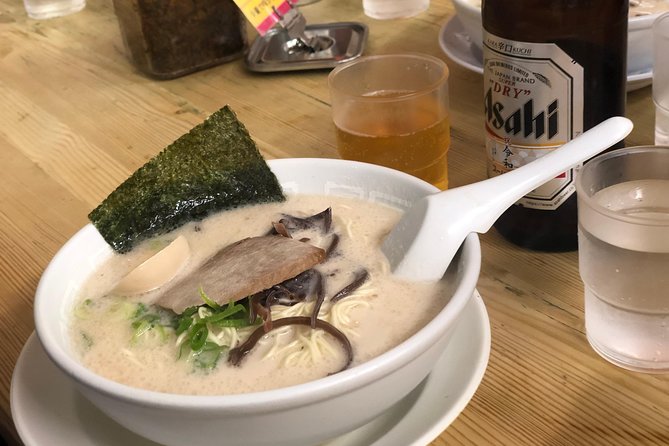
Next up is Omoide Yokocho, which literally translates to Memory Lane. This is one of those Tokyo streets that feels like it kept its old personality, with bars that have remained in place since the 1950 era. It’s not just a pretty photo stop. The layout makes you experience the area the way locals do, clustered around small storefronts and counters.
You also get one of the early food tastings here. The tour description calls out a sample of two delicious foods including ramen around this early phase. That’s a great way to start, because ramen is familiar enough to anchor the experience, and the second item helps you broaden beyond “just noodles.”
Practical tip: if you have a sensitive stomach, pace yourself with the first drinks and don’t rush your first tasting. Once the tour gets moving, you’ll be eating in a steady rhythm, not in one big meal.
- Mt Fuji and Hakone 1-Day Bus Tour Return by Bullet Train★ 5.0 · 26,383 reviews
- 1-Day Tokyo Bus Tour★ 5.0 · 14,250 reviews
- Tokyo: teamLab Planets TOKYO Digital Art Museum Entry Ticket★ 4.6 · 9,779 reviews
- Mt Fuji & Hakone Cruise, Drum Show Bullet Train 1 Day from Tokyo★ 4.0 · 7,413 reviews
- Tokyo: Shinjuku Food Tour (13 Dishes at 4 Local Eateries)★ 5.0 · 6,603 reviews
Kabukicho context, the red-light district angle you cannot skip
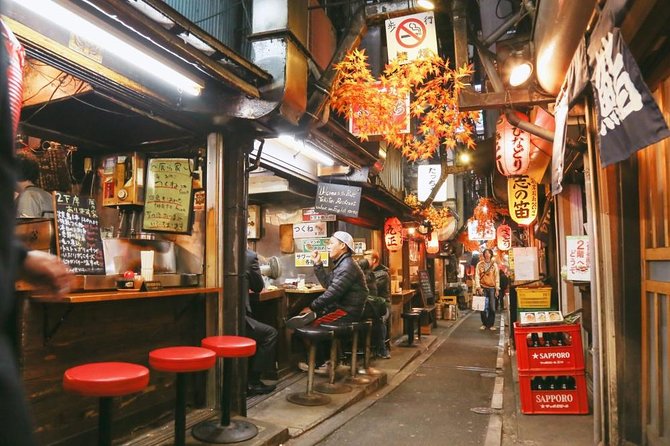
After Omoide Yokocho, the tour walks through Kabukicho, described as the largest and safest red light district in Asia. That wording matters, because it frames the area as entertainment district more than something scary. Still, it’s busy, and it comes with the adult nightlife atmosphere Shinjuku is famous for.
You’ll spend around 30 minutes in this portion. Expect a lot of street-level watching, plus guide explanations about why this part of Tokyo became such a magnet for nightlife. The value here is that you get context while you’re already inside the geography, not after you’ve gone home.
This part of the tour also helps you understand Golden Gai later. Kabukicho is the big stage. Golden Gai is the close-up, tiny-bar version. Without that bridge, Golden Gai can feel random. With it, it feels like a natural next step.
The 4 food stops, what you’ll actually taste
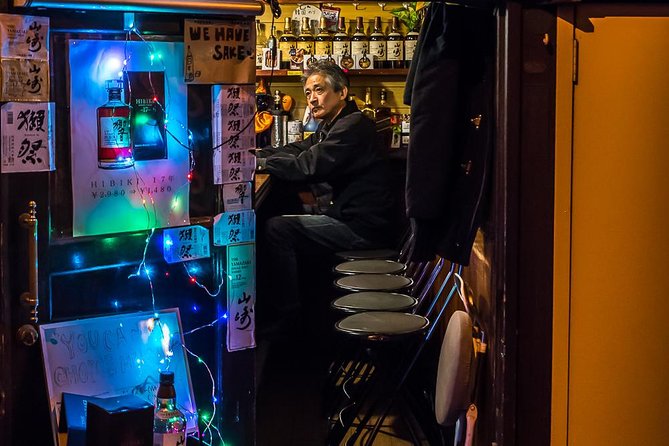
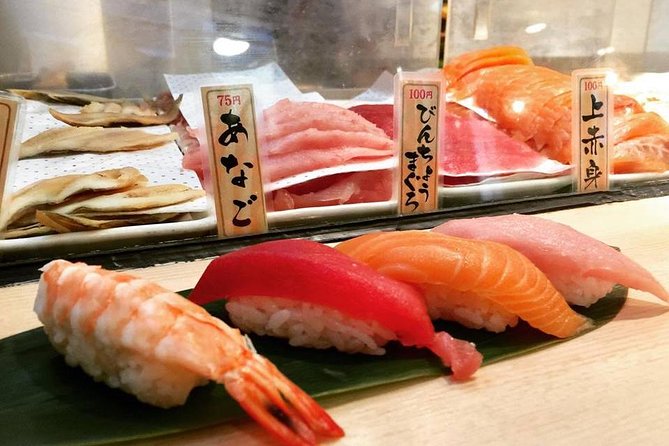
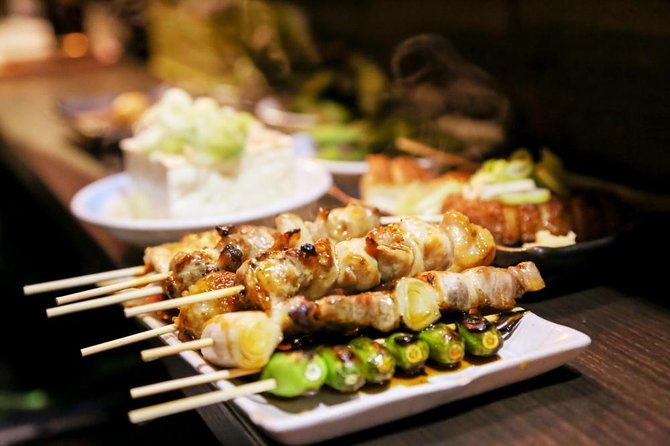
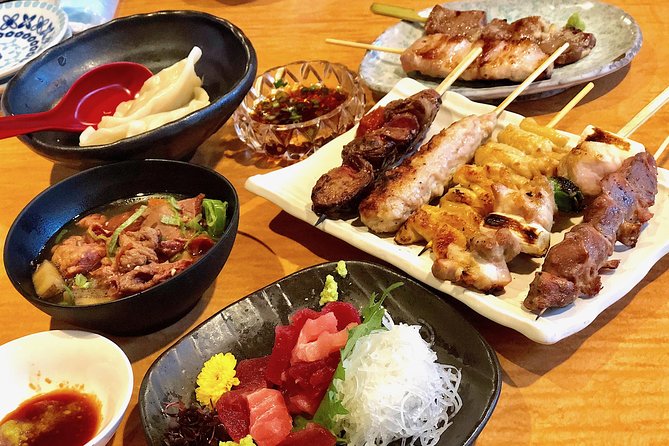
The headline promise is 4 different food stops, with examples including yakitori, ramen, and sushi. The tour also states that you’ll try different local and seasonal dishes, so you’re not limited to one cuisine track.
Here’s why I like this structure: it turns a food search into a guided sampling plan. Instead of picking one place and hoping it’s great, you get multiple chances to hit your preferences. If ramen is your comfort food, you’ll likely see it more than once. If you want the smoky, grilled flavor of yakitori, you should get a stop focused there. And if you want a taste of raw fish, the itinerary lists sushi as part of the mix.
Portion reality check: in a multi-stop walking tour, portions are typically tasting size. That’s not a bad thing. It means you can try more variety without getting too stuffed before the end. Just don’t show up having already eaten a full dinner. Come ready for snacks that feel like mini-meals.
Drinks are part of the deal too. You get two drinks included during the tour. The description specifically mentions a cool drink in Golden Gai at the end, so you can count on at least one refreshment as the night turns into bar hopping time.
Dietary notes: the tour says it’s vegetarian and pescetarian friendly with flexibility. That matters because Tokyo food tours can be tricky for non-meat diets if the guide can’t adjust. If you’re vegetarian, think in terms of asking for swaps for fish or meat items, not expecting a fully separate menu.
One possible drawback for picky eaters: some stops may be chosen for location and variety more than for your specific brand of flavor. The tour is about experiencing the area and sampling multiple Japanese staples. If you only want “one perfect meal,” you might wish you had more time at a single restaurant after the tour.
Hanazono Shrine stop, a calm pause in the middle of noise
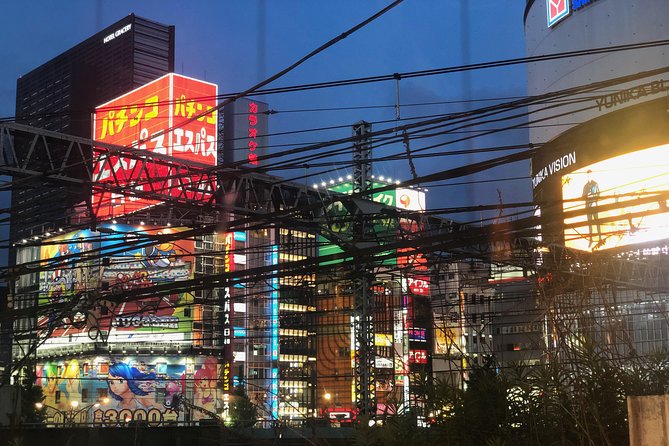
At some point in the walking rhythm, you’ll stop at Hanazono Shrine. The itinerary doesn’t describe a long visit, so expect this to be brief and part of the route rather than the main attraction. Still, it’s a smart break.
Night food tours tend to stay locked in “street energy,” so a shrine stop gives you a moment to slow down, refocus, and reset. It also adds another layer to Shinjuku that many tourists miss, because the neighborhood is usually reduced to nightlife only.
Even if you only get a short look, it helps you feel like you’re moving through real Tokyo neighborhoods, not just a curated eating loop.
Golden Gai and Araku Bar, the night-night finale you can continue
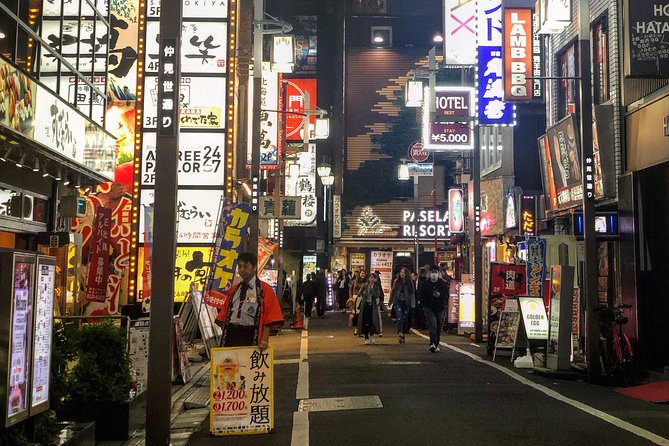
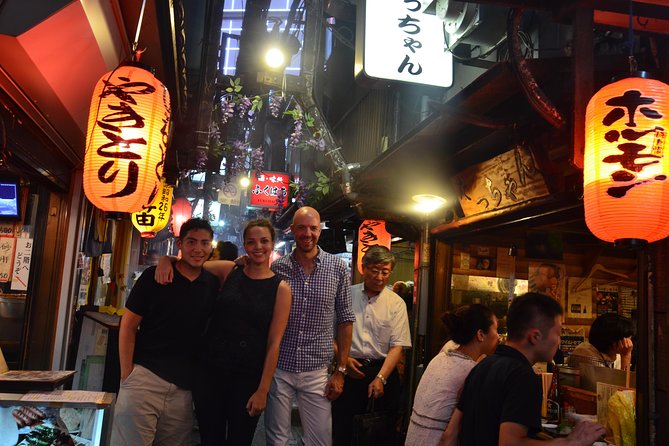
The tour’s ending point is Golden Gai, specifically with an end stop at Araku Bar. Golden Gai is famous for its 200-plus tiny pubs, stalls, and karaoke bars, and the walking tour format is what makes it workable.
Here’s the big practical benefit: Golden Gai is dense. Tiny doors open into tiny rooms. Without guidance, you can end up standing outside places that are full, closed, or simply not the right fit for a small group. With the tour, you arrive with a plan and a held spot at the end.
The tour description also notes you’ll sip an included cool drink here. That’s a nice way to end: you’re not just leaving your snacks behind, you’re getting a final drink while the atmosphere hits its peak.
Karaoke is also part of the picture. The additional info says a karaoke after party is available, which makes sense with Golden Gai’s mix of small bars and karaoke venues. If you want to keep the party going after the set itinerary ends, this is one of the easiest add-ons.
If you’re worried about crowding: just know that Golden Gai venues are small by design. Expect close quarters, especially at peak times. That can be fun if you like social energy, but it can be uncomfortable if you prefer lots of personal space.
Price and value at $217, what you’re really paying for
At $217 per person, this isn’t a budget snack-and-stroll. So you should look at what’s included, because that’s where the value case lives.
You’re getting:
- 4 food stops (multiple Japanese dishes such as yakitori, ramen, and sushi)
- 2 drinks included
- a local guide
- about 3 hours of guided walking during prime nightlife hours
- a small group size (max 10 travelers)
If you tried to replicate this solo, you’d spend money on at least three to four meals or tastings, plus drinks, plus the lost time of wandering and figuring out which places can handle walk-ins for a group. The guide effectively buys you access and speed.
Still, value depends on your food goals. If you love variety, you’re in the sweet spot. If you are a “give me one big meal” person, the tasting format may feel expensive.
My rule: if you’re going to eat anyway and you want a guided route through areas you’d struggle to navigate, the price makes sense. If you’re already doing multiple high-end dinners and just want one local experience, you might get more satisfaction spending that money on one standout meal.
Guides and group vibe, what to look for during the walk
This tour is run by Arigato Japan KK, and the format is centered on a local English-speaking guide. The best nights are the ones where the guide links each stop to the area around it, not just the dish in front of you.
I like that the tour specifically teaches you why these districts are famous entertainment zones. The guide work is what turns a plate of ramen into a story you remember. People also tend to get practical tips during a good tour, like how to handle small-venue etiquette and what to expect in places that are more “counter and conversation” than “restaurant experience.”
Group size helps too. A maximum of 10 means you aren’t herded like a school trip, and you’re more likely to fit comfortably in tiny venues as the night progresses.
One more tip to make your experience smoother: ask questions during transitions. The walking time is when you can learn the most, because your guide can point out what you’re looking at and connect it to the food choices ahead.
Who this Shinjuku night food tour suits best
This is a great match if you want:
- authentic Shinjuku nightlife context while eating
- multiple Japanese classics in one night (ramen, yakitori, sushi)
- a guided way to handle dense areas like Golden Gai
- vegetarian or pescetarian flexibility
It’s less ideal if:
- you dislike crowded nightlife districts
- you want a long sit-down meal with guaranteed comfort
- you’re sensitive to adult entertainment district vibes
Age note: adults 20 years old and above only. If you fall in that range and like a lively evening, you’re the target audience.
Also, the tour requires good weather. If weather is poor, you’ll be offered a different date or a full refund. That matters because this is a walking format, not a museum stop.
Should you book Shinjuku Golden Gai Food Tour?
I’d book it if you want one organized night that hits the key Shinjuku districts, feeds you multiple tastings, and ends in Golden Gai with a drink in hand. The tour’s strongest value is the combination of 4 food stops plus 2 drinks alongside expert navigation of a place that is hard to do well on your own.
I would hesitate if you already have specific restaurant reservations lined up and you’re only looking for one culinary highlight. In that case, you might prefer to spend your time and money on a single place you can linger at.
If you do book, go hungry enough to enjoy tastings, and come ready for a noisy, adult-nightlife side of Tokyo. This is not a quiet culture walk. It’s a night where food and city energy move together.
FAQ
What time does the Shinjuku Golden Gai Food Tour start?
The tour starts at 5:00 pm.
Where do I meet and where does the tour end?
You meet at Shinjuku water seafood building (Shinjuku City, Nishishinjuku, 1-chōme 26). The tour ends in the Golden Gai area at Araku Bar (Shinjuku City, Kabukichō, 1-chōme 16).
How long is the tour?
The duration is approximately 3 hours.
What’s included in the price?
The price includes a local guide, two drinks, and 4 food stops.
Is hotel pickup or drop-off included?
No. Hotel pickup and drop-off are not included.
Are there dietary options for vegetarians or pescatarians?
The tour notes dietary restrictions flexibility, and it is pescetarian and vegetarian friendly.
How many people are in a group?
This tour has a maximum of 10 travelers.
Is the tour age restricted?
Yes. It’s adults 20 years old and above only.
What happens if the weather is bad?
The experience requires good weather. If it’s canceled due to poor weather, you’ll be offered a different date or a full refund.
West Tokyo on Foot: Seven More



Newest Tokyo write-ups from the Loving Japan desk


Shibuya, Shinjuku and Harajuku Walks, side by side.
 ★ 5.0Shinjuku Food Tour (13 Dishes at 4 Local Eateries)From $866,603 reviews
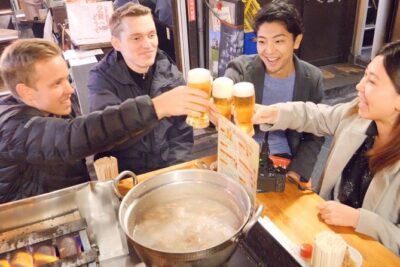 ★ 5.0Tokyo Bar Hopping Tour in Shinjuku (All-You-Can-Drink + Dinner)From $1063,587 reviews
 ★ 5.0Official Street Go-Kart in ShibuyaFrom $763,435 reviews
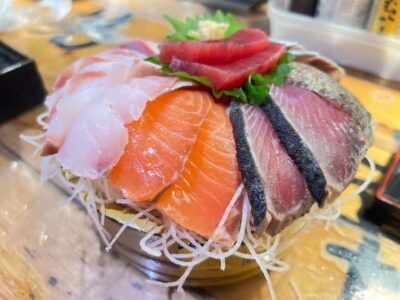 ★ 4.9Shinjuku Food Tour (15 Dishes and 4 Eateries)From $852,033 reviews
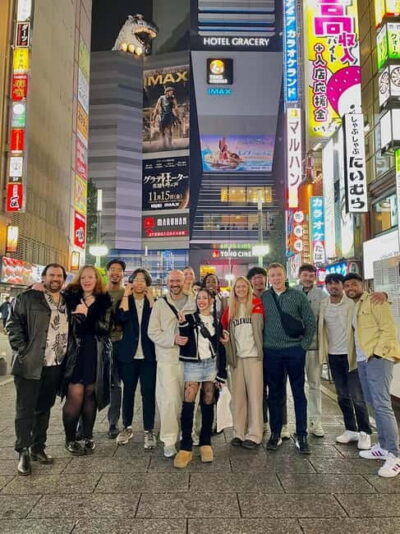 ★ 4.9Shinjuku Local Bar and Izakaya Guided Walking TourFrom $341,794 reviews
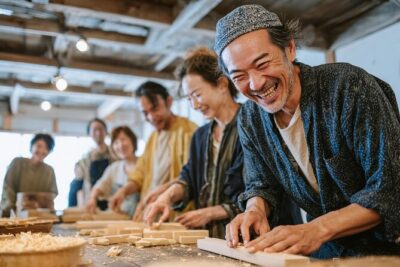 ★ 5.0Tokyo Shinjuku Chopsticks Making ClassFrom $201,763 reviews
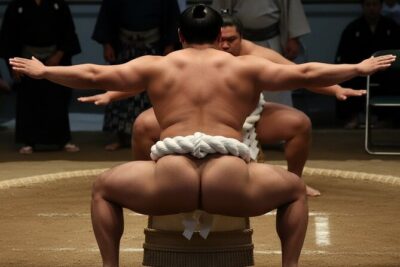 ★ 5.0Tokyo Shinjuku Sumo Show & Experience with PhotoFrom $791,750 reviews
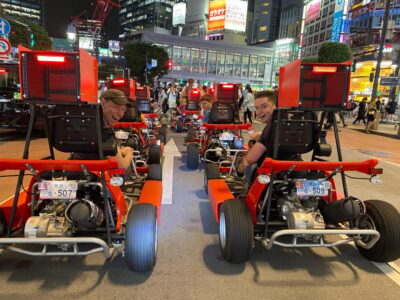 ★ 4.9Street Kart Experience in ShibuyaFrom $741,484 reviews
Filed on these lists too