
REVIEW · TAKAYAMA, HIDA AND SHIRAKAWA-GO
Takayama Local Cuisine, Food & Sake Cultural Tour with Government-Licensed Guide
Sake and snacks in old Takayama feel personal. This is a government-licensed local guide walking tour built around real daily culture: morning markets, preserved old streets, and hands-on visits to long-running food makers. I like that your route is customizable (3 to 4 chosen sites), so you can steer the day toward what you care about most.
One thing to plan for: this is a walking tour around town, and some costs can pop up for admissions or tastings (for example, Takayama Jinya admission is not included, and some sake tasting may cost extra). Also, lunch and entrance fees are on you.
In This Review
- Key things I’d highlight before you go
- Why this Takayama food-and-sake tour feels different than a quick tasting
- Your government-licensed guide: English that connects the dots
- Stop 1: Takayama Jin’ya, your Edo-era context stop
- Morning Market energy: Jinya-mae Asa-ichi and the Miyagawa Market loop
- Sanmachi Suji: the preserved old-town streets where food shops still matter
- Onoya Brewery: traditional miso and soy roots, 15 minutes but memorable
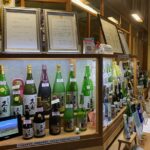
- Harada Sake Brewery: try more than ten types, plus sake-made sweets
- Kawashiri Sake Brewery: matured sake and a small-charge tasting trio
- Customizing your 3 to 4 stops: how to choose without overthinking
- Private tour pacing and meet-up on foot: easy to fit into a stay
- Price and value: what $154.37 usually covers, and what to budget
- Who this tour suits best in Takayama
- Should you book this Takayama Local Cuisine, Food and Sake Tour?
- FAQ
- How long is the Takayama Local Cuisine, Food and Sake Cultural Tour?
- Is this tour mostly walking, and do you get pickup?
- Can I customize which sites I visit?
- Are entrance fees or lunch included in the price?
- Are sake tastings included?
- What is the cancellation window?
Key things I’d highlight before you go
- A truly licensed guide who can connect food to local culture and history in clear English
- Pick 3 to 4 stops from the itinerary list, so you are not stuck with a fixed route
- Two morning markets (Jinya-mae and Miyagawa) in one tight food-focused loop
- Stop at old producers, like an established miso/soy brewery and two different sake breweries
- A private group experience, meaning your pace and interests can shape the walk
- Mobile ticket and optional pickup, with meet-up on foot in the designated area
Old-town Hida and the thatched valley, other versions
- Kanazawa: World Heritage Shirakawa-go Morning Guided Tour
★ 4.9 · 988 reviews - Kanazawa: World Heritage Shirakawa-go & Two Local Experience
★ 4.9 · 274 reviews - Kanazawa/Takayama: Shirakawago & Takayama Private Day Tour
★ 4.8 · 172 reviews - Departing from Takayama [Regular sightseeing bus] World Heritage Sites Shirakawago and Gokayama Ainokura
★ 4.5 · 137 reviews
Why this Takayama food-and-sake tour feels different than a quick tasting
Takayama is the kind of place where food is not an accessory. It is part of the rhythm of the town, from morning market shopping to what still gets made in familiar shops. This tour leans into that. You are not just sampling, you are seeing how people live, buy, and celebrate locally.
I also like the structure. You get a history anchor early, then you move into the morning markets, then you shift into the food-maker stops. That flow makes the flavors easier to understand, because you learn what you are looking at before you eat or sip.
And yes, you’ll try food and drink along the way. But the best part is the context your guide adds, turning random purchases into something you can actually remember.
Your government-licensed guide: English that connects the dots
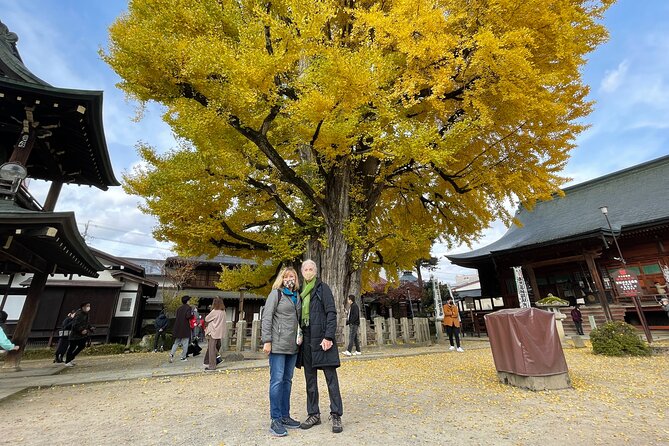
This tour is led by a licensed local English-speaking guide with a National Government Licensed Guide Interpreter certification. That matters because sake and traditional food can turn into name-dropping if the guide cannot explain what the local terms mean and how the practice fits into Takayama life.
In practice, the guides leading these walks tend to be responsive. Based on previous experiences shared by participants, guides like Mitsu and Yoko are known for tailoring the route to family needs and adjusting when interests shift mid-walk. If you are the kind of traveler who changes their mind once you see the streets, this style works well.
You should also know this is a private tour. Only your group goes with the guide, so questions do not get lost in a crowd.
Stop 1: Takayama Jin’ya, your Edo-era context stop
You start at Takayama Jin’ya, a surviving Edo period jin’ya that once functioned as the government headquarters for Hida Province under the Tokugawa shogunate. The timing is about 30 minutes, and the admission ticket is not included, so expect a small extra cost if you want in.
Why this stop is worth it: it sets the rules of the world you are about to walk through. Takayama’s markets and craft culture did not appear out of nowhere. They developed alongside the way the area was administered and the way people organized daily life.
If you prefer food over museums, think of this as a quick orientation. You are not stuck here for hours, and it gives your later stops more meaning.
Pour another. Breweries and tasting rooms nearby
- Takayama: Authentic Sake Tasting at a Historic Brewery★ 5.0 · 65 reviews
- Takayama Local Cuisine, Food & Sake Cultural Tour with Government-Licensed Guide★ 5.0 · 17 reviews
Morning Market energy: Jinya-mae Asa-ichi and the Miyagawa Market loop
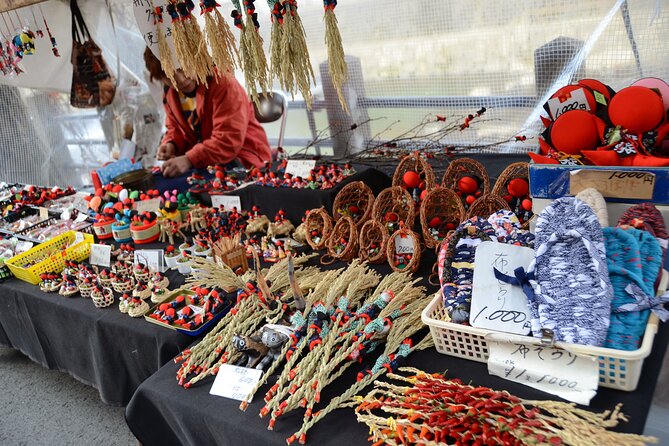
From the jin’ya area, you head to Jinya-mae Morning Market, also tied to Asa-ichi. You get about 30 minutes, and entry is free. It is a classic morning rhythm where fresh produce and local crafts show up as part of daily shopping.
Then you shift to Hida-Takayama Miyagawa Morning Market. This one has existed for more than two centuries in some form, and it is still a hub for fresh produce. It runs along the Miya River, on either side, between two bridges. That river setting helps a lot. Even if you do not buy anything, you get a visual reason to love the place.
Both markets are free to enter in the tour plan, and you get them in a compact stretch. This is a big value point because mornings are when you see Takayama at its most local, before the streets get busier.
Two practical tips:
- Go in hungry, but do not feel pressured to eat everything at every stall. The tour has later food stops.
- Bring a small wallet strategy for random purchases. You might spot crafts or snacks you want to take home.
Sanmachi Suji: the preserved old-town streets where food shops still matter
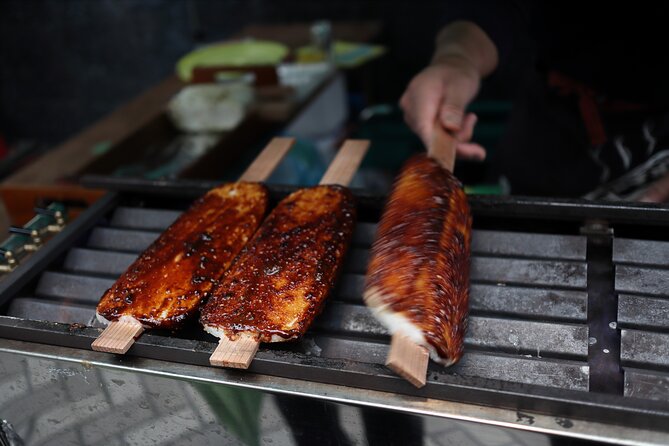
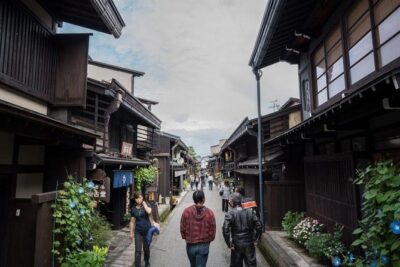
Sanmachi Suji is the heart of Takayama’s old town, with preserved and restored buildings from the Edo period era. You spend about 30 minutes, and there is no admission listed.
This is where the walk starts to feel cinematic, but in a good, real-life way. You are looking at streets shaped by craftsmen, merchants, and farmers, not just photo backdrops. It is also where you can often spot shops doing the same kind of work you just heard about.
Why it’s important in a food tour: your tasting stops later are not just brands. They are part of a town ecosystem that kept repeating the same food habits for generations. Sanmachi is a way to see the stage where that pattern played out.
If you are shopping-minded, give yourself a little breathing room here. The guide can help you decide what is worth the buy, especially if you care about local specialties rather than tourist-friendly souvenirs.
Onoya Brewery: traditional miso and soy roots, 15 minutes but memorable
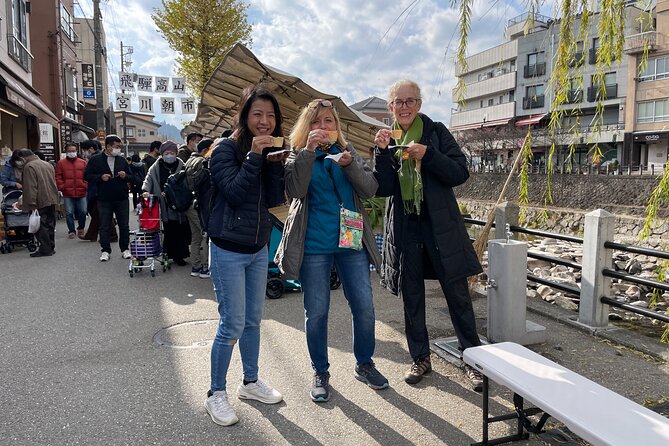
Next up is Onoya Brewery, focused on traditional miso and soy. The stop is shorter, around 15 minutes, and admission is free in the tour plan.
This is a quick-hit stop, but it’s useful because miso and soy are not just ingredients in Japan. In a place like Takayama, they represent how locals build flavor into everyday meals. Watching (or hearing about) how soy and miso are made helps you taste more thoughtfully later.
The drawback? If you love long brewery tours, this one is brief. But the tradeoff is time. Your schedule keeps you moving through both morning markets and two sake stops, so you get a fuller tasting day overall.
Harada Sake Brewery: try more than ten types, plus sake-made sweets
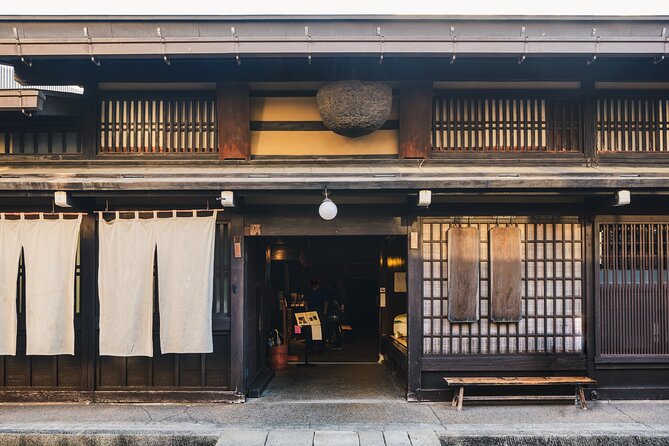
Then you get to Harada Sake Brewery. It is about 30 minutes, and admission is free for the stop.
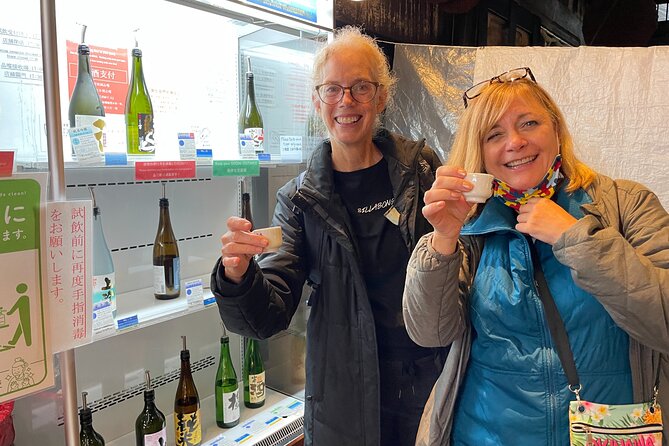
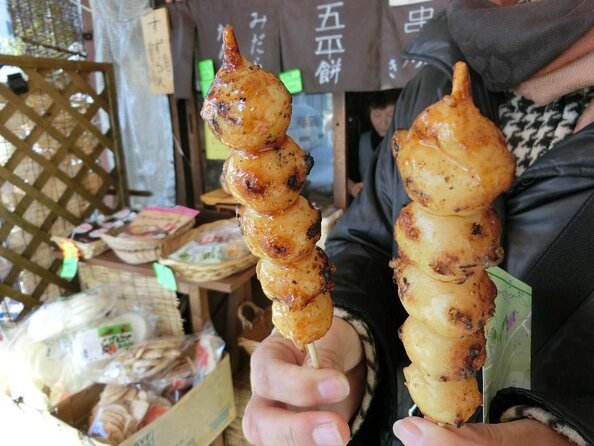
This brewery has a signature brand called Sansha, described as a dry sake with muscular umami. The stop is built around tasting options, and you can buy a small tasting cup to savor more than ten types of sake. There are also steamed manju buns and cakes made with sake, which is a clever bridge between savory and sweet.
If you are a first-time sake taster, this is one of the better formats you can get. You are not stuck with one pour and one opinion. The menu of styles lets you find what you actually like: crisp, dry, richer umami-driven profiles, and any sweeter notes that show up in the paired sweets.
Budget note: buying the tasting cup and any purchases at the tasting counter may cost extra since the tour does not list tastings as fully included everywhere.
Kawashiri Sake Brewery: matured sake and a small-charge tasting trio
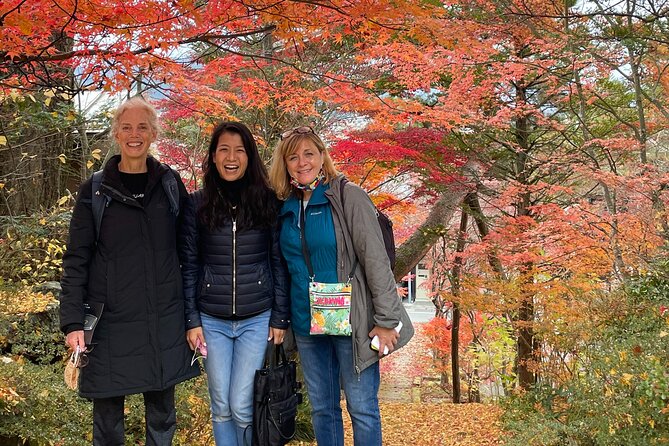
The last sake stop is Kawashiri Sake Brewery, specializing in artisanal matured sake. The stop is about 30 minutes and entry is free.
Here, you can taste a trio of fine brews for a small charge. Hidamasamune is mentioned as one of the labels you might try. This is a good ending because matured sake often feels deeper and rounder than beginner-friendly fresh styles.
Think of it as your payoff stop. By the time you reach Kawashiri, you’ve already walked the old streets, browsed the markets, and tasted your way through one brewery. Now you can compare styles with a clearer palate and a better sense of how aging changes flavor.
Customizing your 3 to 4 stops: how to choose without overthinking
One of the smartest parts of this experience is that you select 3 to 4 sites from the available list. This prevents the usual problem with food tours, where you get assigned to stops that do not fit your interests.
If you want a classic Takayama day:
- Pick the two morning markets and Sanmachi Suji, then add one food-maker stop.
If you are a sake person:
- Lean toward both Harada and Kawashiri, then choose either the miso/soy stop or one market plus Sanmachi.
If you care about history as a thread:
- Include Takayama Jin’ya plus Sanmachi Suji, then choose one market and one producer stop.
If you are traveling as a family, the flexibility is especially helpful. Even in a private setup, not everyone enjoys the same pace. A guide who adjusts to your interests makes the customization actually useful.
Private tour pacing and meet-up on foot: easy to fit into a stay
This is a walking tour. Pickup is listed as offered, but the tour also specifies the pick-up is on foot, with meet-up on foot in a designated Takayama area. You are near public transportation, which helps if you are not staying right in the meeting zone.
The duration is about 6 hours. That sounds like a lot until you remember it includes morning-market time plus multiple food stops. A walking format also keeps you close to real street life, instead of hopping between places by van.
Also, your guide entry fees are covered only for sights listed under what to expect. Translation for your planning: you should expect to pay some small admissions or tasting purchases at the points where the tour notes them as extra.
Price and value: what $154.37 usually covers, and what to budget
At $154.37 per person, you are paying for:
- A licensed local English speaking guide
- A walking tour with a customizable set of stops (3 to 4)
- The structured flow from markets to old-town streets to food and sake breweries
- A private group experience
What you should budget for separately:
- Entrance fees, since Takayama Jin’ya admission is not included
- Lunch, since it is not included
- Transportation fees, if you need them to reach the meeting area
- Sake tasting charges where noted (for example, Kawashiri’s trio is an additional charge, and tasting cups at breweries can be purchased)
So is it good value? In my view, yes, if you want more than casual sampling. The licensed guide plus the mix of morning markets and two sake-focused stops is the kind of combo that costs you more when you assemble it yourself and try to find meaningful explanations.
If you only want a quick bite and a single tasting, you might find cheaper options. But if you want your afternoon to feel like Takayama’s real rhythm, this price tends to fit the experience.
Who this tour suits best in Takayama
This is ideal if you:
- Like food plus context, not just food shopping
- Want to walk a compact area and see multiple sides of the town
- Care about sake beyond one generic label
- Prefer a private guide who adjusts to your interests
It can be less ideal if:
- You dislike walking for around 6 hours
- You have a strict budget and do not want to add admissions or tasting charges
- You are looking for a sit-down lunch included in the price
If you fall somewhere in the middle, the customization helps a lot. Choose fewer stops if you want more time to linger at places you like.
Should you book this Takayama Local Cuisine, Food and Sake Tour?
I’d book it if you want a guided day that connects Takayama streets to what people actually buy and drink. The licensed guide piece is the big difference. It turns sake and snacks into a story you can follow, and the morning markets plus old-town streets give you the right foundation before the tastings.
Skip it if you want a fully priced, no-add-ons meal plan. This tour is smart, but you should expect extra costs for admissions and some tastings, plus you’ll handle lunch yourself.
If you want my practical advice, choose your stops first based on your day. Then let the guide do what they do best, guide you through Takayama so your choices feel easy.
FAQ
How long is the Takayama Local Cuisine, Food and Sake Cultural Tour?
The tour is about 6 hours.
Is this tour mostly walking, and do you get pickup?
Yes, it is a walking tour. Pickup is offered on foot, and you meet the guide within a designated area in Takayama.
Can I customize which sites I visit?
Yes. You choose 3 to 4 sites from a list of must-see spots provided in the tour information to create your itinerary.
Are entrance fees or lunch included in the price?
Lunch is not included. Some entrance fees are not included as well, such as the admission ticket for Takayama Jin’ya. Entrance fees for other stops depend on what the tour notes for each site.
Are sake tastings included?
Sake tastings can be available during the brewery stops, but some tastings may require an additional charge. For example, Kawashiri’s tasting trio is listed as additional.
What is the cancellation window?
Free cancellation is available up to 24 hours in advance for a full refund.
Cups, Cellars and Tasting Rooms
Hida Old Town and the Thatched Valley

Newest Takayama write-ups from the Loving Japan desk
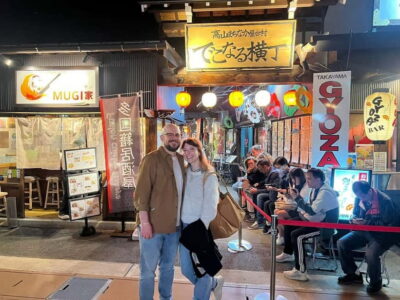

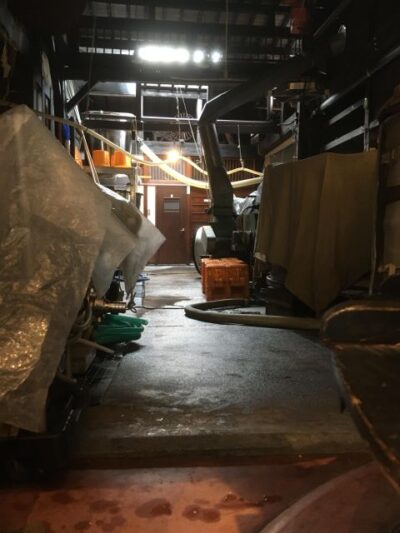
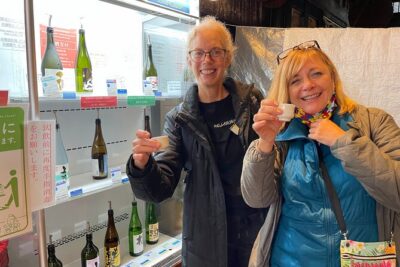
Takayama, Hida and Shirakawa-go, side by side.
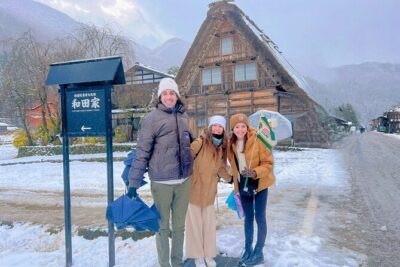 ★ 5.0World Heritage Shirakawa-go and Experience Tours from KanazawaFrom $1224,049 reviews
 ★ 4.9World Heritage Shirakawa-go Morning Guided TourFrom $77988 reviews
 ★ 4.4From Nagoya: Gujo, Hida Takayama, and Shirakawa-go Day TourFrom $61398 reviews
 ★ 4.9World Heritage Shirakawa-go & Two Local ExperienceFrom $116274 reviews
 ★ 4.5From Nagoya: Hida Takayama & Shirakawa-go Tour w/Opt. LunchFrom $61256 reviews
 ★ 4.51 Day Private Charter Tour to Shirakawa-go & TakayamaFrom $575253 reviews
 ★ 5.0[One-day bus tour departing from Kanazawa Station] Shirakawa-go and Gokayama – Two World Heritage Villages Enjoyable Bus TourFrom $88253 reviews
 ★ 5.0World Heritage Shirakawa-go Perfect Guided Tour from KanazawaFrom $81220 reviews