
REVIEW · TAKAYAMA, HIDA AND SHIRAKAWA-GO
Departing from Takayama [Regular sightseeing bus] World Heritage Sites Shirakawago and Gokayama Ainokura
Snow villages, warm bus seats. This day trip stitches together two World Heritage gassho-zukuri villages that are hard to reach on your own, with a Nohi Bus guide on board. I especially liked the way the route balances quiet Ainokura with the famous Shirakawa-go, and I appreciated the built-in structure that still leaves you time to wander at your own pace. The one drawback to watch for is that your schedule in Shirakawa-go can feel tight if you hit peak crowds or if lunch lines run long.
What makes this tour work is that it is simple, realistic, and guided enough to make you look smarter than you feel. I liked the clear guidance for where to go, plus the practical stop order that prevents you from wasting time hunting for the best angles on your own. Still, you should expect a shared bus day, so you are doing “organized sightseeing” rather than a private, slow, deep stay in the villages.
In This Review
- Key highlights you’ll feel on the day
- A one-day “old Japan” loop that actually saves time
- Nohi Bus and the comfort factor from Takayama
- Stop 1: Ainokura Gassho Community, quiet first and more atmospheric
- Stop 2: Historic Shirakawa-go gassho houses, the main event
- Shirakawago Minkaen (open-air museum): what you learn from the included ticket
- Tenshukakau Observatory: the classic view, with just enough time
- Lunch at Shirakawago: plan for choices, lines, and flexibility
- The guide experience: context on the bus, maps on arrival
- Price and value: $64.80 for transport plus key admissions
- Who this tour fits best, and who might want something else
- Should you book this day trip?
- FAQ
- What is the meeting point for this tour in Takayama?
- What time does the tour start?
- How long is the tour?
- Is lunch included in the price?
- Are admission tickets included?
- What if the Minkaen park is closed?
- Is this tour shared with other guests?
Key highlights you’ll feel on the day
![Departing from Takayama [Regular sightseeing bus] World Heritage Sites Shirakawago and Gokayama Ainokura - Key highlights you’ll feel on the day](https://k.lovingjapan.com/wp-content/uploads/departing-from-takayama-regular-sightseeing-bus-world-heritage-sites-shirakawago-and-gokayama-ainokura-1.jpg)
- Gokayama Ainokura first, when it’s calmer, with about 50 minutes on the World Heritage site
- Shirakawa-go historic village time, about 2 hours to walk the gassho-zukuri streets at your own speed
- Minkaen included, a hands-on way to understand how the houses work (with a seasonal closure note)
- Tenshukakau Observatory, the classic poster-style view over Shirakawa-go
- A real day trip rhythm from Takayama, starting early and returning to the same meeting point
Old-town Hida and the thatched valley, other versions
- Kanazawa: World Heritage Shirakawa-go Morning Guided Tour
★ 4.9 · 988 reviews - Kanazawa: World Heritage Shirakawa-go & Two Local Experience
★ 4.9 · 274 reviews - Kanazawa/Takayama: Shirakawago & Takayama Private Day Tour
★ 4.8 · 172 reviews - Departing from Takayama [Regular sightseeing bus] World Heritage Sites Shirakawago and Gokayama Ainokura
★ 4.5 · 137 reviews
A one-day “old Japan” loop that actually saves time
Takayama is a great base, but the gassho villages are not. This is where a bus tour earns its keep: you get comfortable transport and on-board context, so you spend your energy looking, not figuring out buses, routes, or timing.
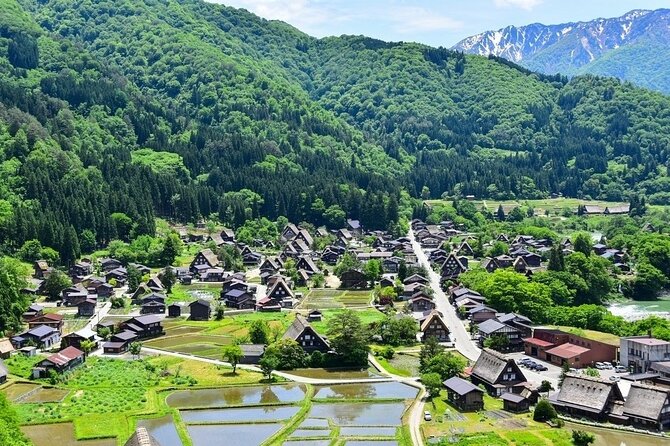
The pairing of Ainokura and Shirakawa-go is also a smart move. Ainokura has far fewer gassho houses than Shirakawa-go, which makes it feel more personal and less like a theme park. Then you shift to the larger, busier Shirakawa-go, where you can see the full scale of the UNESCO village layout and roofs that were built for heavy snow.
One practical note: you are not going to “do everything.” You will do the highlights, plus a museum, plus an observatory, and then you move on. That’s perfect if you want a strong overview with time to stroll, and less perfect if you’re the type who wants hours and hours in one village.
Nohi Bus and the comfort factor from Takayama
![Departing from Takayama [Regular sightseeing bus] World Heritage Sites Shirakawago and Gokayama Ainokura - Nohi Bus and the comfort factor from Takayama](https://k.lovingjapan.com/wp-content/uploads/departing-from-takayama-regular-sightseeing-bus-world-heritage-sites-shirakawago-and-gokayama-ainokura-2.jpg)
You depart from Takayama in the morning, meeting at 6-chōme-125 Hanasatomachi at 8:30 am. The tour returns you to the same meeting point, which is reassuring if you like keeping your day simple.
The ride matters here because you’re crossing mountainous terrain. The tour uses air-conditioned vehicles, and that’s especially welcome in shoulder seasons when temperatures can swing. Reviews also flag the smooth comfort of the bus ride and how it turns a long drive into real sightseeing time.
You’ll also feel the “guided-but-not-handheld” style. The guide gives information during the drive, and when you arrive, you get a map and guidance for key places. After that, you explore on your own within the time blocks.
Stop 1: Ainokura Gassho Community, quiet first and more atmospheric
Your first village stop is Ainokura Gassho Community in Gokayama. This World Heritage area is in Ainokura, within Nanto City, Toyama Prefecture. It’s home to 20 gassho-zukuri houses still in existence, which changes the vibe immediately.
You get about 50 minutes here, and that timing is spot-on. Ainokura is where you can slow down and notice details: steep roofs, mountain-hugging village placement, and the overall “stillness” that larger sites can lose. Because it’s smaller, it’s easier to wrap your head around the village layout quickly and then enjoy the textures and views without racing.
The biggest pro for this stop is contrast. You see the smaller, more attached-to-the-slope side of gassho village life first. Then, when you reach Shirakawa-go later, the comparison feels obvious in a good way.
The main consideration is simple: the time is shorter than Shirakawa-go. If you fall in love with Ainokura, you might wish you had an extra half hour, but the schedule is built to let you experience both villages in one day.
- 1-Day Takayama Tour: Explore Scenic Takayama and Shirakawago★ 5.0 · 113 reviews
- From Takayama: Guided Day Trip to Takayama and Shirakawa-go★ 4.9 · 113 reviews
- Takayama: Onigiri and miso soup making at a buddhist temple★ 4.9 · 93 reviews
- From Takayama: Alpine Splendor – Shinhotaka Ropeway and Kamikochi★ 5.0 · 91 reviews
- Takayama Half-Day Private Tour with Government Licensed Guide★ 5.0 · 69 reviews
Stop 2: Historic Shirakawa-go gassho houses, the main event
Next comes Shirakawa-go, the bigger, famous village with 114 thatched gassho-zukuri houses that help retain the old-Japan streetscape look. You’re given about 2 hours to explore the historic area.
What I like about this setup is that it’s long enough to do a real walk, but not so long that you get burned out. The roofs matter here. Those steep triangular designs are not just charming architecture. They were developed for regions that see heavy snow, helping the roof shed it and survive winter conditions.
Expect the area to be busier than Ainokura. That can be a drawback if you want solitude, but it’s also part of the value: you get to see how this settlement type scales up, and you can spot the major photo angles without feeling lost.
A good strategy is to pick your priorities early. If you have the energy, do a quick orientation walk first, then go back for slower detail. If not, just choose one route and commit. With a set time limit, you’ll enjoy it more if you stop trying to do everything.
Shirakawago Minkaen (open-air museum): what you learn from the included ticket
One of the more useful inclusions is Shirakawago Gassho-zukuri Minkaen. This is an open-air museum, and entrance is included for this stop. Your time here is about 30 minutes, including walking.
Why this is valuable for your day: when you only wander the streets, you can admire the roofs but miss the “how.” A museum visit can give you a framework for understanding how rooms, structures, and the house design connect to daily life in a heavy-snow environment.
There’s also a timing reality. Thumbs-up ratings often note that this museum stop is worth the ticket and helps make the village more meaningful, not just scenic. Since you only have half an hour, it’s not a museum marathon, but it adds context where it matters.
Seasonal note to remember: the park is closed on Thursdays from December to March. If it’s closed, the tour states that you’ll receive an original mascot instead. That doesn’t replace the museum experience, but it does prevent your ticket time from feeling totally wasted.
Tenshukakau Observatory: the classic view, with just enough time
After you’ve walked and explored, you’ll stop at Tenshukakau Observatory. This is on a hill in the northwest of Shirakawa-go, and it’s famous because it gives you the viewpoint you often see on posters.
Your time here is about 20 minutes, and that is exactly the right length for an observatory stop. You’re not there to spend your afternoon reading every sign. You’re there to get the overview, confirm what you saw from ground level, and grab the “now I get it” feeling.
If the light is good, the view can also be a highlight, especially in seasons when the village looks snow-dusted. Even when it’s not snowy, the roof geometry and village layout stand out from above.
The only drawback is that 20 minutes can vanish in a line if the observatory is crowded. The fix is timing. When you arrive, take in the view first, then decide if you need extra minutes.
Lunch at Shirakawago: plan for choices, lines, and flexibility
![Departing from Takayama [Regular sightseeing bus] World Heritage Sites Shirakawago and Gokayama Ainokura - Lunch at Shirakawago: plan for choices, lines, and flexibility](https://k.lovingjapan.com/wp-content/uploads/departing-from-takayama-regular-sightseeing-bus-world-heritage-sites-shirakawago-and-gokayama-ainokura-4.jpg)
Lunch is not included, but the tour expects you to eat lunch at Gassho Village in Shirakawago. That means you’ll be choosing from what’s available in the main village area while others are doing the same.
This is one of those “small logistics” moments that can affect the whole day. If you hit peak lunch hours, you may spend more time queuing than you want. Some people find they need to adjust their plan at Shirakawa-go, like choosing to skip one viewpoint or shorten a museum visit if the line situation eats into time.
My practical advice: decide early what you will do if lunch crowds get annoying. For example, you might grab a quick meal and keep walking, or choose a slightly less popular time window within the allotted break. If you bring your own snack, you can also avoid feeling rushed.
Also remember, your ticket does include admission for Minkaen and the observatory portion. So don’t assume you paid for lunch. Budget for it separately.
The guide experience: context on the bus, maps on arrival
![Departing from Takayama [Regular sightseeing bus] World Heritage Sites Shirakawago and Gokayama Ainokura - The guide experience: context on the bus, maps on arrival](https://k.lovingjapan.com/wp-content/uploads/departing-from-takayama-regular-sightseeing-bus-world-heritage-sites-shirakawago-and-gokayama-ainokura-5.jpg)
This tour is guided by a Nohi Bus guide. The guide’s job is partly storytelling on the road and partly practical navigation once you arrive. In other words, you get enough context to appreciate gassho-zukuri houses, plus you get help with where to walk.
One pattern in feedback is that guides give clear timing and simple instructions, and they often explain the layout in both English and Japanese. Some departures mention guides by name, including Yamashia and Ikuichinami, and the common thread is that they keep you oriented without drowning you in facts.
You should also notice the structure: you don’t just get dropped off. You get a “here is what to see and where it is” approach. That matters because both villages are spread out enough that a bad self-guided route can waste time.
Where it can disappoint some people is if you expect a one-on-one walking guide the entire time. Here, you are mostly self-guided inside the time windows. That’s not wrong, but it changes what type of traveler you are.
Price and value: $64.80 for transport plus key admissions
At $64.80 per person, you’re paying for more than a ride. You’re buying a full day that includes air-conditioned transportation, a guided orientation, and admission items on site (including Minkaen). You also get to visit two World Heritage villages that are otherwise time-consuming to reach.
Is it “cheap”? Not really. But in value terms, it makes sense because you’re converting a long day of planning into a managed route with scheduled stops. If you were to go independently, you’d be spending energy on transportation timing, ticketing for museum stops, and figuring out where to fit both villages into one coherent day.
Also, the tour explicitly does not include lunch, so keep that in mind as part of your real total. If you plan to add a full sit-down meal plus snacks, budget accordingly.
One caution from the real world: there are fake product listings online. The tour details warn about that, and it’s worth taking seriously. Stick to the official Viator listing shown for this tour experience, or the operator’s own channels, to avoid confusion.
Who this tour fits best, and who might want something else
This is a good fit if you want:
- a one-day overview of both UNESCO gassho village areas
- the convenience of a scheduled day trip from Takayama
- clear guidance plus time to wander on your own
You might want to skip this style of tour if:
- you want a slow, deep, hours-long experience in only one village
- you’re the type who hates shared groups and prefer private pacing
- you’re very sensitive to schedule compression in Shirakawa-go, especially around meals and viewpoints
For most people, though, the mix of Ainokura’s quieter feel plus Shirakawa-go’s scale is exactly what makes the day trip satisfying.
Should you book this day trip?
I’d book it if you’re based in Takayama and you want to see both gassho villages without spending your day solving transit. The value comes from the combination of guided context, included museum entry, and the practical time blocks that help you experience a lot without getting overwhelmed.
I would hesitate if you know you’ll be unhappy with crowds in Shirakawa-go, or if you’re hoping for a long, guided walk through every stop. For those travel styles, another plan might suit you better.
FAQ
What is the meeting point for this tour in Takayama?
The tour meets at 6-chōme-125 Hanasatomachi, Takayama, Gifu 506-0026, Japan.
What time does the tour start?
The start time is 8:30 am.
How long is the tour?
The duration is about 7 hours 20 minutes.
Is lunch included in the price?
No. Lunch is not included. The tour expects you to eat lunch at Gassho Village in Shirakawago.
Are admission tickets included?
Admission to Ainokura is free. Shirakawa-go historic village houses are free. Shirakawago Gassho-zukuri Minkaen and the Tenshukakau Observatory admission are included.
What if the Minkaen park is closed?
The park is closed on Thursdays from December to March. If it is closed, the tour states you will receive an original mascot.
Is this tour shared with other guests?
Yes. The tour is shared with other guests and operates by a medium or large bus.
Hida Old Town and the Thatched Valley


Newest Takayama write-ups from the Loving Japan desk


Takayama, Hida and Shirakawa-go, side by side.
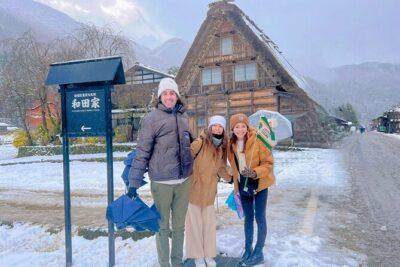 ★ 5.0World Heritage Shirakawa-go and Experience Tours from KanazawaFrom $1224,049 reviews
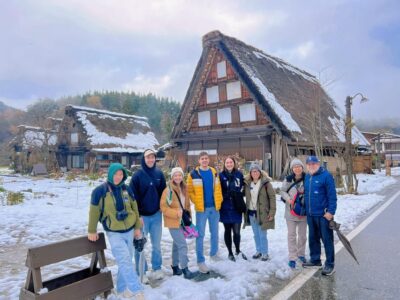 ★ 4.9World Heritage Shirakawa-go Morning Guided TourFrom $77988 reviews
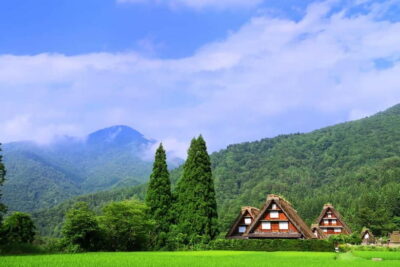 ★ 4.4From Nagoya: Gujo, Hida Takayama, and Shirakawa-go Day TourFrom $61398 reviews
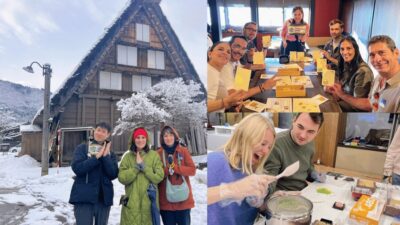 ★ 4.9World Heritage Shirakawa-go & Two Local ExperienceFrom $116274 reviews
 ★ 4.5From Nagoya: Hida Takayama & Shirakawa-go Tour w/Opt. LunchFrom $61256 reviews
 ★ 4.51 Day Private Charter Tour to Shirakawa-go & TakayamaFrom $575253 reviews
 ★ 5.0[One-day bus tour departing from Kanazawa Station] Shirakawa-go and Gokayama – Two World Heritage Villages Enjoyable Bus TourFrom $88253 reviews
 ★ 5.0World Heritage Shirakawa-go Perfect Guided Tour from KanazawaFrom $81220 reviews
Filed on these lists too