
REVIEW · TAKAYAMA, HIDA AND SHIRAKAWA-GO
Takayama Rice Ball and Miso Soup Making at a buddhist temple
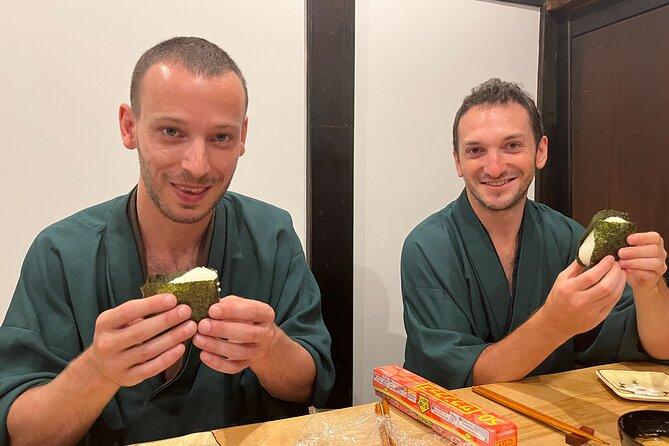
Cooking in a temple feels different. This onigiri and miso soup class in Takayama’s Zenko-ji temple setting pairs hands-on food making with Buddhist calm, so you’re not stuck just watching and walking by. I liked how you get to personalize your own onigiri plate with choices of fillings and flavors, and I also liked learning miso soup from scratch using locally known Hida miso. The only real catch is that the instruction is focused and practical, so if you prefer a super chatty class vibe, you might find the teacher’s tone a little serious at times.
You’ll meet at 宿坊 高山善光寺 TEMPLE HOTEL TAKAYAMA ZENKO-JI and then get into the temple kitchen space (the kuri) for about an hour. The group stays small, up to 10 people, and the experience is vegan-friendly, so it works well for mixed groups. In past sessions, the host Tama has explained the steps clearly in English, which makes a difference when you’re learning by doing.
In This Review
- Key Things You’ll Remember From This Temple Food Class
- Entering Takayama Zenko-ji for Onigiri and Miso Soup
- What You Actually Make in the Curi (Onigiri + Scratch Miso Soup)
- Your onigiri, your choices
- Miso soup built from scratch
- Buddhist Food Mindfulness, Without Being Weird About It
- Guide and Group Size: Small Class Energy
- Price and Value: Why $26.13 Can Make Sense
- How to Plan Your Day Around This Class
- Where You Meet (and Why Location Matters)
- Is This Vegan-Friendly Class Really for Everyone?
- Who Should Book This Takayama Temple Onigiri Class
- Quick Reality Check: A Serious Tone Can Be Good
- Should You Book It? My Take
- FAQ
- How long is the onigiri and miso soup experience in Takayama?
- What is the price per person?
- Is transportation included?
- Where do I meet for the class?
- What’s included in the price?
- Is the class vegan-friendly?
- How many people are in the group?
- Do I get a ticket on my phone?
- What happens after the class ends?
- What if I need to cancel?
Key Things You’ll Remember From This Temple Food Class
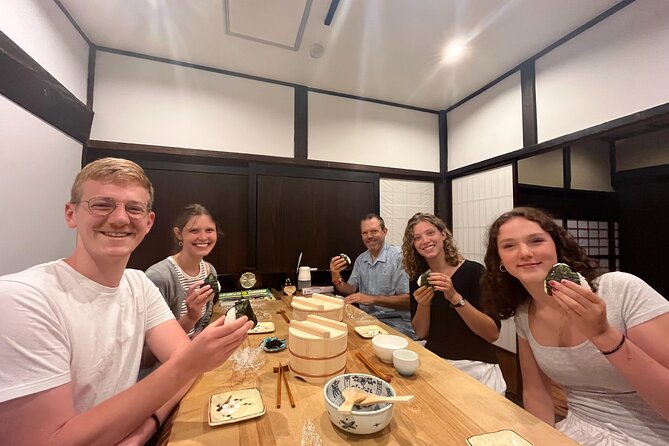
- You make two things, not just one, onigiri plus miso soup, both from basic steps you can repeat later
- Hida miso is the star, and you’ll learn how the soup comes together from scratch, not from a packet
- Your onigiri is customized, with your own choice of fillings and flavors while you build your plate
- Small group, hands-on pacing, so you’re not standing on the sidelines waiting for photos
- Temple calm is part of the ingredient list, with Buddhist touches that frame eating as mindful and grateful
Old-town Hida and the thatched valley, other versions
- Kanazawa: World Heritage Shirakawa-go Morning Guided Tour
★ 4.9 · 988 reviews - Kanazawa: World Heritage Shirakawa-go & Two Local Experience
★ 4.9 · 274 reviews - Kanazawa/Takayama: Shirakawago & Takayama Private Day Tour
★ 4.8 · 172 reviews - Departing from Takayama [Regular sightseeing bus] World Heritage Sites Shirakawago and Gokayama Ainokura
★ 4.5 · 137 reviews
Entering Takayama Zenko-ji for Onigiri and Miso Soup
If your Takayama plan is mostly temples, streets, and side trips, this class is a nice gear shift. You go from sightseeing mode to kitchen mode, but in a place that still feels quiet and reverent.
The setting matters. Instead of a restaurant classroom, you’re working inside the temple environment, in the kuri, the temple’s kitchen space. That means the pace feels different. People tend to slow down without being told, and the food practice becomes something you focus on rather than rush through. It also helps you see Japanese culture through daily habits, not just architecture.
You’ll spend about an hour making food, then the session ends back at the same meeting point. It’s short enough to fit smoothly into a day of walking, and long enough that you don’t feel like you barely started.
What You Actually Make in the Curi (Onigiri + Scratch Miso Soup)
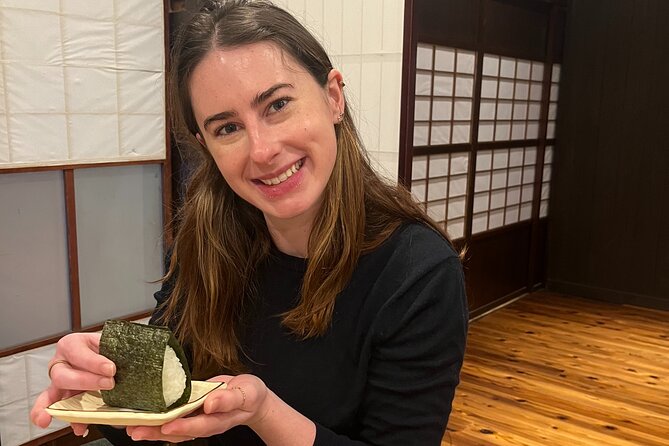
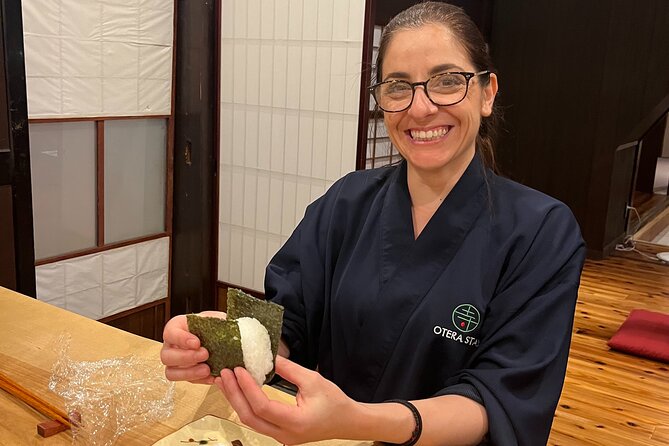
This is a true hands-on session. You’re taught how to make onigiri, the classic Japanese rice ball, and you also learn the process for miso soup from scratch.
Your onigiri, your choices
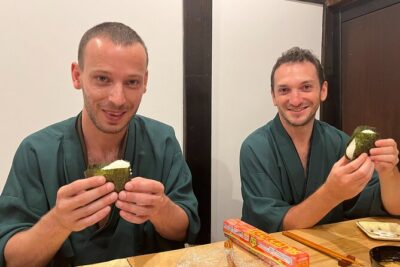
You’ll personalize your onigiri plate. The class gives you seasonal, fresh ingredients and supports you as you work through the basic shaping process. What makes it more interesting than a generic demo is the customization. You’re not just assembling one style. You experiment with fillings and flavors so your final plate feels like yours.
If you care about food texture, you’ll probably enjoy this. Onigiri is simple in concept, but getting the feel right comes from doing it yourself. The short class format still gives you enough time to practice the steps, not just watch them.
- 1-Day Takayama Tour: Explore Scenic Takayama and Shirakawago★ 5.0 · 113 reviews
- From Takayama: Guided Day Trip to Takayama and Shirakawa-go★ 4.9 · 113 reviews
- Takayama: Onigiri and miso soup making at a buddhist temple★ 4.9 · 93 reviews
- From Takayama: Alpine Splendor – Shinhotaka Ropeway and Kamikochi★ 5.0 · 91 reviews
- Takayama Half-Day Private Tour with Government Licensed Guide★ 5.0 · 69 reviews
Miso soup built from scratch
Then comes miso soup. The class teaches you how to make it from scratch, using locally renowned Hida miso. That detail is more than marketing. Hida miso is part of the flavor identity of this region, so learning the basics here gives you a stronger sense of place.
The key value of this part is the method. Once you understand what you’re doing, you can apply the same logic later, even if you’re in a different city using a different miso brand.
In past sessions, the host (including Tama) has been praised for explaining the steps clearly, especially the details that lead to a good miso soup. That kind of guidance matters because miso soup is easy to ruin if you treat it like “just heat water and add paste.”
Buddhist Food Mindfulness, Without Being Weird About It
This class includes Buddhist teachings tied to food customs. The tone is not preachy. It’s more like a gentle framing: mindfulness, gratitude, and attention to the meal.
In practical terms, that shows up in how the session is paced. People pay attention while they work, and you’re encouraged to treat the meal as something earned, not something ordered. That shift is subtle, but it’s real.
If you’re the type who likes meaning behind daily practices, you’ll probably appreciate this. It’s also a good contrast to the more performance-style cooking classes you may have seen elsewhere. Here, the point is not just technique, it’s how technique supports appreciation.
Guide and Group Size: Small Class Energy
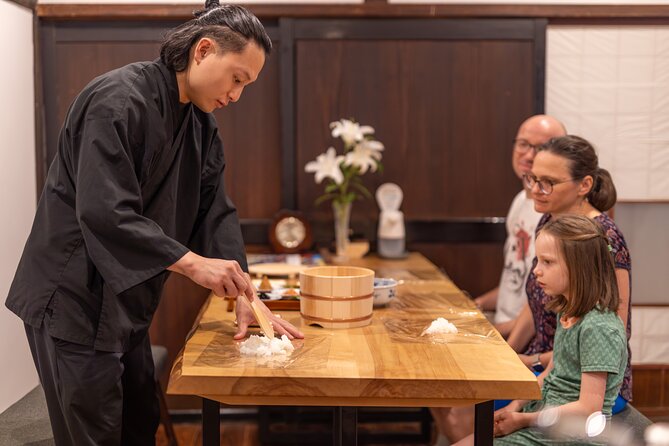
The class keeps the group small, with a maximum of 10 travelers. That size affects everything: questions get answered, you get more personal attention, and the teacher can correct little mistakes while you’re working.
Based on feedback from earlier participants, the host has offered clear explanations in excellent English, and has helped everyone stay on track. If you worry about language barriers, this is one of the main reasons the experience tends to land well.
The class also uses a host-instruction style that mixes explanation with active prep. One of the most useful things you can get from a session like this is seeing the prep work before you start, not after you mess up. When the teacher walks you through prep first, your hands follow your brain better.
Price and Value: Why $26.13 Can Make Sense
At $26.13 per person for about an hour, this is not “cheap” in a strict sense. But it can be good value because you’re paying for three things at once.
First, you’re paying for instruction. You don’t just get a meal delivered. You get coached steps for onigiri and miso soup.
Second, you’re paying for the ingredient experience. Hida miso is specifically called out, and the class uses fresh, seasonal ingredients. That local flavor component is hard to replicate on your own unless you already know what to look for.
Third, you’re paying for the setting. The temple kitchen environment is part of the experience, not an afterthought. You’re basically buying time inside a working cultural space.
Also, this is described as a brunch, which makes it easier to justify as a lunch plan rather than a “random extra.” If you’re touring in the morning, this timing can work out nicely.
How to Plan Your Day Around This Class
The class runs about 1 hour. It’s labeled as brunch, and in practice it fits well as a meal between sightseeing blocks.
Here’s a simple way to plan:
- If you’re touring Takayama in the morning, set this for your lunch slot.
- If you’ve already had a big breakfast, still show up hungry enough to enjoy what you make.
- Wear comfortable clothes and shoes you can move around in.
No heavy lifting is implied. It’s more learn-and-make than sweat-and-scrub. Still, you’ll be handling ingredients and shaping rice balls, so comfort helps.
Also, you’ll get a mobile ticket. That means you’re not chasing paper confirmations at the last minute.
Where You Meet (and Why Location Matters)
You start at 宿坊 高山善光寺 TEMPLE HOTEL TAKAYAMA ZENKO-JI, 4-chōme-3 Tenmanmachi, Takayama, Gifu 506-0025, Japan. The activity ends back at the meeting point, so you don’t need to figure out a second drop-off or transfer.
It’s noted as near public transportation. That’s a big deal in Japan, because many local transit options are easy to use but can still require careful navigation. A meeting point near transit reduces stress.
If you’re walking through Takayama anyway, you’ll likely find you can fold this into your route rather than forcing a detour.
Is This Vegan-Friendly Class Really for Everyone?
This experience is described as vegan-friendly. That matters because miso soup and rice are often easy to adapt, but not every class does it well.
If you eat vegan, you’ll appreciate that the experience is built with accessibility in mind. If you’re not vegan, you’ll still likely enjoy it because the focus is technique and flavor balance, not just “making substitutes.”
Most travelers can participate, and the session is short, which helps for families and mixed ages. One family with kids has rated it very highly, which suggests it can work beyond just adult food nerds.
Who Should Book This Takayama Temple Onigiri Class
I’d put this on your list if you want:
- Hands-on Japanese food basics in a setting with meaning
- A short meal experience you can fit into a packed itinerary
- A local flavor connection through Hida miso
- A small-group class where instructions are clear and helpful
It’s also a good fit for couples. You get something to talk about after you eat, and you end up with a real food memory, not just a photo.
If you hate cooking or you’re uncomfortable working with your hands, you may find it a bit frustrating. The pace is not designed for passive spectators.
Quick Reality Check: A Serious Tone Can Be Good
One possible downside mentioned in earlier experiences is that the teacher can come across more serious than playful. That doesn’t mean the class is bad. In many kitchens, seriousness is actually a sign of care.
But it does mean you should go in with the mindset of learning, not bonding over small talk. If you want warm chatter all hour, you might not get that. If you want clear steps and a focused outcome, you’re likely to enjoy it.
Should You Book It? My Take
Book it if you want a practical, local-feeling experience that combines food and culture in a short time window. The combination of onigiri customization, Hida miso miso soup teaching, and a temple kitchen setting is exactly the kind of activity that makes Takayama feel more personal.
Skip it if you’re looking for a long, social cooking party or you’re not into hands-on food work. Also, if you’ve already got a perfectly planned meal schedule with no flexibility, factor in that this class is both an experience and your brunch plan.
Overall, for a single hour, this is a strong value because it gives you technique, regional flavor, and a calm cultural setting all together.
FAQ
How long is the onigiri and miso soup experience in Takayama?
It runs for about 1 hour.
What is the price per person?
The price is $26.13 per person.
Is transportation included?
No. Private transportation is not included.
Where do I meet for the class?
You meet at 宿坊 高山善光寺 TEMPLE HOTEL TAKAYAMA ZENKO-JI, 4-chōme-3 Tenmanmachi, Takayama, Gifu 506-0025, Japan.
What’s included in the price?
The price includes brunch (you’re taught how to make miso soup and rice ball) and a guide.
Is the class vegan-friendly?
Yes, the experience is described as entirely vegan-friendly.
How many people are in the group?
The class has a maximum of 10 travelers.
Do I get a ticket on my phone?
Yes, the tour uses a mobile ticket.
What happens after the class ends?
It ends back at the meeting point.
What if I need to cancel?
Free cancellation is available. You can cancel up to 24 hours in advance for a full refund.
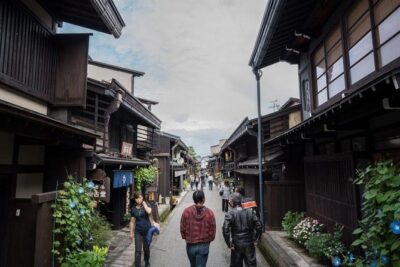
Hida Old Town and the Thatched Valley

Newest Takayama write-ups from the Loving Japan desk
Takayama, Hida and Shirakawa-go, side by side.
 ★ 5.0World Heritage Shirakawa-go and Experience Tours from KanazawaFrom $1224,049 reviews
 ★ 4.9World Heritage Shirakawa-go Morning Guided TourFrom $77988 reviews
 ★ 4.4From Nagoya: Gujo, Hida Takayama, and Shirakawa-go Day TourFrom $61398 reviews
 ★ 4.9World Heritage Shirakawa-go & Two Local ExperienceFrom $116274 reviews
 ★ 4.5From Nagoya: Hida Takayama & Shirakawa-go Tour w/Opt. LunchFrom $61256 reviews
 ★ 5.0[One-day bus tour departing from Kanazawa Station] Shirakawa-go and Gokayama – Two World Heritage Villages Enjoyable Bus TourFrom $88253 reviews
 ★ 4.51 Day Private Charter Tour to Shirakawa-go & TakayamaFrom $575253 reviews
 ★ 5.0World Heritage Shirakawa-go Perfect Guided Tour from KanazawaFrom $81220 reviews
Filed on these lists too