
REVIEW · ASAKUSA, SENSO-JI AND TOKYO SKYTREE
The Old Quarter of Tokyo – Yanaka Walking Tour
Tokyo slows down in Yanaka. I really like the small-group size, because it stays conversational, and I love the religion-and-life stories that turn famous-looking shrines into something human. One possible drawback is that you are walking outdoors for about 3 hours, so hot weather or rain can change the experience.
I also appreciate the pacing and the way the guide builds context step by step. I found the route gives you a quieter Tokyo view, with wooden homes and religious sites that many people miss when they stick to the big-name neighborhoods.
At $40 per person, it is a fair price for an English-speaking local guide and a structured walk with photo stops, especially since the tour wraps at Yanaka Ginza where you can keep exploring on your own. Just plan for extra spending on snacks or drinks at a cafe-style stop, and bring comfortable shoes.
In This Review
- Key things to know before you go
- Why Yanaka feels like a different Tokyo pocket
- The 3-hour walking rhythm, and how to use it to your advantage
- Tennoji Temple and the Yanaka Buddha from 1690
- Yanaka Cemetery: learning customs, not just spotting graves
- Ueno-Sakuragi atari: the renovated wooden-house community stop
- Enju-ji Temple: wishes for strong legs
- Nezu Shrine and its red torii gate photo moment
- Hebimichi back street life and the Yanaka Ginza shopping street finish
- Price and value: where the $40 really goes
- Guide impact: why names like Aya, Junko, and Kiyo show up often
- What to bring for a comfortable Yanaka walk
- Should you book the Old Quarter of Tokyo, Yanaka Walking Tour?
- FAQ
- How much does the Yanaka walking tour cost?
- What is the duration of the tour?
- How many people are in the group?
- Where do we meet, and where does the tour end?
- Is there a mobile ticket?
- What language is the tour guide?
- Is food and drink included in the price?
- Do I need to pay admission fees at the stops?
- If I cancel, will I get a refund?
- What if the weather is bad, and are service animals and gratuities allowed?
Key things to know before you go
- Small group, up to 10 people keeps it intimate and makes questions easy
- Temple and shrine storytelling explains how Shinto and Buddhism show up in everyday life
- Old wooden streets still matter here, including places that survived WWII fires and bombing
- Ueno-Sakuragi atari stop includes renovated wooden houses now used for local food and drink
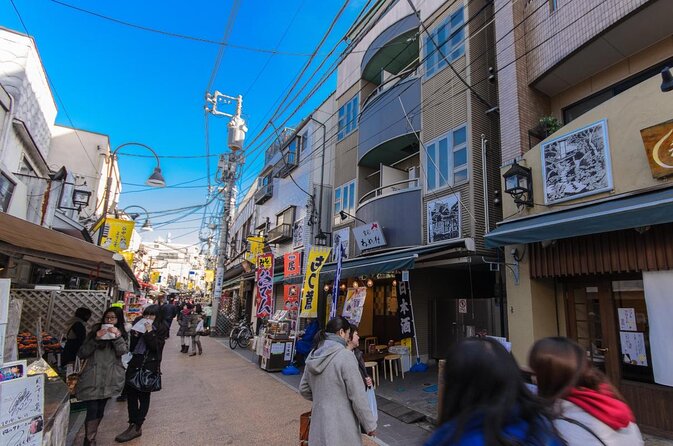
- Yanaka Ginza finish is a practical way to end, with shops and the chance to try local sweets
Still on the Sumida side? A few more Asakusa options
- Tokyo: Japanese Dance Cabaret Theater Asakusa-Kaguwa Ticket
★ 4.8 · 2,270 reviews - Tokyo: Meiji Shrine, Asakusa, Skytree Bus Tour and Cruise
★ 4.7 · 1,986 reviews - Tokyo: Roll and Authentic Sushi Making Class in Asakusa
★ 4.9 · 1,957 reviews - Tokyo: Asakusa Walking Tour with Sensoji Temple Visit
★ 4.8 · 1,583 reviews
Why Yanaka feels like a different Tokyo pocket
Yanaka is the kind of place where Tokyo suddenly feels less like a megacity and more like a series of side streets with long memories. You get wooden homes, small worship sites, and residential lanes that do not feel staged for tourists. The tour is built around that vibe, so you are not just passing by buildings, you are learning why these places sit where they do and how people use them.
What I like best is that the walk is not only about sights. You are also hearing how religion fits into routine, which makes temples and shrines feel less like background scenery and more like part of how Japanese communities function. Guides often connect the dots between Buddhist and Shinto practices, which helps you look at the signs and structures with better understanding.
If you want the contrast to modern Tokyo, this is a smart choice. You are trading glass towers for quiet streets, and trading crowds for a calmer stroll where you can actually look up.
The 3-hour walking rhythm, and how to use it to your advantage
This is a 3-hour walking tour that stays small, with a maximum of 10 people. That matters because you can ask questions and the guide can adjust pace without slowing a whole bus. Most of the time, you are on foot, moving between religious sites and local streets, with short stops where your guide tells stories and points out details.
Timing is part of the experience. The shorter visits, like around 5 to 15 minutes at several stops, work well because they keep you moving while still giving you enough time to absorb what you came to see. It also means you are not stuck waiting around for long periods inside buildings.
Practical tip: wear shoes you can walk in for a few hours without thinking about it. One review called out 35 degrees and humid conditions, and that advice is easy to apply. Bring sun protection too, because there are stretches where shade is limited.
Tennoji Temple and the Yanaka Buddha from 1690
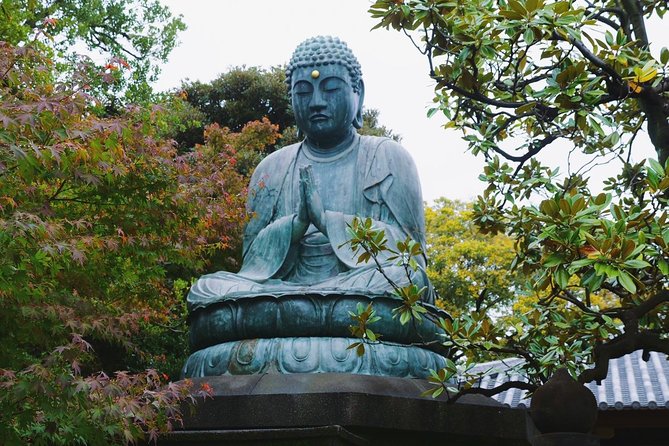
Your tour starts with Tennoji Temple, where you can see the Yanaka Buddha, created in 1690. That date is not just a trivia line. It sets a tone for the walk, reminding you that this area has been spiritually active for centuries, even as Tokyo around it kept changing.
Your guide also explains the temple’s story and how it ties into Japanese religion. The benefit of starting here is that it gives you language for what you will see next. When later you notice charms, wooden offerings, shrine etiquette, or faith traditions tied to specific needs, you are less likely to treat everything as a photo opportunity and more likely to understand what is going on.
Admission is listed as free for this stop, so it is low-pressure. You can focus on the details without worrying about payment or logistics. Even if you are not a religion expert, this is a good entry point because your guide frames it clearly.
- Mt Fuji and Hakone 1-Day Bus Tour Return by Bullet Train★ 5.0 · 26,383 reviews
- 1-Day Tokyo Bus Tour★ 5.0 · 14,250 reviews
- Tokyo: teamLab Planets TOKYO Digital Art Museum Entry Ticket★ 4.6 · 9,779 reviews
- Mt Fuji & Hakone Cruise, Drum Show Bullet Train 1 Day from Tokyo★ 4.0 · 7,413 reviews
- Tokyo: Shinjuku Food Tour (13 Dishes at 4 Local Eateries)★ 5.0 · 6,603 reviews
Yanaka Cemetery: learning customs, not just spotting graves
Next comes Yanaka Cemetery, and it is one of those stops that makes the tour feel respectful and different. Instead of rushing through, you walk into the cemetery and learn what a Japanese cemetery is like, plus some customs locals follow.
This is valuable because cemeteries are often where visitors get curious but also awkward. Here, your guide helps you understand that the purpose is quiet respect. You learn how everyday visitors behave, which helps you avoid the common mistake of treating a sacred space like a sightseeing yard.
The time at the cemetery is about 15 minutes, so it is not long, but it is enough to make you more thoughtful about what you are seeing. Admission is free at this stop, so again, you can keep your focus on the experience.
Ueno-Sakuragi atari: the renovated wooden-house community stop
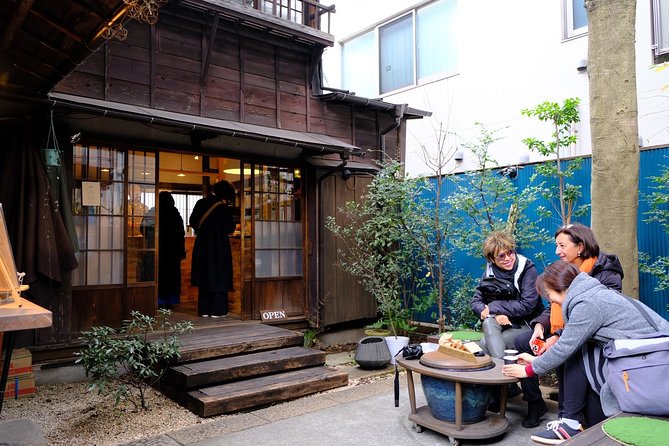
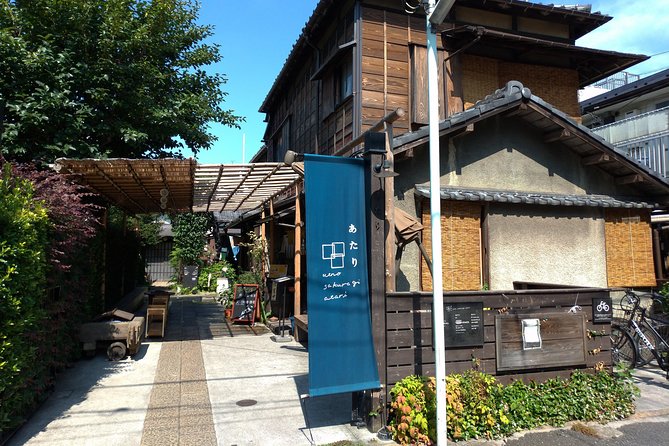
Then you hit Ueno-Sakuragi atari, a break stop that is both practical and meaningful. You stop in an area built around about 80-year-old wooden houses that have been renovated into a cafe, a bakery, and a beer hall, all used as a community space.
What makes this interesting is the way it connects old architecture to modern community life. You are not looking at abandoned ruins, you are seeing how locals keep using older structures. That is a big part of why Yanaka feels real, not theme-park real.
This stop is about 15 minutes. Admission is listed as not included, which usually signals that you should expect to buy something if you want a snack or drink. If you do not plan to eat, you can still enjoy the break and watch how the space functions.
Also keep your eyes open for the symbol in Yanaka, a 100-year-old cyder tree mentioned on the route. It is the kind of detail that makes the neighborhood feel specific, like you are learning the place’s symbols, not just its monuments.
Enju-ji Temple: wishes for strong legs
Enju-ji Temple is brief, about 5 minutes, but it has a clear, memorable concept. Instead of the typical framing people expect from a Buddhist temple, this one enshrines a god of strong legs. If you have foot or walking problems, the story is personal: wishes for those issues are written on a lot of wooden boards.
That is a powerful contrast to the usual tourist approach. You are not just seeing old religious objects. You are learning how people ask for help with practical concerns, and how faith can be tied to the body and daily movement.
Admission is listed as not included for this stop, so plan on the possibility of a small fee if you want to participate in any offering or related activity. Even if you do not, the symbolism makes a quick stop worth it, especially if you like seeing how religion expresses care.
Nezu Shrine and its red torii gate photo moment
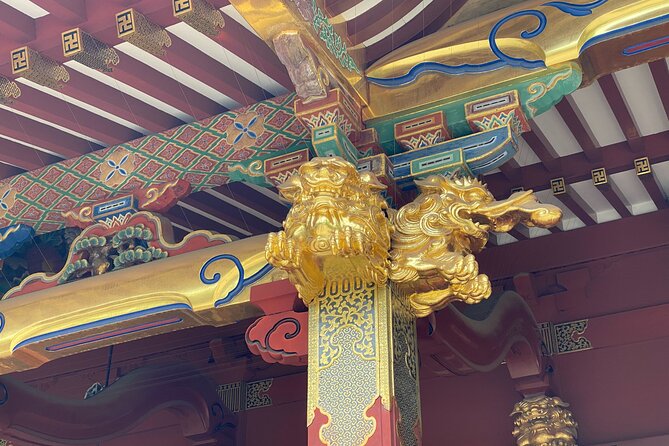
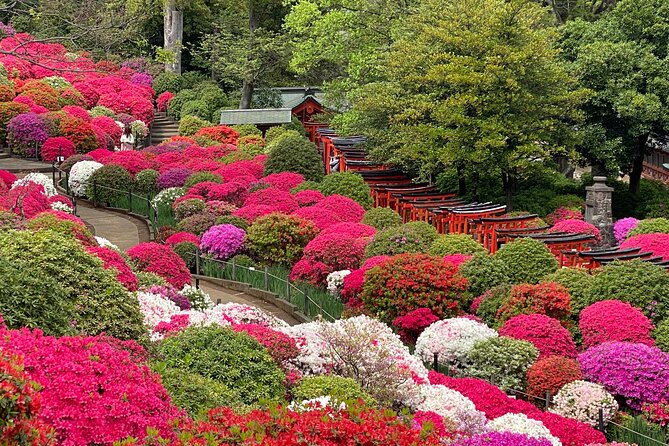
Nezu Shrine is one of the tour’s most photogenic stretches, and it also teaches you how to behave. You see a lot of red torii gates, often compared in feel to Fushimi Inari in Kyoto, and you get time for photos at one of Tokyo’s pretty Shinto spots.
You also learn some shrine etiquette, which is a real time-saver if you have not been in Japan before. The etiquette part matters because torii gates and shrines invite curious looking, but Japan also expects certain respectful behavior. With your guide’s explanation, you can enjoy the place without guessing.
Time here is about 20 minutes, so it is long enough to slow down and take in the patterns and layout. Admission is free for this stop, so it is easy to budget. This is also a good time to ask your guide about what you are seeing, since your earlier stops on Buddhism and cemetery customs make the Shinto context easier to follow.
Hebimichi back street life and the Yanaka Ginza shopping street finish
After Nezu Shrine, you move into Hebimichi, a back street in the residential area. This is where you see Japanese daily life up close, and the tour shifts from religious sites to neighborhood rhythm.
You are not just observing. Your guide points things out in a way that helps you notice the difference between city-center Tokyo and a calmer residential zone. It is a good segment for travelers who feel overwhelmed by Tokyo’s scale and want to feel like they are walking through a real community.
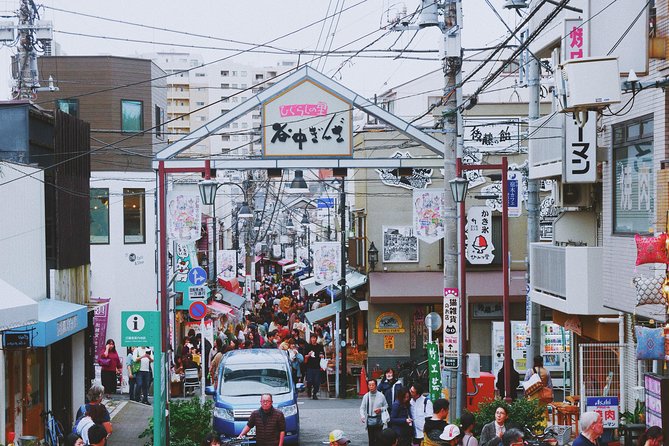
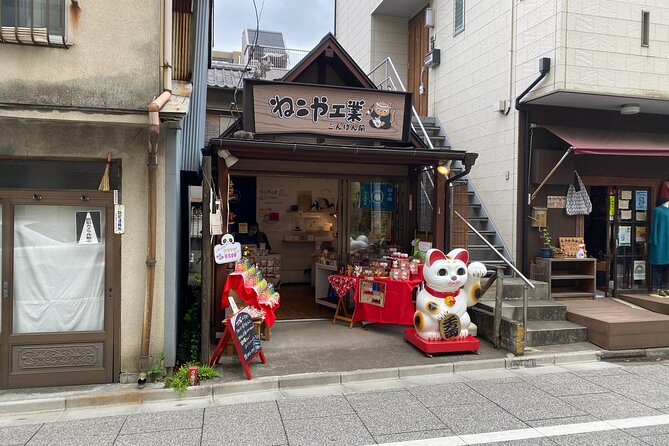
Then you finish at Yanaka Ginza Shopping Street. This is about 20 minutes, and the guide explains the shopping street and specific shops. You can try local foods and sweets, but food fees are not included in the tour price, so treat this as your optional budget moment.
Ending here is smart, because it gives you an on-ramp to keep exploring without needing to re-plan transit. You leave with a place to wander and a sense of what locals might actually eat or buy during the day.
Price and value: where the $40 really goes
At $40 per person for a 3-hour, small-group walk, the value comes from three things: an English-speaking local expert, a structured route that covers both sacred and everyday spaces, and photo opportunities throughout.
If you tried to DIY Yanaka on your own, you could absolutely walk the streets. But you would likely miss the meaning behind the stops, like why the Enju-ji Temple offerings focus on strong legs, or how cemetery customs are practiced, or what makes the renovated wooden houses at Ueno-Sakuragi atari special as a community space.
The tour also runs with a maximum of 10 people, which keeps the experience from turning into a passive parade. Reviews repeatedly highlight guides such as Paulina, Aya, Junko, Mami, Mei, Kiyo, Rei, and Polina, with comments about excellent English and strong answers to questions. That is the kind of value you feel when you can actually ask what something means and get a clear reply.
Plan for extras: food and drinks at the cafe and bakery-style stop are not included, and gratitudes are optional. If you want souvenirs or snacks at Yanaka Ginza, you will pay those separately.
Guide impact: why names like Aya, Junko, and Kiyo show up often
One reason people keep praising this tour is the human side. Guides come off friendly and attentive, with a style that works well for mixed groups. Aya and Polina, for example, were mentioned for being very clear in their explanations and for bringing helpful materials like laminated photos. That kind of support helps you connect the story to what you are physically seeing.
Junko and others also come up for being familiar with the area, with at least one guide described as living in the neighborhood. That matters. When a guide lives nearby, the explanations tend to feel grounded in real routine rather than just a script.
Across the guide mentions, the common thread is Q and A friendliness. If you are the type who asks follow-up questions about religion, Japanese customs, or how old neighborhoods survive, you are likely to enjoy this format.
What to bring for a comfortable Yanaka walk
This is not a museum-in-and-out tour. You are outdoors and moving, with a mix of temple grounds, cemetery paths, shrine areas, and residential streets. So pack for walking first, sightseeing second.
I suggest:
- Comfortable shoes you can wear for long stretches
- Sun protection, like a hat or sunscreen, especially in hot weather
- A water bottle
- A light layer if the weather cools down later
- A small amount of cash or a card for food or drinks at the Ueno-Sakuragi atari stop and for snacks at Yanaka Ginza
Also, keep your phone charged. The tour builds in photo opportunities, and Nezu Shrine’s torii gates are the kind of place where you will want to take a few angles.
Should you book the Old Quarter of Tokyo, Yanaka Walking Tour?
Book it if you want a quieter side of Tokyo and you like learning how everyday life connects to religion. The route makes sense for first-time visitors who already feel Tokyo is too big and too modern. It also suits people who enjoy history, but do not want history dumped as dates. Here, the stories are tied to places you can walk through.
Pass or pick a different option if you dislike walking in heat, because the tour depends on good weather and is outdoors for most of its 3-hour window. If you want a purely casual photo walk with minimal explanation, the structured storytelling may feel like more than you need.
If you do book it, go in with a simple goal: look up. Pay attention to what the guide points out at Tennoji, Nezu Shrine, and the neighborhood streets, and you will leave Yanaka feeling like you actually understood it, not just seen it.
FAQ
How much does the Yanaka walking tour cost?
The tour price is $40.00 per person.
What is the duration of the tour?
The tour lasts about 3 hours.
How many people are in the group?
The tour has a maximum of 10 travelers.
Where do we meet, and where does the tour end?
You meet at Nippori Station, 2 Chome-19 Nishinippori, Arakawa City, Tokyo 116-0013, Japan. The tour ends at Yanaka Ginza, 3-chōme-13-1 Yanaka, Taito City, Tokyo 110-0001, Japan.
Is there a mobile ticket?
Yes, the tour uses a mobile ticket.
What language is the tour guide?
The tour includes an English-speaking local expert guide.
Is food and drink included in the price?
Food and drinks are not included. You can try local foods and sweets at the shopping street, but there is a food fee.
Do I need to pay admission fees at the stops?
Some stops list free admission (such as Tennoji Temple, Yanaka Cemetery, and Nezu Shrine). Other stops list admission ticket not included (such as Ueno-Sakuragi atari and Enju-ji Temple), so you may need to budget for those.
If I cancel, will I get a refund?
Free cancellation is available if you cancel up to 24 hours in advance for a full refund. If you cancel less than 24 hours before the start time, the amount paid will not be refunded.
What if the weather is bad, and are service animals and gratuities allowed?
The tour requires good weather. If it is canceled due to poor weather, you will be offered a different date or a full refund. Service animals are allowed, and gratuities are optional since they are not included in the price.
Asakusa and the Skytree, Keep Going




Newest Tokyo write-ups from the Loving Japan desk
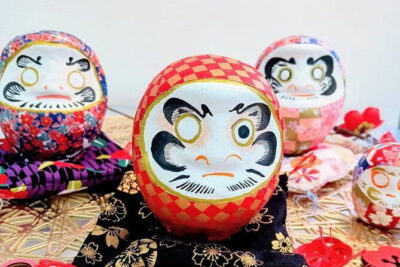

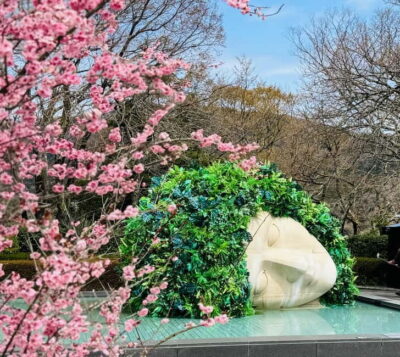
Asakusa, Senso-ji and Tokyo Skytree, side by side.
 ★ 4.5TOKYO SKYTREE® Admission ticketFrom $1311,192 reviews
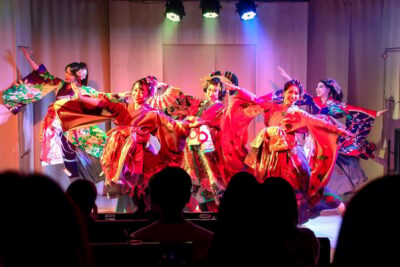 ★ 4.8Japanese Dance Cabaret Theater Asakusa-Kaguwa TicketFrom $492,270 reviews
 ★ 4.7Meiji Shrine, Asakusa, Skytree Bus Tour and CruiseFrom $1221,986 reviews
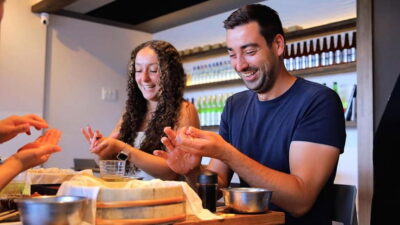 ★ 4.9Roll and Authentic Sushi Making Class in AsakusaFrom $581,957 reviews
 ★ 4.8Asakusa Walking Tour with Sensoji Temple VisitFrom $221,583 reviews
 ★ 5.0Tokyo Asakusa Rickshaw TourFrom $421,375 reviews
 ★ 4.5Tokyo Panoramic 1 Day: Meiji Shrine, Asakusa, Odaiba and SKYTREE®From $851,222 reviews
 ★ 5.0Tokyo Go Kart: Asakusa, Skytree, and Akihabara **IDP MUST**From $99988 reviews
Filed on these lists too