
REVIEW · CYCLING AND E-BIKE TOURS
Tokyo: 3-Hour Bike or E-Bike City Highlights Tour
Tokyo by bike is a fast route to feeling at home. This 3-hour ride strings together the city’s big-name sights with quieter street scenes, guided by an English-speaking local team. I especially like the small-group vibe and how the guides keep things moving without rushing you.
Two more things are a big plus: you get high-quality bikes (Bianchi cross bikes, with e-bikes available), and the stories at each stop make landmarks easier to understand. One consideration is that you will mix sidewalk riding with stretches on roads, so you need to be comfortable being on the bike in city traffic, even if it feels controlled.
In This Review
- Key things I’d watch for
- From Perry to Pedals, the tour’s smart starting point
- Zojo-ji and Shiba Park area, where tradition hits first
- Imperial Palace area and Tokyo Station photos, classic and efficient
- Hibiya Park and Chidorigafuchi breaks, the mental reset you need
- Akasaka Palace grounds and New National Stadium, old power meets modern Tokyo
- A less famous stop that adds the Tokyo texture
- Aoyama St. Grace Cathedral and Cat Street, stylish contrast time
- Shibuya Crossing at bike speed, plus Tower Records energy
- The ride finish at Bell of Peace, then you’re free
- Bike choice: cross bike versus e-bike for real Tokyo distance
- Safety, helmets, and the reality of riding in traffic
- How long you get at each place, and why that matters
- Who this tour fits best, and who should choose something else
- What you’ll get from the guide, beyond facts
- Value check: why $45 can make sense
- Should you book this Tokyo bike highlights tour?
- FAQ
- Where is the tour meeting point?
- How long is the tour?
- What bike options are available?
- Are helmets included?
- What should I bring to the tour?
- Is the tour suitable for kids?
- What languages are the guides?
- What is not allowed during the tour?
Key things I’d watch for
- English guidance at every stop, with enough context to connect the dots between old Tokyo and new Tokyo
- Bianchi cross bikes or e-bikes, so you can match the ride to your stamina
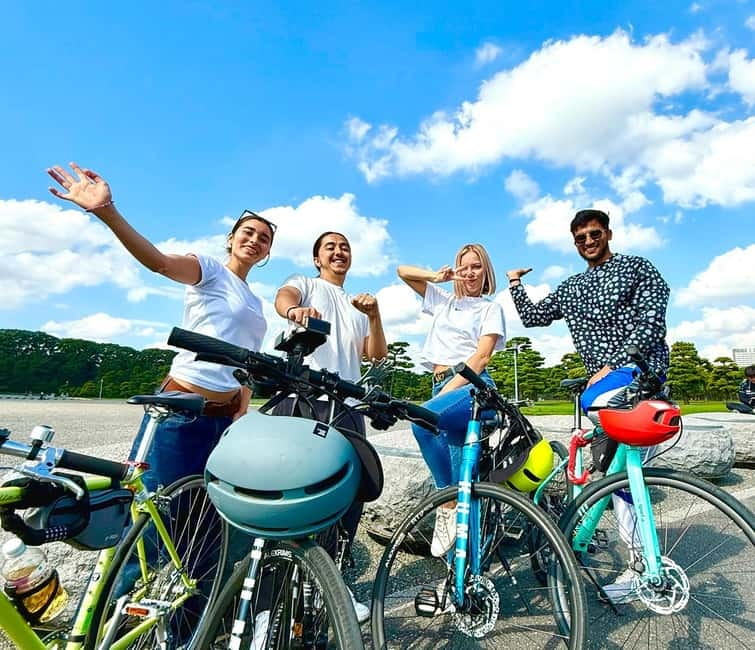
- Route built for photo rhythm, with planned photo stops that keep the pacing sane
- Safety and pacing attention, including frequent group checks during the ride
- A well-balanced mix of landmarks and quieter streets, not just the standard postcard run
- Helmet option on-site (extra cost), plus bike insurance included
Cover Tokyo on two wheels instead
- Tokyo Guided Small-Group Biking Tour
★ 5.0 · 1,250 reviews - Tokyo Great Cycling Tour
★ 5.0 · 811 reviews - Tokyo Top Highlights 3h Guided E-bike Tour
★ 5.0 · 714 reviews - 3h Tokyo E-Bike Tour: Hidden Gems, and Local Life with guide
★ 5.0 · 670 reviews
From Perry to Pedals, the tour’s smart starting point
Your ride kicks off near the Statue of Commodore Perry, a striking starting marker that basically signals what Tokyo tours often do not: this city’s story is both global and local. The meeting spot is close to Daimon Station (3-minute walk from Exit A6), which makes it easy to arrive, grab your bike, and get moving without a long scramble.
From there, the tour quickly sets you into Tokyo mode. You’re not stuck staring at a map and hoping you picked the right trains. You’re rolling through neighborhoods where pedestrians, storefronts, and small streets all blur into one practical travel lens.
Zojo-ji and Shiba Park area, where tradition hits first
The first real land-mark stop is Zojo-ji Temple, plus the Shiba Park temple area that frames it. This is the kind of stop that works even if you only have a short time in Tokyo, because it gives you a strong “before Shibuya” feeling. Expect a photo stop and then a guided look, about 15 minutes total.
What I like about starting with a temple is that it sets a baseline. Tokyo’s modern skyline later in the ride means more when you already understand the city’s older rhythm. If you’re the type who gets museum-fatigue, this pacing helps. You see something meaningful, then you move.
A drawback to keep in mind: temple visits can mean standing still for brief stretches, and you’ll be riding again soon. Bring water and wear comfortable clothes so you do not feel sticky and frazzled when the bike leg starts.
Imperial Palace area and Tokyo Station photos, classic and efficient
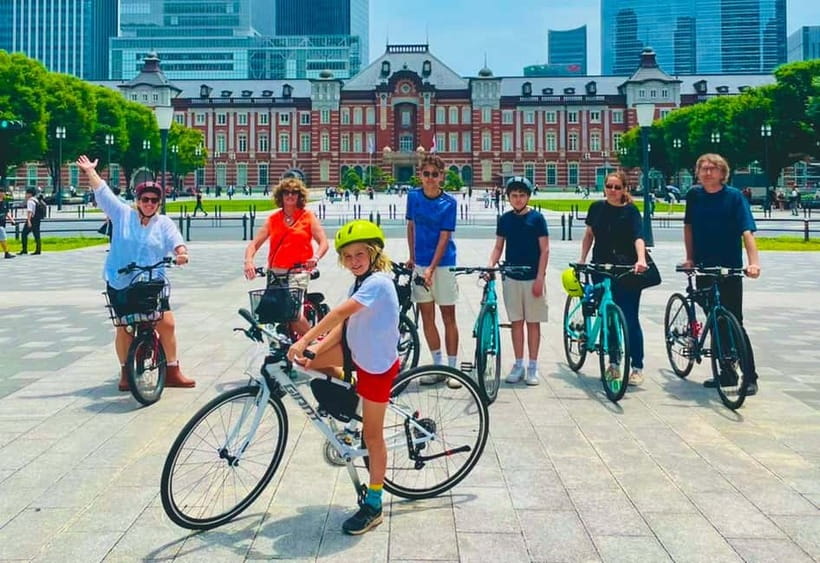
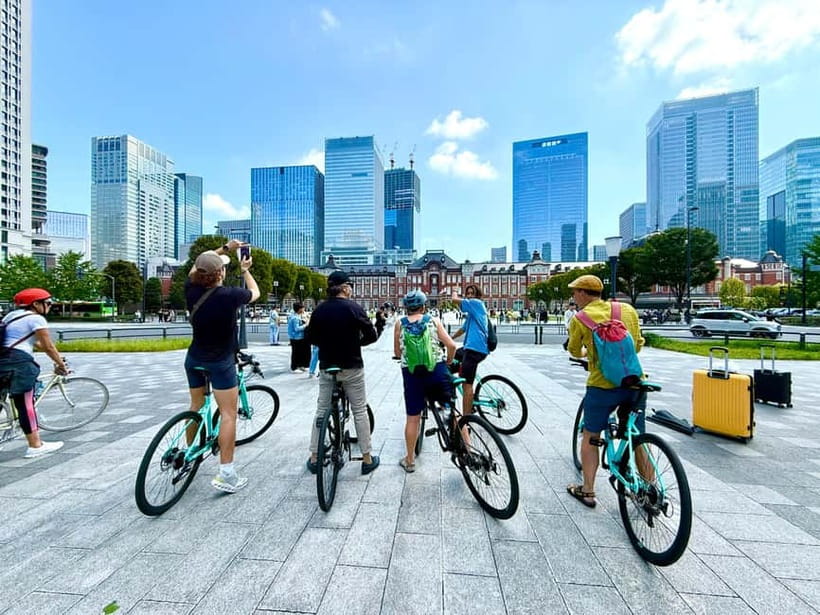
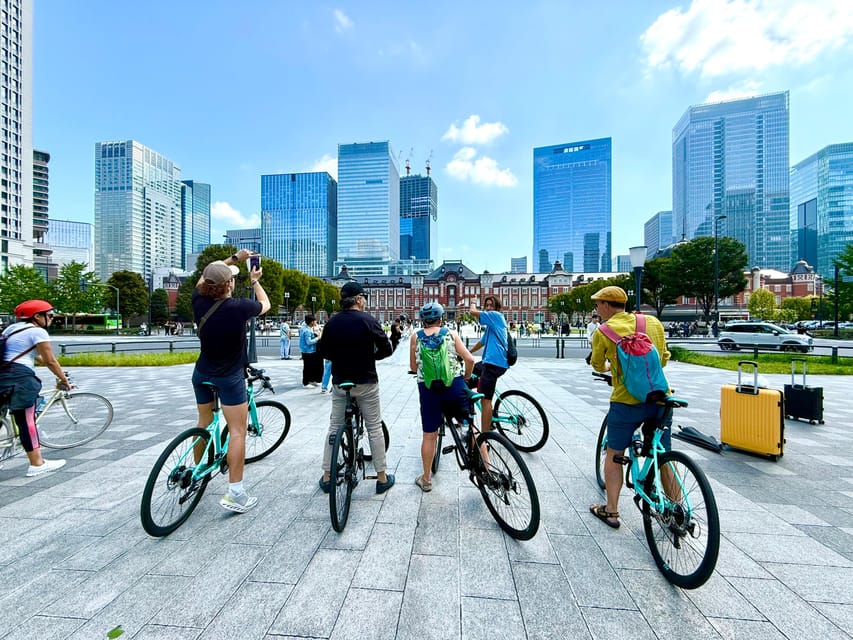
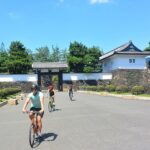
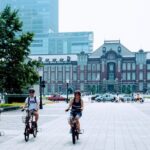
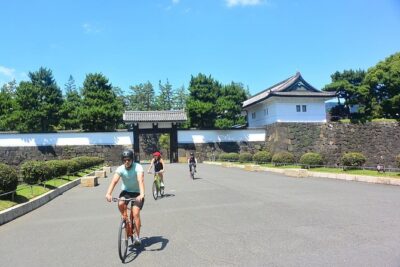
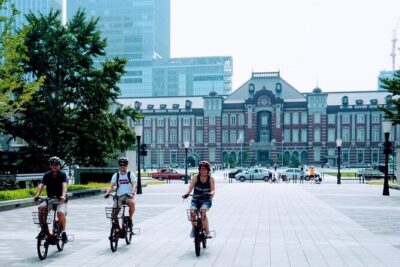
Next come major “wow” zones, but the tour is careful about how much time you spend standing. You get a photo stop and guided moments around the Tokyo Imperial Palace area (about 15 minutes). Then Tokyo Station and Otemon Gate follow with short, focused photo windows.
Tokyo Imperial Palace can feel like a maze if you are trying to do it on your own, and Tokyo Station can be overwhelming if you keep changing trains. On a bike tour, you get the sense of space and flow fast. It also helps that these stops are structured, so you’re not wasting time guessing where to look for the best angles.
The main consideration here is traffic timing and intersection awareness. Even if the ride is handled well, you still need to watch the road. If you have not ridden in busy areas before, this is where you should be most alert. One review even noted it can feel stressful if you expected a more completely off-road experience.
- Mt Fuji and Hakone 1-Day Bus Tour Return by Bullet Train★ 5.0 · 26,383 reviews
- 1-Day Tokyo Bus Tour★ 5.0 · 14,250 reviews
- Tokyo: teamLab Planets TOKYO Digital Art Museum Entry Ticket★ 4.6 · 9,779 reviews
- Mt Fuji & Hakone Cruise, Drum Show Bullet Train 1 Day from Tokyo★ 4.0 · 7,413 reviews
- Tokyo: Shinjuku Food Tour (13 Dishes at 4 Local Eateries)★ 5.0 · 6,603 reviews
Hibiya Park and Chidorigafuchi breaks, the mental reset you need
You weave through Hibiya Park for a short visit, only a few minutes, but it matters because it breaks the pace. Then comes Chidorigafuchi for a short break and photo moment.
This is not just “pretty scenery.” Parks act like breathing space in a city that never stops moving. You get a chance to check in, refill your water, and regroup before the next stretch.
Chidorigafuchi is also a reminder that Tokyo isn’t only crowds and neon. You get a calmer view that balances the landmarks. If your group rides at a relaxed pace, these short stops can feel like little wins.
Akasaka Palace grounds and New National Stadium, old power meets modern Tokyo
After the palace district vibe, the route moves to the State Guest House Akasaka Palace area for a photo stop (about 10 minutes). This stop works because it highlights formality and scale. Even if you only skim the exterior, it makes the city feel less random and more planned.
Then you roll to New National Stadium, again with a mix of photo time and guided context (about 10 minutes). This is where modern Tokyo becomes visible in a practical way. You see how massive venues fit into the city fabric, not just as an isolated destination.
One small planning note for your day: you will likely notice how quickly Tokyo’s scenery changes. That’s a benefit, but it can also make you feel like you blinked and missed something. Stay present at each stop, and do not rely on later memory to fill in the gaps.
A less famous stop that adds the Tokyo texture
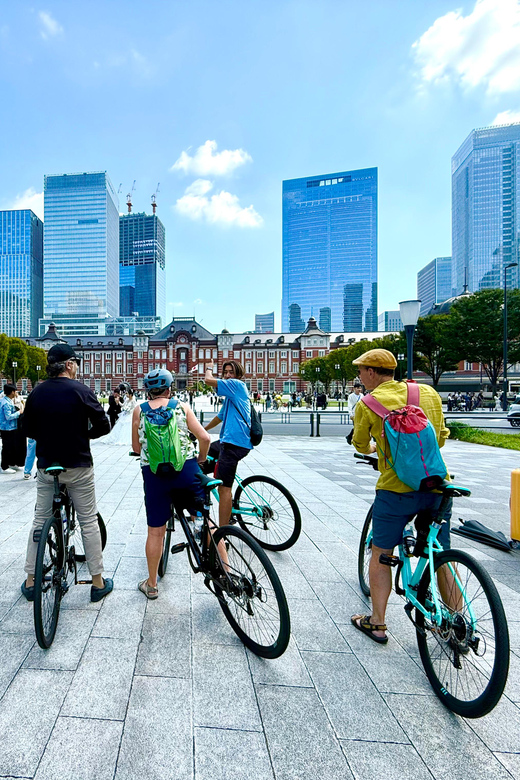
There is a “hidden” style stop on the route, with about 15 minutes for a visit and guided tour. The value here is texture. A few minutes in a less-famous area can teach you more about daily Tokyo life than another big-name photo spot.
This kind of stop also helps you build a travel brain. You leave with a better sense of which neighborhoods feel relaxed, which ones feel shopping-heavy, and which streets feel more local. Later, when you plan independent time, you will know what to chase and what to skip.
Aoyama St. Grace Cathedral and Cat Street, stylish contrast time
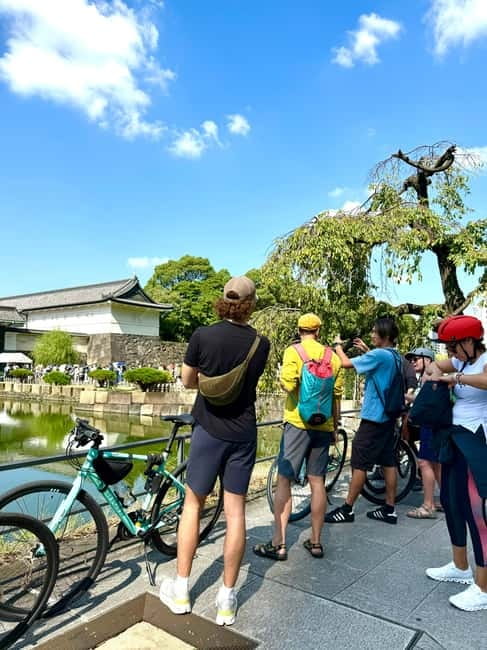
Next up is Aoyama St. Grace Cathedral for a short photo stop, then Cat Street with a short visit window (about 5 minutes). This is a different mood from the palace and stadium areas, and it helps the tour avoid becoming one long “monument march.”
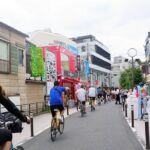
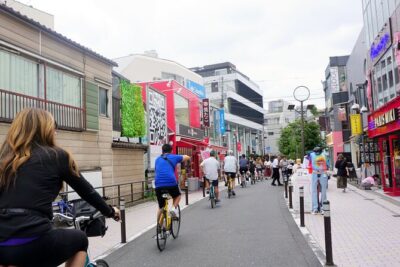
Aoyama’s cathedral area gives you architectural details that are easy to photograph and interesting to understand with a guide’s context. Cat Street adds street-level energy, the kind of place where you can see how Tokyo’s fashion and browsing culture works without needing a huge explanation.
If you like to shop for ideas rather than souvenirs, this is a nice moment. You are not locked into a store run, but you do get a sense of Tokyo’s taste-making zones.
Shibuya Crossing at bike speed, plus Tower Records energy
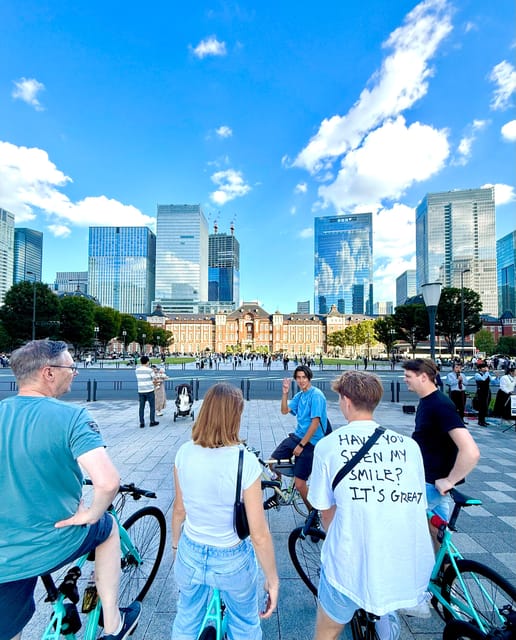
Shibuya Crossing is on the route with a photo stop and a guided moment (about 10 minutes). Then Tower Records Shibuya appears with a short sightseeing time (about 3 minutes). This part of the tour is about impact, and it delivers.
Even if you have seen Shibuya on your phone, it’s different when you are actually riding through the space. You understand the flow of pedestrians, crossings, and signage in a way that photos cannot teach.
Some reviews also mentioned the experience feels extra dramatic in the evening, when the area glows. That makes sense. If your schedule allows, try to align the tour for later in the day if you can.
One practical note: Shibuya can be crowded. The guide’s job here is crucial, and it helps that the tour structure gives you quick moments instead of long waits. Keep your hands ready for your own bike balance, even when your eyes are on the lights and people.
The ride finish at Bell of Peace, then you’re free
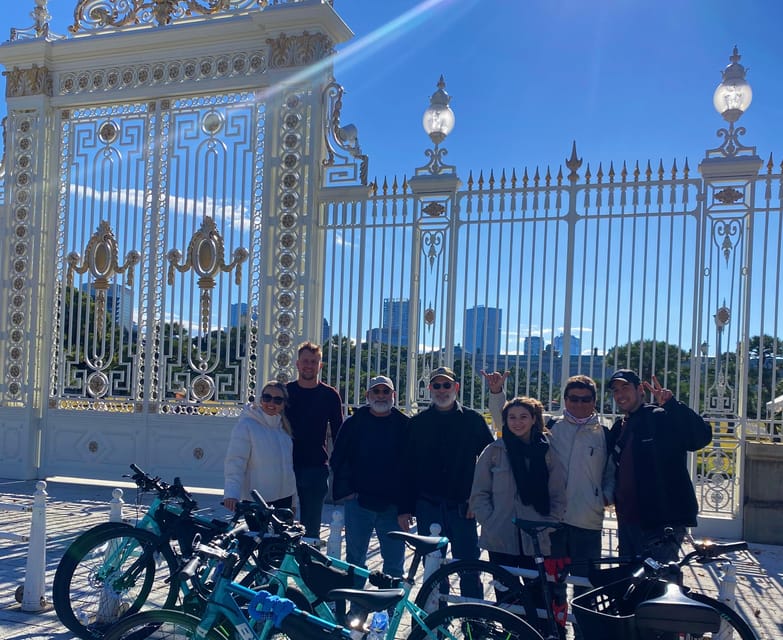
The tour ends at Bell of Peace. Finishing at a clear landmark helps your brain. You know where you are, you know how to transition to your next plan, and you do not end the ride feeling lost.
This ending point is also a good signal for the rest of your day. You can peel off toward shopping streets, restaurants, or an evening attraction without having to find your bike drop-off location again.
Bike choice: cross bike versus e-bike for real Tokyo distance
You can choose either a traditional bike option or an e-bike option. The traditional bikes are cross bikes, and the e-bikes are there for stamina support.
In reviews, people described the ride as covering about 15 km to around 20 km over three hours, depending on how your route plays out and your pace. That range is the big truth behind the decision. If you are the type who rides occasionally, a cross bike can feel like a fair workout. If you rarely ride, an e-bike makes the tour feel less like training and more like sightseeing.
This is also why the e-bike option is not just convenience. It changes what you can enjoy. On an e-bike, you spend more brainpower on street scenes and less on climbing, braking, and conserving energy.
Safety, helmets, and the reality of riding in traffic
Bike insurance is included, which is a reassuring baseline. You are also provided a mini pouch on the bike for phone, wallet, and keys, so you can keep your hands free while still having what you need.
Helmets are not included, but they are available on-site for an extra ¥1,000 per unit paid in cash. The tour data does not force a helmet, but from a practical standpoint, bring your own helmet if you have one. If not, renting one on-site is an easy safety upgrade.
Now the honesty part: you should be comfortable riding in a city where you will encounter traffic. Even with guides doing a good job, the bike itself is your responsibility. One review specifically mentioned the ride felt stressful because it involved moving from sidewalks to roads. If you have never ridden in traffic before, consider choosing the e-bike and plan your mental state for slower, careful riding.
How long you get at each place, and why that matters
This tour is built around short, repeatable timing blocks. You’ll see a pattern: photo stop time, then a guided moment for context. For example, Zojo-ji runs around 15 minutes, Tokyo Imperial Palace and key gate areas run about 15 minutes, and some of the modern stops are shorter, like 3 to 10 minutes for photos.
That rhythm is why it feels efficient. You get just enough time to absorb the meaning, not just the photo. For first-time visitors who need orientation, it also helps you map Tokyo faster in your head.
The trade-off is that you will not have long, slow wandering time at every single site. If you want deep, hours-long temple study, this is not the format. It is a highlights sampler, designed to get you oriented and moving.
Who this tour fits best, and who should choose something else
This tour is not suitable for children under 12, pregnant women, people with back problems, or anyone who cannot ride a bike. That matters because the pace and road conditions rely on you being able to pedal confidently and manage balance.
It suits couples, friends, and family groups who want Tokyo’s top sights without a car or a long train session. It also suits people who want a first-day or early stay introduction, because you get a strong mental grid of where things are.
If you are traveling solo, the guided structure can also help you feel less disconnected. Several reviews praised how friendly guides felt and how they engaged in conversation, including interest in where riders were from. That’s a small thing, but it can make a short tour feel more human.
What you’ll get from the guide, beyond facts
English-speaking local guides are a core part of the value. Reviews highlighted guides like Tam, Atsu, KJ, Naoki, Ken, Keiji, Kosei, Rikuu, Sho, and Miguel as friendly and engaged, with a genuine passion for showing Tokyo.
That guide energy usually shows up in two practical ways. First, you learn what you are looking at, so landmarks stop being random backdrops. Second, guides manage your comfort, including safety checks and pacing adjustments for the group.
If you like asking questions, this tour tends to leave space for it. At least one review noted the pace felt relaxed and the group size helped with easy conversation. For most people, that’s what turns a sightseeing ride into an actual experience.
Value check: why $45 can make sense
At $45 per person for three hours, this is not a budget fantasy, but it can be good value when you add up what’s included. You get guide time, quality bikes, e-bike option, insurance, and a mini pouch.
Also, Tokyo is spread out, and transportation time can eat your day. A bike tour can be a time-saver because you cover ground in a short window and avoid complicated transfer hops. In reviews, people described the ride as a fast orientation tool, especially when done early.
My rule for deciding: if you want a structured way to see multiple neighborhoods, and you’re comfortable riding, this can be a smart use of half a day. If you would rather do everything slowly at your own pace, you might prefer independent walking or transit.
Should you book this Tokyo bike highlights tour?
Book it if you want a guided introduction that mixes temples, palace-area landmarks, and modern Tokyo moments like Shibuya, without spending the whole day in trains. Choose the e-bike if you are not confident on longer effort or you do not ride often. It changes the experience from workout-focused to sightseeing-focused.
Skip it or choose another option if you cannot ride a bike, have mobility or back concerns, or hate the idea of riding near traffic. This is not an entirely car-free stroll. You will be active and you will be on the road at times.
If you want the fastest way to get your bearings and you like the idea of learning Tokyo through movement, this tour is a solid pick. It’s short enough to fit any schedule, and the guide-led stops help you leave with a clearer picture of where you want to go next.
FAQ
Where is the tour meeting point?
Meet your guide around the Statue of Commodore Perry, about a 3-minute walk from Daimon Station Exit A6.
How long is the tour?
The experience runs for 3 hours.
What bike options are available?
You can ride high-quality cross bikes (Bianchi or Fuji) or choose an e-bike option.
Are helmets included?
Helmets are not included. Helmets are available on-site for an extra ¥1,000 per unit paid in cash.
What should I bring to the tour?
Bring comfortable shoes, water, and comfortable clothes.
Is the tour suitable for kids?
No. It is not suitable for children under 12.
What languages are the guides?
The live tour guide is available in English and Japanese.
What is not allowed during the tour?
Smoking, alcohol and drugs, and littering are not allowed.
Bicycles and E-Bikes We Have Ridden
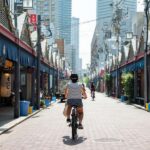
Newest Tokyo write-ups from the Loving Japan desk
Cycling and E-Bike Tours, side by side.
 ★ 5.0Hidden Kyoto E-Biking tourFrom $1161,843 reviews
 ★ 5.0Tokyo Guided Small-Group Biking TourFrom $1061,250 reviews
 ★ 5.0Tokyo Great Cycling TourFrom $99811 reviews
 ★ 5.0Tokyo Top Highlights 3h Guided E-bike TourFrom $63714 reviews
 ★ 5.03h Tokyo E-Bike Tour: Hidden Gems, and Local Life with guideFrom $63670 reviews
 ★ 5.0Arashiyama Bamboo Forest & Hidden Gems Bike Tour (Early Bird)From $106613 reviews
 ★ 5.05 Top Highlights of Kyoto Full Day Bike Tour (E-bike option)From $172511 reviews
 ★ 5.0Full Day Biking Tour Exploring the Best of KyotoFrom $119498 reviews
Filed on these lists too