
REVIEW · CYCLING AND E-BIKE TOURS
Tokyo: 3h Private E-bike Tours, Starting at Your Hotel
Tokyo becomes simple when you start at your hotel. This private e-bike tour is built for an easier first day in the city, with hotel pickup and drop-off so you skip the taxi meet-up stress. I like that your guide can tailor the route to your pace rather than forcing you through a fixed checklist.
The ride itself is the fun part, and the e-bike motor assist makes Tokyo hills feel way less intimidating. In the best cases, your guide (often Kazuma) adjusts the bikes to fit you, explains what you’re seeing with humor and cultural context, and keeps the vibe relaxed and safe.
The one consideration: there are strict rider rules and dress limits, so check the height and weight requirements and plan for practical shoes, not sandals or high heels.
In This Review
- Key highlights to know before you go
- Hotel Lobby Pickup: Starting and finishing where you stay
- E-bikes in Tokyo: Comfort, safety, and hills that stop being scary
- Private routing in 3 hours: How customization really works
- The 10-minute skyline moment at the Tokyo Metropolitan Government Building
- Shinjuku through Shibuya: Back streets, shrines, and the city at full volume
- Imperial Palace, Hibiya Park, and the Ginza and Tokyo Station side
- Waterfront and side-street food culture: Tsukuda, Tsukishima, and rivers
- Temple and tower contrast: Zojo-ji and Tokyo Tower
- Asakusa and Skytree-style modern views: Old gates and big silhouettes
- What you are really paying for: Value at $141 per person
- The stuff that makes or breaks your day: clothing, rules, and reality checks
- Photos, humor, and that Kazuma-style touch
- Who should book this private e-bike tour
- Should you book Tokyo Bike Bliss private 3-hour e-bike tour?
- FAQ
- Where do you start and end?
- Is this tour private?
- How long is the tour?
- What is included in the price?
- What languages are available?
- How does the guide communicate with you before the tour?
- Are there rider or equipment restrictions?
Key highlights to know before you go
- Hotel pickup and drop-off mean you start your ride at your own doorstep.
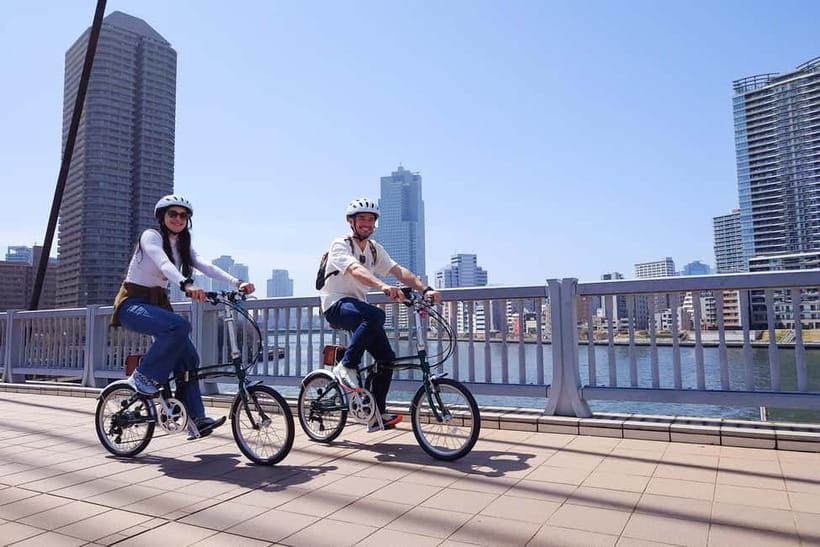
- E-bike motor assist helps you pedal comfortably across Tokyo without turning it into a sweat mission.
- Truly private routing lets you choose the neighborhoods and timing inside the 3-hour window.
- Frequent short stops keep the ride moving, with time for photos and explanations.
- Kazuma-style guiding often brings safety-first riding and big-picture city context.
- Safety gear and insurance included, plus a helmet and safety instruction to start you off right.
Cover Tokyo on two wheels instead
- Tokyo Guided Small-Group Biking Tour
★ 5.0 · 1,250 reviews - Tokyo Great Cycling Tour
★ 5.0 · 811 reviews - Tokyo Top Highlights 3h Guided E-bike Tour
★ 5.0 · 714 reviews - 3h Tokyo E-Bike Tour: Hidden Gems, and Local Life with guide
★ 5.0 · 670 reviews
Hotel Lobby Pickup: Starting and finishing where you stay
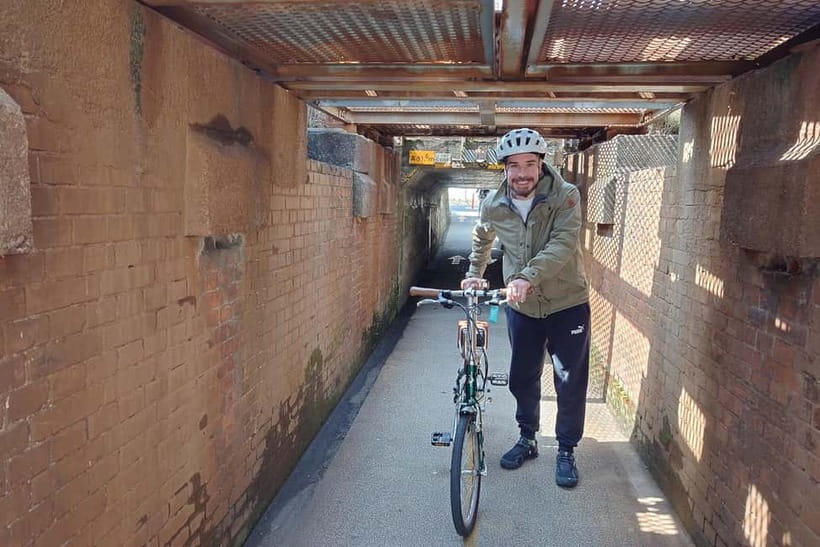
In Tokyo, the hardest part of a day plan is often the logistics, like finding the correct meeting point while streets and signage fight you. This tour sidesteps that by starting and ending at your hotel, with the guide meeting you at your lobby. You are supposed to look for your guide with a bike helmet about five minutes before the scheduled pickup.
If your hotel sits outside the pickup range, they will talk with you about an alternate start location, but you may see extra charges depending on the fix. In practice, that flexibility is useful if you are staying near a major rail line and want to keep the start easy.
You will also get communication ahead of time through WhatsApp, iMessage, or SMS. That matters because Tokyo can be fast-moving, and last-minute clarifications are normal.
E-bikes in Tokyo: Comfort, safety, and hills that stop being scary
You control the pace, because you still pedal, but the motor assist takes the sting out of hills and stop-and-go riding. The whole point is to make the experience feel like cruising rather than grinding. If you are not an athletic rider, the assist is the difference between enjoying the ride and counting minutes until it ends.
You get a helmet as part of the tour, plus safety instruction before you roll. Insurance is included too, which helps you feel more relaxed when you are cycling through busy areas.
Riding rules are also part of the deal. The tour does not allow smoking or alcohol or drugs, and there is no photo or video shooting while you are cycling. That is for safety, but it also means you should be ready to take your photos during stops instead of while moving.
Private routing in 3 hours: How customization really works
This is a private tour, so you are not sharing the route with strangers. The guide proposes a route, but you can request changes for where you go and how long you ride inside the 3-hour plan. Your pace is part of that, so you can slow down for photos or speed up if you are keeping a tight schedule.
The tour route typically covers 15 to 20 km. That sounds like a lot on a regular bicycle, but on an e-bike in three hours it becomes a very manageable way to cover multiple neighborhoods without wasting half your day on buses or trains.
You can also adjust starting time or extend the tour duration, but extra requests can have additional fees, especially if you want to head far from the original route. My advice is to think of the base route as the anchor, then add a short list of must-sees you really want, so your custom plan stays practical.
- Mt Fuji and Hakone 1-Day Bus Tour Return by Bullet Train★ 5.0 · 26,383 reviews
- 1-Day Tokyo Bus Tour★ 5.0 · 14,250 reviews
- Tokyo: teamLab Planets TOKYO Digital Art Museum Entry Ticket★ 4.6 · 9,779 reviews
- Mt Fuji & Hakone Cruise, Drum Show Bullet Train 1 Day from Tokyo★ 4.0 · 7,413 reviews
- Tokyo: Shinjuku Food Tour (13 Dishes at 4 Local Eateries)★ 5.0 · 6,603 reviews
The 10-minute skyline moment at the Tokyo Metropolitan Government Building
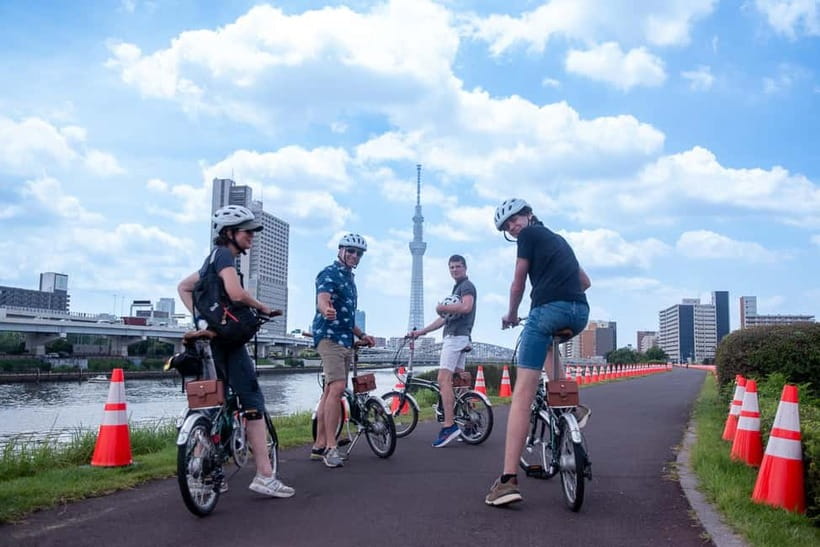
Many Tokyo first-timers want the skyline, but they do not want to spend hours fighting crowds. A photo stop at the Tokyo Metropolitan Government Building gives you a classic high-level view and a quick orientation for where you are in the city.
Plan to treat this as a reset point. You can look around, take a few pictures, and get your bearings before the tour shifts into more neighborhood-style Tokyo. It is also a chance to see how the city’s layout changes block by block, which helps everything else feel clearer later.
Shinjuku through Shibuya: Back streets, shrines, and the city at full volume
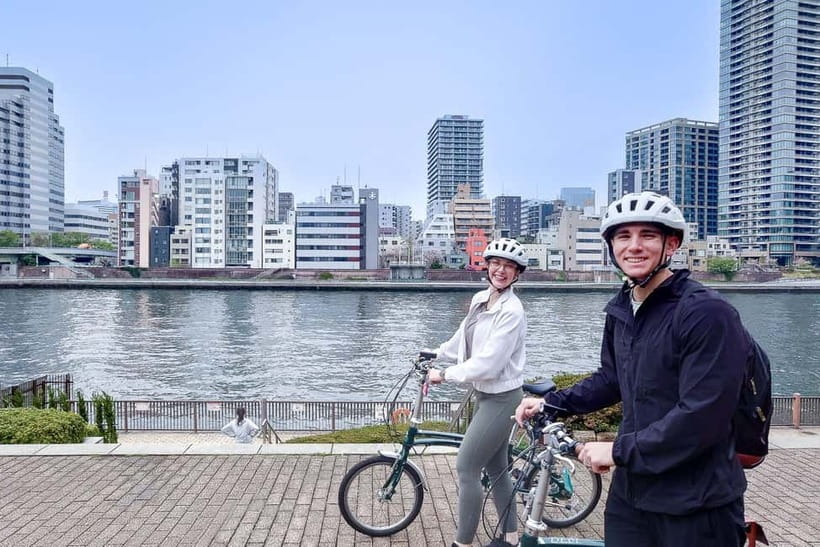
A common way these routes feel is this: you start with bigger city energy, then your guide threads you toward smaller alleys, shrines, and local streets. That is where the private part helps, because you can spend more time in the areas that grab you and less time in the ones that do not.
Shinjuku Omoide Yokocho (Memory Lane) is one of those places where the city feels older and more intimate than the surrounding skyscrapers. It is a narrow network of lanes that makes Tokyo feel human-sized for a moment. The tradeoff is that it can get crowded, so your guide will time your stops so you are not stuck waiting.
Hatonomori Hachiman Shrine is a quieter contrast. You get a cultural pause that helps you balance all the neon and high-rises, and it can make the ride feel less like sightseeing by checklist. Since shrines can involve small walkups and tight corners, you will appreciate having an e-bike guide who can manage where you stop.
If your route includes the National Stadium area, you get a modern Tokyo anchor related to the Olympics. It is a good stop for wide views, and it also sets up the next shift into shopping and street scenes.
Then comes the big show: Shibuya Crossing. This is the moment where Tokyo looks like the movies, but it is also busy. The benefit of going with your guide is that you get help planning crossings and choosing photo angles during short stops, instead of trying to guess how to move through it.
Imperial Palace, Hibiya Park, and the Ginza and Tokyo Station side
From Shibuya and the surrounding central neighborhoods, many routes naturally drift toward the grand, formal edges of the city. You might see Hibiya Park, which is known as the first western-style park in Tokyo. Even if you are not a park person, it is a useful breathing space during a bike day.
You may also ride past or stop near the Imperial Palace area. This is a geography lesson as much as a sight. The contrast between open spaces and the surrounding city helps you understand Tokyo’s structure in a way that a museum stop alone usually cannot.
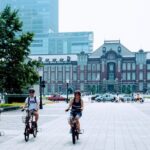
Tokyo Station and Marunouchi bring a different flavor: classic architecture and a sense of Tokyo as a transport crossroads. If your route includes Nihonbashi Bridge, it adds a historic-feeling landmark that anchors you back to the city’s commercial roots.
If you are into shopping streets and photo-friendly streetscapes, Ginza can be a satisfying addition. The tradeoff is that central streets can be hectic, so your guide’s safety emphasis is key, especially during short stop-and-go moments.
Waterfront and side-street food culture: Tsukuda, Tsukishima, and rivers
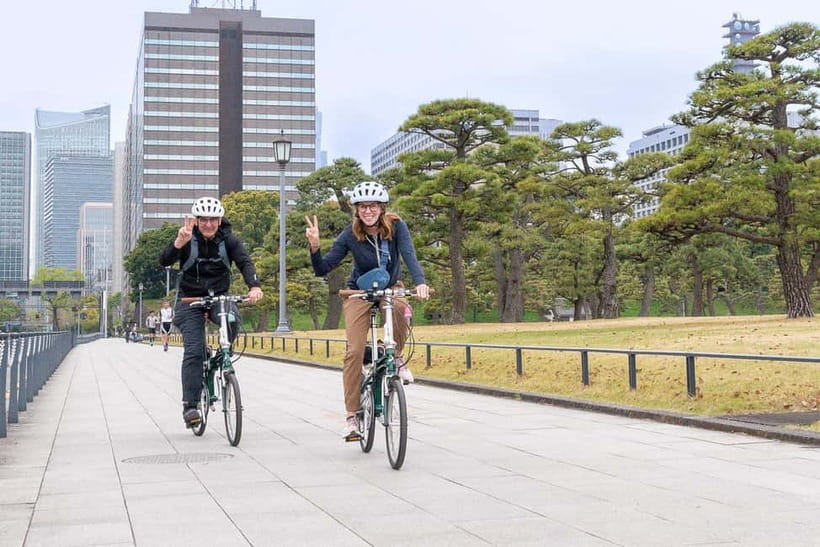
One of the best parts of these private e-bike routes is that Tokyo is not only towers and crossings. You can get a calmer rhythm on the waterfront and near rivers, where the city feels different.
Tsukuda Island can offer a quieter sense of place compared with the dense cores. It is a nice break when you want a few minutes away from crowd density.
Tsukishima Monja Street is the opposite vibe, street-food energy. You might not have food included, but seeing the street scene is useful if you want to come back later for monjayaki or simply understand what kind of place it is.
Arakawa Riverside and Sumidagawa Riverside are where the ride can feel almost like a reset button. Riverside areas often make you slow down naturally, which is perfect for taking in Tokyo without rushing. If you care about photos, these are good spots, because the framing feels less uniform than downtown streets.
Temple and tower contrast: Zojo-ji and Tokyo Tower
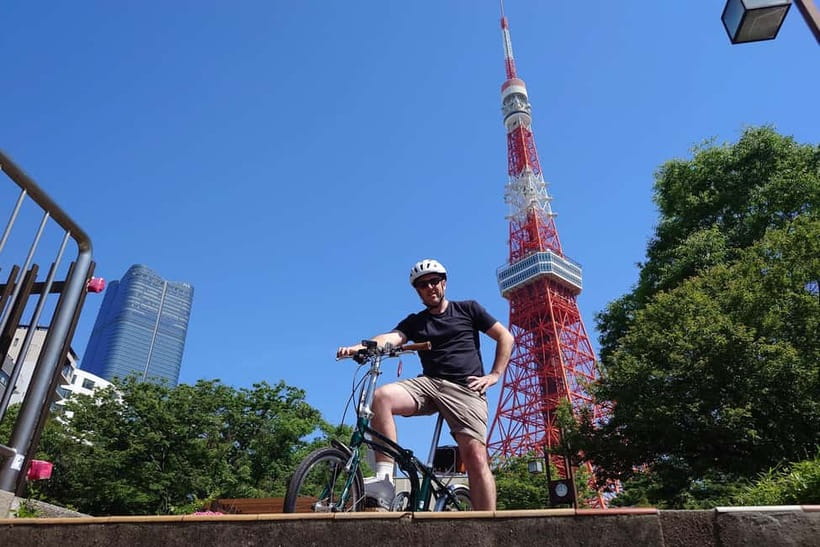
If you want Tokyo’s classic landmark combo, Zojo-ji Temple paired with Tokyo Tower is a very strong match. It gives you a real contrast between old religious grounds and modern city icons in the same general view.
A stop like this works especially well mid-tour. After a few intense city districts, you tend to appreciate a slower pace and a calmer sense of meaning, even if it is only a short visit. The drawback is time. Temple stops can encourage longer walking, so tell your guide if you want quick photos only, so you stay on your 3-hour plan.
Asakusa and Skytree-style modern views: Old gates and big silhouettes
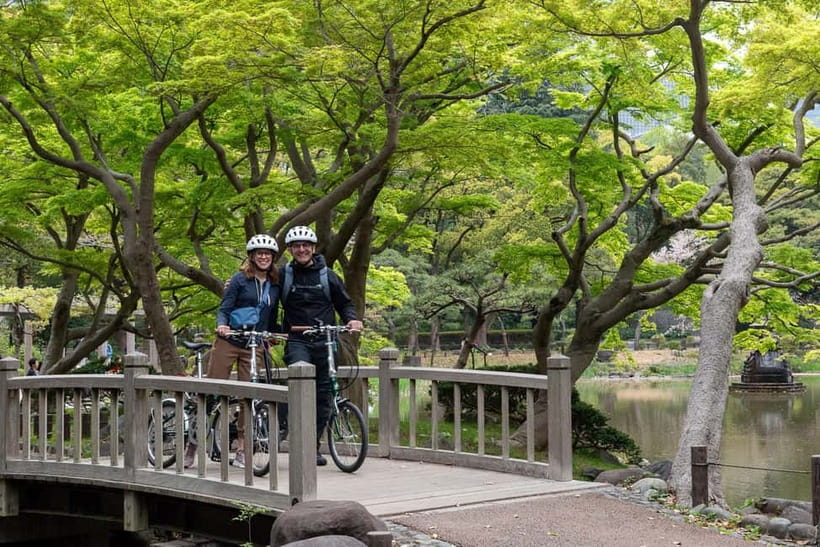
If your tour heads toward east Tokyo, Asakusa Kaminarimon Gate is usually where the atmosphere becomes instantly different. It feels older, more traditional, and very photogenic even if you are not a museum person. The practical consideration is that the area can draw crowds, so you will likely keep your stop efficient while still getting the key photos.
If your route includes Tokyo Skytree, you get a modern skyline silhouette that contrasts sharply with Asakusa’s older streets. Skytree-style views are a great way to end a bike day because they help you remember Tokyo in one single image, not just individual stops.
Depending on the exact route you choose, Kitasenju can add a local-neighborhood feel. That is valuable if you want to see Tokyo as it looks outside the top tourist magnets, while still keeping it safe and structured with a guide.
What you are really paying for: Value at $141 per person
At $141 per person for a 3-hour private e-bike ride, you are paying for three big things: convenience, access, and reduced decision fatigue.
First, the convenience is real. Hotel start and end means you do not spend your trip figuring out taxi directions, meeting points, or time sinks before you even start riding. That alone can be worth a premium if you are short on time.
Second, access and pacing matter in Tokyo. A private guide helps you connect neighborhoods efficiently and stop often enough to understand what you are seeing. Your guide is also responsible for safety management, which is a big deal in busy crossing zones.
Third, this price is also paying for the e-bike experience. You get the bike, helmet, safety instruction, and insurance included. On a normal rental, you would still need to handle where to go and how to manage traffic yourself.
Food and beverages are not included, so plan on grabbing snacks before or after your ride. That is also part of the value equation. If someone promises a full meal, it is usually overpriced somewhere else. Here, you are paying for movement and guidance, then you choose what to eat based on your tastes.
The stuff that makes or breaks your day: clothing, rules, and reality checks
This tour has a clear set of riding expectations. You should wear practical footwear. High-heeled shoes, sandals or flip flops, and skirts are not allowed. That is not about being picky, it is about grip and safety around bike controls.
You also cannot bring alcohol or ride under the influence. Smoking is not allowed, and you are not supposed to record while cycling. That means you should plan to use your phone during stops, not while riding.
Physical fit is important. The tour is ideally for riders between 145 cm and 185 cm, and it is not good for people heavier than 100 kg. Children under 10 are not allowed. If you fall outside these ranges, it is better to look at another activity, because forced compromises can make the ride less comfortable for you and less safe for everyone.
Weather can affect any outdoor ride in Tokyo, so if rain is in your forecast, you may want to consider how that changes your comfort level. The tour format still works, but you should be realistic about slick streets.
Photos, humor, and that Kazuma-style touch
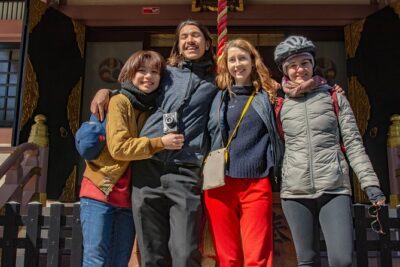
One of the most praised parts is the guide experience. Many guests highlight Kazuma’s kind approach, solid English, humor, and a focus on safety without killing the fun. The explanations tend to connect what you are seeing to the larger feel of Tokyo, not just a list of facts.
Another standout is photo value. Several bookings mention that the guide takes photos of your group during the ride and shares them after. That is handy because you are not allowed to film or photograph while cycling, so you still leave with images without having to do camera gymnastics.
Who should book this private e-bike tour
Book it if you want a first-day Tokyo plan that covers real distance without requiring hardcore fitness. It is also a strong choice if you like structure but still want freedom. The private routing means you can build around your interests, whether that is shrines, skyline viewpoints, street scenes, or river routes.
It also fits solo travelers and couples well, since you get a personal pace. Families of four have done it successfully as long as everyone fits the age and rider limits.
Skip or reconsider if you cannot meet the height and weight requirements, or if you strongly prefer casual, flip-flop street style. Also skip it if you expect food to be part of the package, since nothing to eat or drink is included.
Should you book Tokyo Bike Bliss private 3-hour e-bike tour?
If your goal is an efficient, friendly way to see multiple sides of Tokyo in one afternoon or morning, this is a high-value choice. Hotel pickup and drop-off reduce stress instantly, and the e-bike assist makes the ride feel doable for more people than you might expect.
I would book it if you want a guided connection between neighborhoods, not just a series of photos. The guide experience, the safety focus, and the frequent stops for context and pictures are the reasons this tour tends to feel like more than just transportation.
I would think twice if you are outside the rider limits or you cannot follow the dress and riding rules. If you are a good fit physically and you want a smooth, guided Tokyo day, this private e-bike tour is one of the easiest ways to get your bearings fast.
FAQ
Where do you start and end?
Pickup and drop-off happen at your hotel. You meet your guide in the hotel lobby with the bike helmet about five minutes before the scheduled pickup time.
Is this tour private?
Yes. It is a private group experience, so the route, distance, and duration can be customized to your preferences.
How long is the tour?
The tour lasts about 3 hours.
What is included in the price?
Included are hotel start, the e-bike, helmet, safety instruction, insurance, and a live guide.
What languages are available?
The live guide speaks Japanese and English.
How does the guide communicate with you before the tour?
The operator contacts you via WhatsApp, iMessage, or SMS for communication.
Are there rider or equipment restrictions?
Yes. Riders should be between 145 cm and 185 cm, and it is not good for riders over 100 kg. Not allowed are children under 10, smoking, alcohol or drugs, high-heeled shoes, sandals or flip flops, and skirts.
Bicycles and E-Bikes We Have Ridden
Newest Tokyo write-ups from the Loving Japan desk
Cycling and E-Bike Tours, side by side.
 ★ 5.0Hidden Kyoto E-Biking tourFrom $1161,843 reviews
 ★ 5.0Tokyo Guided Small-Group Biking TourFrom $1061,250 reviews
 ★ 5.0Tokyo Great Cycling TourFrom $99811 reviews
 ★ 5.0Tokyo Top Highlights 3h Guided E-bike TourFrom $63714 reviews
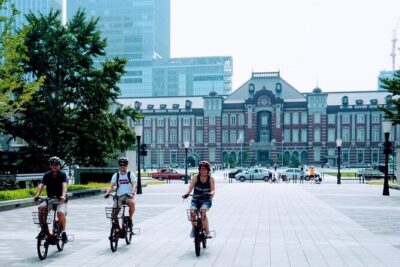 ★ 5.03h Tokyo E-Bike Tour: Hidden Gems, and Local Life with guideFrom $63670 reviews
 ★ 5.0Arashiyama Bamboo Forest & Hidden Gems Bike Tour (Early Bird)From $106613 reviews
 ★ 5.05 Top Highlights of Kyoto Full Day Bike Tour (E-bike option)From $172511 reviews
 ★ 5.0Full Day Biking Tour Exploring the Best of KyotoFrom $119498 reviews
Filed on these lists too