
REVIEW · SIGHTSEEING BUSES AND RICKSHAW RIDES
Tokyo: 60min Panoramic Open Top Bus Tour with Audio Guide
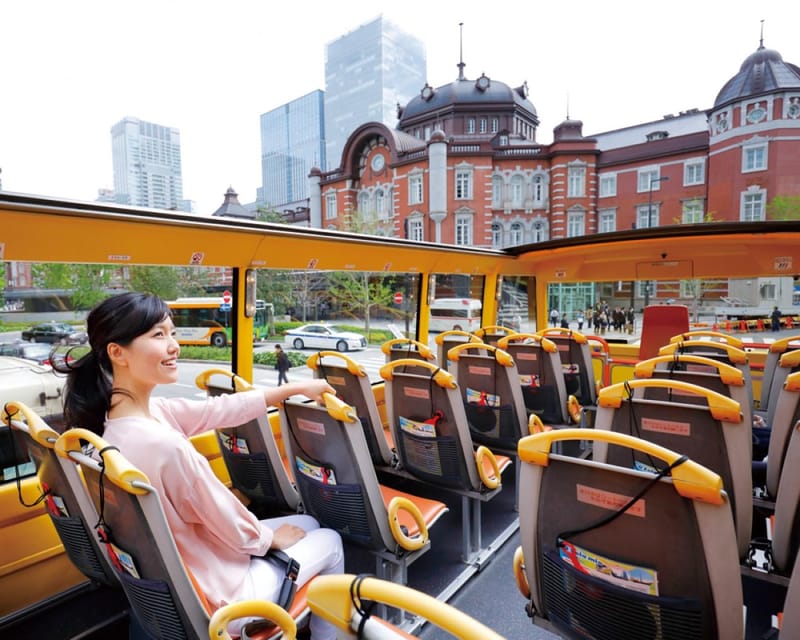
Tokyo moves fast, and this bus keeps up. In one hour you get uninterrupted panoramic views from a double-decker open-top ride.
What I like most is the quick hit on big sights like Tokyo Tower and Rainbow Bridge, plus the GPS audio in multiple languages so you do not need to decipher anything. One thing to consider: it is not hop-on, hop-off, so if you want time to wander inside places, plan to do that after the ride.
The route is built for sight-seeing momentum, and the breeze factor makes it feel special. You also get a Japanese-speaking guide, and the GPS system runs in eight languages. The main drawback is weather, since the roof may close and the tour can be canceled in heavy rain.
In This Review
- Key Points I’d Focus On
- A 60-Minute Open-Top Bus Loop That Feels Like Tokyo at Speed
- Where the Tour Starts, Hato Bus Near Tokyo Station
- Open-Top Double-Decker + GPS Audio in 8 Languages
- The Route From Hibiya Park to the National Diet Building
- Tokyo Tower Angles You Do Not Usually Get
- Rainbow Bridge to Odaiba, the Breeze Moment
- Passing Toyosu, Tsukiji Outer Market Area, and Kabuki-za
- Ginza at the End, When You Want More Time
- Price and Value: What $14 Buys in Real Tokyo Time
- Comfort, Rules on the Bus, and How to Prepare
- Rain Roof Closure and When the Tour Might Not Happen
- Who Should Book This, and Who Might Skip It
- Should You Book This Tokyo Station Open-Top Bus Tour?
- FAQ
- How long is the Tokyo panoramic bus tour?
- Where does the tour start and end?
- Is this a hop-on hop-off bus?
- What sights will the bus pass during the tour?
- Is an audio guide included, and in which languages?
- Do I need my own smartphone?
- Do I need earphones?
- Can I eat or drink on the bus?
- What happens in rain?
- Can I bring children, and are there any limits?
Key Points I’d Focus On
- Open-top double-decker views that stay wide and continuous for the full hour
- GPS automated guidance in eight languages, plus a Japanese-speaking guide on board
- Tokyo Tower and Rainbow Bridge moments that are easy to spot from the best angle you get on a bus
- A smart pass-by route through central Tokyo, Odaiba, and Ginza without walking all day
- You need your own smartphone and earphones for the GPS audio system to work smoothly
Let something else do the walking
- Mt Fuji and Hakone 1-Day Bus Tour Return by Bullet Train
★ 5.0 · 26,383 reviews - Tokyo Mt Fuji 5th St & Hakone Cruise Bus Tour w/Bullet Train
★ 4.4 · 5,024 reviews - Tokyo: Hop-On Hop-Off Sightseeing Bus Ticket
★ 3.9 · 4,207 reviews - Tokyo: Meiji Shrine, Asakusa, Skytree Bus Tour and Cruise
★ 4.7 · 1,986 reviews
A 60-Minute Open-Top Bus Loop That Feels Like Tokyo at Speed
If you only have a slice of time in Tokyo, a one-hour bus tour can actually be a win. This ride is designed to give you big-picture Tokyo views without the friction of getting between neighborhoods on your own.
I like that the bus keeps moving through the highlights, so your brain starts connecting places fast. You also get a classic Tokyo perspective from above street level, which is hard to recreate on foot in an hour.
The value is also in the format. It is not hop-on hop-off, so you can treat it like a guided panorama. Pay attention and you will leave with a clearer mental map of where things are.
Where the Tour Starts, Hato Bus Near Tokyo Station
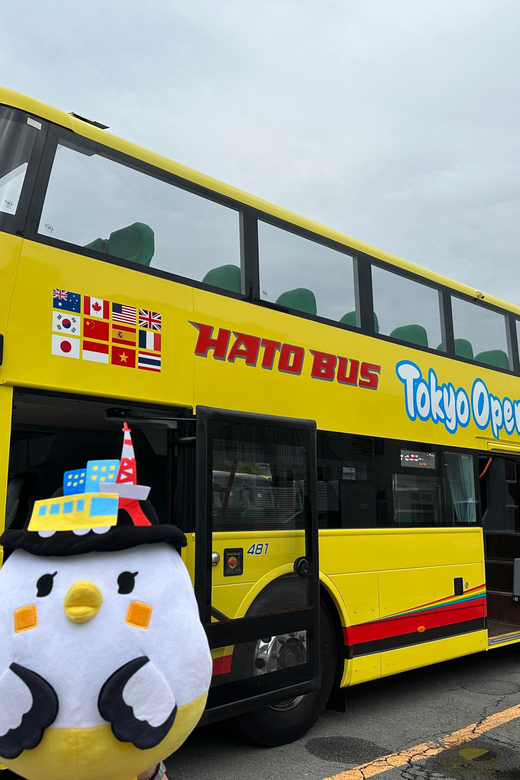
You meet at the Hato Bus Tokyo office in Tokyo Station. It is near the JR Tokyo Station Marunouchi South Exit, and the stop is a yellow bus you can spot when you step out and head left, then straight for a couple minutes.
Using Tokyo Station as the base is practical, because it is one of the easiest places to connect to by train. You can also time your day around this tour without needing a special neighborhood plan.
If you are trying to arrive calmly, I suggest giving yourself a little extra time to find the platform. Tokyo Station has multiple exits, and it is easy to lose a few minutes if you are looking at too many signs at once.
Open-Top Double-Decker + GPS Audio in 8 Languages
This is the part that makes the hour feel smooth. You are up on a double-decker open-top bus, and the views stay wide because you are not stuck behind glass.
On top of that, you get GPS automated guidance in eight languages. The audio language list includes English, Chinese, Korean, Spanish, French, Thai, Indonesian, and Vietnamese. There is also a live Japanese-speaking guide on the bus, which helps if you need something clarified.
Here is the practical catch: you need a smartphone that can be used in Japan and your own earphones. GPS devices and earphones are not provided for rental.
Also remember this detail. The system is provided free of charge, and if your earphones do not work properly or something technical fails, refunds are not given for technical issues or malfunctioning earphones. Bring a spare way to listen if you can, like a backup pair in your day bag.
- Mt Fuji and Hakone 1-Day Bus Tour Return by Bullet Train★ 5.0 · 26,383 reviews
- 1-Day Tokyo Bus Tour★ 5.0 · 14,250 reviews
- Tokyo: teamLab Planets TOKYO Digital Art Museum Entry Ticket★ 4.6 · 9,779 reviews
- Mt Fuji & Hakone Cruise, Drum Show Bullet Train 1 Day from Tokyo★ 4.0 · 7,413 reviews
- Tokyo: Shinjuku Food Tour (13 Dishes at 4 Local Eateries)★ 5.0 · 6,603 reviews
The Route From Hibiya Park to the National Diet Building

The tour begins at the Hato Bus stop at Tokyo Station, then you start seeing the city’s center immediately.
You pass Hibiya Park, which is a useful marker because it sits in a prime location close to central Tokyo. From the bus, you get a sense of how parks fit into the dense city grid, without needing to pause your day.
Next you pass the National Diet Building. Even from a moving bus, it is a recognizable landmark, and it helps anchor the idea that Tokyo is not just neon and shopping. It is also government and big civic architecture.
Then you pass Toranomon. This area is part of Tokyo’s business core, so the feel shifts from civic and park-adjacent Tokyo into office and skyline territory. Watching the skyline change as you travel is one of the quiet pleasures of an hour-long route like this.
Tokyo Tower Angles You Do Not Usually Get

The Tokyo Tower is a star stop on this ride. From an open-top double-decker bus, you naturally get angles you would miss if you are only seeing it from one street viewpoint.
Even if you have seen Tokyo Tower in photos before, getting multiple perspectives in motion changes how it reads in your head. It is less like a single photo moment and more like a landmark that sits at a scale you start to understand.
I also love how the tour timing sets you up for an iconic Tokyo sequence. After Tokyo Tower, you are headed toward the waterfront, and that is where the air and the views start to feel different.
Rainbow Bridge to Odaiba, the Breeze Moment
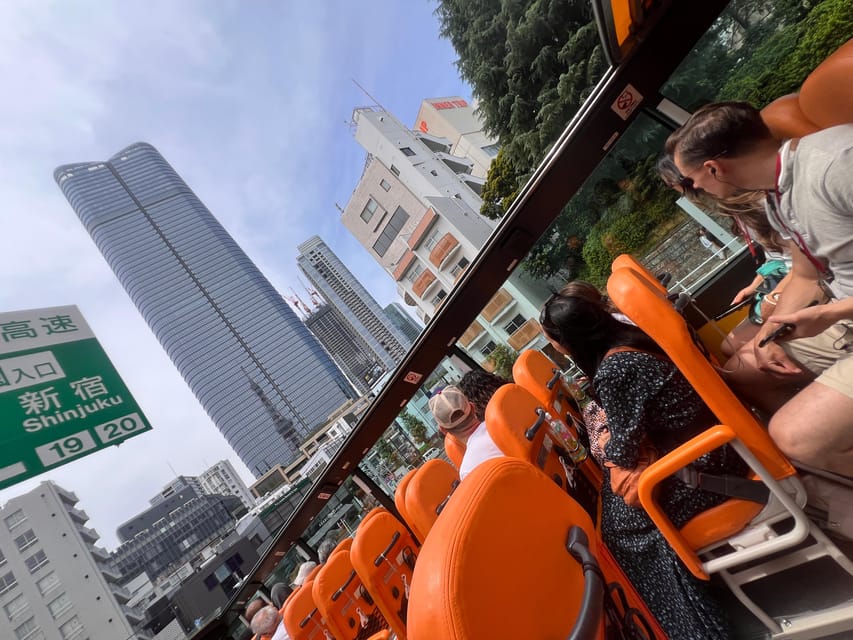
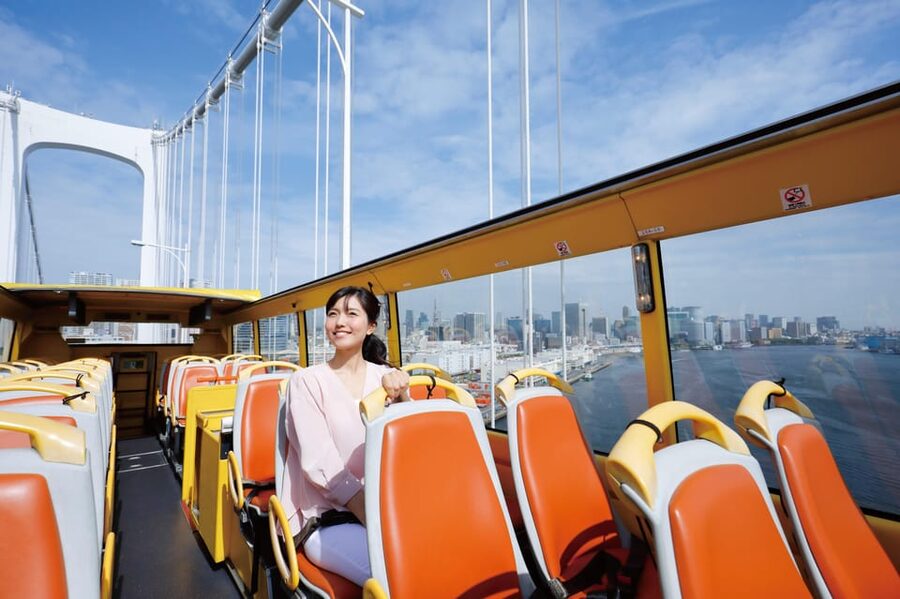
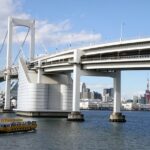
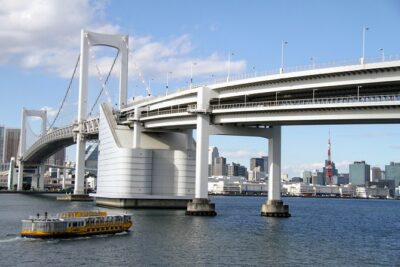
Passing Rainbow Bridge is one of those Tokyo sights that feels instantly recognizable, even from the bus. You are seeing it as part of the route, not as a separate day mission, which makes it easier to fit into a short schedule.
This is also where the tour really leans into what makes open-top worthwhile. As you head toward Odaiba, you get that breeze and wide water-facing perspective that is hard to reproduce inside a normal indoor vehicle.
Odaiba is a major visual district from the road, and seeing it from the bus helps you understand why people plan whole evenings there. You are not stopping for activities on this ride, but you are getting the shapes, waterfront lines, and skyline context.
If you want a “wow” payoff in a short time window, this stretch is where it happens. Look out for the shift from city street density into that more open waterfront feel.
Passing Toyosu, Tsukiji Outer Market Area, and Kabuki-za
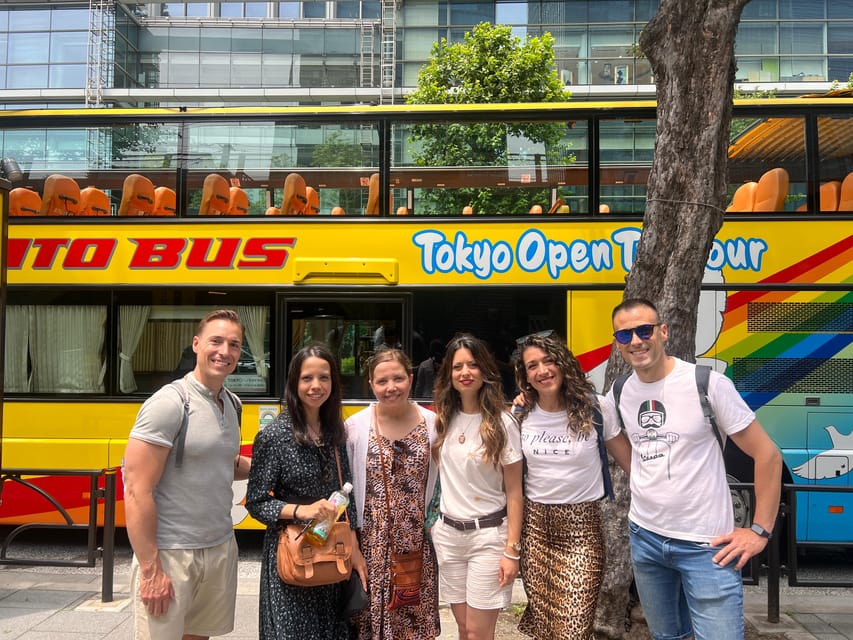
After Odaiba, you continue through Toyosu. Toyosu often reads as a newer-feeling area compared with older central Tokyo, and from the bus you can feel the difference in the streetscape without needing a deep explanation.
Then you pass the Tsukiji Outer Market area. Even though you are not doing a market walk on this tour, this is still valuable. It gives you a quick orientation to where Tsukiji’s food district sits, so if you later want sushi alleys or snacks, you know where to aim.
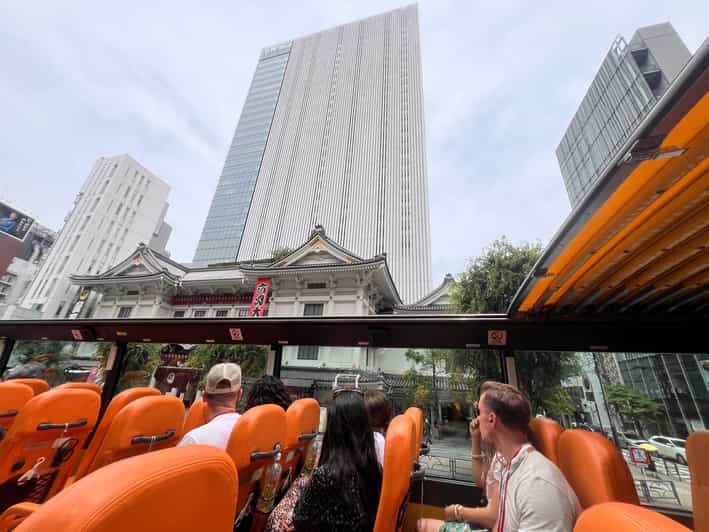
Next up is Kabuki-za, the famous theater complex. Seeing it from the road works because you get a sense of Tokyo’s contrast, where traditional performance and big-city modern flow share the same urban footprint.
This is also a good reminder for how bus tours can help. You might not have time to enter every building, but you can still build the mental map that makes your next outing easier.
Ginza at the End, When You Want More Time

The ride finishes by passing Ginza, then returning to the Hato Bus office at Tokyo Station. Ginza is one of those places where you can keep going after you get off the bus.
If your plan includes shopping, cafés, or simply walking a few blocks to see the storefront rhythm, having Ginza as the end point is convenient. You also end where you started, so you are not forced into navigating a new transfer on a tight timeline.
My advice: decide before the tour ends what you want to do next. If you want photos, linger a little near the last area you saw. If you want shopping, head toward your target immediately after, because Tokyo’s streets can pull you in different directions fast.
Price and Value: What $14 Buys in Real Tokyo Time
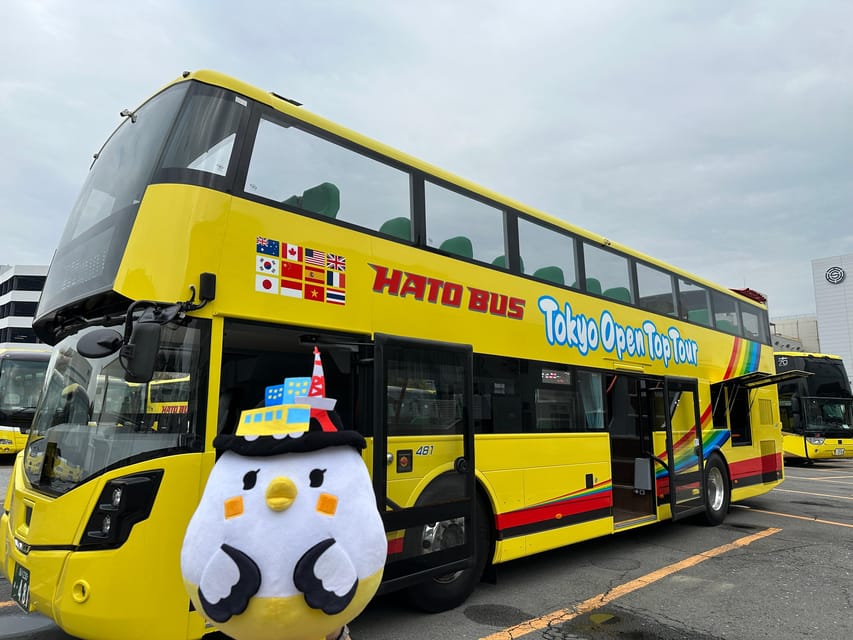
The price is listed at $14 per person for a one-hour tour. For Tokyo, that is a budget-friendly way to get a structured pass through major sights without spending time planning transit between them.
What makes it feel like good value is the combination of three things: open-top views, GPS audio in eight languages, and a route that covers multiple landmark zones. You are paying for time savings and for making the sights easier to connect.
Could you do all of this by transit on your own? Yes, but it can become a juggling act in a short visit. This bus turns it into a simple hour, and simplicity is not a small thing when you are trying to enjoy a city instead of managing logistics.
If you are the type who likes to know what you are looking at, the audio guidance helps a lot. If you are just trying to collect experiences quickly, the views still do the job.
Comfort, Rules on the Bus, and How to Prepare
The bus ride is described as comfortable, and that matters here because you are on board for the whole hour. Bring light layers if you are sensitive to wind, since open-top means you will feel the outdoor air more than you would on a closed vehicle.
There are also a few onboard rules that are worth knowing. Eating is not allowed on the bus, but drinks in plastic bottles are permitted. If you plan to bring water, keep it in a sealed plastic bottle.
You should also plan for listening setup before you board. Use your smartphone, and test your earphones so you do not start the ride with sound issues. The tour notes that refunds are not given for technical issues or earphones that malfunction, so a quick pre-check saves stress.
Rain Roof Closure and When the Tour Might Not Happen
Tokyo weather can change quickly, and this tour is honest about it. If rain comes in, the bus roof may be closed. In heavy rain or bad weather, the tour may be canceled.
In practical terms, this affects two things. First, your open-top experience changes if the roof is closed. Second, a cancellation means you lose that exact time window, so it is smart to keep your schedule flexible.
If you are booking on a day with uncertain forecasts, consider timing the tour earlier in your day. That way, if something happens, you still have options to adjust without panicking.
Who Should Book This, and Who Might Skip It
This tour is a strong match if you want a quick orientation to central Tokyo plus waterfront areas like Odaiba. It is also great if you enjoy landmark viewing but do not want to stop walking and queueing for every sight.
You will likely enjoy it if you like a guided format. The GPS automated guidance in eight languages means you can focus on the views while still getting explanations.
You might want to skip it if you are hoping for lots of time to explore inside specific places. This is a pass-by tour, not an activity hopping tour. You will see many landmarks, but you will not be getting long on-site visits.
It also helps to be okay with weather uncertainty. If you only travel on days with rain-free certainty, you can plan confidently. If not, have a backup idea for your day.
Should You Book This Tokyo Station Open-Top Bus Tour?
I would book it if you want maximum Tokyo landmark exposure in a single hour with audio guidance in your language and a comfortable ride from Tokyo Station. The Tokyo Tower and Rainbow Bridge portion is where the experience feels most memorable, especially because the open-top format makes those moments feel more like you are in the city than just looking at it.
I would not book it if you hate the idea of roof changes in rain or you want to do deep exploring at multiple stops. In that case, you might prefer a longer day plan where you can actually spend time at each site.
If your goal is simple, get the lay of the land and enjoy the sights from above street level, this is a solid buy.
FAQ
How long is the Tokyo panoramic bus tour?
The tour lasts 1 hour.
Where does the tour start and end?
It starts and ends at the Hato Bus Tokyo office in Tokyo Station.
Is this a hop-on hop-off bus?
No. It is not hop-on hop-off, and you stay on for the full ride.
What sights will the bus pass during the tour?
You will pass landmarks including Hibiya Park, the National Diet Building, Toranomon, Tokyo Tower, Rainbow Bridge, Odaiba, Toyosu, the Tsukiji Outer Market area, Kabuki-za, and Ginza.
Is an audio guide included, and in which languages?
Yes. An audio guide is included, with languages listed as Chinese, English, French, Indonesian, Korean, Spanish, Thai, and Vietnamese.
Do I need my own smartphone?
Yes. You need a smartphone that can be used in Japan. GPS devices are not provided.
Do I need earphones?
Yes. You should bring your own earphones. Earphones are not provided for rental.
Can I eat or drink on the bus?
Eating is not allowed. Drinks in plastic bottles are permitted.
What happens in rain?
In case of rain, the bus roof may be closed. The tour may be canceled due to bad weather or heavy rain.
Can I bring children, and are there any limits?
Children under 6 years old without a seat can join for free, one child per adult.
Let Something Else Do the Walking

Newest Tokyo write-ups from the Loving Japan desk
Sightseeing Buses and Rickshaw Rides, side by side.
 ★ 5.0Mt Fuji and Hakone 1-Day Bus Tour Return by Bullet TrainFrom $16326,383 reviews
 ★ 5.01-Day Tokyo Bus TourFrom $12914,250 reviews
 ★ 5.0PERFECT KYOTO 1-Day Bus TourFrom $12913,518 reviews
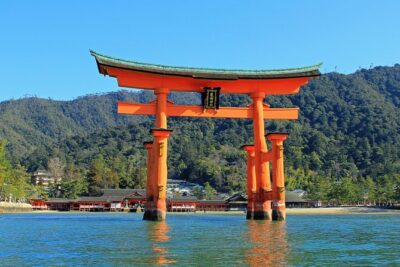 ★ 5.0Peaceful Hiroshima & Miyajima UNESCO 1 Day Bus TourFrom $1295,309 reviews
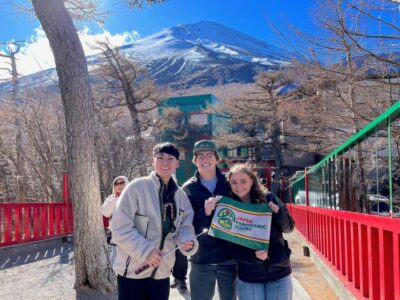 ★ 4.4Tokyo Mt Fuji 5th St & Hakone Cruise Bus Tour w/Bullet TrainFrom $1545,024 reviews
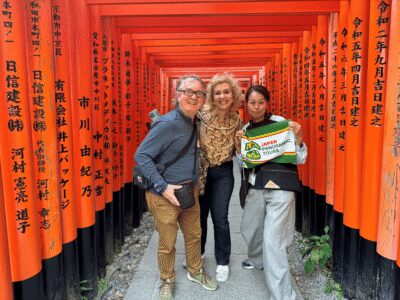 ★ 4.8Fushimi Inari, Kinkakuji, Bamboo Grove 1 Day Bus TourFrom $1224,316 reviews
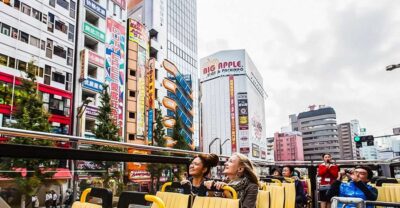 ★ 3.9Hop-On Hop-Off Sightseeing Bus TicketFrom $304,207 reviews
 ★ 4.2Mt. Fuji 5th Station & Hakone Cruise 1-Day Bus TourFrom $1292,381 reviews
Filed on these lists too