
REVIEW · SIGHTSEEING BUSES AND RICKSHAW RIDES
Tokyo: Hop-On Hop-Off Sightseeing Bus Ticket
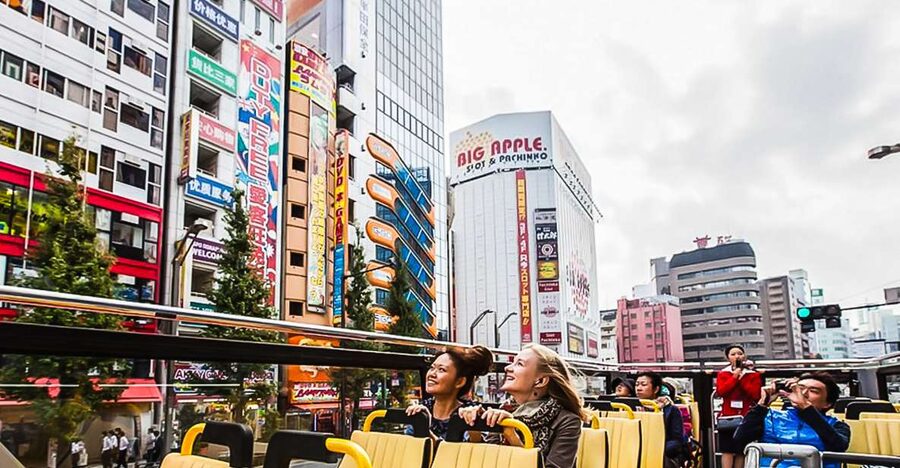
Tokyo feels way less chaotic when you can hop when you want. This hop-on hop-off bus loops through the city’s biggest photo stops on an open-top ride, with a multilingual audio guide you can run on your own device. You get panoramic views while you decide what to visit next.
Two things I really like: the unlimited route access (so you can ride a full loop, jump off, and return later), and the audio that works across 10 languages when you use your smartphone or tablet. The crew also keeps things moving, with clear guidance at the stops.
One consideration: it’s open-air and there’s no air-conditioning, so heat and rain can change the comfort level fast. Also, buses may not be frequent all day, so if you miss one when it’s busy, you might wait.
In This Review
- Key Highlights You’ll Actually Care About
- Is This Tokyo Hop-On Hop-Off Bus Really Worth $30?
- Meeting at the Mitsubishi Building, and How the Day Stays Simple
- Open-Top Comfort, Rain Rules, and the No-AC Reality
- Route 1: Tokyo Skytree, Asakusa, Ueno, and Akihabara Loop
- Route 2: Tokyo Tower, Tsukiji Ginza, and the Central Icons
- Route 3: Shinjuku, Shibuya, Harajuku, and Meiji Jingu Shrine Feel
- Using the Audio Guide on Your Phone (and When It Matters)
- Timing Tips When Buses Are Busy and Stops Feel Tight
- Who This Ticket Fits Best in Your Tokyo Plans
- Should You Book the Sky Hop Bus Tokyo Ticket?
- FAQ
- How much is the Tokyo hop-on hop-off bus ticket?
- How long does the ticket last?
- Where is the meeting point?
- Can I hop on and hop off as many times as I want?
- What sights do the routes cover?
- Do I need a smartphone for the audio guide?
- Is the bus air-conditioned?
- What happens if it rains?
- What is the cancellation window?
Key Highlights You’ll Actually Care About
- Unlimited rides across all routes means you can build your own day instead of following a strict script
- Open-top panoramic views make Tokyo easier to read as a city, not just a list of landmarks
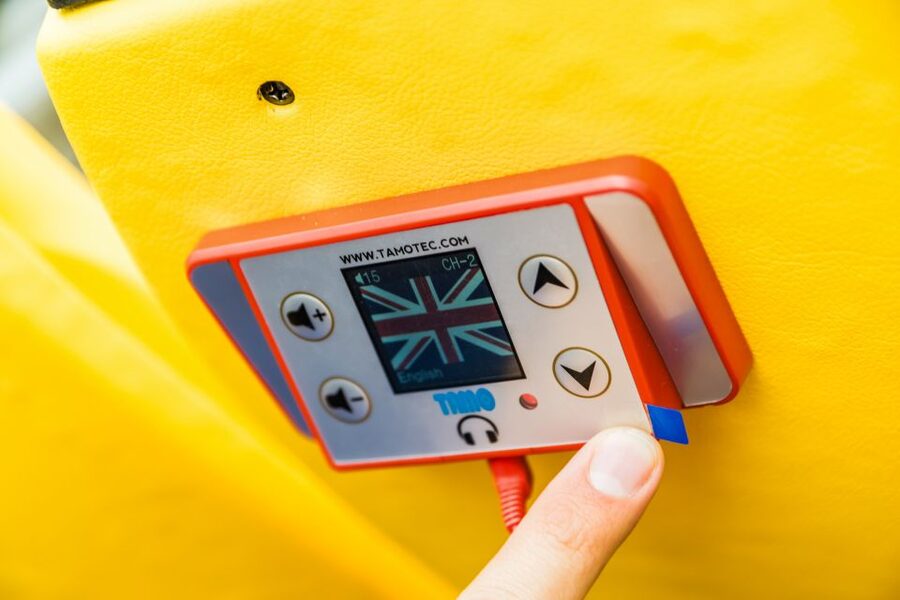
- 10-language audio on your device (with earphones) helps you match commentary to what you’re seeing
- Clear route loops connect central Tokyo with major neighborhoods like Skytree, Asakusa, Ueno, Akihabara, Tsukiji, Ginza, Shinjuku, and Shibuya
- Only second-floor seating helps you plan where to sit, especially if you want to avoid standing
Let something else do the walking
- Mt Fuji and Hakone 1-Day Bus Tour Return by Bullet Train
★ 5.0 · 26,383 reviews - Tokyo Mt Fuji 5th St & Hakone Cruise Bus Tour w/Bullet Train
★ 4.4 · 5,024 reviews - Tokyo: Hop-On Hop-Off Sightseeing Bus Ticket
★ 3.9 · 4,207 reviews - Tokyo: Meiji Shrine, Asakusa, Skytree Bus Tour and Cruise
★ 4.7 · 1,986 reviews
Is This Tokyo Hop-On Hop-Off Bus Really Worth $30?

For $30 per person, this ticket works best when you want broad coverage without spending mental energy on transfers. Tokyo’s neighborhoods feel far apart until you can see how they connect, and the bus routes stitch together a lot of the classic sights in one go.
I like the value here because it is not a single “drive-by.” It’s unlimited hopping across all routes for your chosen 1 to 2 days, so you can ride a loop to get oriented, then spend your real time walking in the places you care about.
The big tradeoff is that you’re paying for convenience, not speed. Tokyo traffic exists, and the bus can be delayed. Still, if your goal is to see more on Day 1 than you could comfortably do by train and foot, this ticket earns its keep.
Meeting at the Mitsubishi Building, and How the Day Stays Simple
The meeting point is easy: in front of the Mitsubishi Building. From there, you can also board using the QR code on your voucher from any bus stop, which is handy if you want to start later or move around based on what the day looks like.
This matters because Tokyo is efficient but not always intuitive on your first hour. When you have a fixed pickup point, plus the option to board at stops with your QR code, you can stop overthinking and get out the door.
Also, the ticket includes a free shuttle service. The exact schedule is not spelled out here, but it is still a nice cushion if you need help getting to a stop without hauling yourself across town.
Open-Top Comfort, Rain Rules, and the No-AC Reality
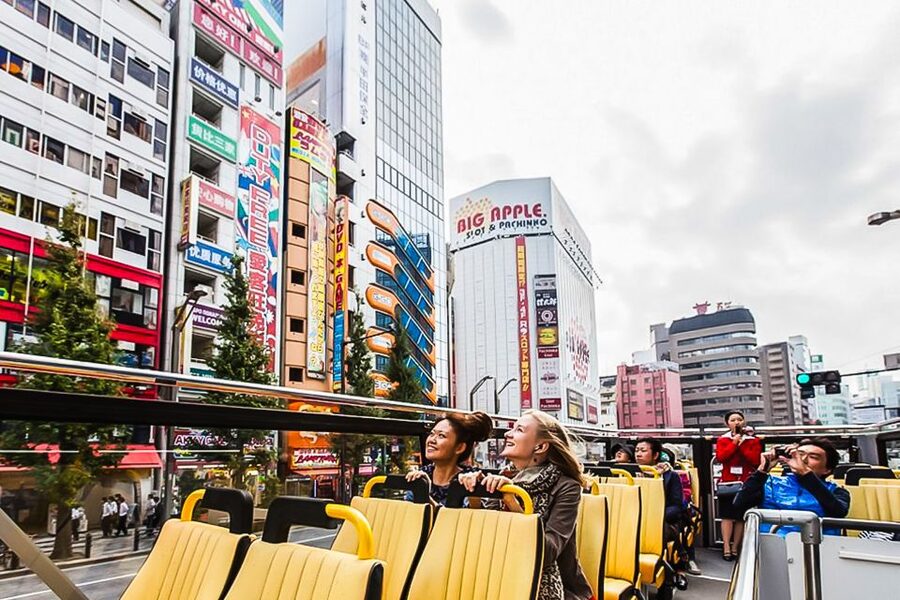
This is an open-air bus, so expect the good and the not-so-good. The upside is obvious: clear views over the city and great photo angles while you move. The downside is just as real: there’s no air-conditioning, so midday heat can feel brutal.
If it rains, the plan is straightforward. Raincoats are distributed if needed, but umbrellas are prohibited on board. That’s a smart safety call for a bus ride, but it means you’ll want a compact rain solution for yourself.
A couple of rules you should note before you board:
- Standing is prohibited while the bus is in motion, so plan to settle in.
- Passenger seats are on the second floor, while the first floor is for storage.
- Traffic congestion may cause delays, so treat timing as flexible.
My practical take: bring sun protection if you’re riding in warmer months, and wear light layers you can handle outdoors. If you’re hoping for a cool, fully enclosed ride, this is not that.
- Mt Fuji and Hakone 1-Day Bus Tour Return by Bullet Train★ 5.0 · 26,383 reviews
- 1-Day Tokyo Bus Tour★ 5.0 · 14,250 reviews
- Tokyo: teamLab Planets TOKYO Digital Art Museum Entry Ticket★ 4.6 · 9,779 reviews
- Mt Fuji & Hakone Cruise, Drum Show Bullet Train 1 Day from Tokyo★ 4.0 · 7,413 reviews
- Tokyo: Shinjuku Food Tour (13 Dishes at 4 Local Eateries)★ 5.0 · 6,603 reviews
Route 1: Tokyo Skytree, Asakusa, Ueno, and Akihabara Loop
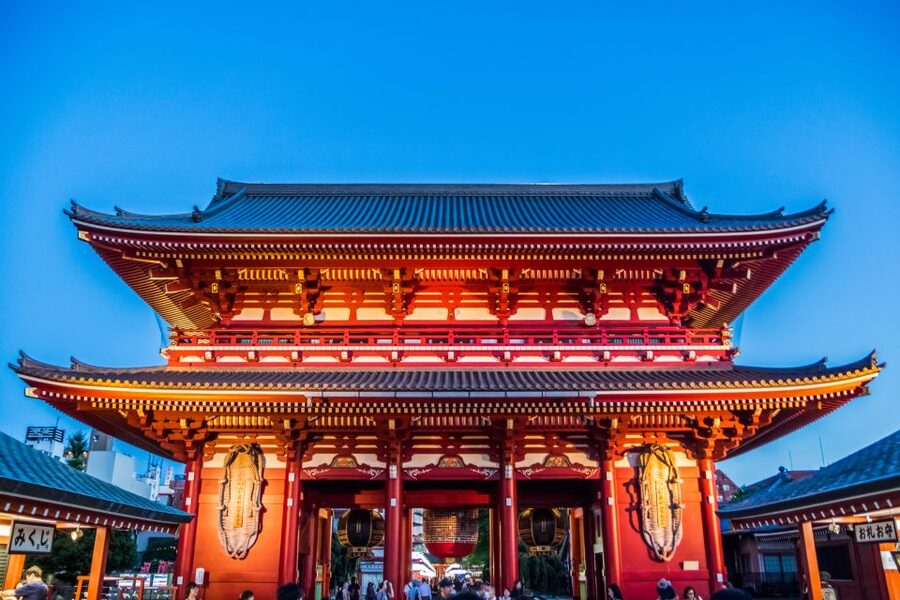
Route 1 is the one I’d pick if you want classic “old Tokyo meets modern neon” variety. It connects key East-side stops and also touches some of the places people usually plot on separate days.
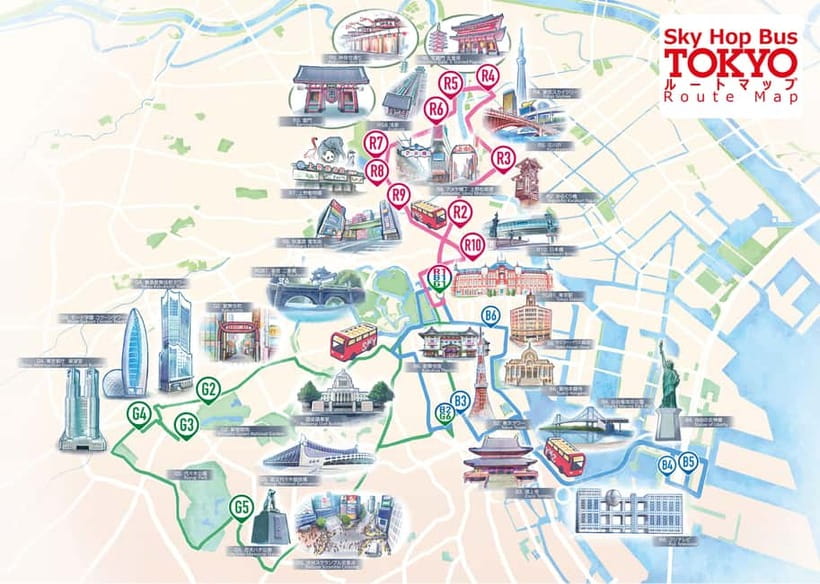
The loop runs from Marunouchi Mitsubishi Building through Kodemmacho Station, then Ryogoku Edo-Tokyo Museum, before reaching Tokyo Skytree station. After that, it continues to Asakusa Hanakawado and Asakusa Tawaramachi, then goes to Ueno Matsuzakaya, and out toward Akihabara (Suehirocho). It wraps back via Shin-Nihombashi Station to Marunouchi Mitsubishi Building.
What’s special about this route is the contrast. You can go from Skytree and the modern city skyline view to Asakusa’s temple-and-street atmosphere, then shift again to Ueno and Akihabara’s shopping and tech vibe. That mix is perfect for first-time visitors who still need a sense of where Tokyo’s “different moods” are located.
A practical drawback: East Tokyo can be crowded, especially around major stations. If your bus load is heavy and you’re aiming to hop off at multiple points, you may want to limit your “rapid drop-off” strategy and instead pick one or two anchor stops.
Route 2: Tokyo Tower, Tsukiji Ginza, and the Central Icons
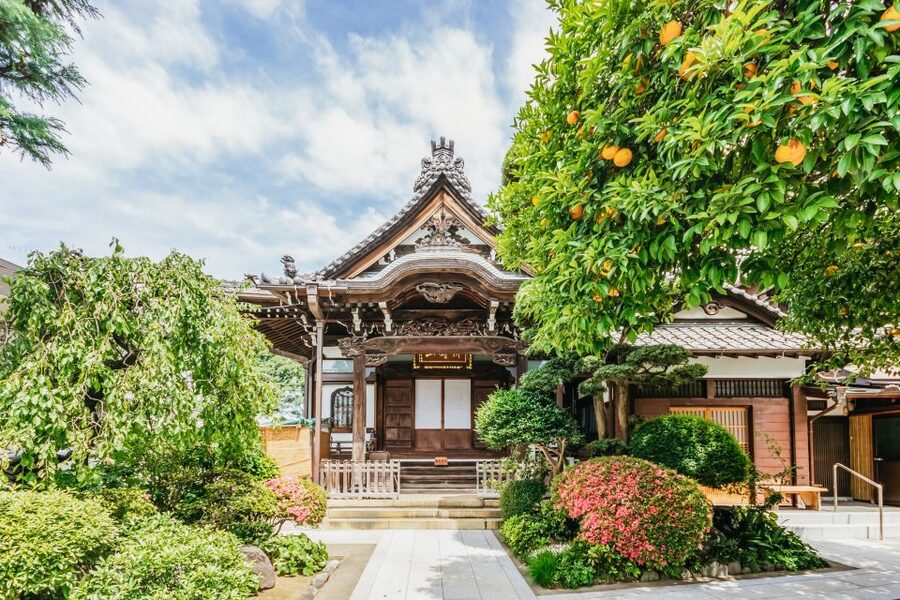
Route 2 is built for the skyline hits and the central foodie and shopping zones. If you have limited time and want iconic landmarks without a ton of walking, this is a strong choice.
The loop starts at Marunouchi Mitsubishi Building, then heads to Tokyo Tower. It passes Tokyo Prince Hotel / Zojo-ji Temple, continues through Tokyo Teleport Station, then reaches Tsukiji Ginza. It loops back to Marunouchi Mitsubishi Building.
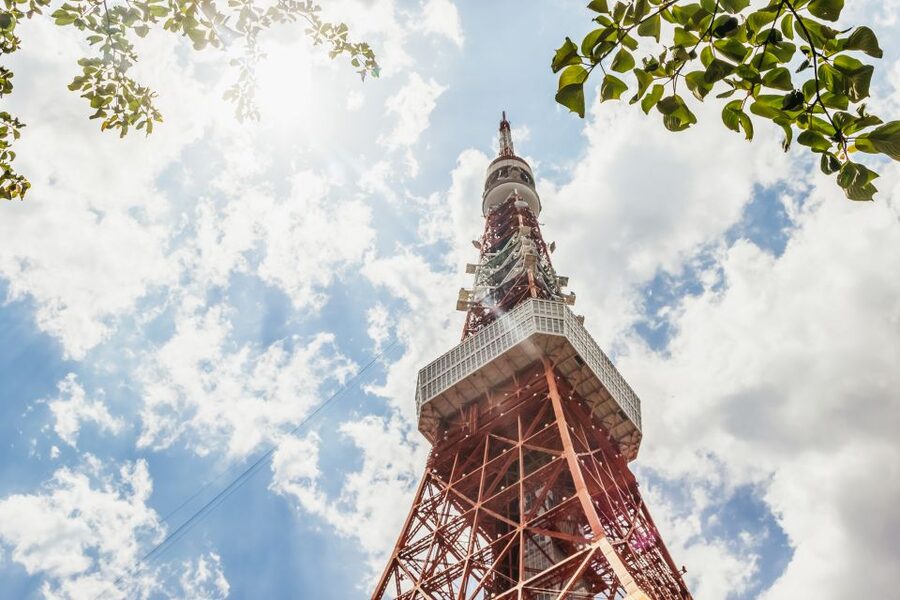
This route is all about “Tokyo postcards.” Tokyo Tower is the headline, and the surrounding stops give you a taste of how Tokyo blends viewpoints, temples, and modern commercial areas. Tsukiji Ginza is another key reason to consider this line, since it’s a major area people want to see even if you only have a few hours.
One consideration: parts of this route can be very popular, so the ride can be stop-and-go depending on traffic. If you’re sensitive to crowding, try boarding earlier in your day or plan a longer walk from a single stop instead of constantly hopping.
Route 3: Shinjuku, Shibuya, Harajuku, and Meiji Jingu Shrine Feel
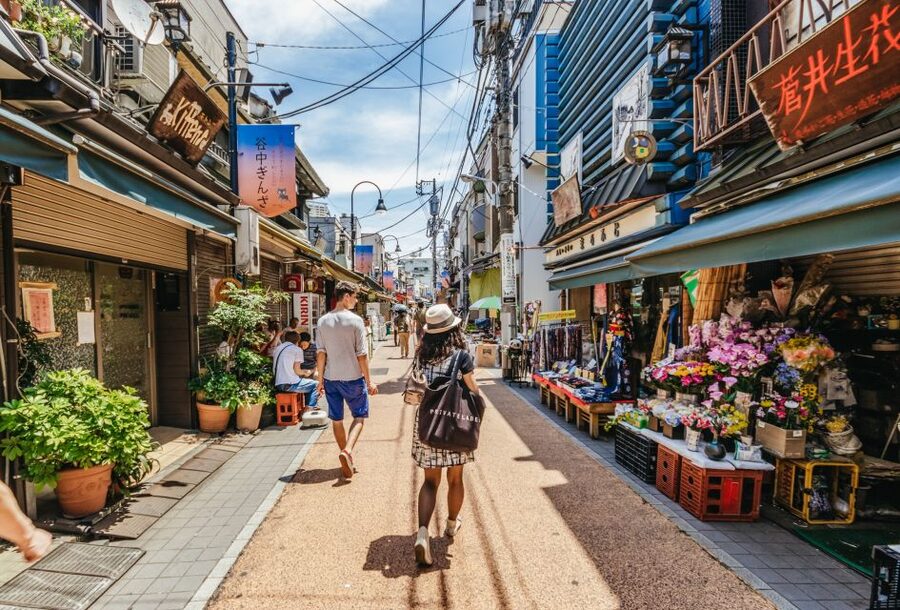
Route 3 is for people who want Tokyo’s attitude: big intersections, famous stations, and the “nearby nature break” that makes this city more than just concrete.
This loop starts again at Marunouchi Mitsubishi Building, then heads to Shinjuku-gyoemmae Station, followed by Shinjuku Station South Exit / Hotel Century Southern Tower, and continues through Shinjuku Mitsui Building (Nishi-Shinjuku). From there it goes toward Shibuya City Hall / Harajuku / Meiji Jingu Shrine, then returns to Marunouchi Mitsubishi Building.
Why this route is worth it is simple: it groups neighborhoods many people treat as separate trips. Shinjuku and Shibuya alone are huge, and adding Harajuku and Meiji Jingu into the same loop gives you a flexible choice. You can focus on fashion streets and photo spots, or pivot to shrine and garden energy depending on your mood.
Potential drawback: Shinjuku and Shibuya areas can be overwhelming if you step off at the wrong time or without a plan. The bus helps, but you still need a “where am I going next” decision before you start wandering. Pick a single area to explore deeply, then ride again once you’re ready.
Using the Audio Guide on Your Phone (and When It Matters)
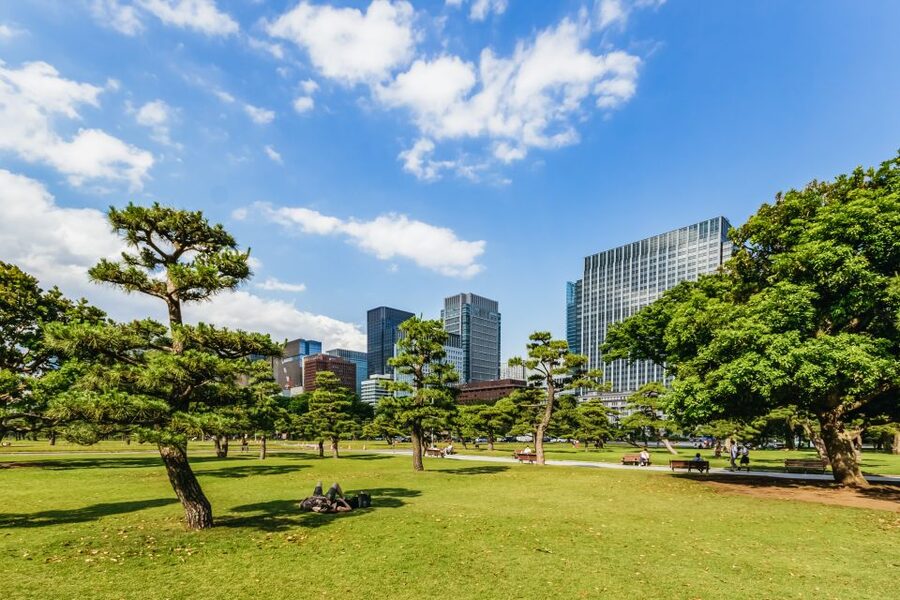
The audio guide system is one of the best parts of this ticket. There’s a vehicle-mounted type (English and Japanese plus a few other languages), but the info also notes it might not be available on some buses. For that reason, you should assume the bring-your-own-device system is the reliable plan.
On the personal-device system, audio supports Japanese, English, Korean, Chinese, French, German, Spanish, Thai, Vietnamese, and Indonesian. You’ll need your own smartphone or tablet and earphones, and data charges may apply.
In practice, this kind of setup is great because you control volume and language. You can also listen in sync with what you’re seeing from the open-top seat, instead of relying on audio that might feel distant while the bus moves.
One small heads-up: some audio setups may be inconsistent depending on the bus. If you want the smoothest experience, load the audio before you board and keep earphones handy.
Timing Tips When Buses Are Busy and Stops Feel Tight
This is not a “wait forever and still catch the next one in 2 minutes” hop-on hop-off. Service can be regular, but gaps between buses can be long enough to be annoying.
Some rides can run on time, and the operation is generally organized. Still, you should expect crowds at major stops and possible waiting if a bus fills up. The rule is simple: if there are no free seats, you board the next bus, since it is not a seat reservation.
So how do you handle it?
- Do your big sightseeing hops earlier in the day, when you can still choose seats easily.
- If you really want one stop, commit to it and give yourself walking time after you hop off.
- If you want multiple stops in one course, take photos of stop info when you exit so you can find your way back to the correct pickup point.
Also, remember that passenger seats are only on the second floor. If you want an easier ride and less hassle, aim for the second floor when you board.
Who This Ticket Fits Best in Your Tokyo Plans
This bus ticket is ideal if you:
- Have limited time and want a quick orientation across major neighborhoods
- Prefer to sit, look around, and decide as you go
- Like getting your bearings before committing to walking routes
- Want audio in multiple languages without hiring a private guide
It can also be a good “reset day” when Tokyo feels like too much all at once. The bus gives you a moving overview, so when you later pick a train and walk, you understand where you are and why the city is laid out the way it is.
Who should think twice:
- If heat, rain, or waiting frustrates you, the open-air setup and bus gaps might wear on you.
- If you already have a tight itinerary and know exactly which subway lines to take, the bus is mostly about convenience, so you may get better value by using transit directly.
Should You Book the Sky Hop Bus Tokyo Ticket?
I’d book it if you want a low-stress way to see the headline sights while your legs save energy for the parts you truly want to explore on foot. The unlimited route access is what makes it flexible, and the audio guide on your device is what makes it more than just sightseeing from a window.
If you’re traveling for 1 day only, I’d plan to ride one or two route loops and then spend your off-bus time at one or two anchor neighborhoods. If you’re going for 2 days, it becomes much easier to do a first-day orientation ride, then return the next day to the stops that pulled you in.
Bottom line: for many first-timers, this is a smart purchase for saving time and building confidence in Tokyo’s geography.
FAQ
How much is the Tokyo hop-on hop-off bus ticket?
The price is $30 per person.
How long does the ticket last?
You can choose a duration of 1 to 2 days, depending on availability and starting times.
Where is the meeting point?
It is in front of the Mitsubishi Building.
Can I hop on and hop off as many times as I want?
Yes. Your ticket provides unlimited access to all routes, so you can hop off and back on when you want.
What sights do the routes cover?
You’ll pass by major highlights including Tokyo Skytree, Asakusa, Tokyo Tower, Tsukiji, Ginza, and stops in the Shinjuku, Shibuya, and Harajuku area.
Do I need a smartphone for the audio guide?
Not always, but the vehicle-mounted audio guide might not be available on some buses. For the bring-your-own-device system, you should bring your smartphone or tablet and earphones, and data charges may apply.
Is the bus air-conditioned?
No. It is open-air and there is no air-conditioning.
What happens if it rains?
Raincoats are distributed if needed, but umbrellas are prohibited on board. If weather is severe, such as typhoons or thunderstorms, the tour may not operate.
What is the cancellation window?
You can cancel up to 24 hours in advance for a full refund.
Let Something Else Do the Walking



Newest Tokyo write-ups from the Loving Japan desk

Sightseeing Buses and Rickshaw Rides, side by side.
 ★ 5.0Mt Fuji and Hakone 1-Day Bus Tour Return by Bullet TrainFrom $16326,383 reviews
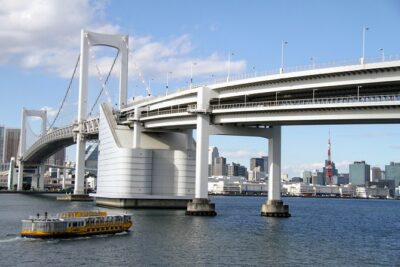 ★ 5.01-Day Tokyo Bus TourFrom $12914,250 reviews
 ★ 5.0PERFECT KYOTO 1-Day Bus TourFrom $12913,518 reviews
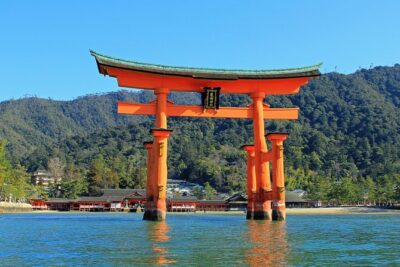 ★ 5.0Peaceful Hiroshima & Miyajima UNESCO 1 Day Bus TourFrom $1295,309 reviews
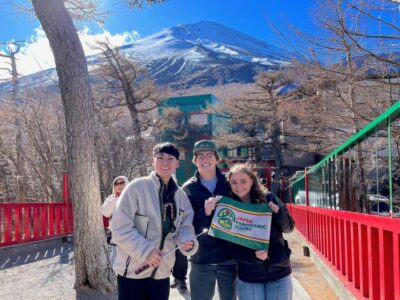 ★ 4.4Tokyo Mt Fuji 5th St & Hakone Cruise Bus Tour w/Bullet TrainFrom $1545,024 reviews
 ★ 4.8Fushimi Inari, Kinkakuji, Bamboo Grove 1 Day Bus TourFrom $1224,316 reviews
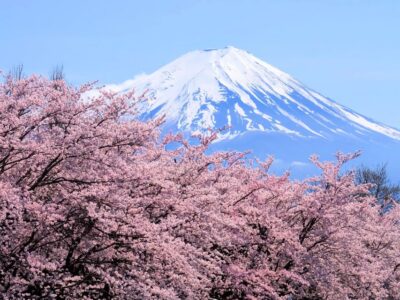 ★ 4.2Mt. Fuji 5th Station & Hakone Cruise 1-Day Bus TourFrom $1292,381 reviews
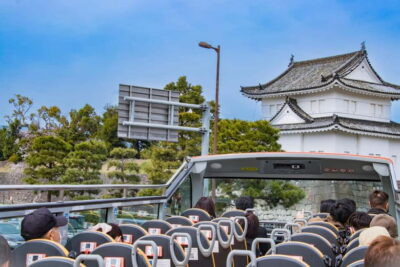 ★ 3.9Hop-on Hop-off Sightseeing Bus TicketFrom $272,034 reviews
Filed on these lists too