
REVIEW · ASAKUSA, SENSO-JI AND TOKYO SKYTREE
Tokyo: Asakusa Walking Tour with Japanese Comedian
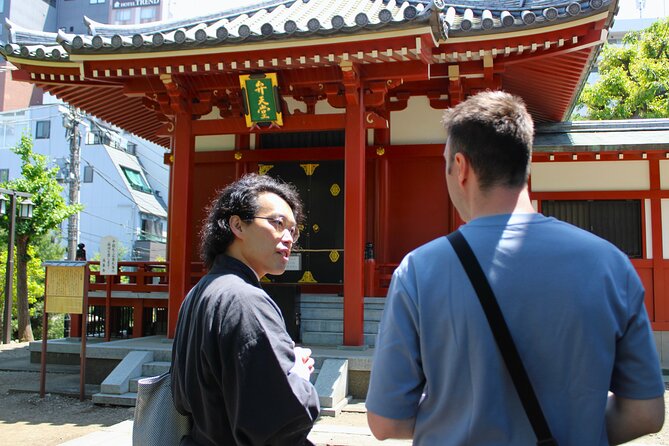
Comedy plus temples in Asakusa works. I love the way Karate Comic Ryo turns Senso-ji, shrines, and Buddhist statues into clear stories, and I also like the English-friendly standup angle tied to his comedy background. One possible drawback: this is a set route, so you will not linger for food and souvenir shopping stops.
In a small group capped at 8, you get a more human pace than the big crowds around Senso-ji. You start with sky views and local landmarks, then walk into the temple core with context, so the area feels less like a photo stop and more like a lived-in neighborhood.
In This Review
- Key Things That Make This Asakusa Tour Work
- Why Walk Asakusa With Ryo Instead of Solo
- Getting Oriented: Meeting Point and the First Stops
- Sumida Park: A Calm Break Before the Temple Crowd
- Kaminarimon Gate: The Icon With a Job to Do
- Nakamise Shopping Street: What the Market Teaches You
- Asakusa Shrine and Sensō-ji: Two Religions in One Area
- Buddhist Deity Statues: Understanding the Meaning, Not Just the Shape
- The English Standup Humor Angle: Light, Local, and Tied to Culture
- Price and Value: Is 90 Minutes Worth $31?
- Who This Tour Suits Best
- A Few Practical Tips Before You Go
- Should You Book This Asakusa Comedy-and-Temples Tour?
- FAQ
- Where is the meeting point for the tour?
- How long is the Asakusa walking tour?
- Is the tour in English?
- How big is the group?
- Do we skip the ticket line?
- Is this tour wheelchair accessible?
- Do we stop to shop for food or souvenirs during the tour?
- Can the guide pick you up from your hotel or drop you at the station?
- What is the cancellation policy?
Key Things That Make This Asakusa Tour Work
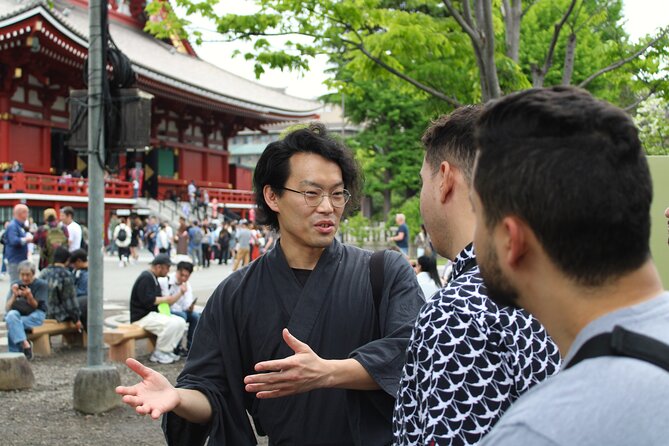
- Comedian-guide perspective: Humor based on a standup career, in English, keeps the walking tour light.
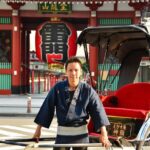
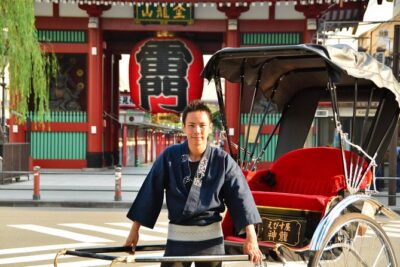
- Ryo’s local Asakusa lens: He has 6 years working in Asakusa as a rickshaw driver, so he explains how people experience the area.
- Senso-ji context before you arrive: You build the story with stops that point you toward what you are about to see.
- Buddhist and Shinto side-by-side: You get help understanding why Asakusa mixes a Buddhist temple and Shinto shrine.
- Skip-the-ticket-line help: You do not waste time lining up before entering major areas.
- Small-group pacing: With up to 8 people, you can ask questions and keep moving without feeling rushed.
Still on the Sumida side? A few more Asakusa options
- Tokyo: Japanese Dance Cabaret Theater Asakusa-Kaguwa Ticket
★ 4.8 · 2,270 reviews - Tokyo: Meiji Shrine, Asakusa, Skytree Bus Tour and Cruise
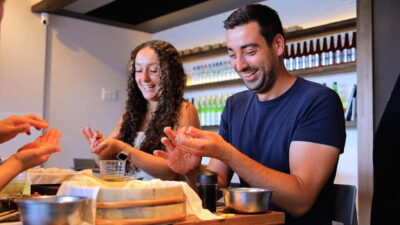
★ 4.7 · 1,986 reviews - Tokyo: Roll and Authentic Sushi Making Class in Asakusa
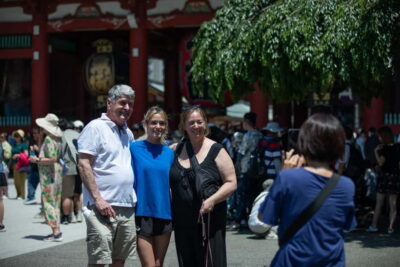
★ 4.9 · 1,957 reviews - Tokyo: Asakusa Walking Tour with Sensoji Temple Visit
★ 4.8 · 1,583 reviews
Why Walk Asakusa With Ryo Instead of Solo
Asakusa is one of those places where you can easily spend a whole day drifting. That is fun, but it can also turn into random gawking, especially around Senso-ji when the crowds thicken. This tour is built to keep you oriented, with a guide who can explain what you are seeing as you see it.
I like that the humor is not decoration. Ryo’s comedy background helps him frame cultural ideas in a way that actually lands in conversation. You get laughs, then you get meaning, like why certain statues matter or what the religious mix in the area suggests about everyday Japanese beliefs.
The other big win is structure. You are not wandering with no plan. You get a guided route that hits major icons, plus side stops you might miss when you are just following your map.
And yes, you should expect a walking tour with a set flow. If you want extra free time to wander deep into shops or hunt snacks, you will need to do that after the tour.
Getting Oriented: Meeting Point and the First Stops
You meet at Tokyo Cruise, the water bus station in Asakusa. It is about a 1 to 2 minute walk from Asakusa Station on the Tokyo Metro Ginza Line, so getting there is pretty straightforward.
The tour starts on time, and you are asked to arrive about 5 minutes early. That matters because the route is specific and the guide will not wait for late arrivals. I also suggest you plan to be at the meeting point before the official start, since navigating station exits and streets can take longer than you expect when you are tired or jet-lagged.
Before you even reach Senso-ji, you get “preview” context. Ryo shows landmarks including Tokyo Skytree and the Asahi Beer Company. You also get a nice view of Asakusa from the top of a nearby building, and it is free. That early look is practical. From above, the temple area makes more sense once you walk back down and enter the streets.
This is also a good moment to ask questions about what you should prioritize. Ryo can point out what to notice later, so the second half of the walk feels like it connects instead of restarting from scratch.
Sumida Park: A Calm Break Before the Temple Crowd
One of the early stops is Sumida Park. This is a simple inclusion, but it works because it gives you a breather before the densest parts of the temple district.
You are moving from skyline views into the real neighborhood scale. In many cities, parks are where you reset your pacing and settle your senses. Here, it helps you transition from “getting oriented” to “reading the area.”
You should also know this stop supports the tour’s goal: context. Rather than rushing you straight to the loudest entrance, the walk helps you understand that Asakusa is more than one landmark. It is a whole stretch of streets and daily life shaped around the temple zone.
Wear comfortable shoes here. It is a walking tour, and Asakusa’s sidewalks are not always perfectly even.
- Mt Fuji and Hakone 1-Day Bus Tour Return by Bullet Train★ 5.0 · 26,383 reviews
- 1-Day Tokyo Bus Tour★ 5.0 · 14,250 reviews
- Tokyo: teamLab Planets TOKYO Digital Art Museum Entry Ticket★ 4.6 · 9,779 reviews
- Mt Fuji & Hakone Cruise, Drum Show Bullet Train 1 Day from Tokyo★ 4.0 · 7,413 reviews
- Tokyo Mt Fuji 5th St & Hakone Cruise Bus Tour w/Bullet Train★ 4.4 · 5,024 reviews
Kaminarimon Gate: The Icon With a Job to Do
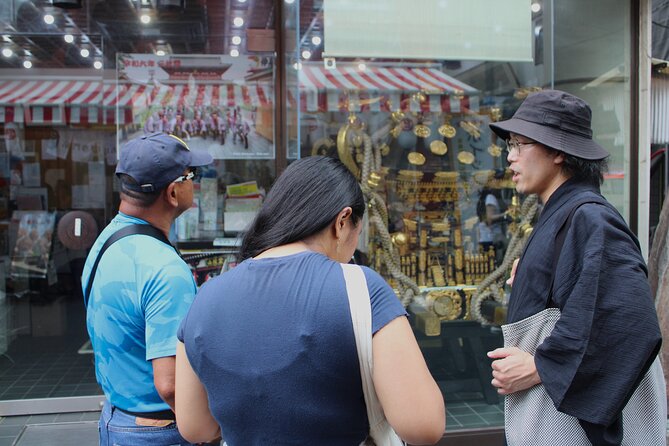
Next comes Kaminarimon, the big gate that basically defines the look of Asakusa on postcards. You will get a photo stop, plus guided context.
What I appreciate is that this is not treated like a simple checkmark. The guide’s job is to help you understand why this gate is a symbol. When you know what it represents, you look at it differently. It stops being only a backdrop for pictures and becomes part of a bigger story about religious life in the area.
You also benefit from seeing it before you get fully swallowed by the shopping street flow. Timing matters. Early on, you can still appreciate the gate’s placement and the approach to the temple. Later, you are more likely to see it through a crowd screen.
If you are sensitive to crowds, this order helps. You hit the icon early, then continue through other stops rather than trying to sprint straight into the busiest entrance.
Nakamise Shopping Street: What the Market Teaches You
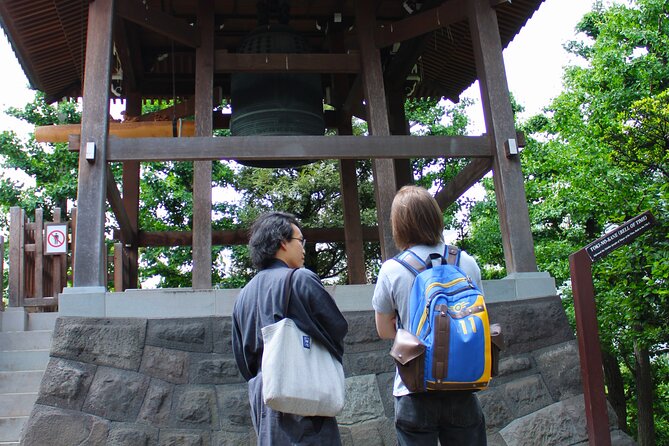
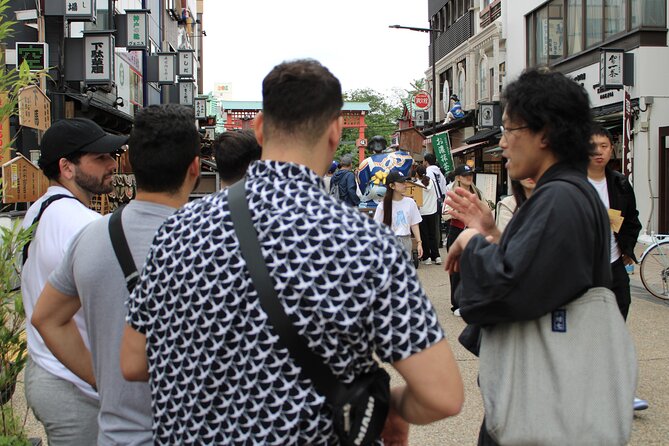
Then you go to Nakamise Shopping Street, which is one of Asakusa’s main lanes for snacks and souvenirs. In this tour, it is not about shopping for long stretches. Instead, you get explanations and the “why” behind the temple story.
Ryo shares the origin of Senso-ji using illustrations. He also talks about how the temple has been supported by different groups over time, including locals and generals from different periods. Even if you do not care about temple lore on paper, this kind of narrative changes what you notice. The street stops feel purposeful. They start to look like a public front porch to the religious site.
This is also where you can adjust your expectations. The tour does not stop to shop for food or souvenirs. That is a good thing for focus. But if you were counting on this walk to double as your snack hunt, plan to handle food on your own afterward.
If you do want to pick something up later, take note of what you see now. You will know what you are buying and why it matters, rather than grabbing the first thing that looks cute.
Asakusa Shrine and Sensō-ji: Two Religions in One Area
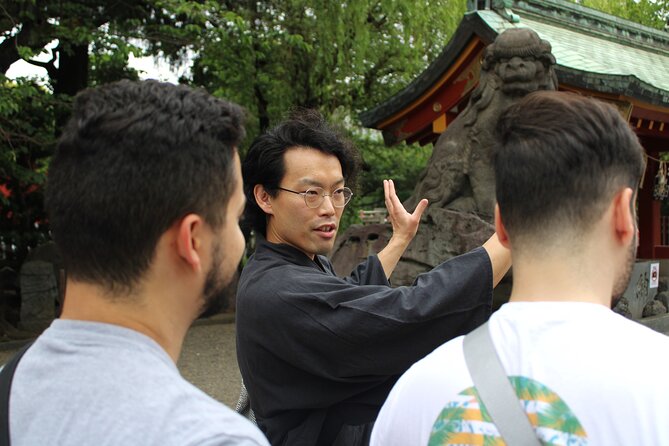
A standout feature here is seeing how Asakusa holds both Shinto and Buddhist space close together. You visit Asakusa Shrine and then Sensō-ji Temple as part of the same walking flow.
This pairing is useful because it addresses a common confusion. Many first-time visitors expect temples and shrines to feel completely separate. In Asakusa, they overlap in the way they sit in people’s minds and in the way the neighborhood is organized.
Ryo explains more about the religious views among Japanese people and why it is normal to experience both traditions in the same area. That helps you see the place like a local. You start noticing what kind of prayers people look like they are making, how they behave at each site, and what they treat as important.
You also get practical value: the tour helps you know where to look. With guide commentary, you will notice the big elements, but also the smaller details that are easy to miss when you are rushing for photos.
Buddhist Deity Statues: Understanding the Meaning, Not Just the Shape
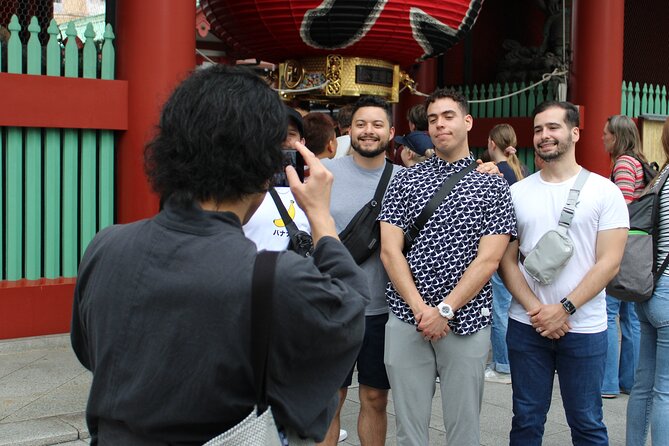
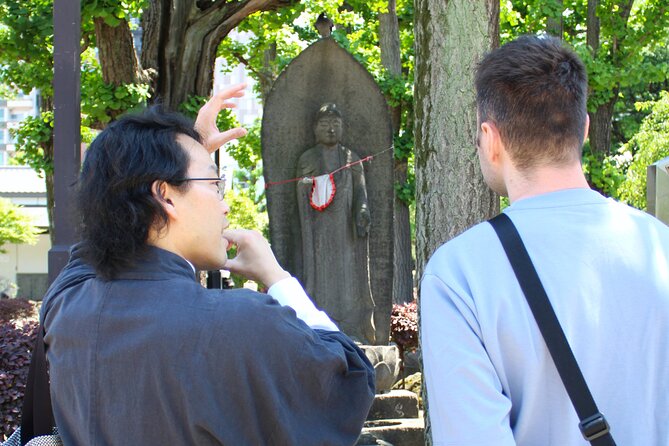
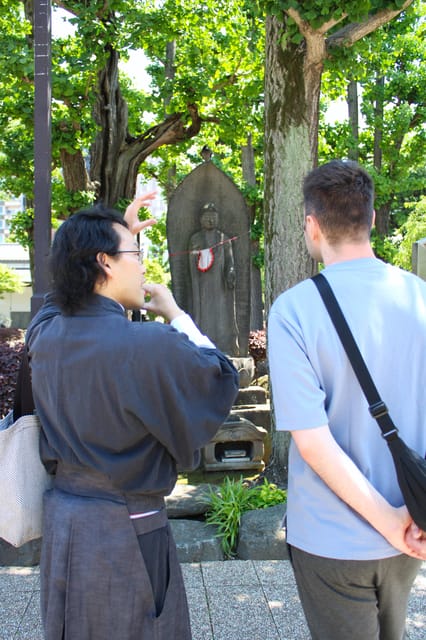
One of the most educational parts is the tour’s attention to Buddhist deities statues and their significance. You do not just pass by them. Ryo introduces the statues and explains why their presence matters.
This kind of explanation is not abstract. When you learn what to look for, it changes your viewing. You start seeing statue details as information rather than decoration.
I also like that this is tied to the broader Asakusa story. The area becomes a set of symbols that reflect how belief shows up in public space. That is a big difference between seeing an attraction and understanding why it exists.
If you are traveling with someone who usually tunes out religious explanations, the comedian angle can help. Humor can lower defenses. Then the facts land more easily.
The English Standup Humor Angle: Light, Local, and Tied to Culture
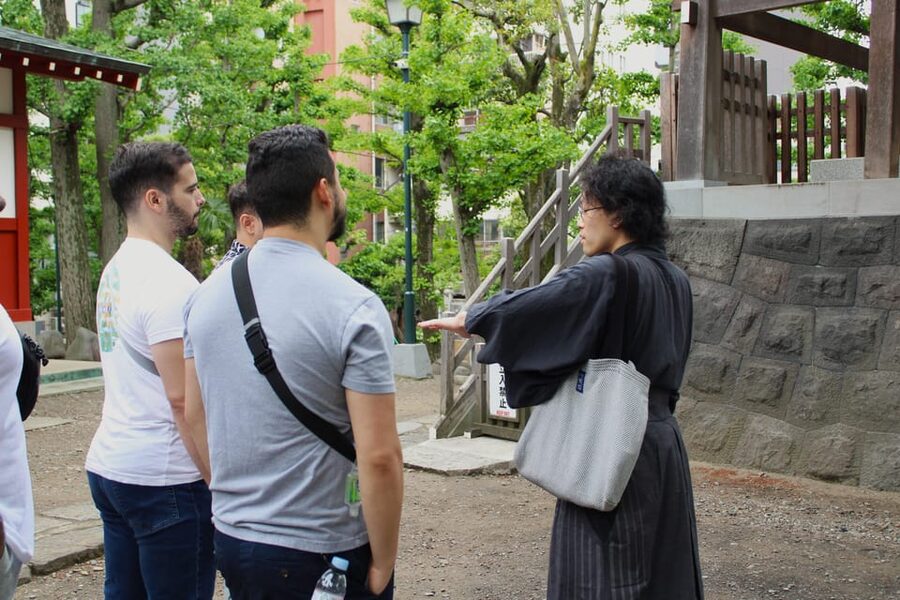
Ryo’s role is a “comedian guide,” and you feel it in the tone. He shares humor based on his career in standup comedy in English. The tone stays friendly, and the jokes are used to keep you engaged while he explains cultural context.
This is not a full comedy show. It is still a guided walking tour, with a set set of stops. But if you like stories with punchlines, you will probably enjoy this style more than a straight lecture.
One small bonus from the route, depending on timing, is that you may spot seasonal touches like cherry blossoms even during winter. It is not something you can count on, but it is the kind of extra moment that makes a tour feel alive.
If you dislike humor or prefer strictly quiet tours, this might not be your favorite style. But the overall approach seems designed to keep things accessible, especially for first-time visitors.
Price and Value: Is 90 Minutes Worth $31?
At $31 per person for about 90 minutes, this sits in the “short and useful” category. You are paying for three things that are hard to replicate solo in the same time window: a guided route, English guidance with cultural interpretation, and help with skip-line entry.
For first-time Asakusa visitors, the value is strongest. You get orientation early, then you get context as you see the icons. That means less time stuck with a screen and more time understanding what you are looking at.
The small group cap of 8 also protects the value. You are less likely to feel ignored, and you can ask questions without waiting for the guide to return to you in a crowd.
Where it might not be worth it is if you are already comfortable exploring Asakusa on your own and you only want the big sights. The tour does include the key icons, but it leans on explanation and pacing more than free time.
Who This Tour Suits Best
I think this tour fits best if you want a guided first visit. It is ideal for couples, solo travelers who like direction, and families who appreciate a guide who can keep kids and adults interested with humor.
You will also like it if you are curious about how Japanese culture shows up in everyday life, not just the postcard images. The religious mix angle, plus the context around Senso-ji, gives you real takeaways you can remember.
If you are traveling with limited time, 90 minutes is a smart length. It covers the essentials without eating half a day.
And if you are not interested in shopping streets or you hate the pressure of wandering with snacks as a plan, you are fine. This route does not build in long food and souvenir stops.
A Few Practical Tips Before You Go
For a smooth experience, I’d do three things. First, plan to arrive at Tokyo Cruise a few minutes early. Second, wear shoes you can walk in for a city stroll. Third, decide in advance what you want to do after the tour, since shopping for food and souvenirs is not the tour’s main focus.
Also, bring a question list. You do not have to be formal, but if you ask about what you should notice at Senso-ji or why certain statues matter, Ryo’s answers will make the sights stick.
Should You Book This Asakusa Comedy-and-Temples Tour?
If you are visiting Asakusa for the first time and you want your visit to feel meaningful, I’d book it. Ryo’s combination of local experience in Asakusa, comedy-flavored storytelling in English, and focused stops around Kaminarimon, Nakamise, Asakusa Shrine, and Sensō-ji is a strong match for travelers who want both fun and context.
It is also a good bet if you dislike wasting time figuring things out on your own. You get orientation early, a free view stop, and skip-line help so you spend your energy where it counts.
Pass on it only if you need lots of unscheduled shopping time or you prefer a strictly quiet, lecture-free tour. Otherwise, this is an efficient way to see the heart of Asakusa and understand what you are looking at while you do it.
FAQ
Where is the meeting point for the tour?
You meet in front of Tokyo Cruise, the water bus station in Asakusa.
How long is the Asakusa walking tour?
The tour lasts about 90 minutes.
Is the tour in English?
Yes. The live guide offers English and Japanese.
How big is the group?
The group is small, limited to 8 participants.
Do we skip the ticket line?
Yes, the tour includes skip-the-ticket-line help.
Is this tour wheelchair accessible?
Yes, it is listed as wheelchair accessible.
Do we stop to shop for food or souvenirs during the tour?
No. The itinerary does not include stops for food or souvenirs, though the guide can recommend options after the tour.
Can the guide pick you up from your hotel or drop you at the station?
No. Everyone meets at the stated location, and the guide does not pick up from hotels or take you to the station after the tour.
What is the cancellation policy?
You can cancel up to 24 hours in advance for a full refund.
Asakusa and the Skytree, Keep Going


Newest Tokyo write-ups from the Loving Japan desk






Asakusa, Senso-ji and Tokyo Skytree, side by side.
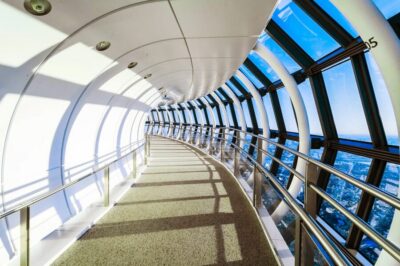 ★ 4.5TOKYO SKYTREE® Admission ticketFrom $1311,192 reviews
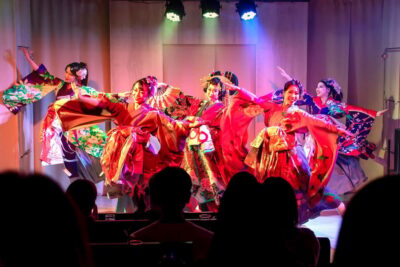 ★ 4.8Japanese Dance Cabaret Theater Asakusa-Kaguwa TicketFrom $492,270 reviews
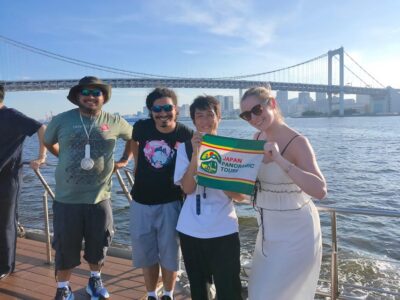 ★ 4.7Meiji Shrine, Asakusa, Skytree Bus Tour and CruiseFrom $1221,986 reviews
 ★ 4.9Roll and Authentic Sushi Making Class in AsakusaFrom $581,957 reviews
 ★ 4.8Asakusa Walking Tour with Sensoji Temple VisitFrom $221,583 reviews
 ★ 5.0Tokyo Asakusa Rickshaw TourFrom $421,375 reviews
 ★ 4.5Tokyo Panoramic 1 Day: Meiji Shrine, Asakusa, Odaiba and SKYTREE®From $851,222 reviews
 ★ 5.0Tokyo Go Kart: Asakusa, Skytree, and Akihabara **IDP MUST**From $99988 reviews
Filed on these lists too