
REVIEW · ASAKUSA, SENSO-JI AND TOKYO SKYTREE
Tokyo: Asakusa Walking Tour with Japanese Comedian
A comedian guide makes Asakusa click. This walking tour uses stand-up comedy to help you explore Senso-ji and the surrounding shrine and temple lanes without getting turned around. I especially liked how small-group pacing makes it easy to ask questions, and how the guide ties everyday street details to bigger Japanese cultural themes.
One possible drawback: you cover a lot of ground in about 1 hour 30 minutes. If you want slow, linger-long photos at every corner, you may feel a little time pressure, so plan comfy shoes and a flexible mindset.
In This Review
- Key things to know before you go
- Why Asakusa Feels Easier With a Japanese Comedian Leading
- Meeting Point at Tokyo Cruise Asakusa Pier, and the Pace You Should Expect
- Stop 1, Asakusa Culture Tourist Information Center: Use the 8th Floor View to Orient
- Enter Through Kaminarimon and Nakamise: The Icon That Frames Your Whole Walk
- Bentendo, the Bell of Time, and Nisombutsu: Learning What the Details Mean
- Nitenmon Gate and Asakusa Shrine: Why Gates and Deities Line Up
- Yogodo and Awashimado: Quiet Corners Inside a Big Complex
- Nishi-sando Sweet Stop at Kagetsu-do: Melon Bread Is the Built-In Reward
- Hozomon Gate and Final Arrival at Sensō-ji Main Hall: Your Ending Point With Context
- How to Time Your Walk: Crowds, Photos, and a Smart Morning Strategy
- Value at $37.99: What You Get for a Short, Guided Loop
- Who Should Book This Asakusa Comedian Walk, and Who Might Want More Time Alone
- Should You Book This Asakusa Comedian Walking Tour?
- FAQ
- How long is the Asakusa walking tour?
- Where do I meet the guide?
- Where does the tour end?
- How much does the tour cost?
- What sights are included, and are entry tickets required?
- Is there a snack stop during the tour?
- How large is the group?
- Are service animals allowed?
- Can I cancel for a full refund?
Key things to know before you go
- Comedian guide (Karate Comic Ryo) keeps history fun, not lecture-mode
- Small group size helps you keep up and ask questions as you walk
- Senso-ji highlights in one flow, from Kaminarimon through key temple gates
- Snacks are built in, including melon-bread at Kagetsu-do in Nishi-sando
- Start early for breathing room, with one note that 8am feels calmer than later
- Free entry at every planned stop, so your money goes to the guiding
Still on the Sumida side? A few more Asakusa options
- Tokyo: Japanese Dance Cabaret Theater Asakusa-Kaguwa Ticket
★ 4.8 · 2,270 reviews - Tokyo: Meiji Shrine, Asakusa, Skytree Bus Tour and Cruise
★ 4.7 · 1,986 reviews - Tokyo: Roll and Authentic Sushi Making Class in Asakusa
★ 4.9 · 1,957 reviews - Tokyo: Asakusa Walking Tour with Sensoji Temple Visit
★ 4.8 · 1,583 reviews
Why Asakusa Feels Easier With a Japanese Comedian Leading
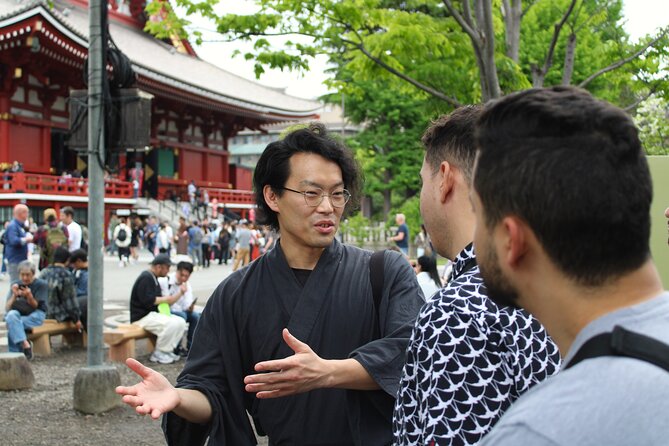
Asakusa can be a little overwhelming at first. You see the big gate, the crowd streams toward Sensō-ji, and suddenly you are guessing where to look next. This tour solves that with an “on-your-feet” route plus a comedian guide who keeps the walk moving and the explanations clear.
I liked that the humor never replaces the meaning. You still get the why behind what you are seeing, like the connections between Buddhist and Shinto elements around Sensō-ji. And because the guide is doing stand-up-style storytelling, you remember details without trying.
You’ll also feel the value of having someone local translate the space into something you can read. Small street cues, gate names, and statue locations become part of the story instead of random sights.
Meeting Point at Tokyo Cruise Asakusa Pier, and the Pace You Should Expect
You start at Tokyo Cruise Asakusa Pier, 1-chōme-1-1 Hanakawado, Taito City. The walk ends in front of the main hall of Sensō-ji, so you finish exactly where most people want to be anyway, just with context along the way.
The tour runs about 1 hour 30 minutes, so it is not a half-day wandering plan. You will be on foot through key areas, then you get a clean, guided route through the temple complex and back toward the core. The pacing is fast enough to cover many landmarks, but not so fast that you cannot take photos during the stops.
One practical tip: if you can, aim for an earlier time slot. A guest noted that starting at 8am helped them beat crowds, while the area got noticeably busier around 9am.
Stop 1, Asakusa Culture Tourist Information Center: Use the 8th Floor View to Orient
The first stop is the Asakusa Culture Tourist Information Center. You get a quick 10-minute look and a free ticket, plus the big payoff is the view from the 8th floor.
This is a smart way to start because you are about to walk a dense area. From above, you can spot how Nakamise Shopping Street and the Sensō-ji approach connect, and you understand why the route makes sense. It also helps you feel less lost when you suddenly descend into the busy shopping lanes.
If you prefer practical sightseeing to trivia, you’ll like this opener. It is short, simple, and it sets you up for better photos and easier navigation.
- Mt Fuji and Hakone 1-Day Bus Tour Return by Bullet Train★ 5.0 · 26,383 reviews
- 1-Day Tokyo Bus Tour★ 5.0 · 14,250 reviews
- Tokyo: teamLab Planets TOKYO Digital Art Museum Entry Ticket★ 4.6 · 9,779 reviews
- Mt Fuji & Hakone Cruise, Drum Show Bullet Train 1 Day from Tokyo★ 4.0 · 7,413 reviews
- Tokyo: Shinjuku Food Tour (13 Dishes at 4 Local Eateries)★ 5.0 · 6,603 reviews
Enter Through Kaminarimon and Nakamise: The Icon That Frames Your Whole Walk
Next, you head to Nakamise Shopping Street and the Kaminarimon area. The plan is to enter Asakusa through the main gate of Sensō-ji, the Kaminarimon icon.
This is one of the most recognizable entry points in Tokyo, and it works as a “reset button” for your brain. After you pass through, you immediately understand you are moving into a cultural zone designed for foot traffic and street life, not car access.
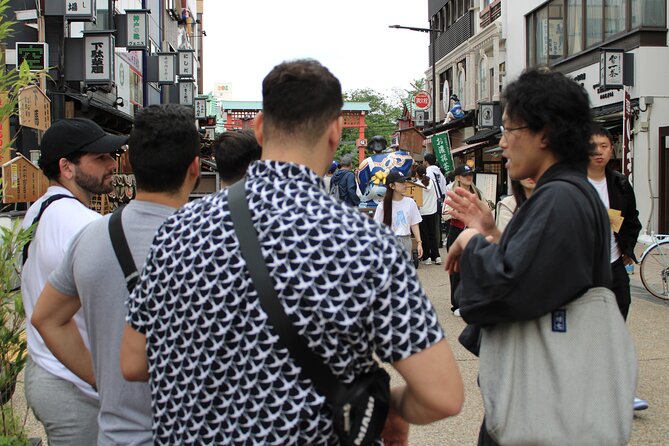
The upside of having a guide here is timing and attention. You do not just walk past shop signs. You get a sense of what to notice and what to ignore so you can keep moving toward the spiritual core.
Bentendo, the Bell of Time, and Nisombutsu: Learning What the Details Mean
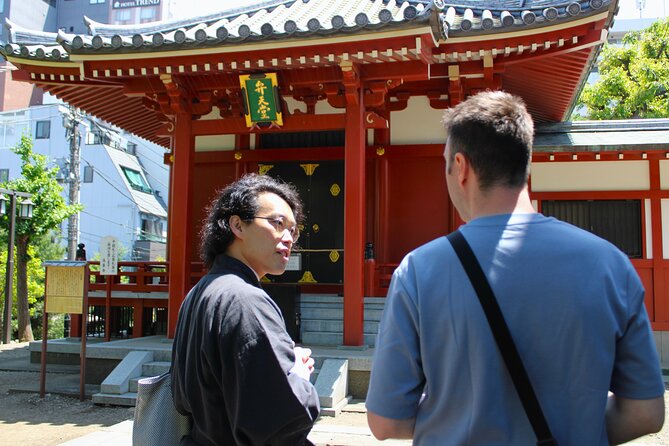
Once you reach the central temple area, the tour focuses on Sensō-ji’s inner highlights. It begins with Bentendo, where you learn about the deity of art and prosperity. It is a short stop, but the explanation helps you understand why this smaller space matters inside the larger complex.
Right by Bentendo, you then see the Bell of Time. This bell was regularly rung by a monk during the Edo period (16th to 18th centuries), to let people know the time. Even if you are not a history buff, it is a cool reminder that temples were part of daily city life, not only ceremonial spaces.
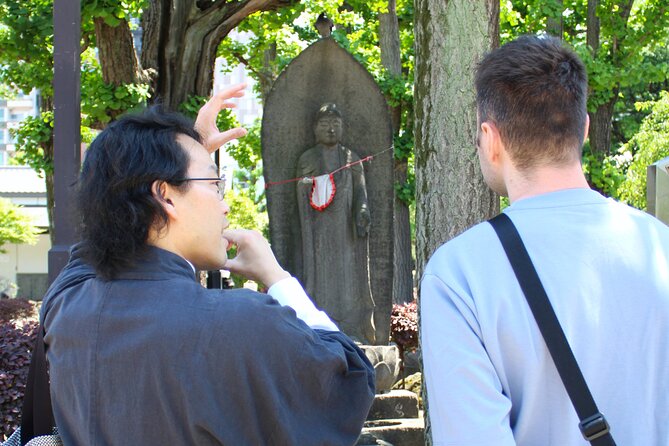
Then comes Nisombutsu, a calm spot with bronze and stone statues of Buddhist deities constructed in the 17th century. This is where you slow down a bit, even on a fast route. You are seeing religious art placed to shape how people pause, look, and reflect.
Nitenmon Gate and Asakusa Shrine: Why Gates and Deities Line Up
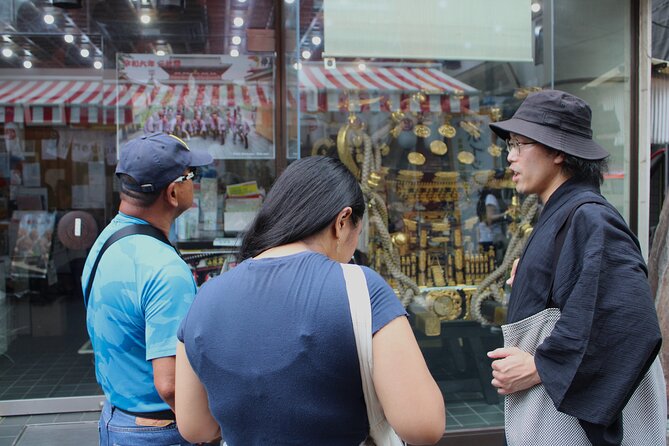
After the inner sights, the tour moves to Nitenmon Gate. It is described as one of Japan’s national cultural properties and it was used as the shogun’s gate, meaning only the general was allowed to pass. Even in a quick walk-by, that kind of detail changes how you see the architecture.
From there, you go to Asakusa Shrine. The tour connects the shrine to three deities related to the origin of Sensō-ji. You also get a look at the storage area for three large portable shrines, the type carried during local religious events.
This part of the route is valuable because it shows the “system” of the area. You see how one site connects to another, instead of treating temples and shrines like separate tourist attractions.
Yogodo and Awashimado: Quiet Corners Inside a Big Complex
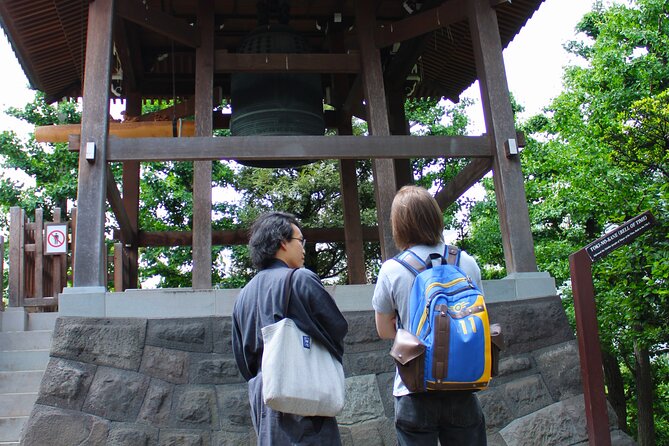
Two additional Sensō-ji spaces are included: Yogodo and Awashimado. Each stop is brief, but these are the kind of places you would easily rush past on your own if you did not know what they are.
In a complex like this, I like having a guide point out spots that feel more reflective than dramatic. You do not need a long explanation every time, but having someone connect these corners back to the overall religious layout makes it easier to slow down and actually notice.
Nishi-sando Sweet Stop at Kagetsu-do: Melon Bread Is the Built-In Reward
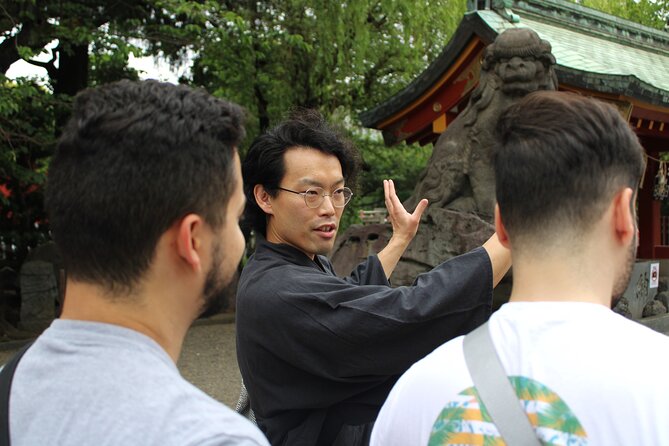
As you head toward the shopping lane off the main approach, you reach Asakusa Nishisando. If you want a snack, the tour can drop by 花月堂 (Kagetsu-do) for Japanese sweets, including melon-bread.
This is a practical win because it is not just sightseeing. It gives you a concrete food moment in the middle of the walk, so you do not have to make last-minute choices when you are already tired from temple steps and crowds.
If you are the kind of traveler who likes one memorable bite to anchor the day, this stop is worth planning around. Just keep in mind it is short, so you should be ready to move when the group does.
Hozomon Gate and Final Arrival at Sensō-ji Main Hall: Your Ending Point With Context
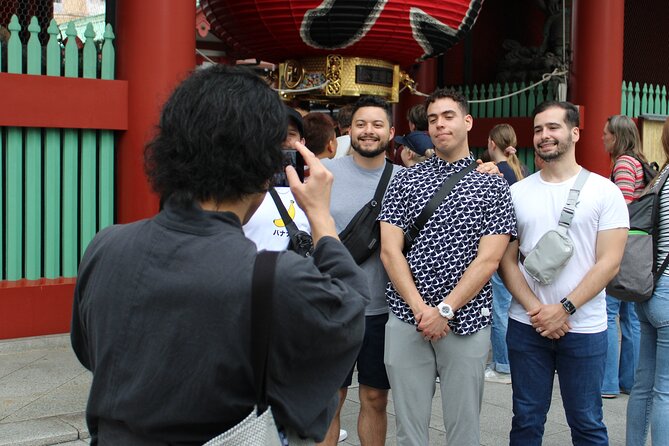
Near the temple route, you see Hozomon Gate, with guardian statues in front. Then your walking tour destination is the main event, Sensō-ji itself, the oldest temple in Tokyo with about 1,400 years of history.
The guide talks about Kannon Bodhisattva, a key Buddhist deity associated with Sensō-ji. That matters because the main hall is crowded and visually intense. If you do not understand the religious focus, you can feel like you are just snapping photos. With the tour context, the space reads as a living devotional site, not only a landmark.
I like that you finish right in front of the main hall. You can keep exploring afterward on your own, now that you know what you are looking at and why.
How to Time Your Walk: Crowds, Photos, and a Smart Morning Strategy
Asakusa is popular, so crowds are part of the deal. But timing changes everything. One guest specifically recommended starting around 8am because it felt calmer, and crowds picked up by about 9am.
So if you have flexibility, pick the earliest slot you can manage. You will get better photo angles, and the tour stops feel less like you are moving through a corridor of people.
Also, remember you are on foot with multiple gates and statue areas. Bring shoes you can stand in for repeated short stops. If you are sensitive to heat, a morning schedule is usually the easiest way to keep the walk comfortable.
Value at $37.99: What You Get for a Short, Guided Loop
At $37.99 per person, the price is not trying to be a luxury private tour. What you are paying for is structure and translation.
A few things make that value work:
- Many of the stops are free to enter, so your money goes into the guiding rather than ticket costs
- The group is kept small, so the comedian guide can answer questions and adjust the flow
- You get a compact route through major Sensō-ji and Asakusa landmarks in one session
- You also get a snack option at Nishi-sando, which helps the day feel complete
From comments I read, the biggest reason people felt it was worth it was how the guide mixes history, jokes, and real conversation. You are not just listening to facts while staring at a sign. You are learning how the whole neighborhood connects.
Who Should Book This Asakusa Comedian Walk, and Who Might Want More Time Alone
This tour fits best if you want the classic Asakusa experience but do not want to play map games all morning. If you are curious about Buddhist temples and Shinto shrines, and you like learning stories behind gates, statues, and street traditions, you will probably enjoy the flow.
It is also a good choice for families and mixed-age groups because the guide style is light and interactive, and the stops are short. One review even mentioned a teen asking lots of questions, with the guide being patient.
If you are the type who likes to spend a long time praying, meditating, or doing deep photo work at one single spot, you might find 1 hour 30 minutes a bit tight. In that case, you could still do the tour for orientation, then plan extra independent time at Sensō-ji after you finish.
Should You Book This Asakusa Comedian Walking Tour?
Book it if you want an efficient, fun way to understand Asakusa without getting lost. The standout strength is the Karate Comic Ryo format: jokes plus clear explanations plus attention to details people usually miss, like quieter temple corners and smaller monuments tied to local culture.
Skip it only if you strongly prefer unstructured self-guided wandering for hours. This walk is designed to move and to hit key landmarks in a set route.
If you do book, my best advice is simple: start early, wear comfortable shoes, and go in ready to laugh while learning why this neighborhood looks the way it does.
FAQ
How long is the Asakusa walking tour?
It lasts about 1 hour 30 minutes.
Where do I meet the guide?
You meet at Tokyo Cruise Asakusa Pier, 1-chōme-1-1 Hanakawado, Taito City, Tokyo 111-0033, Japan.
Where does the tour end?
The tour ends in front of the main hall of Sensō-ji (Sensoji).
How much does the tour cost?
The price is $37.99 per person.
What sights are included, and are entry tickets required?
The planned stops include areas like the Asakusa Culture Tourist Information Center, Nakamise Shopping Street, and multiple parts of the Sensō-ji complex. The information provided lists admission tickets for these stops as free.
Is there a snack stop during the tour?
Yes. The tour includes a possible stop for sweets at 花月堂 (Kagetsu-do) on Nishi-sando Shopping Street, including melon-bread.
How large is the group?
It is a small-group tour, with a maximum of 8 travelers.
Are service animals allowed?
Yes, service animals are allowed.
Can I cancel for a full refund?
Yes. You can cancel up to 24 hours in advance for a full refund. If you cancel less than 24 hours before the start time, the amount is not refunded.
Asakusa and the Skytree, Keep Going


Newest Tokyo write-ups from the Loving Japan desk
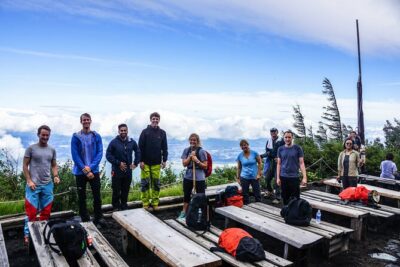
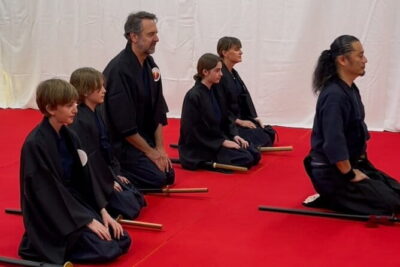
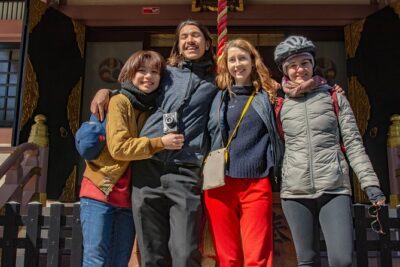
Asakusa, Senso-ji and Tokyo Skytree, side by side.
 ★ 4.5TOKYO SKYTREE® Admission ticketFrom $1311,192 reviews
 ★ 4.8Japanese Dance Cabaret Theater Asakusa-Kaguwa TicketFrom $492,270 reviews
 ★ 4.7Meiji Shrine, Asakusa, Skytree Bus Tour and CruiseFrom $1221,986 reviews
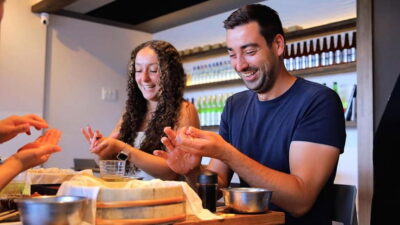 ★ 4.9Roll and Authentic Sushi Making Class in AsakusaFrom $581,957 reviews
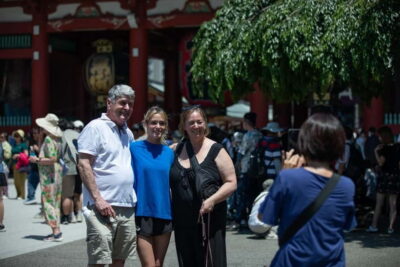 ★ 4.8Asakusa Walking Tour with Sensoji Temple VisitFrom $221,583 reviews
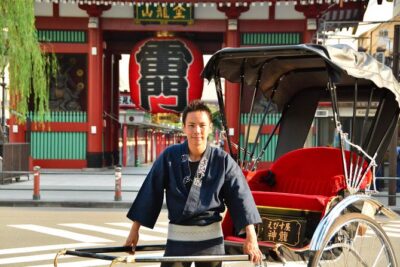 ★ 5.0Tokyo Asakusa Rickshaw TourFrom $421,375 reviews
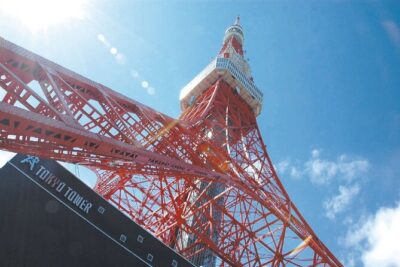 ★ 4.5Tokyo Panoramic 1 Day: Meiji Shrine, Asakusa, Odaiba and SKYTREE®From $851,222 reviews
 ★ 5.0Tokyo Go Kart: Asakusa, Skytree, and Akihabara **IDP MUST**From $99988 reviews
Filed on these lists too