
REVIEW · CYCLING AND E-BIKE TOURS
Tokyo downtown bicycle tour Tokyo Backstreets Bike Tour
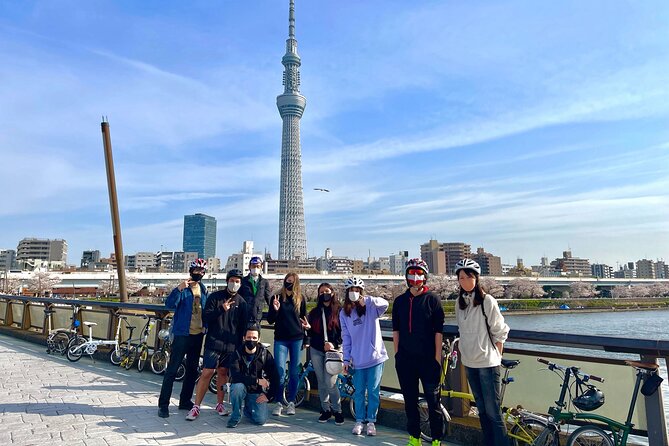
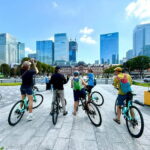
Tokyo makes sense on two wheels. This is a small-group bike tour that slips off main roads and keeps things flexible, so the day can fit what you care about. You get bikes and helmets ready for you, then roll through classic Tokyo neighborhoods, from temple streets to the Skytree area.
I like that you are not stuck in a rigid checklist. The guide can adjust the route and timing, and you can ask questions as you go, with stops picked for real local texture, not just postcards.
One thing to consider is the bike fit. The rental bikes are folding models with 14 to 20 inch sizes, set for heights about 140 to 180 cm, so if you are taller than that, you should tell the operator ahead of time.
In This Review
- Key things that make this tour special
- Why this Tokyo backstreets ride beats a normal walking loop
- Getting ready at the Sumida meeting point and choosing your bike
- Stop by stop, what you will actually see and why it matters
- Yamamotoya sakuramochi, where a snack becomes part of the story
- Honryuin Matsuchiyama Shoden, Senso-ji’s quieter side
- Imado Shrine, a romance and marriage power spot with cat charms
- Edo Taito Traditional Crafts Center, watch your eyes slow down
- Senso-ji, cycling up to Kaminarimon then going on foot
- Gardens, sumo, and the kind of Tokyo you do not see from tour buses
- Kyu Yasuda Garden, a 17th-century pause
- Ryogoku Kokugikan, sumo stadium views from the street
- Riding toward Skytree through Oyokogawa Water Park
- Kyojima Minami Park, old-school shopping and daily life
- How long, how far, and what pace feels like in real life
- The guide makes or breaks the day, and this one gets praise
- Value check: is $65.41 for 4 hours actually fair?
- Who should book this, and who might choose another option
- Should you book this Tokyo Backstreets Bike Tour?
- FAQ
- How long is the Tokyo downtown bicycle tour?
- How much does the tour cost?
- What is included with the tour?
- What kind of bikes are used, and will they fit me?
- Can I request a tandem bike?
- What happens if the weather is bad?
Key things that make this tour special
- A max group size of 6 means you actually get personal attention and an easier ride
- Flexible itinerary so you can spend more time where you want, not only where the clock says
- Included snack and water to keep energy steady while you hop between stops
- Off-main-road Tokyo for quieter streets and a more local rhythm
- Temples, gardens, and craft culture without feeling like a museum day
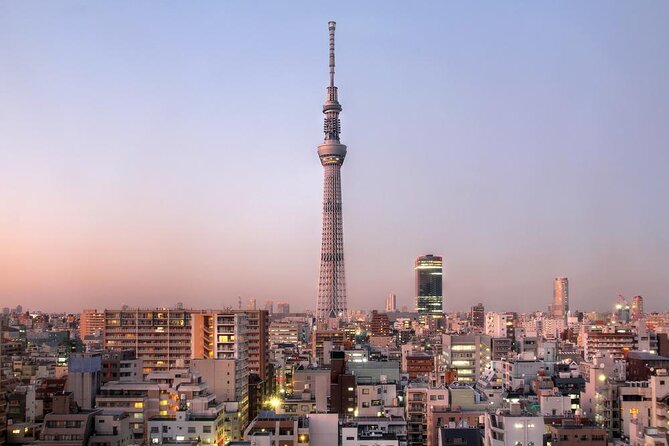
- Skytree stop from street level so it feels like a real neighborhood landmark
Cover Tokyo on two wheels instead
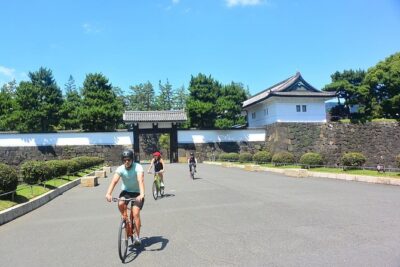
- Tokyo Guided Small-Group Biking Tour
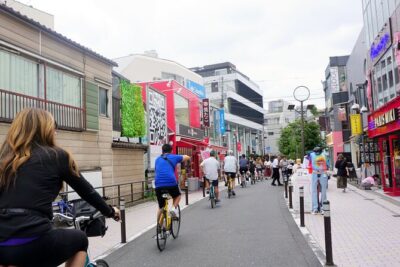
★ 5.0 · 1,250 reviews - Tokyo Great Cycling Tour
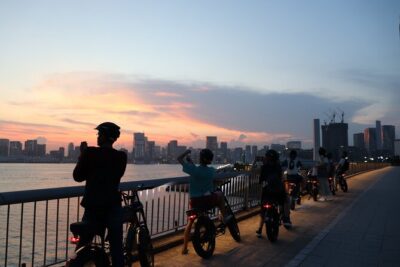
★ 5.0 · 811 reviews - Tokyo Top Highlights 3h Guided E-bike Tour
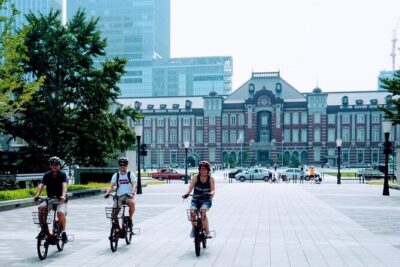
★ 5.0 · 714 reviews - 3h Tokyo E-Bike Tour: Hidden Gems, and Local Life with guide
★ 5.0 · 670 reviews
Why this Tokyo backstreets ride beats a normal walking loop
Tokyo on foot can feel like constant crossing and backtracking. On a bike, you move smoothly between places, and you get that rare mix of sightseeing plus neighborhood flow.
This tour also has the advantage of being grounded in everyday spaces. You will bike through areas where people shop, work, and live, then stop for culture that is close enough to feel personal. The result is a day that helps you understand Tokyo beyond the headline sights.
Getting ready at the Sumida meeting point and choosing your bike
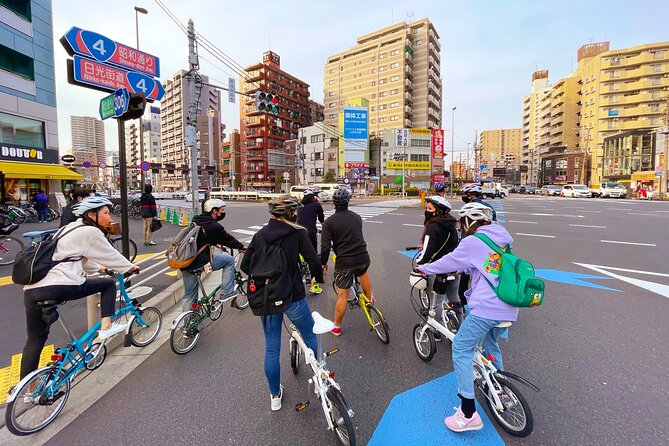
The meeting point is in Sumida City, in Higashimukōjima, at the shared office Synaps (2-chōme 24-14). It is near public transportation, and that matters because a tour like this is about starting smoothly, not wrestling with transit stress.
You will be riding a folding bike designed for most riders roughly 140 to 180 cm tall. If you are over 180 cm, inform the operator before your day so you do not show up and run into a sizing issue.
Helmets come with the bikes, but they are not mandatory. That is fine either way, but if you are used to wearing one, you can just put it on and feel more settled.
One more pro tip: if you are coming as a couple or family and want a tandem bike, you need to request it at least 3 days ahead. When the logistics are handled, the riding experience feels effortless.
Stop by stop, what you will actually see and why it matters
- Mt Fuji and Hakone 1-Day Bus Tour Return by Bullet Train★ 5.0 · 26,383 reviews
- 1-Day Tokyo Bus Tour★ 5.0 · 14,250 reviews
- Tokyo: teamLab Planets TOKYO Digital Art Museum Entry Ticket★ 4.6 · 9,779 reviews
- Mt Fuji & Hakone Cruise, Drum Show Bullet Train 1 Day from Tokyo★ 4.0 · 7,413 reviews
- Tokyo: Shinjuku Food Tour (13 Dishes at 4 Local Eateries)★ 5.0 · 6,603 reviews
Yamamotoya sakuramochi, where a snack becomes part of the story
You start with a classic sweet stop at Yamamotoya, known for sakuramochi. This is a cherry cake wrapped in a salt-pickled cherry leaf, filled with red bean paste.
What I like about starting with food is that it sets the pace right away. You are not just being dropped into culture, you are tasting something tied to the season and to Japanese everyday treat culture. Plus, it gives you a small reset before the ride begins.
Honryuin Matsuchiyama Shoden, Senso-ji’s quieter side
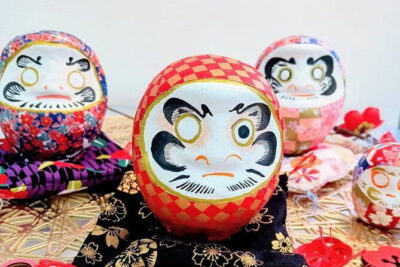
Next comes Honryuin Matsuchiyama Shoden, described as part of Sensoji and founded in 595. You will notice symbolic details, including images tied to a daikon (Japanese radish) and a pouch, with explanations about the mind trapped in deep ignorance.
Temples like this are the payoff for taking a backstreets route. Instead of only aiming at the big famous landmark, you get to see how the spiritual map spreads through the broader area. It also keeps the day from feeling like one giant photo sprint.
Imado Shrine, a romance and marriage power spot with cat charms
After that you ride to Imado Shrine, founded in 1063. The shrine is popular as a power spot for people seeking lovers or marriage partners, and you will see the familiar beckoning cat and fortune cat themes.
This is a good stop if you like atmosphere and meaning, even if you are not a deep temple person. It is also a nice contrast to the more formal temple architecture, because the charm culture is instantly readable and fun to look at.
Edo Taito Traditional Crafts Center, watch your eyes slow down
Then you shift from spiritual stops into craft focus at the Edo Taito Traditional Crafts Center (Edo Shitamachi Traditional Crafts Museum). It is a museum setting where you can see traditional handicrafts and the care behind Japanese craftsmanship.
This break is valuable because it gives your brain a rest from moving. You get a chance to slow your pace, observe materials, and connect the idea of Tokyo as “modern” with the craft traditions still practiced nearby.
Senso-ji, cycling up to Kaminarimon then going on foot
Senso-ji is the big name stop, with you cycling in front of the Kaminarimon gate and then leaving bikes to walk inside. That small change from riding to walking makes the experience feel more complete, since temple grounds reward slower movement.
You also get a practical benefit. For the busiest, most pedestrian-heavy zone, switching to walking helps you avoid the typical bike bottlenecks and keeps your visit comfortable.
Gardens, sumo, and the kind of Tokyo you do not see from tour buses
Kyu Yasuda Garden, a 17th-century pause
At Kyu Yasuda Garden, you will walk through a Japanese garden built in the 17th century. This is the kind of stop where you notice the quiet details, even if you only spend about 20 minutes.
What makes it worth your time on a bike tour is contrast. You get temple energy, then craft focus, then a garden that feels like a reset button before you head toward more modern landmarks.
Ryogoku Kokugikan, sumo stadium views from the street
You will bike past Ryogoku Kokugikan, the sumo stadium, with a short picture chance. Even if there is no match happening, this is still a meaningful landmark in Tokyo’s cultural calendar.
It also works well on this route because it is brief. You keep moving, but you still collect that sense of place that makes the day feel more like Tokyo and less like a checklist.
Riding toward Skytree through Oyokogawa Water Park
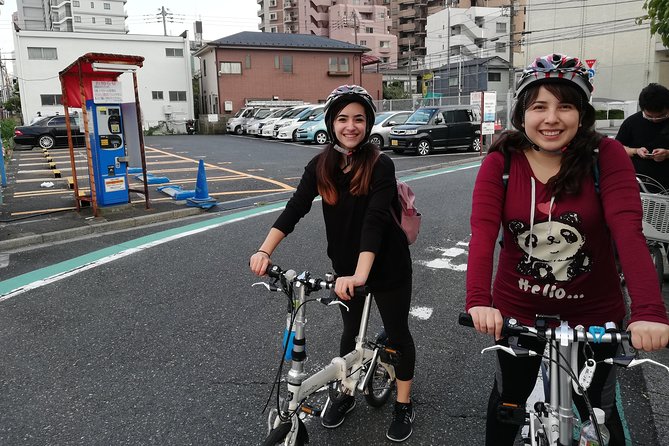
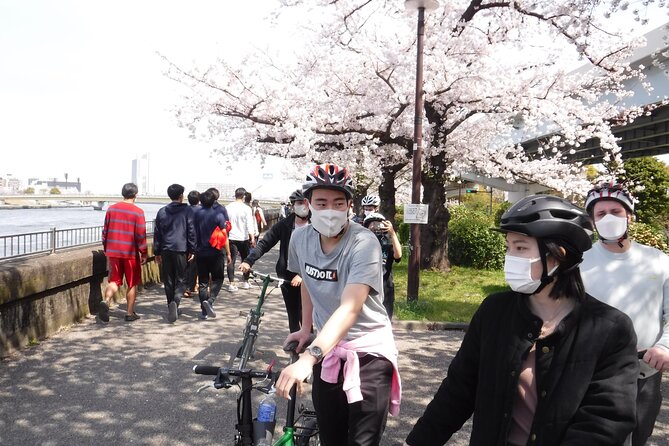
Next you cycle through Oyokogawa Water Park on the way toward Tokyo Skytree. This stretch gives you a more open-feeling ride compared with dense street blocks, and it helps break up the day so you do not feel like you only stop, look, and roll again.
Then comes Tokyo Skytree itself, with you cycling under the tower area and taking in the scale from a close, street-level perspective. A tower stop can feel like a modern photo wall, but arriving by bike makes it feel like part of daily life around you.
The route choice matters here. Instead of forcing Skytree as the end-of-day spectacle, it becomes one stop in a chain of neighborhoods and landmarks.
Kyojima Minami Park, old-school shopping and daily life
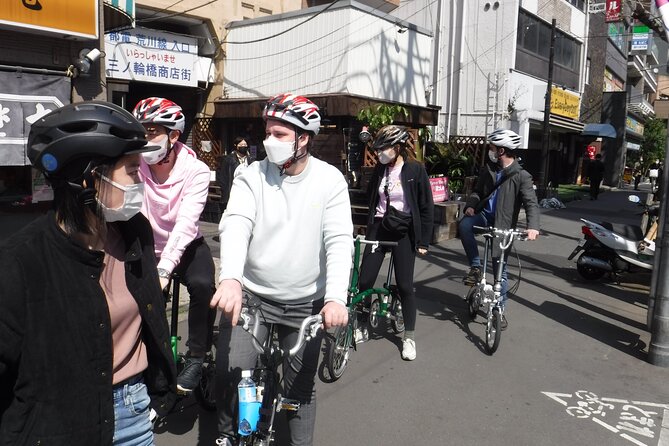
You finish with Kyojima Minami Park, an area described as old fashioned shopping malls where you can see daily life. This is the “so what is real Tokyo like right now?” moment.
I like that the day ends without a big exit-frenzy. You get a final view of ordinary streets and small commerce, which often makes the rest of your memories click into place.
How long, how far, and what pace feels like in real life
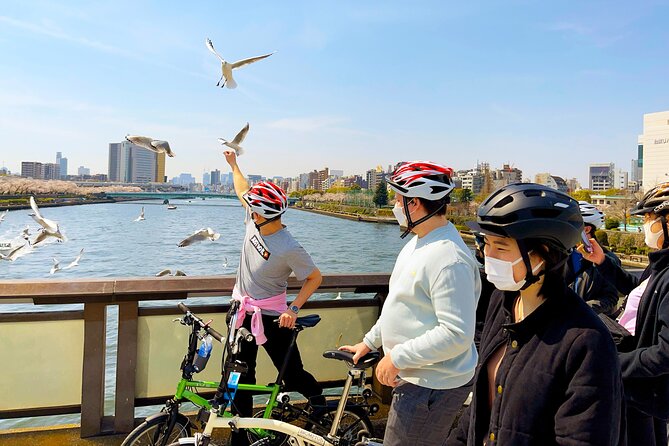
The tour runs about 4 hours. In that time, you cover a lot more ground than a walking tour, and one rider reported moving about 15 km in roughly 4 hours. That gives you a useful expectation for effort, especially if you are coming straight from a long flight.
The pace is generally described as easy and laid back, with quiet streets and comfortable riding. You will still need basic bike comfort, but this is not a high-intensity fitness ride.
If you want a day that helps with jet lag, this style also makes sense. Rolling through neighborhoods while stopping often is a kinder way to adjust to Tokyo time than doing a nonstop museum marathon.
The guide makes or breaks the day, and this one gets praise
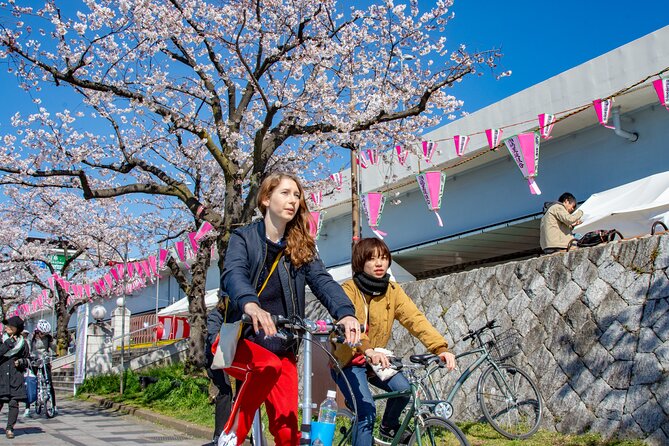
A big reason this tour earns such high marks is the human side. Guides are described as friendly, flexible, and attentive to questions and needs, with people appreciating good English and helpful explanations at stops.
Takeshi shows up repeatedly in the feedback. You will often hear that he is good at answering questions, taking photos for you, and customizing the day based on interests. One review even highlighted that the guide helped them spend more time in areas the pair cared about, instead of rushing through.
That matters because a Tokyo backstreets day can be confusing if you are on your own. A guide turns the streets into a readable map, with meaning attached to what you see, from symbolism at temples to the reason certain neighborhoods feel the way they do.
Value check: is $65.41 for 4 hours actually fair?
At $65.41 per person for about 4 hours, this tour is priced like a mid-range city experience. The value comes from what is included and the small group size.
You get a bike and helmet, plus water and a snack from a traditional sweet shop, not just sightseeing stops. You also get entry to sites where tickets are free, so your money stays focused on the experience and guidance rather than constant paid admissions.
When you factor in that you might cover around 15 km, see around a dozen meaningful stops, and ride on quieter streets with a guide, the cost starts to look reasonable. This is less about saving money and more about buying time, context, and a smoother route through Tokyo.
Who should book this, and who might choose another option
This is a strong match if you want:
- A fast way to understand central Tokyo neighborhoods
- Off-the-beaten-road sightseeing with fewer crowds at stops
- A comfortable pace with frequent breaks
- A guide who can adjust the route to your interests
It can be less ideal if:
- You are tall and need a specific bike size but you forget to notify the operator first
- You prefer strictly guided walking tours with no riding time
- You cannot handle bike riding at all, since the core of the experience is cycling
Should you book this Tokyo Backstreets Bike Tour?
Yes, if you want a practical half-day that mixes famous Tokyo touchpoints with real neighborhood texture. The small-group size, the included snack and water, and the chance to cover serious distance without feeling rushed are the big wins.
I would book it for your first couple of days in Tokyo when you want orientation, and also for later trips when you are tired of only repeating the main sights. If your schedule allows, choose a day with good weather, because the tour is described as requiring it.
If you tell me your dates and your height, I can help you decide whether this fits your comfort level, and which time of day is most comfortable for cycling.
FAQ
How long is the Tokyo downtown bicycle tour?
It runs for about 4 hours.
How much does the tour cost?
The price is $65.41 per person.
What is included with the tour?
Bikes and helmets are provided, and you also get water plus a snack from a traditional sweet shop.
What kind of bikes are used, and will they fit me?
The rental bikes are folding bikes with 14-20 inch sizing, suitable for people between about 140 and 180 cm tall. If you are over 180 cm, you should inform the operator before the tour.
Can I request a tandem bike?
Yes, but you need to inform the operator 3 days before the day you booked if you want to cycle with a tandem bike.
What happens if the weather is bad?
The experience requires good weather. If it is canceled due to poor weather, you will be offered a different date or a full refund.
Bicycles and E-Bikes We Have Ridden
Newest Tokyo write-ups from the Loving Japan desk
Cycling and E-Bike Tours, side by side.
 ★ 5.0Hidden Kyoto E-Biking tourFrom $1161,843 reviews
 ★ 5.0Tokyo Guided Small-Group Biking TourFrom $1061,250 reviews
 ★ 5.0Tokyo Great Cycling TourFrom $99811 reviews
 ★ 5.0Tokyo Top Highlights 3h Guided E-bike TourFrom $63714 reviews
 ★ 5.03h Tokyo E-Bike Tour: Hidden Gems, and Local Life with guideFrom $63670 reviews
 ★ 5.0Arashiyama Bamboo Forest & Hidden Gems Bike Tour (Early Bird)From $106613 reviews
 ★ 5.05 Top Highlights of Kyoto Full Day Bike Tour (E-bike option)From $172511 reviews
 ★ 5.0Full Day Biking Tour Exploring the Best of KyotoFrom $119498 reviews
Filed on these lists too