
REVIEW · SIGHTSEEING BUSES AND RICKSHAW RIDES
Tokyo: Open Top Panoramic Sightseeing Bus with Audio Guide
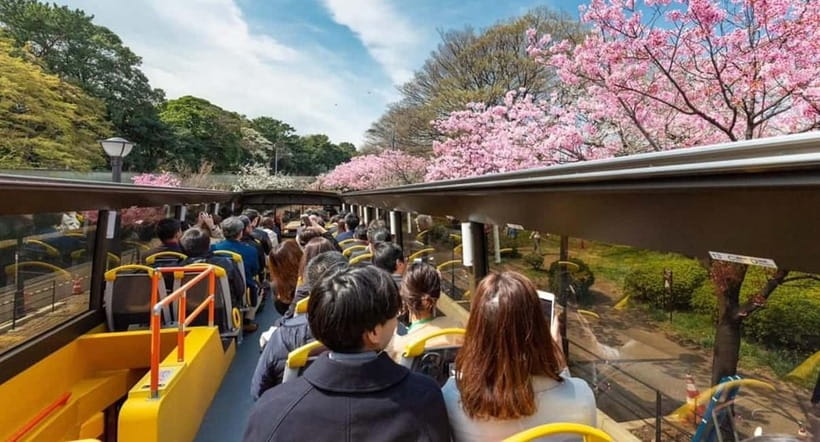
Tokyo looks different from an open-top bus. This tour is a smooth way to clock a lot of Tokyo without getting lost, with open-top views and a GPS audio guide that times the narration to where you are. What I like most is that the bus gives you a top-floor feeling for major sights, and the audio helps you make sense of what you are passing. One thing to plan for is weather, since the open-top may be closed if it rains.
I also like that it comes in two different loops, so you can choose Bay Course for water-and-bridge views or City Course for palace-area and skyscraper vibes. It runs about 70 minutes, and it is built for first-timers and anyone with limited time, especially since you start a short walk from Tokyo Station.
In This Review
- Key highlights that matter
- Price and what $11 actually buys you
- Getting on the bus near Tokyo Station, without the stress
- GPS audio, and why it matters more than you think
- Headphones: optional, but helpful if the mix bothers you
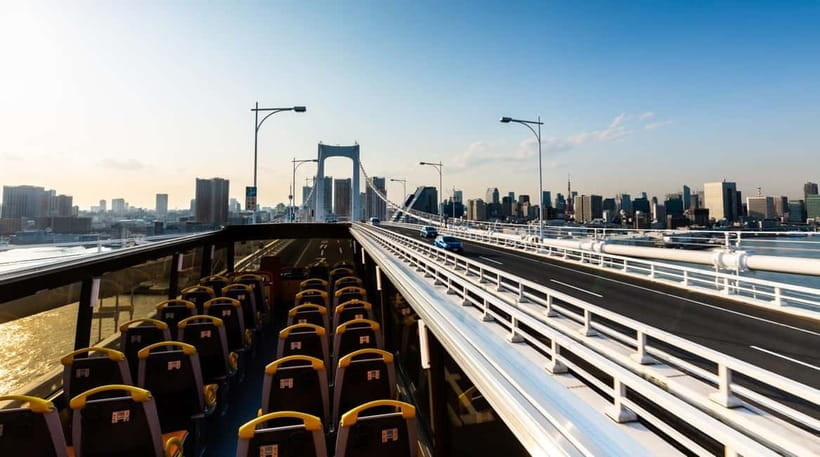
- Bay Course in 70 minutes: Tokyo Bay, Rainbow Bridge, and Odaiba energy
- Tokyo Station Red Brick and Marunouchi: easy launch, big-street views
- Zojoji Temple and Tokyo Tower: classic pairing, straight from the window
- Shibaura Rainbow Bridge (1st Level): the first bridge hit
- Fuji TV Building, Statue of Liberty, and Odaiba Seaside Park: the theme-park-meets-port stretch
- Rainbow Bridge (2nd Level) and Ginza: the return of the skyline
- City Course in 70 minutes: Imperial Palace area, Roppongi, and a Ginza finish
- Chidorigafuchi and Akasaka: leafy and official-feeling edges
- Meiji Jingu Gaien and Tokyo Midtown: where Tokyo looks different
- Roppongi and Tokyo Tower: skyline focus, fast and visible
- Stops you will remember, and what to do with them after
- Comfort, rules on board, and weather reality
- How “organized” feels in real life
- Value check: why this tour works for first-timers
- Who should book the Bay vs. City Course
- Should you book this open-top Tokyo bus tour?
- FAQ
- How long is the open-top bus tour?
- Do I need headphones for the audio guide?
- What languages are available on the audio guide?
- Are there different routes to choose from?
- Where do I meet the bus?
- How early should I arrive to check in?
- Does the tour run in rain?
- Is there a live guide on the bus?
- What items are not allowed on board?
Key highlights that matter
- Open-top bus views on major photo streets like Ginza and the Tokyo Bay area
- GPS-enabled audio guide in several languages that matches the bus location
- Two routes, Bay or City, each designed for a different side of Tokyo
- Rainbow Bridge viewpoints on the Bay Course, including both lower-level and higher-level crossings
- Short 70-minute format, perfect when you do not want to spend half a day commuting
- Simple rules for comfort, like no food and no selfie sticks on board
Let something else do the walking
- Mt Fuji and Hakone 1-Day Bus Tour Return by Bullet Train
★ 5.0 · 26,383 reviews - Tokyo Mt Fuji 5th St & Hakone Cruise Bus Tour w/Bullet Train
★ 4.4 · 5,024 reviews - Tokyo: Hop-On Hop-Off Sightseeing Bus Ticket
★ 3.9 · 4,207 reviews - Tokyo: Meiji Shrine, Asakusa, Skytree Bus Tour and Cruise
★ 4.7 · 1,986 reviews
Price and what $11 actually buys you
At about $11 per person for a 70-minute sightseeing loop, the value is mostly about convenience. You get a guided ride through Tokyo’s best-known landmarks, plus an audio layer that does the “what am I looking at?” job for you.
This is not a full-day tour with time to wander at length. Think of it as an efficient overview: you ride, you look, you listen, and you pick what you want to visit later on foot or by train.
Also, you are paying for the bus time and the audio system, not for a live lecturer. A Japanese-speaking staff member is available for assistance, but there is no live guide mentioned as part of the experience.
Getting on the bus near Tokyo Station, without the stress
Your starting point is the Tokyo VIP Lounge on the 2nd and 3rd floors, with a FamilyMart on the ground floor. It is roughly a 5-minute walk from Tokyo Station’s Yaesu North Exit, and the exact coordinates are 35.681763, 139.7713517.
The move that makes or breaks this tour is timing. You should check in 20 to 40 minutes early so boarding stays smooth. The meeting space is a paid facility, but open-top bus customers can use it free of charge starting 40 minutes before departure, so arriving too early may mean you have to pay to wait.
One more practical point: this is a shared space with other general users, so keep the area tidy and follow the on-site order. If you like calm starts, this is the moment to keep your group organized before you board.
GPS audio, and why it matters more than you think
This tour’s signature is the GPS-enabled audio guide system. The idea is simple: the bus uses GPS to track location and then delivers the right information automatically as you move through Tokyo.
The audio system is described as available in Japanese, English, Chinese, French, Korean, Vietnamese, and Thai, and it delivers sightseeing info in three languages based on current location. That matters because you are not forced to hear a long, fixed script that ignores the road you are actually on.
A few real-world notes based on what people reported:
- Some folks felt the audio music between segments could be louder than the voice, which makes it harder to focus. If you are sensitive to audio mixing, consider using headphones.
- There is also a mention that a live Japanese-speaking element at the start or onboard can sometimes be loud enough to compete with the audio, so if that is your pet peeve, you might want headphones.
- Mt Fuji and Hakone 1-Day Bus Tour Return by Bullet Train★ 5.0 · 26,383 reviews
- 1-Day Tokyo Bus Tour★ 5.0 · 14,250 reviews
- Tokyo: teamLab Planets TOKYO Digital Art Museum Entry Ticket★ 4.6 · 9,779 reviews
- Mt Fuji & Hakone Cruise, Drum Show Bullet Train 1 Day from Tokyo★ 4.0 · 7,413 reviews
- Tokyo: Shinjuku Food Tour (13 Dishes at 4 Local Eateries)★ 5.0 · 6,603 reviews
Headphones: optional, but helpful if the mix bothers you
Headphones are not included. They can be purchased for 100 yen with a 3.5mm mini plug. The important part for you: bring your own if you already have the right jack, or be ready to buy if you want clearer voice focus.
Bay Course in 70 minutes: Tokyo Bay, Rainbow Bridge, and Odaiba energy
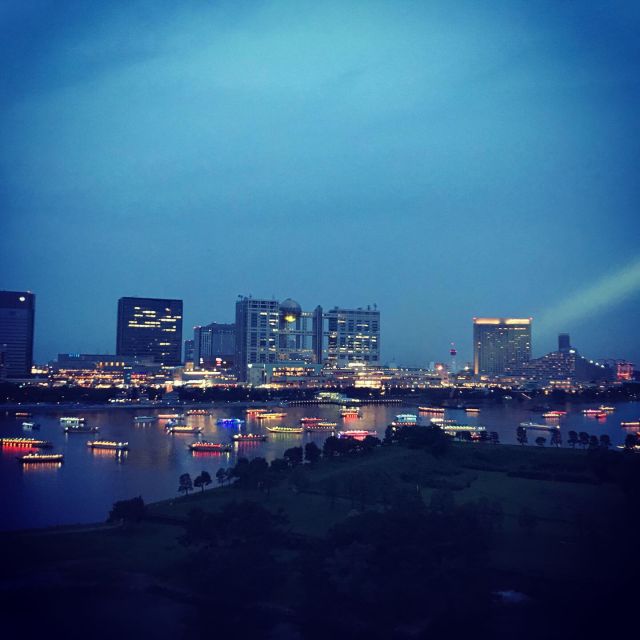
The Bay Course is designed for one thing: sea-and-bridge sightseeing plus a dose of Tokyo’s big skyline. It is about 70 minutes, and it runs through a loop that starts at Tokyo Station and moves toward the Odaiba area.
Here is what you pass, in order:
Tokyo Station Red Brick Station Building → Marunouchi → Zojoji Temple → Tokyo Tower → Shibaura Rainbow Bridge (1st Level) → Fuji TV Building → Statue of Liberty → Odaiba Seaside Park → Rainbow Bridge (2nd Level) → Shiodome → Ginza
Tokyo Station Red Brick and Marunouchi: easy launch, big-street views
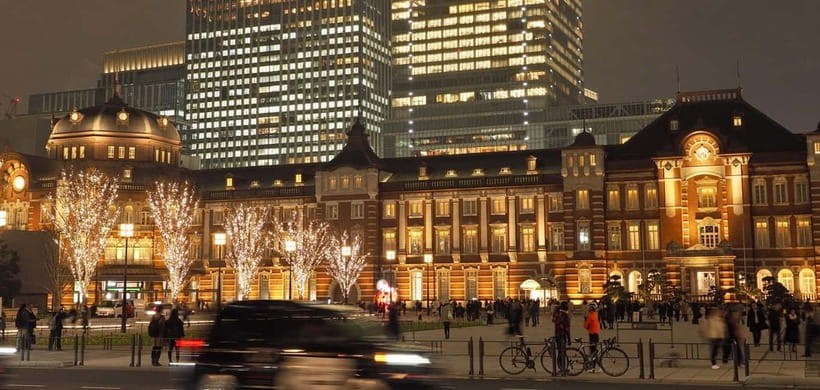
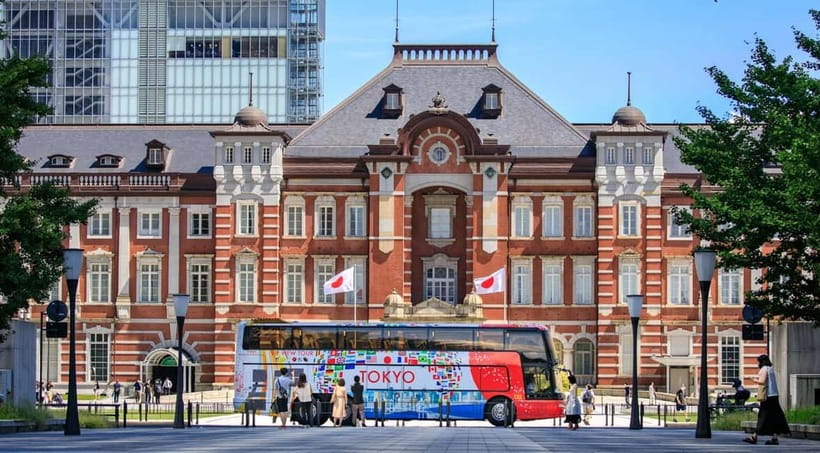
Your ride begins at Tokyo Station’s Red Brick Station Building area and then heads into Marunouchi. Even if you do not spend time there, this start is a plus because it gives you a clean “I am in Tokyo” anchor point fast.
Zojoji Temple and Tokyo Tower: classic pairing, straight from the window
Next you go past Zojoji Temple and Tokyo Tower. This part works well if you want one of Tokyo’s most recognizable silhouettes without hunting for it.
A tip for how to watch: be ready for moments where the bus timing lines up with clear sight angles. If it is sunny, this is also where the open-top experience really feels special.
Shibaura Rainbow Bridge (1st Level): the first bridge hit
The first big wow moment is Shibaura Rainbow Bridge (1st Level). You get water views plus the sense of scale that you do not always notice from land.
If you love “big geometry” city scenes, this is often why people choose the Bay route.
Fuji TV Building, Statue of Liberty, and Odaiba Seaside Park: the theme-park-meets-port stretch
From the bridge area, the route includes Fuji TV Building, the Statue of Liberty, and Odaiba Seaside Park. The payoff here is variety, Odaiba reads different from central Tokyo, and the open-top ride helps you take it in without constantly switching trains.
If you end up visiting Odaiba later, this loop is basically your preview. You see what direction looks promising and what you might skip.
Rainbow Bridge (2nd Level) and Ginza: the return of the skyline
The Bay Course brings you back over Rainbow Bridge (2nd Level) and then through Shiodome and Ginza. Ginza is a great final stretch because it tends to feel polished and energetic, and you finish with major Tokyo street recognition.
One practical drawback: knee space. A few people noted limited space on board and that the weather can swing from cold to hot quickly. If you are tall or sensitive to cramped seating, try to board early and claim the spot that feels best for leg comfort.
City Course in 70 minutes: Imperial Palace area, Roppongi, and a Ginza finish
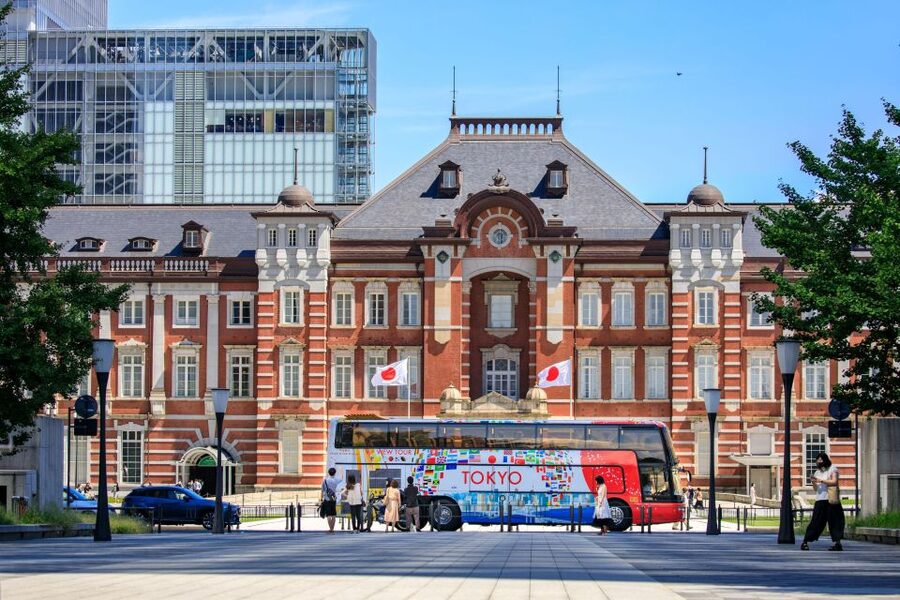
If Bay Course is “water and bridges,” the City Course is “classic central Tokyo plus modern skyline.” It is again 70 minutes with the same GPS-based audio approach.
Your City route passes:
Tokyo Station Red Brick Station Building → Marunouchi → Chidorigafuchi → Akasaka State Guest House → Meiji Jingu Gaien → Tokyo Midtown → Roppongi → Tokyo Tower → Hibiya → Ginza
Chidorigafuchi and Akasaka: leafy and official-feeling edges
The tour includes Chidorigafuchi, then Akasaka State Guest House. The names alone tell you this loop mixes everyday landmark recognition with official Tokyo “this is important” vibes.
If you like photos with a little variety, this part gives you a change of pace from dense business streets.
Meiji Jingu Gaien and Tokyo Midtown: where Tokyo looks different
Next you go past Meiji Jingu Gaien and Tokyo Midtown. Even from a bus, these stops help you notice how Tokyo shifts between cultural spaces and modern commercial architecture.
Roppongi and Tokyo Tower: skyline focus, fast and visible
Then it is Roppongi, followed by Tokyo Tower again as part of the City loop, and Hibiya before you land back at Ginza.
This route works well if you want more “Tokyo skyline” in a short ride, and fewer watery views. If you already know you are coming back to Tokyo for neighborhoods on foot later, the City Course can be a smart primer.
Stops you will remember, and what to do with them after
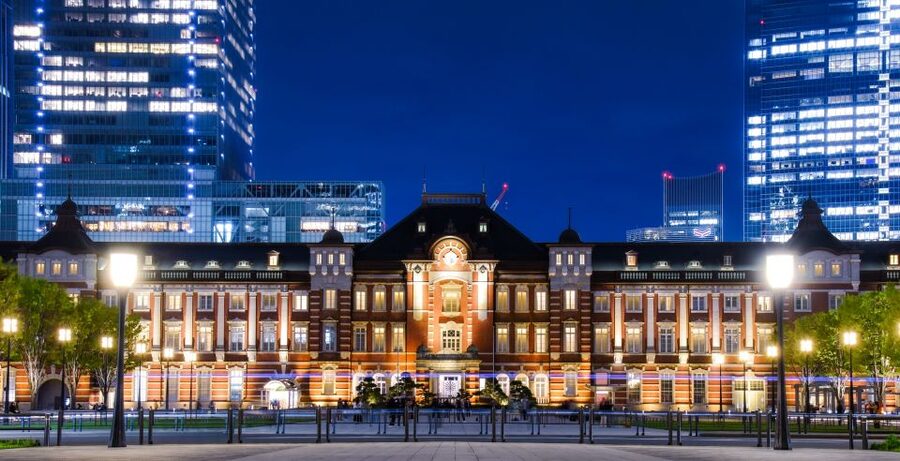
I like that both routes end with Ginza in the description. It gives you a straightforward next step. After a bus loop, you often want a walk or a quick meal near something iconic, and Ginza is an easy anchor.
Because this tour is short, your best strategy is not to treat it like a museum visit. Instead, treat it like a scouting mission. When a street, building, or bridge view hits you, note the general area and decide what you want to explore in more detail afterward.
Rain matters here too. If it rains, the open-top may be closed. That can still be fine for seeing landmarks through windows, but it changes the feel of the ride. If open-top views are your main goal, check weather independently before you go.
Comfort, rules on board, and weather reality
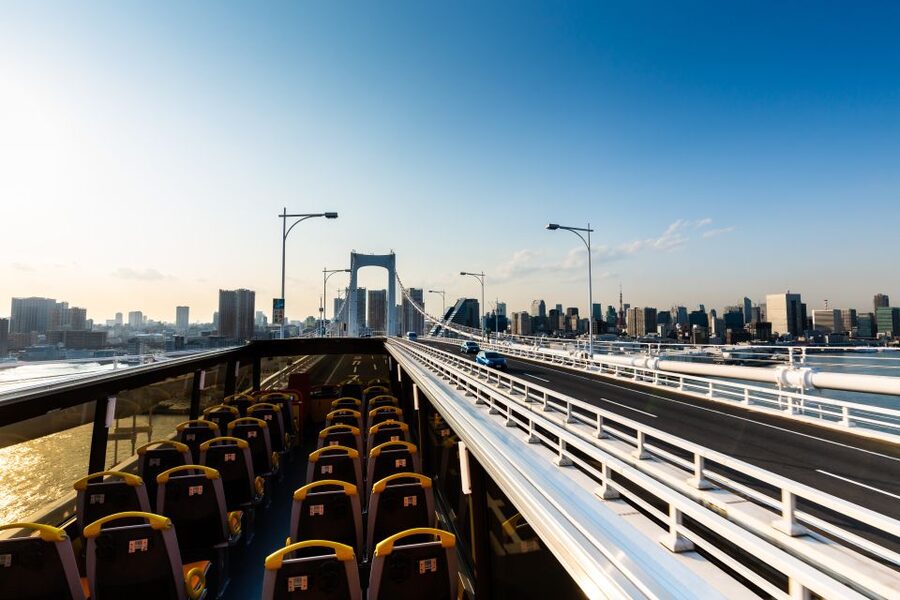
This is an open-top bus, so you should expect an outdoor experience even though you are on a vehicle. The tour runs rain or shine, with cancellations only noted for extreme weather like typhoons, and it explicitly says open top may be closed if it rains.
Practical onboard rules you should follow:
- No smoking
- No selfie sticks
- No food in the vehicle
- No umbrellas
If you are the kind of person who always brings a compact umbrella “just in case,” plan for rain differently. And for photos, leave the selfie stick at home, because it is listed as not allowed.
Also, the open-top aspect affects comfort. A review mentioned being at the mercy of the weather, too cold or too hot. That is not surprising, but it is a good reminder: dress like you will be outside for parts of the ride.
How “organized” feels in real life
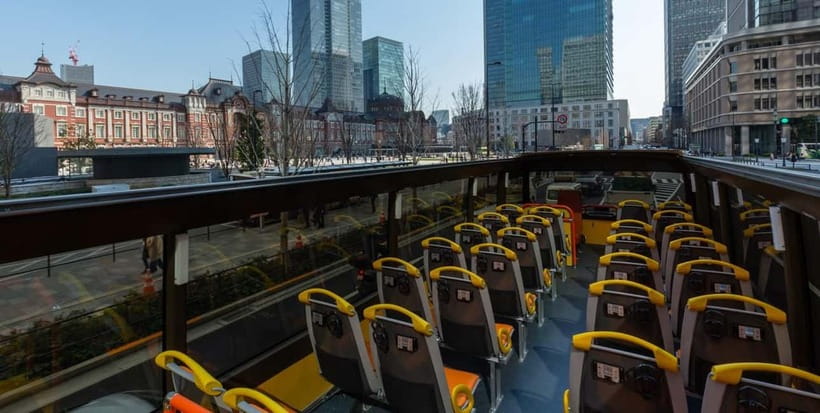
Check-in is very time sensitive. You must show up early and board where they tell you, because delays are not accommodated and refunds are not issued for late arrivals or arriving at the wrong location.
Once people were inside and seated, the mood tends to be calm. Several reports praised the experience as relaxing, with helpful staff and safe driving. One specific example: staff guided people from the check-in room to the bus with a short walk, which helps if you are jet-lagged and trying to orient yourself.
There were also a couple of friction points. One person described a frosty reception at the meeting spot and confusion about where to wait. Another said the meeting place did not match the word VIP, and that they were not offered complimentary drinks. None of that changes the ride itself, but it does tell you to keep expectations practical: show up, find the right floor, and follow the staff directions.
Value check: why this tour works for first-timers
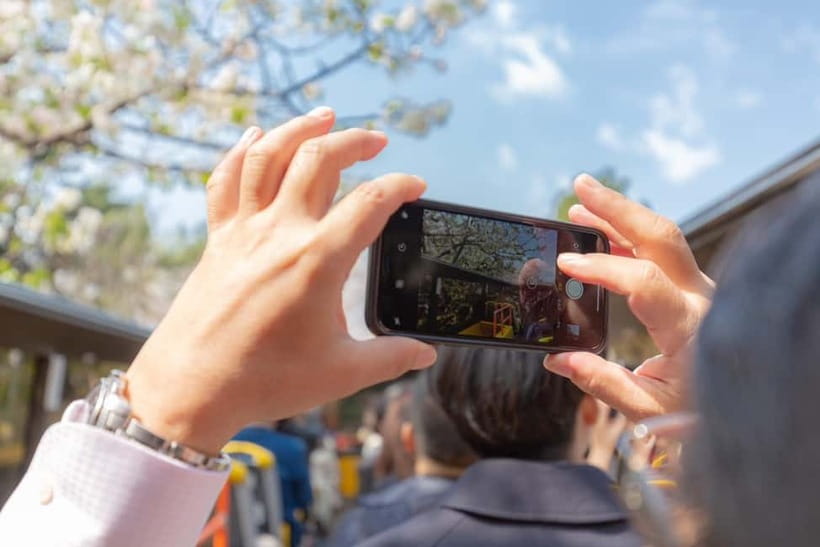
For $11 and a 70-minute duration, this tour is mostly about getting your bearings. You get a lot of landmark exposure in a short time window, without buying multiple tickets or planning route transfers.
It also helps that the audio guide is GPS-driven. Instead of staring at a map every few minutes, you can look out the window while the guide updates automatically. That is the kind of convenience that saves energy, especially if it is your first day in Tokyo.
If you are budget-minded, remember that headphones cost extra, and that the open-top experience can be affected by rain. Still, at this price point, the trade-off often feels worth it for most people who want a fast overview.
Who should book the Bay vs. City Course
Choose Bay Course if you care about:
- Tokyo Bay and Rainbow Bridge views
- Odaiba area landmarks like Odaiba Seaside Park
- A route that feels more like “port Tokyo”
Choose City Course if you care about:
- More central Tokyo landmarks, including Chidorigafuchi and Meiji Jingu Gaien
- A mix of modern areas like Roppongi and city streets leading into Ginza
- A skyline focus with fewer bridge-and-water moments
If you only have time for one loop, I would pick based on your day. If you want a stronger visual “Tokyo wow” moment, Bay Course tends to deliver that through bridges and bay views.
Should you book this open-top Tokyo bus tour?
Yes, if you want an easy, efficient way to see major Tokyo landmarks in 70 minutes, with a GPS audio guide that keeps explaining as you move. I especially think it is a good first-day move when you are still learning where things are.
I would hesitate if you are very sensitive to audio mixing or cramped seating. Also consider the weather. If rain is likely, be prepared that the open top may be closed, and you may feel less of the open-air thrill you came for.
If you like structure, this tour is straightforward: you board near Tokyo Station, ride your loop, and end in the Ginza area where it is easy to continue your day.
FAQ
How long is the open-top bus tour?
It is 70 minutes with the audio guide.
Do I need headphones for the audio guide?
Headphones are optional. The listing notes 100 yen for headphones, and the jack supports 3.5mm mini plugs.
What languages are available on the audio guide?
The GPS audio system is available in Japanese, English, Chinese, French, Korean, Vietnamese, and Thai.
Are there different routes to choose from?
Yes. There are two 70-minute routes: Bay Course and City Course.
Where do I meet the bus?
The meeting point is Tokyo VIP Lounge on the 2nd and 3rd floors of the building, about a 5-minute walk from Tokyo Station’s Yaesu North Exit. It also has a FamilyMart on the ground floor.
How early should I arrive to check in?
You should check in 20 to 40 minutes before the scheduled departure time.
Does the tour run in rain?
It operates rain or shine, with cancellations only for extreme weather such as typhoons. If it rains, the open top may be closed.
Is there a live guide on the bus?
No live guide is listed as included. There is Japanese-speaking staff available for assistance.
What items are not allowed on board?
You are not allowed smoking, selfie sticks, food in the vehicle, or umbrellas.
Let Something Else Do the Walking

Newest Tokyo write-ups from the Loving Japan desk
Sightseeing Buses and Rickshaw Rides, side by side.
 ★ 5.0Mt Fuji and Hakone 1-Day Bus Tour Return by Bullet TrainFrom $16326,383 reviews
 ★ 5.01-Day Tokyo Bus TourFrom $12914,250 reviews
 ★ 5.0PERFECT KYOTO 1-Day Bus TourFrom $12913,518 reviews
 ★ 5.0Peaceful Hiroshima & Miyajima UNESCO 1 Day Bus TourFrom $1295,309 reviews
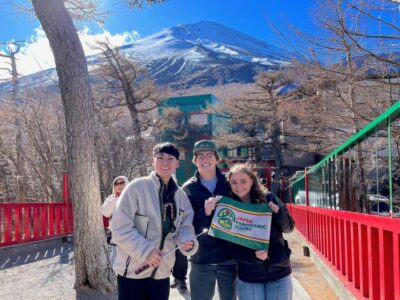 ★ 4.4Tokyo Mt Fuji 5th St & Hakone Cruise Bus Tour w/Bullet TrainFrom $1545,024 reviews
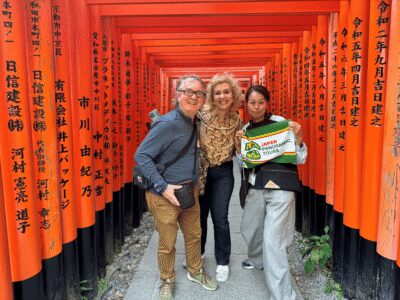 ★ 4.8Fushimi Inari, Kinkakuji, Bamboo Grove 1 Day Bus TourFrom $1224,316 reviews
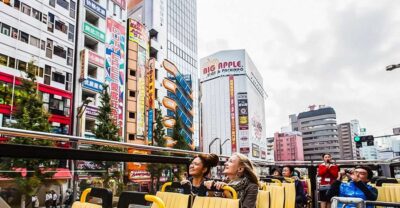 ★ 3.9Hop-On Hop-Off Sightseeing Bus TicketFrom $304,207 reviews
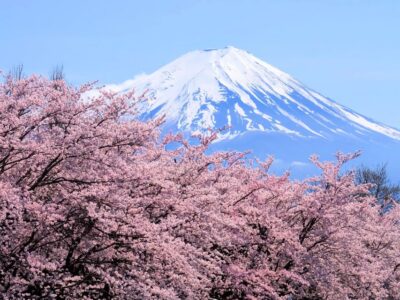 ★ 4.2Mt. Fuji 5th Station & Hakone Cruise 1-Day Bus TourFrom $1292,381 reviews
Filed on these lists too