
REVIEW · SHIBUYA, SHINJUKU AND HARAJUKU WALKS
Tokyo: Shibuya Authentic Food Tour & Local Delights
Tokyo food, minus the guesswork.
This Shibuya walking tour is built around four local meals you would not easily find on your own, starting with a stroll that takes you past Hachiko and across the famous Scramble Crossing. I like how the route connects big-picture Tokyo landmarks with the smaller, everyday restaurant streets you actually want to experience at night. You are also getting guide talk as you go, not just a list of places to eat.
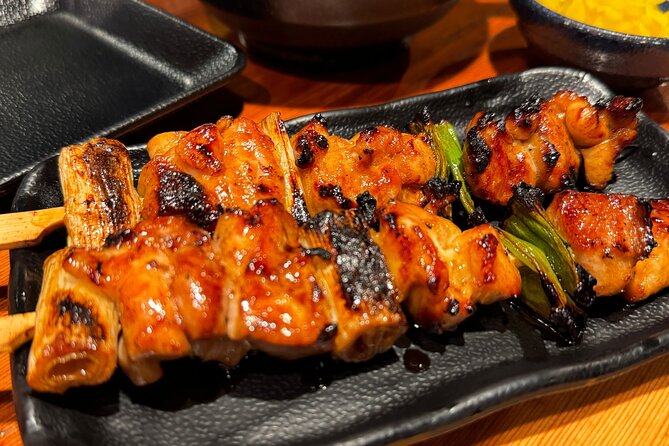
I love the payoff for your appetite: you get enough food for a satisfying dinner plus two complimentary drinks (alcoholic and non-alcoholic). I also like that the menu style hits Tokyo crowd favorites you can name and crave, like smoky yakitori, crispy tonkatsu, and sushi, spread across multiple stops.
One consideration: the pacing is mostly restaurant-based, so it is less of a pure street-food crawl. Also, while the guide is listed as English speaking, one review noted English was not fluent, and a stop may include take-away food without a clearly planned spot to eat it.
In This Review
- Key things I’d circle before you book
- Shibuya at night, four meals, and a guide who talks through the bites
- The 6:00 pm meeting at SHIBUYA TSUTAYA and how to spot your group fast
- The route begins with Hachiko and the Scramble Crossing, then turns into food streets
- Stop 1: Shibuya Center-gai izakaya stop for your first real bite
- Stop 2: Dogenzaka streets and the next rounds of Shibuya favorites
- The four-stop structure, what it means for your hunger (and your photos)
- Guide talk is the secret sauce, and you may get different styles
- Drinks included: choosing alcohol or going non-alcoholic
- Group size matters more than you think (up to 15)
- Price and value: is $90 worth it?
- What type of traveler this tour suits best
- Should you book this Shibuya Authentic Food Tour
- FAQ
- How long is the Shibuya Authentic Food Tour?
- What time does the tour start?
- How many food stops are included?
- Are drinks included?
- What food can I expect to try?
- How big is the group?
- Where is the meeting point?
- Is hotel pickup included?
- Can I cancel for free?
Key things I’d circle before you book
- Four food stops in Shibuya, designed to feel like a full local dinner rather than random snacks
- Evening timing at 6:00 pm so you can fit it after a day of sightseeing
- Small group size up to 15 for easier conversation and quicker moving between places
- Two drinks included so you can try something local without hunting it down first
- Center-gai and Dogenzaka lanes that locals use, not just tourist sidewalks
- Yakitori, tonkatsu, and sushi built into the experience plan
Other routes through the west side of Tokyo, compared
- Tokyo: Shinjuku Food Tour (13 Dishes at 4 Local Eateries)
★ 5.0 · 6,603 reviews - Tokyo Bar Hopping Tour in Shinjuku (All-You-Can-Drink + Dinner)
★ 5.0 · 3,587 reviews - Official Street Go-Kart in Shibuya
★ 5.0 · 3,435 reviews - Tokyo: Shinjuku Food Tour (15 Dishes and 4 Eateries)
★ 4.9 · 2,033 reviews
Shibuya at night, four meals, and a guide who talks through the bites
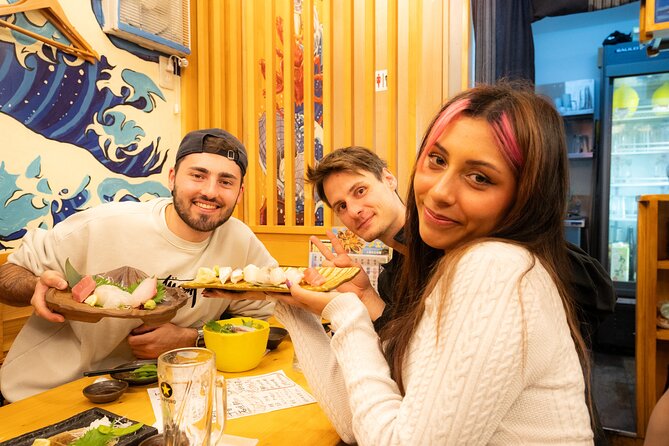
If you are heading to Tokyo and your calendar is tight, an evening food tour is one of the easiest ways to make the city taste like something real. This one works because it is not trying to be everything at once. In about 3 hours, you move through Shibuya’s main food streets while a local guide helps you understand what you are eating and why Japanese diners order it the way they do.
I also like the structure. You start with a major landmark moment, Hachiko and the Scramble Crossing, then you go into the side streets where the restaurant life actually happens. It is the difference between seeing Shibuya and experiencing Shibuya.
And because it is a walking tour, you do not waste time with transit logistics. You get your steps in, you see the neighborhood’s energy up close, and you still end with a meal that feels like dinner, not a cookie stop.
The 6:00 pm meeting at SHIBUYA TSUTAYA and how to spot your group fast
The tour meets at SHIBUYA TSUTAYA in Shibuya (Udagawachō, near Q Front). The start time is listed as 6:00 pm, and the tour ends back at the meeting point area.
Practical tip: arrive a little early, not because the tour runs late, but because Shibuya stations can be a maze. Once you are inside the TSUTAYA area, your biggest job is finding the guide and matching your group size. The tour uses a mobile ticket, so have it ready on your phone right when you arrive.
No hotel pickup is included. If you plan to eat with a friend after, you will want to build in time to get back to your own hotel. Still, meeting near one of Tokyo’s biggest transit hubs is usually an advantage. You are not starting from some remote address.
The route begins with Hachiko and the Scramble Crossing, then turns into food streets
The itinerary starts with a pass by Hachiko. Think of that as your Shibuya “orientation moment.” Even if you have seen photos of Hachiko, it helps to stand there in person before you move into the narrower streets where you will be eating.
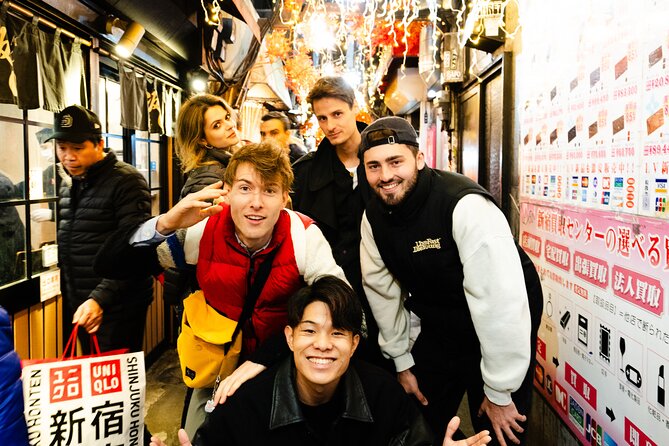
Then you walk across the Scramble Crossing and head into Center-gai, a street area packed with restaurants and izakayas. This is where the tour’s main idea shows: it uses a familiar highlight to pull you into the less obvious places.
If you like food tours but hate wasting time searching for an open spot that suits your tastes, this structure is a win. You get a quick landmark payoff, then you immediately shift to local dining lanes.
- Mt Fuji and Hakone 1-Day Bus Tour Return by Bullet Train★ 5.0 · 26,383 reviews
- 1-Day Tokyo Bus Tour★ 5.0 · 14,250 reviews
- Tokyo: teamLab Planets TOKYO Digital Art Museum Entry Ticket★ 4.6 · 9,779 reviews
- Mt Fuji & Hakone Cruise, Drum Show Bullet Train 1 Day from Tokyo★ 4.0 · 7,413 reviews
- Tokyo: Shinjuku Food Tour (13 Dishes at 4 Local Eateries)★ 5.0 · 6,603 reviews
Stop 1: Shibuya Center-gai izakaya stop for your first real bite
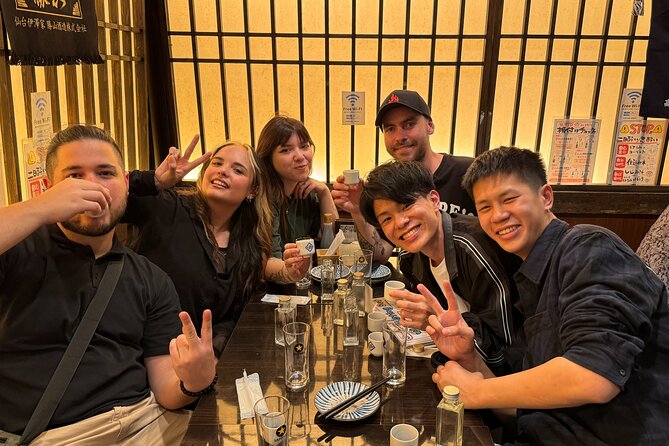
Your first neighborhood stop is Shibuya Center-gai, and it includes time at one local izakaya restaurant. This matters because izakaya culture is not just about food, it is about the flow of a night out. The guide helps you understand what to order and how Japanese diners think about sharing dishes.
The tour segment here is about 1 hour, which is enough time to settle in, eat something warm and smoky, and still keep the momentum for the next stops. This is often where people get their first sense of whether the tour style fits them. If you enjoy casual dining, this should feel right.
Potential drawback to keep in mind: this is not a “grab-and-go only” tour. Even if one place offers take-away, most of the experience is designed around sitting, ordering, and eating at local restaurants. If you want only street snacks, you might find the restaurant time a little heavier than you expected.
Stop 2: Dogenzaka streets and the next rounds of Shibuya favorites
After Center-gai, you move toward Dogenzaka, a well-known cluster of restaurants and izakayas that locals of many ages use. The tour specifically aims to avoid tourist traps, so the streets you walk matter. Dogenzaka is one of those areas where the sidewalks are full, but the best eating is still in the side doors and small storefronts you would normally miss.
This portion is about 1 hour 30 minutes on the published schedule. In that window, you get additional eating stops. Even though only two neighborhood segments are explicitly spelled out, the overall tour plan is clearly four local food stops total. You should expect the later bites and drinks to appear across the Center-gai and Dogenzaka sections, with the four tastings spreading through the route.
Based on the tour’s food promise, this is where you should be watching for dishes like:
- Yakitori, often smoky and grilled in a way that makes the smell part of the experience
- Tonkatsu, usually breaded and fried for that crunch and juicy center
- Sushi, the kind you can more easily sample as a group without needing to decode menus
I find that Japanese food tours work best when you are not trying to order perfectly. Let the guide do the heavy lifting, and you get variety you might skip if you only had one night and limited confidence with menus.
The four-stop structure, what it means for your hunger (and your photos)
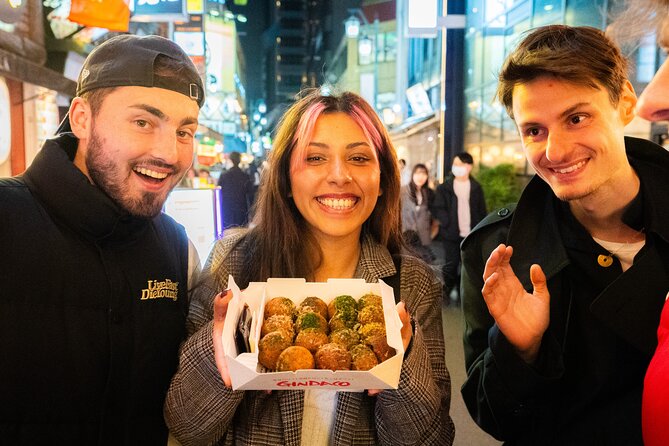
A “four stop” plan sounds simple until you try to imagine how it works in real life. The key detail here is that the tour includes enough food for a satisfying local dinner. That phrase is doing more work than it looks like.
What you can expect is a sequence that keeps you from feeling underfed. You are not eating one giant meal and calling it done. You are sampling multiple dishes, likely with different textures and flavors. That is why this format often feels like a multi-course dinner, even though you are moving between restaurants.
Also, because you will be walking between stops, you will be able to take in the atmosphere without feeling stuffed before the next place. Shibuya at night has enough visual energy to keep you engaged, but the tour keeps you grounded in food.
One review detail to keep in mind: one person felt a stop leaned toward take-away food, and they did not have a planned place to eat it. That is not guaranteed, but it is a real possibility on any walking tour. If you are picky about where you eat, bring a flexible attitude.
Guide talk is the secret sauce, and you may get different styles
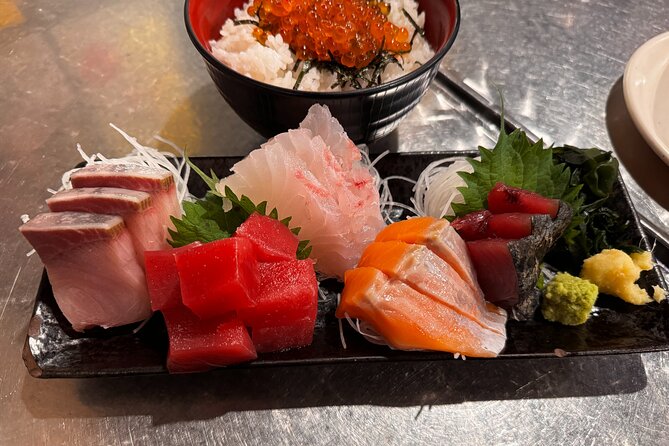
This tour highlights context from an expert English-speaking local guide, and the guide component is clearly the part people remember most. One review praised Ryo for being friendly and kind, another described Guru as an easygoing delight who made the culinary scene make sense. Haru and Yo were also called out for knowledge, good company, and making it easy to find the guide.
What that means for you: you are not only eating. You are learning how these foods fit into Japanese everyday life. Even basic things, like understanding what makes yakitori distinct, or why tonkatsu is ordered and eaten a certain way, can turn “I ate a dish” into “I get why people love it.”
Now the balanced part. One review noted English was not fluent, and that conversation was harder. So if you are the kind of person who wants heavy explanation nonstop, you might want to be mentally ready for variation. The overall tour is still built around your food experience first, guide talk second.
Drinks included: choosing alcohol or going non-alcoholic
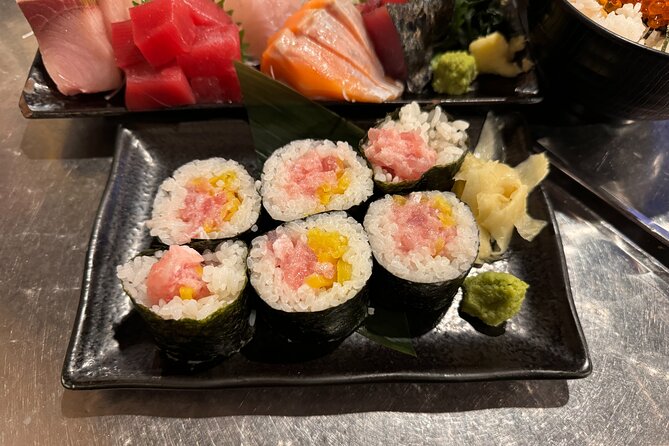
You get two complimentary drinks, and the plan includes both alcoholic and non-alcoholic options. That is a practical win in Japan, where menus can be easier to decode with help. You can also pace yourself. If you start with a non-alcoholic drink, it makes the rest of the night feel smoother.
This also changes the feel of the tour. Instead of being strictly about eating, it becomes more like joining a local night out. That can be especially nice if you are traveling solo or if you just want an easy social rhythm without planning it.
Group size matters more than you think (up to 15)
The tour caps at 15 travelers. That is a sweet spot for a walking food experience. Big enough that you will not feel awkward as the only newcomer, small enough that you can keep moving and actually talk with your guide without constant interruption.
In Shibuya, timing is everything. A group that moves well eats better. A group that shuffles gets stuck behind crowds. Keeping it under 15 is one of the reasons these tours usually feel fun instead of stressful.
Price and value: is $90 worth it?
At $90 per person for about 3 hours, this is not a budget snack. But it also is not just a few bites. You are paying for:
- Four food stops that add up to a full local dinner
- Two drinks included
- A local guide who talks through what you are eating
- A guided walking route that saves you time and guesswork in a tough neighborhood to navigate
If you planned this yourself, you would still pay for multiple meals, and you would likely spend time figuring out where to go and what to order. The tour is essentially buying you efficiency plus local choice.
Where the value gets tricky is fit. If you want street-food only, or you hate restaurant seating, you may not get your money’s worth. But if you want to sample real Tokyo foods in a smart sequence, the price is easier to justify.
Also, it is booked around 29 days in advance on average, which suggests steady demand. If you are visiting during a busy season or on a weekend, booking ahead is wise.
What type of traveler this tour suits best
This tour is a good match if you:
- Want an evening plan that slots into sightseeing without wrecking your schedule
- Like casual Japanese dining and want help ordering
- Are new to Japan and want a guide to reduce menu stress
- Prefer a small group over large coach tours
It might be less perfect if you:
- Want only street snacks and very little sit-down time
- Are extremely sensitive to English fluency and constant conversation
- Need a super strict plan for where every bite is eaten, not take-away situations
Should you book this Shibuya Authentic Food Tour
My honest take: if you are going to be in Shibuya anyway, this is one of the more straightforward ways to eat a variety of Tokyo classics without spending your whole night figuring things out.
Book it if you want a guided food evening with yakitori, tonkatsu, and sushi as part of the plan, plus the comfort of two included drinks. Skip it or choose a different style if you are chasing only street-food vibes or you know you dislike restaurant-based pacing.
If you do book, do two things that improve the experience fast: arrive early enough to find your meeting point calmly, and bring a flexible mindset about restaurant versus take-away. That is when this tour tends to feel like exactly the kind of local night you hoped Tokyo would deliver.
FAQ
How long is the Shibuya Authentic Food Tour?
The tour lasts about 3 hours.
What time does the tour start?
The start time is 6:00 pm.
How many food stops are included?
The experience includes visits to 4 local food stops.
Are drinks included?
Yes, 2 complimentary drinks are included, with both alcoholic and non-alcoholic options.
What food can I expect to try?
The tour highlights local favorites such as smoky yakitori, crispy tonkatsu, and sushi.
How big is the group?
The tour has a maximum of 15 travelers.
Where is the meeting point?
The meeting point is SHIBUYA TSUTAYA in Shibuya, at the address listed for Shibuya TSUTAYA.
Is hotel pickup included?
No, hotel pickup and drop-off are not included.
Can I cancel for free?
Yes. You can cancel up to 24 hours in advance for a full refund.
West Tokyo on Foot: Seven More

Newest Tokyo write-ups from the Loving Japan desk


Shibuya, Shinjuku and Harajuku Walks, side by side.
 ★ 5.0Shinjuku Food Tour (13 Dishes at 4 Local Eateries)From $866,603 reviews
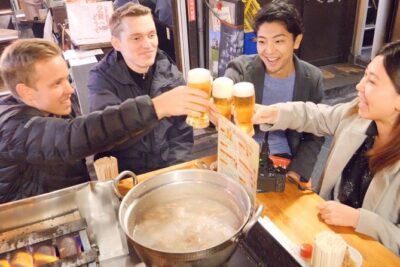 ★ 5.0Tokyo Bar Hopping Tour in Shinjuku (All-You-Can-Drink + Dinner)From $1063,587 reviews
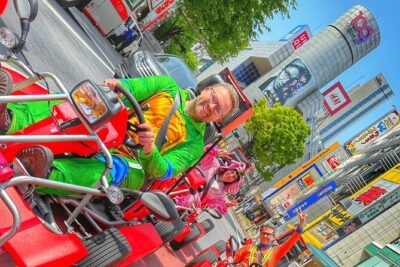 ★ 5.0Official Street Go-Kart in ShibuyaFrom $763,435 reviews
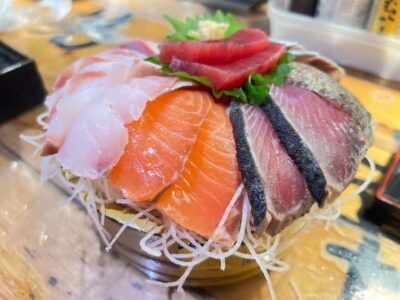 ★ 4.9Shinjuku Food Tour (15 Dishes and 4 Eateries)From $852,033 reviews
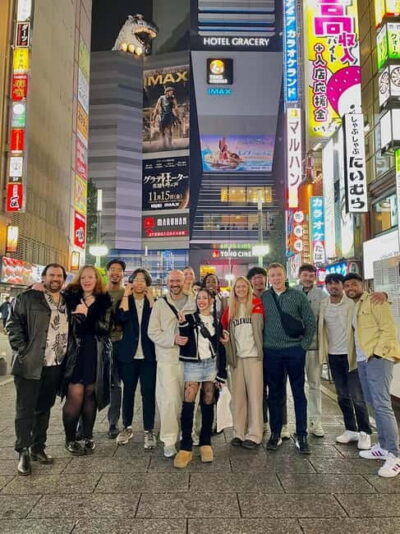 ★ 4.9Shinjuku Local Bar and Izakaya Guided Walking TourFrom $341,794 reviews
 ★ 5.0Tokyo Shinjuku Chopsticks Making ClassFrom $201,763 reviews
 ★ 5.0Tokyo Shinjuku Sumo Show & Experience with PhotoFrom $791,750 reviews
 ★ 4.9Street Kart Experience in ShibuyaFrom $741,484 reviews
Filed on these lists too