
REVIEW · SHIBUYA, SHINJUKU AND HARAJUKU WALKS
Tokyo Shibuya Crossing & Hidden Streets Walking Tour
Shibuya is noisy, but this walk feels human. I love the small-group size and the way your guide steers you into places like Nonbee Yokocho, not just the main photos. The one real catch is there’s some hill and stair walking, so wear shoes you trust.
This is a 2-hour Shibuya Crossing and Hidden Streets walking tour with a hard cap of 12 travelers, led by a guide who keeps the group moving and helps you not get lost in the maze around Shibuya Station. You’ll use a mobile ticket, hit a string of nearby sights that are all free to enter, and end at the famous Hachiko statue so it’s easy to keep exploring.
What makes it worth your time is the mix. Yes, you’ll stop at Shibuya Crossing, but you’ll also get context and side streets through Shibuya’s station area and surrounding neighborhoods, including a major mural and some of the area’s after-dark energy.
In This Review
- Key highlights you will feel on your feet
- From Shibuya Crossing to hidden streets, the goal is context
- Getting to the meeting point at SABON Shibuya Mark City
- Stop 1: Myth of Tomorrow mural inside Shibuya Station
- Stop 2: Shibuya Crossing, the scramble you watch and time
- Stop 3: Miyashita Park and the city’s multi-level play
- Stop 4: Nonbee Yokocho, the Drunkard’s Alley side streets
- Stop 5: Shibuya Center-gai for street-level shopping energy
- Stop 6: Maruyamacho, the former red-light district to today
- Stop 7: Hachiko outside Shibuya Station, your easy finish
- Price and value: why $25 feels fair for this route
- Pacing and practical tips for Shibuya hills and weather
- Who this tour fits best (and who should skip it)
- Should you book this Shibuya Crossing and Hidden Streets tour?
- FAQ
- How long is the Shibuya Crossing and Hidden Streets walking tour?
- How much does the tour cost?
- How large are the groups?
- Where do I meet the guide?
- Where does the tour end?
- Is this tour ticketed on my phone?
- What is included in the price?
- Are tips included for the guide?
- Is the tour suitable for people traveling with service animals?
- What if the weather is bad or I need to cancel?
Key highlights you will feel on your feet
- A guided route that goes past Shibuya Crossing photos
- Myth of Tomorrow mural by Taro Okamoto at Shibuya Station
- Miyashita Park, a multi-level park built into the city
- Nonbee Yokocho lanes near the station, known as Drunkard’s Alley
- Shibuya Center-gai pedestrian shopping street for quick street-level culture
- Guides like Loc, Rio, Grey, and Zach often add practical food and bar tips
Other routes through the west side of Tokyo, compared
- Tokyo: Shinjuku Food Tour (13 Dishes at 4 Local Eateries)
★ 5.0 · 6,603 reviews - Tokyo Bar Hopping Tour in Shinjuku (All-You-Can-Drink + Dinner)
★ 5.0 · 3,587 reviews - Official Street Go-Kart in Shibuya
★ 5.0 · 3,435 reviews - Tokyo: Shinjuku Food Tour (15 Dishes and 4 Eateries)
★ 4.9 · 2,033 reviews
From Shibuya Crossing to hidden streets, the goal is context
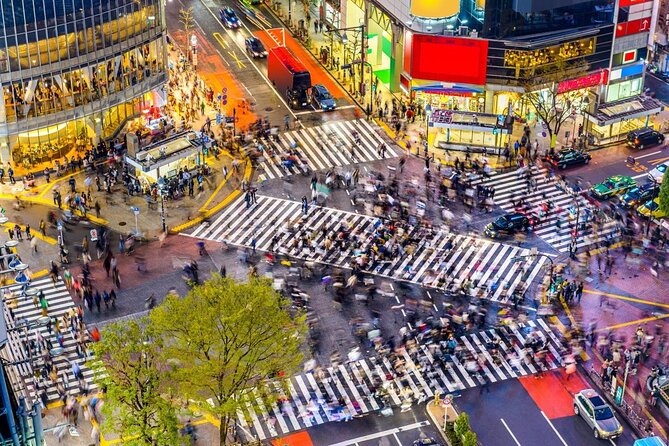
Shibuya Crossing is the obvious hook. When you stand near Shibuya Station and watch the streams of people move at once, it’s easy to see why this spot gets so many photos. But the real value of this tour is what happens after the camera moment.
I like the way the route is planned so you keep moving through the same general area, which means less time commuting and more time experiencing Shibuya as a neighborhood. You also get a guide to translate what you’re seeing. That matters here, because Shibuya can feel like a wall of signs and high-rises unless someone helps you connect the dots.
Getting to the meeting point at SABON Shibuya Mark City
Your start point is SABON Shibuya Mark City, East Mall, 3F. That’s specific, which is good, but it can still be confusing inside a big complex. My best advice: arrive a little early and take a careful look at the exact level.
Why this matters: several people have struggled with meeting points in large malls. So if you’re even slightly unsure, slow down. Ask at the customer desk or use the address you have, because once you’re in the right building, the rest is easier.
Stop 1: Myth of Tomorrow mural inside Shibuya Station
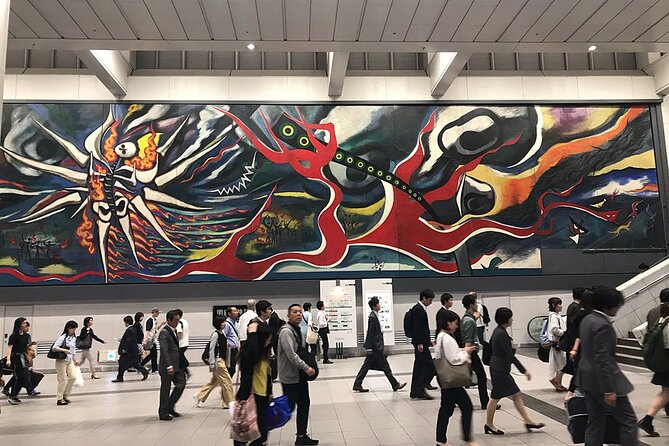
You start with a striking piece called Myth of Tomorrow. It’s a large mural by the Japanese artist Taro Okamoto, located in Shibuya Station. The scene deals with the horrors and destruction connected to the atomic bombings, so it’s not a typical “fun photo” stop.
This is exactly why I think it works early in the tour. You’re about to enter one of Tokyo’s busiest zones, and this mural adds weight and perspective right away. It helps the rest of the walk feel more grounded, not just loud and flashy.
Practical note: this is listed as free, and it only takes about 10 minutes on the itinerary. Still, it’s the kind of artwork where you may want an extra minute to look carefully before moving on.
- Mt Fuji and Hakone 1-Day Bus Tour Return by Bullet Train★ 5.0 · 26,383 reviews
- 1-Day Tokyo Bus Tour★ 5.0 · 14,250 reviews
- Tokyo: teamLab Planets TOKYO Digital Art Museum Entry Ticket★ 4.6 · 9,779 reviews
- Mt Fuji & Hakone Cruise, Drum Show Bullet Train 1 Day from Tokyo★ 4.0 · 7,413 reviews
- Tokyo: Shinjuku Food Tour (13 Dishes at 4 Local Eateries)★ 5.0 · 6,603 reviews
Stop 2: Shibuya Crossing, the scramble you watch and time
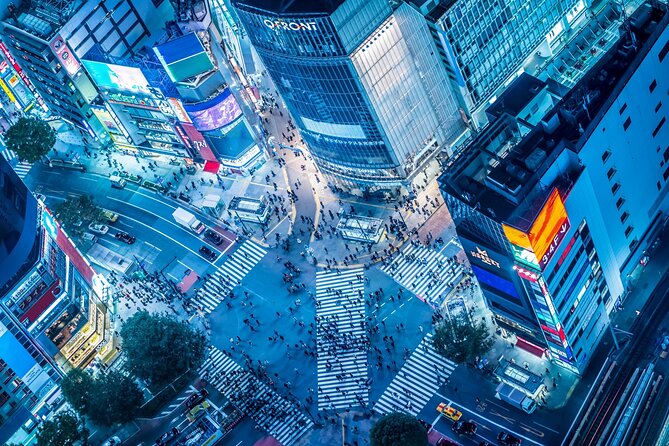
Next up is Shibuya Crossing, one of the world’s best-known intersections, right in front of Shibuya Station. The tour gives you time to experience it, not just point at it.
Here’s how you can get the most out of the stop:
- Look at how people line up and cross on the signals. It’s orderly, even when it looks chaotic.
- If you’re taking photos, watch when the crowds thin slightly between waves.
In at least some departures, the group also gets time to cross the intersection, which can be a great way to see how the timing works from inside the flow. Even if you don’t cross, you’ll still get the famous “everyone moves together” effect.
Stop 3: Miyashita Park and the city’s multi-level play
After the crossing, you head to Miyashita Park. It’s an urban renewal project that turns what used to be more ordinary park space into a multi-level sports and recreation area.
Why I like this stop: it breaks the rhythm. Shibuya has plenty of shopping and stations, but Miyashita Park gives you a different kind of atmosphere. You’re seeing how Tokyo uses space vertically and how a neighborhood park can feel like part of everyday life.
This stop is about 20 minutes, and it’s also listed as free. That makes it a low-pressure pause before you get back into the tighter streets.
Stop 4: Nonbee Yokocho, the Drunkard’s Alley side streets
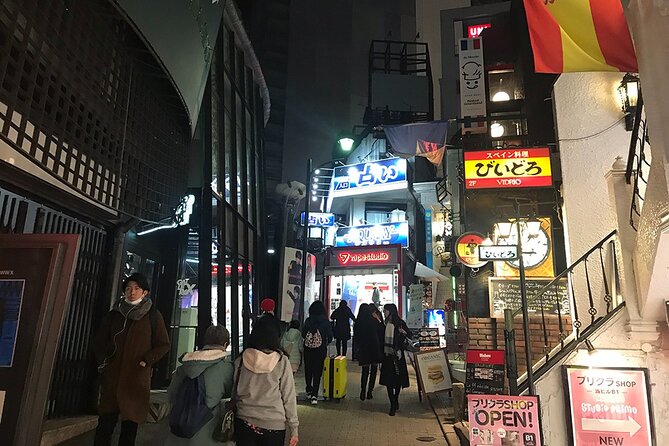
Nonbee Yokocho is a narrow, tucked-away area near Shibuya Station, famous enough that people translate it as Drunkard’s Alley. This is one of those places where you can walk past it on your own and miss the whole point.
What you’re looking for here is the “small space, big personality” contrast. Instead of wide sidewalks and giant storefronts, you get tight lanes and old-school alley character. The itinerary only budgets about 5 minutes for the stop, but it’s timed well. You get a quick feel for the vibe, then move on so you don’t get stuck rushing through.
One of the best parts of the guide experience is that you can ask what to order or where to go nearby for a low-key night out. In the past, guides like Loc and Grey have been the kind who make suggestions that are practical, not just generic. If you want help planning your evenings, this is a good time to ask.
Stop 5: Shibuya Center-gai for street-level shopping energy
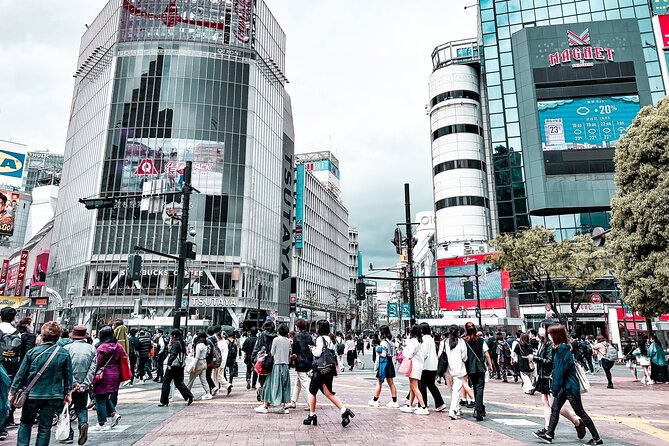
Shibuya Center-gai is a pedestrian shopping street at the heart of the district. It’s known for youthful, trend-setting culture, and it’s the kind of place where you’ll see lots of small shops and people moving with purpose.
This is where the tour keeps it fun without pretending you’re shopping like a local. The stop is about 10 minutes, so it’s more about orientation and atmosphere than buying everything you see.
I find Center-gai helpful if you’re trying to place Shibuya on your map. After this, you’ll understand how the shopping arteries connect back toward Shibuya Station and the side streets the tour highlights.
Stop 6: Maruyamacho, the former red-light district to today
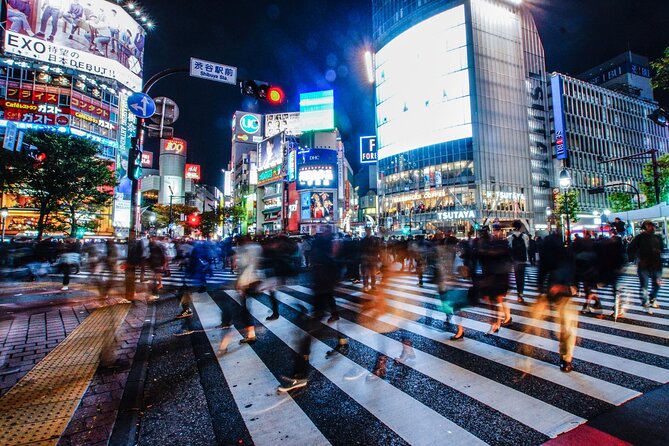
Maruyama-cho is one of the most interesting “time layer” areas in Shibuya. Historically, it was tied to the city’s red-light district, and today it has transformed into an area with trendy spots while still keeping an eclectic mix of older and newer elements.
Even if you don’t think of yourself as a “history person,” this stop is valuable because it explains why neighborhoods feel different from one block to the next. Shibuya isn’t just modern glass. It has neighborhoods that went through change, and the street level still carries the story.
The itinerary sets aside about 10 minutes here. Use it as an orientation stop, then keep walking afterward at your own pace if you want more.
Stop 7: Hachiko outside Shibuya Station, your easy finish
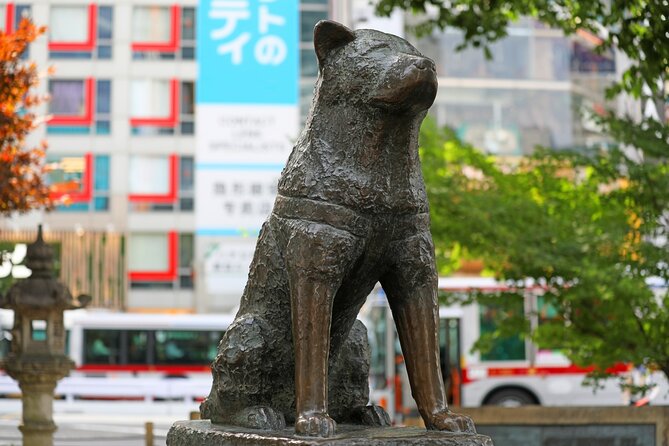
You end at the Hachiko statue, right outside Shibuya Station. Hachiko is an Akita dog who became famous for unwavering loyalty, and the statue is one of the most loved landmarks in Japan.
Ending here is smart for two reasons:
- It’s easy to find afterward.
- It’s a natural jumping-off point for food, transit, and more wandering.
If you’re thinking about what to do after the tour, this is where you can re-enter Shibuya’s big-picture flow. The hard work of navigating is done, and you get to choose what you want next.
Price and value: why $25 feels fair for this route
At $25 per person for an approximately 2-hour walk, this is priced like a budget-friendly way to get a local guide in one of Tokyo’s most confusing areas. The inclusion list is also a big part of the value: the tour includes all fees and taxes.
Even better, the specific stops are listed as free admissions on the itinerary. That means the price is paying for:
- a guide to connect the dots,
- time-saving route planning,
- and practical recommendations around Shibuya.
If you’re the type who enjoys asking questions, this can feel like a bargain. In the style of guides like Rio, Grey, Zach, and Daichi, you often get answers that help you understand what you’re seeing and where to go next for food and drinks.
Pacing and practical tips for Shibuya hills and weather
This route is short, but it’s not flat. One caution I’ll repeat: Shibuya has hills, and the tour includes uphill walking. That matters for comfort and for photo stops, because when you’re climbing, you’re less likely to want to stop every 30 seconds.
Also plan for weather. The experience is described as requiring good weather, and if it’s canceled due to poor weather, you’ll be offered a different date or a full refund. Even if you go in good conditions, bring a water bottle and be ready for humidity.
One more practical thought: the tour is designed around a sequence of nearby places. That’s efficient, but it also means you’ll want to wear shoes you can walk in for the full 2 hours, not just “stand and look.”
Who this tour fits best (and who should skip it)
This works especially well if:
- you’re a first-timer in Shibuya and want help figuring out the neighborhood,
- you want more than Shibuya Crossing photos,
- you like a guide who adds practical suggestions for bars and eateries,
- you prefer small groups, capped at 12.
You might consider a different style of tour if:
- you dislike walking on hills or stairs,
- you need a fully accessible route with zero uneven surfaces (the data only says you’re near public transportation, not that the route is step-free),
- you want ultra-deep time at one single museum or interior site, because the itinerary is spread across multiple quick stops.
Should you book this Shibuya Crossing and Hidden Streets tour?
If you’re doing Tokyo for the first time, I think this is a strong bet. It gives you the famous Shibuya moment, then immediately hands you the context and side streets that most people miss. For $25, you’re really buying a guided route plus local advice, not expensive ticketed attractions.
The decision comes down to one thing: are you comfortable with some hill walking and a start point inside a large mall? If yes, book it. If not, you might still enjoy Shibuya on your own, but you’ll miss the kind of street-level explanations and after-dark tips that guides like Loc, Rio, and Grey are known for sharing.
FAQ
How long is the Shibuya Crossing and Hidden Streets walking tour?
It lasts approximately 2 hours.
How much does the tour cost?
The price is $25.00 per person.
How large are the groups?
The tour has a maximum of 12 travelers.
Where do I meet the guide?
You meet at SABON Shibuya Mark City, Japan, at 150-0043 Tokyo, Shibuya, Dōgenzaka, 1-chōme 123, 渋谷マークシティ イーストモール 3F.
Where does the tour end?
The tour ends at the Hachiko Statue area at 2 Chome-1 Dogenzaka, Shibuya, Tokyo 150-0043, Japan.
Is this tour ticketed on my phone?
Yes, it uses a mobile ticket.
What is included in the price?
All fees and taxes are included.
Are tips included for the guide?
No, tips to the guide are not included.
Is the tour suitable for people traveling with service animals?
Yes, service animals are allowed.
What if the weather is bad or I need to cancel?
The experience requires good weather. If it’s canceled due to poor weather, you will be offered a different date or a full refund. You can also cancel for a full refund if you cancel at least 24 hours in advance.
West Tokyo on Foot: Seven More


Newest Tokyo write-ups from the Loving Japan desk

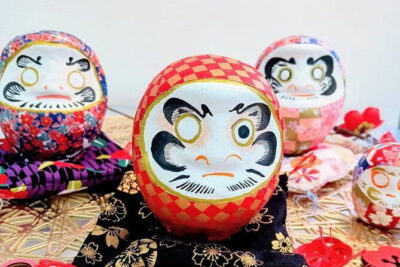
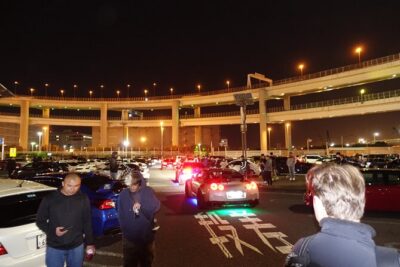
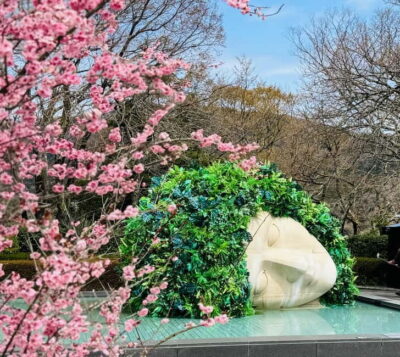
Shibuya, Shinjuku and Harajuku Walks, side by side.
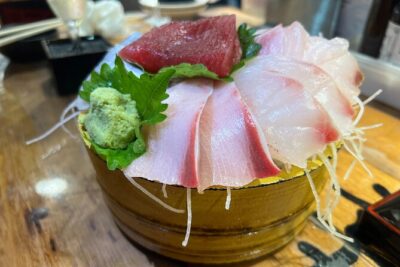 ★ 5.0Shinjuku Food Tour (13 Dishes at 4 Local Eateries)From $866,603 reviews
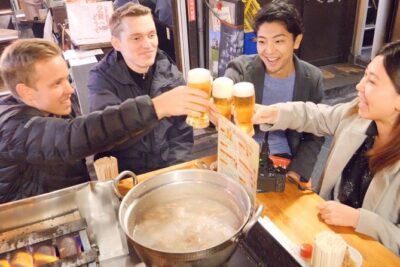 ★ 5.0Tokyo Bar Hopping Tour in Shinjuku (All-You-Can-Drink + Dinner)From $1063,587 reviews
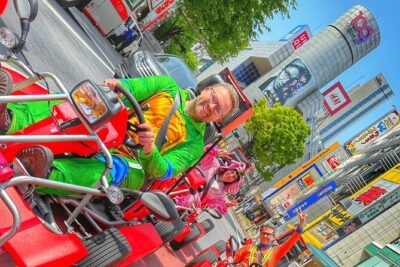 ★ 5.0Official Street Go-Kart in ShibuyaFrom $763,435 reviews
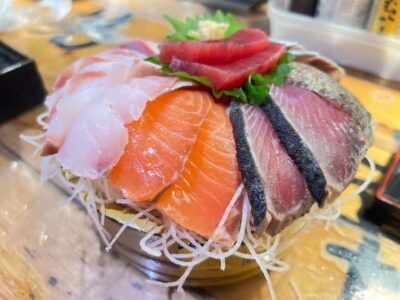 ★ 4.9Shinjuku Food Tour (15 Dishes and 4 Eateries)From $852,033 reviews
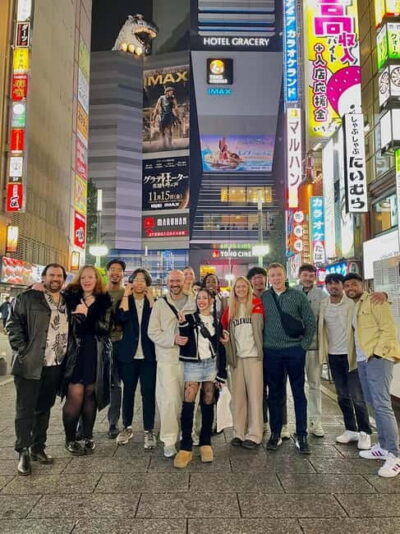 ★ 4.9Shinjuku Local Bar and Izakaya Guided Walking TourFrom $341,794 reviews
 ★ 5.0Tokyo Shinjuku Chopsticks Making ClassFrom $201,763 reviews
 ★ 5.0Tokyo Shinjuku Sumo Show & Experience with PhotoFrom $791,750 reviews
 ★ 4.9Street Kart Experience in ShibuyaFrom $741,484 reviews
Filed on these lists too