
REVIEW · SHIBUYA, SHINJUKU AND HARAJUKU WALKS
Tokyo: Shibuya Crossing & Hidden Streets Walking Tour
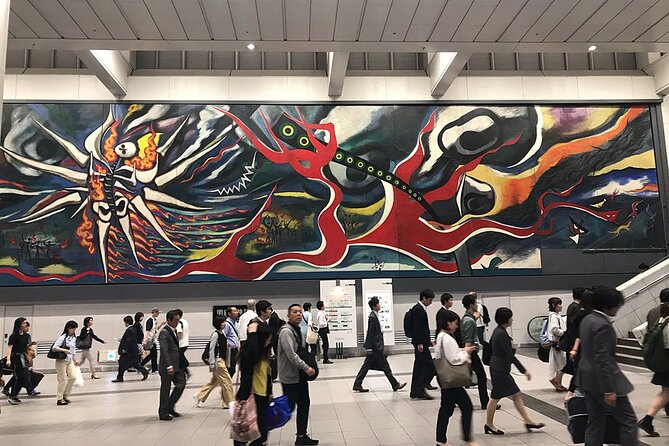
Shibuya feels like a movie set. This 2-hour walk pairs Shibuya Crossing with quieter old streets, so you get both the loud icon and the human scale of Tokyo. You also stop at The Myth of Tomorrow mural, which adds real weight to the usual neon photo run.
I love the way the route balances Nonbei Yokocho with modern spots like Miyashita Park, so Shibuya doesn’t feel one-note. I also like the guides, from Loc to Rio and Kumi, who slow down at key moments, explain context, and even help with photos at the crossing.
One consideration: the meeting point is inside Mark City 3rd floor, and it can be confusing on your first day, so plan to arrive early and watch for the guide sign.
In This Review
- Key things to know before you walk
- Why this Shibuya walk fits first-time Tokyo energy
- Starting at SABON Shibuya Mark City, how to not miss the group
- The Myth of Tomorrow mural at Shibuya Station, art with a point
- Shibuya Crossing, how to get your bearings and get better photos
- Nonbei Yokocho, Drunkard’s Alley and the old Tokyo mood
- Miyashita Park, the multi-level breather in the middle of Shibuya
- Center Gai and Maruyamacho, youth energy plus modern nightlife streets
- Hachikō Memorial Statue, a satisfying finish in the middle of Shibuya
- Guides make the difference, especially when plans get messy
- Price and value: $22 for 2 hours in one of Tokyo’s hardest-to-scan districts
- Who should book this tour (and who might want something else)
- Should you book this Shibuya Crossing and Hidden Streets tour?
- FAQ
- How long is the Shibuya Crossing and Hidden Streets walking tour?
- What is the price per person?
- Where do I meet the guide?
- Is the tour guide available in English?
- What stops are included on the walk?
- Can I reserve now and pay later?
- Is free cancellation available?
Key things to know before you walk
- Myth of Tomorrow starts you at Shibuya Station with Taro Okamoto’s nuclear-impact message and hope
- Shibuya Crossing is more than a photo stop, it’s where your guide helps you orient fast
- Nonbei Yokocho (Drunkard’s Alley) gives you a taste of lived-in Tokyo history in a small footprint
- Miyashita Park is a multi-level urban pause, good for a breather and people-watching
- Center Gai and Maruyamacho connect the youth scene with streets that lead into modern nightlife
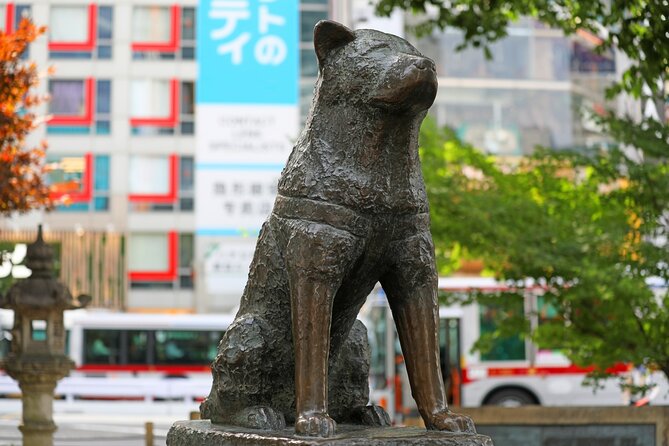
- Hachikō Memorial Statue finishes at a loyalty icon, right in the heart of Shibuya
Other routes through the west side of Tokyo, compared
- Tokyo: Shinjuku Food Tour (13 Dishes at 4 Local Eateries)
★ 5.0 · 6,603 reviews - Tokyo Bar Hopping Tour in Shinjuku (All-You-Can-Drink + Dinner)
★ 5.0 · 3,587 reviews - Official Street Go-Kart in Shibuya
★ 5.0 · 3,435 reviews - Tokyo: Shinjuku Food Tour (15 Dishes and 4 Eateries)
★ 4.9 · 2,033 reviews
Why this Shibuya walk fits first-time Tokyo energy
Shibuya is famous for one thing, the intersection. But if that is all you see, you miss why the district feels like it is always moving forward. This tour keeps things tight and purposeful: big landmark moments, then quick side streets that show how real neighborhoods work.
What makes it work is the contrast. You start with a serious mural stop, then hit the chaos of Shibuya Crossing, then slow down again in older lanes like Nonbei Yokocho. Later, you shift back to modern life at Miyashita Park and the shopping and nightlife areas around Center Gai and Maruyamacho. By the time you end at Hachikō, Shibuya feels like a place with layers, not just a logo.
The format also helps if you have a packed itinerary. At 2 hours, it is short enough to fit your day, but long enough that you do not just snap pictures and vanish.
Starting at SABON Shibuya Mark City, how to not miss the group
Meet-up happens at SABON Shibuya Mark City, inside the building called Mark City, on the 3rd floor. The note that it can be difficult to find on your first day is not a throwaway line. If you arrive late, you will likely be stuck wandering while everyone else starts.
Here is what to do in practice:
- Go early, take a quick lap inside Mark City, then look for your guide holding a sign.
- If you are coming from Shibuya Station, give yourself buffer time before you try to locate Mark City 3rd floor.
Your guide will be holding an identifying sign, and you do want that visual because the building layout is not always intuitive at first glance. Once you are with the group, the rest of the walk flows smoothly through Shibuya’s main zones.
The Myth of Tomorrow mural at Shibuya Station, art with a point
The first standout moment is the Myth of Tomorrow mural by Taro Okamoto. Instead of starting with scenery, you start with meaning. The mural reflects on nuclear impacts, but the message it leads with is hope. That matters because it shifts your mindset right away.
This is a smart move for anyone who thinks Shibuya is only trends and traffic. Japan’s modern districts can carry memory and moral questions right alongside everyday life. Stopping here gives you a theme for the walk: big impact, big responsibility, and still a forward-looking tone.
You also get a photo stop window. Even if you do not love murals, the art is a good anchor for your first minutes in the area, especially if you are still adjusting to the station flow.
- Mt Fuji and Hakone 1-Day Bus Tour Return by Bullet Train★ 5.0 · 26,383 reviews
- 1-Day Tokyo Bus Tour★ 5.0 · 14,250 reviews
- Tokyo: teamLab Planets TOKYO Digital Art Museum Entry Ticket★ 4.6 · 9,779 reviews
- Mt Fuji & Hakone Cruise, Drum Show Bullet Train 1 Day from Tokyo★ 4.0 · 7,413 reviews
- Tokyo: Shinjuku Food Tour (13 Dishes at 4 Local Eateries)★ 5.0 · 6,603 reviews
Shibuya Crossing, how to get your bearings and get better photos
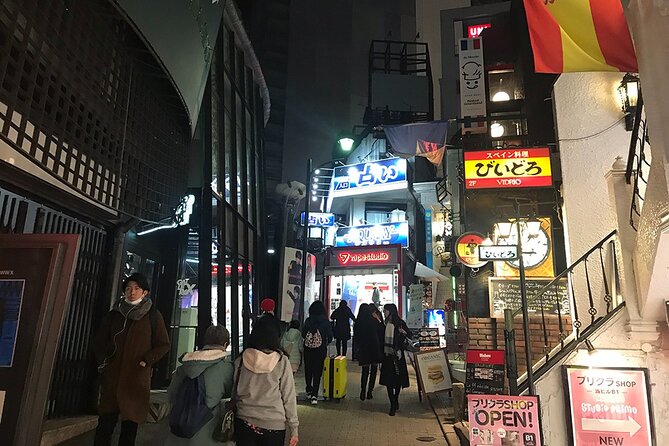
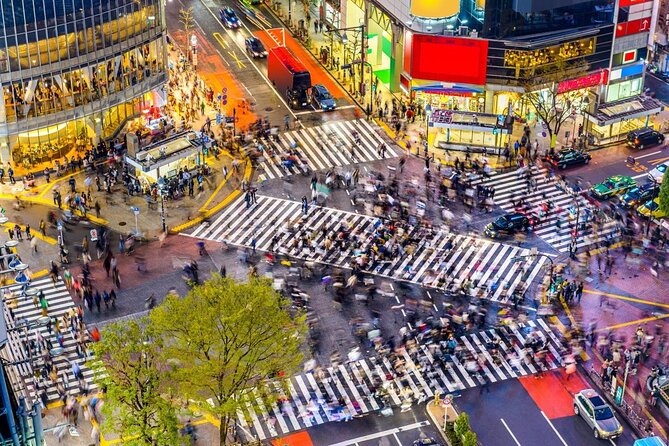
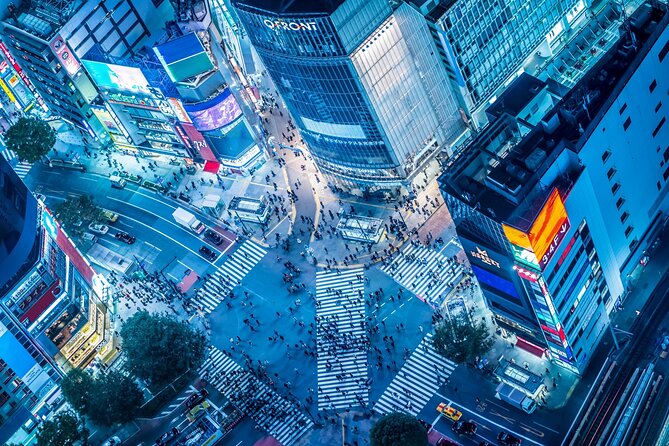
Then comes Shibuya Crossing, the world-famous intersection that feels like it runs on electricity. The tour treats it as more than a check-the-box stop. You pause, look, and learn how people move through it. That guidance can save you from doing the classic tourist move, getting stuck on the wrong side while the lights change.
A key practical benefit is timing and placement for pictures. Guides like Loc have been singled out for taking really great photos of solo travelers at the crossing. If you are traveling alone, that one detail is huge. You can stand in a better spot and trust that you will not miss the peak moment while fumbling with your camera.
And if you are with friends, the guide’s crowd navigation tips help you meet up without stress. Shibuya is busy, but you do not have to be frantic.
Nonbei Yokocho, Drunkard’s Alley and the old Tokyo mood
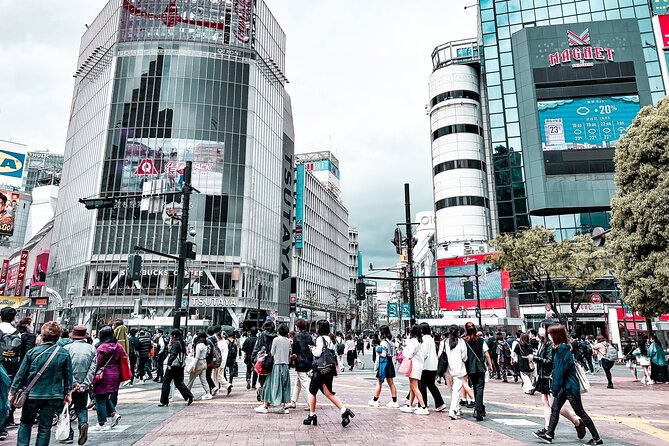
Next you head to Nonbei Yokocho, also known as Drunkard’s Alley. The name alone is memorable, and the experience is more grounded than it sounds. You get a guided walk through a slice of older Tokyo character, the kind of narrow lane atmosphere that disappears if you only stick to main streets.
This stop is valuable because it changes the texture of your walking day. Your pace slows. The buildings and narrow passages create a different scale, and you can start noticing small details that make old Tokyo feel human: tight street rhythms, older-style storefronts, and the sense that people actually spend time here, not just pass through.
Guides also tend to connect these alleys to the broader story of how districts evolve. That makes the experience feel less like a photo set and more like a living neighborhood you are temporarily borrowing.
Miyashita Park, the multi-level breather in the middle of Shibuya
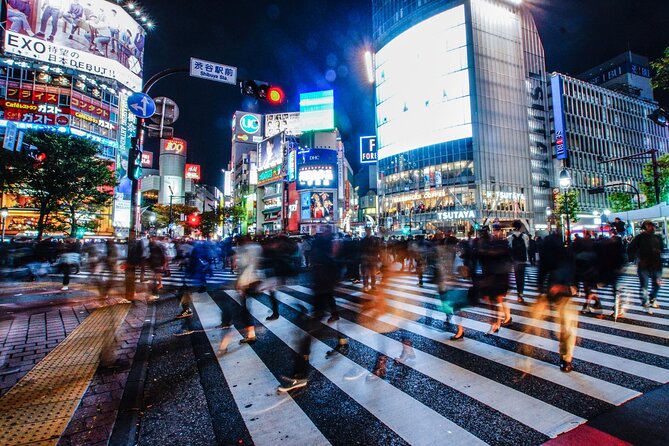
After the older lane atmosphere, you step into Miyashita Park, a multi-level urban oasis. It is one of those spots where Shibuya’s intensity gets politely interrupted. Instead of just walking past more streets, you get a pause zone.
This stop is helpful for three reasons:
- You reset your legs and eyes. Two hours on Shibuya streets adds up.
- You get a change in viewpoint thanks to the park’s layers, which makes it feel like a mini landscape even though you are in the city.
- You see how modern Shibuya people hang out, not just shop.
The guide stays with you for context, but you also get some space to look around and recharge. If you have been in Tokyo long enough to feel the pace everywhere, this is a nice mid-tour correction.
Center Gai and Maruyamacho, youth energy plus modern nightlife streets
From Miyashita Park, the route shifts into the heart of Shibuya’s social life. Center Gai is described as youthful energy, and that’s exactly how it feels: shops, activity, and a sense of momentum that stays on even when you are standing still.
Maruyamacho follows, and this is where the tour gets clever about contrasts. You are moving through historical streets that have become a hub for modern nightlife. That combo is what makes Shibuya more interesting than a generic nightlife district. You are not just seeing new neon, you are seeing history still shaping the street layout.
One practical bonus from this part of the route is that guides often give useful real-world pointers. Some tour participants have mentioned vegan food and shopping recommendations, and that kind of guidance can save you time later. Even if you do not follow every suggestion, it helps you understand what direction to go once the tour ends.
If you are the type who gets overwhelmed in major districts, this segment helps. You walk with someone who reads the neighborhood for you.
Hachikō Memorial Statue, a satisfying finish in the middle of Shibuya
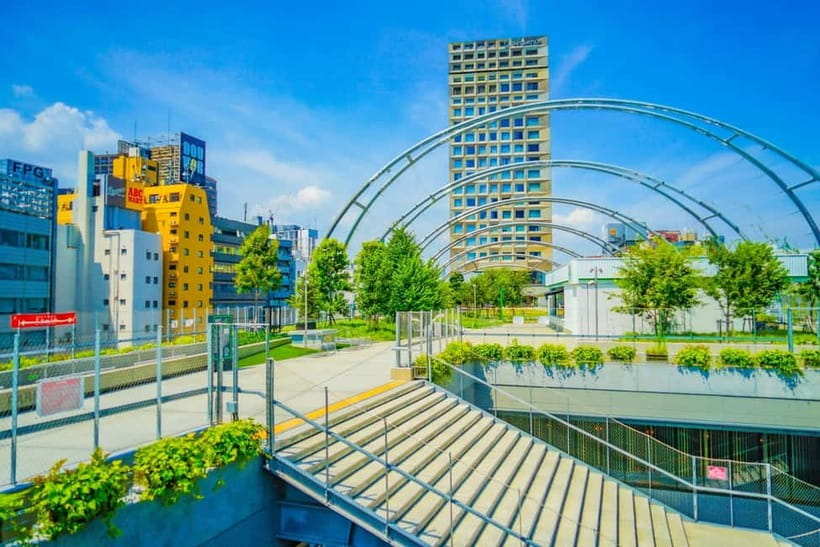
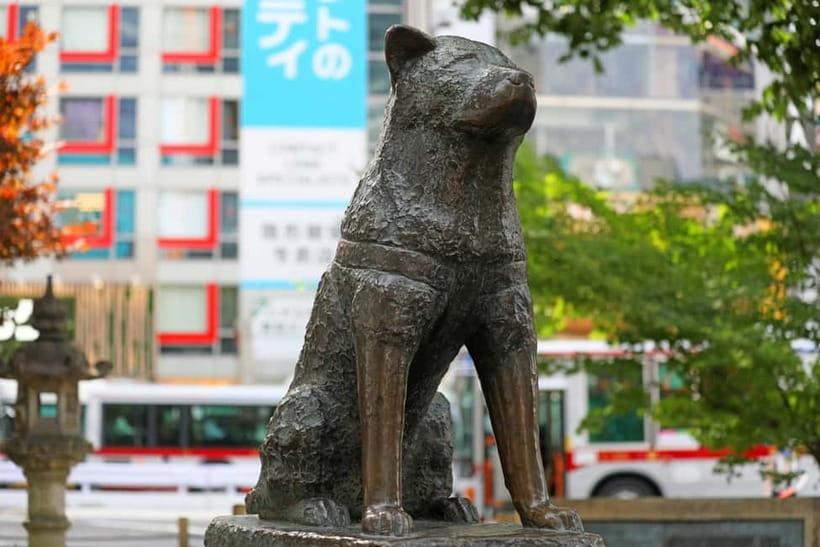
Finally, you end at the Hachikō Memorial Statue, a symbol of loyalty in Shibuya. Ending here is smart because it is recognizable and central, so you do not have to figure out where to regroup on your own.
This finish point also gives the tour emotional balance. After all the motion, the loyalty symbol offers a calmer kind of attention. It is iconic enough that it feels like closure, but it is still right in Shibuya, so you can continue your day without losing time.
If you are planning a next stop, this is a convenient anchor. You get to wrap the tour with a landmark that makes navigation easier for the rest of your Tokyo day.
Guides make the difference, especially when plans get messy
One reason this tour keeps scoring high is the guide factor. Names that show up in recent experiences include Loc, Rio, Kumi, Grey, Zach, and Daichi. Across them, the common thread is friendly communication, clear context at each stop, and flexibility when the group needs a little adjustment.
That flexibility shows up in real ways. Solo travelers have appreciated having their guide help with photos at Shibuya Crossing. Others have mentioned that guides answered questions patiently and adjusted pace so you do not feel rushed through important moments. Even when weather gets slightly annoying, the walk can still feel like it is moving in the right direction.
For you, that means the tour is not just a checklist. It becomes a guided conversation about Shibuya’s culture, how it works geographically, and what you should notice as you go.
Price and value: $22 for 2 hours in one of Tokyo’s hardest-to-scan districts
At $22 per person for a 2-hour guided walk, this is strong value for Tokyo. Shibuya is a place where it is easy to feel lost, especially if you are juggling trains, crowds, and multiple street levels. Paying for a guide here is not just paying for company, it is paying to reduce guesswork.
Also, the tour gives you more than the obvious sights:
- It includes a mural stop with meaningful context
- It covers both old lanes like Nonbei Yokocho and modern gathering spaces like Miyashita Park
- It finishes at Hachikō, a natural re-entry point for your next plan
You get a lot of practical orientation for a short time. If your Tokyo schedule only has one window for Shibuya, this kind of structured route is exactly what you want.
The one tradeoff is time. You will not see everything in Shibuya in 2 hours. But you will see a smart cross-section, and you will leave knowing where to return for food, shopping, or photos.
Who should book this tour (and who might want something else)
This tour is a great fit if:
- You are visiting Tokyo for the first time and want Shibuya explained in plain language
- You want both iconic photos and calmer side streets
- You care about cultural context, not just what to photograph
- You like having someone help you navigate crowds without turning it into a full-day mission
It might be less ideal if:
- You dislike walking for 2 hours in a busy district and want long, sit-down time at every stop
- You prefer fully independent wandering with no guide directing your path
For most people, though, this is a tidy way to get oriented and to come away with memories that feel like more than screenshots.
Should you book this Shibuya Crossing and Hidden Streets tour?
Yes, if you want a compact Shibuya plan that mixes big landmark energy with the older street mood of Nonbei Yokocho and the modern hangout feel of Miyashita Park. The $22 price makes it easier to justify even on a tight itinerary, and the guide quality comes through in how people describe the experience, from photo help at Shibuya Crossing to clear explanations and friendly pacing.
If you do book it, do one thing that makes the whole experience better: arrive early at Mark City 3rd floor and get eyes on the guide sign. Once you are in, you will get a guided walk that helps Shibuya click fast, and that is the real value.
FAQ
How long is the Shibuya Crossing and Hidden Streets walking tour?
It lasts 2 hours.
What is the price per person?
The price is $22 per person.
Where do I meet the guide?
You meet at SABON Shibuya Mark City. It is inside Mark City, on the 3rd floor. The meeting point can be hard to find on a first day, and the guide will be holding a sign.
Is the tour guide available in English?
Yes, the tour is guided live in English.
What stops are included on the walk?
You’ll visit Shibuya Nonbei Yokocho, stop at the Myth of Tomorrow mural, see Shibuya Crossing, visit Miyashita Park, go through Center Gai, visit Maruyamacho, and finish at the Hachikō Memorial Statue.
Can I reserve now and pay later?
Yes, you can reserve now and pay later.
Is free cancellation available?
Yes, you can cancel up to 24 hours in advance for a full refund.
West Tokyo on Foot: Seven More


Newest Tokyo write-ups from the Loving Japan desk

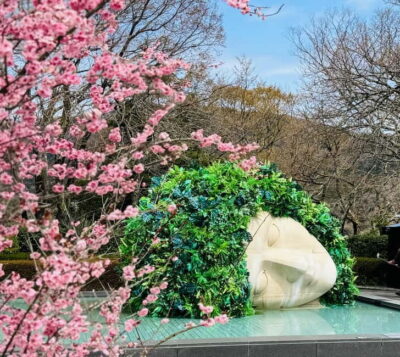
Shibuya, Shinjuku and Harajuku Walks, side by side.
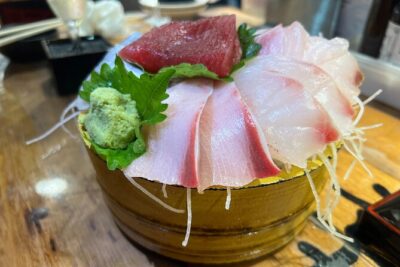 ★ 5.0Shinjuku Food Tour (13 Dishes at 4 Local Eateries)From $866,603 reviews
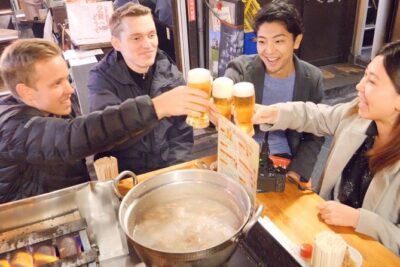 ★ 5.0Tokyo Bar Hopping Tour in Shinjuku (All-You-Can-Drink + Dinner)From $1063,587 reviews
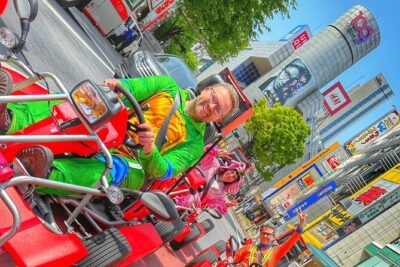 ★ 5.0Official Street Go-Kart in ShibuyaFrom $763,435 reviews
 ★ 4.9Shinjuku Food Tour (15 Dishes and 4 Eateries)From $852,033 reviews
 ★ 4.9Shinjuku Local Bar and Izakaya Guided Walking TourFrom $341,794 reviews
 ★ 5.0Tokyo Shinjuku Chopsticks Making ClassFrom $201,763 reviews
 ★ 5.0Tokyo Shinjuku Sumo Show & Experience with PhotoFrom $791,750 reviews
 ★ 4.9Street Kart Experience in ShibuyaFrom $741,484 reviews
Filed on these lists too