
REVIEW · SHIBUYA, SHINJUKU AND HARAJUKU WALKS
Tokyo: Shibuya Food Tour (13 dishes and 4 Eateries)
Shibuya can feel like sensory overload. This 3-hour food walk turns the chaos into a clear route, with 13 dishes across four eateries. You start at the famous sights, then shift into side streets where you can actually eat without getting turned around.
I love the pace and the sheer variety. You get classic picks like sushi, yakiniku, udon, karaage, plus standouts like dumplings and multiple types of tuna, and you do not leave hungry. A possible drawback is that the guide experience can vary a bit, and you may get lighter commentary at the early landmarks than you hoped.
In This Review
- Key Points to Know Before You Go
- Shibuya Food Without the Guesswork
- Your Route Starts With Shibuya Crossing and Hachiko
- Dogenzaka: Where the Izakaya Streets Take Over
- Shibuya Center-gai: A Second Act Built for Eating
- What 13 Dishes Across 4 Eateries Means for Your Night
- Drinks, and the Age Rule You Need to Know
- Guide Style: When Naruto, Hoshi, Kei, and Others Hit Right
- Timing, Walking, and What to Wear
- Price and Value: Does $77.44 Add Up?
- Where You’ll Finish, and How to Keep the Night Going
- Should You Book This Shibuya Food Tour?
- FAQ
- How long is the Shibuya food tour?
- How many dishes and eateries are included?
- Where does the tour start and end?
- What stops are included during the walk?
- What is included in the price?
- Are alcoholic drinks included?
- How big is the group?
- Do I get a mobile ticket?
- Can I cancel for a full refund?
- What happens if the tour cannot run?
Key Points to Know Before You Go
- 13 dishes, 4 eateries: enough variety to sample a full mini-night of Shibuya food.
- Small group, max 10: easier questions, faster answers, less time waiting.
- Free “sights” included: Shibuya Crossing and Hachiko stops are part of the route with no ticket added.
- Dogenzaka and Center-gai focus: you get real neighborhood energy, not just a single strip of restaurants.
- Alcohol only for age 20+: you can still get drinks, but rules apply.
- Ending in Shibuya: you are dropped back in the area with an easy path to Shibuya Station.
Other routes through the west side of Tokyo, compared
- Tokyo: Shinjuku Food Tour (13 Dishes at 4 Local Eateries)
★ 5.0 · 6,603 reviews - Tokyo Bar Hopping Tour in Shinjuku (All-You-Can-Drink + Dinner)
★ 5.0 · 3,587 reviews - Official Street Go-Kart in Shibuya
★ 5.0 · 3,435 reviews - Tokyo: Shinjuku Food Tour (15 Dishes and 4 Eateries)
★ 4.9 · 2,033 reviews
Shibuya Food Without the Guesswork
Tokyo at night is loud, busy, and full of signage you cannot process fast. This tour is built to solve that problem. You follow a small group and a local English-speaking guide, so you spend your energy eating instead of searching for the next place.
Another big win is structure. You have a set route through Shibuya Crossing, Hachiko, then into Dogenzaka and Shibuya Center-gai for the meals and tastings. That means you see the icons, but you also get the local restaurant streets that make Shibuya feel like more than a photo backdrop.
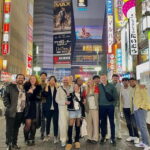
Group size matters here. With a maximum of 10 travelers, the guide can explain what you are eating and keep you together on a walking route. If you have even basic questions about menu items or how to order, you are more likely to get an actual answer.
Your Route Starts With Shibuya Crossing and Hachiko
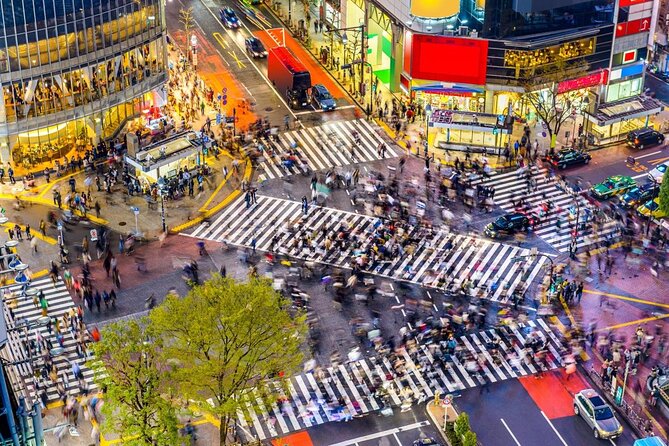
The evening begins with the two best-known stops in the area, Shibuya Crossing and Hachiko. You do not spend long there, but you get the chance to orient yourself quickly. It also sets expectations for the rest of the night, because once you leave these landmarks, Shibuya becomes more manageable.
At Shibuya Crossing, you will check out the biggest crossing in Japan. The stop is short, and admission is free for the sight. Do not treat this like a sightseeing marathon. Think of it as a fast way to understand where you are and how the streets connect before the food part begins.
Next comes Hachiko. You get a quick lesson on the history of the loyal dog, and you get a chance to see the statue in context. One caution: if you are hoping for a super detailed story, time is tight. Still, it is a solid cultural anchor before you move into eating mode.
Dogenzaka: Where the Izakaya Streets Take Over
After the landmark pair, the tour shifts into Dogenzaka, a district known for izakayas and busy neighborhood shopping. This is one of the reasons the tour works well for first-timers. You are not just walking through a mall or along one main road. You are moving through the kind of streets where Tokyo locals snack, sip, and linger.
Dogenzaka is where you start spending real time. This segment runs about an hour, and it is also a prime area for the first waves of tastings. Expect the tour to connect food to place, like why certain dishes fit the vibe of an izakaya-style night out.
From the food examples mentioned in the tastings, you should anticipate classics that are easy to share and designed for a group: things like karaage and udon, plus richer bites such as sushi or yakiniku later in the night. The guide also tends to show you how to eat specific dishes, which helps when you land on something you would not automatically order alone.
- Mt Fuji and Hakone 1-Day Bus Tour Return by Bullet Train★ 5.0 · 26,383 reviews
- 1-Day Tokyo Bus Tour★ 5.0 · 14,250 reviews
- Tokyo: teamLab Planets TOKYO Digital Art Museum Entry Ticket★ 4.6 · 9,779 reviews
- Mt Fuji & Hakone Cruise, Drum Show Bullet Train 1 Day from Tokyo★ 4.0 · 7,413 reviews
- Tokyo: Shinjuku Food Tour (13 Dishes at 4 Local Eateries)★ 5.0 · 6,603 reviews
Shibuya Center-gai: A Second Act Built for Eating
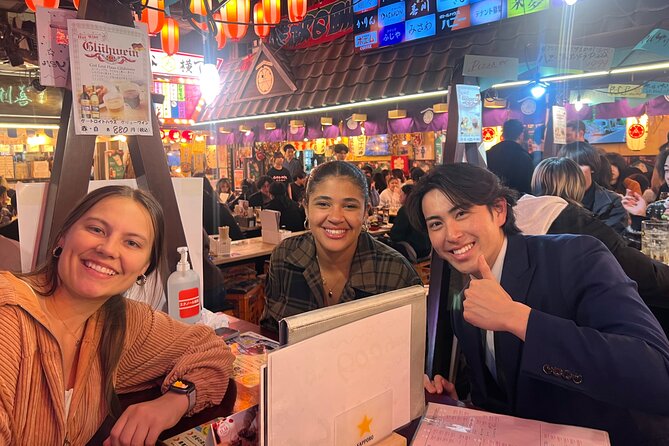
Next you move to Shibuya Center-gai, one of the busiest central streets in Shibuya. If you have ever felt like Shibuya is all motion with no plan, this stop helps you see the pattern. You understand how the main street links back into smaller restaurant lanes.
This segment also runs about an hour. That time is there for more tastings, plus the practical benefit of keeping the group together while the area stays busy. You will be walking, stopping, eating, and then walking again, so you get a full rhythm instead of one long dinner that turns into a blur.
Center-gai is also where you may notice the tour balancing “iconic” with “local.” It is still Shibuya, still crowded, but the food stops are meant to avoid the easy tourist traps. The result is that you can try a mix of Japanese favorites without spending your night translating menus or guessing what is good.
What 13 Dishes Across 4 Eateries Means for Your Night
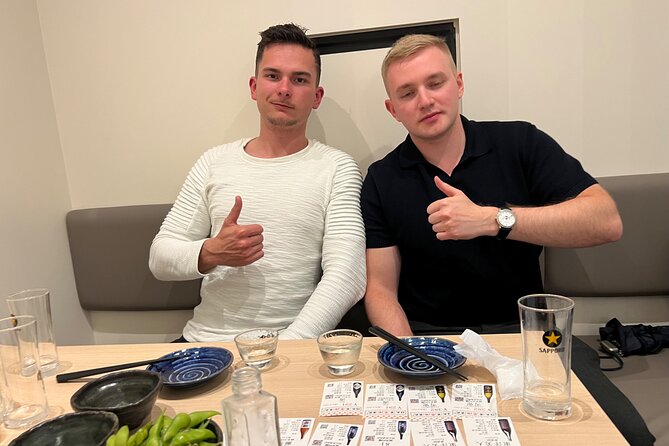
The headline promise is 13 dishes at four eateries, and that is where the value really shows. At $77.44 for about three hours, the money is not only paying for food, it is paying for guidance, ordering help, and getting you into places you might walk past without realizing they are right for a group.
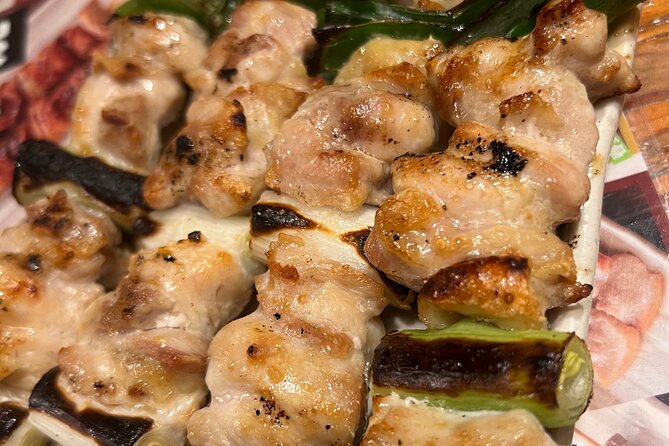
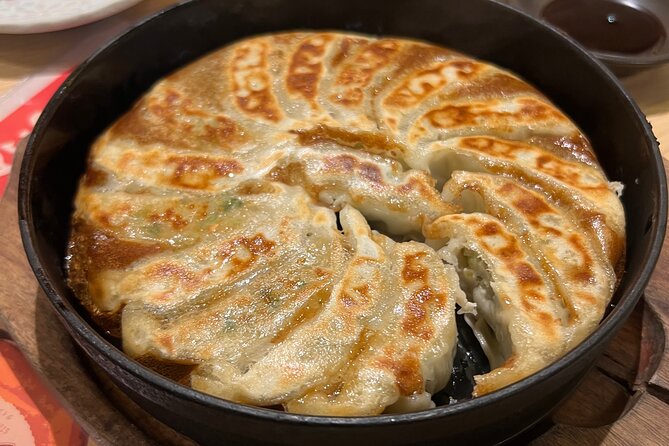
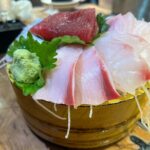
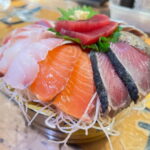
Here is the kind of range you can expect based on the tastings shared: sushi, yakiniku, udon, karaage, dumplings, and several types of tuna. You also get drinks, plus dessert at the end. That is not just variety for variety’s sake. Many of these dishes are different textures and flavors, so you get a better sense of Japanese eating than if every stop served the same style of snack.
A practical tip for your stomach: arrive hungry. Multiple guides and guest accounts highlight that the portions are generous across the tastings. Even if you think you eat lightly, 13 dishes add up fast, and you are usually satisfied by the time dessert arrives.
Still, I would set one expectation clearly. This tour is not a slow, sit-down dinner in one restaurant. It is a sequence of tastings in different places, so you should enjoy snack-to-meal pacing. If you want a single-course tasting menu experience with long explanations in one dining room, this is a different style.
Drinks, and the Age Rule You Need to Know
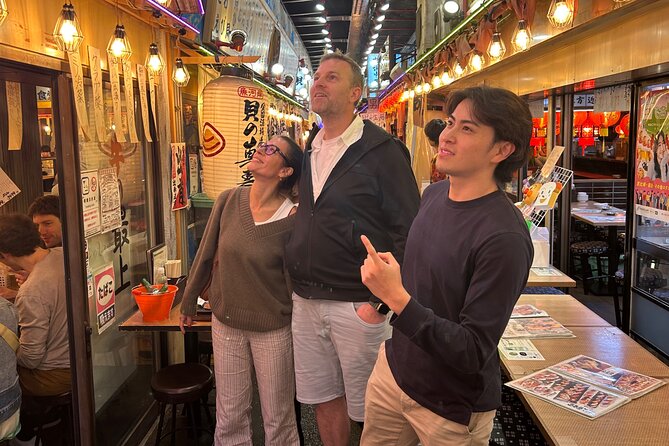
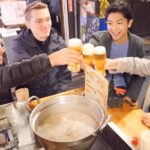
Drinks are part of what you are included in. But there is a rule: alcohol beverages are only served to travelers who are 20 or older. That matters because it affects how the drink stops feel for some groups.
If you are under 20, you can still join fully for the food portion and non-alcohol options. If you are 20 or older, you should be ready for the fact that you will likely be trying drinks alongside the dishes, which is part of how the tour balances savory bites.
I also like that the guide role here is not only handing you food. Some guides clearly work to keep the group moving and the pace steady, so you are not stuck waiting while someone orders something complicated.
Guide Style: When Naruto, Hoshi, Kei, and Others Hit Right
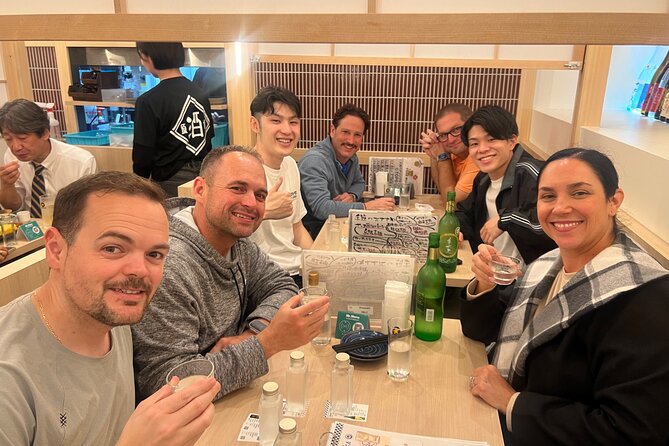
In a food tour, the guide can make or break the experience. This tour has a strong track record, and the names that keep showing up include Naruto, Hoshi, Kei, Will, Mat, and Benjamin. What guests often praise is not just facts about food. It is the personality and the ability to connect, plus the sense of humor that makes the whole night feel easy.
One standout theme is teaching in a practical way. You are more likely to get direction on what you are eating and how to handle it. Some guides also give trip planning suggestions at the end, and at least one guest noted that they received restaurant recommendations by text after the tour. That kind of follow-up is useful because it helps you turn one good meal into a better whole trip.
There is also a caution worth respecting. A small number of experiences mention that early landmark time felt light on commentary, like walking past Shibuya Crossing or not seeing the Hachiko statue as expected. Another comment said the dessert felt more like a simple pre-selected pastry drop than a carefully planned finale. None of that changes the food quality, but it does affect how you should mentally frame the night: expect tastings with a guide, not a museum tour with nonstop storytelling.
So how do you protect yourself? Go in open-minded. If you want maximum sightseeing explanation, bring a few questions. If you want maximum food payoff, this style usually delivers.
Timing, Walking, and What to Wear
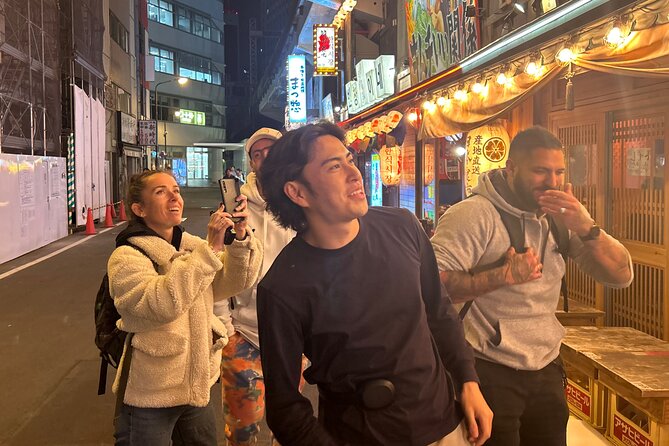
This is about 3 hours walking around Shibuya. The timeline includes short stops at Shibuya Crossing and Hachiko, then longer segments in Dogenzaka and Shibuya Center-gai. The walking is manageable for most people, but it adds up because you are moving between multiple eateries.
Plan for standing and short waits. The group is small, but Shibuya is busy and the restaurants will have their own flow. Wear shoes you trust for uneven sidewalks and quick turns. Also, bring a small layer if you are going in cooler months, because you will spend time outside between stops.
One more reality check: because this is a night walk, crowds can affect how quickly you pass each area. The tour helps with this by keeping a tight route, but you are still in central Shibuya.
Price and Value: Does $77.44 Add Up?
Let’s talk value in plain terms. $77.44 for a 3-hour experience that includes a local English-speaking guide, walking time, admission to local bars and izakaya, and food plus drinks is not an outrageous number for Tokyo.
Where the value can feel especially good is when you compare what you would pay on your own to get this same spread of dishes across multiple eateries. Sushi, yakiniku, fried chicken, dumplings, and multiple drink stops are not cheap, and you are also paying for the guide’s ability to choose places that work well for group tastings.
Still, I would be honest about one concern that comes up in the reviews. A few comments question whether the price matches what you eat and drink if you compare it to a separate meal elsewhere in Tokyo. That does not mean the tour is overpriced, but it does mean you should treat it as a curated sampling experience, not a guaranteed bargain relative to every possible restaurant plan.
If you want value, the best move is to do this when you have not already planned a big dinner. You want your appetite to be the main ingredient. Then the tour price feels like it turns into real food you would otherwise have had to hunt down.
Where You’ll Finish, and How to Keep the Night Going
You end back in Shibuya. The guide can take you toward Shibuya Station, which is a big help if you want to continue your evening without figuring out the quickest route on foot right after a food-heavy night.
This ending matters because Shibuya is a hub with lots of options. You can pivot to shopping, pop into another izakaya, or head back to your hotel. The tour helps you not only eat well, but also avoid the common post-meal problem of being too full to navigate.
If you want to extend the night, ask your guide for one or two extra spots before you wrap up. Some guides are known for sending follow-up suggestions, and even if you do not get a text recap, you will likely leave with at least a couple ideas.
Should You Book This Shibuya Food Tour?
I would book this if you want a simple way to eat 13 different Japanese dishes in Shibuya without menu stress. It is a strong pick for first-time Tokyo visits, for couples, and for anyone who likes food and wants a guided route through Dogenzaka and Center-gai.
Book it especially if you like the idea of variety. The mix of sushi, yakiniku, udon, karaage, dumplings, tuna, drinks, and dessert is exactly the kind of spread that makes a Tokyo food night feel complete.
Skip it if you want a nonstop commentary-heavy sightseeing experience. The landmark segments are short, and the dessert finale can be more grab-and-go than a showpiece. Also, if you are the type who needs a perfect storyline at every stop, keep in mind that guide style can vary.
If you go with the right mindset, you get what you came for: a clear Shibuya route, plenty of food, and a small group night that feels like locals know where to eat.
FAQ
How long is the Shibuya food tour?
It runs for about 3 hours.
How many dishes and eateries are included?
You will taste 13 different Japanese dishes across 4 local eateries.
Where does the tour start and end?
The tour starts at Kusumoto Bld., 1-chōme-3-3 Dōgenzaka, Shibuya, Tokyo 150-0043, Japan. It ends in Shibuya, and the guide can take you to Shibuya station.
What stops are included during the walk?
You will visit Shibuya Crossing and see Hachiko, then walk through Dogenzaka and Shibuya Center-gai.
What is included in the price?
The price includes a local English-speaking guide, a walking tour, advice on future plans for your stay, admission to local bars and izakaya, plus food and drinks.
Are alcoholic drinks included?
Drinks are included, but alcohol beverages are only served to travelers who are 20 or older.
How big is the group?
The tour has a maximum of 10 travelers.
Do I get a mobile ticket?
Yes, the tour uses a mobile ticket.
Can I cancel for a full refund?
Yes, you can cancel up to 24 hours in advance for a full refund.
What happens if the tour cannot run?
The experience requires good weather. If it is canceled due to poor weather, you will be offered a different date or a full refund. It also requires a minimum number of travelers, and if that minimum is not met, you will be offered a different date or experience, or a full refund.
West Tokyo on Foot: Seven More

Newest Tokyo write-ups from the Loving Japan desk

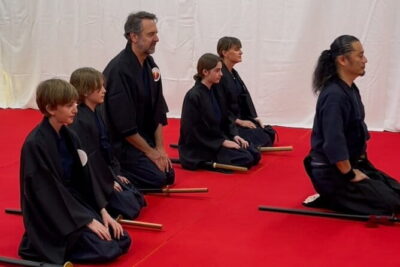
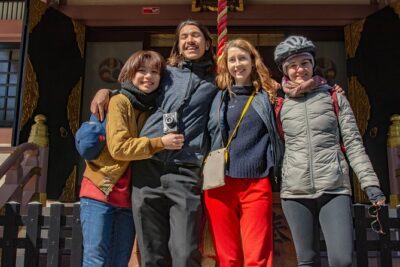
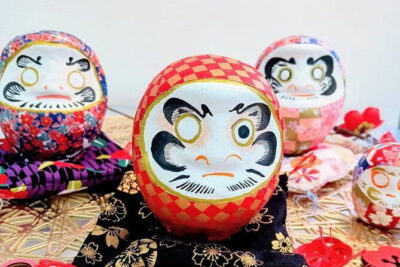
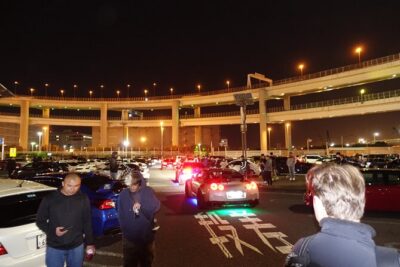
Shibuya, Shinjuku and Harajuku Walks, side by side.
 ★ 5.0Shinjuku Food Tour (13 Dishes at 4 Local Eateries)From $866,603 reviews
 ★ 5.0Tokyo Bar Hopping Tour in Shinjuku (All-You-Can-Drink + Dinner)From $1063,587 reviews
 ★ 5.0Official Street Go-Kart in ShibuyaFrom $763,435 reviews
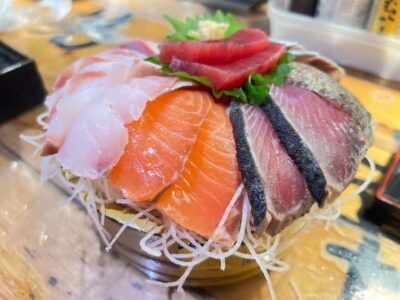 ★ 4.9Shinjuku Food Tour (15 Dishes and 4 Eateries)From $852,033 reviews
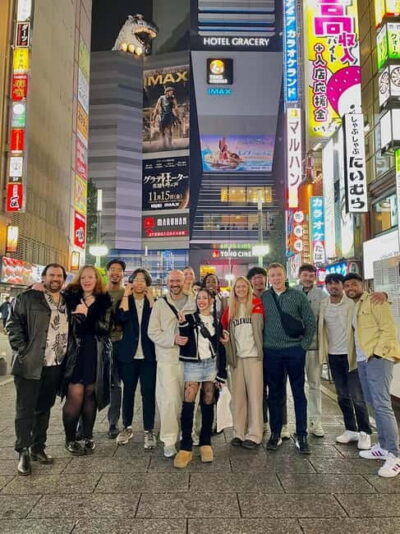 ★ 4.9Shinjuku Local Bar and Izakaya Guided Walking TourFrom $341,794 reviews
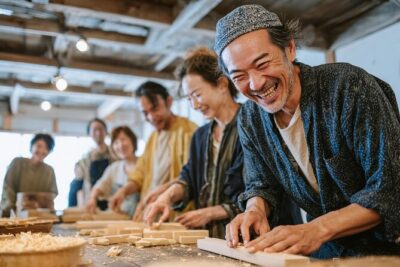 ★ 5.0Tokyo Shinjuku Chopsticks Making ClassFrom $201,763 reviews
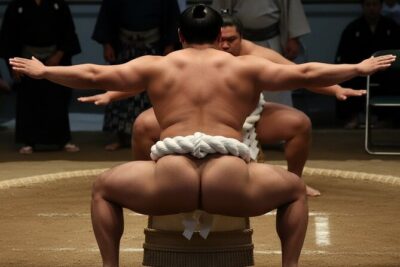 ★ 5.0Tokyo Shinjuku Sumo Show & Experience with PhotoFrom $791,750 reviews
 ★ 4.9Street Kart Experience in ShibuyaFrom $741,484 reviews
Filed on these lists too