
REVIEW · SHIBUYA, SHINJUKU AND HARAJUKU WALKS
Tokyo: Shinjuku Bar Hopping & Night Walking Tour
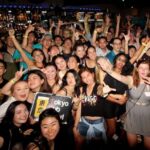
Tokyo at night has a different rhythm. In this Shinjuku bar-hopping walk, you hit three distinct izakaya-style stops in the city’s most neon-heavy district, guided by a real local. I like that the pacing is built for wandering on foot, and I also like that you get insider access to bars you would never find on your own.
The biggest catch is also the most Japanese part of it: food and drinks are not included, and seating can be tight. You’ll want cash ready, and you should expect some standing while you eat and drink.
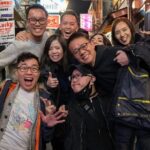
If you end up with a guide like Ayaka, Hajime, Miko, Chihiro, or Han, you’re likely to get the same theme that pops up again and again in real experiences: lots of practical culture talk, smart drink picks, and a friendly night that still feels local. And yes, the night can include surprises, from sake tastings to karaoke detours, depending on the flow.
In This Review
- Key things to know before you go
- Shinjuku at night, and why this route works
- Meeting at Shinjuku Station East Exit, then getting moving fast
- Omoide Yokocho: red lanterns, tight tables, and the sushi moment
- Kabukicho’s neon streets: gyoza, kushikatsu, and nightlife energy
- Golden Gai: tiny bars, sake tastings, and doors that stay closed
- What you should expect from the pace and the food flow
- Price and value: $30 is for the guide, not the drinks
- Drinking rules in Japan, and how to stay comfortable
- Guide style: the names you might hear, and why they matter
- Who this is for, and who should consider a different option
- Should you book Shinjuku bar hopping now?
- FAQ
- What is included in the $30 tour price?
- What should I bring for the tour?
- How long is the tour?
- Where do I meet the guide?
- Is there an age requirement for drinking alcohol?
- What about vegetarian options?
Key things to know before you go
- Three izakaya stops across Shinjuku for a focused night with minimal guesswork
- Insider connections at Golden Gai so you can actually get in
- Cash is required, since food and drinks are on you
- Some standing room at small places because seats are limited
- Sake comes with context, including tastings and differences in styles
- English or Japanese live guide so you can follow the why behind the what
Other routes through the west side of Tokyo, compared
- Tokyo: Shinjuku Food Tour (13 Dishes at 4 Local Eateries)
★ 5.0 · 6,603 reviews - Tokyo Bar Hopping Tour in Shinjuku (All-You-Can-Drink + Dinner)
★ 5.0 · 3,587 reviews - Official Street Go-Kart in Shibuya
★ 5.0 · 3,435 reviews - Tokyo: Shinjuku Food Tour (15 Dishes and 4 Eateries)
★ 4.9 · 2,033 reviews
Shinjuku at night, and why this route works
Shinjuku after dark is not just a place to eat and drink. It’s a quick crash course in how Tokyo social life really works, from tiny counter restaurants to narrow alleys that feel like they’re part of another decade. The fun here is that you’re not stuck with one neighborhood. You get a chain of settings with different vibes, all within a short walk radius.
What makes this tour worth your time is that it’s structured for first-time visitors. You start with places that feel chaotic if you walk in alone, then move toward areas that can be confusing unless someone points the way. In other words, you get the payoff without the hours of map work and trial and error.
And you’re not doing it solo. You’ll be walking with a guide and other people, which often turns a group meal into actual conversation.
Meeting at Shinjuku Station East Exit, then getting moving fast
You meet at the Shinjuku Police Station Shinjuku East Exit Police Box, at the east side of Shinjuku Station. It’s easy to find if you approach the station’s east exit and look for the guide holding a sign that says Local Guide Stars.
Right away, you’ll start walking for about five minutes. That short intro walk matters because Shinjuku is huge, and orientation is half the battle. Once you’re headed into the neighborhood lanes, the night starts feeling like it belongs to Tokyo, not to your itinerary.
The tour runs for about three hours. It’s long enough to eat at multiple spots, but short enough that the night still feels lively instead of dragged out.
Omoide Yokocho: red lanterns, tight tables, and the sushi moment
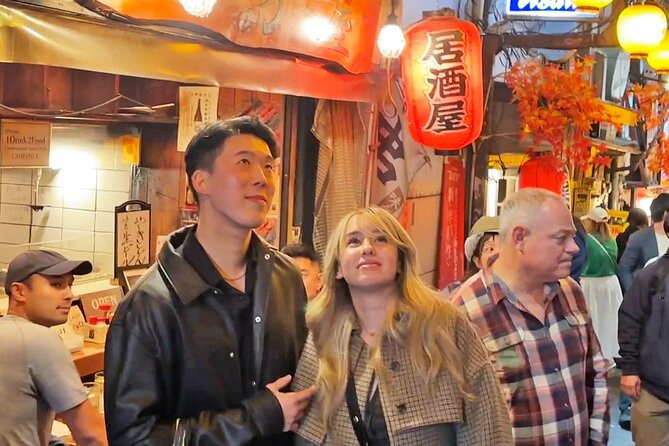
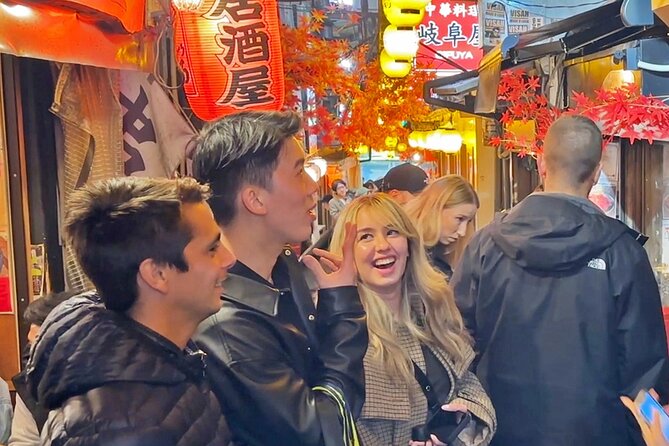
The first major stop is Omoide Yokocho, famous for its red lantern glow and packed-in after-work crowds. This is the kind of place where you can understand the appeal instantly, even if you don’t speak much Japanese. Office workers crowd around small counters and tiny tables, and the atmosphere is all about the evening ritual.
Here’s the part I love: you’re not left to fight for a spot or figure out how to order while you’re hungry. The setup includes reservation handling, which helps at a place where getting seated can be genuinely challenging. That means you can focus on what matters, the food and the rhythm of the place.
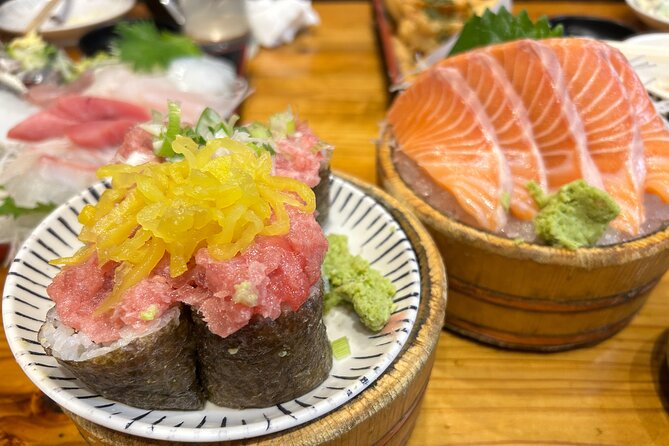
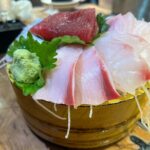
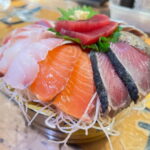
In recent experiences, the Omoide Yokocho stop often includes fresh sushi as one of the highlights. Even if you’re not a sushi expert, it’s a smart first meal because it sets the tone: clean, satisfying flavors right at the start, before the night gets more chaotic and smoky.
Practical note: because these are small venues, don’t be surprised if some people end up standing part of the time. The guide helps you keep the night on track, but the physical reality of Omoide Yokocho is still compact spaces.
The red lanterns stay lit later. More Tokyo crawls
- Tokyo: Shinjuku Local Bar and Izakaya Guided Walking Tour★ 4.9 · 1,794 reviews
- Shibuya Meltdown Nightlife Tour: All-You-Can-Drink Bar Hopping★ 5.0 · 1,058 reviews
- Tokyo: Pub Crawl and Bar Tour★ 4.5 · 951 reviews
- Tokyo: Shinjuku Local Bar & Izakaya Crawl Tour★ 5.0 · 890 reviews
- Tokyo: Shinjuku Bar Hopping with All-You-Can-Drink & Dinner★ 4.9 · 440 reviews
Kabukicho’s neon streets: gyoza, kushikatsu, and nightlife energy
Next you move into Kabukicho, Shinjuku’s best-known entertainment neighborhood. If Omoide Yokocho is about intimate lanes and lantern light, Kabukicho is about scale and noise. Neon signs stack up, crowds move fast, and the area feels like Tokyo’s version of a stage set.
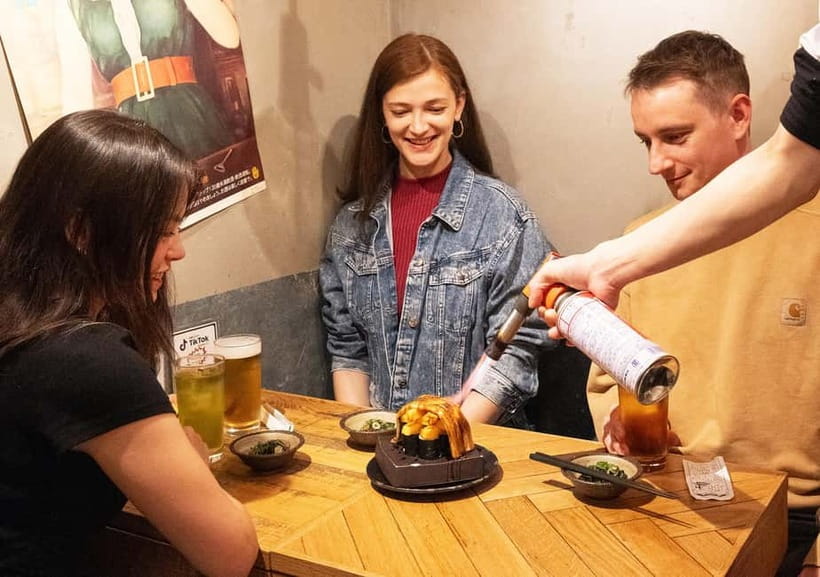
This is also where you get a different kind of food experience. In this part of the night, guests often mention crispy kushikatsu and juicy gyoza, plus plenty of sake. The point isn’t just trying snacks. It’s learning what people order when they want comfort food that works with drinking, all in bite-sized, shareable portions.
What I find valuable here is the guided context. Kabukicho can look like pure chaos if you’re wandering alone, but with a local guide you can connect the dots: why the streets are arranged the way they are, why certain places feel more “local,” and how the nightlife culture is built around casual, repeated visits.
One more thing that can make Kabukicho special on a tour like this: you’re less likely to fall into the most tourist-heavy routines. A guide can steer you toward spots that feel like they fit the neighborhood, not like they were designed for quick photo stops.
Golden Gai: tiny bars, sake tastings, and doors that stay closed
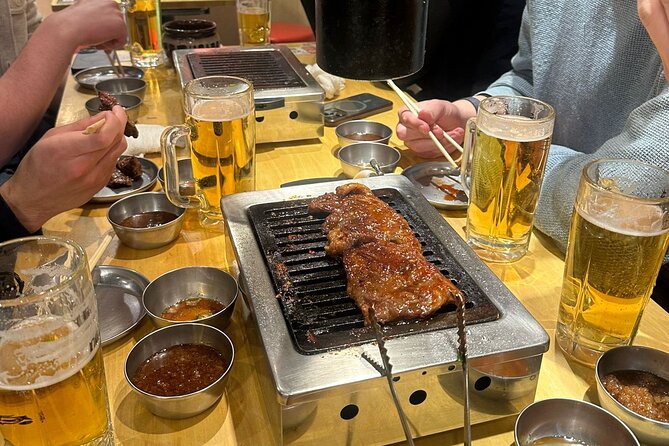
The final stop is Golden Gai, a cluster of narrow lanes packed with extremely small bars. This is where the tour earns its keep. Many of these places are not set up for walk-ins, especially new customers who don’t know the right doorway to use.
What you get here is insider access through the guide’s local connections. That means you can spend time in Golden Gai without turning the night into a hunt. And because these bars are tiny, the vibe often becomes more personal than you’d expect from a nightlife area.
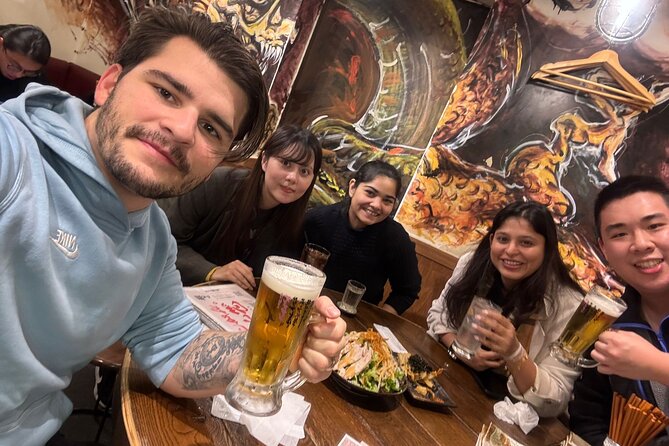
Golden Gai is also where sake becomes more than a drink. Several accounts mention sake tasting, with guides explaining differences between types, which makes your orders feel intentional instead of random. If you’ve ever wondered why one cup tastes lighter while another feels fuller, this is the kind of moment that can make it click.
And while sake is the star, you might also see bolder drink stories show up in experiences. One guest mentioned snake sake tied to karaoke time later in the night. That doesn’t mean it happens every time, but it does reflect the kind of playful edge Golden Gai can bring when the group and timing line up.
Just know the space is tight. Even if you’re seated, it won’t feel like a restaurant dining room. It feels like you’re stepping into someone’s corner of Tokyo nightlife, which is exactly why it’s memorable.
What you should expect from the pace and the food flow
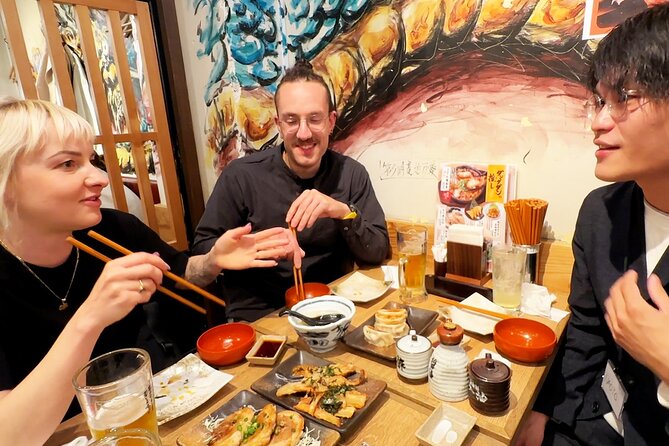
The structure is simple: three dinner-and-drink moments, each paired with guided time. Expect the tour to feel like you’re being led from one “social setting” to another.
Service can be a factor. In Japan, ordering and getting food can take longer than you’re used to at home, especially in small spots. The tour may run a bit past the scheduled time if service is slow. I’d treat this as part of the experience, not a problem.
As for food variety, you should expect classic drinking-friendly choices. From what’s been experienced on these nights, you’re likely to encounter:
- Sushi at the first stop
- Kushikatsu and gyoza during the night
- Plenty of sake alongside beer and other spirits, depending on your group
Vegetarian options exist, but they’re limited. If you don’t eat meat, plan for the reality that most small izakaya menus are built for omnivores. The guide can help you navigate what’s available, but don’t expect a large, dedicated vegetarian menu.
Price and value: $30 is for the guide, not the drinks
The tour price is $30 per person, and that’s worth understanding up front. This fee covers the walking tour, the local guide, and photos taken during the tour. Food and drinks are not included.
So what value are you actually buying? Access, timing, and reduction of risk.
- You’re paying for someone to handle restaurant reservations where seating is tight.
- You’re paying for the translation help and ordering guidance that makes small places less stressful.
- You’re paying for insider entry at Golden Gai, where your odds drop fast if you’re on your own.
Then you budget separately for what you drink and eat. Since you must bring cash, I suggest planning a realistic “night out” amount before you arrive, based on what you actually want to try. If you’re the type who wants lots of sake pours, you’ll spend more. If you’re more cautious and stick to a couple drinks, you can keep it controlled.
One more practical detail: the tour lists skip-the-ticket-line. That matters in Japan when places are tight and people are waiting. Even if you’re not buying big tickets, a guide can still save time when entry involves queues or timing.
Drinking rules in Japan, and how to stay comfortable
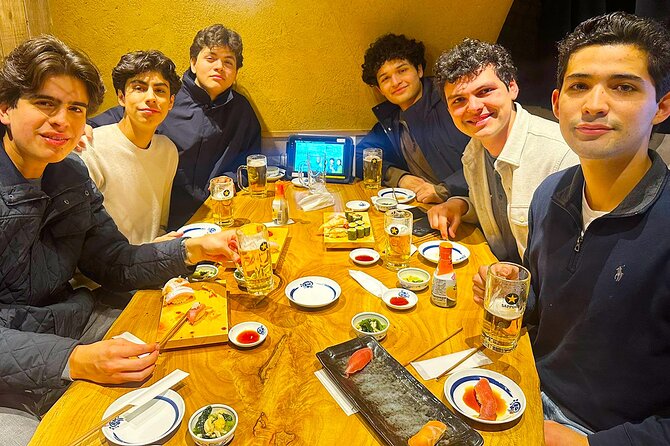
By Japanese law, only people aged 20 and over can drink alcohol. If you’re under 20, you can still join for the food and walking parts, but you should be ready that the alcohol side won’t apply to you.
Also, this is a tour that respects start times. If you’re late and you miss the group, you won’t get a refund or rescheduling. The message here is clear: show up early, especially in Shinjuku, where signage and crowds can slow you down.
Because seating can be limited, you should also expect that some moments might involve standing. This is normal in izakaya life, especially in places like Omoide Yokocho and Golden Gai.
Guide style: the names you might hear, and why they matter
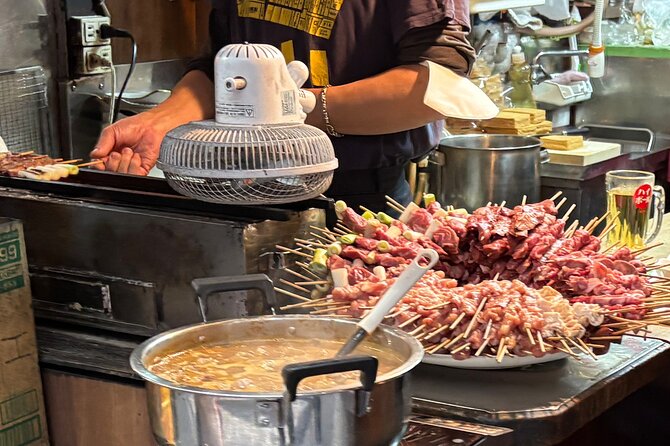
A big part of the quality is the guide. The consistent theme in real experiences is friendliness plus humor, with strong English when needed. Several guides are named in accounts, including Miko, Han, Ayaka, Hajime, Chihiro, and Ichiro, and the common thread is that you’re not just getting food recommendations. You’re getting context.
For example:
- One guide experience included a sake-tasting explanation that compared types and helped people order with confidence.
- Another guide experience included drink recommendations that felt personal, not generic.
- Solo travelers have reported feeling comfortable and supported, including a solo female traveler who said the guide and group made it easy to relax.
You’re also walking through areas with character. Kabukicho has a lot of odd shops and loud street energy, and Golden Gai is basically made of micro-neighborhoods. A guide helps you read what you’re seeing, so the night becomes more than consumption.
Who this is for, and who should consider a different option
This tour fits you if you want:
- A guided way into Shinjuku nightlife that reduces confusion
- A chance to try multiple food and drink styles in one evening
- Cultural context that makes sake and izakaya customs easier to understand
It might not fit you if:
- You don’t plan to drink much. Some groups end up doing more alcohol-focused tastings than you might expect, and limited seating can make the night feel more like a social drinking session.
- You need a fully vegetarian-friendly menu. Options exist, but they’re limited.
- You’re not comfortable with standing in compact bars.
One tip that can improve your night: do this earlier in your trip. Once you learn how Shinjuku izakaya life works, you can reuse the skills and knowledge for your later nights on your own.
Should you book Shinjuku bar hopping now?
My take: yes, if you want a first-rate introduction to Shinjuku after dark, this is a solid choice. The $30 price makes sense because you’re paying for the guide, the restaurant coordination, and the insider access that you would struggle to replicate alone.
Book it if you’re excited to try sake, eat classic izakaya foods, and wander through Omoide Yokocho, Kabukicho, and Golden Gai with someone who knows how to get you into the right rooms. Skip it if you’re expecting food and drinks to be included, or if you need lots of vegetarian certainty and wide seating.
If you do book, go in with one mindset: this is a guided night out. The real value is the flow, the access, and the local atmosphere.
FAQ
What is included in the $30 tour price?
The tour includes a walking experience, a local guide, and photos taken during the tour. Food and drinks are not included in the price.
What should I bring for the tour?
Bring cash. Since the tour does not include food and drinks, you’ll need cash for purchases at the stops.
How long is the tour?
The tour lasts about 3 hours.
Where do I meet the guide?
Meet at the Shinjuku Police Station Shinjuku East Exit Police Box, at the east exit of Shinjuku Station. The guide will be holding a sign that says Local Guide Stars.
Is there an age requirement for drinking alcohol?
Yes. By Japanese law, only guests aged 20 and over are allowed to drink alcohol.
What about vegetarian options?
Vegetarian options are limited. Most Japanese restaurants are not fully equipped to offer vegetarian menus, but the guide can try to help you find suitable choices.
Lantern Light and Late Counters
West Tokyo on Foot: Seven More

Newest Tokyo write-ups from the Loving Japan desk


Shibuya, Shinjuku and Harajuku Walks, side by side.
 ★ 5.0Shinjuku Food Tour (13 Dishes at 4 Local Eateries)From $866,603 reviews
 ★ 5.0Tokyo Bar Hopping Tour in Shinjuku (All-You-Can-Drink + Dinner)From $1063,587 reviews
 ★ 5.0Official Street Go-Kart in ShibuyaFrom $763,435 reviews
 ★ 4.9Shinjuku Food Tour (15 Dishes and 4 Eateries)From $852,033 reviews
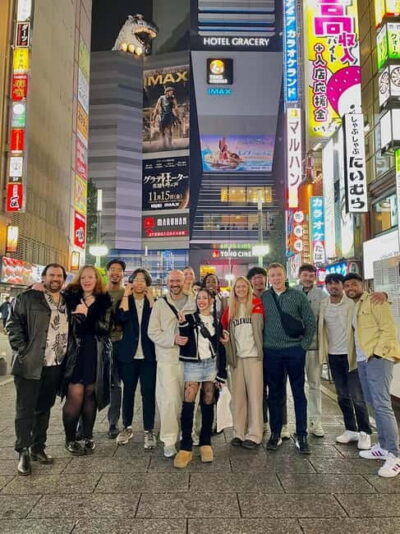 ★ 4.9Shinjuku Local Bar and Izakaya Guided Walking TourFrom $341,794 reviews
 ★ 5.0Tokyo Shinjuku Chopsticks Making ClassFrom $201,763 reviews
 ★ 5.0Tokyo Shinjuku Sumo Show & Experience with PhotoFrom $791,750 reviews
 ★ 4.9Street Kart Experience in ShibuyaFrom $741,484 reviews