
REVIEW · CYCLING AND E-BIKE TOURS
Tokyo: West-Side Cycling and Food Tour with Guide
Tokyo changes when you pedal.
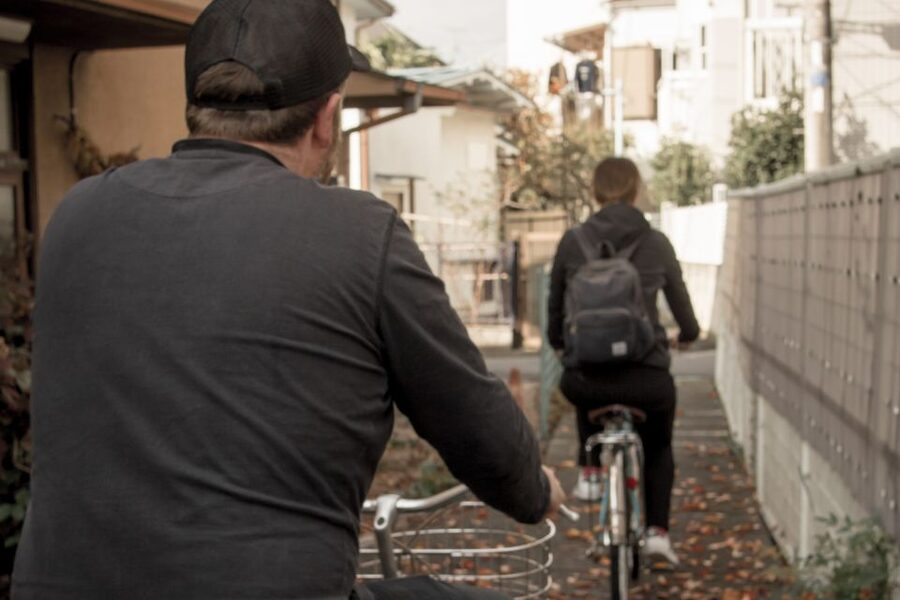
This West Tokyo cycling and food tour takes you through everyday neighborhoods like Koenji and nearby Nakano and Asagaya, far from the usual tourist detours. You ride a working, slightly scrappy salvaged mamachari style bike and get an English guide, Andy, who explains what you are seeing, from street routines to bike habits.
I also love the practical food plan, with a simple Japanese lunch plus two street food eats and a bottled drink. The other big win is how the route teaches Tokyo cycling culture in real life, including the way people park bicycles and squeeze through busy streets. One consideration: you need to be comfortable cycling on crowded, sometimes narrow streets and uneven surfaces (about 12 to 15 km total), and it is not suited to vegans or most food allergies.
In This Review
- Key points before you book
- Why West Tokyo by bike beats the usual sightseeing
- Koenji Station start, mamachari bikes, and how the ride feels
- Nakano, Koenji, and Asagaya on back streets, not tourist routes
- Food stops: a simple lunch, two street bites, and a drink you choose
- Tokyo cycling culture: parking, habits, and how to feel confident
- Price and value: what $110 buys you in real Tokyo time
- Practical tips so your day goes smoothly
- Who should book this tour?
- Should you book this Tokyo West-Side cycling and food tour?
- FAQ
- How long is the Tokyo West-Side cycling and food tour?
- Where do I meet the guide?
- What is included in the ticket price?
- What food options are available for dietary needs?
- Is this tour okay for beginners or kids?
- What happens if it rains?
Key points before you book
- Mamachari bikes: an authentic, everyday style of Tokyo bicycle, not a flashy rental gimmick
- West Tokyo neighborhoods: Nakano, Koenji, and Asagaya, with local energy you do not see on main-street routes
- Food that feels normal: a simple lunch plus two popular street food stops and a bottled drink
- Cycling culture and parking: you will learn how Tokyo bike life really works
- English guide with local context: Andy’s explanations make the whole ride click
- Real riding requirements: plan for 12 to 15 km and narrow, busy streets
Cover Tokyo on two wheels instead
- Tokyo Guided Small-Group Biking Tour
★ 5.0 · 1,250 reviews - Tokyo Great Cycling Tour
★ 5.0 · 811 reviews - Tokyo Top Highlights 3h Guided E-bike Tour
★ 5.0 · 714 reviews - 3h Tokyo E-Bike Tour: Hidden Gems, and Local Life with guide
★ 5.0 · 670 reviews
Why West Tokyo by bike beats the usual sightseeing
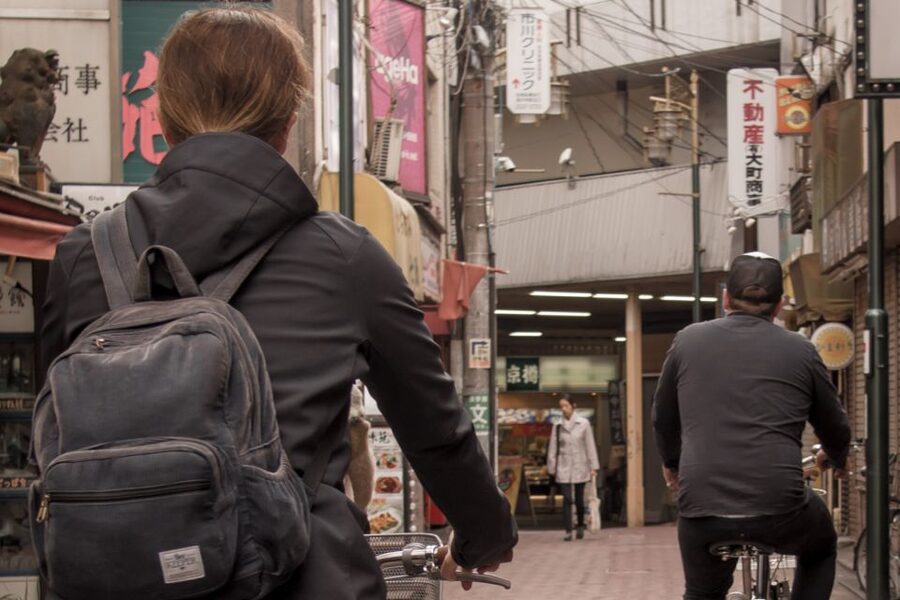
If your Tokyo bucket list is all temples and big-name districts, this is a nice change of pace. The focus here is local neighborhoods on the west side of the city, where everyday life moves at a street level pace. You get the fun of exploring on wheels, plus the human context that usually takes days to figure out on your own.
The ride matters because Tokyo is built for movement. Streets, storefronts, train connections, and bike culture all interlock. When you cycle through it, you feel the rhythm in a way that walking from one landmark to the next usually cannot match.
The food part also feels more grounded than most “tour snacks” plans. You are not just collecting bites. You are sampling everyday Japanese food as you pass the places locals actually use, with a guide who can explain what you are seeing and eating.
Koenji Station start, mamachari bikes, and how the ride feels
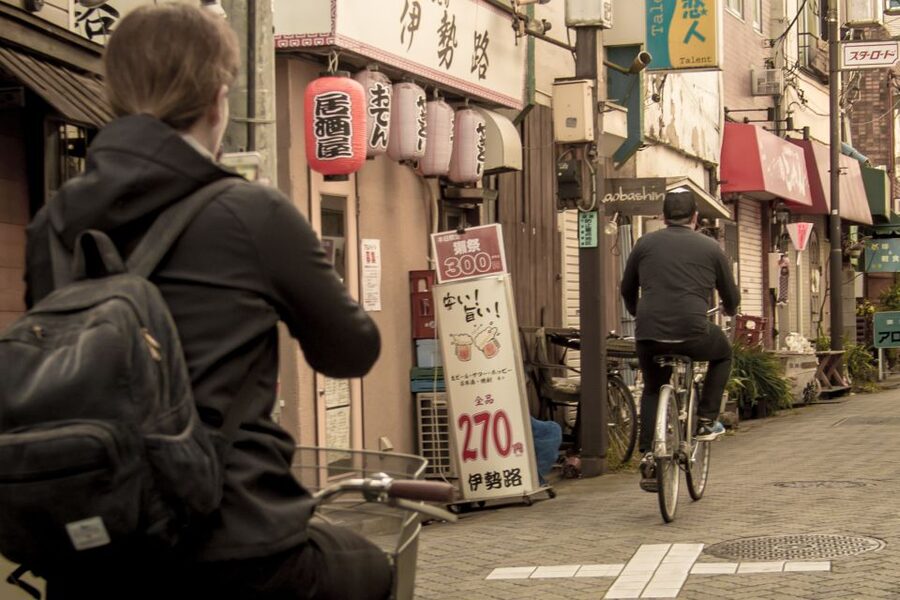
Your tour starts at Koenji Station on the JR network. It is a quieter suburban station compared with the busy hubs, and you meet your guide directly outside the ticket gates. The guide typically waits 5 minutes before the start, wearing a baseball cap, so it is easy to spot the meetup point.
Then you switch to the main character of the tour: a salvaged mamachari bicycle. This is the classic Tokyo “mom’s bike” style: practical, stable, and built for daily errands. Expect a sometimes creaky or squeaky ride, but the bikes are kept in good condition and are designed for actual street use.
The pace is leisurely, but the cycling is real. You should be comfortable riding about 12 to 15 km total on city streets, including narrow and crowded areas and uneven surfaces. If you are a cautious rider, you can still enjoy this, but you will want to pay attention and keep a steady rhythm. Short breaks happen as needed, but you should not plan on stopping for long sightseeing photos at every corner.
The route also uses a mix of cycling and walking. That combination helps you manage busier intersections and places where the bike flow does not make sense. You still spend most of the time in “moving Tokyo” mode, which is the whole point.
Nakano, Koenji, and Asagaya on back streets, not tourist routes
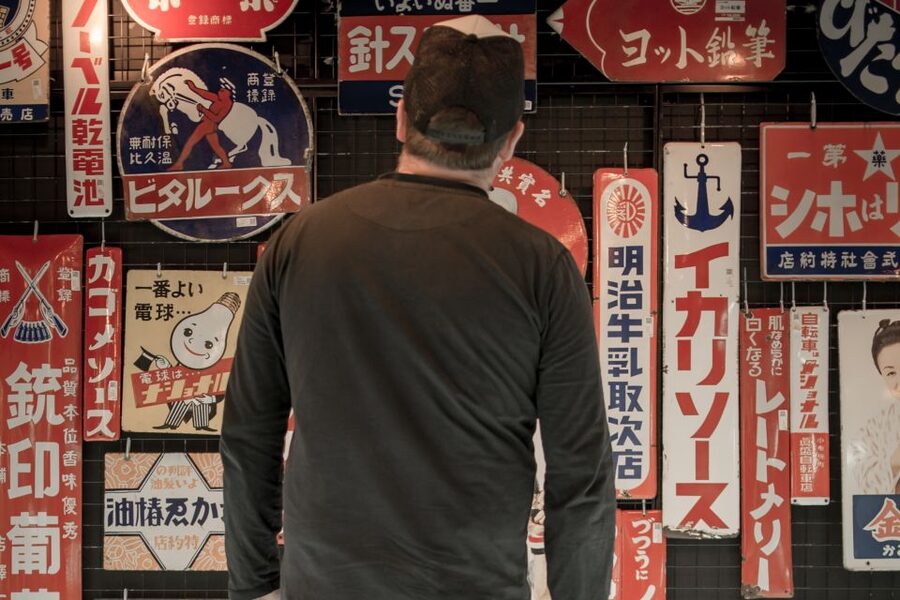
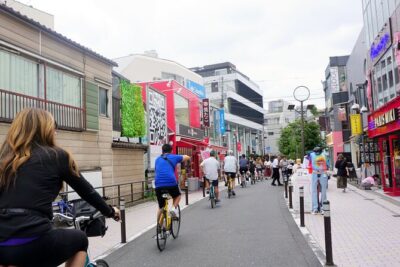
The neighborhoods on this tour are the star: Nakano, Koenji, and Asagaya. This is where you start noticing how Tokyo changes block by block. One street feels like it is in a hurry, the next feels more local and low-key. You see residential buildings right next to small shops, and you watch people move through their routines without performing for anyone.
Koenji in particular is a magnet for street-level character, and that comes through quickly when you are cycling rather than sightseeing from a sidewalk. The back streets you take are the kind of routes you would not naturally pick if you stayed inside the most obvious tourist lines.
As you ride, you also get a chance to experience Tokyo bicycle parking systems first-hand. Japan has a specific way of handling bike storage in public areas, and seeing how it works makes the city feel more navigable. It also helps you understand why so many people use bikes for short trips, even in a dense city.
One small but important reality: you will be sharing space with locals. You may find yourself weaving gently, moving at the pace of traffic, and learning how to pass in crowded spots. It sounds intimidating on paper, but with an experienced English guide, the rhythm becomes predictable.
- Mt Fuji and Hakone 1-Day Bus Tour Return by Bullet Train★ 5.0 · 26,383 reviews
- 1-Day Tokyo Bus Tour★ 5.0 · 14,250 reviews
- Tokyo: teamLab Planets TOKYO Digital Art Museum Entry Ticket★ 4.6 · 9,779 reviews
- Mt Fuji & Hakone Cruise, Drum Show Bullet Train 1 Day from Tokyo★ 4.0 · 7,413 reviews
- Tokyo: Shinjuku Food Tour (13 Dishes at 4 Local Eateries)★ 5.0 · 6,603 reviews
Food stops: a simple lunch, two street bites, and a drink you choose
Food is not random here. The plan is structured around one simple Japanese lunch, plus two popular street food eats, and your choice of a bottled drink. The guide keeps it easy, so you are not stuck translating menus while also trying to keep up with the group.
Lunch is meant to feel normal, not staged. One detail that stands out from real tour experiences is that the lunch stop can be something like a noodle bar, the kind of place locals use because it is fast, reliable, and tasty. That matters because it gives you a snapshot of everyday meal culture rather than a one-time “experience restaurant” vibe.
Between meals, you get street food bites that fit the neighborhoods you are cycling through. If you like eating while you explore, this is a good rhythm. You are not waiting for hours to snack, and you are not eating massive meals that slow the pace.
A nice bonus is how the tour can demystify practical Tokyo habits, even the small stuff. For example, there is a real-life moment with vending machine drinks where the guide explains how to make it work smoothly. That kind of tip can help you later in Tokyo, when you are trying to buy a drink without fuss.
Diet limits are real on this tour. It does not cater to personal tastes, dietary requirements, or allergies. It is not suitable for vegans, and it is not designed for guests with food allergies. If that is your situation, you will likely be happier choosing a different food experience.
Tokyo cycling culture: parking, habits, and how to feel confident
One of the strongest reasons to do this tour is that it teaches you the culture of cycling, not just the mechanics of riding. Tokyo has a bike mindset that is different from many cities. People treat bicycles as daily tools, and the infrastructure supports it.
You will see the bicycle parking fees included in your ticket price. You will also see how people lock and park bikes in ways that match the urban layout. Even without memorizing every detail, you walk away with a clearer mental map of how bike life fits into Tokyo.
The tour also gives you a feeling for how to handle busy conditions. Narrow streets and crowded areas can be stressful if you are alone. With the group and the guide leading, you learn where to position yourself, how to move at a safe pace, and how to keep your attention on the road.
And yes, the bikes can be “characterful.” Expect a sometimes creaky or squeaky ride. That is part of the charm, and it also reminds you that you are experiencing real everyday transportation, not an entertainment vehicle.
One more subtle benefit: it helps you reframe Tokyo as more than trains and sidewalks. If you are the type who likes getting around efficiently, you will leave thinking about future rides and neighborhood exploration with a lot more confidence.
Price and value: what $110 buys you in real Tokyo time
At $110 per person for about 3.5 hours, this is not a cheap casual activity. But it is also not “just a guide walking and eating street snacks.” You are paying for transportation (the mamachari bike), time with a local English guide, bicycle parking fees, and cycling liability insurance, plus the meal plan.
The value equation looks strong because so much is included. You get:
- A local lunch (simple Japanese meal)
- Two popular street food eats
- One bottled drink
- Bicycle parking fees
- Cycling liability insurance
- Local English-speaking guide
If you tried to assemble the same day on your own, you would spend time figuring out routes, bike logistics, and food stops that match local culture. Here, someone handles that, and you get to focus on riding and eating.
Where you should pause is the fit. If you are not comfortable cycling in crowded and narrow streets, you may spend mental energy worrying instead of enjoying. Also, the food limits can matter a lot for some travelers.
Practical tips so your day goes smoothly
Bring the basics that the tour asks for: passport or an ID card, hand sanitizer or tissues, and a garbage bag. Japan is good at providing bins in many places, but street eating can still create small trash moments, so having a bag saves hassle.
Dress for street riding, not just sightseeing. You will be outside, and weather can affect comfort. In rain, the tour generally proceeds as planned, so you should anticipate getting wet. Since you are outside most of the time, packing a small plan for rain comfort is smart.
Also, match your expectations to the activity. This is an outdoor cycling and walking experience, with food built in. If you want a slow, sit-down museum-style pace, this is likely too active.
Cycling requirements are clear: you should be competent riding a bicycle. The route can include narrow and crowded streets and uneven surfaces, and the total distance is roughly 12 to 15 km at a leisurely pace. Height matters too, with a minimum of 140 cm to ride comfortably.
Who should book this tour?
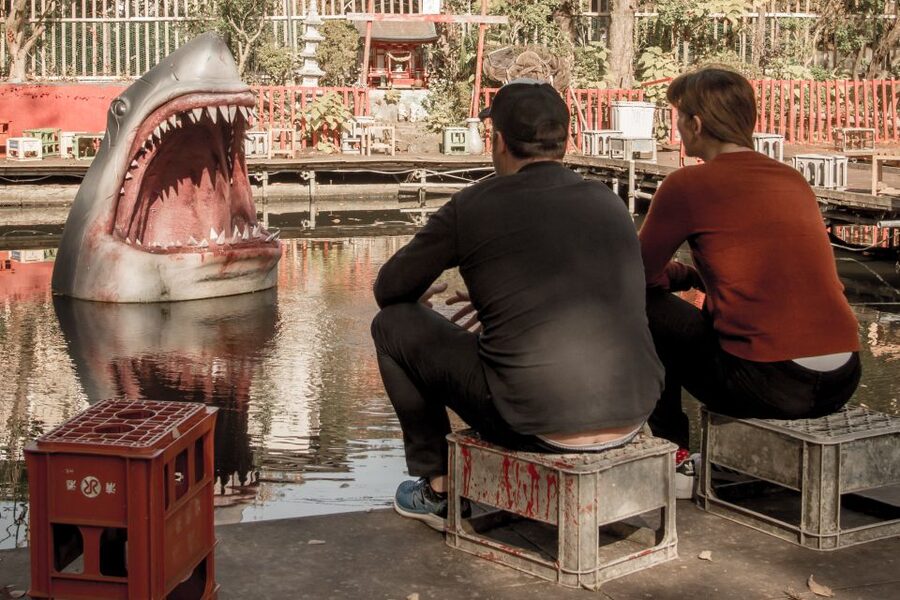
This is a great match if you want a more local, neighborhood-based Tokyo experience. You will probably enjoy it most if:
- You like the idea of seeing Tokyo from street level at bike speed
- You enjoy eating while exploring, not eating after the fact
- You want to learn cultural details that make the city feel understandable
- You are comfortable cycling and can handle crowded streets
- You want a guided option that takes you beyond the most obvious areas
It may be a poor match if you need vegan food or have food allergies. It also is not suitable for children under 10. If any of those apply, skip it and look for a different tour format.
Should you book this Tokyo West-Side cycling and food tour?
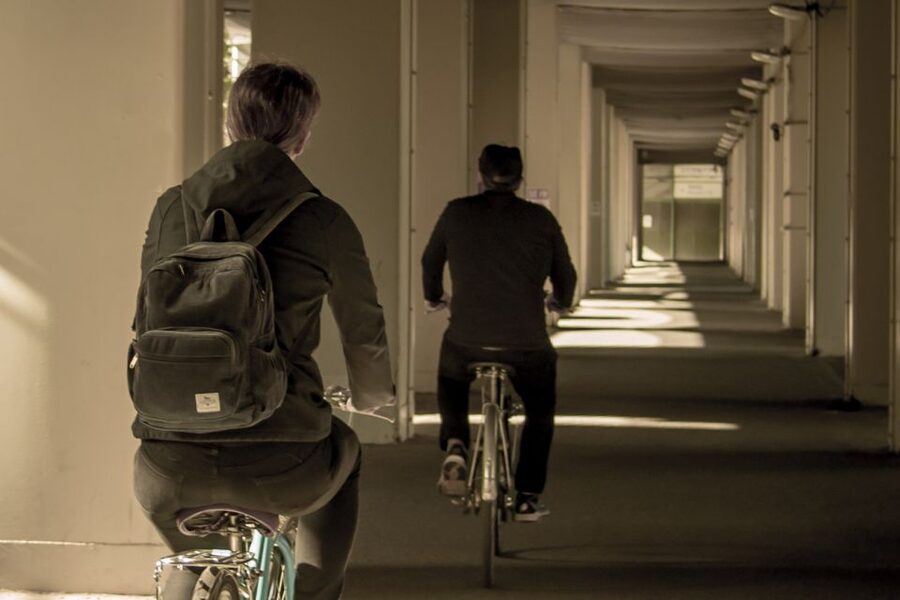
I think you should book it if you want Tokyo that feels lived-in, not packaged. The combination of mamachari cycling, West Tokyo neighborhoods like Nakano and Koenji, and the straightforward included food plan makes this a high-connection experience. You also get practical culture lessons, including bike habits and daily routines, which often become the things you remember months later.
I would not book it if you are looking for a relaxing, low-movement day or if your diet restrictions are strict. The ride requires real comfort on the street, and the food plan is not built to accommodate special dietary needs.
If you are the “let me figure out how locals move and eat” type of traveler, this is a smart way to spend 3.5 hours in Tokyo.
FAQ
How long is the Tokyo West-Side cycling and food tour?
The tour lasts 210 minutes, which is about 3.5 hours.
Where do I meet the guide?
You meet at Koenji Station on the JR train network. The guide is waiting outside the ticket gates about 5 minutes before the start, wearing a baseball cap.
What is included in the ticket price?
The price includes a simple local lunch, two street food eats, one bottled drink, bicycle parking fees, and cycling liability insurance, plus an English-speaking local guide.
What food options are available for dietary needs?
This tour does not cater to dietary requirements or allergies. It is not suitable for vegans and not suitable for people with food allergies.
Is this tour okay for beginners or kids?
You are expected to be competent riding a bicycle, including on narrow and crowded streets and uneven surfaces. It is also not suitable for children under 10 years, and riders should be at least 140 cm tall.
What happens if it rains?
It is an outdoor activity and weather may impact it. In the event of rain, the tour generally proceeds as planned, so plan on getting wet.
Bicycles and E-Bikes We Have Ridden
Newest Tokyo write-ups from the Loving Japan desk
Cycling and E-Bike Tours, side by side.
 ★ 5.0Hidden Kyoto E-Biking tourFrom $1161,843 reviews
 ★ 5.0Tokyo Guided Small-Group Biking TourFrom $1061,250 reviews
 ★ 5.0Tokyo Great Cycling TourFrom $99811 reviews
 ★ 5.0Tokyo Top Highlights 3h Guided E-bike TourFrom $63714 reviews
 ★ 5.03h Tokyo E-Bike Tour: Hidden Gems, and Local Life with guideFrom $63670 reviews
 ★ 5.0Arashiyama Bamboo Forest & Hidden Gems Bike Tour (Early Bird)From $106613 reviews
 ★ 5.05 Top Highlights of Kyoto Full Day Bike Tour (E-bike option)From $172511 reviews
 ★ 5.0Full Day Biking Tour Exploring the Best of KyotoFrom $119498 reviews
Filed on these lists too