
REVIEW · ASAKUSA, SENSO-JI AND TOKYO SKYTREE
Tokyo : Yanaka and Nezu-Old Traditional Town Cultural Experience
Old Tokyo still breathes in Yanaka and Nezu. This 3.5-hour small-group walk takes you past torii gates, old cemeteries, and everyday neighborhood life that most visitors skip. You’ll get a slower pace and a guide who helps you understand what you’re seeing, not just where to go.
What I love most is the combination of temple and shrine etiquette plus practical local recommendations as you move through the area. The guide, often Sui, is friendly, energetic, and clear in English, and she’s the kind of person who points out details you would totally miss on your own.
One possible drawback: this is still a walking tour, and some stops are short photo moments. If you hate moving constantly or want long, unstructured time at each place, you might feel a bit rushed.
In This Review
- Key things that make this tour worth it
- Yanaka and Nezu: the Tokyo you rarely see
- How $39.41 turns into real value (not just sightseeing)
- Where you start at Nippori, and how the route flows
- Nezu Shrine: torii gates, prayer, and fortune-telling
- Tennoji Temple: a calm reset with a bronze Buddha
- Yanaka District: layers of Meiji, Taishō, and Showa
- Nezu neighborhood walk: old and new side by side
- Yanaka Cemetery and the 100-year-old cedar pause
- Yuyake Dandan: the sunset staircase and Yanaka Ginza views
- The 200-year-old bathhouse turned art space
- Ueno Sakuragi Atari: wooden houses turned into shops
- Ending at Yanaka Ginza: street foods, desserts, and souvenirs
- Who should book this Yanaka and Nezu tour
- Should you book it or skip it?
- FAQ
- How long is the Yanaka and Nezu Old Traditional Town Cultural Experience?
- Where is the meeting point, and does it end nearby?
- How many people are in the group?
- Do I have to pay for admission at the stops?
- Is there a mobile ticket for this tour?
- Are service animals allowed, and can I cancel for free?
Key things that make this tour worth it
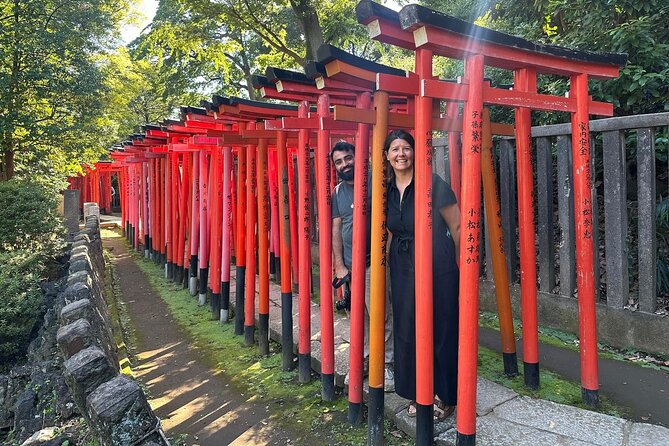
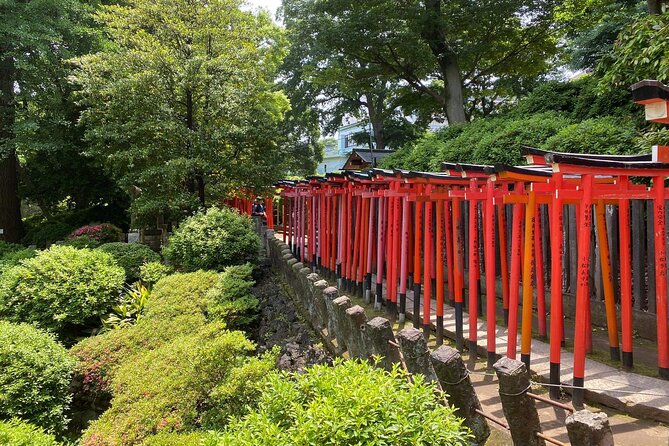
- Nezu Shrine rituals in a beautiful torii-lined setting, plus fortune-telling
- Small-group size (max 9), so you can actually ask questions
- Guide-led etiquette tips for shrines and temples, so you know what to do
- Yanaka Cemetery and scenic pauses for a quieter, reflective side of Tokyo
- Yuyake Dandan sunset staircase for views over Yanaka Ginza
- Yanaka Ginza shopping street at the end, with food and souvenir ideas
Still on the Sumida side? A few more Asakusa options
- Tokyo: Japanese Dance Cabaret Theater Asakusa-Kaguwa Ticket
★ 4.8 · 2,270 reviews - Tokyo: Meiji Shrine, Asakusa, Skytree Bus Tour and Cruise
★ 4.7 · 1,986 reviews - Tokyo: Roll and Authentic Sushi Making Class in Asakusa
★ 4.9 · 1,957 reviews - Tokyo: Asakusa Walking Tour with Sensoji Temple Visit
★ 4.8 · 1,583 reviews
Yanaka and Nezu: the Tokyo you rarely see
Yanaka and Nezu are the kind of neighborhoods that help you picture Tokyo before it became all glass towers and highway loops. The vibe is low-key, residential, and old-school in the best way. You can walk past areas where buildings and street life still show layers from the Meiji, Taishō, and Showa periods. It’s not staged. It feels like you’re moving through a lived-in part of the city.
This matters because most first-timers base their Tokyo on the big-name sights, then wonder why the photos look similar. Here, the “main attraction” is the texture. Small shops you can’t even name, side streets where the pace slows down, and religious spots that still function in daily life.
If you like cultural context, you’ll appreciate how the tour frames what you see. It’s not just stop, snap a photo, and move on. You get a sense of why these places matter and how people typically behave there.
How $39.41 turns into real value (not just sightseeing)
At around $39.41 per person for about 3 hours 30 minutes, this sits in the budget-friendly zone for a guided Tokyo experience. The value is that you’re paying for (1) a guide who explains what you’re looking at and (2) a route that strings together meaningful stops without long detours.
A big plus for your wallet is that many stops are free. Nezu Shrine, Tennoji Temple, the Yanaka District portion, the Nezu neighborhood walk, Yanaka Cemetery, the street-level photo spots, and the final Yanaka Ginza portion all have free admission noted. One place stands out as different: Ueno Sakuragi Atari is listed with admission included, so you’re not stuck wondering what costs extra.
Also, you’re not doing this with a crowd. The group is capped at 9 travelers, which keeps questions possible and walking comfortable. For Tokyo, where “small” can still mean dozens, that detail is surprisingly important.
One more practical note: you’ll get a mobile ticket, and confirmation is received at booking. So you’re not hunting for paper or scrambling the day of.
Where you start at Nippori, and how the route flows
The tour starts at Nippori Station (2 Chome-19 Nishinippori, Arakawa City) and ends back at the meeting point. That round-trip setup is helpful because it reduces the stress of “How do I get back?” You finish near where you started, which is useful if you’re planning the rest of your day in Ueno, Nippori, or along the Yamanote line.
This is also near public transportation, so getting there is straightforward. And because the tour is designed for most travelers to participate, it’s not built around extreme climbs or hard-to-reach sites.
How it feels: a sequence of short visits, neighborhood walks, and a few specific photo moments. If you like structure but not rigidity, the pacing works well. If you prefer only major attractions with long dwell times, you might find that some stops are brief. The route is built to show you old Tokyo in a single chunk, not to linger for hours in one location.
- Mt Fuji and Hakone 1-Day Bus Tour Return by Bullet Train★ 5.0 · 26,383 reviews
- 1-Day Tokyo Bus Tour★ 5.0 · 14,250 reviews
- Tokyo: teamLab Planets TOKYO Digital Art Museum Entry Ticket★ 4.6 · 9,779 reviews
- Mt Fuji & Hakone Cruise, Drum Show Bullet Train 1 Day from Tokyo★ 4.0 · 7,413 reviews
- Tokyo Mt Fuji 5th St & Hakone Cruise Bus Tour w/Bullet Train★ 4.4 · 5,024 reviews
Nezu Shrine: torii gates, prayer, and fortune-telling
You begin at Nezu Shrine, and the first thing you’ll notice is the torii-lined pathway. It’s one of those approaches that instantly changes your mindset. Instead of rushing through a busy district, you slow down as you walk toward the shrine area.
The tour focuses on what the shrine represents and how to participate respectfully. You’ll learn about the religions in Japan as they relate to the shrine setting, plus practical guidance on how people typically pray. You also get steps like writing your wish and receiving your fortune.
Plan to treat this as a cultural stop, not just a landmark. The guide’s role here is huge. If you show up without understanding the ritual flow, it’s easy to feel lost. With the guidance, you’ll know what you’re looking at and what you’re supposed to do.
It’s also listed as free admission and about 30 minutes, which is a good length. You have time to take in the atmosphere and participate in the experience without it feeling rushed.
Tennoji Temple: a calm reset with a bronze Buddha
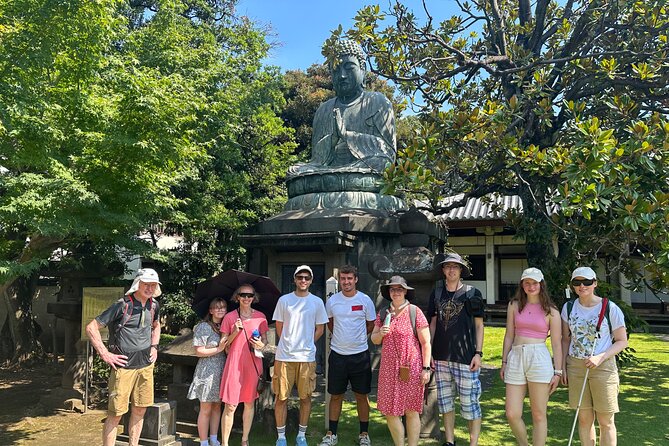
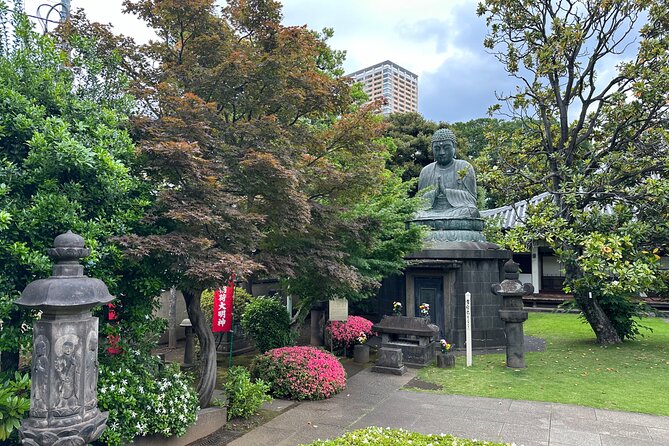
Next comes Tennoji Temple, one of the older temples in the Yanaka area. The highlight is a large, bronze, seated image of Buddha. The tour frames this stop as a calm moment, not a quick photo sprint.
There’s also mention of garden views surrounding the temple. Even in a city like Tokyo, that kind of visual quiet matters. A short temple break can make the rest of the neighborhood walk feel more meaningful.
This stop is short, listed at about 5 minutes and free admission. So don’t expect a long sit-down meditation. Instead, think of it as a palate cleanser. You pause, you look, you absorb the atmosphere, then you move on with a calmer head.
If you want to maximize your time, stand where you can see both the main image and the surrounding setting, then let the guide’s explanations do their job. The point is understanding the context, not collecting a hundred shots.
Yanaka District: layers of Meiji, Taishō, and Showa
The tour then moves into the Yanaka District for around 50 minutes. This is where you really start to feel the idea of old Tokyo as something physical, not just a story.
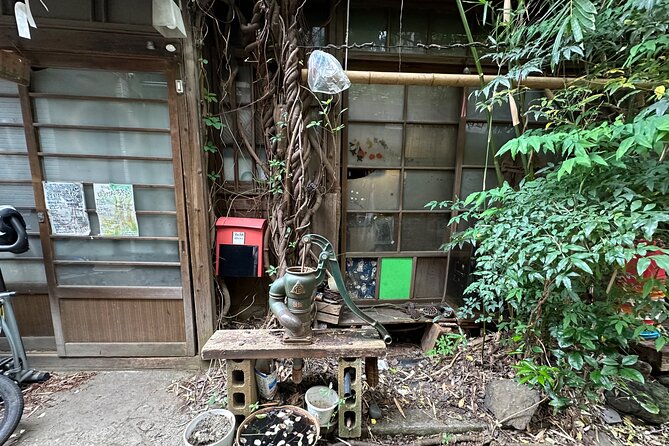
You’ll see remains of buildings tied to the Meiji, Taishō, and Showa periods. It’s not a theme park version of history. It’s street-level evidence of how places evolve. You’ll also find traditional small shops that are passed down through generations.
This is one of those zones where a guide helps a lot. Without someone pointing things out, it can blend together into generic “older streets.” With the explanation, you’ll start noticing architectural clues, street rhythms, and the ways everyday commerce stays tied to local history.
One thing I like about this stop: it gives you time to chat with your guide. That turns the walk into two-way learning, which is what makes the experience feel personal even though you’re in a group.
Nezu neighborhood walk: old and new side by side
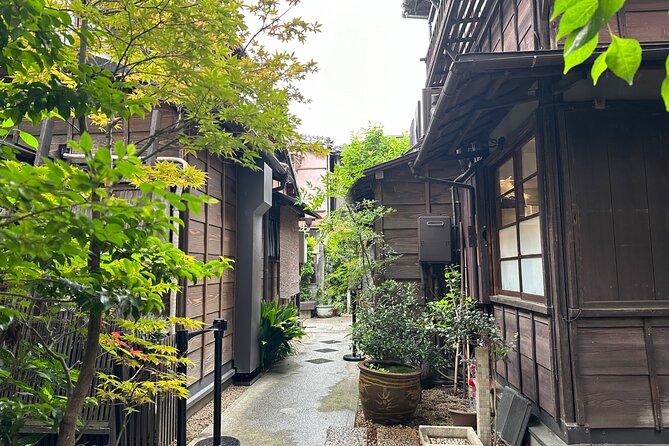
After the Yanaka District portion, you slow-walk through Nezu in a 30-minute residential area route. The key here is balance: old and new houses and shops appear together, and the tour helps you notice that contrast instead of skipping right past it.
This stop feels like the tour’s “real life” segment. You’re not only visiting cultural monuments. You’re walking through streets that locals still use, so you can see what daily Tokyo looks like when it’s not centered on trains and tourist corridors.
The guide’s familiarity shows here. You get local context, and you’re more likely to notice how neighborhoods maintain character as they modernize. That’s a big part of why Yanaka and Nezu work as an experience, not just as a photo stop.
If you enjoy neighborhoods, not just attractions, this portion is often the most rewarding. It’s quiet, slower, and easy to watch the street with less pressure to constantly move.
Yanaka Cemetery and the 100-year-old cedar pause
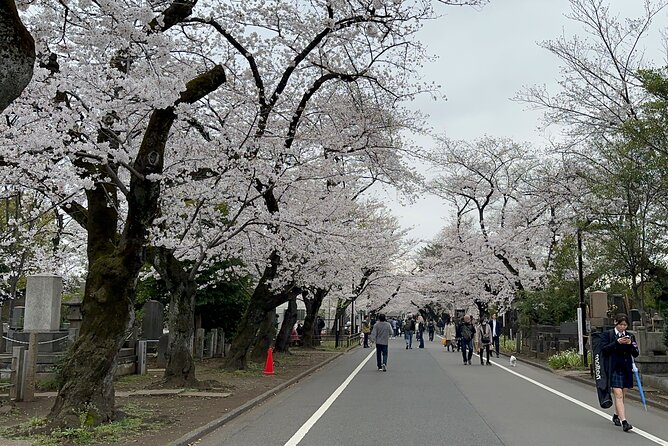
Then you visit Yanaka Cemetery for about 20 minutes. It’s described as one of the largest and most scenic cemeteries in Tokyo, and it notes that many important figures are buried there. This is a more reflective stop than most people expect on a Tokyo tour.
You’ll also want to act with respect. Cemeteries are peaceful by design, and the best way to experience this is to lower your pace and let the setting do the work.
Right around this area, you’ll also pass by a 100-year-old Himalayan cedar tree. It’s a brief pause, but it adds breathing space. Tokyo can feel intense. A mature tree moment helps you feel the passage of time in a way buildings can’t.
The main drawback here is also the nature of cemeteries: you’re not going to be entertained. You’re going to observe, reflect, and get a different view of Tokyo’s cultural fabric.
Yuyake Dandan: the sunset staircase and Yanaka Ginza views
Next is Yuyake Dandan, also called the sunset staircase. It’s listed as a quick stop, about 2 minutes, but it’s a meaningful one because you get a view angle that connects the neighborhood to its street life.
The idea is simple: from the staircase, you can see beautiful sunset potential and the Yanaka Ginza street view. Even if your timing isn’t perfect for sunset, the viewpoint still gives you a sense of geography. You get to “see the layout,” not just walk through it.
This is clearly a photo stop, and that’s okay. In a city of endless sights, a short but well-chosen viewpoint can make the day feel complete.
If you’re carrying a camera or phone, this is your moment to slow down, frame carefully, and take a few shots before moving on. The tour doesn’t linger because the point is to keep the route flowing.
The 200-year-old bathhouse turned art space
You also pass by a 200-year-old bath house that has turned into an art gallery. This is one of those details that makes you feel like you’re walking through Tokyo’s layers rather than only ticking boxes.
It’s not a full “go inside and tour the museum” stop, at least based on what’s scheduled. But even as a pass-by, it adds context for how older spaces get reused. In Tokyo, that reuse approach is one of the reasons the city can feel both modern and historic at the same time.
If you like architecture, adaptive reuse, or just noticing how communities keep their past in circulation, you’ll enjoy this quick moment.
Ueno Sakuragi Atari: wooden houses turned into shops
The tour continues to Ueno Sakuragi Atari for about 15 minutes, with admission listed as included. This part is built around small wooden houses that are turned into shops.
Think of it as a compact “browse and look” segment. You don’t have hours to shop, but you do get enough time to walk through, see what’s being sold, and get a feel for the local style of commerce.
Because the tour includes admission for this stop, it’s less of a puzzle day-of. You can focus on enjoying the area instead of worrying about extra entry fees.
If you love small-scale shopping, this is a good lead-in before the final shopping street.
Ending at Yanaka Ginza: street foods, desserts, and souvenirs
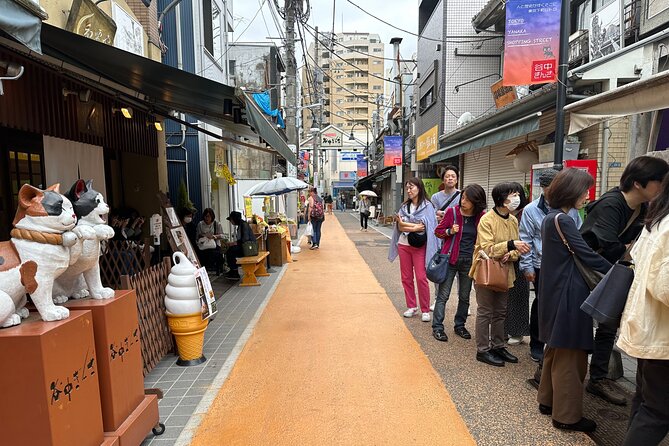
You finish at Yanaka Ginza, an old shopping street, for about 10 minutes. This is the part where the tour turns from sights to choices.
The guide introduces local street foods, Japanese desserts, and Japanese souvenirs. And importantly, you choose what you want to eat. That keeps it flexible. If you want a snack, you can. If you’re more interested in souvenirs, you can shift your attention there.
This is a great ending because your senses are already warmed up. After temples, cemeteries, and photo stops, you’re ready for something simple and fun.
Practical mindset: go in with a little room in your stomach and a little patience for browsing. The tour doesn’t end with a “hard sell.” It gives you ideas, then lets you decide what fits.
Who should book this Yanaka and Nezu tour
This tour is a strong match if you:
- Want a quieter, older side of Tokyo with real neighborhood texture
- Like temples and shrines, and you want guidance on what to do and why it matters
- Appreciate a small-group pace where you can ask questions
- Enjoy photos, especially viewpoints like Yuyake Dandan
- Like mixing culture with a bit of shopping at the end
It’s less ideal if you:
- Prefer big-ticket landmarks and long museum-style time
- Want minimal walking or lots of downtime
- Expect every stop to be long and detailed, since some are short by design
Should you book it or skip it?
I’d book this if you’re the type of traveler who likes Tokyo with its volume turned down. Yanaka and Nezu deliver that feeling, and the guide-led explanations make the day richer than just walking around.
The price is also reasonable for what you get: a structured route, many free admission stops, and a guide who can handle the cultural side so you don’t feel awkward at shrines. Plus, the group size cap of 9 keeps it from feeling like a conveyor belt.
If you’re short on time and only want the most famous sights, you might feel this tour is “off the main map.” But if you want Tokyo’s everyday soul, this is a solid way to see it, without exhausting yourself.
FAQ
How long is the Yanaka and Nezu Old Traditional Town Cultural Experience?
The tour lasts about 3 hours 30 minutes.
Where is the meeting point, and does it end nearby?
You meet at Nippori Station (2 Chome-19 Nishinippori, Arakawa City, Tokyo 116-0013) and the activity ends back at the meeting point.
How many people are in the group?
The tour has a maximum of 9 travelers.
Do I have to pay for admission at the stops?
Most of the scheduled stops list free admission. Ueno Sakuragi Atari is listed as having admission included.
Is there a mobile ticket for this tour?
Yes, the tour uses a mobile ticket.
Are service animals allowed, and can I cancel for free?
Service animals are allowed, and you can cancel for free up to 24 hours in advance for a full refund.
Asakusa and the Skytree, Keep Going




Newest Tokyo write-ups from the Loving Japan desk






Asakusa, Senso-ji and Tokyo Skytree, side by side.
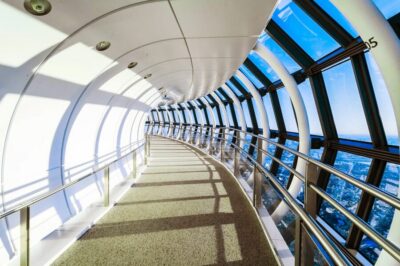 ★ 4.5TOKYO SKYTREE® Admission ticketFrom $1311,192 reviews
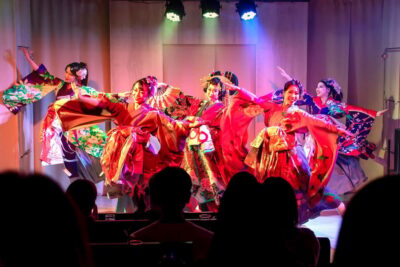 ★ 4.8Japanese Dance Cabaret Theater Asakusa-Kaguwa TicketFrom $492,270 reviews
 ★ 4.7Meiji Shrine, Asakusa, Skytree Bus Tour and CruiseFrom $1221,986 reviews
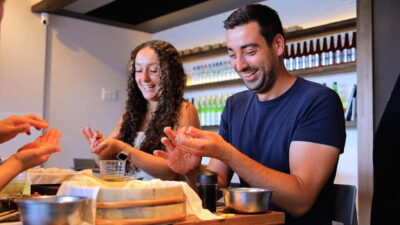 ★ 4.9Roll and Authentic Sushi Making Class in AsakusaFrom $581,957 reviews
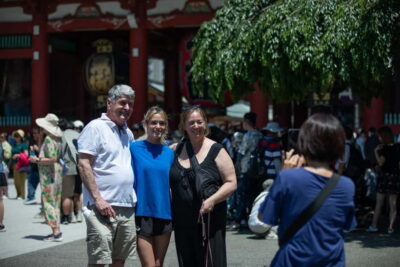 ★ 4.8Asakusa Walking Tour with Sensoji Temple VisitFrom $221,583 reviews
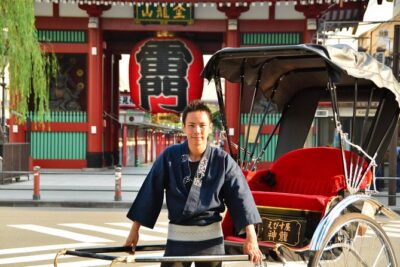 ★ 5.0Tokyo Asakusa Rickshaw TourFrom $421,375 reviews
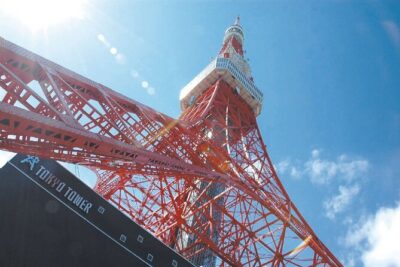 ★ 4.5Tokyo Panoramic 1 Day: Meiji Shrine, Asakusa, Odaiba and SKYTREE®From $851,222 reviews
 ★ 5.0Tokyo Go Kart: Asakusa, Skytree, and Akihabara **IDP MUST**From $99988 reviews
Filed on these lists too