
REVIEW · SUMO WRESTLING EXPERIENCES
Authentic Sumo Experience in Tokyo: Enter the Sanctuary
Tokyo sumo, but with real access. This hands-on experience in Kawasaki shows you how wrestlers live, train, and eat, then lets you try moves yourself. I especially love the morning practice ringside view and the fact that you share chanko-nabe made for and with sumo culture, not a generic restaurant meal. One thing to keep in mind, Japan is hot and humid in summer, and the training part has you actively participating, so come prepared.
You meet at Shin-Kawasaki Station and spend about 4 hours getting guided access to a real sumo stable setting. The group stays small (up to 15), and you also get tour photos plus an original designed T-shirt. If you are late, you miss the group, so plan a little buffer time getting to Shin-Kawasaki.
In This Review
- Key Things That Make This Sumo Tour Worth Your Time
- Entering The Sumo Sanctuary: What Makes This Tour Different
- Shin-Kawasaki To The Stable: A Short Trip With Big Context
- Ringside Morning Practice: Watching Training Like You Mean It
- Chasing “Real Sumo” With Actual Training Moves
- Lunch Like a Wrestler: Chanko-Nabe at the Sumo Table
- Photos, T-Shirts, and the Small-Group Advantage
- Price and Timing: Is $171.12 a Smart Use of Your Half Day?
- Who Should Book This Sumo Experience (And Who Might Not)
- Quick Tips So You Enjoy Every Part
- Should You Book This “Enter the Sanctuary” Sumo Tour?
- FAQ
- Where do I meet, and what time does the tour start?
- How long is the experience?
- Is lunch included?
- Can I watch sumo practice and learn moves?
- What about dietary requests or allergies?
- Is there any limit on luggage?
- What is the cancellation policy?
Key Things That Make This Sumo Tour Worth Your Time
- Ringside viewing of morning practice so you see training up close, not just a big match.
- Room tour of daily life spaces including the dining room, bath, and practice area.
- Hands-on training with sumo wrestlers where you learn basic moves and how rigorous it really is.
- Chanko-nabe lunch made with wrestlers at a table used in the sumo room.
- Small group size (max 15) plus commentary and photos, so questions actually land.
- Included extras like tour photos and an original designed T-shirt.
Morning practice or an evening show. Both reviewed
- Tokyo: Authentic Sumo Wrestling Experience with Lunch
★ 4.9 · 88 reviews
Entering The Sumo Sanctuary: What Makes This Tour Different
If you only watch sumo on TV, you miss the point. Real sumo is routine, discipline, and a very specific way of living. This tour gives you that practical behind-the-scenes look, starting with how the stable works day to day and ending with you trying training movements yourself.
The biggest value is the mix of perspectives. You get a guide-led explanation of sumo traditions and history, but you also see the physical reality: the spaces, the training focus, and the rhythm of morning practice. And then comes the part most people remember most, you get to learn sumo moves directly from wrestlers. It is playful, but it is also hard enough that you feel how much work is hidden behind that controlled strength.
The lunch is another standout. Chanko-nabe is famous for a reason. The idea is nourishment and stamina for a body that needs power, and on this tour you eat it in a setting tied to stable life. In other words, you get the story and the food, not just one or the other.
Shin-Kawasaki To The Stable: A Short Trip With Big Context
You start at Shin Kawasaki Station, then head to the real sumo stable. This matters more than you might think. Tokyo has plenty of museums and arenas, but those are curated. A stable visit is the opposite. It is smaller, more local, and more “this is how things function.”
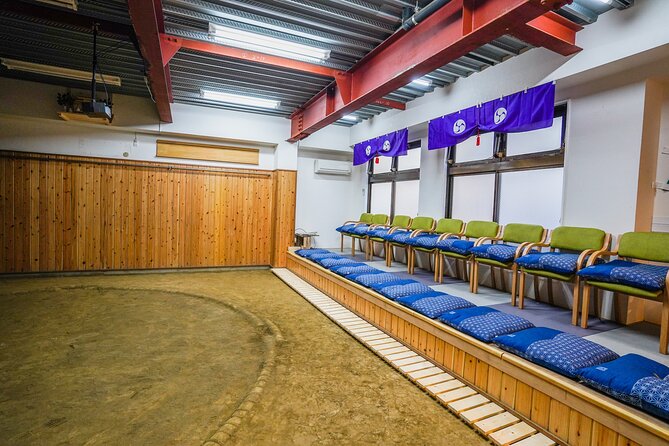
At the stable, your guide sets the tone first. You hear about how sumo wrestlers live in real life, plus tradition and history of sumo. Then you tour key areas you would not see in a typical spectator experience. The tour includes the dining room, the bath area, and the practice area. Those details help you connect what you are about to watch later with how the wrestlers spend their mornings and evenings.
It also helps that the group stays tight, max 15 travelers. When you can ask questions during a room tour, you catch the parts that do not fit into a short lecture. You also get better pacing. You are not rushing from one photo stop to another, you are actually being walked through the stable.
One practical note: large luggage like suitcases are not permitted. If you are moving around Japan with baggage, plan to travel light for this day.
Ringside Morning Practice: Watching Training Like You Mean It
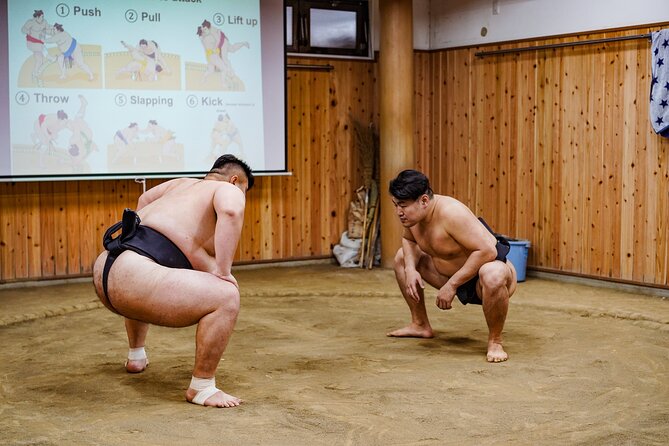
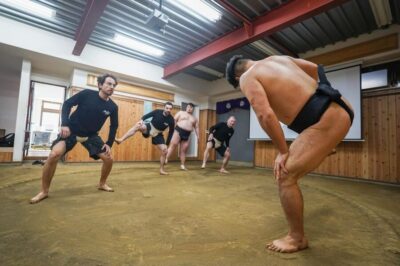
After the stable tour, you get seated right in front of the ring to watch a morning sumo practice session. Most mornings of practice begin around 7:00 a.m. and last three to four hours, so you are not just seeing a quick warm-up. You are catching a real training flow.
Even if you are not a sumo expert, practice has patterns you can recognize fast. You see how technique repeats. You see how wrestlers move with intention. And you see the seriousness behind what looks like simple grappling. The ring is the obvious center, but practice is also about conditioning and control, and watching long enough helps you spot the difference.
This is where I think the tour pays off versus most “watch a match” options. Matches are dramatic. Practice is instructive. You leave with a clearer sense of how wrestlers build skill over time, not just how they win on one day.
Also, do not underestimate how physical it can feel when you later try it. The practice session is essentially your warm-up for understanding. It prepares you for the later “you are in the ring” moment.
Chasing “Real Sumo” With Actual Training Moves
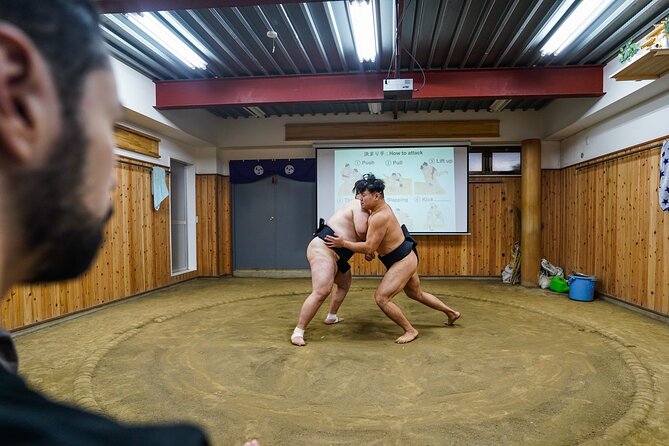
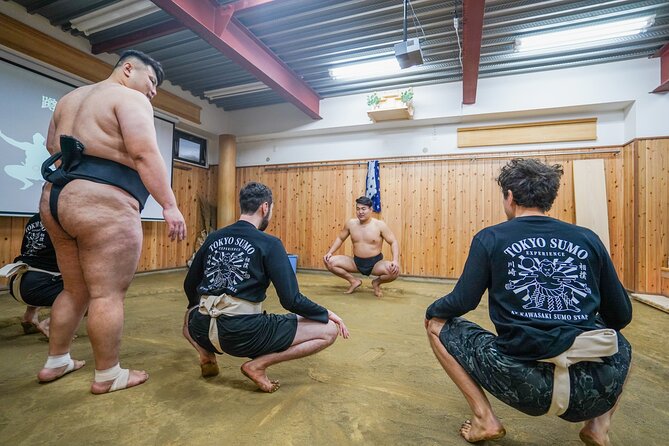
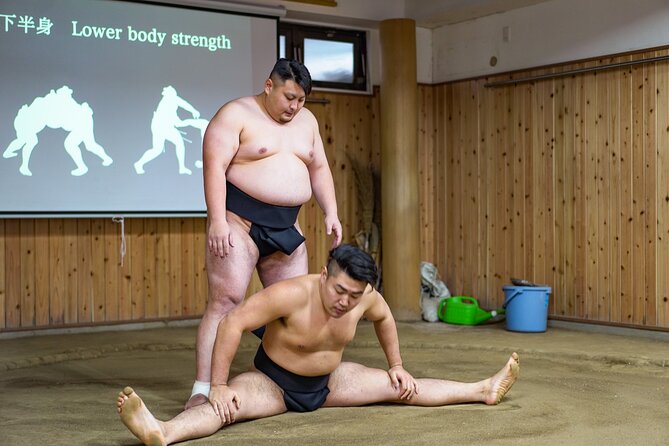
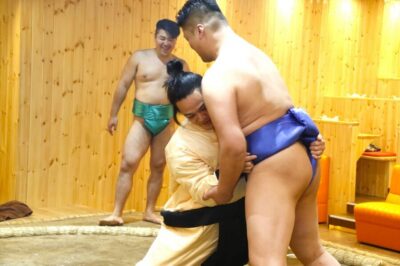
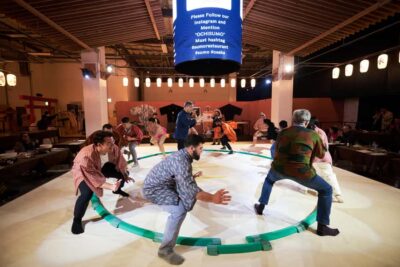
The most praised part for a reason is the hands-on training. After watching the practice, you get the chance to experience sumo movements with the instructors and wrestlers. This is not passive. You follow demonstrations and then try the movements, guided by what you just saw.
From past guides I have heard named, instructors like Charlie, Jim, and Lily were called out for making the history and training easy to follow, including using presentations and clear explanations. Wrestlers themselves were often described as kind and funny while teaching, which matters because you are learning something with your whole body, not just your brain.
You should also expect a “serious but fun” tone. Several people mention being nervous at first, especially when the group looks quiet early on, but then it turns lively once everyone starts participating. That tracks with the best training sessions. You learn faster when you are relaxed enough to try.
Is this for everyone? The tour says most travelers can participate. That said, think of it as light wrestling practice, not a casual show. If you have mobility limitations or you are recovering from injury, check with the operator before booking. And come in ready to sweat, because summer in Japan is hot and humid and you will be moving.
Lunch Like a Wrestler: Chanko-Nabe at the Sumo Table
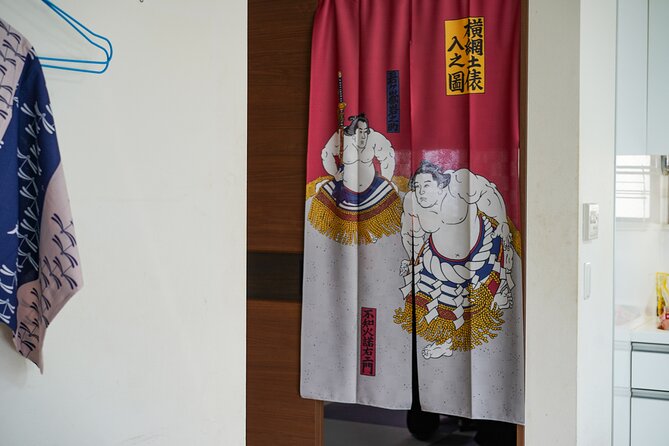
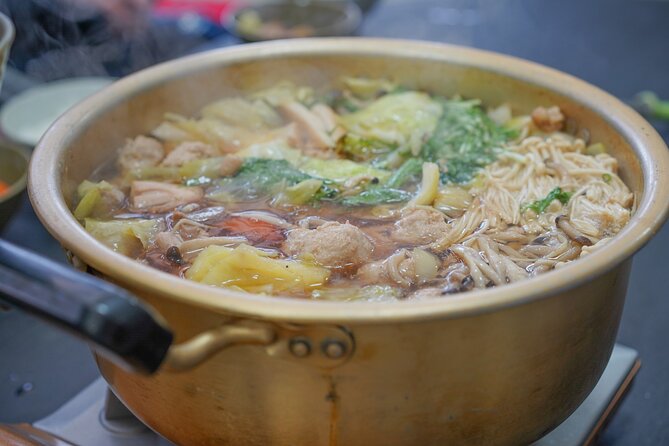
After training comes the meal: Chanko-nabe. This is not positioned as a side quest. It is part of the experience, and it connects food to training culture.
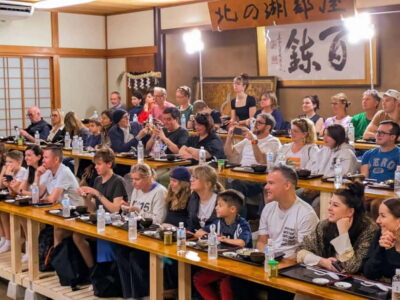
You eat together around a table that was used in the sumo room. That detail turns lunch into a social break with context. The meal itself includes chicken dumplings as a main ingredient, and on this tour you make the chicken dumplings together with the wrestlers before you sit down to eat.
That hands-on food part is one reason people rave about the lunch. It is tasty, yes. But it is also memorable because you are cooking in a stable environment with people who take their life seriously. Several diners also describe the soup as something you just keep coming back for, with big appetites showing up at the table.
Value-wise, lunch inclusion is a big deal. Japan can be pricey for full meals in central areas, and a guided cultural activity that includes food often saves you time and cash. Here, you are getting a specific meal that belongs to sumo culture, not a generic lunch package.
Dietary requests are possible if you tell the team at least one day before. You cannot assume it will be fully allergy-free, since the food is prepared in kitchens not run by MagicalTrip. If you have serious allergies, plan conservatively and communicate early.
Photos, T-Shirts, and the Small-Group Advantage
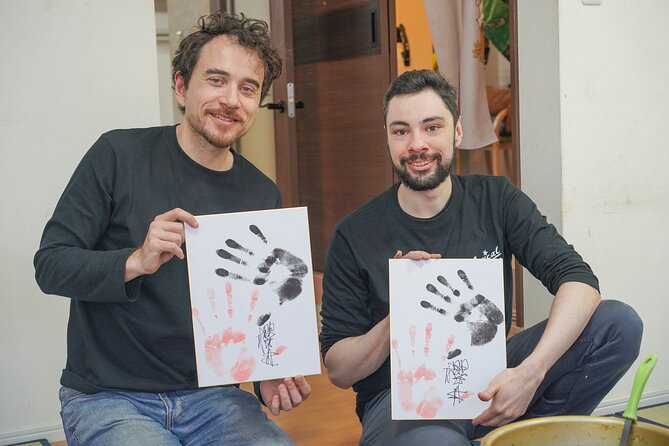
What I like about this tour is how it supports the “I want proof I did this” feeling. You get tour photos included, plus an original designed T-shirt. Those two extras are simple, but they also make the experience easier to share.
The small group size matters for another reason: it keeps the vibe respectful. A stable visit benefits from quiet attention. When there are too many people, guides have to speed up and wrestlers end up repeating themselves instead of teaching. With max 15 travelers, you can usually get questions answered, and you can actually hear the commentary.
The guide adds commentary throughout the day and also shares tour photos. Some guides, like Charlie, Jim, and Lily, have been praised for English clarity and for using slide presentations to explain history and training concepts. Even if you know nothing about sumo going in, that structure helps you connect what you see to what it means.
Price and Timing: Is $171.12 a Smart Use of Your Half Day?
At about $171.12 per person, this is not a budget activity. But you are also paying for access and instruction, not just a venue ticket. You get:
- A guided stable tour with commentary
- Ringside viewing of morning practice
- A chance to learn sumo movements with wrestlers
- Chanko-nabe lunch, included
- Tour photos
- An original designed T-shirt
- A certified guide through MagicalTrip
You also spend about 4 hours 10 minutes on the experience, which is a realistic length for travelers who want “big cultural moment” without taking the whole day.
Where value can drop is if you are expecting a passive sightseeing tour. This one asks you to participate. If your travel style is “sit, observe, take photos,” you might enjoy it more if you accept that you will be moving and trying things.
Still, for most people who love Japan culture and want an experience that feels specific rather than generic, it is a strong use of time. It is the kind of activity you cannot easily recreate on your own, because it requires stable access and coordinated instruction.
Who Should Book This Sumo Experience (And Who Might Not)
This tour is ideal if you fall into one of these categories:
- You want more than watching sumo. You want to understand training and stable life.
- You like interactive cultural experiences, including learning basic movements.
- You want a family-friendly structure with a clear flow from lesson to action to food.
- You care about small groups and guided context, not crowd scrambling.
It may not be the best match if:
- You want a completely seated, low-movement activity.
- You cannot handle heat and physical participation during warm months.
- You need guaranteed allergy-free food. The tour can accommodate dietary requests if told in advance, but it cannot promise allergy-free preparation.
One more practical point: sumo stable schedules can change. The tour notes unexpected cancellations from sumo stables can happen a few days to a couple of days before. If your itinerary is tight, give yourself flexibility.
Quick Tips So You Enjoy Every Part
Plan your day around Shin-Kawasaki Station and start time at 9:30 a.m. From there, the schedule moves through stable tour, practice viewing, training, and lunch. That means you should not overbook the time before the tour.
Bring:
- Water, and consider a hat for summer
- Comfortable clothing you can move in
- Light layers, because you might be indoors and outdoors
Also:
- Travel light. Large suitcases are not permitted.
- Arrive early. If you are more than 5 minutes late without contacting the team, it is treated as cancellation with no refund. This is strict, but it keeps the group experience smooth for everyone.
Should You Book This “Enter the Sanctuary” Sumo Tour?
Yes, if you want a real stable visit where sumo is not just a spectacle. This tour’s best parts are the combination of ringside practice, a stable room tour, and hands-on training with wrestlers, capped off with chanko-nabe served in a setting tied to stable life. It is also a good value when you compare it to paying for transportation, a guided experience, and a specialized meal all separately.
Book it when you:
- Want an authentic window into sumo life
- Like interactive activities and learning by doing
- Appreciate small groups with structured guidance
Skip it when you:
- Prefer passive sightseeing
- Have strict allergy needs that require guaranteed allergy-free kitchens
- Are unable or unwilling to participate physically
If your goal is one memorable sumo moment that feels specific to Japan culture, this is one of the better ways to get there.
FAQ
Where do I meet, and what time does the tour start?
You meet at 9:30 a.m. at kiyoken1-chōme-2-1 Kashimada, Saiwai Ward, Kawasaki, Kanagawa 212-0058, Japan. The day ends back at the meeting point.
How long is the experience?
The experience lasts about 4 hours 10 minutes.
Is lunch included?
Yes. A sumo wrestler’s lunch is included, and it features chanko-nabe with chicken dumplings.
Can I watch sumo practice and learn moves?
Yes. You will sit right in front of the ring to watch a morning sumo practice session, and guests can also participate in learning sumo movements with the wrestlers.
What about dietary requests or allergies?
You should inform the team at least one day before the tour if you have dietary requests or allergies. They cannot guarantee allergy-free food because it is prepared in kitchens that do not belong to MagicalTrip, and substitutions are not always possible.
Is there any limit on luggage?
Large luggage such as suitcases are not permitted.
What is the cancellation policy?
You can cancel up to 24 hours in advance for a full refund. Cancellations made less than 24 hours before the start time are not refunded. If you cancel or no-show after the tour start time, there is no refund or date change.
Practice Rooms and Show Nights
Newest Kawasaki write-ups from the Loving Japan desk
Sumo Wrestling Experiences, side by side.
 ★ 4.8Sumo Show Experience with Chicken Hot Pot and a PhotoFrom $1036,678 reviews
 ★ 4.8Sumo Show and Dining ExperienceFrom $792,742 reviews
 ★ 5.0the SUMO showFrom $891,960 reviews
 ★ 5.0Tokyo Shinjuku Sumo Show & Experience with PhotoFrom $791,750 reviews
 ★ 4.8Sumo Show and Experience in ShinjukuFrom $691,001 reviews
 ★ 4.6Sumo Tournament Tour with Chair Seat TicketsFrom $141753 reviews
 ★ 4.5Sumo Show & Experience w/ Optional Kimono & Hot PotFrom $77609 reviews
 ★ 4.7Luxury Sumo Show Experience & Japanese cuisine & DrinkFrom $103577 reviews
Filed on these lists too