
REVIEW · SAKE BREWERIES AND TASTINGS
Experience a western twist on Japanese sake snacks
Tsukudani turns seafood into bite-size comfort. At Shinbashi Tamakiya, founded in 1782, I like how they walk you through both traditional and modern tsukudani and pair it with sake or wine during a private 1 hour 30 minute tasting.
One thing to consider: tsukudani is preserved seafood, so the flavors are salty, sweet, and briny. If you are expecting mild snacks, you may need to adjust your expectations.
In This Review
- Key moments you will remember
- Why tsukudani is the perfect sake snack in Tokyo
- Shinbashi Tamakiya, founded in 1782, and what you learn before the first bite
- The tasting flow at a private tsukudani workshop
- Traditional vs modern tsukudani, and how the flavors change
- Rice with tsukudani and furikake: why it is more than filler
- Tsukudani with pasta and nuts, the real western-style twist
- Sake or wine pairings: how to listen to your palate
- What makes this private tasting feel worth your time
- Price and value: what about $36.24 buys you
- Practical tips for booking and doing it smoothly in Tokyo
- Who should book this tsukudani tasting
- Should you book Shinbashi Tamakiya’s tsukudani tasting?
- FAQ
- How long is the tsukudani tasting?
- Where does the tasting take place?
- Is this experience private?
- What is included in the price?
- Can I choose between sake and wine?
- Is a confirmation provided after booking?
- What is the cancellation policy?
Key moments you will remember
- A private tasting just for your group, so the pacing feels personal
- Traditional plus modern tsukudani side by side, not one or the other
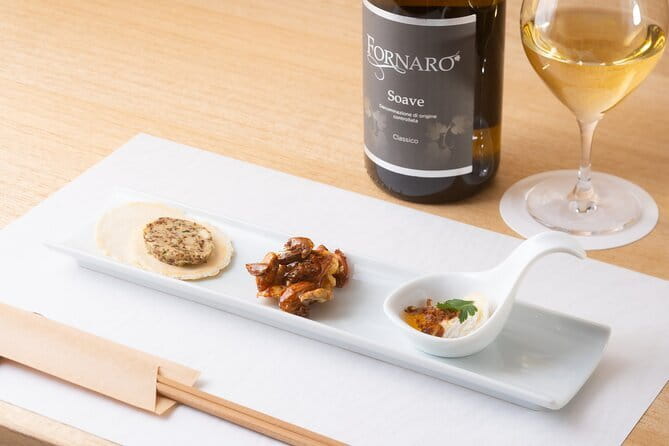
- Secret sauce and three signature bites at the shop
- Rice with furikake seasonings to anchor the flavors
- Food beyond seafood, including options like pasta and nuts
Pour another. Breweries and tasting rooms nearby
- Ramen and Sushi Cooking Class with Sake Pairing Set in Tokyo
★ 5.0 · 291 reviews - Sake Tasting Masterclass in Shinjuku (8+ Varieties with a Pro)
★ 5.0 · 271 reviews - Sake Omakase in Tokyo: Guided Tasting by Certified Sommeliers
★ 5.0 · 239 reviews - Tasting All Types of Sake with Sommelier
★ 5.0 · 151 reviews
Why tsukudani is the perfect sake snack in Tokyo
Tsukudani is one of those foods that makes you rethink what a snack can be. It is preserved seafood, cooked down with seasonings until it turns glossy and intense. In Japanese, it reads as practical food with a taste payoff. Out of context, it can sound heavy. In practice, it is designed to be eaten in small bites, often alongside drinks.
What I like about a tasting like this is that you do not just sample one kind of tsukudani. You learn why the taste works. You also learn how people actually eat it. That matters because tsukudani can taste very different depending on how you portion it, what you pair it with, and whether you follow the shop’s suggested way.
This is where the western twist comes in. You can choose sake or wine pairings. Even if you are not a drinks expert, you can still pay attention to how acidity, sweetness, and alcohol heat bring the preserved flavors into focus.
Shinbashi Tamakiya, founded in 1782, and what you learn before the first bite
Your stop is Shinbashi Tamakiya, an old shop established in 1782. That is not a marketing detail. It changes how the experience feels, because the tastings are rooted in shop tradition and the dish’s role in Japanese eating culture.
Before you start eating, you get context on what tsukudani is and how it developed over time. The tasting includes the shop’s history and also the history of the dish itself. You are not doing a lecture. It is more like getting the why behind the bite.
You also hear practical guidance. The experience focuses on the idea of arranging tsukudani, meaning you learn how to match it, how to propose pairings, and how to think about eating it. That sets you up for the tastings so you are not just going through samples blindly.
The tasting flow at a private tsukudani workshop
This is built as a private tasting. That sounds simple, but it changes everything. You are not trying to hear over a crowd. You can take your time. You can also ask questions as the host guides you through each sample.
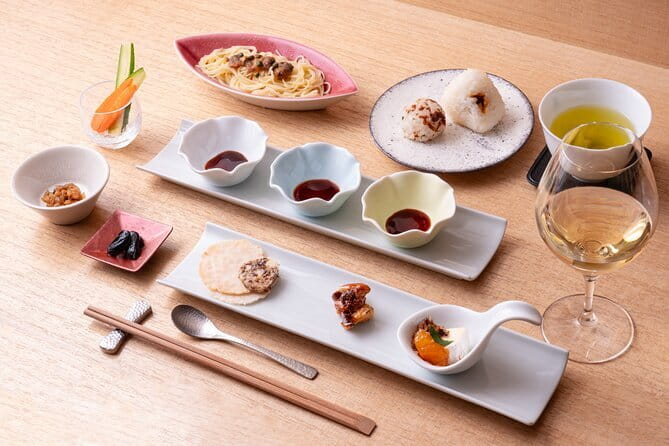
The experience runs about 1 hour 30 minutes. You get a brunch-style meal format in tasting form. It includes all tsukudani tastings plus alcohol pairings, and then several food additions that go beyond the classic spoonful.
Here is the sequence you can expect.
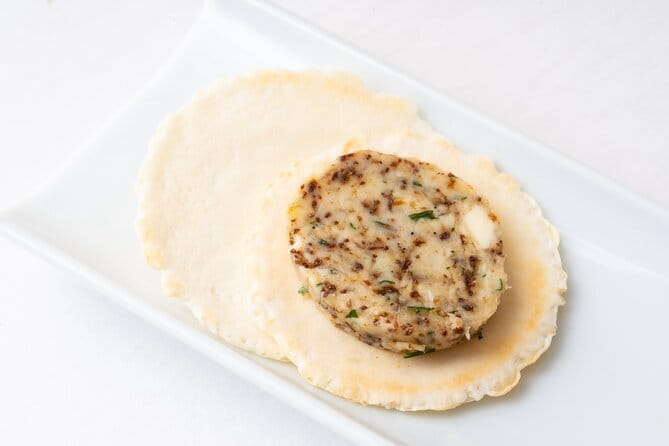
First comes the shop moment. You try the shop’s secret sauce and then taste three signature tsukudani. This is a great way to calibrate your palate quickly. If one style surprises you, you still have two more bites to compare. It also helps you understand how the shop differentiates traditional preparations from newer takes.
Then the tasting expands. You move from the main tsukudani bites into rice, using tsukudani and furikake seasonings. That combo is a classic direction in Japanese food. Rice takes the edge off while still carrying the umami and sweetness.
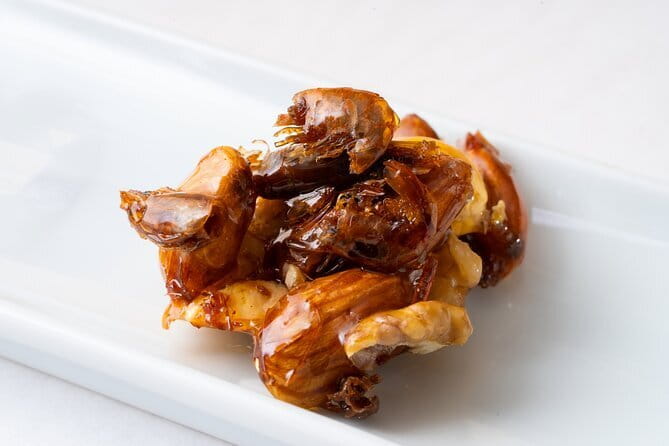
After that, you sample tsukudani paired with different ingredients. The experience specifically mentions options like pasta and nuts. This is where you see how preserved seafood can show up in modern food thinking, not just in old-school side dish mode.
- Mt Fuji and Hakone 1-Day Bus Tour Return by Bullet Train★ 5.0 · 26,383 reviews
- 1-Day Tokyo Bus Tour★ 5.0 · 14,250 reviews
- Tokyo: teamLab Planets TOKYO Digital Art Museum Entry Ticket★ 4.6 · 9,779 reviews
- Mt Fuji & Hakone Cruise, Drum Show Bullet Train 1 Day from Tokyo★ 4.0 · 7,413 reviews
- Tokyo: Shinjuku Food Tour (13 Dishes at 4 Local Eateries)★ 5.0 · 6,603 reviews
Traditional vs modern tsukudani, and how the flavors change
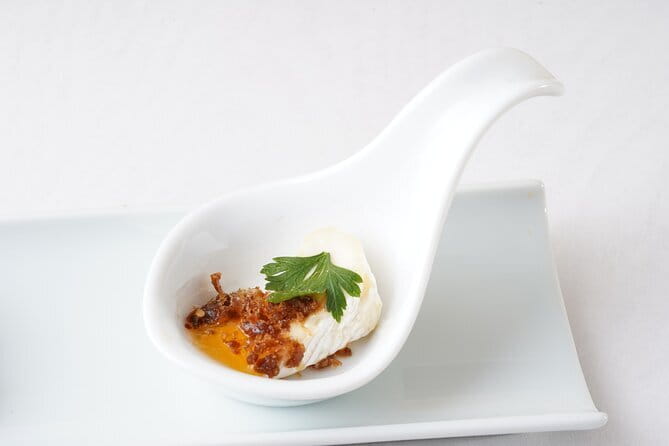
A big win here is the mix of traditional and modern tsukudani. Traditional versions tend to emphasize careful preservation and deep seasoning. Modern versions often adjust texture or seasoning style, sometimes aiming for a cleaner finish or a different balance of sweetness and salt.
What to pay attention to during your tasting:
- How quickly the sweetness shows up, then how it fades
- Whether the seafood flavor feels smoky, ocean-like, or more background-like
- How sticky or spoonable each tsukudani feels, since texture affects your perception
You will taste multiple preparations, not just one. That gives you real contrast, which is the best way to learn. If you only try one type, you can miss the range and assume tsukudani always tastes the same. Here, you get proof that it does not.
Also, the host is explaining the reasoning behind the samples. That is the difference between tasting as consumption and tasting as understanding. You leave with mental bookmarks, not just a full stomach.
Rice with tsukudani and furikake: why it is more than filler
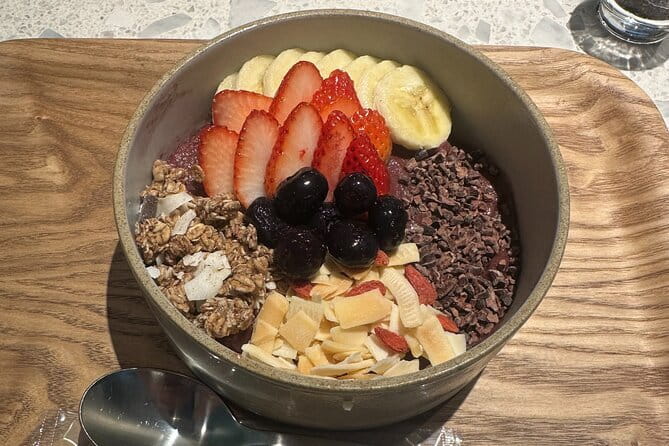
At some food tastings, the rice course can feel like a rest stop. Here it does more. Rice with tsukudani and furikake seasonings acts like a palate reset, but it also turns the snack into a complete bite.
Furikake is key. It brings aroma and an extra layer of flavor. When you mix tsukudani into rice, you get less of the concentrated sweetness hit you get from eating tsukudani straight. Instead, the flavor spreads out. The umami stays, but it becomes calmer.
If you want to get the most out of the tasting, take your first rice bite plain in your head. Then try it again with your attention on the furikake. You are training your palate to separate the seafood preservation taste from the seasoning top notes.
Tsukudani with pasta and nuts, the real western-style twist
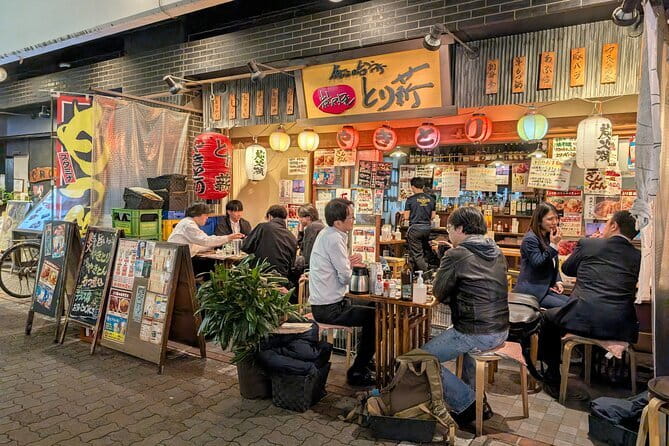
The experience does not stop at old-school. It includes tsukudani with various ingredients, with examples like pasta and nuts. This is a smart move for two reasons.
First, it shows you how preserved ingredients can be repurposed. Tsukudani is not locked to one role. Second, pasta and nuts make it easier for western palates to connect. You can treat these bites like you would with other umami-forward toppings.
You still get the tsukudani identity, just in a different form. It becomes less of a traditional side dish and more of a versatile flavor booster. That is probably the closest thing here to a Western twist, and it works well if you like trying familiar foods with unfamiliar foundations.
Sake or wine pairings: how to listen to your palate
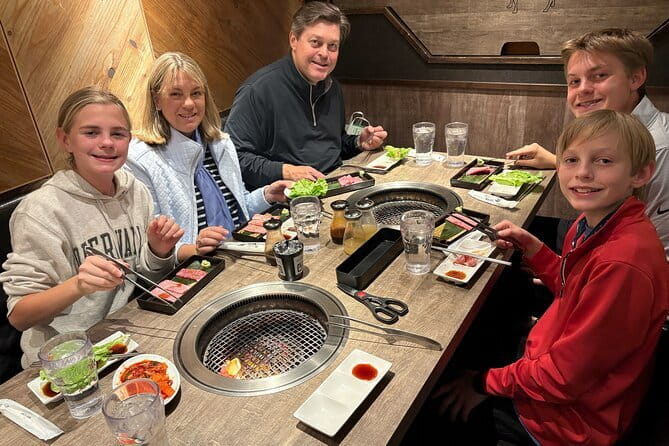
You get a choice of sake or wine pairings. That means you can steer the experience toward what you enjoy, and it also helps you understand the dish through contrast.
Sake pairings can highlight the briny-sweet profile of tsukudani. Wine pairings often bring acidity and tannin into the conversation, and you will likely notice how those qualities change your perception of salt and sweetness.
I suggest you treat the pairing like a tasting exercise:
- Take one bite of tsukudani
- Note what your mouth senses first, sweet or salty
- Take a sip and see what changes
- Repeat, even if the differences feel subtle
Even if you do not know wine terms, you can still judge whether the pairing makes the flavor sharper, rounder, or less intense. The whole point of the pairing is to help you understand the food, not just to add alcohol.
What makes this private tasting feel worth your time
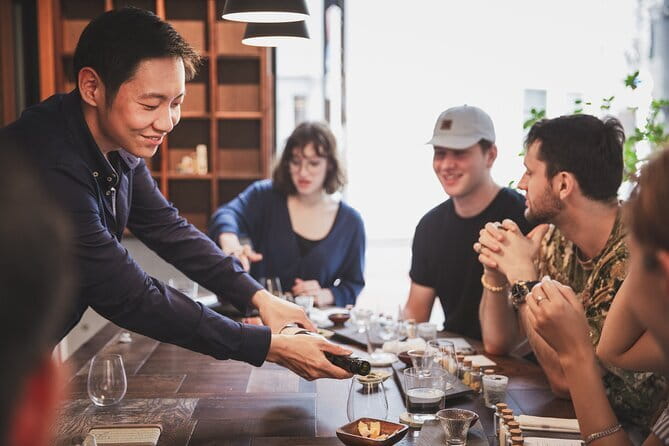
Plenty of food experiences are group-based and rushed. This one is private, so the format fits people who want to slow down and really taste.
Because it is private, you can better match your pace. If you want to focus on the traditional examples, you can. If you are more curious about the modern versions and the pasta and nuts, you can spend extra time there. The host also supports the idea of matching and proposing how to eat things, which is easier in a private setting.
It also helps that the experience includes everything related to the tastings: all tsukudani samples plus alcohol pairings and the included food items. You are not constantly checking what costs extra.
Price and value: what about $36.24 buys you
At $36.24 per person, this is not a bargain basket snack stop. It is a structured private tasting that includes brunch, alcoholic beverages, and multiple tsukudani tastings plus additional courses like rice and other ingredient combinations.
For value, the key is what you get:
- Multiple tsukudani samples, including secret sauce and signature bites
- Traditional and modern comparison in one sitting
- Alcohol pairings, either sake or wine
- More than seafood-only tasting, with rice and additional ingredient pairings
If you were to recreate that on your own, the time cost alone is high. You would be hunting for a shop, figuring out what to order, and then figuring out which drinks pair well. Here, the shop handles the order and pairing logic, and you get guidance while you eat.
So yes, it is pricier than grabbing something from a vending machine. But for Tokyo food, especially a private tasting with alcohol and multiple courses, it is a fair value.
Practical tips for booking and doing it smoothly in Tokyo
You can choose morning or afternoon tastings. Pick based on when you want your best food energy. If you like tasting before the day gets loud, go morning. If you want to walk around a bit first, afternoon can work well.
The tour uses a mobile ticket, and it starts and ends at Shinbashi Tamakiya. The address is Shinbashi 4-chōme, Minato City, with the shop listed at the building in Shinbashi. It is also near public transportation, so you are not stuck on a complicated route.
Since this is preserved seafood, you may want to skip super heavy meals right before. You do not need to fast, but arriving hungry helps you taste the differences between versions.
Finally, treat it like a tasting, not just a snack. Take small bites, sip between bites, and ask questions if something surprises you. The experience is designed to be personalized, so use that.
Who should book this tsukudani tasting
This tour is a strong fit if you:
- Like food experiments that are still rooted in real Japanese tradition
- Enjoy umami flavors and want to learn why they work
- Want a private format rather than a crowded group meal
- Are curious about how Japanese snacks can pair with sake or wine
- Prefer structured tasting with clear guidance
It may not fit as well if:
- You do not enjoy preserved or salty, briny flavors
- You want only mild flavors and zero alcohol focus
- You are looking for a long sightseeing route, because this is centered on a shop tasting
Should you book Shinbashi Tamakiya’s tsukudani tasting?
Yes, if you want a practical, food-first way to understand Japanese preserved seafood and how it can be paired like a grown-up snack. The private format makes it easy to learn without rushing, and the mix of secret sauce, signature bites, rice with furikake, and creative pairings like pasta and nuts gives you a real range.
If you love learning with your stomach, this is a smart use of time in Tokyo. If you dislike strong salty-sweet flavors, you may want to pass or at least go in with expectations set.
FAQ
How long is the tsukudani tasting?
It lasts about 1 hour 30 minutes.
Where does the tasting take place?
The tasting starts at Shinbashi Tamakiya in Shinbashi, Minato City, Tokyo, and it ends back at the meeting point.
Is this experience private?
Yes. It is a private tour or activity, so only your group participates.
What is included in the price?
It includes brunch, alcoholic beverages, and tsukudani snacks.
Can I choose between sake and wine?
Yes. The experience includes tastings with wine or sake pairings, and you can choose your tasting time slot (morning or afternoon).
Is a confirmation provided after booking?
Confirmation is received within 48 hours of booking, subject to availability.
What is the cancellation policy?
Free cancellation is available. You can cancel up to 24 hours in advance for a full refund, based on local time.
Cups, Cellars and Tasting Rooms



Newest Tokyo write-ups from the Loving Japan desk




Sake Breweries and Tastings, side by side.
 ★ 5.0Kyoto Night Foodie Tour in Gion (9+ dishes + 6 Sake tastings)From $1631,762 reviews
 ★ 5.01-Day Snow Monkeys, Zenko-ji Temple & Sake in NaganoFrom $1511,020 reviews
 ★ 5.03-Hour Kyoto Insider Sake Brewery Tour with Tastings & PairingsFrom $84917 reviews
 ★ 4.8Arashiyama Bamboo, Temple, Monkeys, or Secret Sake BreweryFrom $87886 reviews
 ★ 4.9Nagano: Snow Monkeys, Zenkoji Temple & Sake Day TripFrom $135833 reviews
 ★ 5.0Insider Sake Brewery Tour with Sake and Food PairingFrom $87704 reviews
 ★ 5.0Kyoto Sake Brewery & Tasting Walking TourFrom $98623 reviews
 ★ 5.01.5-Hour Kyoto Insider Sake Experience with 7 Tastings & PairingsFrom $68297 reviews
Filed on these lists too