
REVIEW · TOURS
Explore Hidden Alleyway with a Local Expert (Afternoon Tour)
Kyoto by bike is the fastest way to feel daily life. This afternoon tour takes you down quiet backstreets, then snaps you back to famous streets at the right moments, so you get contrast without wasted time. I really like the small-group feel and the focus on real neighborhood routes, including places like Miyagawacho Kaburenjo and Gion. Another big plus is the trained guide team, who handle cycling skills and local etiquette so you do not spend the whole ride worrying. One thing to consider is that you must be comfortable riding in traffic-adjacent areas and narrow lanes, even with guidance.
You meet at 2:00 pm and ride for about 3 hours, with several short stops that keep the pace brisk but not chaotic. Admissions at most stops are free, and the tour runs in rain with a sensible plan. If your schedule is tight, this is a good match for seeing multiple highlights plus those calmer, less-traveled lanes in one go.
In This Review
- Key highlights worth your attention
- Afternoon Kyoto by bike: what 3 hours buys you
- Miyagawacho Kaburenjo to Gion: the real side streets of geisha Kyoto
- Tatsumi Bridge and the willow-stream stroll
- Kyoto Imperial Palace: cycling through a national garden
- Kashiwayacho and Kamo River calm break
- Bikes, safety, and how to avoid stress on narrow streets
- Price value and who should book, plus a quick yes/no
- Should you book?
- FAQ
- How long is the afternoon hidden alleyway bike tour?
- What time does the tour start and where does it begin?
- Is this a private tour?
- How many people can ride with each guide?
- Does the tour run in the rain?
- What bike experience do kids need?
- Are tickets mobile?
- What is the cancellation situation if plans change?
Key highlights worth your attention
- Quiet alleyway routes: you move through narrow streets where the atmosphere changes block to block.
- Geisha districts, minus the crowds-first approach: you hit Miyagawacho Kaburenjo and Gion as part of a local walking-and-riding rhythm.
- Tatsumi Bridge photo moment: the path by the stream and the willow branches are built for a breather.
- Kyoto Imperial Palace on gravel paths: you cycle through public garden areas rather than only viewing from outside.
- Kamo River reset at Kashiwayacho: you pause where locals unwind, not just at a landmark viewpoint.
- Safety and group cycling training: your guide is trained in traffic safety and how to keep a small group together.
Still weighing up options in Kyoto? These are the ones our reviewers rated highest.
- PERFECT KYOTO 1-Day Bus Tour
★ 5.0 · 13,518 reviews - Kyoto: Fushimi Inari, Kinkakuji, Bamboo Grove 1 Day Bus Tour
★ 4.8 · 4,316 reviews - Kyoto: Tea Ceremony in a Traditional Tea House in Kiyomizu
★ 4.9 · 3,519 reviews - Kyoto Geisha Walking Tour: Gion District & Hidden Gems
★ 4.7 · 3,273 reviews
Afternoon Kyoto by bike: what 3 hours buys you
This tour is built for the middle of the day, starting at 2:00 pm. In about 3 hours, you cover multiple areas across Kyoto, using a bike route that is designed to cut down on stop-and-go confusion. That timing matters because you get to see evening-ready streets later, without feeling like you have to cram everything into a single morning.
I also like how the itinerary uses short stops, not long sightseeing marathons. You get brief, focused time at each place, then you roll to the next one. That keeps energy up, especially when you are riding through lanes that can feel tight and lively.
Value-wise, it is not just paying for movement. Several stops have free admission, which matters because Kyoto highlights can add up once ticketing gets involved. One stop includes admission, but overall it feels like a smart way to bundle iconic places with the softer, local texture in between.
Miyagawacho Kaburenjo to Gion: the real side streets of geisha Kyoto
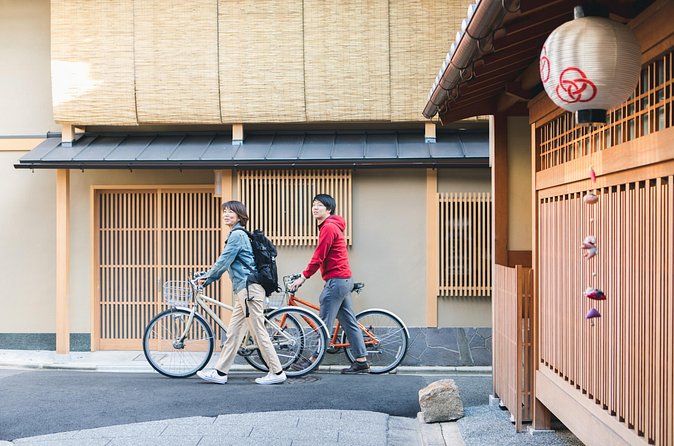
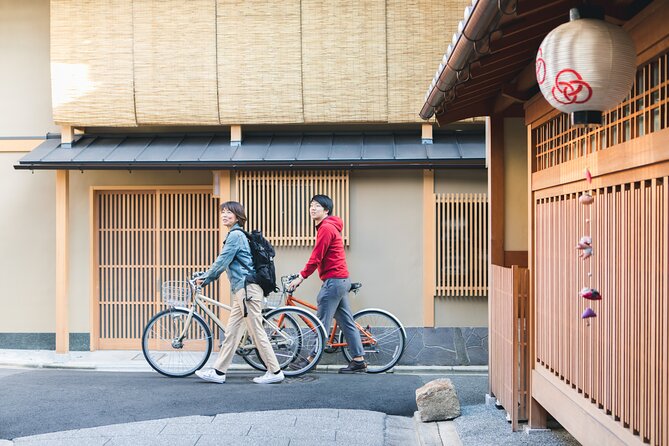
You start with Miyagawacho Kaburenjo, one of the geisha districts in Kyoto. This area stands out because it is lined with traditional wooden houses, and that gives you a calm, old-Kyoto mood even before you reach the better-known names. The point here is not only the architecture, it is how the streets feel when you are not stuck in the busiest pedestrian pockets.
Next is Gion, the district most people associate with Kyoto geiko and maiko culture. It is described as a major geisha district where the elegant and refined atmosphere of earlier times is still present. Riding into Gion as part of a planned route helps you understand the geography, not just take photos. You also get the practical benefit of not trying to navigate those lanes on your own right away.
One of the best parts of this segment is contrast. Miyagawacho gives you quiet, wooden-house stillness. Gion shifts you back to a more recognizable Kyoto scene. If you only visit one zone, you miss that tonal change that makes Kyoto feel like a patchwork of neighborhoods.
Tatsumi Bridge and the willow-stream stroll
After Gion, you roll to Tatsumi Bridge. The attraction here is simple but memorable: the path runs along a stream, and willow branches sway in the breeze. It is the kind of stop that slows you down in a good way, because you are not just looking at a structure. You are walking, breathing, and letting the scenery soften the pace of the ride.
This is also a nice reset point mid-tour. After geisha district streets, the stream path brings you back to a quieter rhythm. Kyoto often feels like it has different weather in different streets, and this stop is one of the places where you can feel that shift.
If you care about photos, this is a solid one to target. Even if you are not chasing perfect shots, it is still a relaxing stretch where you can see the water and the willow movement without needing a long detour.
- PERFECT KYOTO 1-Day Bus Tour★ 5.0 · 13,518 reviews
- Kyoto: Fushimi Inari, Kinkakuji, Bamboo Grove 1 Day Bus Tour★ 4.8 · 4,316 reviews
- Kyoto: Tea Ceremony in a Traditional Tea House in Kiyomizu★ 4.9 · 3,519 reviews
- Kyoto Geisha Walking Tour: Gion District & Hidden Gems★ 4.7 · 3,273 reviews
- Kyoto: Tea Ceremony Ju-An at Jotokuji Temple★ 4.9 · 3,207 reviews
Kyoto Imperial Palace: cycling through a national garden
The Kyoto Imperial Palace area adds a different flavor to the afternoon. It used to be the residence of Japan’s imperial family, and now it is open to the public as a national garden with seasonal flowers. Cycling through the grounds on gravel paths is a key detail because it changes the experience from view-only sightseeing to a gentle, moving walk-through.
Gravel paths matter. They tend to feel slower and more grounded than smooth sidewalks, so you can notice the setting without feeling rushed. You also get a better sense of scale than you would from a single standing viewpoint.
This stop is a good place to pay attention to how Kyoto blends history with present-day public space. You are not just at a museum-style site. You are in an active garden environment designed for visitors to walk and enjoy the seasons.
Kashiwayacho and Kamo River calm break
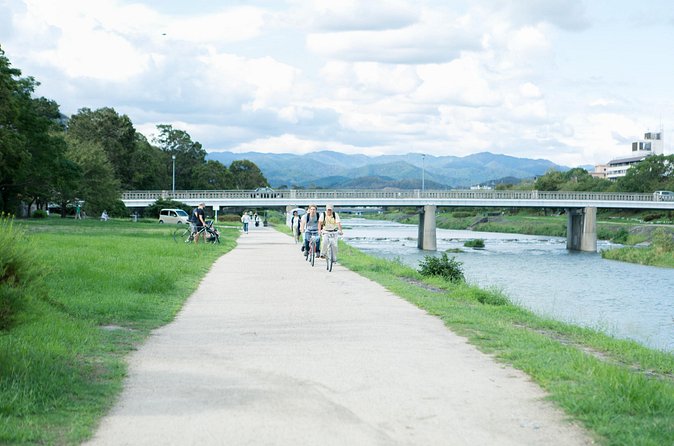
Kashiwayacho is your river moment, with time to relax by the Kamo River. This stop is framed as a place locals love, which is a big deal because it changes your mindset from landmark hunting to everyday life watching. The Kamo River corridor is one of the easiest ways to understand how Kyoto social life flows around water.
You likely will not need a plan here beyond slowing down. Sit, watch the movement, and let the earlier alley riding settle into something calmer. If the morning was crowded or if your legs are starting to feel it, this is the type of break that keeps the tour enjoyable rather than tiring.
This segment also balances the overall route. You have wooden houses and geisha districts, then stream-side scenery, then palace grounds, and finally a river hang. That arc is one of the reasons the tour works well for first-timers who still want variety.
Bikes, safety, and how to avoid stress on narrow streets
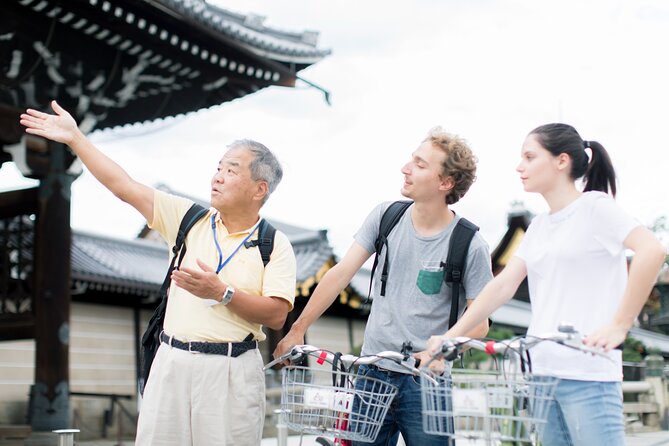
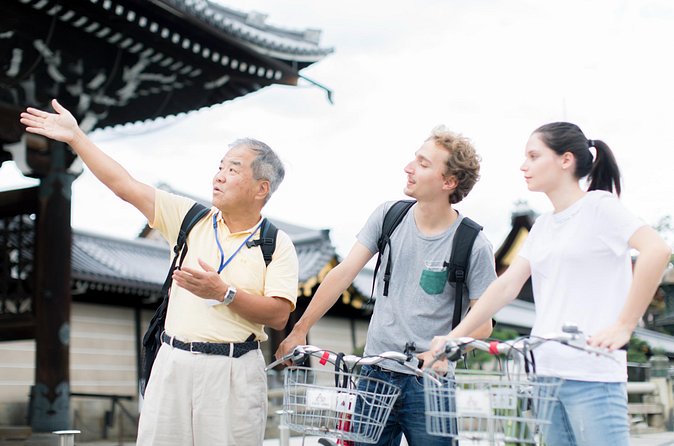
The tour is designed for easy participation, and the guides are trained through a program that covers traffic safety, group cycling techniques, and local etiquette. That training is what turns a bike tour from adventurous to manageable.
You should still go into it with the right attitude. Narrow Kyoto lanes can feel intimate and busy depending on the hour, so you want to follow your guide’s signals and stay close in the group. The structure here is small-group cycling, so the guide can manage spacing and pace.
On equipment, one of the strongest positives from feedback is the e-bike comfort angle. The electric assist factor shows up as a frequent reason people say the ride feels more fun than stressful. Even if you are not an athlete, electric help makes it easier to enjoy the stops instead of working hard just to keep up.
Guide personality also matters on tours like this because you are spending time in motion. In feedback, one guide name that pops up is Yuichi, praised for being personable, informative, and funny. Even if your guide is not the same person, the key idea stays the same: you want someone who can guide you through both the street logic and the cultural context.
Price value and who should book, plus a quick yes/no
At $102.47 per person for about 3 hours, this can feel like a splurge if you are comparing it to self-guided walking. The value comes from three places: the guided route through lesser-used lanes, the stop structure that bundles multiple major areas, and the included admissions at key points.
You are also not paying for endless stops. You get five planned stops, with free admissions for the first four, and a Kamo River stop where admission is included. That means you are less likely to end up adding extra ticket costs mid-day.
This tour is a good fit if you want:
- a bike-based way to connect Miyagawacho, Gion, the Imperial Palace area, and the Kamo River without spending hours planning,
- a guided cultural lens while you move between neighborhoods,
- a small-group experience rather than a big bus tour.
It may be less ideal if you want total freedom to linger for long periods at one site. This is paced for movement plus short stops, not for staying put for hours in one place.
Should you book?
Yes, book it if your afternoon needs structure and you want to see more Kyoto than you could manage comfortably on your own. It is especially worth it when you prefer quiet lanes early in the route, then access the famous districts without letting crowds run your schedule. If you are a confident rider and you like guided street-level context, this is a strong, practical way to get the feel of Kyoto in one session.
FAQ
How long is the afternoon hidden alleyway bike tour?
It runs for about 3 hours.
What time does the tour start and where does it begin?
The tour starts at 2:00 pm. The meeting point is 552-13 Higashiaburanokōjichō, Shimogyo Ward, Kyoto 600-8235, Japan, and the tour ends back at the meeting point.
Is this a private tour?
Yes. It is private, and only your group participates.
How many people can ride with each guide?
The group is limited to a minimum of 2 and a maximum of 6 guests per guide. One-person bookings are not accepted. If your group is 7 to 12 people, an extra guide can be arranged.
Does the tour run in the rain?
Yes, it operates in rain. You can continue on bikes with a rain poncho at no extra charge, or switch to a walking tour using public transportation, with the transport included in the tour fee.
What bike experience do kids need?
Children must be at least 10 years old and 145 cm or above, and they must be able to ride a bicycle safely on the road unassisted.
Are tickets mobile?
Yes, this experience uses a mobile ticket.
What is the cancellation situation if plans change?
The experience is non-refundable and cannot be changed for any reason.
Newest Kyoto write-ups from the Loving Japan desk
Tours, side by side.
 ★ 5.0Mt Fuji and Hakone 1-Day Bus Tour Return by Bullet TrainFrom $16326,383 reviews
 ★ 5.01-Day Tokyo Bus TourFrom $12914,250 reviews
 ★ 5.0PERFECT KYOTO 1-Day Bus TourFrom $12913,518 reviews
 ★ 5.0Shinjuku Food Tour (13 Dishes at 4 Local Eateries)From $866,603 reviews
 ★ 5.0Peaceful Hiroshima & Miyajima UNESCO 1 Day Bus TourFrom $1295,309 reviews
 ★ 4.4Tokyo Mt Fuji 5th St & Hakone Cruise Bus Tour w/Bullet TrainFrom $1545,024 reviews
 ★ 5.0Flagship 2-Hours Official Street Go-Kart Tour – Tokyo Bay ShopFrom $644,974 reviews
 ★ 4.8Fushimi Inari, Kinkakuji, Bamboo Grove 1 Day Bus TourFrom $1224,316 reviews