
REVIEW · PHOTOGRAPHY SESSIONS
Explore Unique Tokyo Streets / Learn with a Pro Photographer
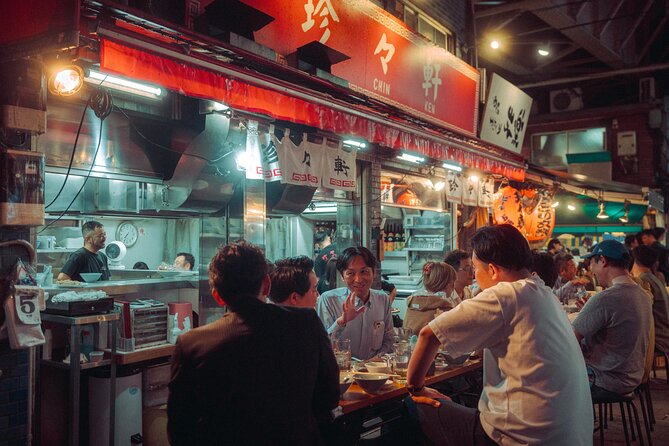
Night Tokyo teaches your camera faster. This evening walk focuses on Yurakucho and Shinbashi, with a pro photographer guide who gives practical, personalized coaching as you shoot. I like that the group stays small, with a maximum of 6 people, so you can actually get answers to your questions. I also like that it is not just scenic wandering, you get real photo instruction, from basics like settings to more advanced street-shooting ideas.
One consideration: it is only about 2 hours, so if you expect a long photo safari with lots of stops, this will feel short.
If you want Tokyo after dark with direction that helps your photos improve fast, this is a smart pick. The short time is the tradeoff, but the coaching is the point, and it is built for getting better right where you are standing.
In This Review
- Key things I’d focus on before you go
- Evening Tokyo Streets With a Pro Photographer in a Group of Six
- Where You Meet in Shimbashi and What Happens in the 2-Hour Window
- Yurakucho and Shinbashi After Dark: What to Shoot and How to Think
- Deniz Demir’s Teaching Style: Settings, Lenses, and Framing That Improves Photos
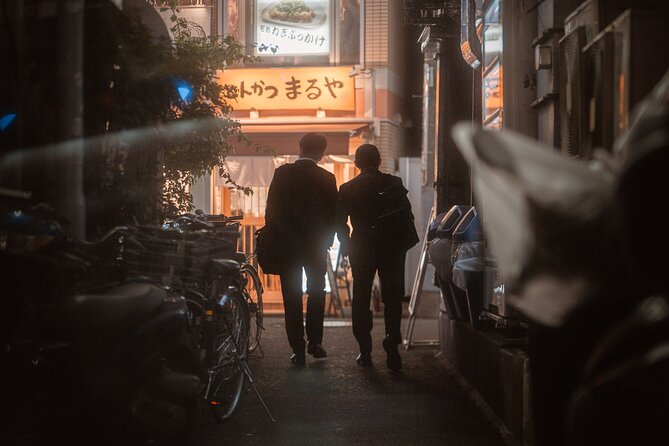
- Weekday Evening Options and Salaryman Culture: Shooting People With Context
- Tripod, Mobile Ticket, and Gear Choices That Actually Matter
- Price and Value: Is $128.09 Worth a 2-Hour Pro-Led Session?
- What You’ll Learn While You Walk: A Practical Checklist for Better Street Photos
- Who This Tokyo Evening Photo Walk Is Best For
- A Quick Reality Check Before Booking
- Should You Book This Tokyo Evening Photography Tour?
- FAQ
- How long is the Tokyo evening photography tour?
- Where does the tour start and end?
- How many people are in the group?
- What areas of Tokyo do we explore?
- Can the photographer guide bring a tripod?
- Are there different evening options to choose from?
- Do I get a mobile ticket?
- Is the tour focused on salaryman culture during weekdays?
- Is there free cancellation?
- Are service animals allowed?
Key things I’d focus on before you go
- Small group size (max 6): you get more time with the guide and less waiting around.
- Evening light in Yurakucho and Shinbashi: great for street mood, reflections, and layered city scenes.
- Personalized photography tips: you bring your gear, your questions, and your shooting style.
- Tripod option: your photographer guide can bring one if you want to use it.
- Street-shooting philosophy, not just settings: framing and what to look for are part of the lesson.
- Weekday culture angle for salaryman topics: a different kind of Tokyo storytelling when schedules line up.
Someone else behind the camera. Other shoots
- Tokyo Ryogoku Sumo Morning Practice + Photo Shoot with Wrestlers
★ 4.5 · 277 reviews - Tokyo Cyberpunk Street Photo Tour
★ 5.0 · 165 reviews - Tokyo by Night Photography Tour (Private Option Available)
★ 5.0 · 151 reviews - Tokyo Shinjuku Night Photo Tour with Pro Gota
★ 5.0 · 142 reviews
Evening Tokyo Streets With a Pro Photographer in a Group of Six
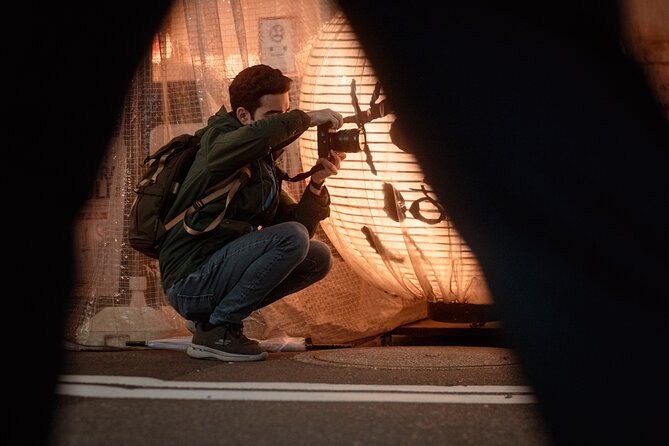
This is the kind of Tokyo tour that helps even if you already own a camera and think you have your settings figured out. The guide behind it, Deniz Demir, is a professional photographer and also runs a large creative Meetup group in the city, so you get both technical teaching and real-world street experience.
The vibe is friendly and practical. You are walking through the evening streets, but the goal is to sharpen how you see, and how you turn what you notice into a photo you are proud of. That is why the small size matters so much: with up to 6 people, the guide can watch what you’re doing and steer you toward fixes you can use immediately.
I also like that the tour is built around flexibility. You can choose from several evening options, and if you are traveling with a busy schedule, that reduces stress when you are trying to catch the right time of night.
Where You Meet in Shimbashi and What Happens in the 2-Hour Window
You start at Shimbashi Station (2 Chome-17 Shinbashi, Minato City, Tokyo 105-0004, Japan), and you end back at the same meeting point. The timing is short, roughly 2 hours, which is long enough to shoot, review what worked, and apply corrections, but not long enough to wander aimlessly.
That structure is actually a benefit if you want to improve quickly. In a 2-hour session, you learn faster because you have fewer chances to get lost in your own routine. You also get a clear rhythm: move through the evening streets, make frames, adjust what you are doing, then keep going to test the change in real time.
If you are the type of traveler who likes to take hundreds of photos and edit later, you’ll still have plenty to work with. Just be ready to spend some time actually shooting deliberately, not only pressing the shutter while walking.
Yurakucho and Shinbashi After Dark: What to Shoot and How to Think
The tour’s core is exploring Yurakucho and Shinbashi in the evening. These areas make sense for a photo walk because Tokyo at night often gives you the ingredients street photographers chase: strong contrast, signs and light sources, and busy street texture.
Instead of telling you to chase one specific landmark, the approach is about helping you see patterns. You learn what to look for while you move: how to frame, how to use lines and layers in the street, and how to turn ordinary moments into photos with purpose.
One smart thing here is the focus on turning the environment into part of the composition. You are not just photographing people or buildings in isolation. You’re learning how the city around you can do the work for you, such as guiding your eye, creating depth, or making a scene feel more intentional.
In short, you will leave with better instincts. Even if you already know camera settings, a good street-walk coach can still fix your timing, your framing choices, and your habit of shooting too wide, too centered, or too late.
- Mt Fuji and Hakone 1-Day Bus Tour Return by Bullet Train★ 5.0 · 26,383 reviews
- 1-Day Tokyo Bus Tour★ 5.0 · 14,250 reviews
- Tokyo: teamLab Planets TOKYO Digital Art Museum Entry Ticket★ 4.6 · 9,779 reviews
- Mt Fuji & Hakone Cruise, Drum Show Bullet Train 1 Day from Tokyo★ 4.0 · 7,413 reviews
- Tokyo Mt Fuji 5th St & Hakone Cruise Bus Tour w/Bullet Train★ 4.4 · 5,024 reviews
Deniz Demir’s Teaching Style: Settings, Lenses, and Framing That Improves Photos
Deniz’s background comes through in how the instruction is organized. The tour covers basics like settings, lenses, and other gear, and it also touches advanced topics like using things such as LEDs and prisms. That doesn’t mean you will need sci-fi equipment to benefit, but it does signal that the guide understands how optics and light control your results.
What I really value is the “from ordinary to real art” framing. This kind of session is not only about getting a technically sharp photo. It is about learning the why: why that angle, why that crop, why that moment, why that choice of what to include or leave out.
Also, you get guidance that is meant to be personalized. A small group helps, but the deeper reason this works is that you can bring your own camera and your own questions. One past guest feedback that matches this style is that they learned how much they did not know about their own equipment, then got a chance to test the new ideas right away.
That is a key point for you. If you show up with a camera manual you barely used, or you rely on Auto mode too much, this tour gives you a path to change that without guessing forever.
Weekday Evening Options and Salaryman Culture: Shooting People With Context
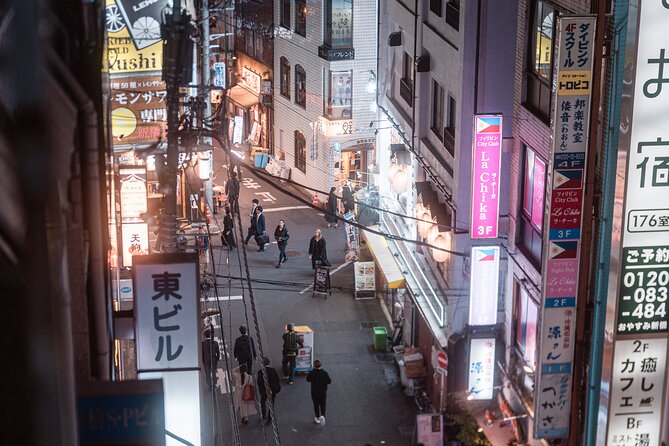
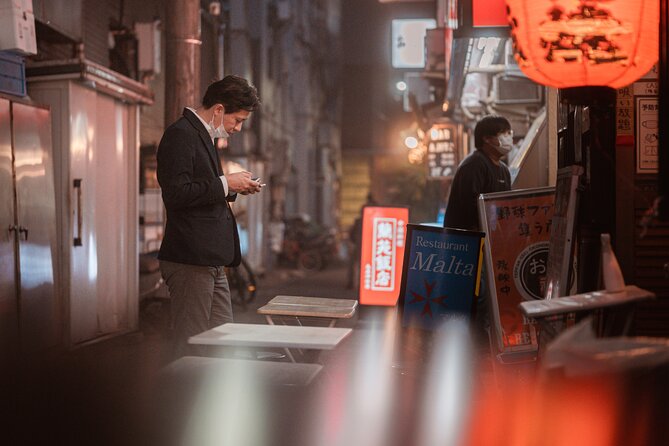
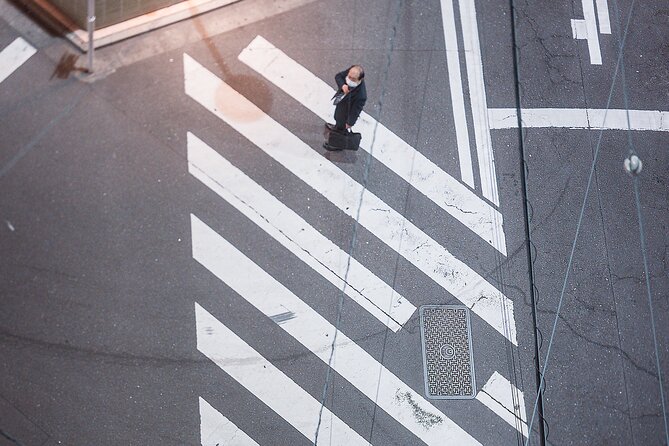
One of the tour’s most interesting features is that certain evening schedules during weekdays have a focus on Japan’s salaryman culture. That matters because it changes what you’re looking for in the street.
If you are photographing people, you need more than camera settings. You need respect and awareness, plus an eye for storytelling. This kind of cultural focus helps you shoot with better context, not just as a tourist grabbing photos of busy commuters.
Practically, it also changes the way the evening feels. Even the best street photos often come from timing and observation. When your guide brings a topic focus, it gives your brain a target beyond random scenes. You learn to watch behavior, rhythm, and details that help your photos say something.
So if you are in Tokyo on a weekday evening, this is a great reason to choose one of the options that includes the salaryman-culture angle.
Tripod, Mobile Ticket, and Gear Choices That Actually Matter
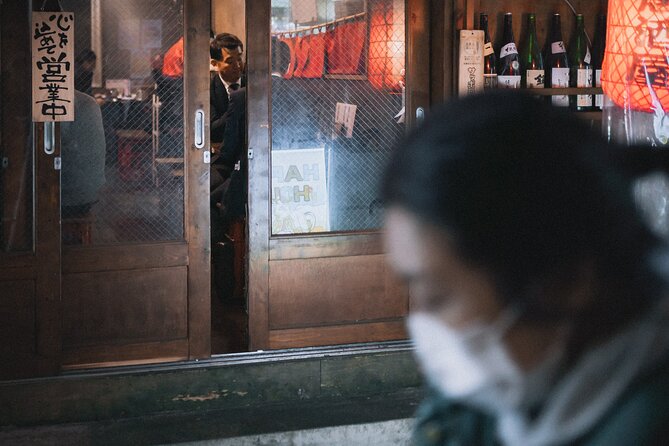
The tour offers a tripod option, meaning your photographer guide can bring one if you want it. For night photography, that can be a big deal, especially if you want steadier shots and more control over exposure.
But the tour also talks about a range of gear topics beyond tripods, including lenses and advanced tools like LEDs and prisms. You do not need to own every specialty item to get value, because the point is instruction. If you have a tripod, you’ll likely use it. If you do not, you can still benefit from knowing when a tripod makes sense and when it can slow you down.
You will also use a mobile ticket, and confirmation is received at booking. That is the kind of detail that helps on a trip, because you do not want your first evening plan to turn into a ticket chase.
Bring what you already shoot with. The strongest way to get value from a photo coach is to use the camera you actually travel with, not a fantasy setup you do not bring.
Price and Value: Is $128.09 Worth a 2-Hour Pro-Led Session?
At $128.09 per person for about 2 hours, this is not a bargain-basement activity. But it is also not overpriced for what you get, mainly because you’re buying three things at once.
First, you are paying for a professional guide, Deniz Demir, who is actively working as a photographer and teaches other creatives. Second, you’re getting instruction designed for a small group size, maximum 6, so you are less likely to feel like you’re just tagging along with a crowd. Third, you’re getting a structured learning experience that mixes basics and more advanced street-photography thinking.
If you’ve ever tried to improve your photography on your own in Tokyo, you know how many dead ends you can hit. This tour compresses that trial-and-error by giving you feedback while you shoot. That time-saving and the coaching quality are the real value drivers.
If you are already a confident photographer who only needs inspiration, you might not use every gear topic. But if you want better results fast, or you want to stop fighting your camera at night, this is one of the more practical investments you can make.
What You’ll Learn While You Walk: A Practical Checklist for Better Street Photos
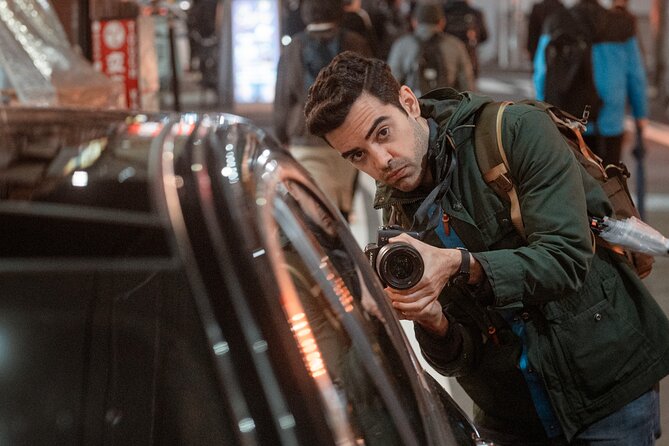
Deniz’s session covers more than one layer of photography. The goal is to help you go from automatic shooting to intentional shooting, without getting trapped in theory.
Here is what you should expect to work on during the evening:
- Camera settings and lenses: enough to let you choose rather than guess.
- Gear concepts: including how light tools like LEDs and other optics can affect results.
- Street shooting philosophy: what to look for so your frames have structure.
- Framing choices: how to use what’s around you instead of only composing from scratch.
- Putting it into practice: you learn, then you test on the same evening you’re learning in.
From a traveler’s perspective, the key is that you are not waiting until you get home to fix your photos. You apply changes while the light and street mood are still there.
Who This Tokyo Evening Photo Walk Is Best For
This is a good fit if any of these sound like you.
You’ll like it if you:
- Want personalized coaching rather than generic tips
- Shoot with a camera but feel stuck on night shots
- Enjoy street photography and want stronger framing and timing
- Want to understand how to use your own gear better
- Prefer small groups where you can ask questions
It also helps if you can handle moderate walking, since the tour lists a moderate physical fitness level requirement. It is not described as a strenuous hike, but it is an evening walk through city streets.
If you are traveling solo and want a social but not chaotic experience, the max of 6 people keeps things manageable. If you are traveling with friends, you can still benefit, because each person can get specific feedback, not just group-level advice.
A Quick Reality Check Before Booking
This tour is built for a specific kind of value: better photos through live coaching in Tokyo at night. That means you should go in ready to shoot, ready to listen, and ready to change what you’re doing after the guide points something out.
Because it is about 2 hours, you should not expect a full evening of unlimited wandering. You get focused time, then you move on. If you love slow travel and long photo sessions, you might still enjoy it, but you may want to pair it with independent exploration afterward.
Should You Book This Tokyo Evening Photography Tour?
Book it if you want the fastest path to improving your Tokyo night photos without turning your trip into a technical frustration project. The small group size, the pro-led instruction from Deniz Demir, and the focus on both practical settings and street-shooting thinking are exactly what make this kind of experience worth paying for.
Skip it if you only want sightseeing with no instruction, or if you prefer ultra-long photo walks with lots of downtime. This is short on purpose, and the payoff is the guided learning while you’re already in the streets.
If you’re the type who leaves a city wishing your photos looked more like what you saw in your head, this tour gives you tools to close that gap. And in a place as visually intense as Tokyo, that difference shows up fast.
FAQ
How long is the Tokyo evening photography tour?
It runs for approximately 2 hours.
Where does the tour start and end?
It starts at Shimbashi Station (2 Chome-17 Shinbashi, Minato City, Tokyo 105-0004, Japan) and ends back at the meeting point.
How many people are in the group?
The tour has a maximum group size of 6 travelers.
What areas of Tokyo do we explore?
You’ll explore the Yurakucho and Shinbashi areas in the evening.
Can the photographer guide bring a tripod?
Yes. Your photographer guide can bring a tripod if desired.
Are there different evening options to choose from?
Yes. You can choose from several evening tour options for flexibility.
Do I get a mobile ticket?
Yes. The tour uses a mobile ticket.
Is the tour focused on salaryman culture during weekdays?
During evening tours on weekdays, there is a focus on Japan’s unique salaryman culture up close as you take photos.
Is there free cancellation?
Yes. You can cancel for a full refund up to 24 hours in advance of the experience’s start time.
Are service animals allowed?
Yes, service animals are allowed.
Someone Else Behind the Camera
Newest Tokyo write-ups from the Loving Japan desk






Photography Sessions, side by side.
 ★ 5.0Best Go Kart Experience in Shibuya Crossing with Iconic PhotosFrom $106348 reviews
 ★ 4.7Maiko Makeover and Photoshoot ExperienceFrom $140239 reviews
 ★ 4.8Tokyo Go-Karting Experience: Shibuya Crossing with PhotosFrom $90190 reviews
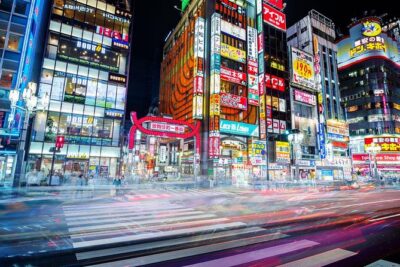 ★ 5.0Tokyo Cyberpunk Street Photo TourFrom $184165 reviews
 ★ 5.0Private Photoshoot ServiceFrom $78158 reviews
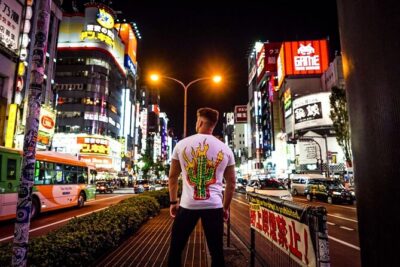 ★ 5.0Tokyo by Night Photography Tour (Private Option Available)From $105151 reviews
 ★ 5.0Tokyo Shinjuku Night Photo Tour with Pro GotaFrom $85142 reviews
 ★ 5.0[Okinawa Blue Cave] Snorkeling with Private Guide+ Free PhotosFrom $32127 reviews
Filed on these lists too