
REVIEW · HIKING & TREKKING
Frozen fall trekking
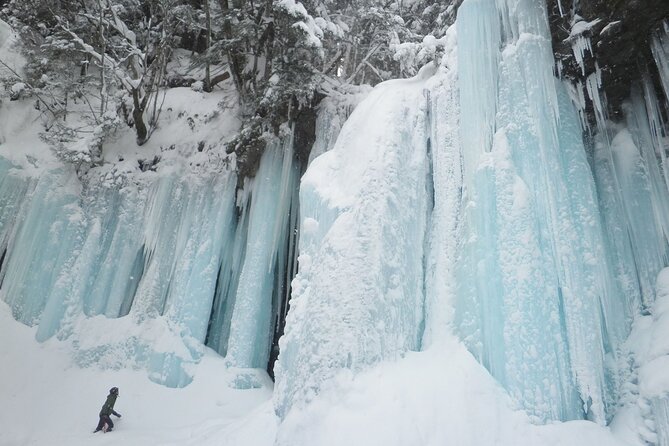
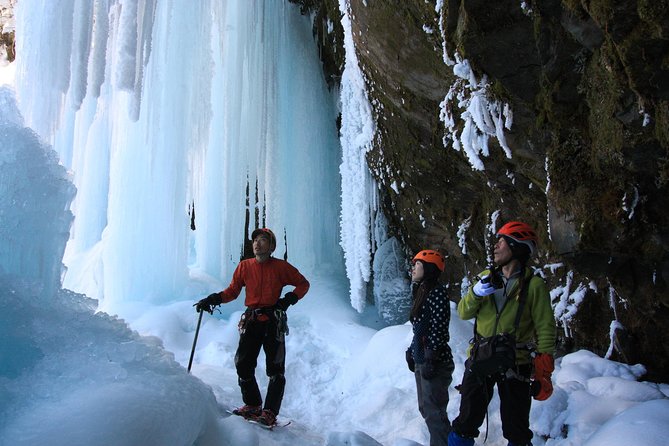
Blue ice beats any postcard. On this Frozen fall trekking outing in Gero’s Hida-Osaka area, you walk through a snow-capped forest and arrive at a frozen waterfall that shows up like something out of a dream. I like that the hike is built around shinrin-yoku, forest bathing, so the day is not just about getting from A to B.
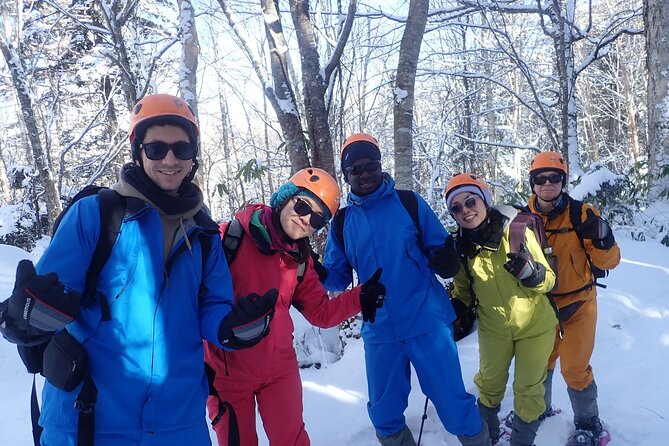
Two more things I really like: you get a guide who selects a route based on your skill level and needs, and the group stays small, up to 7 people, so the whole experience feels personal. The one real drawback to plan for is that winter is winter, you need solid fitness, and there are height and weight limits plus strict focus on safe pacing in deep snow.
In This Review
- Key highlights to know before you go
- Where you start in Gero, and how you actually get there
- Getting your bearings: forest bathing on snow, not just a walk
- How the guide customizes the snow route and pace
- The walk to the frozen waterfall: where the magic builds
- The blue ice moment: slow time at the waterfall
- What your 8 hours look like, in real life
- Gear, body limits, and staying comfortable in cold snow
- Price and value: what $180.64 covers (and what it doesn’t)
- The most praised parts of the experience, and why they matter
- Who should book this frozen waterfall trek in winter
- Should you book Frozen fall trekking?
- FAQ
- How long is the frozen waterfall trekking experience?
- Where does the tour start and end?
- How many people are in a group?
- Is equipment included, and are there body limits?
- Is lunch included?
- What happens if the weather is bad?
Key highlights to know before you go
- A guide picks your route based on your skill level and needs, not a one-size-fits-all hike
- Forest bathing in real snow (shinrin-yoku) as you trek through a dense, snow-covered forest
- That frozen waterfall moment when a tall tower of blue ice appears in front of you
- Small group size with a maximum of 7 travelers for more attention and a calmer pace
- Equipment is included, so you start the day ready for traction and winter conditions
Where you start in Gero, and how you actually get there
You’ll meet up near the tour activity base at the Waterfalls of Osaka Tour Secretariat in Gero (38-8 Osakachō Ochiai, Gero, Gifu 509-3111). The experience is also described as an easy meetup with your guide at Hida-Osaka Station, so plan to be able to reach that meeting area smoothly.
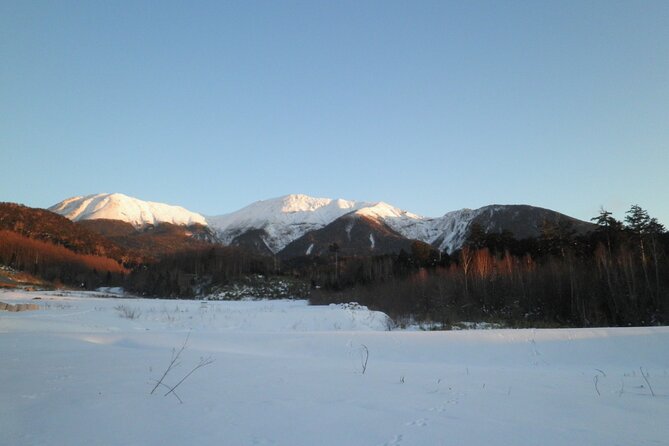
Location matters here because Hida-Osaka is tucked in mountain country around forests and waterfalls. The area is accessible from Takayama and Gero in about 40 to 50 minutes by train, bus, or car, so it works well if you’re doing a multi-stop Japan trip and want to add a cold-weather nature experience without changing your whole itinerary.
A small practical tip: if you’re visiting from Takayama or Gero, double-check your transit timing the day before. In winter, trains and buses can still run on schedule, but your margin for comfort gets smaller when it’s cold and you’re carrying winter gear.
Getting your bearings: forest bathing on snow, not just a walk
The core idea of this tour is shinrin-yoku, forest bathing, translated into a winter setting. You follow your guide deep into a snow-covered forest, and the route is chosen to match your needs and comfort level. Instead of treating nature as a backdrop, the day slows down just enough for you to notice the forest itself, the textures underfoot, and the quiet that only heavy snowfall creates.
The tour also leans into the idea of fresh mountain air with negative ions, which is part of how the experience is framed when you’re out in the pines and snow. I’d treat that as part of the local story, not as a medical claim, but it does match the feeling you get when you’re breathing cold air and moving gently through stillness.
What makes this feel special for me is that you’re not rushing to a viewpoint. You’re doing the best winter version of paying attention: slow steps, consistent breathing, and a guide who keeps you safe while you enjoy the surroundings.
How the guide customizes the snow route and pace
This tour is built around the fact that snow hiking is not one activity. Your guide picks a trek suitable to your skill level and needs, which matters because “easy” can mean different things depending on your background with snow, trekking poles, or snow shoes.
Expect the guide to manage the rhythm of the group. Your walking pace and route details will depend on conditions, how deep the snow is, and what’s safe that day. That’s also why the experience caps the group at 7 travelers. Smaller groups make it easier to keep everyone together, adjust pace, and handle the reality of slippery patches or uneven snow.
You’ll also notice that the frozen waterfall hike is described as a way to spend more time around the scenery. That suggests your guide will likely prioritize arrival and time at the waterfall, not just speed.
The walk to the frozen waterfall: where the magic builds
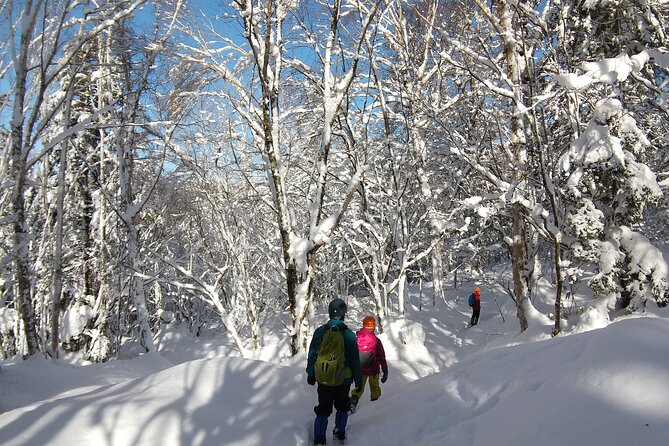
The hike takes you through a dense, snow-capped forest. Then, in a moment that’s hard to forget, the frozen waterfall appears. You’re told you’ll see a tower of blue ice in front of you, and that’s the big visual payoff of the route.
One reason I like this kind of outing is that the approach is part of the attraction. You’re trekking through endless white scenery, and the repeated turns and pauses make the forest feel like a changing scene. Even in very cold weather, that “in-between” time tends to be what people remember, because it feels like you’re walking through a real winter story, not a quick stop.
From the experience description, the waterfall is the most-admired waterfall in Hida-Osaka, and the guide knows the area better than anyone. In practice, that means you’re less likely to miss the best angles or struggle with the route, and more likely to get a clean, comfortable experience even if you’re new to snow hiking.
The blue ice moment: slow time at the waterfall
When you reach the frozen waterfall, the goal shifts. This is not the type of site where you stand for two minutes and move on. The tour is specifically suited for people who want more time around the frozen waterfall and want to experience the scenery rather than just pass through it.
Here’s what to expect emotionally: the waterfall is described as “otherworldly,” and that matches the idea of a tall tower of blue ice. The color matters. Bright blue ice tends to look unreal in winter light, and it can also make photos easier, since the scene has strong contrast even under overcast skies.
Also, because this is a forest-bathing style trek, you’ll likely be encouraged to slow down mentally. I’d treat it like a winter reset. Look, breathe, take your time, then prepare for the return walk while your legs are still cooperative.
What your 8 hours look like, in real life
The duration is listed as about 8 hours. While exact timing isn’t provided, the day’s rhythm is consistent based on how the tour is described:
1) Meet your guide and get briefed
You’ll connect at the start point area, then your guide selects a trek that fits you.
2) Trek through the snow-capped forest
You’ll walk deeper into the winter woods, with shinrin-yoku style pauses and a pace controlled for safety.
3) Arrive and spend time at the frozen waterfall
You get time to see the blue ice waterfall, soak in the scene, and enjoy the quiet.
4) Hike back to the meeting point
The experience ends back where you started, so you’re not dealing with complicated logistics at the end of the day.
If you’re planning the rest of your day, I’d assume you’ll want a full buffer afterward. Cold weather and snow hiking can be tiring even when the hike is described as easy, and you’ll likely want time to warm up and get food.
Gear, body limits, and staying comfortable in cold snow
You get equipment included, which is a big part of the value. Snow hiking without the right gear can turn unpleasant fast, so it’s helpful that the tour covers equipment as part of the package.
That said, there are firm body limits for operating the tour with the proper gear fit: you must be taller than 140 cm (4’7”) and shorter than 190 cm (6’2”), and you must weigh under 90 kg (198 lbs). There’s also a note that travelers should have a strong physical fitness level. That combination suggests the activity is designed to be safe and manageable for a range of people, but not casual.
Cold comfort matters. One review excerpt references conditions around -12°C and describes trekking through endless white landscapes with snow shoes. That’s your clue to dress for real winter, not mild cold. If you’ve ever done winter hikes, you know comfort often comes down to insulation you can trust and layers that can handle snow.
One more practical note: lunch is not included. There is an optional bread and hot soup lunch, which is a nice way to refuel without turning the day into a long break.
Price and value: what $180.64 covers (and what it doesn’t)
At $180.64 per person for about 8 hours, you’re paying for three main things:
- A professional guide who adjusts the trek to your needs and skill level
- Included equipment for snow trekking
- A small group format with a maximum of 7 travelers
That package can be good value, especially when you compare it to winter tours that charge separately for guide time and gear. Here, you’re not just buying a place on a hike. You’re buying the winter expertise that helps you reach the frozen waterfall safely and enjoy the forest bathing approach without stress.
What’s not included is lunch, which means you may want to plan either to pay for the optional bread and hot soup lunch or handle a meal before or after the tour. The tour’s availability also depends on good weather, which can affect whether you get the frozen waterfall route exactly as planned.
The most praised parts of the experience, and why they matter
From the most positive feedback patterns, two things consistently show up as the reasons people feel satisfied.
First, the guides are repeatedly described as excellent and highly helpful, with Reiko and Osamu named in at least one family experience, and Jun named as another guide. That matters because winter hiking success depends on small things, like where you step, when you pause, and how you interpret conditions on the ground.
Second, the frozen waterfall itself is framed as the highlight. People talk about it as the standout moment of the entire trip, and not just because it looks pretty. It’s memorable because the day builds to it: you walk through dense snow forest, then the blue ice tower appears, and you’re given time to actually enjoy it.
A third, quieter theme is that organization feels solid. People mention smooth start-to-finish coordination, including pickup from the station and drop-off back at the meeting point. When winter trips go wrong, it’s often due to confusion or timing problems, so this is an underrated value point.
Who should book this frozen waterfall trek in winter
This tour fits best if you want an outdoor winter experience with a strong nature focus. It’s especially good for people who like forest bathing and who want to experience the Japanese idea of shinrin-yoku in a snowy setting.
It also looks like it can work for families, since one group described included kids aged 13, 12, 10, and 8 enjoying the day with Reiko and Osamu. That doesn’t mean every family will be a match, but it suggests the route can be friendly when the group is appropriate and the guide manages pacing.
You may want to skip it or consider a gentler alternative if any of the following apply:
- You cannot meet the height range or weight limit
- You don’t feel comfortable in cold conditions and deep snow
- You need lunch included and don’t want optional meal planning
- You are looking for a very short outing, since this is an 8-hour day
If you want “one more thing” beyond temples and photo stops, this tour can be a strong addition.
Should you book Frozen fall trekking?
If your goal is a meaningful winter nature experience, I’d book this. The combination of a small group, an equipment-supported snow trek, and guided forest bathing is a practical recipe for a day you’ll remember.
Book it if you’re excited by:
- Snowshoe-style trekking through a dense forest
- The promise of a blue ice frozen waterfall moment
- Having a guide adjust the hike to you
Skip it if you’re not up for real winter conditions, deep snow, and an 8-hour block outdoors. Also, because the experience is weather-dependent, keep your expectations flexible. If conditions don’t cooperate, the operator may suggest a different hike route option rather than forcing the exact plan.
FAQ
How long is the frozen waterfall trekking experience?
It runs for about 8 hours.
Where does the tour start and end?
The activity starts at The Waterfalls of Osaka Tour Secretariat (38-8 Osakachō Ochiai, Gero, Gifu 509-3111, Japan) and ends back at the same meeting point.
How many people are in a group?
The maximum group size is 7 travelers.
Is equipment included, and are there body limits?
Equipment is included. You must be taller than 140 cm (4’7”), shorter than 190 cm (6’2”), and weigh less than 90 kg (198 lbs).
Is lunch included?
Lunch is not included. Bread and hot soup lunch is optionally available.
What happens if the weather is bad?
The tour requires good weather. If it’s canceled due to poor weather, you’ll be offered a different date or a full refund.
Hiking & Trekking, side by side.
 ★ 4.93-Hour Fushimi Inari Shrine Hidden Hiking TourFrom $72270 reviews
 ★ 5.0Hiroshima Local guided Hiking Tour&Open-air Tea CeremonyFrom $109213 reviews
 ★ 5.0Hiking the Historic Nakasendo Trail [1 Day Tour from Nagoya]From $210104 reviews
 ★ 5.0Kyoto Hiking Tour: The Nature and Legends of Kurama and KibuneFrom $19175 reviews
 ★ 4.8Morning Hiking Tour with Open-air Tea CeremonyFrom $10658 reviews
 ★ 5.0Full Day Hiking Tour at Mt.Takao including Hot SpringFrom $11852 reviews
 ★ 5.0Hike and Hot Springs in KuramaFrom $8049 reviews
 ★ 5.0Hike Hakone HachiriFrom $23148 reviews
Filed on these lists too