
REVIEW · HIROSHIMA AND MIYAJIMA DAY TRIPS
Hiroshima: Morning Hiking Tour with Open-air Tea Ceremony
Morning quiet beats Hiroshima crowds. A small-group climb up Futaba Mountain ends with an open-air tea ceremony and a forest bathing-style pause, with Hiroshima laid out below in the morning light. It’s a different side of Hiroshima, where shrines, woodland paths, and simple hospitality take center stage.
The main tradeoff is the effort. You need to go up about 500 steps, and the walking includes steep stretches, so wear grippy shoes and pace yourself.
In This Review
- Key moments that make this tour worth your morning
- A 3-hour early start that gets you above Hiroshima
- Meeting point at Hiroshima Station, then right onto the path
- Hiroshima Toshogu Shrine: traditional architecture and guided context
- Kinko Inari Shrine and the hike into Futaba Mountain
- Peace Pagoda viewpoint: the moment the city opens up
- Nodate open-air tea ceremony: matcha in the forest light
- Forest bathing: calm, sensory, and not what you expect
- Guide quality is part of the value: English, personality, and pacing
- Price and value: $106 for guide-led shrines, tea, and mountain time
- Who should book this, and who should skip it
- Should you book this Futaba Mountain morning tour?
- FAQ
- Where is the meeting point?
- What is the tour duration?
- How big is the group?
- Are hotel pickup and drop-off included?
- What are the main places you visit?
- How many steps are involved?
- What should I bring?
- Is the tour suitable for people with heart problems?
- What is included in the price?
- Can I cancel for a full refund?
Key moments that make this tour worth your morning
- Futaba Mountain, morning views over Hiroshima, the Seto Inland Sea, and Miyajima
- Nodate open-air tea ceremony with green tea outdoors
- Hiroshima Toshogu Shrine and its traditional buildings, guided
- Kinko Inari Shrine paths through mountain greenery
- Peace Pagoda photo stop from a high point on the route
- Forest bathing that is sensory and calm, led by your guide
Sit down somewhere quieter. Other tea rooms we booked
- Hiroshima Local guided Hiking Tour&Open-air Tea Ceremony
★ 5.0 · 213 reviews - Kimono and Tea Ceremony in Miyajima
★ 5.0 · 73 reviews - An Amazing set of Cultural experience: Kimono, Tea Ceremony and Calligraphy
★ 5.0 · 69 reviews - Hiroshima: Morning Hiking Tour with Open-air Tea Ceremony
★ 4.8 · 58 reviews
A 3-hour early start that gets you above Hiroshima
This is the kind of tour that pays off precisely because it starts early. You meet at Hiroshima Station, then you’re soon trading station noise for steps, shade, and fresh air. The payoff is big-city perspective without big-city crowds.
It’s also a nicely compact format. In about three hours you cover multiple sacred spots, reach an excellent viewpoint, and still slow down for tea and nature time. If your Hiroshima schedule feels mostly museum-and-bus heavy, this one adds breathing room.
Group size stays small, capped at 6 people, and your guide leads in English and Japanese. That smaller setting matters for two reasons: you can ask questions in a calm way, and the tour rhythm can flex without turning into a cattle line.
Meeting point at Hiroshima Station, then right onto the path
You’ll meet your guide at the deck on the 2nd floor of Hiroshima Station, in front of the Shinkansen North Exit. This is convenient because it’s a clear landmark and you can find it quickly from the main station flow.
You’ll also see that the tour offers a few starting options, including Hiroshima Station and a Seven Bank ATM area. Same idea, different convenience. If you’re staying somewhere walkable around the station, pick the start that saves you the most time.
No hotel pickup or drop-off means you control your timing. If you’re prone to running late, build in buffer time. This tour works best when you arrive early enough to feel calm before the climb begins.
Hiroshima Toshogu Shrine: traditional architecture and guided context
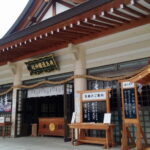
The first major stop is Hiroshima Toshogu Shrine, with about 30 minutes set aside for visiting and guided sightseeing. This is where the tour shifts from “walking in nature” to “learning how people worship here.”
You’ll spend time looking at the shrine grounds and important cultural assets. The guided part is key. Even if you know basic Shinto ideas, a good explanation helps you read what you’re seeing: why certain buildings look the way they do, and what the shrine space is designed to communicate.
One extra detail I like from guide-led moments like these: they often point out the effort that goes into keeping the area cared for. In several cases, guides highlighted the work volunteers do to maintain the space, which adds meaning beyond photos.
Pairing the city with Miyajima. Other itineraries
- Peaceful Hiroshima & Miyajima UNESCO 1 Day Bus Tour★ 5.0 · 5,309 reviews
- Hiroshima: Hiroshima and Miyajima UNESCO Sites 1-Day Tour★ 4.9 · 2,330 reviews
- Hiroshima / Miyajima Full-day Private Tour with Government Licensed Guide★ 5.0 · 1,298 reviews
- Hiroshima in a Nutshell: Morning Bike Adventure★ 5.0 · 524 reviews
- Hiroshima City 4hr Private Walking Tour with Licensed Guide★ 5.0 · 437 reviews
Kinko Inari Shrine and the hike into Futaba Mountain
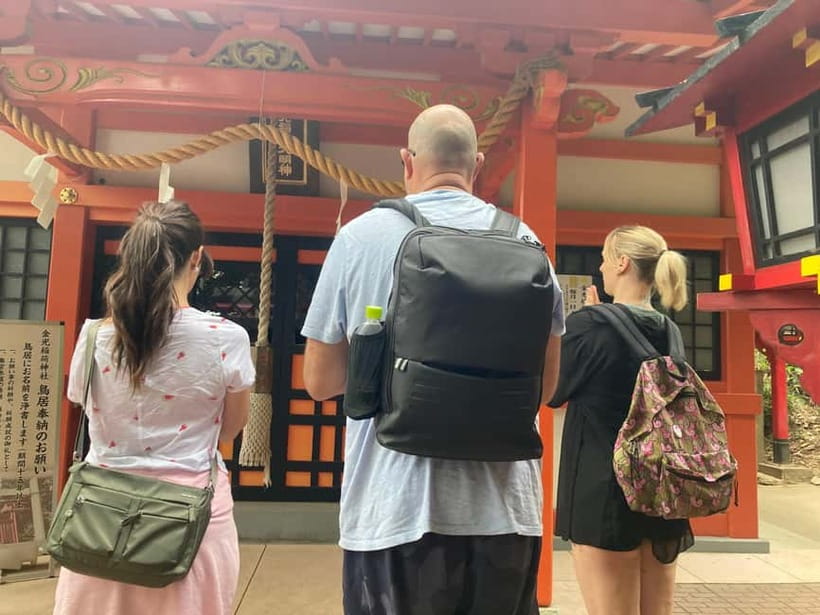
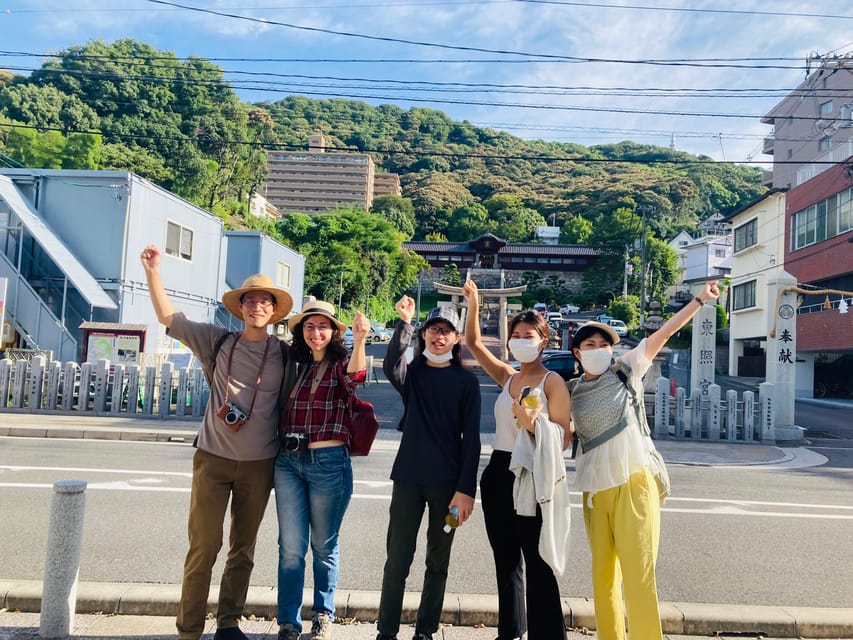
After the shrine stop, you head toward the mountain paths that lead into the Futaba area, with Kinko Inari Shrine as a key waypoint. Expect a guided walk with sightseeing, including about 25 minutes of walking in the mountains.
This section is lush and green in feel, and it’s also where you’ll feel the climb. The tour information flags a big number, around 500 steps, and multiple hikers reported steep stairs and uphill effort throughout. The good news is the route breaks the work into manageable pieces, with pauses for learning and views.
If you’ve only done flat sightseeing days in Hiroshima, this is the moment your legs notice. Still, it’s very doable for people who can handle steps at a steady pace. The trick is to slow down early, so you’re not fighting your breathing halfway through.
Peace Pagoda viewpoint: the moment the city opens up
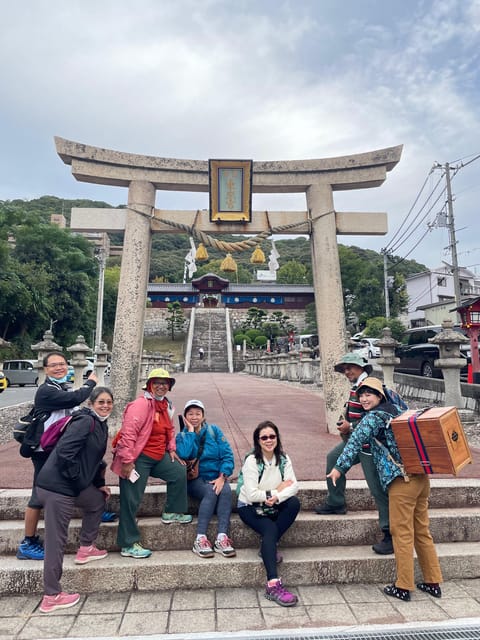
You’ll reach the Hiroshima Peace Pagoda area after the Kinko Inari mountain segment, and the route includes a scenic photo stop with guided views on the way. Plan for about 35 minutes here total, including the time to look out and take photos.
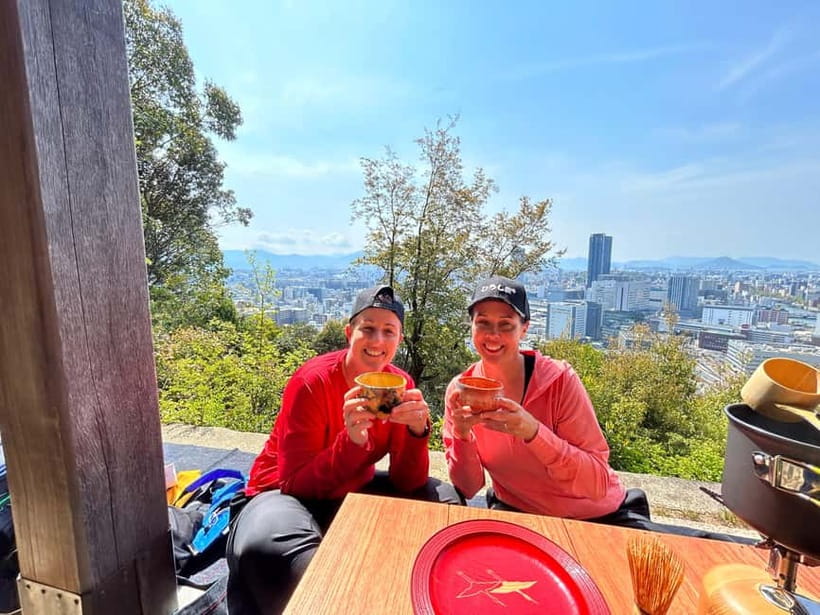
What makes this stop special is the viewpoint. From up there, the city stretches out under the morning sky. You get views across Hiroshima, the Seto Inland Sea, and Miyajima. It’s a striking contrast: peaceful landscape from a place that connects to Hiroshima’s identity.
Even if you think you already know Hiroshima from day trips and major sights, this angle changes the feeling of the city. You’re seeing it as a coastal region with islands and water, not just a destination tied to history.
Tip I’d follow: treat this as a photo stop, not a sprint. The view is the point, so pause, look around 360 degrees if you can, then settle back into the slower pace before the tea.
Nodate open-air tea ceremony: matcha in the forest light
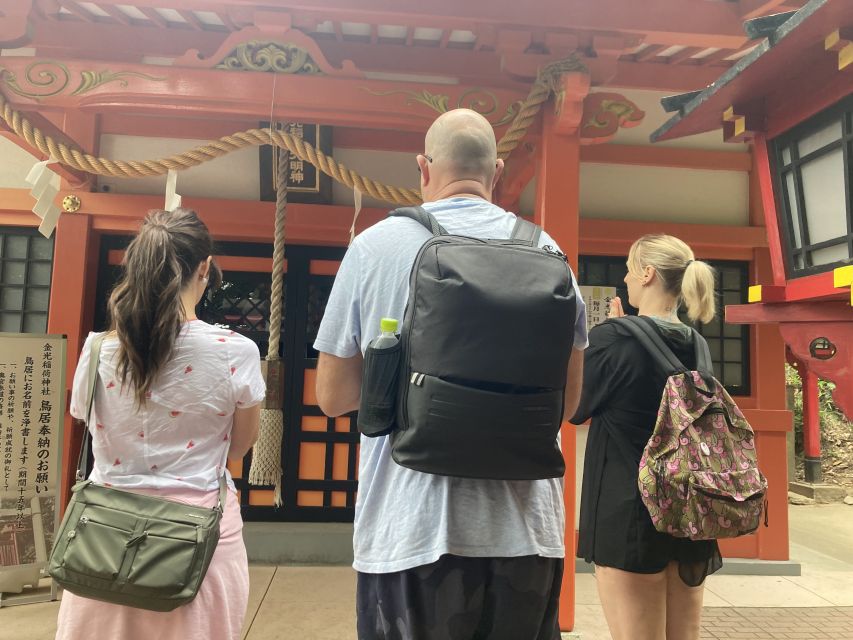
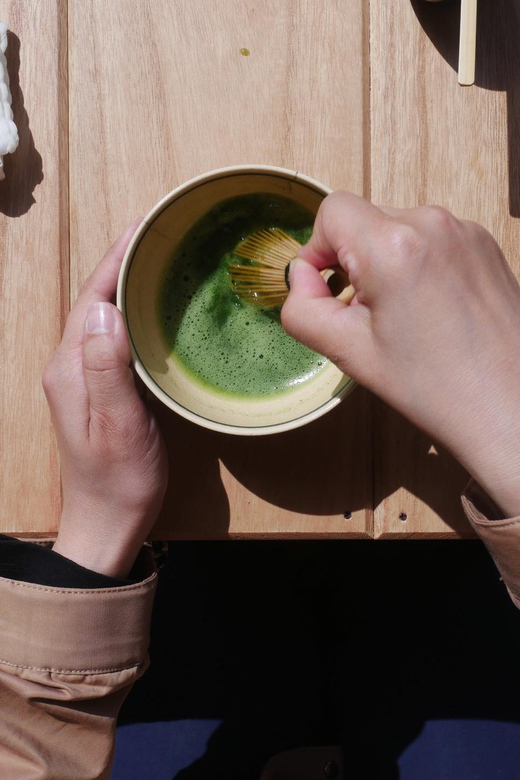
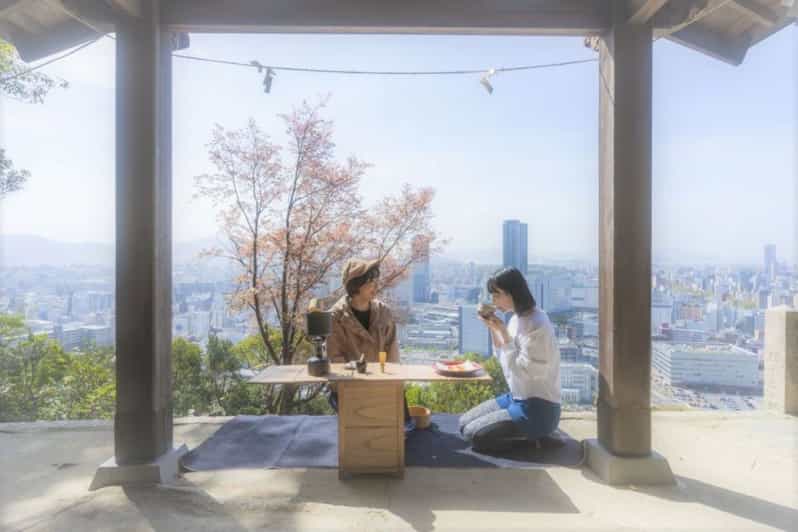
The tea ceremony is one of the most praised parts of the experience, and for good reason. The tour includes an outdoor, open-air tea ceremony called Nodate. Your guide makes green tea outdoors during a break period on the mountain.
This isn’t a stuffy sit-down museum-style performance. It’s outdoors, with a sense of place. Guides often explain the meaning behind the steps and etiquette, and some guides take the chance to let you try. People mentioned learning to whisk matcha properly in the rules of art, which is a fun way to move from watching to doing.
A few groups also mentioned small sweets alongside the tea. The key point for your expectations is the combination: you finish a climb, then you get to slow down with tea in fresh air. That rhythm is the magic.
If you’re a tea fan, you’ll likely enjoy the focus on matcha and the practical way the guide teaches. If you’re not, you can still participate through the explanation and calm pause.
Forest bathing: calm, sensory, and not what you expect
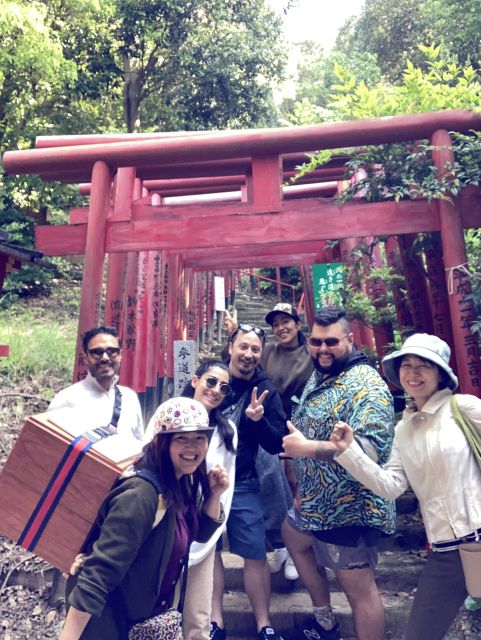
The forest bathing activity is often described as a sensory meditation session. That matters because if you picture something physical like swimming or a workout, you’ll be surprised.
Instead, think of it as guided attention. You’ll likely be coached to notice sounds, smells, and the feeling of the air, and you’ll get a slower tempo to match the natural setting. Many hikers described it as calming and relaxing.
Some guides also mix in gentle movement. One group noted a yoga-like element during the forest bathing portion. So if you’re flexible and open to light stretching or breathing exercises, this part can feel surprisingly personal.
My practical advice: do it. People who relax into the session tend to remember it longer than those who treat it as a pause to wait for the next landmark.
Guide quality is part of the value: English, personality, and pacing
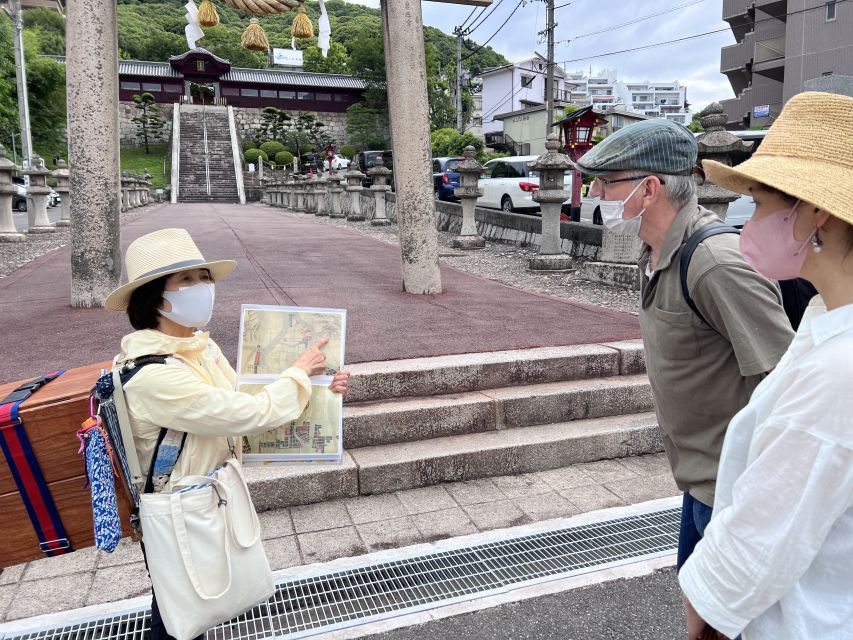
This tour shines because the guide affects everything, from explanations to how the group moves. Multiple named guides showed up in experiences, including Stephanie, Naomi, Nana, Mimi, Michiyo, and Michi. Across those examples, the common thread is a mix of warmth and structure.
A strong guide does three things well:
- Explains what matters on the spot, not in a lecture format.
- Keeps the pace realistic for uneven terrain and steps.
- Builds connections, like why the shrines matter or what you’re seeing from the viewpoint.
Because the group is limited to 6, you’re more likely to get direct answers and personal attention. One solo traveler even described it as a nice chance to ask questions that wouldn’t happen in a larger group.
Price and value: $106 for guide-led shrines, tea, and mountain time
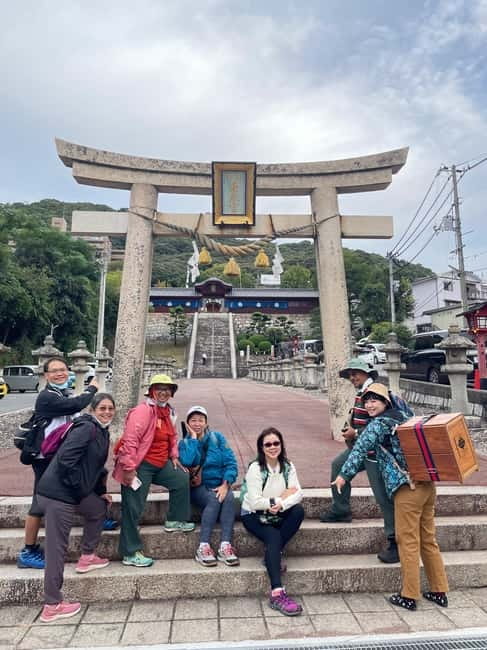
At $106 per person for about 3 hours, you’re paying for three things at once: expert guidance, structured sightseeing, and included activities. The included items are a guide, the open-air tea ceremony, and forest bathing. Breakfast is included if you choose that option.
Compared with paying for a standalone guide just for walking, this price feels fair because the tour bundles in cultural stops and a real experience component. You’re not only moving through a place, you’re also pausing for a tea moment and doing guided nature time.
Where value gets even clearer is the small group limit. Six people max means less crowding, more chances to ask questions, and a calmer pace. If you hate jam-packed tours, that matters.
What’s not included is hotel pickup and drop-off. That’s a tradeoff you should factor in. If you’re staying near Hiroshima Station, it’s no big deal. If you’re farther out, you may want to plan your commute carefully so you don’t feel rushed.
Who should book this, and who should skip it
This tour is a strong match if you want Hiroshima beyond the usual highlights, and you like a blend of culture plus nature. You’ll get shrine architecture, Shinto context, viewpoint scenery, and a tea ceremony that’s genuinely part of the day, not an add-on.
You’ll also like it if you enjoy early mornings. Several people mentioned starting around 7:30am to beat the heat, and that early timing makes the climb feel easier and the air nicer.
Skip this if you have heart problems. The tour specifically notes it isn’t suitable for people with heart issues. Also take the steps seriously. Even hikers who said they enjoyed it mentioned that the climb includes steep stairs and can still feel intense two days later.
Should you book this Futaba Mountain morning tour?
I think it’s worth booking if you want a meaningful morning that feels local and calm. The combination of tea outdoors, forest bathing, and shrine visits makes it more than a sightseeing walk, and the viewpoint at the Peace Pagoda area gives you a big payoff for your effort.
I’d pass if you hate stairs or you’re looking for a fully relaxed, flat stroll. The steps are central to the experience, not optional.
If you do book, come with comfortable shoes, go slow on the uphill sections, and treat the tea and forest bathing as the real finish. That’s where the tour turns from “walking around” into something memorable.
FAQ
Where is the meeting point?
Meet your guide at the deck on the 2nd floor of Hiroshima Station, in front of the Shinkansen North Exit.
What is the tour duration?
The duration is 3 hours.
How big is the group?
The tour is a small group limited to 6 participants.
Are hotel pickup and drop-off included?
No. Hotel pickup and drop-off are not included.
What are the main places you visit?
You visit Hiroshima Toshogu Shrine, Kinko Inari Shrine, and the Hiroshima Peace Pagoda viewpoint area. The outdoor tea ceremony and break happen during the time at Kinko Inari.
How many steps are involved?
You need to go up 500 steps on this hike.
What should I bring?
Bring comfortable shoes.
Is the tour suitable for people with heart problems?
No. The tour is not suitable for people with heart problems.
What is included in the price?
Included items are a guide, an open-air tea ceremony, and forest bathing. Breakfast is included if you select the breakfast option.
Can I cancel for a full refund?
Yes. You can cancel up to 2 days in advance for a full refund.
Hiroshima and Miyajima Together

Kyoto by the Bowl
Newest Hiroshima write-ups from the Loving Japan desk
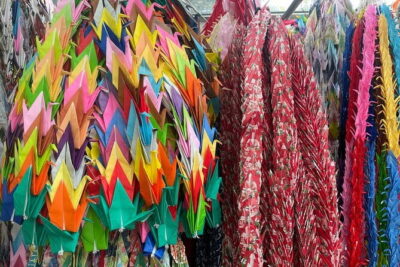
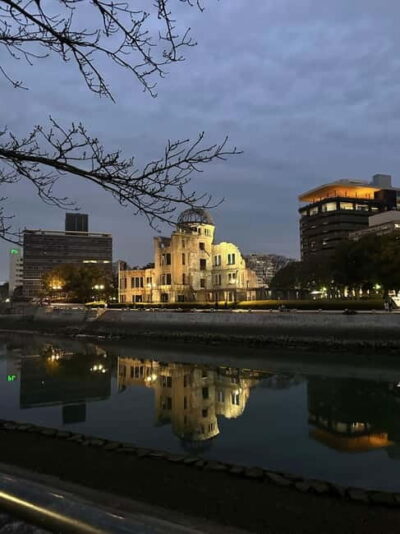
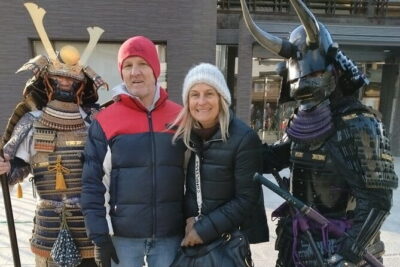
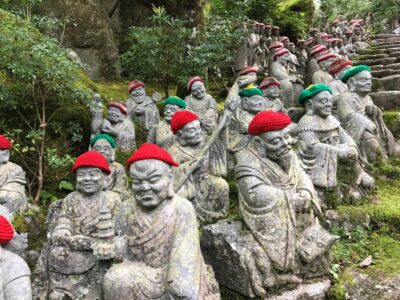
Hiroshima and Miyajima Day Trips, side by side.
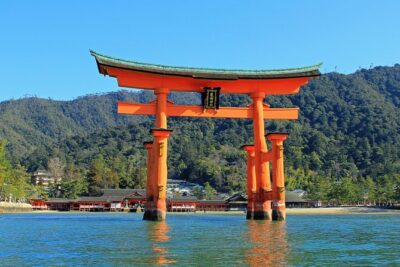 ★ 5.0Peaceful Hiroshima & Miyajima UNESCO 1 Day Bus TourFrom $1295,309 reviews
 ★ 4.9Hiroshima and Miyajima UNESCO Sites 1-Day TourFrom $1222,330 reviews
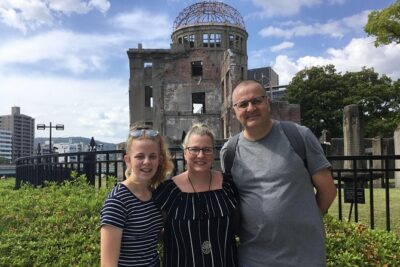 ★ 5.0Hiroshima / Miyajima Full-day Private Tour with Government Licensed GuideFrom $2021,298 reviews
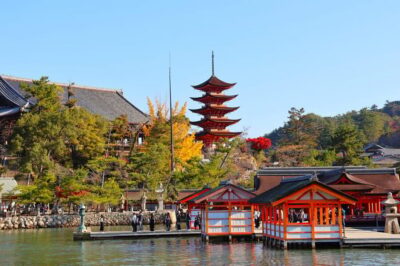 ★ 4.7Osaka/Kyoto: Hiroshima Miyajima Bus Tour & Shinkansen TicketFrom $277919 reviews
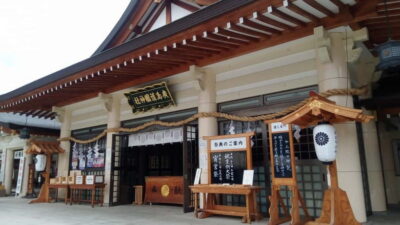 ★ 4.8Hiroshima Historical Walking Tour – Why A-Bomb was DroppedFrom $35893 reviews
 ★ 5.0Hiroshima Peace (Heiwa) Walking Tour at World Heritage SitesFrom $94872 reviews
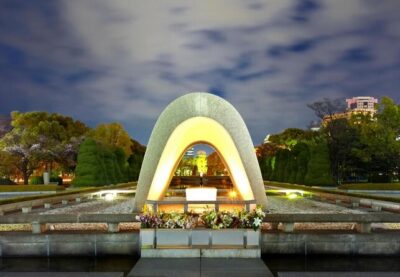 ★ 5.0Hiroshima in a Nutshell: Morning Bike AdventureFrom $72524 reviews
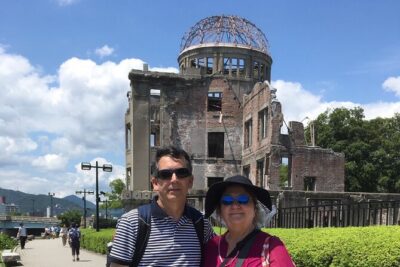 ★ 5.0Hiroshima City 4hr Private Walking Tour with Licensed GuideFrom $122437 reviews
Filed on these lists too