
REVIEW · ONSEN, HOT SPRINGS AND BATHHOUSES
Kyoto: Hike and Hot Springs in Kurama
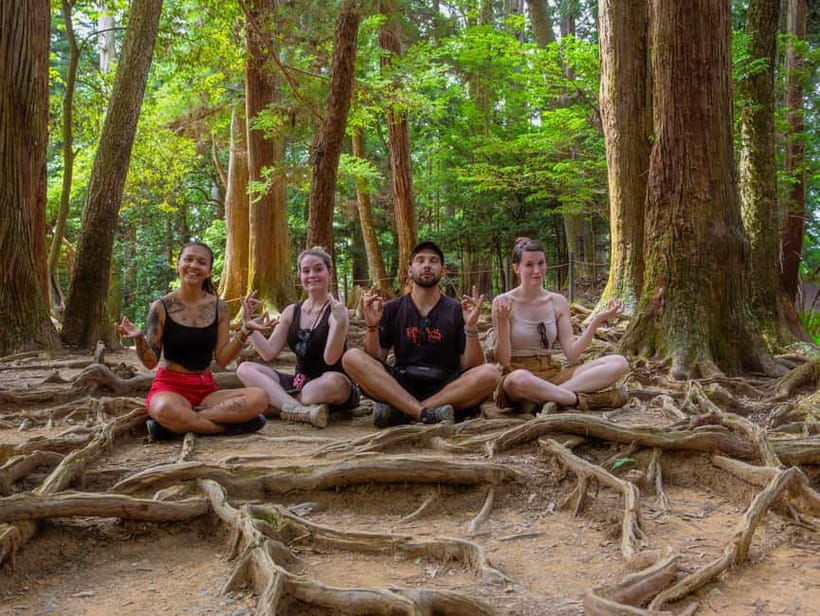
Steam, silence, and a mountain climb in Kyoto. This half-day hike to Kurama Temple and the outdoor onsen threads you through cedar shade and old legends, starting with a scenic train ride that feels like a real escape. I love how the guide turns each shrine and trail stop into a story you can actually picture, and I love the end-of-day reset once you’re back in Kurama. The main consideration is the stamina check, because you climb stairs to reach the mountaintop, and on some days temple areas may be affected by maintenance.
A big reason this works is the human touch. Guides such as Philippe, Chris, Kevin, and Salome are repeatedly praised for being patient, fun, and good at matching the pace, even when the group is small. In other words, you do not just walk the route, you understand why it matters.
You’ll start at Demachiyanangi Station exit 7 in front of the Eizan railway, so you can be on the mountain quickly. Wear comfortable shoes and bring water, and if you want to avoid bug bites, long pants help a lot.
In This Review
- Quick hits you will feel after this hike
- Kyoto’s quieter north: Kurama and Kibune in one half-day
- Getting there from Demachiyanangi: a smooth start on the Eizan railway
- The hike route: sacred start, cedar forest, and a climb to Kurama Temple
- Kibune shrine stop: a prayer you can actually do
- Kurama Temple on the mountaintop: views, power-spot vibes, and what to watch for
- Kurama village after the climb: lunch options and how to time your onsen
- The guide matters: what makes Philippe and others worth it
- Price and value: is $80 per person worth it for 4 hours?
- Who should book this Kurama and Kibune hike
- Should you book Kyoto: Hike and Hot Springs in Kurama?
Quick hits you will feel after this hike
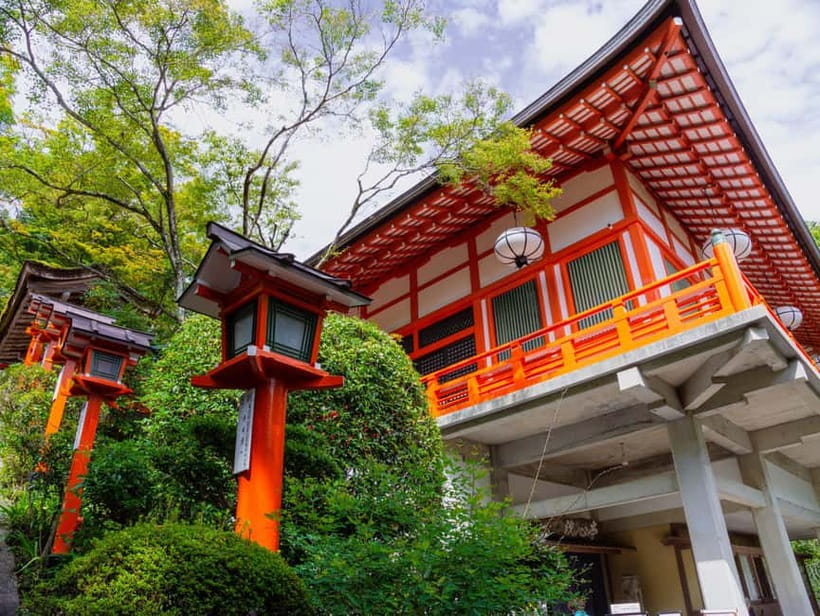
- Kurama Temple at the top, with a mountain valley view and a local idea of a power spot
- Kibune shrine prayer for good relationships, a calm, meaningful moment in the middle of the walk
- Train ride through the mountains and gorge area on the way out, so the day starts scenic
- Ancient forest hiking paths, including a steep stair section that takes about 30 to 40 minutes to reach the peak
- Kurama village time after the hike, with choices for lunch, strolling, or an onsen dip
- Outdoor hot springs at the end, with an option for a discounted ticket
Still weighing up options in Kyoto Prefecture? These are the ones our reviewers rated highest.
- Kyoto: Zen Meditation and Garden Tour at a Temple with Lunch
★ 4.9 · 86 reviews
Kyoto’s quieter north: Kurama and Kibune in one half-day
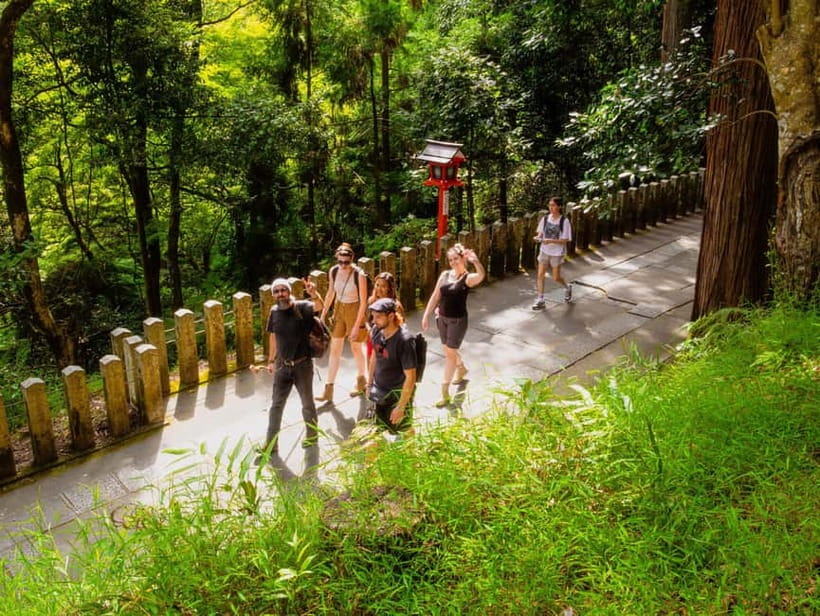
Kyoto has a famous crowd. This outing is designed to get you out of the usual center and into the calmer north, where cedar trees thin the noise and the river valley shapes the air. Kurama and Kibune sit in that pocket of Kyoto that feels older than the city blocks around it.
I like that the day is not only sightseeing. You do real movement, you stop at sacred places, and then you finish with a soak. That mix is why the experience tends to stick, even for people who have already seen plenty of temples in Kyoto.
The hike is moderate, but it is not a stroll. Expect a stair climb and enough time on your feet that you will feel it the next day if you are not used to hiking. The good news is the plan includes breaks and plenty of chances to look up, not just down at the trail.
Getting there from Demachiyanangi: a smooth start on the Eizan railway
You meet at Demachiyanangi Station exit 7, in front of the Eizan railway. That matters because it keeps the early part simple: you are not hunting for the right platform or guessing which line goes where.
Once you leave Kyoto proper, you switch into a more rural rhythm. Part of the value here is that you ride through the mountains rather than just transferring and driving to a trailhead. In one common highlight, people mention the mountain train ride through the gorge area, which is exactly the kind of Kyoto scenery you rarely get when you stay inside city limits.
Your guide also handles the practical stuff along the way, so you can focus on what is happening outside the window and ahead on the path. The tour lasts 4 hours, and you will be back in the Kurama area at the end, with guidance on the train back to town.
The hike route: sacred start, cedar forest, and a climb to Kurama Temple
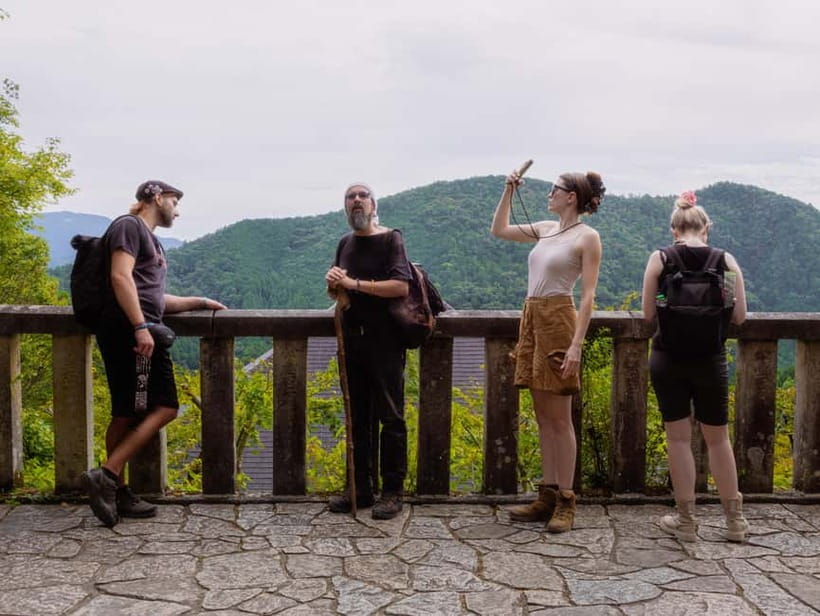
The day begins at a shrine and then moves into the forest trails. This is not just exercise. The sacred start helps you shift your mindset from tourist mode into slower, attentive walking.
As you hike, you follow scenic paths that wind upward through tall cedars, with views that open little by little. There are stops along the way, and the guide shares stories tied to the places you pass. This is where the best guides shine, because it turns a trail into a sequence with meaning.
Then comes the real work: climbing steps to reach the mountaintop. The peak is typically reached in about 30 to 40 minutes once you start that stair section. You do not need to be a mountain athlete, but you do need a decent baseline fitness, because the steps are steady and the climb adds up.
A few practical notes that will make a difference:
- Bring water, even if you think you will not need it.
- Wear comfortable shoes with grip, since the trail is outdoors and can feel slick depending on conditions.
- If it is warm, the climb can feel harder than you expect, so take your breaks instead of pushing through.
Kibune shrine stop: a prayer you can actually do
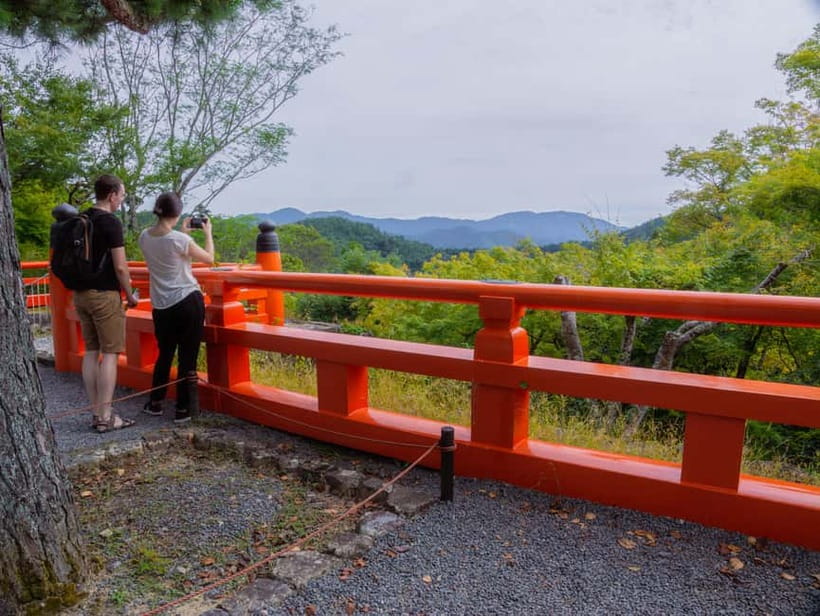
A highlight in this tour is the visit to Kibune shrine, where you make a prayer for good relationships. That is the kind of activity that sounds small until you are standing there and realizing you are participating, not just watching.
This stop also breaks up the intensity of the hike. It gives you a moment to breathe, slow down your steps, and focus on the meaning behind the route rather than the cardio.
If you like spiritual travel that is respectful and practical, you will appreciate that this is not a vague stop with a quick photo. You are guided through what you should do, then you move on to the next section of the mountain.
Kurama Temple on the mountaintop: views, power-spot vibes, and what to watch for
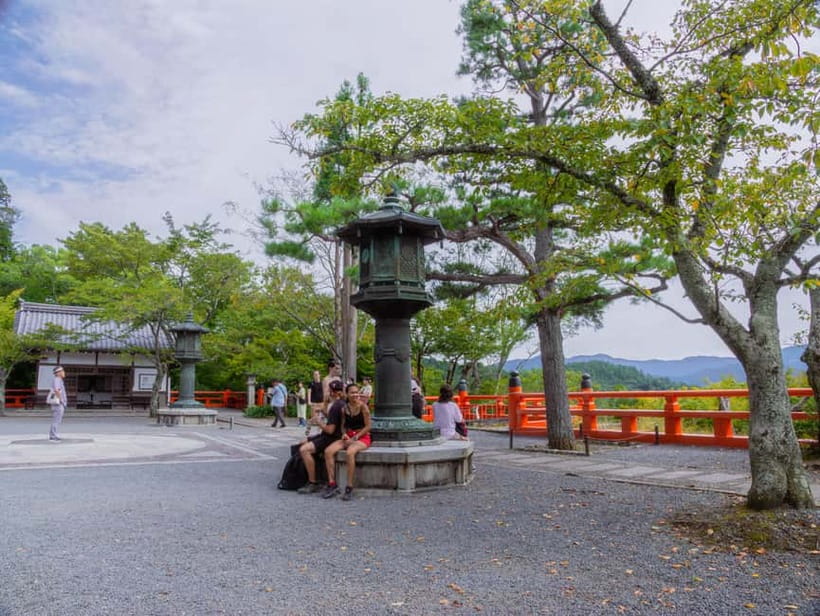
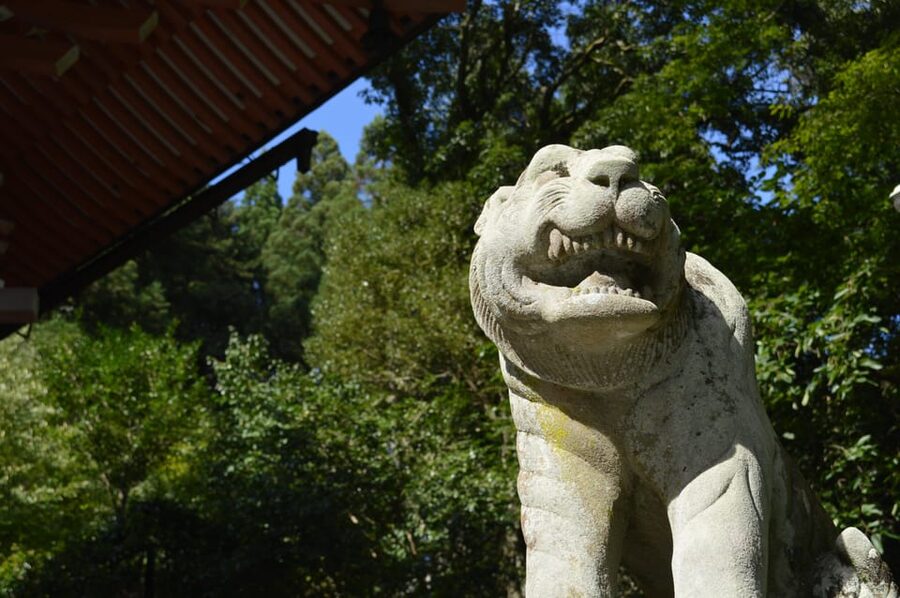
Reaching Kurama Temple at the top is the emotional peak of the hike. Locals describe the area as a kind of power spot, and I get why. You are up high, the valley spreads out below, and the quiet feels different from street-level Kyoto.
From the temple area, you get the kind of view that makes the climb feel worth it. You can also take a breather in the fresh mountain air before you head back down.
One detail I really value here is that the temple visit can be more than a quick stop. On some days, groups are able to see additional parts of the complex, including areas under the temple such as a crypt and a maze-like layout. This is not something you should assume every time, but when it happens, it adds real depth to the visit.
One honest consideration: maintenance can affect what you see. On at least one occasion, scaffolding has limited visibility of the main temple exterior, even though the group could still go inside and ring a bell. If you are coming for specific photos, keep your expectations flexible.
Kurama village after the climb: lunch options and how to time your onsen
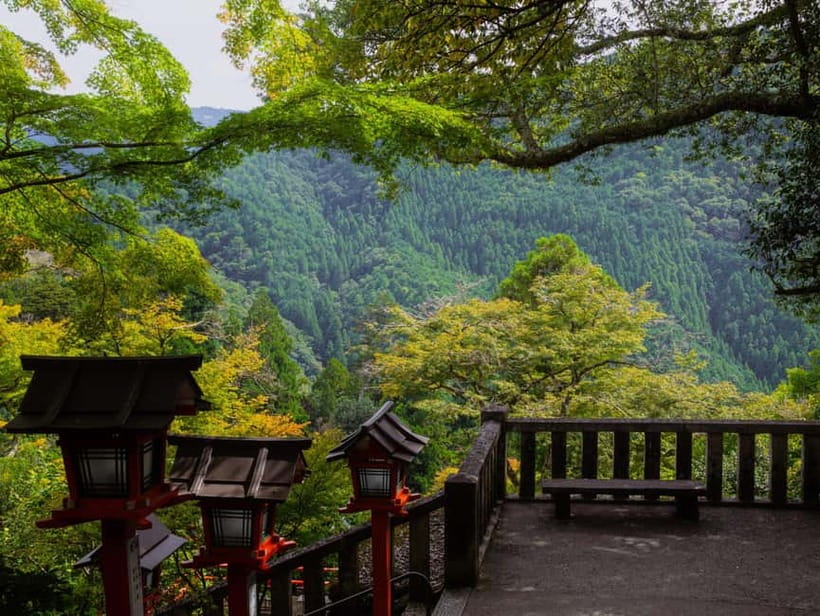
After you descend, you end in the village of Kurama. This is a good design choice because it gives you breathing room, not just a finish line. You can have a late lunch, stroll the area, or head straight to the bath if you want your legs to thank you.
Kurama has plenty of places to eat around the valley area, including restaurants near the river where you can rest. That matters because you are not forced into a fixed lunch break, which lets you match the timing to your pace and energy.
Then there is the onsen, and honestly, it is part of the point. The hot spring is a separate fee, but the tour may offer a discounted ticket. People highlight the outdoor bath experience with mountain views, and it is exactly the kind of reward that makes a half-day hiking plan feel complete.
If you are sensitive to crowds, aim for a calmer time window rather than arriving at the busiest moment, if timing is flexible that day. The tour guide can steer you based on the flow.
The guide matters: what makes Philippe and others worth it
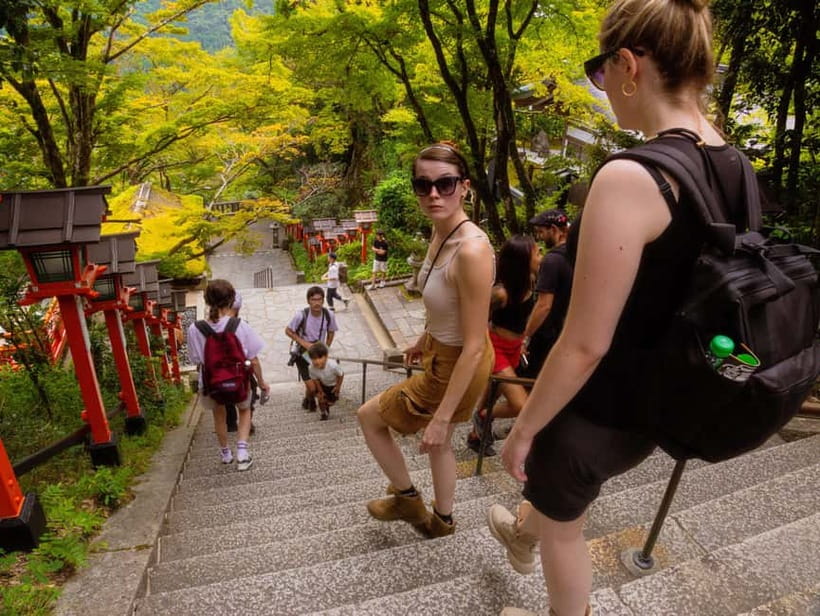
This is a guided tour, so the quality of the guide is not a minor detail, it is the difference between walking and understanding.
In the feedback, Philippe is repeatedly praised for being down to earth, funny, and strongly connected to the local legends and history. People also mention custom pacing, like spending more time at Kurama when the group was small, and getting extra access to temple areas such as the crypt and maze.
Other named guides also stand out: Chris for hidden spots, Kevin for cultural and historical context, and Salome for making the outing unforgettable. Even when the day includes tough stairs, the common theme is patience, good planning, and taking breaks without making it feel rushed.
One small personal lesson you can take from that pattern is this: if you want your hike to feel meaningful, choose a tour where the guide can explain what you are seeing in plain language. This one seems built for that.
Price and value: is $80 per person worth it for 4 hours?
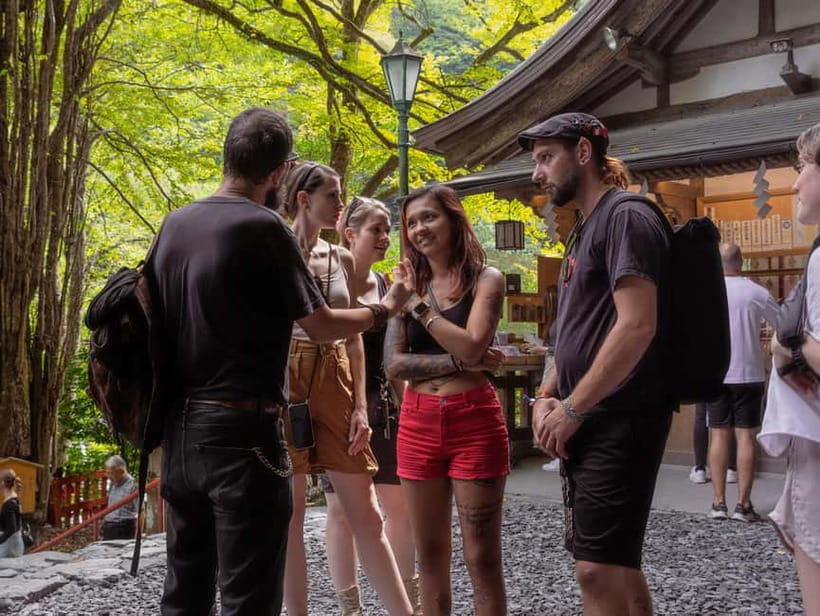
At $80 per person for a 4-hour outing, you are paying for more than the hiking route. The price includes the guide fee, temple admission, and transportation to get you out into the mountain area.
That is the value equation. You are not spending your own time figuring out transit, hunting tickets, or budgeting separately for entry fees at the temple. And the day is structured so you end with choices in Kurama instead of being dumped back in the city mid-exhaustion.
Two things are not included: lunch and the hot springs fee. That is normal for a half-day format, but you should plan for it mentally. If you want the full experience, budget for the onsen on the day and pick your lunch spot in Kurama after you arrive.
Also note the tour includes transportation, but transportation back to the meeting point is not included. Practically, you will finish in Kurama and get guidance for returning to town by train. You may need a quick additional hop to reach your exact start area back in Kyoto.
Who should book this Kurama and Kibune hike
You should book this if you want:
- A half-day mountain escape from central Kyoto
- A guided hike with shrines and temple meaning, not just photos
- A natural ending with onsen relaxation after stairs
- English or French support from a live guide
This is not for everyone. It is not suitable for children under 11, and it is not suitable for wheelchair users or people with mobility impairments. It also does not fit people without hiking experience, mainly because of the stair section and uneven outdoor walking.
If you are the type who likes to combine cardio with culture, this tour is a strong match. If your idea of a great Kyoto day is mostly flat pavements and museum doors, you may find the climb tiring.
Should you book Kyoto: Hike and Hot Springs in Kurama?
If you like Kyoto beyond the crowds, I think this is a very sensible choice. The biggest payoff is the sequence: train ride into the mountains, cedar forest hiking, shrine and temple moments, then an onsen that turns the day from busy to restorative.
Book it if you can handle a moderate climb and you want your time in Kyoto to feel grounded and local, especially around Kurama Temple and the village atmosphere. Consider skipping or choosing a gentler option if you need a fully flat route, or if you are worried about stairs.
Finally, if you are flexible about what you will see at the temple on the day, you will enjoy this for what it is: a half-day north-of-Kyoto reset where the guide helps you feel the place, not just pass through it.
Newest Kyoto Prefecture write-ups from the Loving Japan desk
Onsen, Hot Springs and Bathhouses, side by side.
 ★ 4.4Nara and Uji Day Trip with Deer Park and Hot SpringFrom $57302 reviews
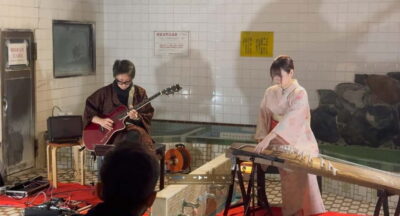 ★ 4.9Traditional Concert at Townhouse or BathhouseFrom $32224 reviews
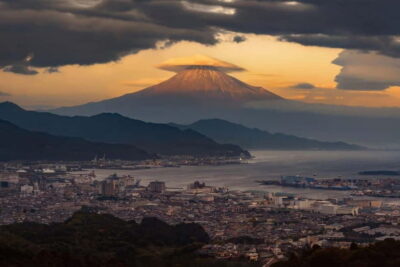 ★ 5.0From Tokyo: Private Tour to Fuji/Hakone – Onsen, Art, NatureFrom $322116 reviews
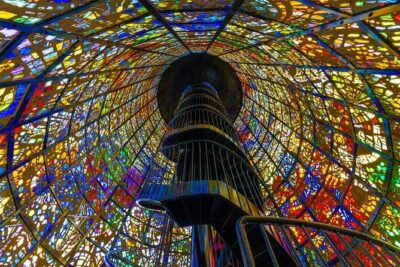 ★ 5.0Mt. Fuji, Hakone Private Tour from Tokyo – Onsen, Arts and NatureFrom $85279 reviews
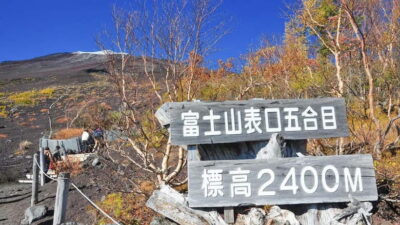 ★ 4.3Mount Fuji 5th Station & Onsen Day TripFrom $5075 reviews
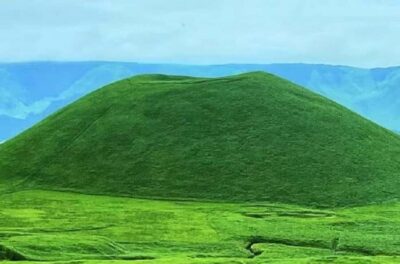 ★ 4.6From Fukuoka: Mount Aso, Kurokawa Onsen, and Shrine TourFrom $5072 reviews
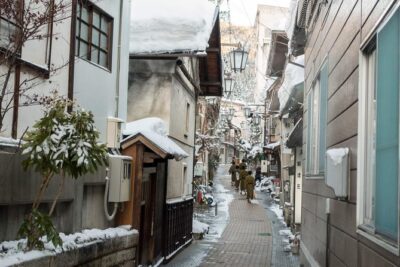 ★ 5.0Private Nagano 1-Day Tour:Snow Monkeys,Zenko-ji,Obuse,Sake,OnsenFrom $33771 reviews
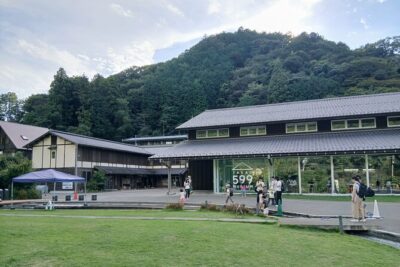 ★ 5.0Mt Takao Tour with Ramen and Tattoo-Okay Hot SpringFrom $12069 reviews
Filed on these lists too