
REVIEW · HAKONE, OWAKUDANI AND LAKE ASHI
Hakone Adventure: Explore Nature’s Beauty and Tranquility
Hakone hits you with mountains, steam, and lake views all in one day. The big draw is the mix of Hakone’s signature transport plus top sights without you juggling connections. I like that the pace is built around real viewpoints, and that my guide time goes beyond facts, like when Yumiko kept things smooth and responsive. One watch-out: you still pay transport fares separately, and crowds can squeeze the schedule.
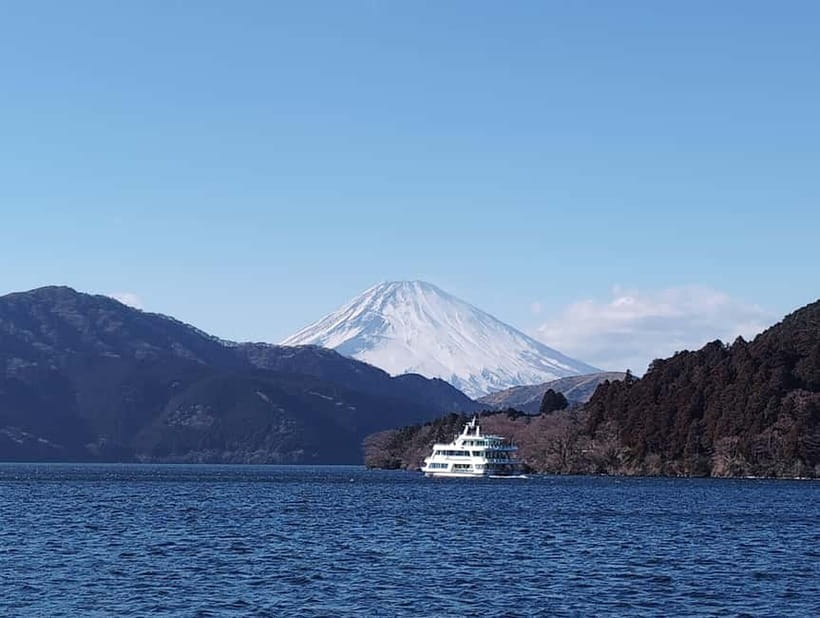
This is also the kind of day that can pay off fast for first-timers. You get the mountain train ride, the cable car and ropeway above the volcanic caldera, then a sightseeing cruise on Lake Ashi where Mt. Fuji might appear. If you’re lucky, you’ll spot it, like Lawrence did, but if weather rolls in, you’ll be staring at clouds instead.
The one drawback I’d plan around is timing. One guide did great managing transport changes, but if queues form, you may run out of time for the last stop, like what happened to Cheryl on a crowded Monday.
In This Review
- Key things that make this Hakone day feel worth it
- Why Hakone Adventure works as a one-day plan from Honshu
- Meeting points near Shinjuku and Hakone Yumoto: choose the easiest start
- Ride the Hakone Tozan Railway, Japan’s only mountain train
- Cable car and ropeway views above the volcanic caldera
- Owakudani geothermal valley: steam, sulfur air, and living geology
- Lake Ashi cruise: torii gates and possible Mt. Fuji framing
- Hakone Shrine: a cultural pause after the steam and views
- Timing, crowd reality, and how to plan for Mt. Fuji odds
- Price, transport fares, and the value question you should ask
- Who this guided Hakone day suits best, and who should rethink it
- Should you book Hakone Adventure?
- FAQ
- How long is the Hakone Adventure tour?
- What main stops are included in the day?
- Where do you meet and where do you get dropped off?
- Is an English-speaking guide included?
- Are transport fares and meals included in the tour price?
- What should I bring, and are there any rules?
Key things that make this Hakone day feel worth it
- Hakone Tozan Railway: Japan’s only mountain railway, riding into forested slopes and switchbacks
- Volcanic air at Owakudani: steam vents and that unmistakable sulfur smell with guided context
- Cable car plus ropeway views: you gain height fast and see the caldera from above
- Lake Ashi cruise: torii gates and possible Mt. Fuji views, without negotiating boat schedules
- One English-speaking guide for the whole flow: less confusion across train, cable car, ropeway, and cruise
- Time for Hakone Shrine: a calmer cultural capstone by the water
The Hakone loop runs several ways. Here are the rest
- Hakone 6 hour Private Tour with Government-Licensed Guide
★ 5.0 · 218 reviews - Custom Private Tour in Hakone with a Certified Local Guide
★ 5.0 · 91 reviews - Hakone 8 hour Private Tour with Government-Licensed Guide
★ 5.0 · 63 reviews - Private Tour – Hakone Day Trip! A Tour to Explore All Must-Sees!
★ 5.0 · 58 reviews
Why Hakone Adventure works as a one-day plan from Honshu
Hakone is one of those places that can feel overwhelming if you try to “piece it together” yourself. It’s not just one sightseeing spot. It’s a string of experiences tied to elevation, geothermal activity, and a lake inside a volcanic caldera. This tour’s strength is that it stitches those pieces into a single day with one set of people handling the transitions for you.
What you’re really buying is not only the sights. It’s the reduction of friction. Instead of hunting for the next gondola or figuring out how long the cruise line will take, you can focus on what you came for: rail views, ropeway panoramas, steam vents, and lake water framed by torii.
I also like that the tour is built around different angles of the same region. You’ll see Hakone from the forest slopes on the mountain train, from above the volcanic valley on the cable car and ropeway, and from the lake surface on the cruise.
Meeting points near Shinjuku and Hakone Yumoto: choose the easiest start
The tour gives you four start options: 向山公園, 新宿警察署 新宿駅東口交番, 箱根湯本駅, and 小田原駅観光案内所. Picking the easiest departure matters, because it can protect your energy for the day’s movement.
In plain terms:
- If you want a straightforward Tokyo start, Shinjuku is the obvious choice.
- If you’re already closer to the Hakone side, starting at 箱根湯本駅 can reduce early commuting.
- Odawara and Gora are useful if your Tokyo itinerary already has you in that direction.
You also get two drop-off options at the end: 箱根湯本駅 or 新宿警察署 新宿駅東口交番. That flexibility matters if you want to avoid a last-minute long transfer.
One more practical tip: the day works best if you arrive at the meeting point about 15 minutes early. That buffer helps everyone stay on track when transport schedules tighten.
Ride the Hakone Tozan Railway, Japan’s only mountain train
The morning starts with the Hakone Tozan Railway, a one-hour train ride known as Japan’s only mountain railway. This part matters because it sets the tone. You’re not just traveling to Hakone, you’re seeing it climb.
Inside the car, you’ll move through forested slopes and seasonal scenery that changes with the time of year. The windows make the ride feel like a moving viewpoint, especially on clear days when the valley views open up between curves.
Guides add depth here by explaining Hakone’s development as a mountain resort and a gateway between regions. That context helps when you later see the geothermal valley and the shrine. You start to connect the geography to why people built there in the first place.
If you’re the type who likes rail days, this is the moment you’ll be happy you didn’t skip. It’s also a good warm-up for the rest of the elevation changes, since you’ll already be in “up and out” mode.
- Private Hakone Half-day Car Tour with Hotel Pickup – Local Guide★ 5.0 · 48 reviews
- Hike Hakone Hachiri★ 5.0 · 48 reviews
- Hike Japan Heritage Hakone Hachiri with certified mountain guide★ 5.0 · 46 reviews
- Traverse Outer Rim of Hakone Caldera and Enjoy Onsen Hiking Tour★ 5.0 · 30 reviews
- Kowakien Yunessun Hot Springs Entry Ticket★ 4.2 · 23 reviews
Cable car and ropeway views above the volcanic caldera
After the railway, you transition to the cable car for about 40 minutes, then continue with another long sightseeing segment (about an hour) that centers on Hakone’s volcanic terrain from above. In other words, you’ll feel the day’s biggest elevation shift twice: first by cable car, then by ropeway.
This is where Hakone turns dramatic. You’re not looking at a postcard from the street. You’re gaining height over the Hakone caldera, a crater formed by ancient eruptions. Even if geology isn’t your thing, the views make it make sense.
What I like about doing it this way is that each lift gives you a different “frame” of the region. The cable car tends to feel like a steady reveal, while the ropeway can feel like a broad overview. Together, they give you scale: the size of the crater, the rugged terrain, and the way travel routes thread through it.
One caution: this is also where crowds can slow you down. On busy days, ropeway lines can get long, which can squeeze time later in the day.
Owakudani geothermal valley: steam, sulfur air, and living geology
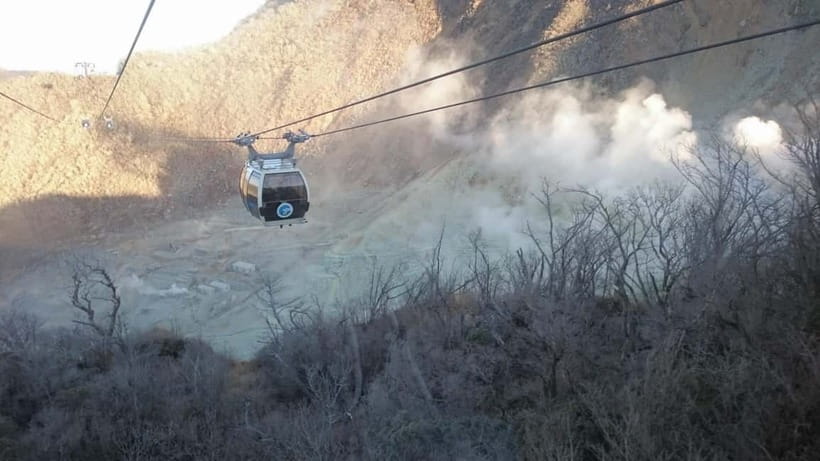
Owakudani is Hakone’s geothermal valley, and it’s one of those stops that’s hard to fake with photos. The tour sets aside about 20 minutes for a visit with a guided tour and sightseeing.
What you’re looking for is the steam rising from active vents. You’ll likely notice the sulfur-scented air too. That smell is not subtle, and it’s part of why the place feels alive. You’re seeing a system that still works.
The guide turns it from a quick viewpoint into a story. You’ll hear cultural context and local traditions tied to this site, which helps you understand why people travel specifically to stand here and watch steam rise.
Here’s how to make this stop work for you:
- Wear comfortable shoes, because you may need to move around to see the vents from different angles.
- Dress warm if it’s cool out. Steam areas can feel colder because of wind and mist.
- Bring a camera, but expect more “atmosphere” than perfect clarity.
This is also the place where a short delay elsewhere can matter. If queues run long on the ropeway, you might feel the time pressure most at Owakudani, since it’s early enough that the rest of the day depends on keeping the flow.
Lake Ashi cruise: torii gates and possible Mt. Fuji framing
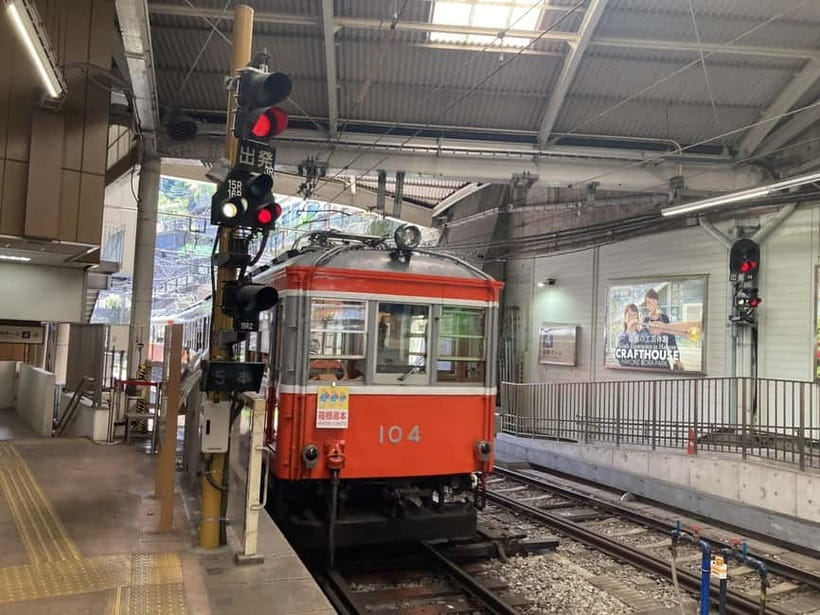
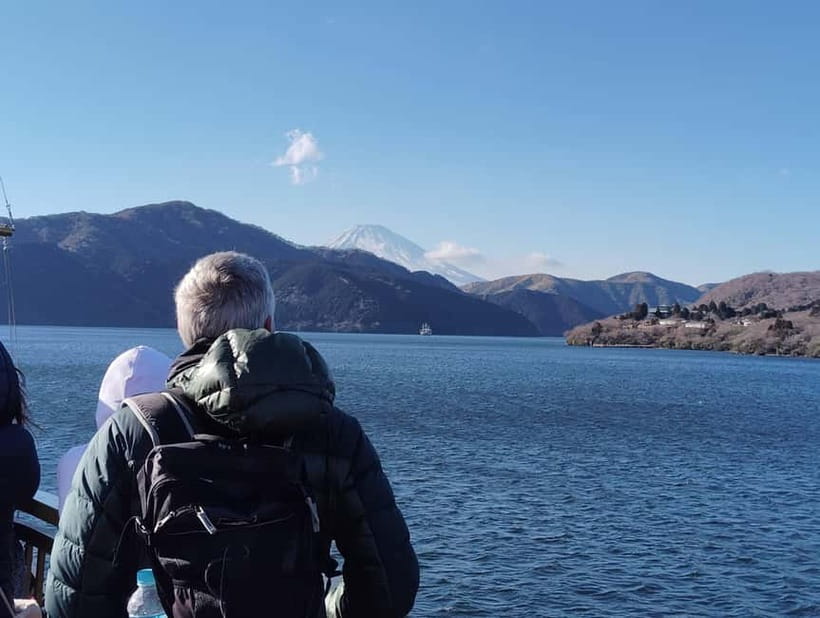
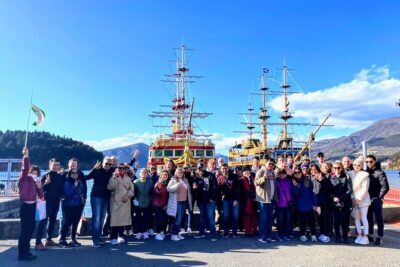
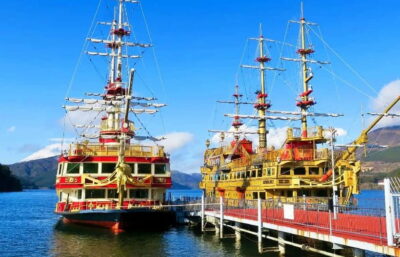
Next up is the water part: a sightseeing cruise of about 50 minutes on Lake Ashi. You’ll also have a short Lake Ashi time window for sightseeing and a guided component.
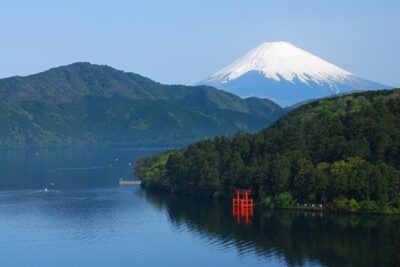
This is where the day softens. After volcanic air and elevated viewpoints, the lake feels calm. The water reflects the hills around it, and the iconic torii gates become the background you didn’t fully appreciate on land.
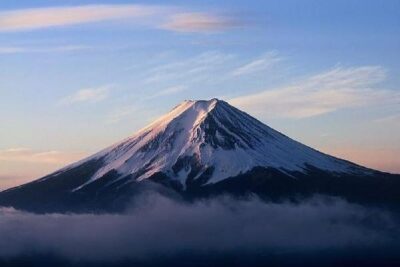
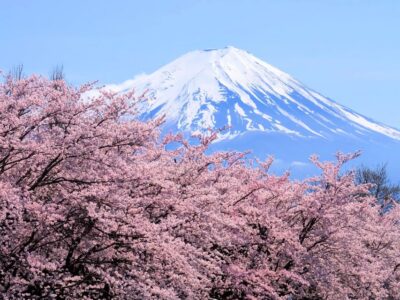
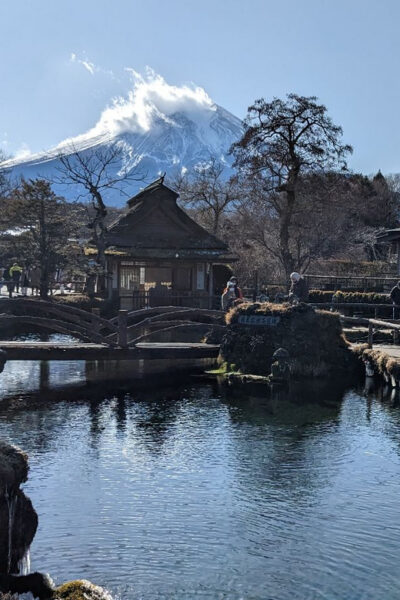
On clear days, Mt. Fuji can appear in the distance, and it’s one of those moments that makes people stop talking for a second. One guide day worked out perfectly for Mt. Fuji, but another didn’t due to cloud cover, so be mentally ready for both outcomes.
Even without Fuji, the cruise is still a win because you get different angles on the same area. You’re not waiting in line for the next transport platform. You’re moving slowly, which makes it easier to enjoy details like shoreline shapes and the way the torii sits in the scene.
A small practical point: Lake Ashi time can be visually bright. Sunscreen helps, and a light layer can be useful if it’s windy.
Hakone Shrine: a cultural pause after the steam and views
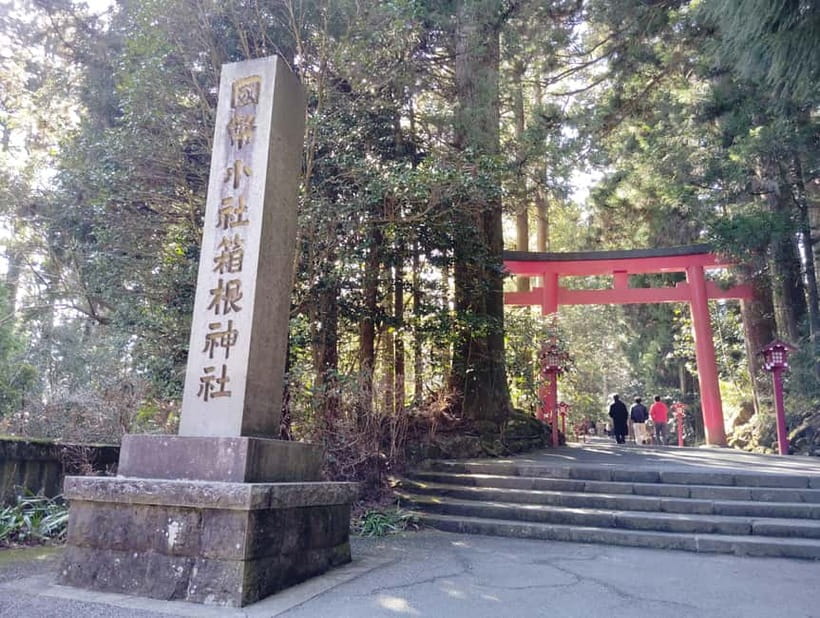
The day ends with Hakone Shrine, about 45 minutes for a guided visit and sightseeing.
This stop is valuable for two reasons. First, it gives you a cultural anchor after all the geology. Second, it’s a calmer moment to slow down and take in the connection between nature and spiritual tradition in Hakone.
If you’re trying to keep the day enjoyable, think of the shrine as your reset button. You’ll likely feel your legs after the ropeway/cable car walking and the stairways around viewpoints, and this is a good time to breathe.
Do plan for crowds. If the earlier transport segments run behind, you might feel rushed here. One experience ended up cutting off shrine time due to ropeway queues, and that’s exactly the trade-off you want to avoid if you really care about the shrine.
Timing, crowd reality, and how to plan for Mt. Fuji odds
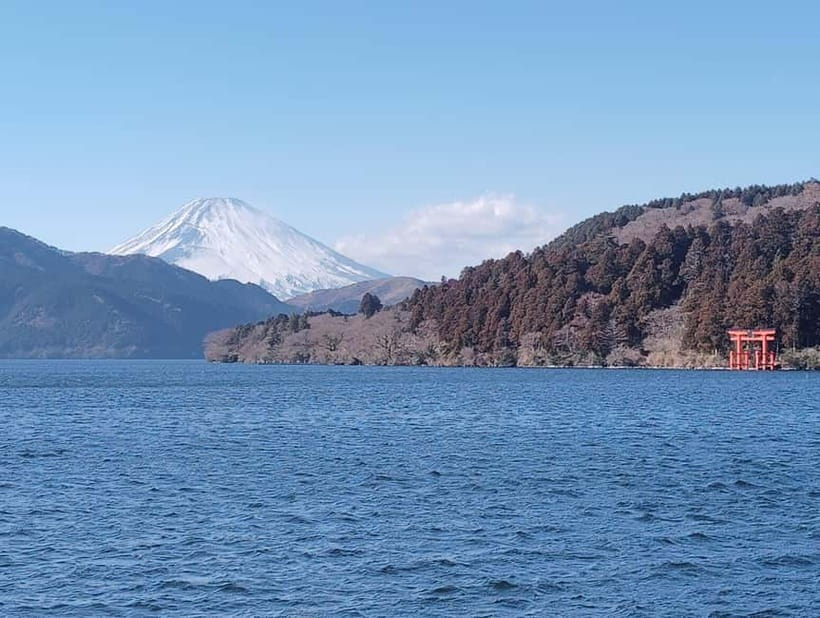
The tour duration is listed as 270 to 570 minutes, so expect the schedule to flex. The main reason is practical: transport changes and lines happen. On at least one Monday, crowds were heavy enough to require queues for ages on the ropeway, which shifted the day later.
So, what should you do with this information?
1) Treat Fuji as a bonus, not a guarantee. Clear weather helps, but cloud cover can erase it.
2) Go for a realistic pace. This is a full-day, multi-transport day. If you want long pauses at each stop, you may feel compressed.
3) If you’re traveling on a high-crowd day, arrive early at the start meeting point. Your buffer reduces stress later.
One more idea that helps: pack for quick weather changes. Warm clothing can matter, and sunscreen matters too. You can move from forest shade to open views to water reflections in one day.
Price, transport fares, and the value question you should ask
At $139 per person, this is not a bargain, and the key issue is that transportation fares are not included. The tour price covers the expert English-speaking guide and the route, but you pay for transport during the day.
That’s why the value argument isn’t simple. If you compare to a self-planned day, you might be able to spend much less. One person noted the tour felt expensive partly because they had to buy train tickets on top of the tour cost, and they suggested a round-trip option could cost about a third of the tour price.
So when does the tour make sense anyway?
It makes sense when you value time and confidence:
- You get an English-speaking guide for the day.
- You cover Hakone’s biggest highlights with guided context at the key stops.
- You avoid route-planning stress across mountain train, cable car, ropeway, and cruise.
- You get a structure that helps you actually see everything without getting stuck at the wrong station.
If you’re a “numbers first” traveler who loves to map routes and buy tickets independently, DIY could be cheaper. If you’re a “day flow first” traveler who wants the calm of not thinking about connections, the guide-led structure can be worth the higher cost.
My advice is simple: before you book, read the details for exactly what you’ll pay for during the day, not just the base tour price. That one step prevents surprises.
Who this guided Hakone day suits best, and who should rethink it
This is best for:
- First-time visitors who want Hakone’s top sights in one guided day
- People who prefer not to deal with transferring between multiple transportation modes
- Anyone who values explanations at Owakudani, Hakone’s historical setting, and the cultural meaning behind the shrine
It may be less ideal if:
- You want lots of free time to wander slowly at each viewpoint
- You’re extremely sensitive to queues, especially around ropeway lines
- You’re counting every dollar and you’d rather do a self-guided plan
Also note the tour states it is not suitable for pregnant women, people with mobility impairments, and people with heart problems. Comfortable shoes are required, and the day includes walking.
One interesting nuance from real experiences: a guide provided assistance for slight mobility issues. That doesn’t override the official “not suitable” note, but it does suggest that guides can be attentive. Still, if you fall into the tour’s listed unsuitable categories, you should look for a different option.
Should you book Hakone Adventure?
If you want a guided, high-hit-rate day and you’re okay paying extra for transport to keep the stress low, I’d say this is a solid booking. You’re paying for structure, an English guide, and a route that hits Hakone’s signature experiences, from Hakone Tozan Railway to Owakudani steam, then Lake Ashi cruise views and Hakone Shrine.
But if you’re budget-focused, verify transport costs carefully. Also check the day you’re going. Crowds and ropeway lines can steal time from later stops, and Mt. Fuji is never guaranteed.
If you’re the kind of traveler who values getting the most out of a single day in Hakone with minimal mental load, book. If you’d rather take control and compare ticket options yourself to cut costs, you may prefer a DIY plan.
FAQ
How long is the Hakone Adventure tour?
The duration is listed as 270 to 570 minutes. Check availability for the specific starting time you select.
What main stops are included in the day?
You ride the Hakone Tozan Railway, then take the cable car and a ropeway above the volcanic area. You visit Owakudani, take a sightseeing cruise on Lake Ashi, and finish with a visit to Hakone Shrine.
Where do you meet and where do you get dropped off?
Meeting points can vary based on your option: 向山公園, 新宿警察署 新宿駅東口交番, 箱根湯本駅, or 小田原駅観光案内所. Drop-off options are 箱根湯本駅 or 新宿警察署 新宿駅東口交番.
Is an English-speaking guide included?
Yes. You’ll have a live English-speaking guide throughout the journey.
Are transport fares and meals included in the tour price?
No. Transportation fares are paid separately during the tour, and food and drinks are not included.
What should I bring, and are there any rules?
Bring comfortable shoes, warm clothing, a camera, and sunscreen. Smoking is not allowed during the tour. The tour also advises arriving at the meeting point 15 minutes before departure.
The Hakone Loop, Reviewed

Newest Hakone write-ups from the Loving Japan desk
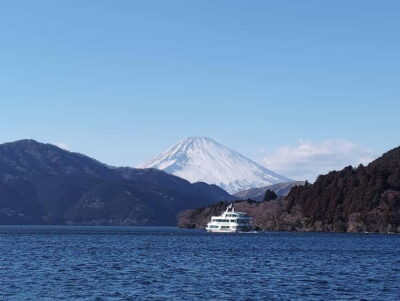
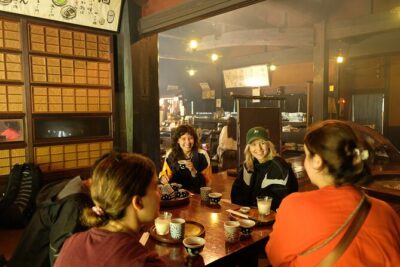
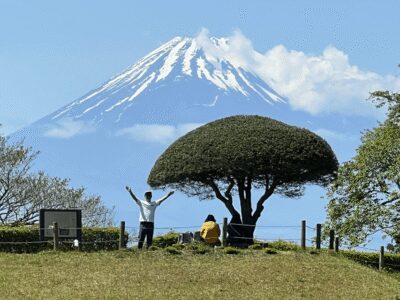
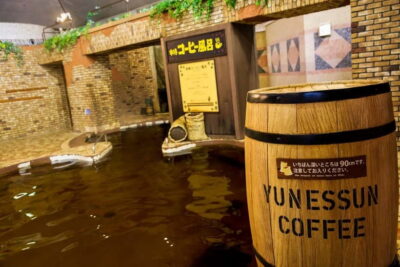
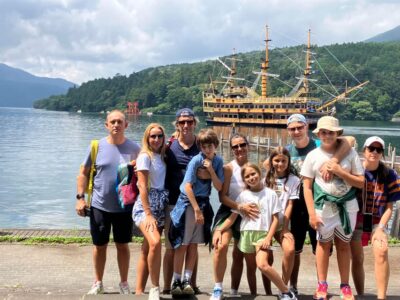
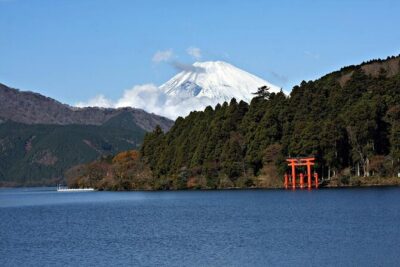
Hakone, Owakudani and Lake Ashi, side by side.
 ★ 5.0Mt Fuji and Hakone 1-Day Bus Tour Return by Bullet TrainFrom $16326,383 reviews
 ★ 4.0Mt Fuji & Hakone Cruise, Drum Show Bullet Train 1 Day from TokyoFrom $1497,413 reviews
 ★ 4.4Tokyo Mt Fuji 5th St & Hakone Cruise Bus Tour w/Bullet TrainFrom $1545,024 reviews
 ★ 4.7Mt. Fuji Tour, Hakone Ropeway, Owakudani, Lake AshiFrom $544,002 reviews
 ★ 4.2Mt. Fuji 5th Station & Hakone Cruise 1-Day Bus TourFrom $1292,381 reviews
 ★ 5.0Private Tour to Mt. Fuji and Hakone (Fully Licenced Operator)From $4971,910 reviews
 ★ 4.0Mt Fuji & Hakone Cruise, Drum Show Bus 1 Day from TokyoFrom $1221,287 reviews
 ★ 4.2From Tokyo: Mt. Fuji & Hakone Tour w/ Return by Bullet TrainFrom $1171,278 reviews
Filed on these lists too