
REVIEW · CYCLING AND E-BIKE TOURS
Half day Osaka Bay Area Cycling with E-Assist Bicycle Tour
Bridges, ferries, and shrine views, in one pedal. An e-assist bike tour like this is a smart way to see Osaka Bay without wrestling train transfers, and I like the small-group feel plus the mix of local ferry crossings and major viewpoints. One thing to keep in mind, though, is that some stretches are close to heavy truck traffic and certain bridge segments can feel steep or tricky.
This half-day ride runs about 4 to 6 hours, starts at 10:00 am, and returns to the meeting spot, with bike and helmet rental taken care of. The tour caps at 3 travelers, and the guide here is Banri, known for pacing people carefully and keeping the route easy to follow.
In This Review
- Why Osaka Bay feels different on an e-bike
- Key points I’d plan around before you go
- Price and time: what you’re really buying for 78.38 USD
- Getting started at the Lawson meeting point
- What the guide does for you, and why it matters on this route
- Stop 1: Sumiyoshi Taisha Shrine, a sea-god landmark near the bay
- Stop 2: Shinkizugawa Bridge, three-stage views and quick photo angles
- Passing film history: the factory district from Black Rain
- Stop 3: Funamachi ferry facilities, a one-minute local crossing
- Stop 4: IKEA Tsuruhama break, with a vegetarian lunch option
- Stop 5: Namihaya Bridge, 360-degree bay-to-city views and a ship channel
- Stop 6: Mt. Tempozan and the Tempozan sights, plus lunch break
- Photogenic expressways, subway lines, and an old-style arcade pocket
- Stop 7: 甚兵衛渡船場, another one-minute ferry with bicycles
- Stop 8: Sensai Bridge, steep bike access and an option to ferry instead
- Stop 9: Sembonmatsu Bridge, the glasses-bridge nickname and the final crossing
- The reality check: traffic, weather, and bike sizing
- Who should book this Osaka Bay ride
- Should you book this tour?
- FAQ
- How long is the Osaka Bay cycling tour?
- What time does the tour start?
- Where is the meeting point?
- Is this tour a small group?
- What is included in the price?
- Is lunch included?
- What stops are on the route?
- Is there an admission fee for the stops?
- What weather conditions can affect the tour?
- What are the physical requirements for riding?
Why Osaka Bay feels different on an e-bike
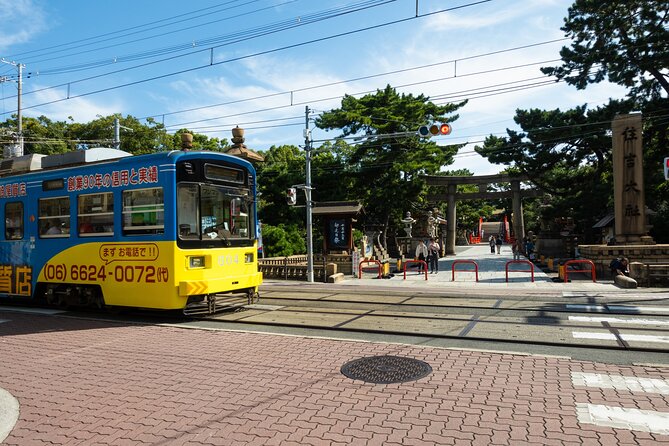
Osaka Bay can look like a single big industrial waterfront from inside a taxi window. On a bike, it becomes something else. You move at street level, you slow down naturally for turns, and the city reveals itself in layers: shrine grounds, working districts, ferry piers, and bridges designed to keep ships flowing.
The big practical win is that the guide handles navigation. You are not trying to read maps, translate stop names on the fly, or guess which side street leads where. You just ride, stop, look, and take photos when the view opens up.
This also keeps your day efficient. For the price (78.38 USD per person), you are paying for guided route planning, an e-assist bicycle and helmet, and basic comfort items like bottled water. In a city where renting a bike and figuring out a safe route can be its own little project, that bundled approach adds up.
One more value point: you are not stuck only in the headline tourist zone. The route leans toward areas most visitors skip, including manufacturing pockets and ferry facilities that are used by locals.
Cover Osaka on two wheels instead
- 5-Hour Osaka Bike Tour to the Neighborhood of Osaka Castle
★ 5.0 · 319 reviews - Eat, Drink & Cycle: Osaka Foodie Bike Tour
★ 5.0 · 224 reviews - Osaka E-Bike Tour with a Local Guide
★ 5.0 · 219 reviews - 5-Hour Osaka Highlights Bike Tour with Lunch
★ 4.8 · 146 reviews
Key points I’d plan around before you go
- Small group (max 3 travelers) means more attention when roads get steep or traffic feels busy.
- E-assist support makes a half-day circuit more realistic, even if your legs are not marathon-ready.
- Local ferry facilities are short rides, about one minute each, and you can cross as a pedestrian and bicycle.
- Famous bridge viewpoints combine photos with real structure, including a channel bridge with 47 m clearance for ships.
- Lunch choices are built in: Japanese diner in Tempozan for most, IKEA Sweden food market option for vegetarians.
Price and time: what you’re really buying for 78.38 USD
At 78.38 USD, you are not just paying for a bike. You are paying for a guided route that strings together multiple “types” of Osaka Bay scenery in a single block of time.
You also get predictability. The tour runs 4 to 6 hours, starts at 10:00 am, and ends back at the same meeting point. For half-day tours, predictability matters. It lets you plan dinner or the rest of your Osaka time without a big guessing game.
Is it a lot to spend for a short ride? It depends on your travel style. If you enjoy route-hunting and building your own plan, you might feel boxed in by a fixed itinerary. If you want your energy spent on seeing things, not solving logistics, this is good value.
And based on past guest experiences shared with me, the ride length lands around the high 20s in kilometers on days like this. That is a fun workout when you have e-assist helping you along the busier stretches.
Getting started at the Lawson meeting point
You meet at Lawson Tamadenaka 2-chome 2-chōme-6-12 in Nishinari Ward, Osaka. The start time is 10:00 am, and the tour ends back at the meeting point.
You’ll want to arrive a few minutes early so you can get fitted with the bicycle and helmet without feeling rushed. The tour uses an e-assist bike setup, but the exact feel can vary by rider size, which brings me to a key practical consideration: the bicycle may be too small if you are over 180 cm tall.
There are also clear body requirements. You should have a moderate physical fitness level, you must be able to ride a bicycle, the minimum height is 140 cm, and the maximum weight is 90 kg. If you are outside those limits, the experience will not be a good fit.
- Hungry Osaka Street Food Tour:15 Tastings & 3 Drinks with a Local★ 5.0 · 1,727 reviews
- Osaka: Tea Ceremony Experience★ 4.9 · 1,426 reviews
- Osaka Kickstart: Hotspots & Hidden Gems Tour★ 5.0 · 1,306 reviews
- Osaka: Hotspots & Hidden Gems Walking Tour Private or Group★ 4.9 · 1,300 reviews
- Deep Backstreet Osaka Tours (Option to add Dinner)★ 5.0 · 1,290 reviews
What the guide does for you, and why it matters on this route
Banri is the guide behind this tour. The role matters more than usual because the route includes steep spots, busy road areas, and crossings where it helps to know exactly where to stand and how to proceed.
What I like about the guiding style described for Banri is the patience. When your route includes tricky access points to bridges, being rushed is the enemy. A careful guide keeps the group together and makes it easier for you to enjoy the scenery instead of worrying about timing.
The route also gives you story, not just stops. You’re riding through places with recognizable functions and local rhythm, like working districts and ferry facilities used by residents. That context makes the photos look better later because you remember what you were actually seeing.
Stop 1: Sumiyoshi Taisha Shrine, a sea-god landmark near the bay
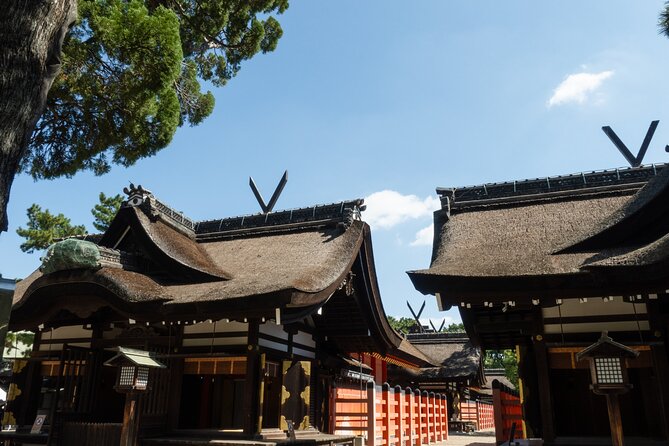
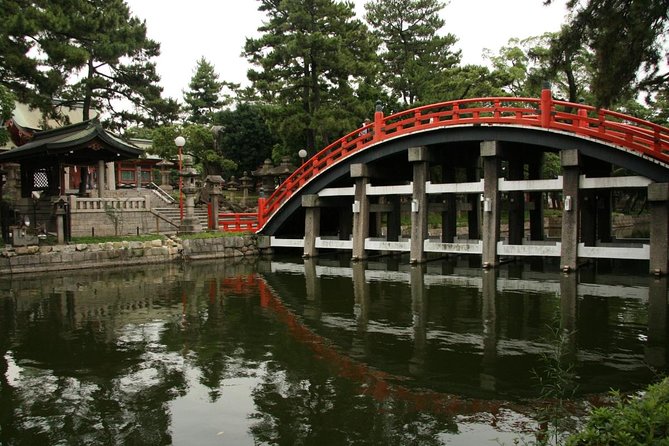
The ride begins with Sumiyoshi Taisha Shrine, a site with nearly 2,000 years of history. This shrine enshrines the three gods of the sea, and the main building is designated a Japanese national treasure.
The stop is about 30 minutes, and admission is free. That matters, because it lets you take in the atmosphere without feeling like you are racing the clock. If you like understanding why a place matters, this one gives you a strong starting point. The sea theme connects nicely to what you’ll see later at bridges and ferries.
Practical note: shrine grounds can involve walking surfaces that are not flat everywhere. Wear comfortable clothes that let you move easily once you dismount.
Stop 2: Shinkizugawa Bridge, three-stage views and quick photo angles
Next up is Shinkizugawa Bridge, with roughly 20 minutes on the stop. This is a picture-friendly bridge because you can get a view toward Tennoji and the Ikoma Mountains in the background.
The bridge includes a descent of a three-stage loop, which is the kind of detail that makes a bike stop feel more than just a quick overlook. You’re not only looking at structure, you’re experiencing how it shapes movement.
Again, admission is free, so you can take time for photos without feeling like you are paying for the right to stand there.
Passing film history: the factory district from Black Rain
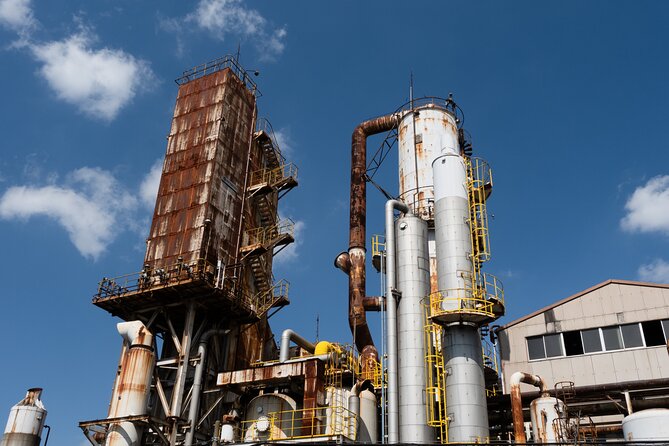
Between bridges, you pass through a factory district that appeared in Ridley Scott’s film Black Rain. Even if you are not a film fan, it is a striking reminder that Osaka Bay is not only about temples and views.
This kind of transit moment can be underrated. You get to see how the city actually works, with industrial buildings and practical space, not just “pretty” tourism zones.
Stop 3: Funamachi ferry facilities, a one-minute local crossing
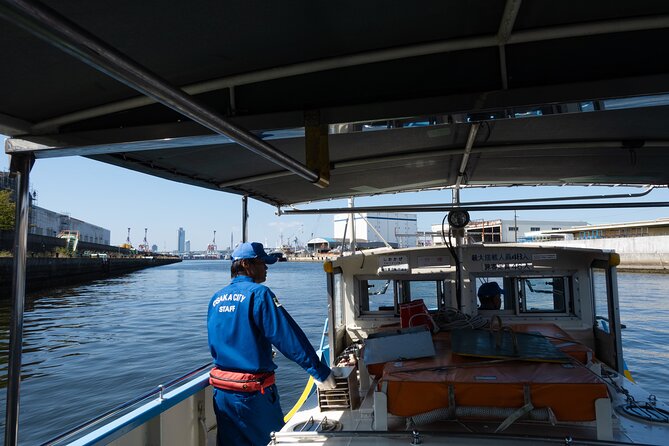
Then you hit Funamachi Ferry Facilities for a short crossing, about 10 minutes total, and admission is free. This ferry is operated by Osaka City and used only by locals.
The key detail is the scale of the crossing. It’s a very short boat trip, about one minute, and it’s for bicycles and pedestrians only.
This is exactly the kind of stop you would never plan for on your own unless you already knew the local routes. It turns the bay into something you participate in rather than something you look at from a bridge.
Stop 4: IKEA Tsuruhama break, with a vegetarian lunch option
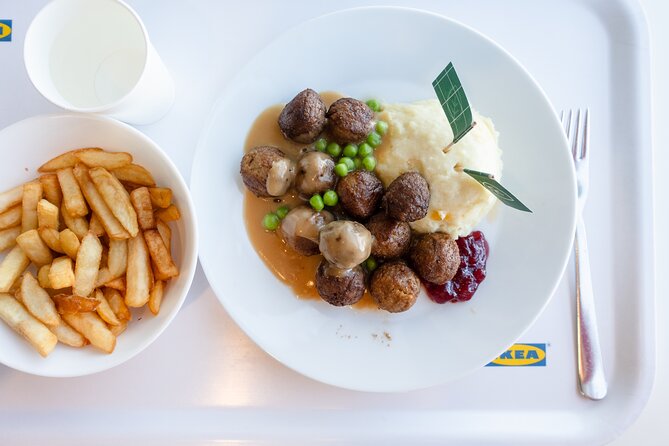
You get a break at IKEA Tsuruhama for about 15 minutes. Admission is free, and there is a specific vegetarian lunch option mentioned: the Sweden food market at IKEA.
For non-vegetarians, your lunch is handled later at Tempozan in a Japanese diner. That means this stop is more about resetting your energy, grabbing water or a snack, and getting your body ready for the rest of the ride.
Stop 5: Namihaya Bridge, 360-degree bay-to-city views and a ship channel
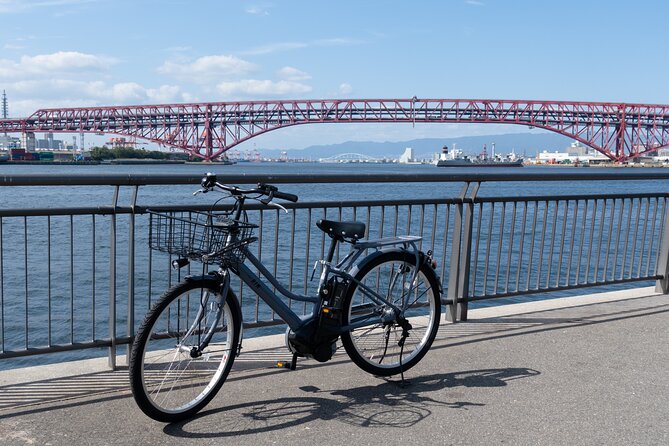
Namihaya Bridge is about 20 minutes, and admission is free. The highlight here is the view. It’s positioned almost in the middle of the bay area and offers a 360-degree view of the Osaka city area.
There’s also a practical engineering point: ships pass through a channel with a height of 47 m above the water. It’s not abstract. You can stand on a bridge and understand why these structures exist, because the maritime system is right there.
This is also a good stop to slow down and just look. On a bike ride, it’s easy to stay in motion. Namihaya is a place that rewards taking your time.
Stop 6: Mt. Tempozan and the Tempozan sights, plus lunch break
You’ll reach Mt. Tempozan for about 40 minutes. Admission at this stop is not included, and lunch is not included as well.
This is where you’ll eat. The plan is either a Japanese diner in Tempozan, or for vegetarians, the IKEA Sweden food market option.
What makes Tempozan fit into this route is what you pass on the way there and around it. The route mentions the aquarium Kaiyukan, a Ferris wheel, and Tadao Ando architecture. Tempozan is also famous for cherry blossoms in spring, so depending on when you go, you might catch some seasonal color.
One more useful detail: this stop functions like a midpoint reset. After bridges and ferries, you’ll probably appreciate the time to sit, eat, and take a breather before the later river crossings.
Photogenic expressways, subway lines, and an old-style arcade pocket
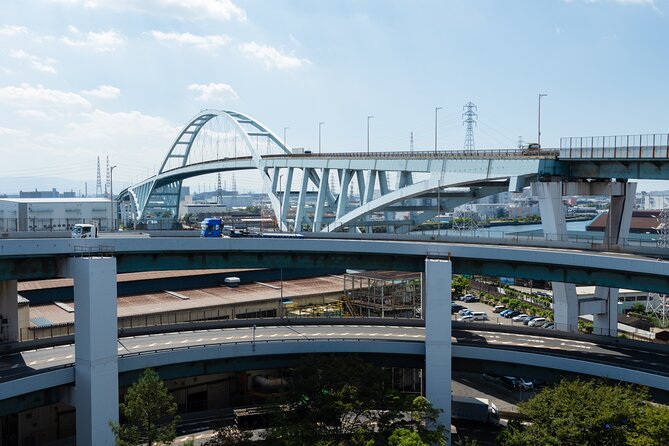
After the Tempozan break, you stop at a photogenic intersection where three expressways cross and subway tracks also intersect. The architecture at the piers is described as intricate, and it’s a great spot for photos because the geometry is so different from shrine views.
Then there is a stop at an old-style Japanese arcade shopping center. This is another one of those “small detours that change your perception of the city.” You get a glimpse of everyday shopping streets, and the ride keeps feeling grounded in local life rather than only scenic viewpoints.
Stop 7: 甚兵衛渡船場, another one-minute ferry with bicycles
Next comes 甚兵衛渡船場 (大正区泉尾側) for about 10 minutes. Admission is free.
This is also an Osaka City ferry used only by locals. It’s again about a one-minute trip for bicycles and pedestrians only.
By the time you reach this point, the ferries stop being a novelty and start feeling like part of the route logic. They are practical connections across waterways, and they help you avoid having to muscle along where bicycle roads might be awkward.
Stop 8: Sensai Bridge, steep bike access and an option to ferry instead
At Sensai Bridge, the bicycle road is described as steep. The route advice here is useful: you can take the ferry instead of handling the steep bicycle segment.
This is where an e-bike and a patient guide earn their keep. Even with assist, steep sections can feel intense if you are not used to hills. The ferry option gives you a way to keep the day enjoyable.
This stop is about 15 minutes and admission is free.
Stop 9: Sembonmatsu Bridge, the glasses-bridge nickname and the final crossing
The ride ends at Sembonmatsu Bridge for about 15 minutes, with admission free. This is a unique Osaka bridge because it crosses the Kizu River, which connects toward Dotonbori.
Locals nickname it Megane-bashi, meaning glasses bridge, because the shape resembles a pair of glasses. That kind of local nickname is exactly why the route is satisfying. You learn how residents see their city, not only how guidebooks categorize it.
It’s a fitting finish for a tour that mixes old shrine space, working districts, and modern city infrastructure. You’re ending with a structure that feels both functional and playful.
The reality check: traffic, weather, and bike sizing
This tour is built for comfort and good pacing, but you should go in with eyes open.
Roads can be heavily trafficked by large trucks. If you are concerned about air quality, the tour notes that you should prepare a mask and eye drops. That is practical advice, not worry for worry’s sake, because you are riding outdoors along roads where exhaust exposure could happen.
Rain also matters. The tour can be canceled if the rain probability is 40 percent or more. If it’s canceled due to poor weather, you’ll either be offered a different date or a full refund.
Bike sizing is another real-world factor. Since the bicycle may be too small for riders over 180 cm, you should check fit during pickup. The small-group size helps here because the guide can adjust and support you if something feels off.
Who should book this Osaka Bay ride
This is a good fit if:
- you want a half-day plan that’s already mapped for you
- you like the idea of mixing big viewpoints with local ferry moments
- you want an e-assist bike day without needing to be a road cycling expert
It might not be the best fit if:
- you dislike traffic-adjacent routes, even with a mask option
- you are very sensitive to steep segments and want zero hill effort (there are steep areas, though there are ferry alternatives in at least one spot)
- you are outside the basic ride requirements, like being above the 180 cm range where bike fit may be an issue
Should you book this tour?
If you want an Osaka Bay day that feels like local movement, not tourist teleportation, I think this is worth booking. The standout value is the blend of guided ease, e-assist support, and the small ferry crossings that show you how people actually get around the water.
For me, the biggest reasons to say yes are the route’s variety, and the fact that the guide Banri is described as patient and helpful, which matters a lot when the route includes steep or tricky access points. Just come prepared for two realities: truck traffic in parts of the ride, and possible weather cancellation if rain probability gets high.
If that sounds okay, you’ll likely come away with a half-day that feels both efficient and genuinely different from the typical Osaka checklist.
FAQ
How long is the Osaka Bay cycling tour?
It runs about 4 to 6 hours.
What time does the tour start?
The start time is 10:00 am.
Where is the meeting point?
You meet at Lawson Tamadenaka 2-chome 2-chōme-6-12 Tamadenaka, Nishinari Ward, Osaka 557-0044, Japan.
Is this tour a small group?
Yes. The maximum group size is 3 travelers.
What is included in the price?
Bike use, helmet, and bottled water are included.
Is lunch included?
No. You’ll have lunch either at a Japanese diner in Tempozan, or for vegetarians at the Sweden food market of IKEA.
What stops are on the route?
You’ll pass places including Sumiyoshi Taisha Shrine, Shinkizugawa Bridge, Funamachi Ferry Facilities, IKEA Tsuruhama, Namihaya Bridge, Mt. Tempozan, an expressway/subway intersection photo stop, an old-style Japanese arcade shopping center, 甚兵衛渡船場, Sensai Bridge, and Sembonmatsu Bridge.
Is there an admission fee for the stops?
Most stops list admission as free. Mt. Tempozan is listed as admission ticket not included, and lunch is also not included.
What weather conditions can affect the tour?
The tour may be canceled if rain probability is 40 percent or more. If canceled due to poor weather, you’ll be offered a different date or a full refund.
What are the physical requirements for riding?
You should have moderate physical fitness. You must be able to ride a bicycle. The minimum height is 140 cm and the maximum weight is 90 kg. The bicycle may be too small for people over 180 cm tall.
Bicycles and E-Bikes We Have Ridden
Newest Osaka write-ups from the Loving Japan desk

Cycling and E-Bike Tours, side by side.
 ★ 5.0Hidden Kyoto E-Biking tourFrom $1161,843 reviews
 ★ 5.0Tokyo Guided Small-Group Biking TourFrom $1061,250 reviews
 ★ 5.0Tokyo Great Cycling TourFrom $99811 reviews
 ★ 5.0Tokyo Top Highlights 3h Guided E-bike TourFrom $63714 reviews
 ★ 5.03h Tokyo E-Bike Tour: Hidden Gems, and Local Life with guideFrom $63670 reviews
 ★ 5.0Arashiyama Bamboo Forest & Hidden Gems Bike Tour (Early Bird)From $106613 reviews
 ★ 5.05 Top Highlights of Kyoto Full Day Bike Tour (E-bike option)From $172511 reviews
 ★ 5.0Full Day Biking Tour Exploring the Best of KyotoFrom $119498 reviews
Filed on these lists too