
REVIEW · HIROSHIMA AND MIYAJIMA DAY TRIPS
Half Day Private Guided Walking Tour in Hiroshima City
History here feels personal fast. On this 4-hour private walk in Hiroshima, I love how Pancho, the son of an A-bomb survivor, ties each landmark to family memory and real human details, not just dates. I also like the hands-on touch, origami crane making, which helps your brain switch from shock to reflection.
There is one thing to consider. At $200 per person, this is pricier than doing Hiroshima Peace Park on your own, so you’ll want to be sure you value a guided, emotional interpretation over saving money.
In This Review
- Key highlights worth planning around
- A private 4-hour walk in Hiroshima City, with Pancho leading
- Meet-up options and how the day flows
- Hiroshima Station to Shirakami Shrine: start with a quiet but pointed beginning
- Hypocenter Monument and Saiko-ji Temple: where evidence meets emotion
- Atomic Bomb Dome to Peace Flame: the memorial center, explained with restraint
- Lunch near Peace Memorial Park: you recharge without leaving the story
- Peace Park survivor building and origami: learning that stays human
- Children’s Peace Monument to Cenotaph for Atomic Bomb Victims: stories that shape your takeaway
- Why Pancho’s family perspective makes the difference
- Price and value: $200 per person, and what you get for it
- Who this Hiroshima tour fits best, and who should skip it
- Should you book this half-day private Hiroshima walk?
- FAQ
- How long is the Hiroshima City half-day private walking tour?
- Is this tour private or shared?
- Who is the guide?
- What is included in the price?
- What is not included?
- Is public transportation part of the plan?
- Where will the guide meet us?
- Do I need to pay for the Peace Memorial Museum?
- What is the cancellation policy?
Key highlights worth planning around
- A guide with family ties to the A-bomb, speaking with first-person weight and careful context
- Peace Park on foot in a focused half-day, so you do not burn your daylight
- Real survivor-era landmarks, including a surviving building now used for visitor info and small exhibits
- Origami and Q&A that keep the tour from becoming only lecture-mode
- Lunch near Peace Memorial Park with options suggested for different diets
Pairing the city with Miyajima. Other itineraries
- Hiroshima: Hiroshima and Miyajima UNESCO Sites 1-Day Tour
★ 4.9 · 2,330 reviews - Hiroshima / Miyajima Full-day Private Tour with Government Licensed Guide
★ 5.0 · 1,298 reviews - Hiroshima Historical Walking Tour – Why A-Bomb was Dropped
★ 4.8 · 893 reviews - Hiroshima Peace (Heiwa) Walking Tour at World Heritage Sites
★ 5.0 · 872 reviews
A private 4-hour walk in Hiroshima City, with Pancho leading
This tour is built for people who want a Hiroshima day that feels intentional. You get a half-day format, about four hours, and it stays private, meaning your group is the only group on the walk. That matters here, because the topic is heavy and you may want to ask questions without feeling rushed.
Your guide is Pancho, a certified English-speaking guide. His role is not just interpreting history, he brings his family connection to the A-bomb, and that changes the tone from sightseeing to something closer to learning how people lived through it and what they chose to protect afterward.
There is also a practical benefit: you use a mobile ticket, so you are not juggling paper while walking around a busy central area.
Meet-up options and how the day flows
You will meet Pancho at one of several set locations. If you arrive by shinkansen, the tour lists the bullet train platform in Hiroshima Station as a meetup option. If you are staying nearby, there is also a reception at your hotel option.
Most people can participate, and the tour is near public transportation. The route is a walking tour through Hiroshima’s core, so wear shoes you trust. Also, plan for a day where you may stop for short photo moments and brief museum-like views, then keep moving.
If you prefer a more direct route, private transportation is optional at additional cost. Public transportation is listed too, at about $4 per person, which gives you an idea of the day’s baseline transit cost if you are moving by train or tram.
Hiroshima Station to Shirakami Shrine: start with a quiet but pointed beginning
The first moment you get is at Hiroshima Station, where the tour anchors you in the geography of the city. It is a smart start because it sets you up for the fact that today’s Hiroshima is both modern and scarred. From the train area, you can more easily picture how the city functions around the memorial zone.
Next comes Shirakami Shrine, a stop built around a specific local connection to why Hiroshima became an A-bomb target. You also get to see survived trees from the bombing, which is one of those details that hits different in person. A photo can show damage, but a living, resilient tree makes the story feel like it continues.
If you are the type who likes symbolism, this shrine stop delivers. It looks like a shrine you might see elsewhere, but the background is not generic. It is part of what makes this tour feel more personal than a standard Peace Park script.
- Hiroshima Peace (Heiwa) Walking Tour at World Heritage Sites★ 5.0 · 872 reviews
- Hiroshima in a Nutshell: Morning Bike Adventure★ 5.0 · 524 reviews
- Hiroshima City 4hr Private Walking Tour with Licensed Guide★ 5.0 · 437 reviews
- From Hiroshima: Hiroshima & Miyajima 1 Day Tour with Lunch★ 4.7 · 395 reviews
- Japanesel Archery Experience HIROSHIMA CASTLE SHARAKU★ 5.0 · 387 reviews
Hypocenter Monument and Saiko-ji Temple: where evidence meets emotion
The Hypocenter Monument is short but direct. You stop at the ground-level point associated with the atomic bomb, take a photo afterward, and that brief pause gives you a physical reference for what you just read and what you are about to see next.
Then you head to Saiko-ji Temple, where the tour focuses on evidence of the blast and heat. This is one of the stops that tends to feel intense, because it is not only about memory, it is about scale and impact. You get to see how huge the heat and blast were when the bomb exploded, plus some evidence tied to what happened.
A practical note for your pacing: these two stops are the kind where you will want a few quiet moments. If you rush through them, you miss what the guide is doing with the timing, connecting the sites in a way that makes the overall arc make sense.
Atomic Bomb Dome to Peace Flame: the memorial center, explained with restraint
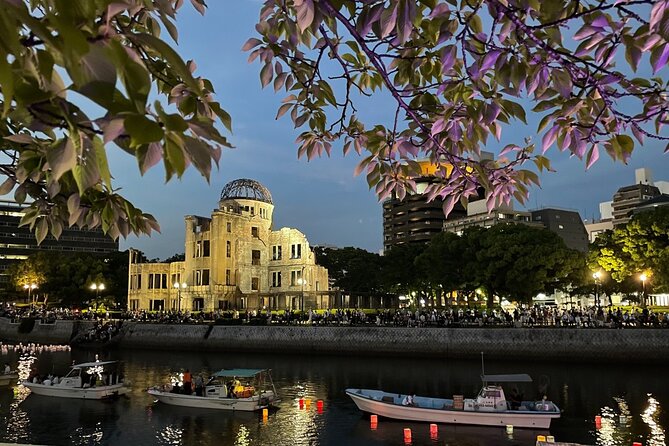
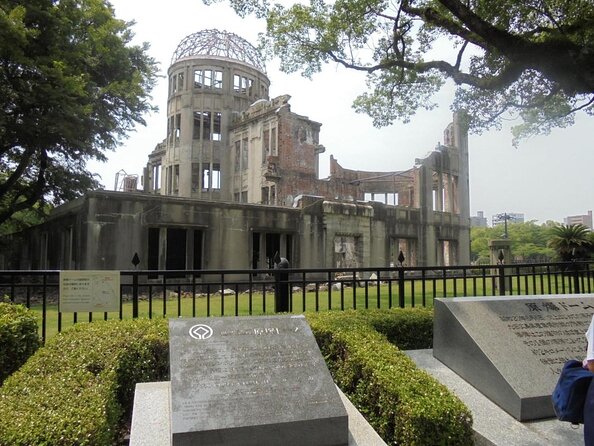
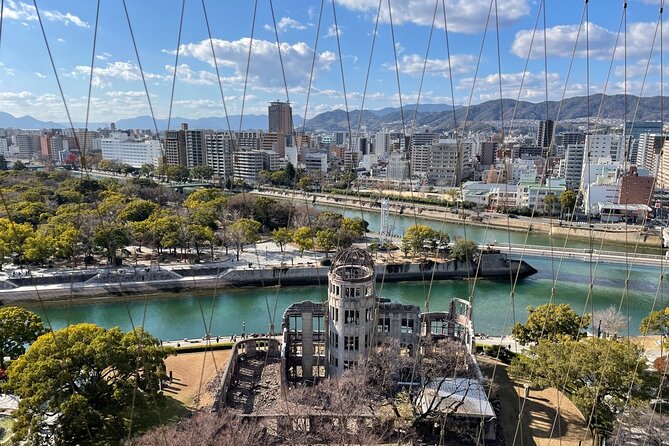
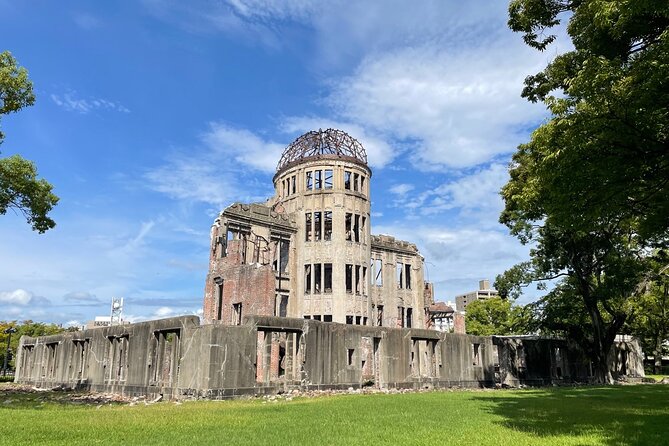
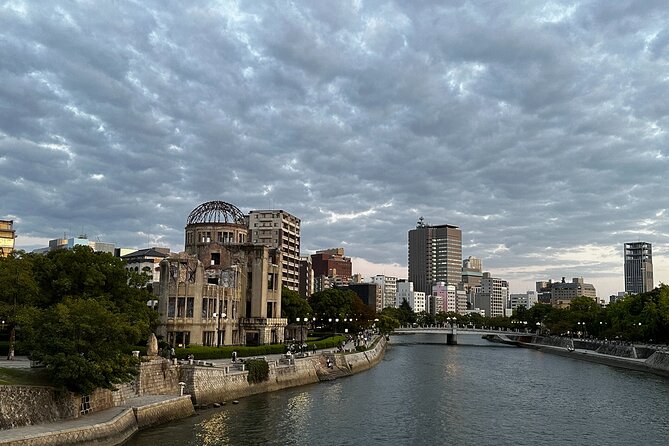
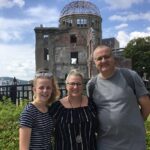
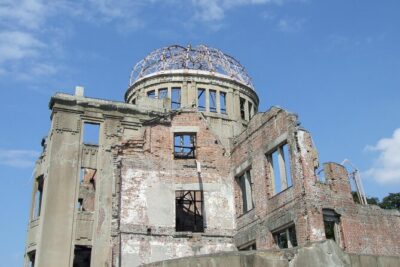
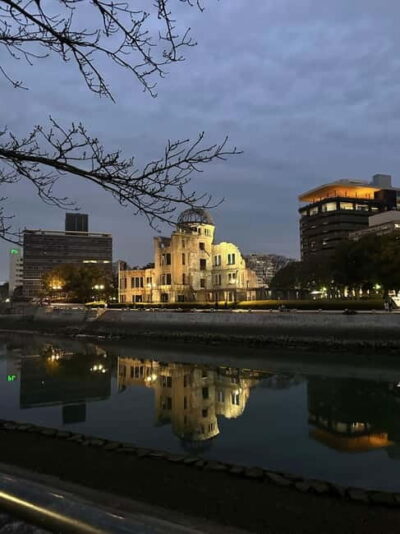
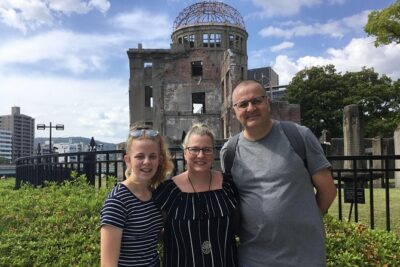
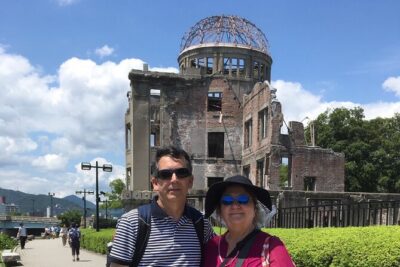
The Atomic Bomb Dome is the best-known stop in Hiroshima for a reason. You stop and spend time looking at it as a reminder of what happened, and you get context that helps you understand why it became such a visual symbol for the world.
Right after, you visit the Peace Flame. This is a small stop in terms of time, about five minutes, but it carries a big idea. The guide explains what the flame represents and why it is kept burning, which is the kind of detail that you cannot always spot on your own.
What I appreciate is that the tour does not just tell you where to look. It helps you notice what to notice, so your photos feel more like records than trophies.
Lunch near Peace Memorial Park: you recharge without leaving the story
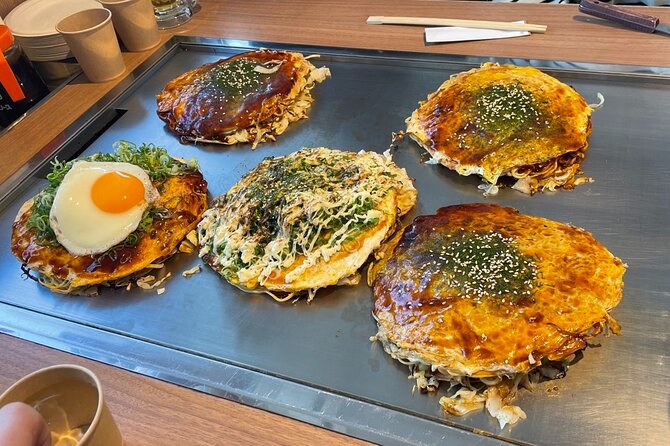
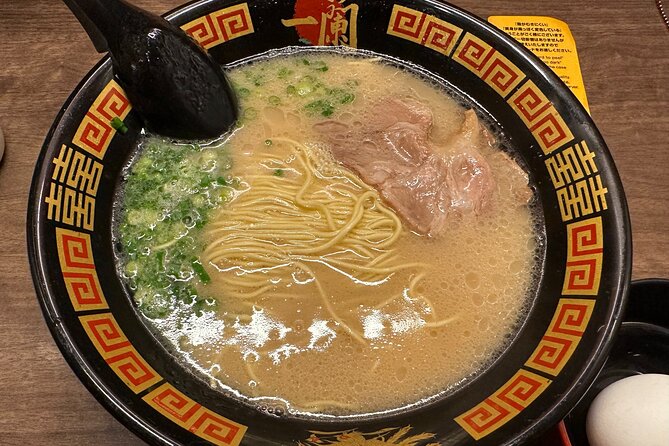
You get a lunch break near Peace Memorial Park. The tour includes time for you to eat, but lunch itself is not included. The good part is that the guide introduces local restaurant options based on what people want, including Hiroshima-style okonomiyaki, ramen, and sushi.
The tour also calls out dietary support, with options for vegetarian, vegan, and gluten-free needs. That is not a trivial detail, because a day built around solemn sites can go sideways if you cannot find food you can handle.
If you want a practical strategy: eat somewhere your guide recommends, then return with an appetite for the next few monuments. You will still be thinking about the A-bomb, but food keeps you steady enough to process it.
Peace Park survivor building and origami: learning that stays human
One of the most thoughtful parts of the experience is the Rest House of Hiroshima Peace Park. This building is described as one of the surviving buildings from the A-bomb, now used for visitor information and a small museum. That blend matters, because you get both a place to orient yourself and a structured way to understand what you are seeing.
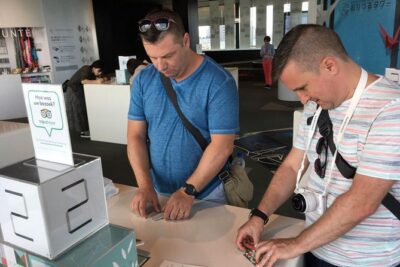
The tour experience also includes an origami component. In the guide’s own words and approach, it is more than craft time, it is part of how the tour turns sorrow into something actionable: a small ritual of care and persistence. Several people also highlight the Q&A aspect as what makes the day feel alive, not like a script read at walking speed.
Timing-wise, you only spend about 15 minutes here, so treat it like a concentrated stop. You can absorb more by asking one or two questions rather than trying to read everything on your own.
Children’s Peace Monument to Cenotaph for Atomic Bomb Victims: stories that shape your takeaway
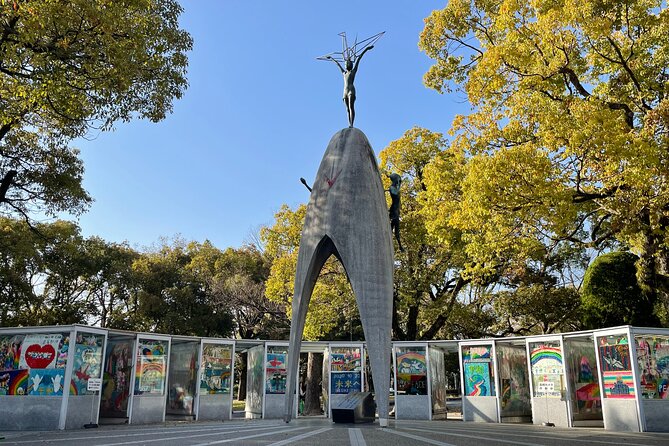
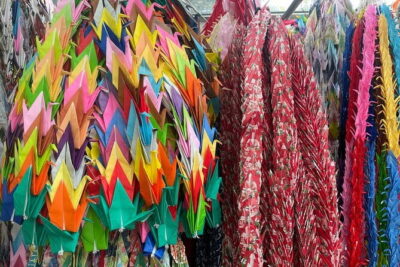
The tour then moves to the Children’s Peace Monument. You stop at a monument connected to the story of a girl who tried to fold a paper crane, hoping to recover from leukemia, shaped by a Japanese belief in the meaning of paper cranes.
This is one of the stops where the guide’s family perspective can make the city feel closer. You are not just seeing a memorial object, you are hearing a way people made hope out of something fragile.
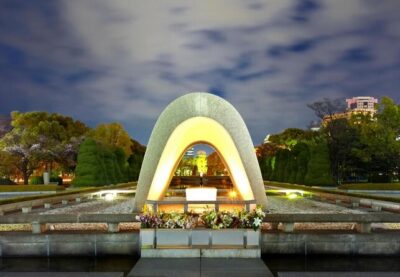
Finally, you reach the Hiroshima Peace City Monument, the Cenotaph for the Atomic Bomb Victims. You see the cenotaph and learn the history, the reason for its shape, and its meaning. The guide also shares the design concept so you are not left guessing what you are looking at.
If you are prone to museum fatigue, this ending can still work because it ties together what you saw earlier. You can leave with a clearer sense of the purpose behind the memorial architecture and the message Hiroshima wants carried forward.
Why Pancho’s family perspective makes the difference
A guided walk is useful in any big city. Here, it is not just about interpretation, it is about viewpoint. Pancho leads the tour as the son of an A-bomb survivor, and that personal connection comes through in how he explains each site.
From the feedback I learned, the best moments are not only the facts, they are the small human details: how family experience connects to city landmarks, and how Q&A keeps the tour from becoming one-direction listening. People also mention how Pancho helped them with coordination, including text communication and exchanging photos to make meet-up easier in tricky spots like a pier scenario.
That kind of care matters more than people think. When you feel confident you will find your guide, you can focus on the experience instead of stress.
Price and value: $200 per person, and what you get for it
At $200 per person for a half-day private tour, this is a serious spend. The value comes from several places that add up in a day like Hiroshima.
First, you are paying for the guide fee, not just a generic route. Second, you are getting a private format, which usually costs more but helps the guide respond to your pace and questions. Third, the emotional and interpretive content is the main product here, and Pancho’s family connection is the core reason people book.
Important costs are not included. Lunch is excluded, and public transportation is listed separately at about $4 per person. The Peace Memorial Museum entrance fee is also listed as ¥200 per person, so if you want that museum component during your day, plan for that extra cost.
Optional private transportation may add more cost if you do not want to use public transport. If you are traveling as a pair or small group, you can compare the total against taxi costs and decide what feels less tiring.
One more practical reality: this tour is booked about 108 days in advance on average. That is a sign it is popular, especially among people who want a guided, personal approach.
Who this Hiroshima tour fits best, and who should skip it
This tour suits you if you want the Peace Park area and key memorial sites explained with sensitivity and family-level context. It is a good pick for people who prefer a structured route, a guide who can answer questions, and a day that stays within roughly four hours.
It also fits families who can handle emotional content. The pace is short and focused, and you get stops like the Children’s Peace Monument and origami that help make meaning more accessible.
You might want to skip or choose a lighter tour style if you are trying to keep Hiroshima as a low-cost day, or if you personally do not want a guide-led focus on the A-bomb sites. The subject is solemn by design, and this is not a casual walking tour for distraction.
Should you book this half-day private Hiroshima walk?
Yes, you should book it if you want a guided Hiroshima day that connects landmark facts to human stories, delivered by Pancho, the son of an A-bomb survivor. The combination of short memorial stops, a surviving building visit, and the origami and Q&A moments is a strong mix when you want meaning, not just sights.
If you can afford $200 per person and you are comfortable with emotionally heavy history, this is a high-value way to spend a half day. If budget is tight, or you know you want only self-guided roaming, then do the area at your own pace and save this kind of guided interpretation for another trip.
FAQ
How long is the Hiroshima City half-day private walking tour?
The tour is approximately 4 hours.
Is this tour private or shared?
It is private. Only your group participates.
Who is the guide?
The tour is led by Pancho, a certified English guide. He is the son of an A-bomb survivor.
What is included in the price?
The guide fee is included. The tour also uses a mobile ticket.
What is not included?
Lunch is excluded. Entrance fees are not included, including the Hiroshima Peace Memorial Museum at ¥200 per person. Public transportation is also not included (listed as $4 per person). Private transportation is optional and costs extra.
Is public transportation part of the plan?
Public transportation is listed as about $4 per person, and the tour is described as near public transportation. Private transportation is optional if you want to take a taxi from your hotel or Hiroshima Station.
Where will the guide meet us?
The tour lists multiple meetup options. One option is the bullet train platform in Hiroshima Station if you arrive by shinkansen. Another option is reception at your hotel. You will receive confirmation within 48 hours, and it will specify your meetup details.
Do I need to pay for the Peace Memorial Museum?
Yes. The Hiroshima Peace Memorial Museum entrance fee is listed as ¥200 per person and is not included.
What is the cancellation policy?
Free cancellation is available. You can cancel up to 24 hours in advance of the experience start time for a full refund. Changes within 24 hours are not accepted, and refunds are not provided if you cancel less than 24 hours before the start time.
Hiroshima and Miyajima Together
Newest Hiroshima write-ups from the Loving Japan desk
Hiroshima and Miyajima Day Trips, side by side.
 ★ 5.0Peaceful Hiroshima & Miyajima UNESCO 1 Day Bus TourFrom $1295,309 reviews
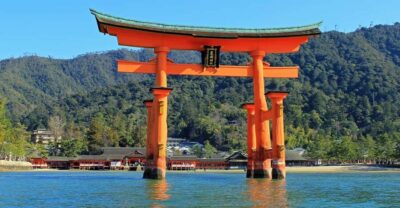 ★ 4.9Hiroshima and Miyajima UNESCO Sites 1-Day TourFrom $1222,330 reviews
 ★ 5.0Hiroshima / Miyajima Full-day Private Tour with Government Licensed GuideFrom $2021,298 reviews
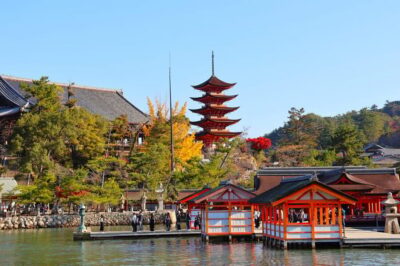 ★ 4.7Osaka/Kyoto: Hiroshima Miyajima Bus Tour & Shinkansen TicketFrom $277919 reviews
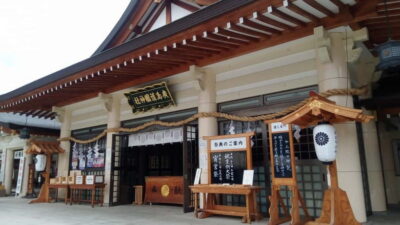 ★ 4.8Hiroshima Historical Walking Tour – Why A-Bomb was DroppedFrom $35893 reviews
 ★ 5.0Hiroshima Peace (Heiwa) Walking Tour at World Heritage SitesFrom $94872 reviews
 ★ 5.0Hiroshima in a Nutshell: Morning Bike AdventureFrom $72524 reviews
 ★ 5.0Hiroshima City 4hr Private Walking Tour with Licensed GuideFrom $122437 reviews
Filed on these lists too