
REVIEW · HIROSHIMA AND MIYAJIMA DAY TRIPS
Hiroshima’s Heart: A 4-Hour Private Storytelling Walk
Hiroshima hits hardest when you understand the why. This private storytelling walk with local guide Alex connects the city’s everyday life before 1945 to what you see at the Peace Memorial Park now, using small details and plain context. You can start at either Shukkeien Garden or the Peace Memorial Park, so the day fits your energy.
What I like most is the way the tour uses lived-in local perspective. Alex has lived in Hiroshima for over 20 years, and it shows in how he explains places like Hiroshima Castle grounds and Hiroshima Gokoku Shrine, then guides you along the Peace Line with room for questions and reflection.
One thing to plan for: two major stops cost extra. Shukkeien Garden (¥360 per person) and the Peace Memorial Museum (¥200 per person) are not included, and you’ll also be on your feet for about four hours, so comfortable shoes matter.
In This Review
- Key highlights you should know
- Why a private storytelling walk works in Hiroshima
- Picking your route: Shukkeien first or Peace Park first
- Shukkeien Garden: calm context before the hard parts
- Hiroshima Castle grounds: a pre-1945 anchor
- Hiroshima Gokoku Shrine: everyday spiritual life, not just monuments
- Peace Memorial Park and the Peace Line: the story that ties it together
- Peace Memorial Museum: optional, but powerful when you want clarity
- The value: private guide cost, plus the two extra tickets
- Logistics that actually matter during the walk
- Who should book this tour
- Should you book this Hiroshima storytelling walk?
- FAQ
- Where does the tour start and end?
- How long is the walk?
- Is this tour private?
- What is included in the price?
- What tickets cost extra?
- Is pickup available?
- Quick final check: before you go
Key highlights you should know
- Private group, up to 6 people: one guide, your pace, no crowd shuffle
- Start where it helps you most: Shukkeien for a calm opener, or Peace Memorial Park for a direct hit first
- Alex’s local context: explanations built from everyday life in Hiroshima, not just textbook facts
- Peace Line storytelling with time to think: relaxed walking, questions welcome, reflection built in
- Major sites without the race: Shukkeien, Hiroshima Castle grounds, Gokoku Shrine, Peace Park, and optional museum
- Food and planning tips included: personal recommendations for what to do next
Pairing the city with Miyajima. Other itineraries
- Peaceful Hiroshima & Miyajima UNESCO 1 Day Bus Tour
★ 5.0 · 5,309 reviews - Hiroshima: Hiroshima and Miyajima UNESCO Sites 1-Day Tour
★ 4.9 · 2,330 reviews - Hiroshima / Miyajima Full-day Private Tour with Government Licensed Guide
★ 5.0 · 1,298 reviews - Hiroshima Historical Walking Tour – Why A-Bomb was Dropped
★ 4.8 · 893 reviews
Why a private storytelling walk works in Hiroshima
Hiroshima is one of those cities where “seeing” is not the same as “understanding.” A self-guided route can show you the monuments, but it often misses the human context, the why behind the layout, and the small details that turn a landmark into a message.
That’s where a private storytelling format pays off. You get a local English-speaking guide in Alex, with the freedom to ask questions as you go. The pace stays relaxed, and you’re not forced into a rigid checklist. Instead, the walk is built around connections, like how the city functioned before 1945, then how the Peace Memorial area reshapes memory and meaning afterward.
Also, because it’s for up to six people, it works well for families, couples, and small friend groups. In past experiences with Alex, groups have included kids, and the tone stays approachable, with lots of chances to ask and learn at normal speed.
Picking your route: Shukkeien first or Peace Park first
You’ll choose where to meet based on your mood. If you start at Shukkeien Garden, you get a gentle entry into Hiroshima, before you move toward the heavy sites. If you start at Peace Memorial Park, you go straight to the core message and then widen your understanding from there.
Starting at Shukkeien makes sense if you want your day to feel like a story with a soft beginning. The garden has winding paths, ponds, and bridges, and that calm matters. It helps your brain shift from vacation mode to “pay attention” mode.
Starting at Peace Memorial Park first can be the right move if you came to Hiroshima because of the bombing history and you want that emotional focus early. Then you can better appreciate how Alex ties later stops back to what came before 1945.
Either way, your guide helps you connect the pieces. And because the itinerary is customizable within the tour structure, you can match the flow to your group.
Shukkeien Garden: calm context before the hard parts
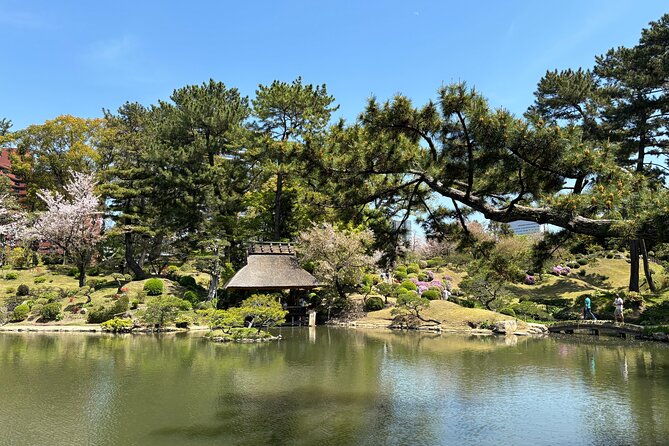
Shukkeien Garden is a strong opener because it teaches you how Hiroshima looks when it’s not shouting for attention. You spend about an hour moving along winding paths, with time to slow down near ponds and bridges. Alex uses that quiet setting to explain the city’s early history and cultural roots in a way that doesn’t feel like a lecture.
This stop is also a good reset if your group arrived tired or jet-lagged. Gardens do something practical: they force you to walk at a human pace. That means when you later reach the Peace Memorial area, you’re not sprinting through everything on adrenaline.
The drawback is cost and timing. The garden admission is extra at ¥360 per person, and it’s an included stop for about an hour. Still, if you’re the kind of traveler who likes understanding context, you’ll feel like the money is buying a smoother, smarter start.
- Hiroshima in a Nutshell: Morning Bike Adventure★ 5.0 · 524 reviews
- Hiroshima City 4hr Private Walking Tour with Licensed Guide★ 5.0 · 437 reviews
- From Hiroshima: Hiroshima & Miyajima 1 Day Tour with Lunch★ 4.7 · 395 reviews
- Japanesel Archery Experience HIROSHIMA CASTLE SHARAKU★ 5.0 · 387 reviews
- Hiroshima and Miyajima Day Trip with Itsukushima Shrine & Ferry★ 5.0 · 378 reviews
Hiroshima Castle grounds: a pre-1945 anchor
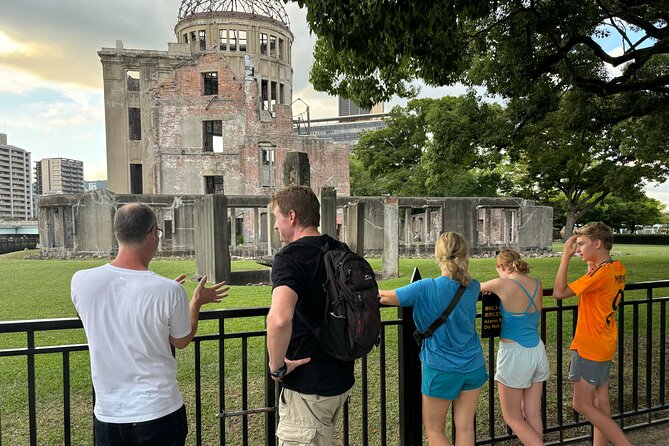
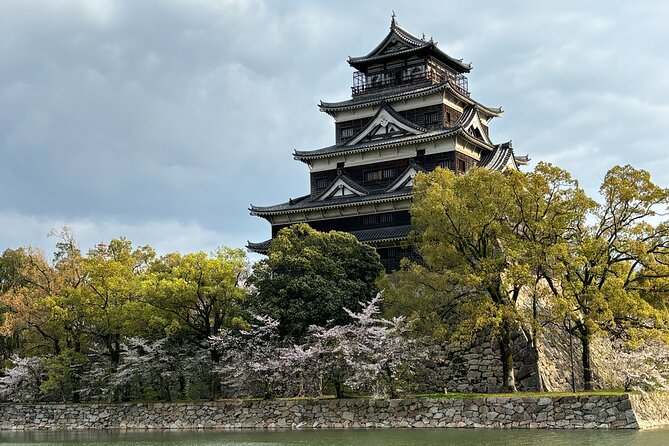
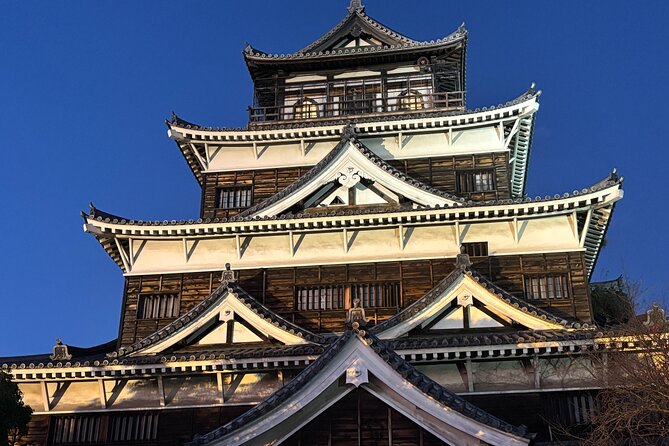
Next up is Hiroshima Castle. Even though the castle you see today is a reconstructed one, the grounds help you picture what centered the samurai-era city. The tour time here is about 30 minutes, and the goal is not to race through museum rooms. It’s to orient you in the geography and in the idea of how power and city life were organized before 1945.
I like this stop because it creates contrast. You see a symbol of older Hiroshima, then you shift toward the Peace Memorial Park message and the way the city’s core was reshaped. That contrast is the point of the tour structure: understanding what was there, then understanding what replaced it.
Because Hiroshima Castle admission is free for this stop, it’s also a lower-friction addition. You still get a meaningful shift in perspective, without the extra entry fee pressure that some other attractions carry.
Hiroshima Gokoku Shrine: everyday spiritual life, not just monuments
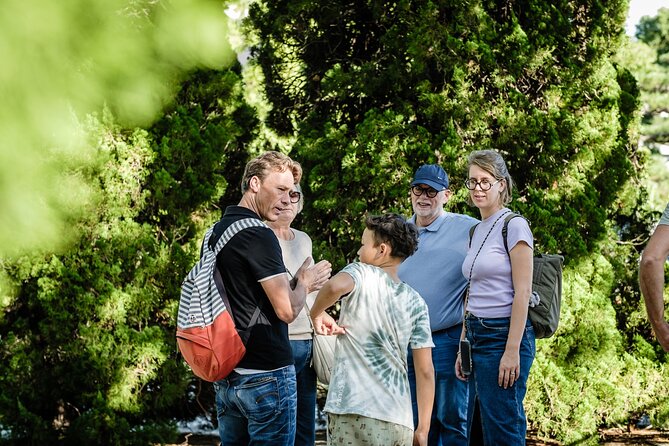
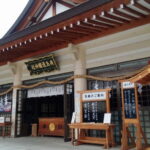
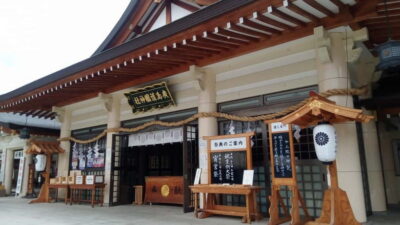
Hiroshima Gokoku Shrine is a quieter stop, around 30 minutes. You get a Shinto setting dedicated to local history and tradition, and Alex uses it to explain rituals, festivals, and daily spiritual life in Hiroshima.
This is one of the more overlooked parts of many Hiroshima visits. People rush from major memorials to museums, but a shrine stop reminds you that Hiroshima was, and is, a living city. It’s not only a place of remembrance. It’s a place with ongoing culture, routines, and community celebrations.
If your group tends to prefer heavier sites, this stop can feel slower. But if you want your day to feel balanced, it helps you step back and see Hiroshima as a place with continuity, not only a chapter of tragedy.
Peace Memorial Park and the Peace Line: the story that ties it together
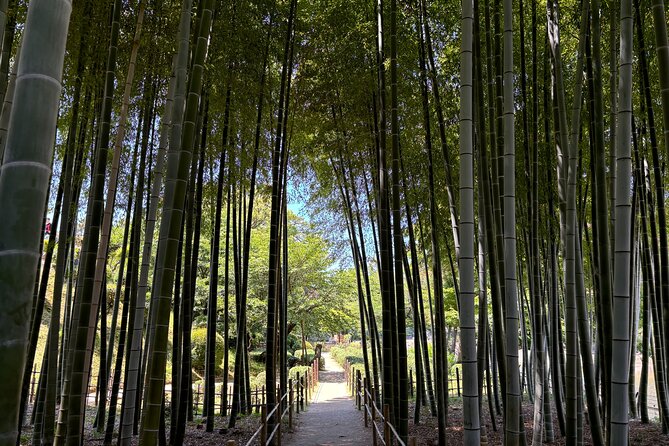
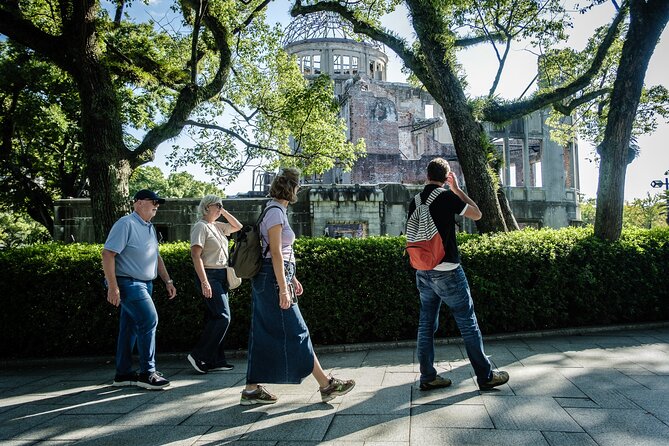
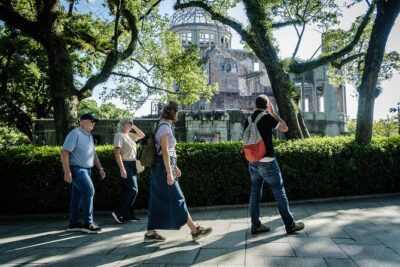
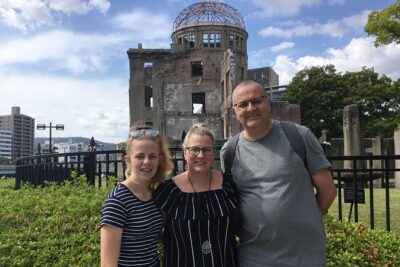
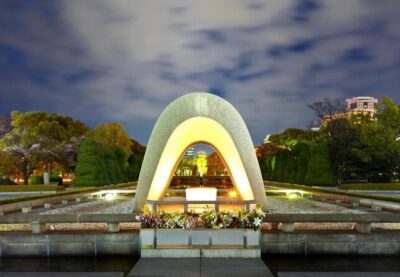
This is the heart of the walk, about an hour at Hiroshima Peace Memorial Park. You’ll visit key monuments, including the A-Bomb Dome area and the Children’s Peace Monument. Alex shares stories and perspectives from survivors and local families, with time for questions and reflection.
What makes this part work is the way it’s framed along the Peace Line, meaning you’re guided to connect the dots instead of just absorbing scenes. The Peace Memorial Park can be emotionally intense. A rushed walkthrough can flatten it into photos and facts.
A relaxed, guided pace keeps it human. You can stop, ask, and get context that helps you understand why the monuments look the way they do and what messages they were meant to carry.
Also, in real groups with Alex, the conversation often turns toward moments that feel connected to community life, like the way local families and schools are part of the ongoing memory. You may not get that kind of texture from a standalone guidebook.
One practical note: because this portion carries the emotional weight, it helps if you plan your group’s energy. Take breaks if you need them. The tour format leaves room for that.
Peace Memorial Museum: optional, but powerful when you want clarity
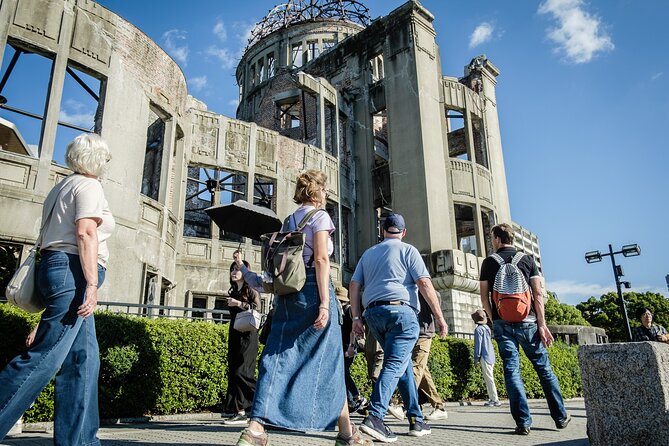
The Peace Memorial Museum is about an hour, and it’s optional in the sense that Alex can adjust how you do it based on crowd conditions and your preference for quieter pacing. Museum admission is extra at ¥200 per person.
If you choose to go in, what you’re buying is clarity. The park can tell you the message in space and monuments. The museum adds explanation, documents, and details that help you interpret what you just saw outside.
If the museum is busy, it can be hard to take in everything. Alex’s approach can include guidance through key sections rather than pushing you to see everything at once. That’s useful because the museum can be information-heavy, and a straight self-tour can feel like you’re staring at panels without a map of what to prioritize.
The tradeoff is time and ticket cost. But if you want your visit to stick in your brain for the right reasons, the museum is the best place to get the missing context.
The value: private guide cost, plus the two extra tickets
At $209.03 per group for up to six people, you’re paying for a private guide time block. That price can feel steep if you compare it to a group tour. It feels fairer once you break it down per person for a small party.
Then add the extra admissions: Shukkeien Garden at ¥360 per person, and the Peace Memorial Museum at ¥200 per person. So your final cost depends on where you start and whether you do the museum.
Here’s the practical way to think about it:
- If you’re 4 to 6 people, the guide cost gets easier to stomach.
- If you’re 1 to 2 people, the admission fees still apply, and you’ll feel the private price more strongly.
- If you care about context, storytelling, and Q and A time, you’re paying to get a guide who can explain the city in a human way.
For me, the strongest value argument is not the sites themselves. It’s the how: a local guide (Alex) who lived in Hiroshima for decades, guiding a relaxed route that connects before and after 1945.
Logistics that actually matter during the walk
The tour is about four hours. Stop times are built in, but you’ll still spend time transitioning between locations on foot. That means you should treat it like a proper walking plan, not a quick museum hop.
You also have flexibility:
- Pickup is offered if you need it.
- Meeting points are within central Hiroshima, with options to meet at Peace Memorial Park or in front of Shukkeien Garden.
- Your exact meeting point is confirmed in advance.
- Tickets are mobile, which helps you avoid fuss on-site.
Your best prep is simple:
- Wear comfortable shoes for sidewalks and steady walking.
- Bring water, especially if you’re starting earlier in the day.
- If anyone in your group gets tired easily, tell Alex at the start. The pace is designed to include questions and reflection, not to speed-run the city.
Also, this is a private experience, meaning only your group participates. That matters because the guide can shape the day around your needs instead of trying to herd a larger crowd.
Who should book this tour
This is a great fit if you want more meaning than photos. It works especially well if:
- You’re visiting Hiroshima for the first time and want context for what you see at the Peace Memorial area.
- You have limited time and want key sites covered without rushing.
- You prefer Q and A and conversation over silence and signage.
- You’re traveling with kids or mixed ages who benefit from clear explanations and a calmer pace.
It’s also a smart choice if you care about the city as more than a memorial. The inclusion of Hiroshima Castle grounds and Gokoku Shrine helps you see how Hiroshima is a functioning community, not only a place frozen in history.
If your goal is only quick sightseeing and you want to move at your own speed with minimal explanation, a self-guided plan may be cheaper. But for many people, Hiroshima rewards the kind of guided context that turns important places into understandable stories.
Should you book this Hiroshima storytelling walk?
If you want a Hiroshima visit that feels organized, thoughtful, and emotionally grounded, I’d book it. The biggest reason is the story-first approach: Alex connects pre-1945 Hiroshima, the city’s transformation, and the Peace Memorial message through a relaxed route that gives you time to process.
Book it especially if your group is small enough to make the private cost feel sensible, and if you don’t mind paying extra for Shukkeien Garden and the Peace Memorial Museum. If you’re traveling with limited energy, want clear explanations, and prefer reflection over a checklist, this is exactly the kind of tour that makes Hiroshima last longer in your memory.
FAQ
Where does the tour start and end?
You can meet at either Peace Memorial Park or in front of Shukkeien Garden, depending on what you prefer. The tour ends at either Peace Memorial Park (after visiting the museum) or Shukkeien Garden, depending on where you started.
How long is the walk?
The tour lasts about 4 hours.
Is this tour private?
Yes. It’s a private tour, so only your group participates, up to 6 people.
What is included in the price?
Included are the private 4-hour walking tour, an English-speaking local guide, a customizable itinerary, flexible meeting within central Hiroshima, and personal recommendations for food and things to do afterward.
What tickets cost extra?
Shukkeien Garden admission is ¥360 per person, and the Peace Memorial Museum entrance fee is ¥200 per person. Those are not included.
Is pickup available?
Pickup is offered, and your guide will confirm your exact meeting point based on your preference and location in central Hiroshima.
Quick final check: before you go
If you’re choosing between speed and understanding, pick understanding. This is the kind of Hiroshima tour that helps you look at the big monuments and also notice what makes them meaningful.
Hiroshima and Miyajima Together
Newest Hiroshima write-ups from the Loving Japan desk

Hiroshima and Miyajima Day Trips, side by side.
 ★ 5.0Peaceful Hiroshima & Miyajima UNESCO 1 Day Bus TourFrom $1295,309 reviews
 ★ 4.9Hiroshima and Miyajima UNESCO Sites 1-Day TourFrom $1222,330 reviews
 ★ 5.0Hiroshima / Miyajima Full-day Private Tour with Government Licensed GuideFrom $2021,298 reviews
 ★ 4.7Osaka/Kyoto: Hiroshima Miyajima Bus Tour & Shinkansen TicketFrom $277919 reviews
 ★ 4.8Hiroshima Historical Walking Tour – Why A-Bomb was DroppedFrom $35893 reviews
 ★ 5.0Hiroshima Peace (Heiwa) Walking Tour at World Heritage SitesFrom $94872 reviews
 ★ 5.0Hiroshima in a Nutshell: Morning Bike AdventureFrom $72524 reviews
 ★ 5.0Hiroshima City 4hr Private Walking Tour with Licensed GuideFrom $122437 reviews
Filed on these lists too