
REVIEW · HIROSHIMA AND MIYAJIMA DAY TRIPS
Hiroshima: Food and Culture Guided Walking Tour with Dinner
Hiroshima at night tastes like real Japan. This 3-hour guided walk sends you through the downtown glow, with tachinomi counter-style stops where locals eat and chat, plus a proper stroll on Hondori. The focus stays on food first, culture second, and you keep moving so the evening never feels like one long restaurant wait.
I love how the tour is paced: you spend about 30 minutes at each place, so you get multiple dish chances without feeling stuffed too early. I also like that you choose your three drinks, alcoholic or non-alcoholic, one at each stop, which makes it easy to match your mood.
One thing to consider: this is a very hands-on eating plan, and at least part of the experience is standing at counters, with menus that shift by season and what the restaurants have that night.
In This Review
- Key things to love about this Hiroshima food tour
- Why Hiroshima night food feels different from most tours
- Starting at Don Quijote, then finding the Hondori vibe fast
- Tachinomi culture: the standing counters where you actually join in
- Restaurant stop 1: your first drink, then a sampler-style start
- Restaurant stop 2: another 30 minutes of variety and conversation
- Nagarekawa Dori walk: a short breather between the last two food stops
- Restaurant stop 3: finishing strong with Hiroshima-style favorites
- How much food is actually included, and what that means for your appetite
- Drinks included, plus the rule for staying in control
- Allergy needs and preference changes, what the guide can do
- Price and value: how $94 stacks up for 3 hours in Hiroshima
- Who this tour suits, and who should skip it
- Practical tips before you go
- Should you book this Hiroshima food and culture walking tour?
Key things to love about this Hiroshima food tour
- Tachinomi-style stops with small plates you eat while you socialize
- Three drinks included, chosen by you at each of the three restaurants
- At least ten dishes across the night, covering seafood, tempura, grilled, steamed, and slow-simmered tastes
- Short, steady time blocks around 30 minutes per restaurant so you stay in the flow
- A guide who brings restaurant access, English support, and lots of local food talk
- Built for the evening vibe, with a walk along Nagarekawa Dori after dinner stops
Pairing the city with Miyajima. Other itineraries
- Hiroshima: Hiroshima and Miyajima UNESCO Sites 1-Day Tour
★ 4.9 · 2,330 reviews - Hiroshima / Miyajima Full-day Private Tour with Government Licensed Guide
★ 5.0 · 1,298 reviews - Hiroshima Historical Walking Tour – Why A-Bomb was Dropped
★ 4.8 · 893 reviews - Hiroshima Peace (Heiwa) Walking Tour at World Heritage Sites
★ 5.0 · 872 reviews
Why Hiroshima night food feels different from most tours
If you’ve eaten in Japan before, you already know the country can do food with precision. But this tour targets the other side too, the casual, talky side, where meals are less about formality and more about sharing.
Hiroshima’s local dining culture leans heavily toward izakaya style, and the best way to get it is to actually follow the rhythm locals use. You hop between small places, order a bunch of small plates, and keep your conversation going while you eat. It is noisy in a friendly way, and you do not need special skills to enjoy it.
What makes this tour especially practical is the structure. You get three restaurant stops, plus two built-in walking segments. So you do not just sit and wait for your next course. You move through the entertainment and shopping districts, then come back to food each time your appetite resets.
Starting at Don Quijote, then finding the Hondori vibe fast
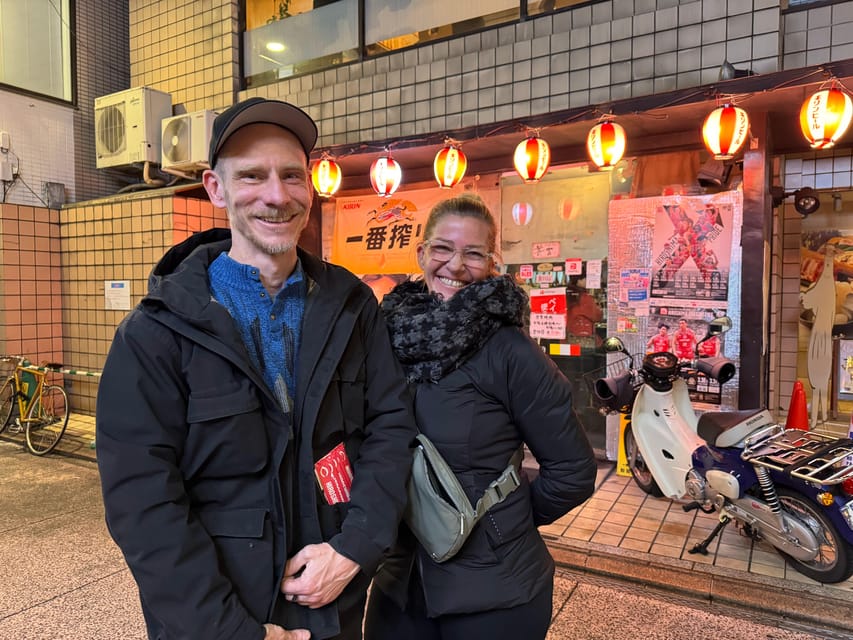
You meet right in front of Don Quijote Hiroshima Hatchobori store. It sounds like an odd landmark until you realize why it works. It’s easy to find, easy to regroup, and the surrounding area is exactly where people go for an after-work or after-dinner night out.
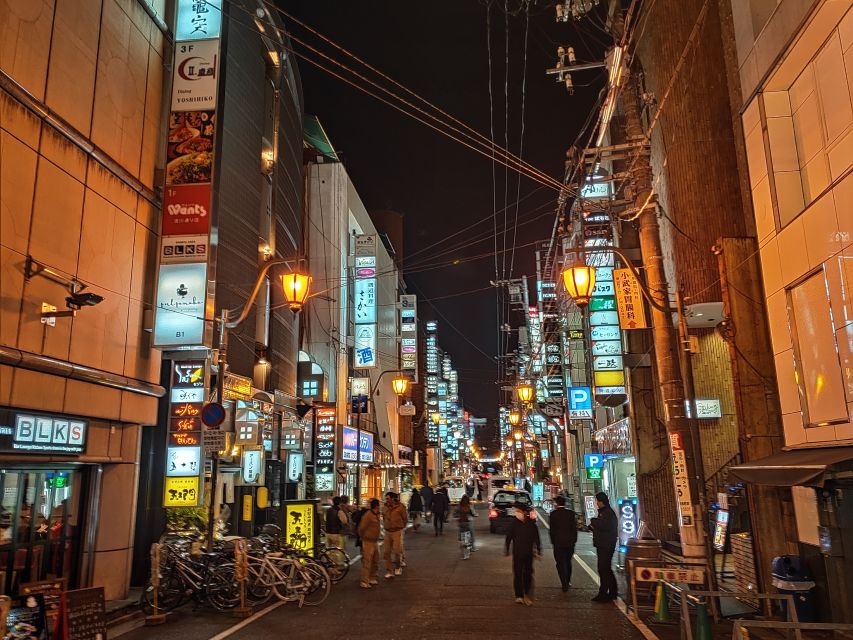
From there, you head to Hiroshima Hondori Shopping Street for about 30 minutes. This is your orientation walk, the moment your brain gets used to the lighting, the street energy, and the kinds of shops you’ll notice later on your own. Even if you only planned a quick look around, the guide uses this time to set the tone for the night.
You’ll also be in the right mindset for what comes next. Hondori is where you feel the “anyone could be here” side of Hiroshima, not just the tourist poster view.
Tachinomi culture: the standing counters where you actually join in
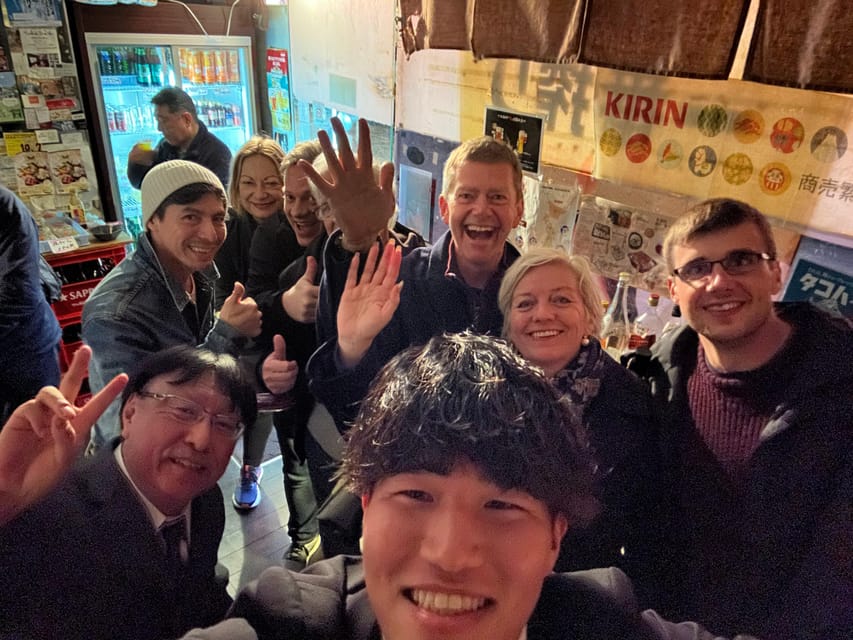
The heart of the evening is tachinomi style. In plain terms, it’s counter or standing table eating where you socialize while you snack. Some stops are fully standing, some are partly seated, but the goal stays the same, small plates, quick enjoyment, and lots of people watching without feeling awkward.
This matters because it changes how you taste. When you’re not trapped at one table for an hour, you’re more likely to try the weird-sounding item the menu offers. You also get variety, because the plates come in a steady stream across multiple restaurants.
You should know what this feels like before you go. You’ll likely eat while standing or leaning at a counter. If that’s uncomfortable, plan for it in advance. Wear shoes you can stand in and bring an open mind. The reward is that you get a very local way of eating, not a polished show.
- Hiroshima Peace (Heiwa) Walking Tour at World Heritage Sites★ 5.0 · 872 reviews
- Hiroshima in a Nutshell: Morning Bike Adventure★ 5.0 · 524 reviews
- Hiroshima City 4hr Private Walking Tour with Licensed Guide★ 5.0 · 437 reviews
- From Hiroshima: Hiroshima & Miyajima 1 Day Tour with Lunch★ 4.7 · 395 reviews
- Japanesel Archery Experience HIROSHIMA CASTLE SHARAKU★ 5.0 · 387 reviews
Restaurant stop 1: your first drink, then a sampler-style start
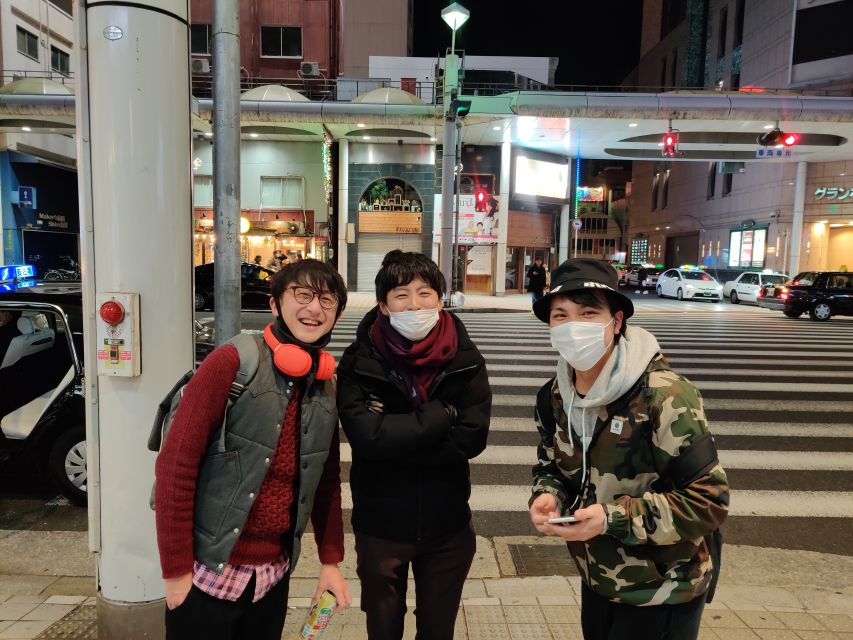
The first restaurant stop runs about 30 minutes and includes one drink of your choice. That drink could be alcoholic or non-alcoholic, depending on what you prefer that night. After that, the food starts to flow.
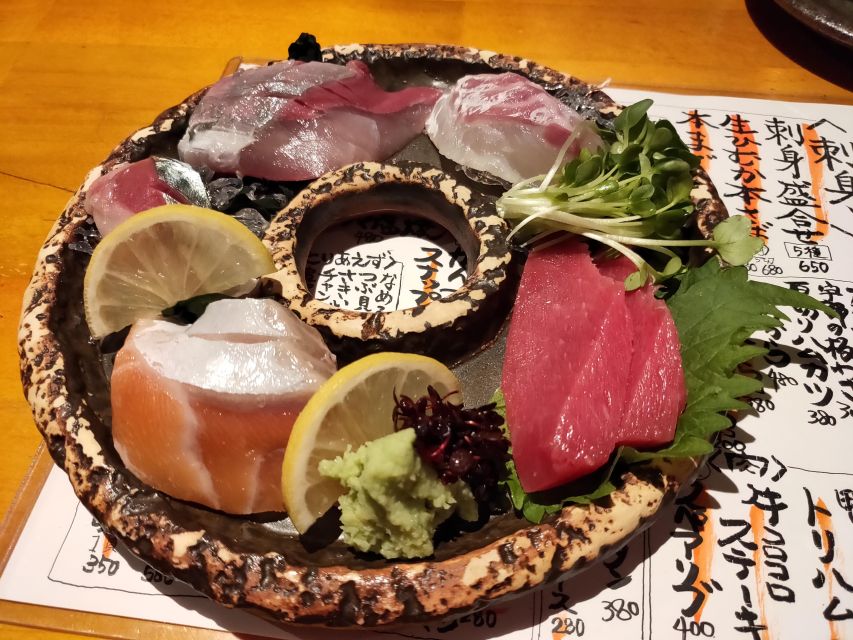
You’re not stuck with one type of dish. Across the whole tour, you’ll see a mix of fresh seafood, tempura, grilled items, steamed items, and slow-simmered dishes. In practice, the first stop usually acts like your entry point. It’s the place where you test the waters, decide what you like, and then adjust your ordering mindset for the next places.
I especially like how this works for first-time Japan eaters. Even if your Japanese is limited, the experience is built around sharing and tasting. You’re not expected to master menu translations before you start eating.
Restaurant stop 2: another 30 minutes of variety and conversation
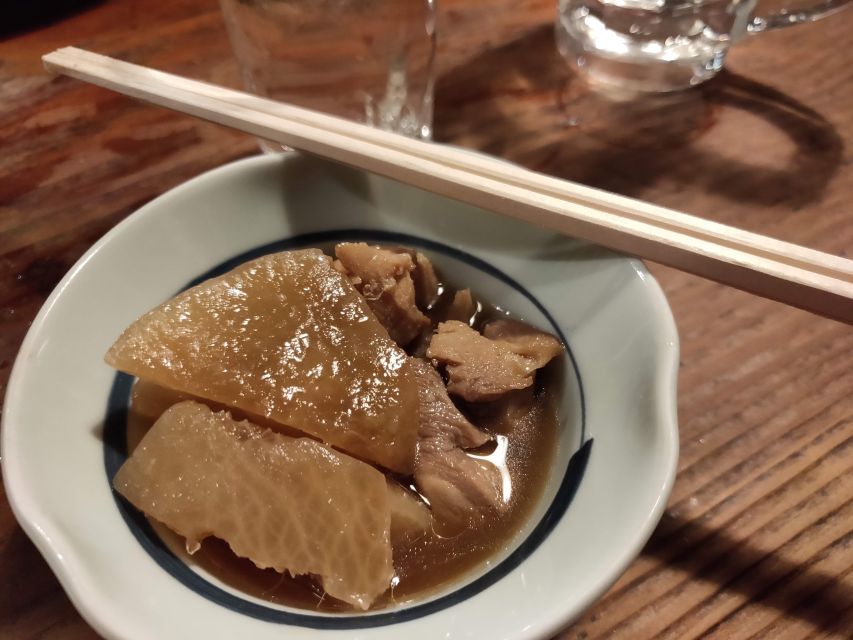
Stop two is similar in timing, about 30 minutes, and again includes a drink selected by you. The guide keeps the night moving, so you’re not waiting around while others finish.
This is where the tour’s value shows up. You’re getting multiple restaurants rather than one “signature” place. Each stop can emphasize different textures and flavors, from crisp fried bites to saucy, simmered comfort. Because you’re eating tapas-style portions, you can sample more than one dish per craving.
One detail that I find reassuring is how often the tour is described as fun, relaxed, and easy to follow. Guides on this tour, including Ken, Kensuke, and Alex, are repeatedly praised for being attentive hosts and for creating an atmosphere where questions feel normal. That is a big deal on restaurant nights, when you’d rather ask about what to try than guess.
Nagarekawa Dori walk: a short breather between the last two food stops
After the restaurant pairings, you head to Nagarekawa Dori for about 30 minutes of guided walking. This part matters more than it looks on paper.
It breaks up the meal rhythm. You get a chance to stretch your legs, reset your stomach, and look at the street energy without holding chopsticks. It’s also where the night starts to feel like a real outing, not just a sequence of tickets.
If you want photos, this is your best window. You’re not inside a smoke-friendly (and sometimes dim) restaurant. You’re out in the open, moving at an easy pace with a guide who can point out what’s worth noticing.
Restaurant stop 3: finishing strong with Hiroshima-style favorites
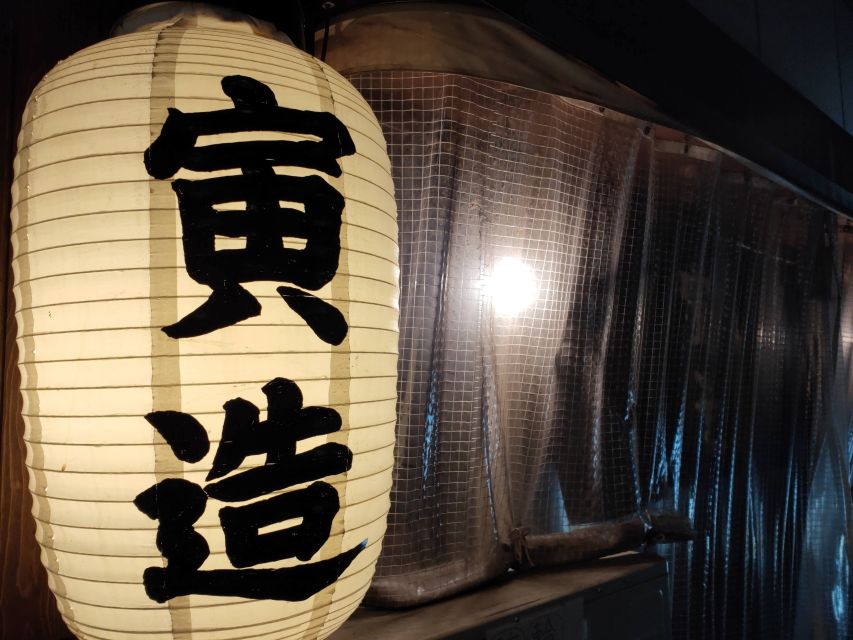
The third restaurant stop brings you back into the tasting mode for another 30 minutes, with your third included drink. By now, you have a working sense of what you enjoy, which makes your last round feel more confident.
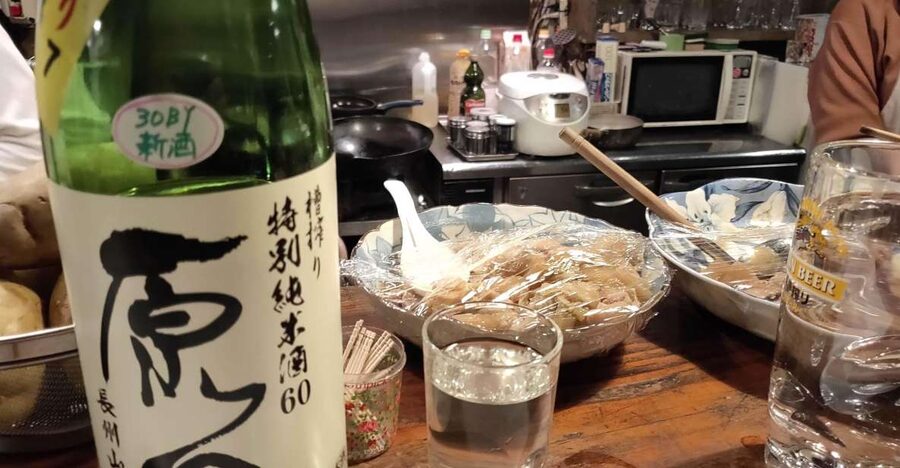
Hiroshima has a few foods that stand out to visitors, and your night may include items like okonomiyaki, plus drinks such as sake and plum-based options like plum wine or even plum soda, depending on what’s available at the restaurants that night. Even if okonomiyaki is not on the exact rotation, you can expect that local specialties show up through the dish mix.
One review detail worth noting, without assuming it will happen for you: some groups have been introduced to restaurant owners with interesting backgrounds. That kind of personality is part of the reason the tour works. You’re eating at places that feel like they belong to the neighborhood, not a theme park.
How much food is actually included, and what that means for your appetite
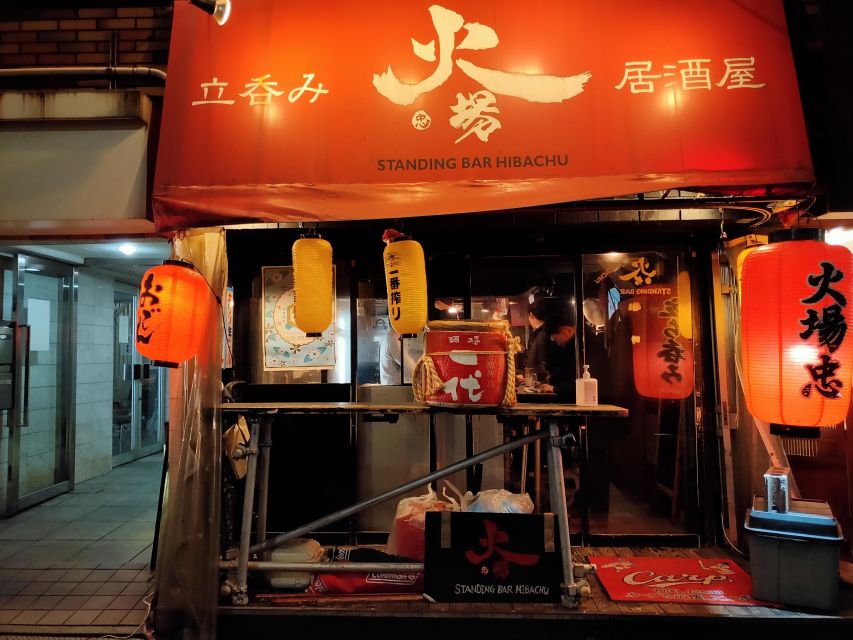
The tour promises at least ten different dishes across the evening. In practice, a lot of people leave describing the experience as food-heavy in a satisfying way, not a painful overstuffing contest.
Here’s the useful part for you: the tour’s pacing and dish style keep it from feeling like one giant meal. Tachinomi-style small plates let you try more items without committing to one huge portion of any single dish.
I’d still advise you to eat light before you go. If you arrive truly full, you’ll feel the standing eating part faster than you should. If you arrive hungry, you’ll get the best payoff from the variety, including seafood, fried items, grilled choices, steamed bites, and slow-simmered flavors.
Drinks included, plus the rule for staying in control
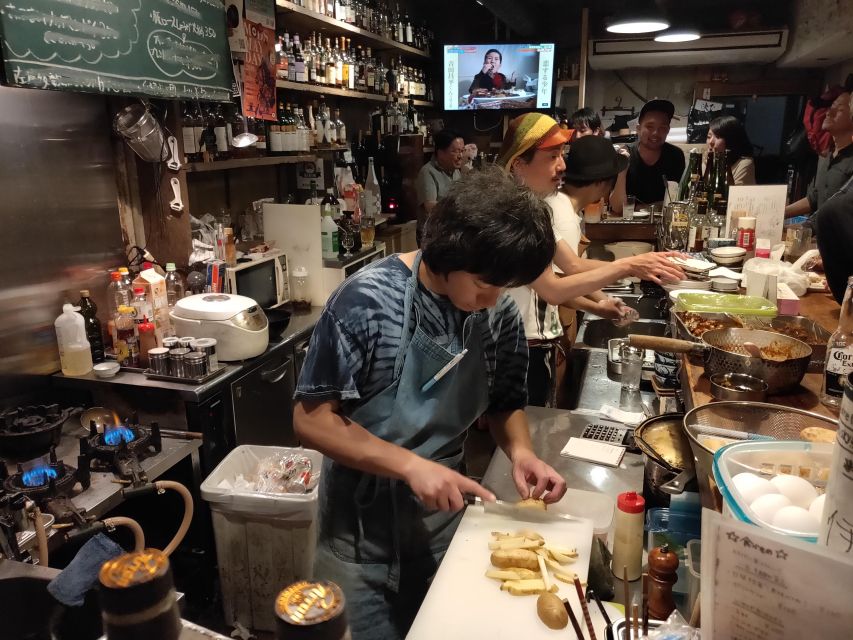
You get up to three alcoholic or non-alcoholic beverages, one at each restaurant. The minimum drinking age in Japan is 20, so if you’re under that, plan on non-alcoholic choices.
This tour also gives you a smart off-ramp. If you choose to keep it light, you still get the full dinner’s worth of food and the culture walking portion. You’re not forced into the “everything must be alcohol” mindset.
If you do want more than the included drink, additional drinks typically cost around 500 yen each, and you pay directly at the restaurant. That pricing detail helps you plan your total budget without surprises.
Allergy needs and preference changes, what the guide can do
The good news is that the local partner aims to accommodate eating restrictions and preferences. The key is to tell them ahead of time so the restaurants can plan what they’ll put in front of you.
On a tasting tour, this is especially important. If you have allergies, you don’t just need a single replacement dish. You need a safe flow across multiple restaurants.
For your part, think in categories: what you cannot eat, what you can eat but dislike, and how strict you need it to be. That way, the guide can advocate with the restaurants instead of guessing.
Price and value: how $94 stacks up for 3 hours in Hiroshima
At $94 per person for a 3-hour experience, you’re paying for more than just food. You’re paying for three things that usually cost extra when you DIY it: restaurant access, local guidance, and planned pacing.
Three restaurant stops with a full dinner’s worth of food across them is the main value. Then add in three included drinks, plus an English and Japanese-speaking guide. If you’ve ever tried to build a similar plan alone, you know the time cost is real. Figuring out which places will take non-Japanese speakers, how to order, and where to go next, eats up your evening.
I also like that solo travelers are not simply penalized with a higher base price. If the minimum group requirement is not met, you’ll be offered an alternate date, a 3000 yen solo supplement, or a full refund. That’s a fairer approach than many tours use.
Who this tour suits, and who should skip it
This is a strong match if you:
- Want a food-first evening with local pacing
- Enjoy casual nightlife areas and walking around after dark
- Like trying multiple small plates instead of committing to one big meal
- Want English support to make ordering and choosing easier
It’s not suitable for children under 13, and participants must be 13+.
If you strongly dislike standing or counter-style eating, you should think twice. Some stops are seated, but at least part of the experience uses tachinomi style where standing is common. Also, because seasonal changes can affect dishes, you should not book it expecting one exact menu item every time.
Practical tips before you go
A few small choices can make this feel effortless.
First, wear comfortable shoes. You’ll be walking between areas and likely standing at counters while you eat. Second, bring a mindset of experimenting. This tour works best when you’re okay trying things you might not pick on your own.
Third, ask your guide questions. Guides like Ken, Kensuke, and Alex are repeatedly praised for being attentive, friendly, and ready to answer food and culture questions. If you care about something specific, like what a dish tastes like or what to try next, ask early while you still have room in your appetite.
Finally, pace your drinks. You get three included beverages, and additional drinks can add up quickly at about 500 yen each. A steady pace helps you enjoy the walking portion on Nagarekawa Dori without feeling wiped out.
Should you book this Hiroshima food and culture walking tour?
I think you should book it if you want your Hiroshima evening to feel local fast. You’ll eat a full dinner’s worth across three neighborhood restaurants, with at least ten dishes and three drink picks, while walking through areas like Hondori and Nagarekawa Dori.
Skip it if you need a quiet, sit-down meal with no standing element, or if you want a guaranteed exact menu with no seasonal swaps. Also consider it carefully if you dislike social dining, since tachinomi style is built around talking and sharing.
If you want one night in Hiroshima that’s practical, delicious, and actually fun, this is one of the best ways to get there without guessing your way through the food scene.
Hiroshima and Miyajima Together

Newest Hiroshima write-ups from the Loving Japan desk
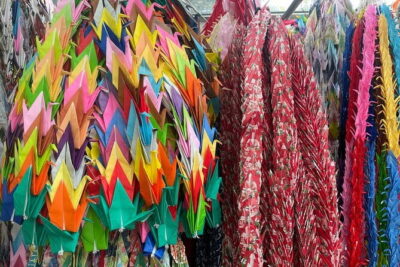
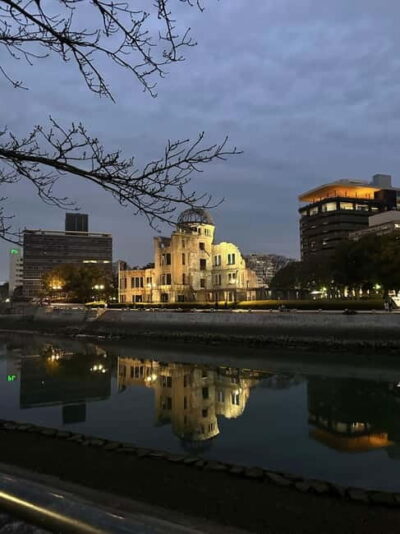
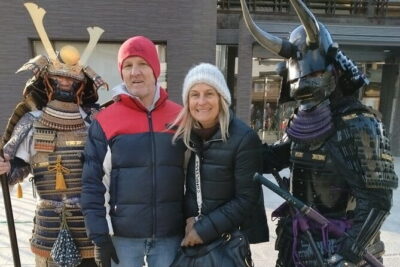
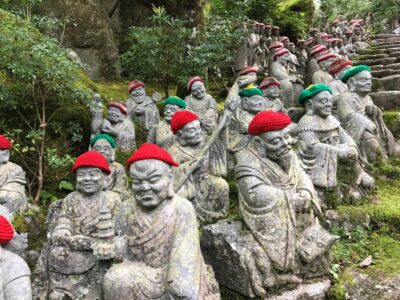
Hiroshima and Miyajima Day Trips, side by side.
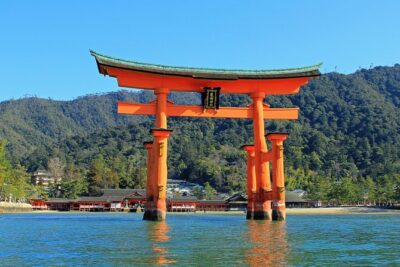 ★ 5.0Peaceful Hiroshima & Miyajima UNESCO 1 Day Bus TourFrom $1295,309 reviews
 ★ 4.9Hiroshima and Miyajima UNESCO Sites 1-Day TourFrom $1222,330 reviews
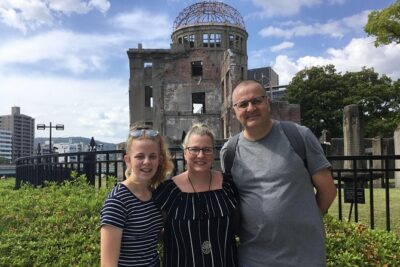 ★ 5.0Hiroshima / Miyajima Full-day Private Tour with Government Licensed GuideFrom $2021,298 reviews
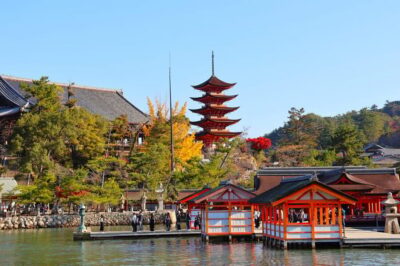 ★ 4.7Osaka/Kyoto: Hiroshima Miyajima Bus Tour & Shinkansen TicketFrom $277919 reviews
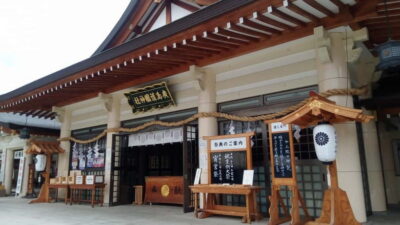 ★ 4.8Hiroshima Historical Walking Tour – Why A-Bomb was DroppedFrom $35893 reviews
 ★ 5.0Hiroshima Peace (Heiwa) Walking Tour at World Heritage SitesFrom $94872 reviews
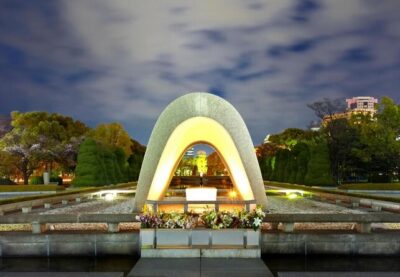 ★ 5.0Hiroshima in a Nutshell: Morning Bike AdventureFrom $72524 reviews
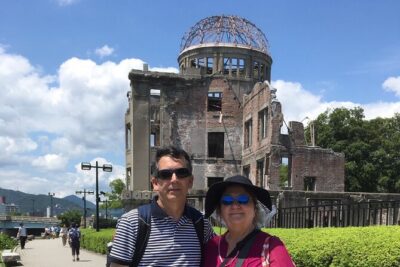 ★ 5.0Hiroshima City 4hr Private Walking Tour with Licensed GuideFrom $122437 reviews