
REVIEW · HIROSHIMA AND MIYAJIMA DAY TRIPS
Hiroshima Kagura Performance Entry Ticket
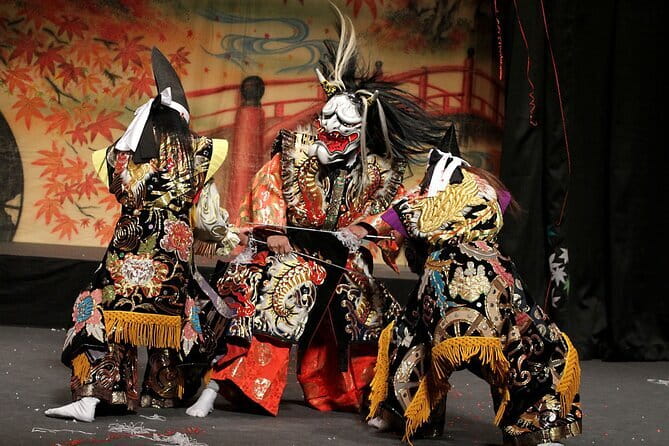
A stage full of myth, in living motion. Hiroshima Kagura is a traditional performance from Hiroshima Prefecture, done weekly, where dancers bring stories from Japanese mythology to life through costumes and lively music. You get English support too, so you are not stuck guessing what is happening.
I love how easy it is to understand the legends, even though the show is mostly movement and sound. I also like the hands-on energy if you add the backstage option, including costume and mask try-ons and photo time.
One thing to consider: if you choose the optional backstage visit, the performers may not speak English directly, so your interaction may be more “smiles and gestures” than a fluent Q&A.
In This Review
- Key things to know before you go
- Hiroshima Kagura at the Hiroshima Prefectural Citizen’s Culture Center
- 7:00 pm timing and where to sit for the best view
- What you’ll see: myth-based dance, gorgeous costumes, and vivid characters
- The English subtitles and story setup that actually help
- Live music that drives the action, not just background sound
- Optional backstage tour: costume try-ons, masks, and photos
- Price and value at about $11.86 for an evening cultural show
- Who should book Hiroshima Kagura, and who might skip it
- Should you book Hiroshima Kagura regular performances in Hiroshima?
- FAQ
- What time does the Hiroshima Kagura performance start?
- Where do I redeem my ticket?
- How long is the performance?
- Is the admission ticket included in the experience price?
- Is there English support for the show?
- Is there a backstage tour option?
Key things to know before you go
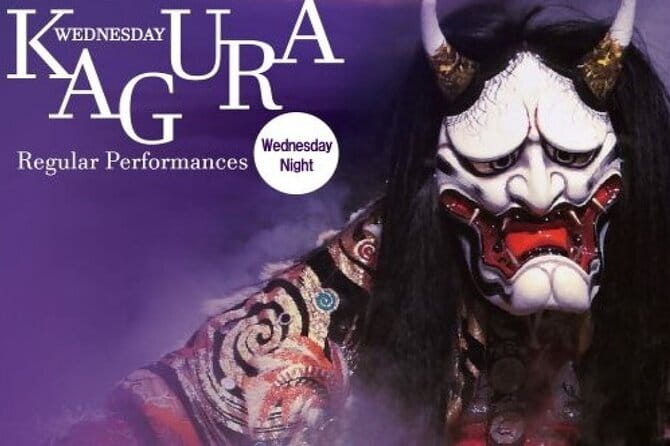
- Weekly Hiroshima Kagura troupes perform traditional dances with mythology themes
- English subtitles and guidance help you follow the story during a short show
- Tiered viewing makes it easier to see from most seats
- Optional backstage experience may add costume try-ons, masks, and photos for an extra fee
- Easy access at Hiroshima Prefectural Citizen’s Culture Center, near public transportation
Pairing the city with Miyajima. Other itineraries
- Hiroshima: Hiroshima and Miyajima UNESCO Sites 1-Day Tour
★ 4.9 · 2,330 reviews - Hiroshima / Miyajima Full-day Private Tour with Government Licensed Guide
★ 5.0 · 1,298 reviews - Hiroshima Historical Walking Tour – Why A-Bomb was Dropped
★ 4.8 · 893 reviews - Hiroshima Peace (Heiwa) Walking Tour at World Heritage Sites
★ 5.0 · 872 reviews
Hiroshima Kagura at the Hiroshima Prefectural Citizen’s Culture Center
If you want a Hiroshima cultural night that feels local, not “tourist entertainment,” this is a smart pick. The show brings together Kagura troupes from across Hiroshima Prefecture, and they perform Hiroshima Kagura, a traditional dance-and-music art rooted in Japanese mythology and classical literature.
The setting matters, because Kagura works best when you can see the dancers’ full body movement and detailed costumes. This performance takes place at the Hiroshima Prefectural Citizen’s Culture Center, so you are in a dedicated cultural venue rather than a random theater stop.
I also appreciate the scale of the experience. It is about an hour total, which makes it easy to fit into your day without sacrificing sightseeing time the next morning.
7:00 pm timing and where to sit for the best view
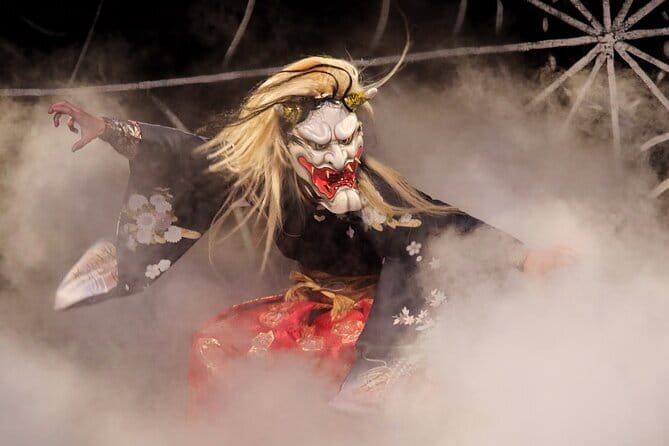
The show starts at 7:00 pm, with ticket redemption at the Hiroshima Prefectural Citizen’s Culture Center. Because it is an evening performance, I suggest arriving early if you care about prime sightlines, especially if you are seated in a group area.
The good news is that the venue uses sloping, amphitheater-style seating. That helps a lot when dancers move around the stage, because you usually will not feel blocked by taller heads.
A practical note: there is a locker on site, which is handy if you have been out exploring and you do not want to carry bags into the theater. And since the venue is near public transportation, you can plan a low-stress arrival and skip the hassle of private rides.
What you’ll see: myth-based dance, gorgeous costumes, and vivid characters
Hiroshima Kagura is not a talk-heavy performance. It is designed around dance gestures, rhythmic movement, and music that pushes the story forward.
The performances are based on legends, with performers in gorgeous, ornate costumes. Expect lots of visual drama in the costumes, plus energetic choreography that includes jumps and twirls. One example you might see on some nights is the story of Yamata No Orochi, a famous myth that shows up in different forms across Japanese performing arts.
Even if you have never studied Kagura before, the structure is easy to follow. You see performers enter, build momentum through dance and percussion, and then reach a satisfying finish without dragging on.
- Hiroshima Peace (Heiwa) Walking Tour at World Heritage Sites★ 5.0 · 872 reviews
- Hiroshima in a Nutshell: Morning Bike Adventure★ 5.0 · 524 reviews
- Hiroshima City 4hr Private Walking Tour with Licensed Guide★ 5.0 · 437 reviews
- From Hiroshima: Hiroshima & Miyajima 1 Day Tour with Lunch★ 4.7 · 395 reviews
- Japanesel Archery Experience HIROSHIMA CASTLE SHARAKU★ 5.0 · 387 reviews
The English subtitles and story setup that actually help
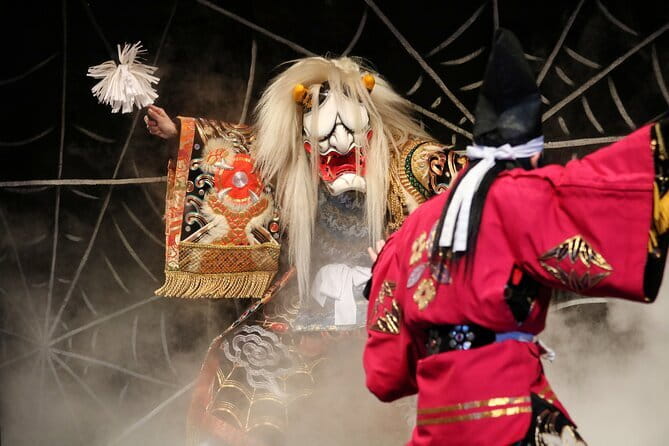
This is one of the main reasons I think the show works for non-Japanese speakers. English subtitles are available, and there is also written story support in English.
In practice, you will notice that spoken dialogue is limited, which means you are mostly relying on subtitles and the visual flow. A lot of visitors find the subtitles helpful, and many say they do not even feel strictly necessary because the action tells most of the story.
Also, before the dancing starts, staff typically explain what you are about to see. That matters, because even a short legend gets easier to track once you know the basic characters and stakes.
One more detail I like: there is a subtitle screen visible overhead, so you are not forced to read tiny captions from your seat. For a one-hour show, that kind of legibility is a big deal.
Live music that drives the action, not just background sound
Kagura is built on the partnership between dance and percussion. The music is lively and rhythmic, and it acts like the engine for the performers’ movement.
You can think of it like this: the costumes and choreography are the visuals, but the drums, flutes, or other traditional instruments are what create tension and release. When the rhythm speeds up, the dance energy follows. When it slows, you get more controlled gestures and dramatic pauses.
That connection is why the show feels “intimate” even in a public venue. You are watching dancers respond in real time to musical cues, and the costumes make those changes look even more striking.
If you like live performance where music and body movement lock together, this one delivers.
Optional backstage tour: costume try-ons, masks, and photos
There is an optional backstage tour after the performance, offered occasionally for an additional fee. If you add it, you typically get explanations from the performers and a chance to interact with them.
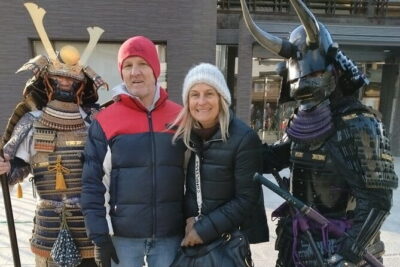
The hands-on part is what makes it tempting: you can try on costumes and masks, take commemorative photos, and ask questions after the dancing. That is a rare chance to get closer to the craft, not just watch from your seat.
That said, here is the key consideration from real-world experience. The performers may not speak English directly, and the interaction time around photos can feel more like a line than a long conversation. In other words, it is still fun, but you should manage expectations if you were hoping for a fluent back-and-forth.
If you do go backstage, come ready with a few simple questions and a camera roll worth of patience. Think: what does this costume signify, what is the mask for, how hard is it to dance in it. Even without perfect English, those questions usually land well.
Price and value at about $11.86 for an evening cultural show
At $11.86 per person, this is one of the best-priced cultural performances you are likely to find in Hiroshima. The ticket covers admission, and you get a full traditional dance-and-music show with English subtitles and story support.
What makes it feel like value is not just the price. It is the combination of:
- a live troupe performance (real costumes, real music)
- English subtitles that help you follow quickly
- a show length that fits an evening without exhausting you
You are also getting something different from the usual sightseeing loop. Instead of another museum or another temple photo stop, you get an in-the-moment look at local performing art that is tied to Hiroshima’s own cultural identity.
If you want to “buy one evening experience” that is low-cost and high-impact, this fits the bill.
Who should book Hiroshima Kagura, and who might skip it
This show suits you if you want a cultural evening that is easy to understand. The English subtitles and story guidance are genuinely helpful, especially because the performance relies mostly on movement rather than lengthy dialogue.
It is also a good fit if you want something short. About 40 to 60 minutes is common for the experience, and that is perfect if you have a packed Hiroshima schedule or you just do not want to commit to a long night.
You might decide to skip or at least think twice if you strongly prefer backstage access with lots of language support. The optional backstage visit can be fun, but interaction time and English ability from performers may be limited.
One more match: if you love theater that is also costume art, this is your kind of event. People are often surprised by how heavy or intricate costumes can be, and the overall visual impact is part of the point.
Should you book Hiroshima Kagura regular performances in Hiroshima?
I think you should book it if you want a local Hiroshima experience that is short, affordable, and easy to follow. The English subtitles, the pre-show story guidance, and the live music make it work even if you are not familiar with Kagura.
It also makes sense if you are traveling on a tight budget. At around $11.86, you are not taking a financial risk, and you still get a real performance, not a watered-down show.
If you have time and you are curious about the costumes, consider upgrading to the occasional backstage option. Just go in with realistic expectations: photos and try-ons are a highlight, but the interaction may be brief.
FAQ
What time does the Hiroshima Kagura performance start?
The start time is 7:00 pm.
Where do I redeem my ticket?
Ticket redemption is at Hiroshima Prefectural Citizen’s Culture Center, 1-chōme-5-3 Ōtemachi, Naka Ward, Hiroshima, 731-0051, Japan.
How long is the performance?
The duration is approximately 1 hour.
Is the admission ticket included in the experience price?
Yes. The admission ticket is included.
Is there English support for the show?
Yes. English subtitles are available, and there is also an English story synopsis and explanation before the performance.
Is there a backstage tour option?
Yes, a backstage tour is occasionally offered after the performance for an additional fee. It may include explanations, interaction with performers, costume and mask try-ons, and commemorative photos.
If you tell me your travel dates, I can help you decide whether the backstage add-on is worth it for your specific evening.
Hiroshima and Miyajima Together

Newest Hiroshima write-ups from the Loving Japan desk
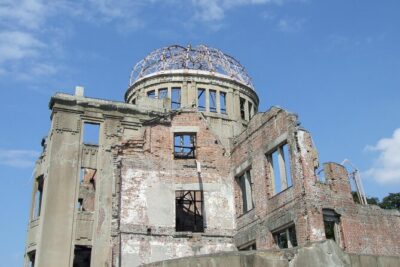
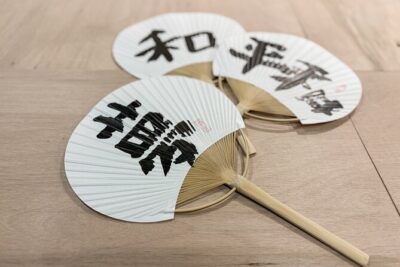
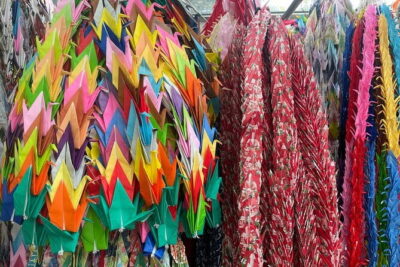
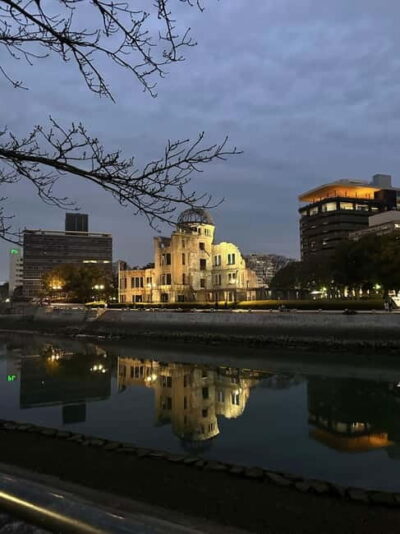
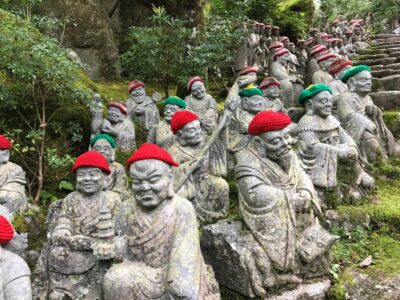
Hiroshima and Miyajima Day Trips, side by side.
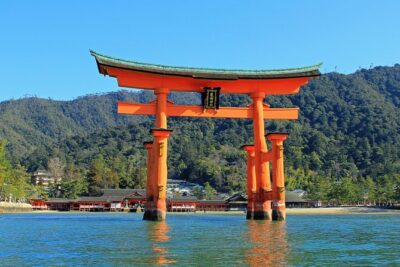 ★ 5.0Peaceful Hiroshima & Miyajima UNESCO 1 Day Bus TourFrom $1295,309 reviews
 ★ 4.9Hiroshima and Miyajima UNESCO Sites 1-Day TourFrom $1222,330 reviews
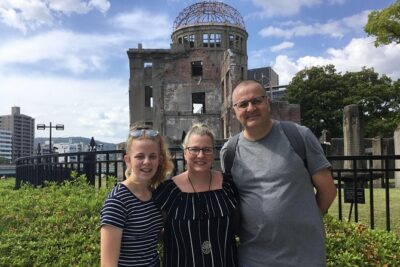 ★ 5.0Hiroshima / Miyajima Full-day Private Tour with Government Licensed GuideFrom $2021,298 reviews
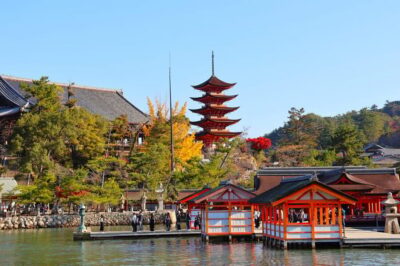 ★ 4.7Osaka/Kyoto: Hiroshima Miyajima Bus Tour & Shinkansen TicketFrom $277919 reviews
 ★ 4.8Hiroshima Historical Walking Tour – Why A-Bomb was DroppedFrom $35893 reviews
 ★ 5.0Hiroshima Peace (Heiwa) Walking Tour at World Heritage SitesFrom $94872 reviews
 ★ 5.0Hiroshima in a Nutshell: Morning Bike AdventureFrom $72524 reviews
 ★ 5.0Hiroshima City 4hr Private Walking Tour with Licensed GuideFrom $122437 reviews
Filed on these lists too