
REVIEW · HIROSHIMA AND MIYAJIMA DAY TRIPS
Hiroshima Walking Tour Why A Bomb was dropped to Hiroshima
One walk can change how you understand a city. This Hiroshima walking tour maps the lead-up and the lasting impact of the atomic bombing with a guide who helps the details click. You’ll see famous memorial sites, but you’ll also start in a shrine and pass through modern Hiroshima, so the story feels anchored in real daily life.
I especially like the small-group size and the pace. With a maximum of 12 guests (and listed up to 15 in the fine print), you get room for questions, and the walk stays manageable at about 2 hours 30 minutes. The other big win for me is the way guides bring places to life, with real examples like Chihiro’s personal touch, Thomas’s clear, structured explanations, and Katya’s way of making the history feel understandable even on a cold day.
One consideration: the subject matter is heavy. You’ll move through memorial ground, and the focus can feel more lecture-style than hands-on exploration, so if you want lots of quiet time to sit with your thoughts at each monument, plan to extend your time after the tour ends.
In This Review
- Key Things I’d Highlight Before You Go
- Why This Hiroshima Walking Tour Feels Different Than a Quick Sites Pass
- Hiroshima Gogoku Shrine: The Calm Start That Sets the Tone
- Hiroshima Castle Grounds and the Carp Castle Name You’ll Want to Remember
- Hiroshima Green Arena: A Modern Pause That Keeps the Day Real
- Orizuru Tower Near Peace Park: The Modern Landmark Beside the Memorial Ground
- Atomic Bomb Dome: Where the History Becomes Visceral
- Children’s Peace Monument and the Victims Memorial Cenotaph
- When the Tour Ends at Peace Memorial Museum, Here’s How to Keep Going
- Price, Time, and Value: Is $28 Worth It?
- Who This Hiroshima Walk Is Best For
- The Main Drawbacks to Keep in Mind
- Should You Book This Hiroshima Walking Tour?
- FAQ
- How long is the Hiroshima walking tour?
- What does the Hiroshima tour cost?
- How many people are in the group?
- Where does the tour start and end?
- Which sites do we visit during the walk?
- Is bottled water included?
- Can I cancel for free?
Key Things I’d Highlight Before You Go
- A focused 2.5-hour route that hits Hiroshima Gogoku Shrine, the Atomic Bomb Dome, and key Peace Memorial Park stops without long gaps
- Small-group format that keeps it conversational, not a big-bus march
- Multiple perspectives in one walk, tying the lead-up to August 6, 1945 and the city’s peace message afterward
- Photo-rich stops in and around Peace Memorial Park, with time built in for pictures and questions
- A guide who explains clearly, with examples of Thomas, Chihiro, Katya, and Emi being praised for making the story easy to follow
Pairing the city with Miyajima. Other itineraries
- Hiroshima: Hiroshima and Miyajima UNESCO Sites 1-Day Tour
★ 4.9 · 2,330 reviews - Hiroshima / Miyajima Full-day Private Tour with Government Licensed Guide
★ 5.0 · 1,298 reviews - Hiroshima Historical Walking Tour – Why A-Bomb was Dropped
★ 4.8 · 893 reviews - Hiroshima Peace (Heiwa) Walking Tour at World Heritage Sites
★ 5.0 · 872 reviews
Why This Hiroshima Walking Tour Feels Different Than a Quick Sites Pass
Hiroshima can be overwhelming on your own. The city gives you icons, monuments, and names, but it does not hand you the connective tissue. This tour tries to do that work for you, linking what you see on the street to the why and the how, then carrying that thread forward into what Hiroshima stands for today.
I also like that it does not treat the day of the bombing as a single isolated event. The walk includes places that help you understand Hiroshima as a lived-in city before the blast, then shows you how that same city chose remembrance and peace as a future direction. Guides often add human details too, like the personal angle one guide shared as the granddaughter of a bomb survivor, which makes the story feel less like a textbook and more like a direct inheritance.
The route is also practical. It is mostly a walk between close stops, and it stays timed, so you can build the rest of your day around it without guessing.
Hiroshima Gogoku Shrine: The Calm Start That Sets the Tone
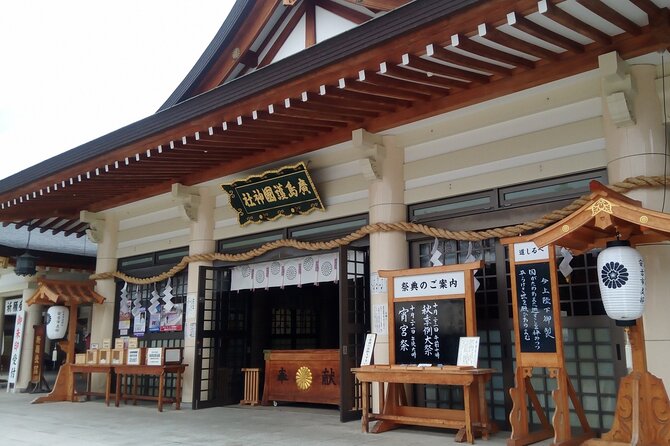
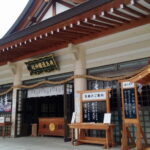
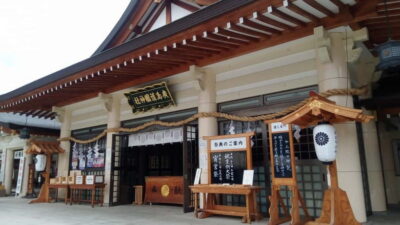
Your tour begins at Hiroshima Gogoku Shrine in Motomachi, near the start point listed at 21-2 Motomachi. This is not a war site, and that’s the point. You start with the shrine’s architecture and tranquil setting, so your brain is not instantly assaulted by grief.
You get about 20 minutes here, and admission is free. For me, that opening matters because it frames Hiroshima as something more than the bombing. Shrines in Japan carry layered meaning, and starting here gives you a baseline for how communities organize memory, protection, and identity over generations.
One practical note: if you’re visiting in colder months, shrine grounds can feel open and exposed. Dress for the weather, and use this first stop as a reset before the heavier portion of the day begins.
Hiroshima Castle Grounds and the Carp Castle Name You’ll Want to Remember
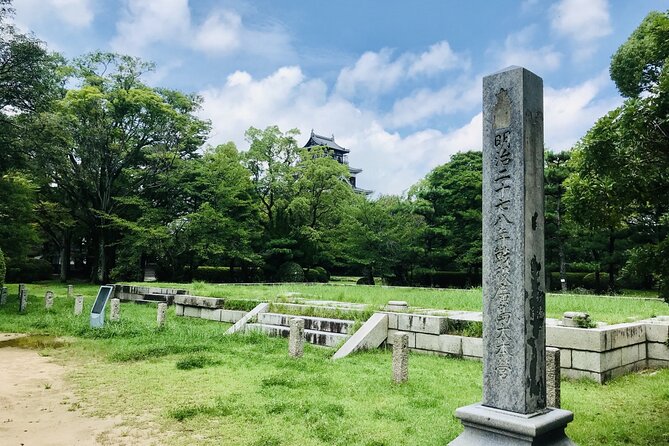
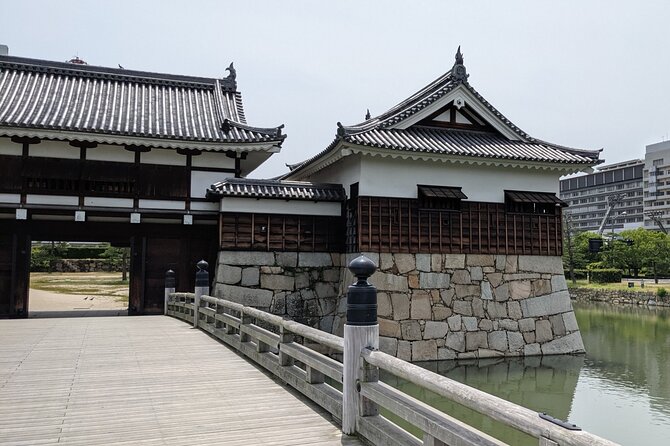
Next up is Hiroshima Castle, often called Carp Castle. You spend around 20 minutes here, again with free admission as listed. You’re not going into the castle interior on this tour, but you do visit the grounds, which is still a great way to orient yourself.
The castle’s story helps you grasp Hiroshima’s earlier power structure. It was constructed in the 1590s and served as the home of the daimyō, the feudal lord, of the Hiroshima han (domain). Even if you only catch the big shape and the surrounding views, that context turns the skyline into something more meaningful than background scenery.
My advice: take a few minutes to slow down and look around from where you stand. Castle grounds are often set up for sightlines, and you’ll start noticing how the city’s geometry plays into how Hiroshima rebuilt and redesigned itself.
- Hiroshima Peace (Heiwa) Walking Tour at World Heritage Sites★ 5.0 · 872 reviews
- Hiroshima in a Nutshell: Morning Bike Adventure★ 5.0 · 524 reviews
- Hiroshima City 4hr Private Walking Tour with Licensed Guide★ 5.0 · 437 reviews
- From Hiroshima: Hiroshima & Miyajima 1 Day Tour with Lunch★ 4.7 · 395 reviews
- Japanesel Archery Experience HIROSHIMA CASTLE SHARAKU★ 5.0 · 387 reviews
Hiroshima Green Arena: A Modern Pause That Keeps the Day Real
The tour then includes a stop at Hiroshima Green Arena, officially the Hiroshima Prefectural Sports Center. You get about 30 minutes, and admission is listed as free.
This is one of those stops that feels small on paper but useful in real life. It is a reminder that Hiroshima is not only a memorial destination. Sports, events, and public life occupy the same streets and neighborhoods, and slipping in a modern facility helps prevent the day from becoming a single emotional blur.
If you’re thinking, why include this in a bombing-focused walk, my answer is: because context helps. Seeing a contemporary public venue keeps the story grounded in a city that did not stop moving after 1945.
Orizuru Tower Near Peace Park: The Modern Landmark Beside the Memorial Ground
As you get closer to Peace Memorial Park, you’ll pause at Orizuru Tower, a modern building opened in 2016. It’s listed as right next to Peace Memorial Park and known for its distinctive architecture.
You only get a short window as part of the overall flow, but this stop adds an important contrast. In Hiroshima, the memorial story does not sit alone in a frozen moment. It sits next to newer architecture and city development. That juxtaposition is part of the message: remembrance, yes, but also forward motion.
If you like photography, this is a good moment to frame shots with the Peace Park area in view. Just keep your mind on why you’re there, not only on what looks good on your camera.
Atomic Bomb Dome: Where the History Becomes Visceral
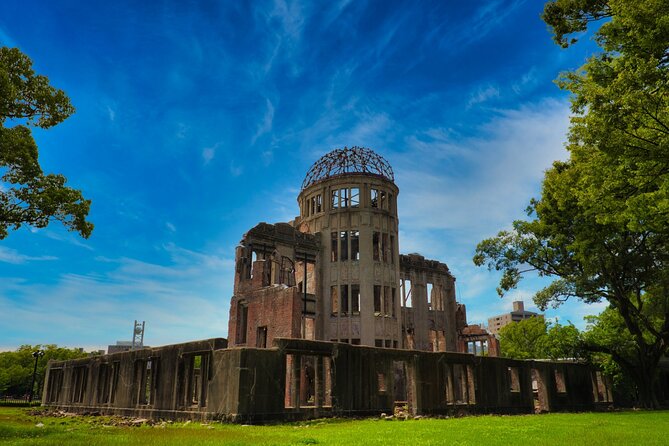
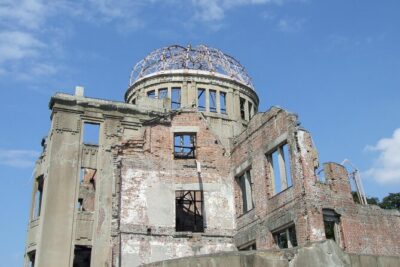
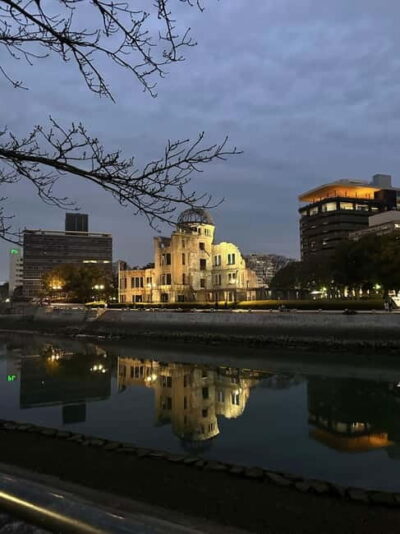
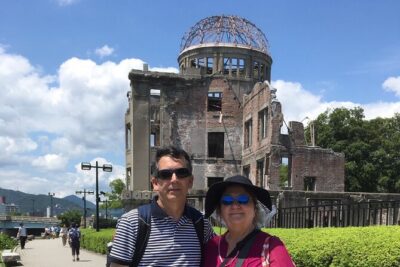
Then comes the stop people remember. The Atomic Bomb Dome. You spend about 20 minutes here, with admission listed as free.
You’re looking at the former Hiroshima Prefectural Industrial Promotion Hall, preserved near the blast’s epicenter as a solemn reminder of nuclear devastation. The dome works differently after a guided explanation. Without context, it can feel like a striking ruin. With context, it becomes an anchor for the human story, the scale of destruction, and the moral weight the city has carried ever since.
I like how this part of the tour tends to slow down your thinking. The guide helps you connect what you heard earlier to what your eyes are seeing now. And if you’re a question person, this is usually when your questions feel the most alive.
One practical consideration: the area can be emotionally draining. Take breaks if you need them, and do not rush. The tour schedule is helpful, but your pace matters too.
Children’s Peace Monument and the Victims Memorial Cenotaph
After the Dome, you’ll move into Peace Memorial Park and its key monuments.
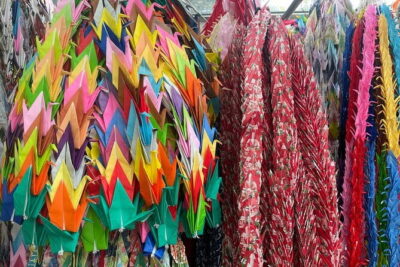
First is the Children’s Peace Monument, about 10 minutes. This one honors Sadako Sasaki and the thousands of child victims of the atomic bombing. It is inspired by Sadako, and that detail gives the monument a specific human focus rather than a vague category of tragedy.
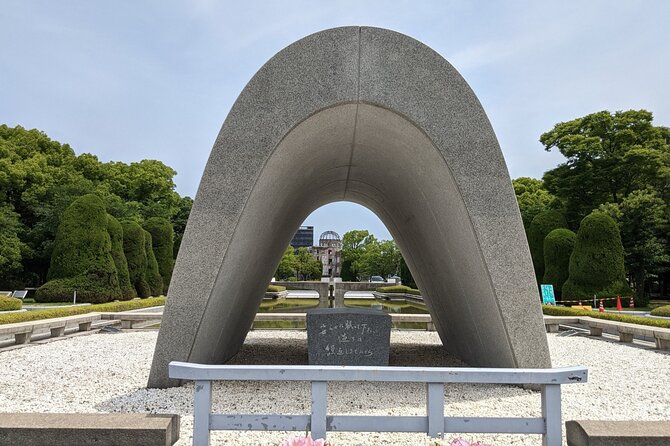
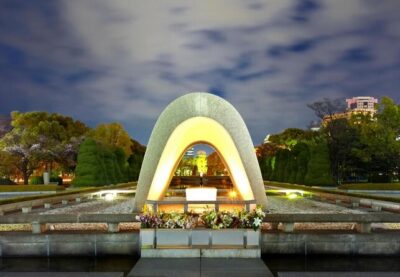
Next is the Hiroshima Victims Memorial Cenotaph, with about 30 minutes allocated. This is the heart of the remembrance story, dedicated to the victims of the atomic bomb dropped on August 6, 1945, located near the epicenter. If you want a moment to feel how Hiroshima chose remembrance, this is usually it.
I recommend standing back for a minute here, then going closer. Let your eyes adjust. Monuments like these hit harder when you notice the small things, like how people leave offerings or how the space encourages reflection.
When the Tour Ends at Peace Memorial Museum, Here’s How to Keep Going
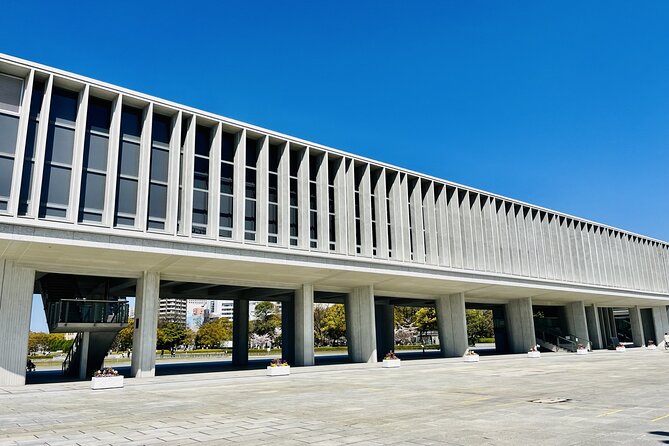
The tour finishes at Peace Memorial Museum, specifically in front of it. That matters because it gives you an obvious next step. Even if you don’t know what you want to do after, you can choose your mood: more context inside the museum, a quieter walk around the park, or time to write down what you learned while it’s fresh.
Since the walk ends at the museum, I’d treat the tour as your orientation. It helps you understand what you will see and why it is there, so your museum time tends to feel less like wandering and more like filling in gaps.
Price, Time, and Value: Is $28 Worth It?
At $28 per person for about 2 hours 30 minutes, this is one of those deals that works if you care about explanation. You are not paying for private transport or a long itinerary. You are paying for a guide who can connect places into a clear story and help you read Hiroshima instead of just looking at it.
Value-wise, a few things matter:
- The big stops are free to enter as listed for the tour’s main sites
- The experience includes all fees and taxes
- The group is small, so you get more conversation and fewer delays than big tours
- The route covers both remembrance ground and the broader city context, so it does not feel one-note
One more note: bottled water is not included, so bring a small bottle or buy one nearby so you don’t get dehydrated during an emotionally heavy day.
Who This Hiroshima Walk Is Best For
This tour fits especially well if you:
- Want the story behind the Hiroshima bombing, not just a list of places
- Appreciate clear explanations and chances to ask questions
- Like walking tours that stay paced, not rushed
- Plan to pair it with Peace Memorial Museum afterward
It also seems family-friendly in real terms. One guide explanation was praised for keeping young kids interested, and that’s a strong sign this tour can work for families who want history without turning it into a lecture that loses everyone.
The Main Drawbacks to Keep in Mind
No tour is perfect, and Hiroshima comes with particular emotional weight. Here are the two practical drawbacks I’d watch for:
First, if you want ultra-deep history of every political and military factor, a 2.5-hour walk may not feel like enough. The tour is designed for clarity and key points, not for exhaustive detail on every topic.
Second, pacing can be a mixed bag if you really like to linger in one spot. Some people want more decisive guidance and a little more time at certain stops. The good news is the tour ends at Peace Memorial Museum, so you can extend time where you need it most.
Should You Book This Hiroshima Walking Tour?
I’d book it if your goal is to understand Hiroshima in a way that actually connects to what you see. The route is timed well, the group stays small, and the guides get strong praise for making the story clear, human, and easy to follow. You also get the important contrast of starting at a shrine and then moving into the Peace Memorial Park area, so the city feels whole, not trapped in one chapter.
Skip it only if you already know the background and you prefer a completely self-paced museum-and-park day with long pauses. In that case, you may want to build your own itinerary around how long you want to sit with each monument.
FAQ
How long is the Hiroshima walking tour?
The tour lasts about 2 hours 30 minutes.
What does the Hiroshima tour cost?
It costs $28.00 per person.
How many people are in the group?
It’s described as a small group with a maximum of 12 guests, and it’s also listed with a maximum of 15 travelers.
Where does the tour start and end?
It starts at Hiroshima Gokoku Shrine, 21-2 Motomachi, Naka Ward, Hiroshima, and ends in front of Peace Memorial Museum at 1-2 Nakajimachō, Naka Ward, Hiroshima.
Which sites do we visit during the walk?
You’ll visit Hiroshima Gogoku Shrine, Hiroshima Castle (grounds), Hiroshima Green Arena, Orizuru Tower, the Atomic Bomb Dome, the Children’s Peace Monument, and the Hiroshima Victims Memorial Cenotaph in Peace Memorial Park.
Is bottled water included?
No, bottled water is not included.
Can I cancel for free?
Yes, you can cancel for a full refund if you cancel up to 24 hours in advance of the start time.
Hiroshima and Miyajima Together
Newest Hiroshima write-ups from the Loving Japan desk
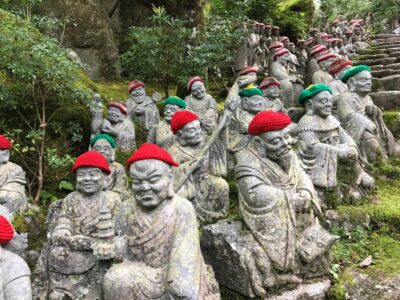
Hiroshima and Miyajima Day Trips, side by side.
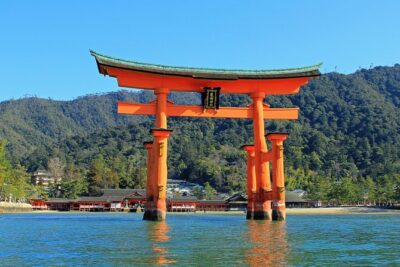 ★ 5.0Peaceful Hiroshima & Miyajima UNESCO 1 Day Bus TourFrom $1295,309 reviews
 ★ 4.9Hiroshima and Miyajima UNESCO Sites 1-Day TourFrom $1222,330 reviews
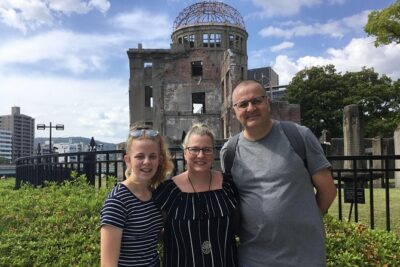 ★ 5.0Hiroshima / Miyajima Full-day Private Tour with Government Licensed GuideFrom $2021,298 reviews
 ★ 4.7Osaka/Kyoto: Hiroshima Miyajima Bus Tour & Shinkansen TicketFrom $277919 reviews
 ★ 4.8Hiroshima Historical Walking Tour – Why A-Bomb was DroppedFrom $35893 reviews
 ★ 5.0Hiroshima Peace (Heiwa) Walking Tour at World Heritage SitesFrom $94872 reviews
 ★ 5.0Hiroshima in a Nutshell: Morning Bike AdventureFrom $72524 reviews
 ★ 5.0Hiroshima City 4hr Private Walking Tour with Licensed GuideFrom $122437 reviews
Filed on these lists too