
REVIEW · KAMAKURA, THE GREAT BUDDHA AND ENOSHIMA
Kamakura 6hr Private Walking Tour with Government-Licensed Guide
Kamakura feels like a history lesson. This private, government-licensed English guide turns the day into a clear route, and I love the pick 3 to 4 sights flexibility. One possible drawback: it is still a walking and public-transport day, so you will want good shoes for hills and temple stairs.
At $155.22 per person, it is not a cheap casual stroll, but it can be great value if you want meaning, pacing, and less guesswork. The guides behind this tour range from professionals like Shinji, Masa, Koba, and Sam to teachers like Takako and friendly specialists like Noripy, and they are used to handling different group needs and energy levels.
In This Review
- Key Things That Make This Kamakura Tour Worth Your Time
- A Government-Licensed Guide Makes Kamakura Less Stress
- How the 6-Hour Walking Plan Works (and What 3 to 4 Stops Means)
- From Tsurugaoka Hachimangu Shrine to the Great Buddha at Kotoku-in
- Hasedera Temple: Ocean Views and Wish-Making Rituals
- Hokoku-ji Bamboo Grove: Quiet Paths in a Sea of Green
- Zen Temples for the Middle of the Day: Kencho-ji and Engaku-ji
- Enoshima Island and Zeniarai Benten: When You Want a Coastal Detour
- Meigetsuin Hydrangea Temple and the Hilltop Options That Feel Off the Main Track
- Price and Value: When $155.22 Per Person Makes Sense
- Who This Tour Fits Best, and Who Might Want a Different Day
- Should You Book This Kamakura Walking Tour?
- FAQ
- How long is the Kamakura walking tour?
- How many sights will we see?
- Is this a private tour?
- Do we get pickup?
- Is the tour walk-only?
- Are entrance fees included?
- Are transportation costs included?
- Is lunch included?
- Can I cancel for a full refund?
Key Things That Make This Kamakura Tour Worth Your Time
- Government-licensed local English guidance, so you get explanations on the spot, not just app text
- Choose 3 to 4 sights from a temple-heavy list to match your time and interests
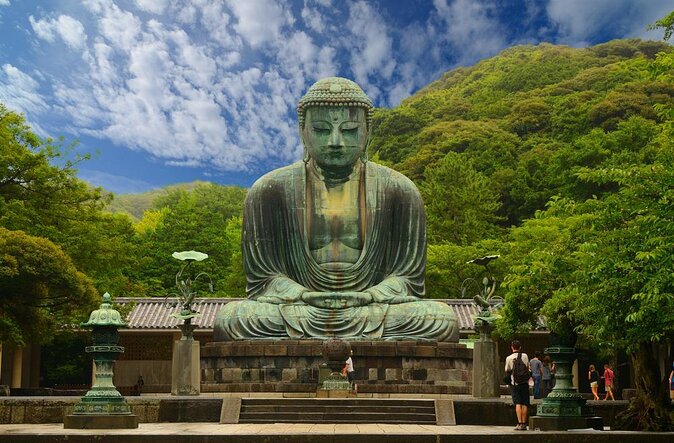
- Big names and big moments, including the Great Buddha at Kotoku-in (11.4 meters tall)
- Hokoku-ji bamboo grove, with 2,000 plus stalks and narrow paths made for slow looking
- Zeniarai Benten coin washing, a fun, photogenic break from solemn temples
- Public transportation planning, so you spend less time figuring out trains and buses
Still weighing up options in Yokohama? These are the ones our reviewers rated highest.
- EVO, WRX, Skyline – JDM Night Run to Daikoku Car Meet
★ 4.9 · 478 reviews - Tokyo: Best Price Daikoku Parking Area JDM Car Meet
★ 4.9 · 192 reviews - Daikoku & Tokyo Private JDM Tour by 700HP R34 GT-R
★ 4.9 · 101 reviews - Tokyo 8hr Private Tour with Licensed Guide from Yokohama
★ 5.0 · 94 reviews
A Government-Licensed Guide Makes Kamakura Less Stress
Kamakura can be simple to reach from Tokyo and Yokohama, but once you start moving between shrines, temple gates, and hilltop paths, it gets tricky fast. The big win here is that you do not just get directions. You get a licensed guide who can explain what you are seeing while you are still there.
I also like that this tour is built for real movement, not a bus drop-and-stand session. Your guide meets you on foot within a designated Kamakura or Yokohama area, then guides you through the walking plus trains and buses portion of the day. In other words, you are not left alone with your phone when you are tired or when the route gets confusing.
How the 6-Hour Walking Plan Works (and What 3 to 4 Stops Means)
The tour runs about 6 hours total, and transportation time is included in that time budget. You get to customize your route and typically see 3 to 4 sights from the list, which is the right scale for Kamakura.
Why that matters:
- Three to four stops lets you actually look at things, not just pass them.
- Many of Kamakura’s best spots are spread out, including hilltop and side-valley temples.
- You can adjust time on the fly if something is taking longer, like a shrine courtyard with people lined up for the photo angle, or a temple with gardens you want to wander.
The watch-out is pacing. This is not a drive-around tour. Even if each stop is quick, the day adds up in walking time, and some temples are on slopes. If someone in your group has mobility limits, I would still choose this tour, but plan for extra time and slow breaks.
From Tsurugaoka Hachimangu Shrine to the Great Buddha at Kotoku-in
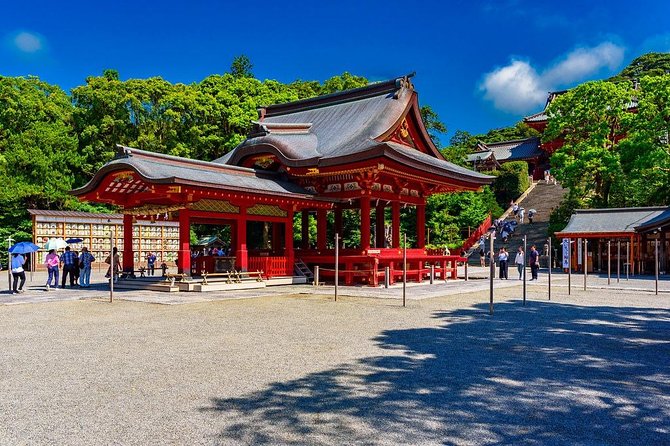
Most Kamakura days start with Tsurugaoka Hachimangu Shrine, and for good reason. It gives you a samurai-era anchor right away. The shrine honors Hachiman, the patron god of the Minamoto family and samurai in general, which helps your later temple visits feel connected instead of random.
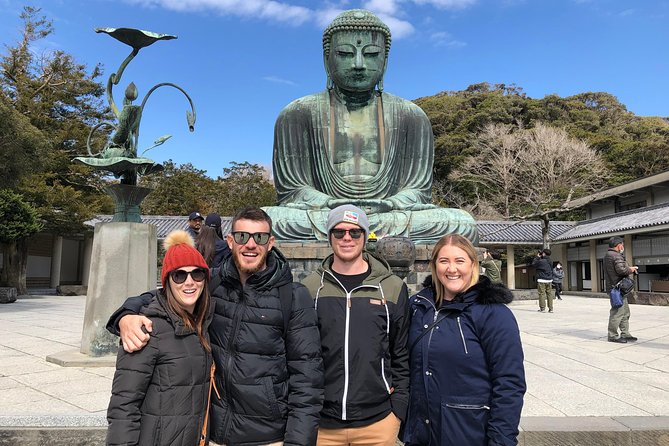
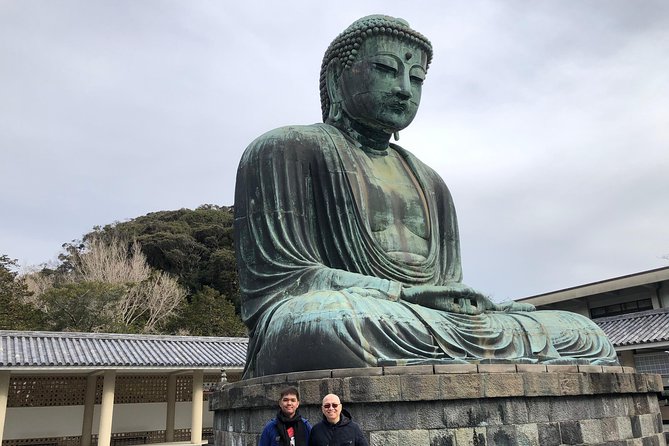
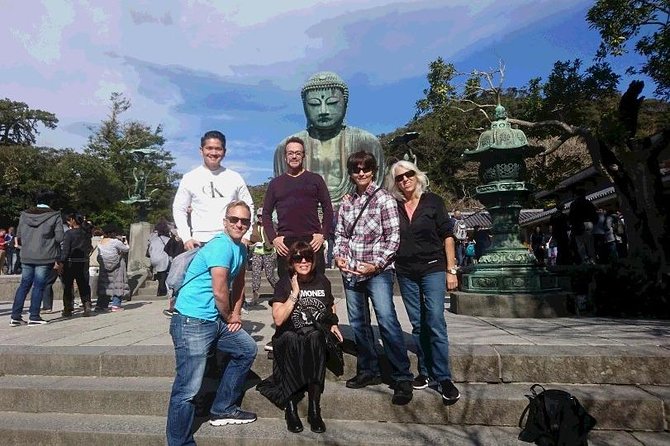
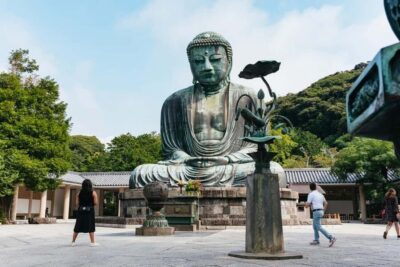
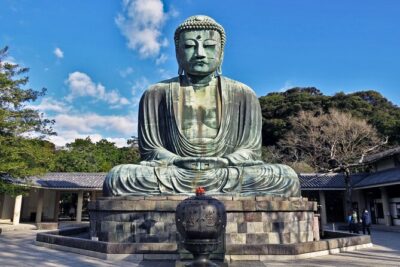
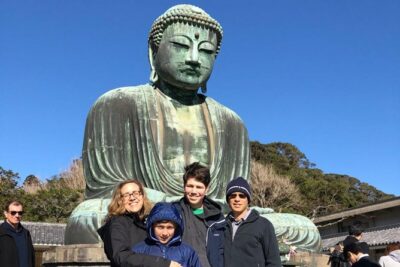
Then the route often swings toward Kotoku-in, home to the Great Buddha of Kamakura. This is the iconic bronze statue of Amida Buddha, about 11.4 meters tall. Even if you have seen Buddha statues before, this one hits differently because the scale is obvious immediately and the setting makes it feel permanent, like it has always been part of the coastline world.
Practical tip: if you care about photos, ask your guide where to stand for the clearest angles before you settle in. Guides on this tour are used to helping people get the right viewpoint without wasting time.
Licensed guides working the same ground
- Kamakura 6hr Private Walking Tour with Government-Licensed Guide★ 5.0 · 42 reviews
Hasedera Temple: Ocean Views and Wish-Making Rituals
Hasedera Temple is a favorite stop when you want something scenic and spiritual at the same time. The temple is famous for its eleven-headed statue of Kannon, the goddess of mercy. The gilded wooden statue is 9.18 meters tall, and it is described as one of the largest wooden sculptures in Japan, which explains why people linger here even after the main hall visit.
Two reasons Hasedera works so well in a 6-hour day:
- You get a hillside perspective, with views of the ocean from the higher areas of the temple grounds.
- You can do a wish-writing ritual involving an oyster shell, which adds an experience element beyond just sightseeing.
If your group likes gardens, this stop tends to be rewarding because you can move at a relaxed pace, then look back at what you already saw once your eye gets trained.
Hokoku-ji Bamboo Grove: Quiet Paths in a Sea of Green
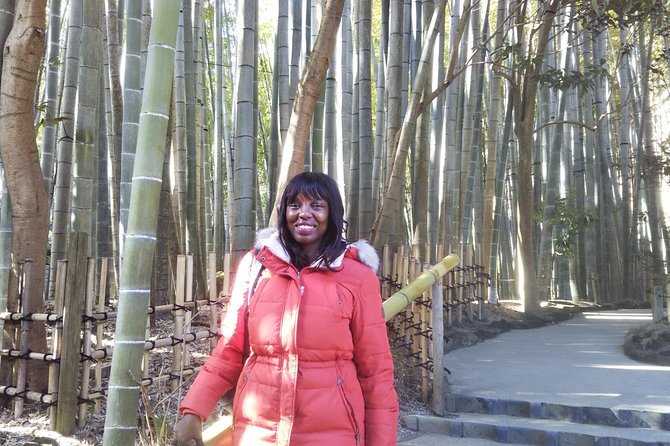
Hokoku-ji Temple is known for its bamboo grove behind the main hall. The grove is famous for having 2,000 plus bamboo stalks, and the paths are narrow enough that you get that “slow walk” effect even when the area is popular.
This is a great counterbalance to Kamakura’s bigger icons. After the Great Buddha, this feels intimate. The grove also gives you a different kind of photo, mostly vertical lines and light filtering through bamboo.
Downside to consider: because it is a walk-through experience, it is not always everyone’s favorite if you are short on time or if you prefer large open spaces. But if you like atmosphere and quiet visuals, this is often a highlight.
Zen Temples for the Middle of the Day: Kencho-ji and Engaku-ji
Kamakura’s Zen temples are a major part of why the area feels distinct from Tokyo. Two of the most important choices from the list are Kencho-ji and Engaku-ji, the number one and number two of Kamakura’s five great Zen temples.
Kencho-ji:
- Founded in 1253 by the ruling regent Hojo Tokiyori.
- Often chosen when you want the “most important” Zen anchor.
Engaku-ji:
- Founded in 1282 by the ruling regent Hojo Tokimune.
- A strong pick if you want that classic temple-court atmosphere and an easy explanation of Kamakura’s shifting political-religious world.
A good guide makes this stops-and-stairs loop feel logical. You should expect stories about the temple system, the role of ruling families, and how Zen spread in the region. In past tours tied to this format, guides like Koba and Takako have been praised for connecting the dots, including Shogun and city history while you walk.
Timing note: both stops are often around 30 minutes in a typical customized run, which is enough to enjoy the grounds without rushing.
Enoshima Island and Zeniarai Benten: When You Want a Coastal Detour
If your list includes Enoshima Island, you get a switch in mood. Enoshima is an island just west of Kamakura, connected to the mainland by a bridge. It is touristy in the sense that it has lots of attractions, shrines, and views, but it still gives you that coastal break from purely temple-centered walking.
Zeniarai Benten Shrine is a fun addition in western Kamakura. The key detail is right in the name: Zeniarai means coin washing. People come here to wash their money at the shrine’s spring, and it is said to bring good luck.
In practice, this stop works well because:
- It is quick but memorable.
- It offers an easy, light moment for photos and interaction.
- It is a change of pace from strict temple halls.
If you are sensitive to crowds, Enoshima can feel busier than the hilltop temples, so your guide can help decide where to focus.
Meigetsuin Hydrangea Temple and the Hilltop Options That Feel Off the Main Track
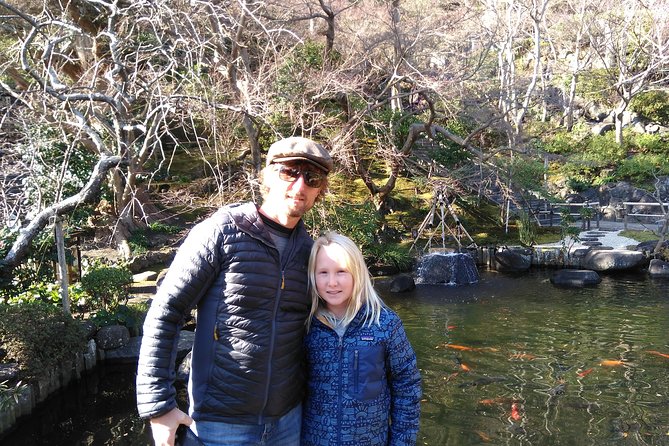
Depending on the season and what you choose, Meigetsuin (often called Hydrangea Temple) can be one of the most visually rewarding stops. It is a Rinzai Zen temple founded in 1160, and hydrangeas bloom abundantly on the grounds. Even if you are not visiting peak hydrangea season, it still tends to feel like a calm garden stop where you can slow down.
Other temple options in the hills and corners include:
- Ankokuronji, connected to Nichiren’s early presence in Kamakura around 1253.
- Jomyo-ji, founded by the Ashikaga family.
- Zuisen-ji, located in a narrow valley in the far east of Kamakura, surrounded by wooded hills. One guide’s comment that sticks with people is how this stop can feel especially peaceful when you are away from the busiest routes.
- Myohonji, founded by Hiki Yoshimoto in 1260.
- Jochiji, Tokeiji, and Jufukuji, all listed as part of Kamakura’s important branch-temple world within Rinzai Zen networks.
- Eishoji, notable as the only surviving nunnery in Kamakura, founded in the early Edo period and connected to the Tokugawa family.
You do not need to pick all of these. In a 6-hour format, I like using these options to shape the personality of your day. If you want scenic and quiet, pick some of the valley and hill placements. If you want “greatest hits,” focus on the famous Zen temples plus one signature shrine and the Great Buddha.
Price and Value: When $155.22 Per Person Makes Sense
At $155.22 per person for about 6 hours, you are paying for a few things you cannot easily replicate on your own:
- A government-licensed guide who can explain what you are seeing while you walk.
- A customized plan for choosing 3 to 4 sights instead of rigid routes.
- Help with public transport navigation, which is the part that usually consumes your time and energy.
What is not included matters for real budgeting. Transportation fees, entrance fees, and lunch are not included. Entrance fees are often minor on paper, but they add up once you start mixing shrines and temples. Also, guide entry fees are only covered for the sights included in your chosen list.
So how do you judge value?
- If you hate map stress, this price starts to look fair fast.
- If you want more than just photos, the guide explanations and pace control make it worth it.
- If you are fine using apps and picking a single train line, you might find cheaper DIY options. But you would be trading away the on-the-spot context that makes Kamakura click.
A small planning note: the tour is often booked about 82 days in advance, so if your dates are flexible, you can often choose your preferred time slot sooner rather than later.
Who This Tour Fits Best, and Who Might Want a Different Day
This tour fits best if you:
- Want a private experience with your own group only.
- Like walking and are okay with trains and buses as part of the day.
- Want clear context for temples and shrines, not just landmarks.
- Value an adjustable pace so you can spend more time where you care.
It might be less ideal if you:
- Expect a car-based, low-walking itinerary. There is no private vehicle.
- Have very limited mobility and cannot manage hills. Service animals are allowed, but the itinerary is still a walking tour.
- Want a long list of stops. This format caps you at about 3 to 4 sights for a reason.
One more practical detail I appreciated in the way guides are described: several guides have been praised for managing different needs, including older family members, hearing-aid accessibility, and keeping the day moving without rushing people.
Should You Book This Kamakura Walking Tour?
I would book it if your goal is a focused Kamakura day where you understand what you are seeing and you do not want to spend your time figuring out transit. The combination of government-licensed English guidance, customizable 3 to 4 stops, and public-transport help is the core value.
I would think twice if you want to minimize walking or if you already know Kamakura well enough to guide yourself confidently. In that case, DIY can work. But if you want your day to feel organized, paced, and meaningful, this is a strong choice.
FAQ
How long is the Kamakura walking tour?
The tour lasts about 6 hours.
How many sights will we see?
Your guide will customize the route around 3 to 4 sights from the listed options.
Is this a private tour?
Yes, it is private. Only your group participates.
Do we get pickup?
Pickup is offered on foot. The guide meets you within a designated Kamakura or Yokohama area.
Is the tour walk-only?
No. It is a walking and public transport tour, with trains and buses included as part of the day plan.
Are entrance fees included?
No. Entrance fees are not included.
Are transportation costs included?
No. Transportation fees are not included.
Is lunch included?
No. Lunch is not included.
Can I cancel for a full refund?
Yes. You can cancel up to 24 hours in advance for a full refund. If you cancel less than 24 hours before the start time, the amount paid is not refunded.
Licensed Guides on the Same Ground

Newest Yokohama write-ups from the Loving Japan desk

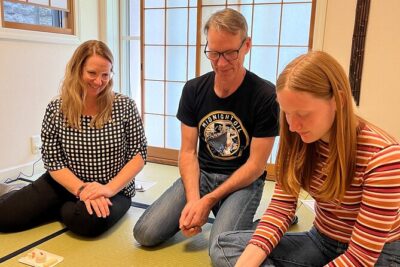
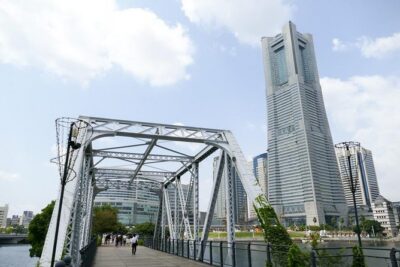
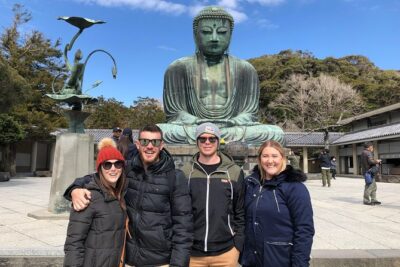
Kamakura, the Great Buddha and Enoshima, side by side.
 ★ 4.5Kamakura & Enoshima Day Trip including Temple TicketsFrom $581,375 reviews
 ★ 4.5Mt. Fuji, Kamakura, Big Buddha, & Lake Ashi Day TripFrom $49867 reviews
 ★ 4.5From Tokyo: Kamakura & Enoshima 1-Day Bus TourFrom $66189 reviews
 ★ 5.0Kamakura Historical Walking Tour with the Great BuddhaFrom $98129 reviews
 ★ 5.0Kamakura Private Tour: Temples, Nature, and the Great BuddhaFrom $98121 reviews
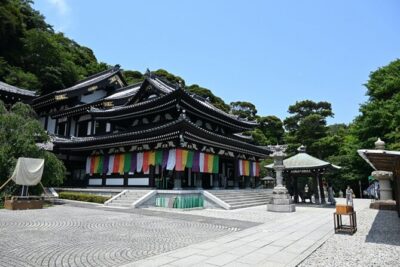 ★ 5.0Kamakura Walking Tour – The City of ShogunFrom $35100 reviews
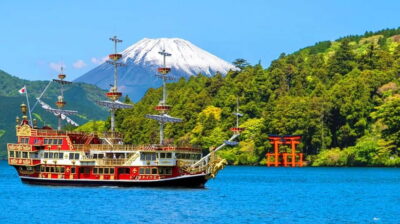 ★ 4.9Sea of Mount Fuji, Hakone Ropeway, Ōwakudani, EnoshimaFrom $5084 reviews
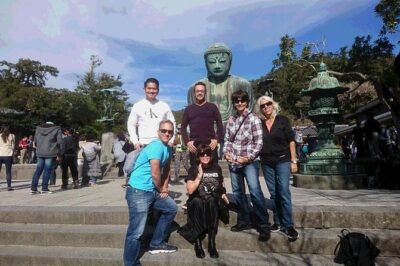 ★ 5.0Kamakura 8 hr Private Walking Tour with Licensed Guide from TokyoFrom $20180 reviews
Filed on these lists too