
REVIEW · KAMAKURA, THE GREAT BUDDHA AND ENOSHIMA
Kamakura Private Tour: Temples, Nature, and the Great Buddha
Kamakura is all steep paths and big icons, in a good way. This private walking tour strings together temples, forest trails, and sea views so you get the feel of old Japan without wrestling logistics. I especially like that it ends where the town turns relaxing, with the Great Buddha as the headline stop.
I love the smart mix of stops you actually want to see. You get admission included for Jochiji, Kotoku-in, and Hasedera, and your guide brings the stories of each place to life in clear English. I also like the pacing options because you are with a private guide, not a rushed pack.
One catch: you will walk at least 5 km, including a mountain pass. On a hot or wet day, that can feel like a hike more than a stroll, so wear good shoes and plan extra breaks.
In This Review
- Key Things That Make This Tour Worth Your Time
- Why This Kamakura Walk Feels Different Than a Sightseeing Circuit
- Price and What You Actually Get for $98.44
- Getting There: Start at Kita-Kamakura, End at Hase
- Stop 1: Jochiji Temple, Quiet Zen Under the Trees
- The Middle Stretch: Mountain Hiking Trails and the Daibutsu Course Feeling
- Zeniarai Benten Ugafuku Shrine: The Torii Framed Hole
- Sasuke Inari Shrine: The Fox Dream Story
- Kotoku-in Great Buddha: Size You Can Feel in Your Neck
- Hasedera Temple: Ocean Views Plus Seasonal Flower Energy
- Yuigahama Beach: A South-Facing Finish Where You Can Exhale
- Guides Make or Break This Day
- Walk Prep: Shoes, Heat, and When the Day Feels Steeper
- Food During the Tour: Plan for Lunch Off the Map
- Who This Tour Fits Best
- Should You Book This Kamakura Private Tour?
- FAQ
- How long is the Kamakura private tour?
- Where do I meet, and where does the tour end?
- Which temple entrances are included in the price?
- Is food or drink included?
- How much walking should I expect?
- Is hotel pickup or private transportation included?
- What if the tour is canceled due to weather?
Key Things That Make This Tour Worth Your Time
- Temple entry included for Jochiji, Kotoku-in, and Hasedera, so you can spend less time on tickets and more on the sites.
- Mountain pass walking plus scenic breaks, so you get both nature and spirituality in one loop.
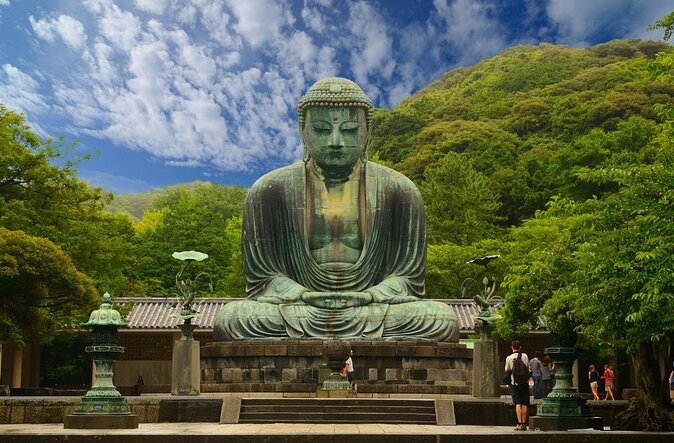
- Great Buddha facts that hit hard (13.35 m tall, about 121 tonnes, with the current bronze dating to 1252).
- Sea-facing finale at Yuigahama Beach, with south-facing views that line up with the ocean light.
- Small but powerful private experience, so your guide can adjust the day if conditions change.
Coast and temples south of Tokyo, compared
- Tokyo: Kamakura & Enoshima Day Trip including Temple Tickets
★ 4.5 · 1,375 reviews - From Tokyo: Kamakura & Enoshima 1-Day Bus Tour
★ 4.5 · 189 reviews - Kamakura Historical Walking Tour with the Great Buddha
★ 5.0 · 129 reviews - Kamakura Private Tour: Temples, Nature, and the Great Buddha
★ 5.0 · 121 reviews
Why This Kamakura Walk Feels Different Than a Sightseeing Circuit
Kamakura is close to Tokyo, but it does not feel like a suburb trip. It feels like a different mood, temples on slopes, forests cooling the air, and the coast acting like a reset button. This tour leans into that rhythm.
You start on the northern side around Kita-Kamakura Station, then work your way through mountain paths and shrine lanes. By the time you hit Kotoku-in (the Great Buddha) and later Hasedera, you are not just checking boxes. You are moving through the place the way a local would, step by step.
Price and What You Actually Get for $98.44
At $98.44 per person for about 5 hours, the value comes from the structure. You are paying for a private, English-speaking guide plus the convenience of included entrance fees for three major stops: Hasedera, Kotoku-in, and Jochiji.
What is not included is also important. Food and drink are not included, and there is no hotel pickup or private transport unless you add it. The price makes more sense if you are comfortable using Japan’s trains or local transit and you want your guide to handle routing and interpretation.
Also, you get a mobile ticket and photos of tour participants. Those are small things, but they add up when you are trying to keep the day easy.
Getting There: Start at Kita-Kamakura, End at Hase
This tour is set up for public transit. You meet at Kita-Kamakura Station and finish at Hase Station. Meeting and ending at different stations is great for flow, because you end closer to the coast, not back where you started.
If you are coming from Tokyo, you will usually find the train ride straightforward. One practical tip: plan your day so you do not need complicated transfers immediately after the tour ends at Hase Station.
If you want to minimize effort further, you can add hotel pickup for 8000 yen per person. Without pickup, you are walking and using local connections as part of the experience.
- Kamakura Walking Tour – The City of Shogun★ 5.0 · 100 reviews
- Kamakura 4hr Private Trip with Government-Licensed Guide★ 5.0 · 58 reviews
- When Emperors Reigned and Shoguns Ruled★ 5.0 · 43 reviews
- From Tokyo: Kamakura Full Day Tour with a Local Expert Guide★ 4.6 · 43 reviews
- Exciting Kamakura – One Day Tour from Tokyo★ 5.0 · 40 reviews
Stop 1: Jochiji Temple, Quiet Zen Under the Trees
Your first real stop is Jochiji Temple, a serene Zen site built in 1281 by Hojo Tokoyori to honor his son. The reason this opening matters is simple: it sets the tone.
Jochiji sits in a forested area, so it feels like a mental exhale right after you arrive. You get time to stroll and look around without the pressure of a long line crowd. The guided context also helps. When you know why it was built, you see the temple as more than architecture.
One time-saving detail: this stop is about 25 minutes and includes admission.
The Middle Stretch: Mountain Hiking Trails and the Daibutsu Course Feeling
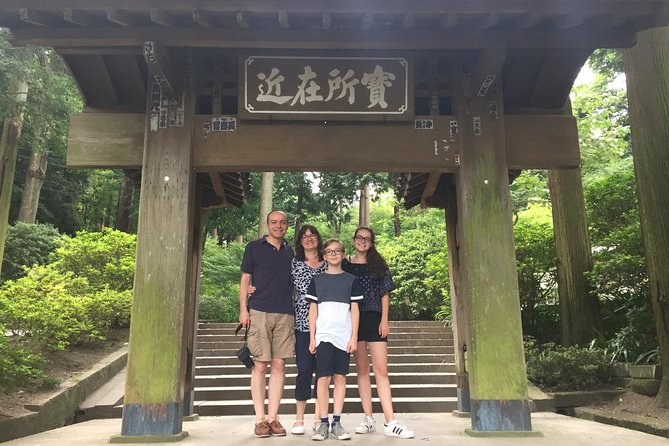
Between temples you hit the hiking side. There is a stretch on Kamakura hiking trails, including a pass area, with about 40 minutes set aside for nature walking. The goal is not just exercise. The goal is perspective.
This is where Kamakura stops feeling like a list and starts feeling like a place. You are away from the easiest city routes. You are also more likely to notice the textures of the area, paths, slopes, and those sudden pocket views you would miss if you just rode between major sites.
Expect it to be at least 5 km total walking, including the mountain pass. Reviews back up the reality: this can be strenuous, especially when it is hot and humid.
Zeniarai Benten Ugafuku Shrine: The Torii Framed Hole

Next comes Zeniarai Benten Ugafuku Shrine and the walk along the Daibutsu Hiking Course through the mountains. You are headed toward a very specific spot: a mysterious hole in the hillside framed by a torii gate.
This is the kind of stop that does not feel like a typical temple photo moment. It is more like a local legend visual. You can feel why people gather here. Your guide’s job is to explain what you are seeing and why it matters, not just point at it.
Admission is not listed as included for this stop, but the shrine time is about 25 minutes and it fits nicely between the heavier landmarks.
Sasuke Inari Shrine: The Fox Dream Story
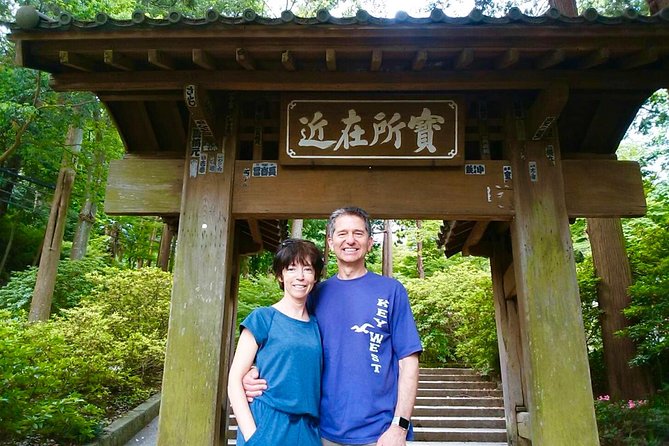
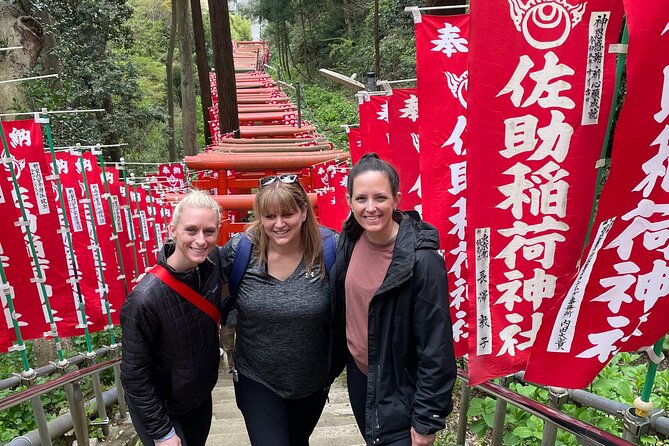
Then you shift to Sasuke Inari Shrine, tied to a legend. The story says the first shogun of Kamakura, Minamoto Yoritomo, was visited in a dream by a white fox known as Inari, who advised him how to win a battle.
That matters because Inari is not just a random shrine category. It is one thread in how Japanese belief and local stories overlap. Even if you do not remember every detail, you will probably remember the sense that the shrine is pointing to a larger story about power, guidance, and faith.
This stop is short, about 20 minutes, so you get the symbolism without eating your whole afternoon.
Kotoku-in Great Buddha: Size You Can Feel in Your Neck
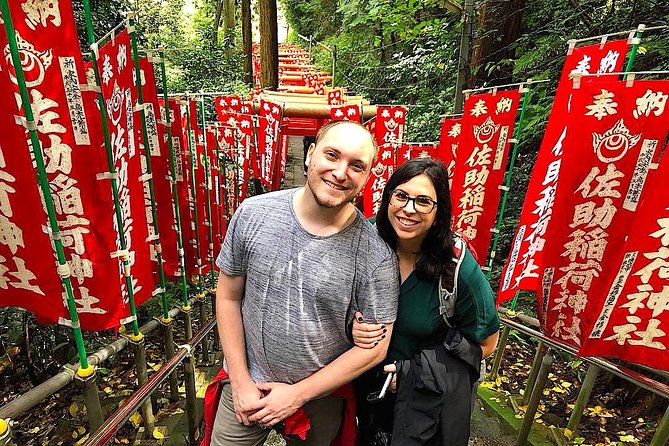
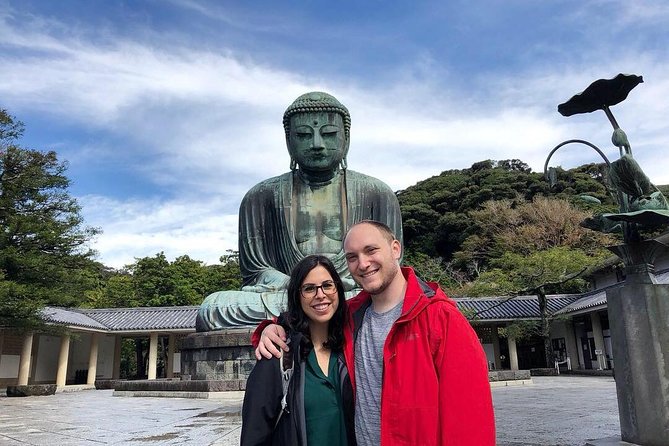
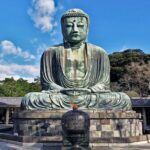
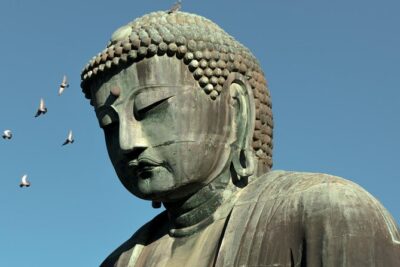
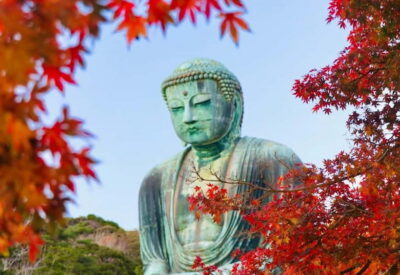
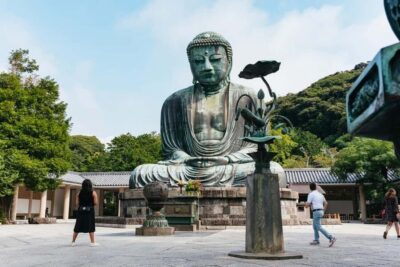
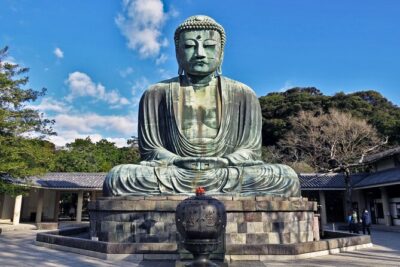
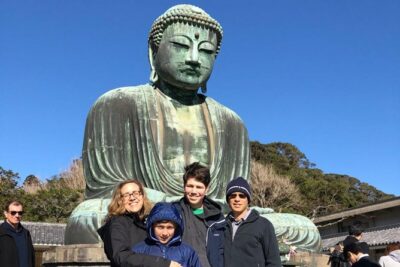
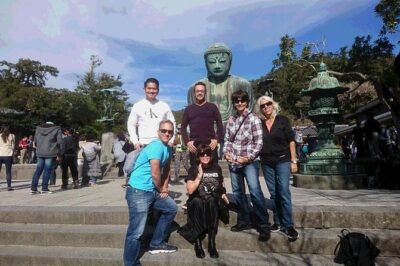
Now for the big one: Kotoku-in and the Great Buddha of Kamakura. The statue stands 13.35 m tall and weighs about 121 tonnes. The construction of the bronze statue in the form you see today dates to 1252.
Even without special effects, it is a visual shock. You spend less time trying to take the perfect picture and more time just absorbing scale. It is also a good moment to slow down. After hiking, your body wants a pause, and the Buddha naturally forces one.
Admission is included here, and the stop is about 20 minutes. It is long enough for both exterior views and a calm look at the statue area.
Hasedera Temple: Ocean Views Plus Seasonal Flower Energy
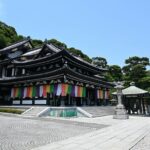
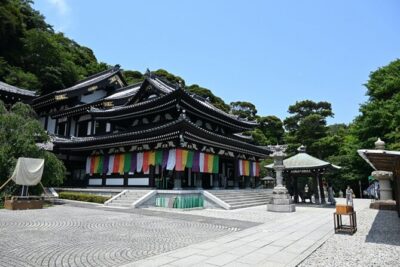
Next is Hasedera Temple, located about halfway up Mount Kamakura. That position is the whole point: the temple has great views south over the ocean and the Yuigahama Beach area.
One practical detail that helps you plan: during June and July, you can see ground hydrangeas. If you travel in those months, this stop becomes even more rewarding because you get both views and the flower season atmosphere.
This is about 30 minutes, with admission included. It is also a place where you may want to take it slow, because you will likely want to step back and let the view settle into your day.
Yuigahama Beach: A South-Facing Finish Where You Can Exhale
To close, you reach Yuigahama Beach. The beach faces south, so from here you expect to see the sun over the ocean. The timing depends on the season and day, but the direction is built for beautiful light.
During summer, there is an open-air market called Umi-no-ie. Even if you are not traveling in peak summer, this is still a great way to end the tour with something simple and human. Your guide can point out what to look for, but mostly you get to sit, breathe, and let the day’s walking come down a notch.
This stop is about 15 minutes, and you finish the tour at Hase Station.
Guides Make or Break This Day
This type of tour lives and dies by the guide. In the examples I’m using here, guides like Teiko, Yu, Yumi, Noriko, Yoko, Naho, Takami, and Famiko are praised for one thing over and over: clear English plus context that makes the sites make sense.
Here are the patterns that matter for you:
- Guides often add small etiquette notes for temple and shrine visits, which saves awkward guesswork.
- Guides commonly tailor the pace to your group needs, especially when someone needs slower walking or extra attention.
- If weather turns, guides adjust. One guide shifted plans using transit rather than insisting on the mountain stretch when rain hit, and another arranged a tea ceremony when the original plan got disrupted.
If you are lucky enough to get a guide who can explain what you are seeing, the tour turns from sightseeing into understanding.
Walk Prep: Shoes, Heat, and When the Day Feels Steeper
I cannot sugarcoat this. The tour calls for moderate physical fitness, and you will walk at least 5 km, including a mountain pass. That means you need shoes with grip and comfort.
Rain is also a factor. The route includes hillside and mountain paths, so slippery spots are possible. When it rains, you may do more transit segments. That is not a failure of the tour. It is the tour staying safe and workable.
Heat is another issue. One review described an extreme hot day and still got a good experience, but it required more breaks. So if you travel in summer, bring water and plan to slow down.
Food During the Tour: Plan for Lunch Off the Map
Food and drink are not included. That means you will either:
- Bring snacks so you can keep energy up between stops, or
- Let your guide help you find a practical lunch spot.
In several cases, guides booked lunch for the group at local places, including one described as hibachi-style with a grilled cooking setup. Another guide helped coordinate something reasonably priced. Your guide can usually steer you toward something that fits the day, and that is a major value add if you are tired of searching while walking.
Who This Tour Fits Best
This tour is a strong match if you want:
- Temple and shrine meaning, not just photos
- Nature walking without needing to plan a route yourself
- A day that balances “big landmark” with smaller spiritual stops
It is not the best choice if you:
- Hate uphill walking, or
- Expect a flat, easy stroll like a typical city museum day
It also works well for families if the kids can handle some walking and the group pace stays manageable. One review noted guides worked kindly with children and explained stops in a way that held both adults and kids.
Should You Book This Kamakura Private Tour?
Book it if you want Kamakura as a lived-in experience: forest temples, shrine legends, the Great Buddha, and a calm coastal finish. The included temple admissions and the private English guide make it a good value if you would otherwise spend time figuring out routes and context.
Hold off if you are not comfortable with a 5 km walking day with a mountain pass, especially in heat or rain. If your main goal is minimal walking and maximum relaxation, Kamakura has other options that will feel easier.
FAQ
How long is the Kamakura private tour?
It runs about 5 hours.
Where do I meet, and where does the tour end?
You meet at Kita-Kamakura Station and the tour ends at Hase Station.
Which temple entrances are included in the price?
Entrance fees are included for Hasedera Temple, Kotoku-in (the Great Buddha of Kamakura), and Jochiji Temple.
Is food or drink included?
No, food and drink are not included.
How much walking should I expect?
You will walk at least 5 km, including a mountain pass. You should have moderate physical fitness.
Is hotel pickup or private transportation included?
Hotel pickup and drop-off are not included, but they are available for an extra 8000 yen per person. Private transportation is also not included.
What if the tour is canceled due to weather?
This experience requires good weather. If it is canceled due to poor weather, you will be offered a different date or a full refund.
South to Kamakura and the Coast
Newest Kamakura write-ups from the Loving Japan desk

Kamakura, the Great Buddha and Enoshima, side by side.
 ★ 4.5Kamakura & Enoshima Day Trip including Temple TicketsFrom $581,375 reviews
 ★ 4.5Mt. Fuji, Kamakura, Big Buddha, & Lake Ashi Day TripFrom $49867 reviews
 ★ 4.5From Tokyo: Kamakura & Enoshima 1-Day Bus TourFrom $66189 reviews
 ★ 5.0Kamakura Historical Walking Tour with the Great BuddhaFrom $98129 reviews
 ★ 5.0Kamakura Walking Tour – The City of ShogunFrom $35100 reviews
 ★ 4.9Sea of Mount Fuji, Hakone Ropeway, Ōwakudani, EnoshimaFrom $5084 reviews
 ★ 5.0Kamakura 8 hr Private Walking Tour with Licensed Guide from TokyoFrom $20180 reviews
 ★ 4.8Great Buddha, Kasuga Shrine & Deer Park TourFrom $7762 reviews
Filed on these lists too