
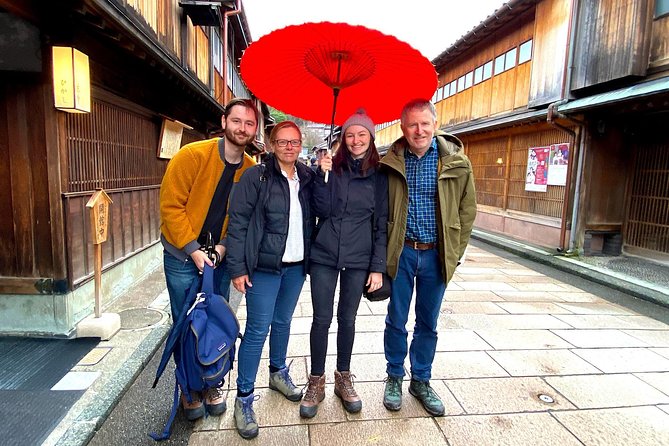
REVIEW · KANAZAWA AND KENROKU-EN GARDEN
Kanazawa Private Tour: Highlights of an Old Samurai Town
Kanazawa gets under your skin fast when you walk it with a real guide. This private tour strings together the big emotional hits of the city, Kenrokuen Garden and Kanazawa Castle, plus quieter meaning in the Suzuki Daisetsu Museum and a preserved samurai house. I like that it feels structured but not rushed, and I also like that you get a local perspective built around how Kanazawa worked and thought, not just what you pose in front of. The main catch is physical, uneven surfaces and mountain paths mean you should wear supportive shoes and have a moderate walking pace in mind.
What makes the $171.73 per person feel realistic is that several admissions are already covered, and you are not spending your day haggling with trains or figuring out bus routes. Hotel pickup and drop-off, an English guide, and included bus tickets cut a lot of friction. One practical downside: food and drinks are not included, so budget for lunch and snacks on your own (there is a vegetarian option if you flag it in advance).
In This Review
- Key highlights at a glance
- A 7-hour private day that starts with pickup
- Omicho Market: your 40-minute shortcut to local life
- Kanazawa Castle, built in 1583: what to watch for in 45 minutes
- Kenrokuen Garden: one of Japan’s big national gardens
- D. T. Suzuki Museum: Zen culture through a Kanazawa birthplace
- Nomura Family Samurai House: daily life in a preserved home
- The guides are a big part of the value
- Walking, shoes, and winter reality checks
- Price and value: what you really pay for at $171.73
- Who should book this Kanazawa private tour
- Should you book this tour?
- FAQ
- How long is the Kanazawa private tour?
- What is included in the price?
- Is this tour really private, and how many people are in a group?
- Where does the tour start?
- Can the tour accommodate vegetarian diets?
- Is the tour suitable for people with walking disabilities?
Key highlights at a glance
- Hotel pickup and drop-off to keep the day easy and start right where you are
- Up to 8 people per booking, so you get true conversation time with your guide
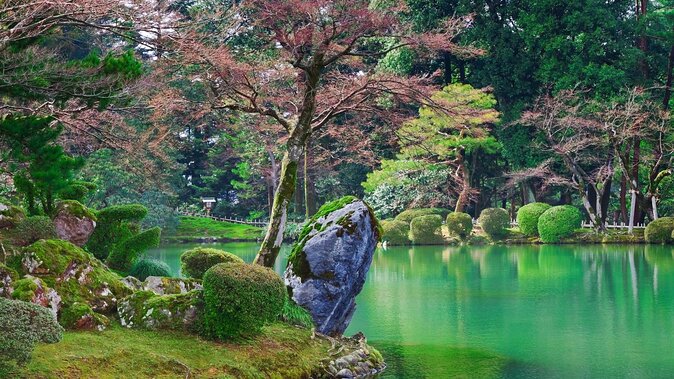
- Kenrokuen, one of Japan’s national garden standouts with seasonal beauty
- Kanazawa Castle built in 1583 and tied to the Maeda family story
- Suzuki Daisetsu Museum linking Kanazawa to Zen culture abroad
- Nomura family samurai house for daily life, not just armor and names
What else fills a Kanazawa afternoon
- World Heritage Shirakawa-go and Experience Tours from Kanazawa
★ 5.0 · 4,049 reviews - Kanazawa: Kenrokuen Tea Ceremony Experience
★ 4.8 · 1,139 reviews - Kanazawa Half Day Tour (Private Guide)
★ 5.0 · 361 reviews - Kanazawa Full Day Tour (Private Guide)
★ 5.0 · 323 reviews
A 7-hour private day that starts with pickup
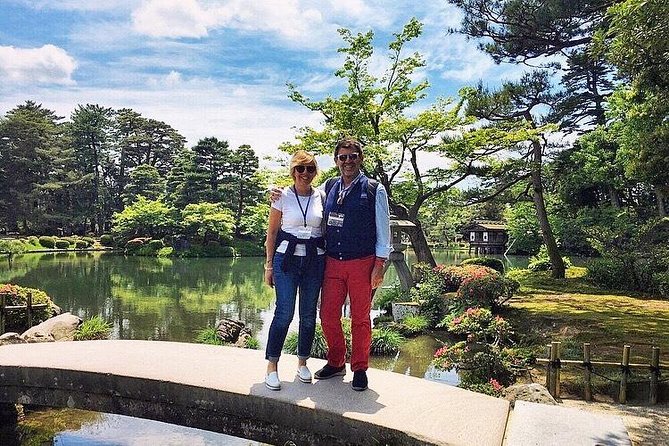
This is a private tour in the real sense: only your group participates, with a maximum of 8 people. The tour runs about 7 hours, so it works well for a first full day in Kanazawa or when you want your bearings without building your own route.
Your day starts near Kanazawa Station, with an option for hotel pickup and hotel drop-off. That matters because Kanazawa’s sights spread out enough that independent travel can turn into lots of short hops and schedule stress. Here, those transitions are handled for you with included bus tickets.
In practice, you should expect a walking-heavy format. The route includes uneven surfaces and mountain paths, and you will be on your feet for hours. The tour asks for easy-to-walk shoes, and that is good advice. If your legs tire easily, plan on taking your time at each stop and listening for the guide’s “watch for this” cues before you move on.
Omicho Market: your 40-minute shortcut to local life
You begin at Omicho Market, a place locals call the kitchen of Kanazawa. You are not there to eat every bite for two hours. You are there for orientation: it is a compact window into what this city does well, especially with seasonal seafood and fruit.
The market’s vibe is loud in a friendly way, full of stalls and quick conversations. It is also a good place to notice how Kanazawa’s location shapes its food culture. The description even points to how Sea of Japan crabs end up here. That gives the rest of the day context. You are not just touring buildings in a vacuum, you are seeing a city that eats with the seasons.
Because your market time is about 40 minutes, treat it like a “scan and decide” stop:
- Look first, then buy a small snack if you want
- Use the guide to point out what is worth tasting versus what is mostly for show
If you are traveling with dietary limits, remind your guide what you can eat. The tour does not include food, but the guide can help you navigate choices in a way that keeps the day comfortable.
Kanazawa Castle, built in 1583: what to watch for in 45 minutes
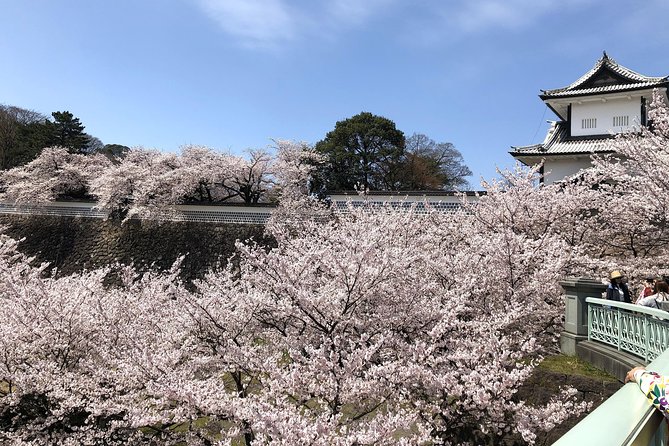
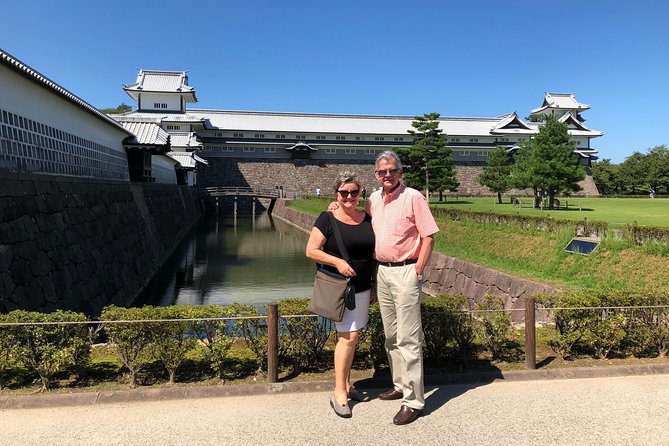
Next comes Kanazawa Castle, built in 1583 by Toshiie Maeda. It served as the residence for the 14 generations of the Maeda family of the Kaga clan until 1869. That time span is the point. You are seeing a place that outlasted eras, not a single era snapshot.
Your visit is about 45 minutes, which sounds short until you realize the castle’s real job on this tour is interpretation. A well-planned castle stop helps you understand how Kanazawa functioned politically and socially. Even if you do not read every sign, your guide can connect the dots between the castle, the samurai neighborhoods later in the day, and why the city’s cultural achievements became so strong.
Pay attention to the surviving features mentioned in the description, like Ishikawa Gate and the 30 Nagaya area. These are the kinds of details that turn a “pretty castle” visit into real historical grounding. If you are the type who wants names and dates, this is your lane. If you are more visual, focus on how the castle layout informs the surrounding town.
One drawback to keep in mind: if you arrive with a tour pace mindset, you might feel you are “only” there briefly. But the trade-off is that you get to move on while the story stays coherent. This is a day tour, not an all-day castle deep study.
Blade work and stagecraft, other sessions
- Kanazawa: Samurai Residence Remains Nomura Family admission★ 4.4 · 111 reviews
- Kanazawa: Samurai, Matcha, Gardens and Geisha Full-Day Tour★ 4.9 · 75 reviews
- Full-Day Tour from Kanazawa: Samurai, Matcha, Gardens and Geisha★ 5.0 · 68 reviews
- Kanazawa Private Tour: Highlights of an Old Samurai Town★ 5.0 · 46 reviews
Kenrokuen Garden: one of Japan’s big national gardens
Kenrokuen is your signature calm moment, with about 1 hour on-site. It is listed among Japan’s three famous national gardens, alongside Mito Kairakuen and Okayama Korakuen, and it is known for looking great in every season.
The tour’s practical value here is timing and focus. Gardens can be hard to “see right” without context, because you do not know what to look for. With a guide, you can orient yourself quickly and notice how the garden’s design supports different viewpoints and walking paths. Even if you only take in parts of it, you walk away understanding why Kenrokuen gets treated like a national treasure.
This is also where you should dress for the weather. The description notes winter can make scenes stunning, but it also signals that severe winter weather may change the schedule. So bring layers even if the morning looks mild. In cold conditions, a garden walk becomes much more comfortable when you plan for it.
If you are not a big garden person, do not skip this stop. Kenrokuen is one of the clearest ways to feel Kanazawa’s aesthetic side without needing a museum ticket or a long train ride.
D. T. Suzuki Museum: Zen culture through a Kanazawa birthplace
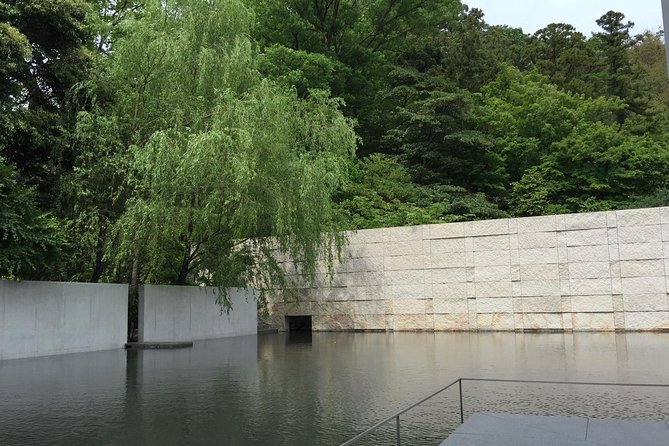
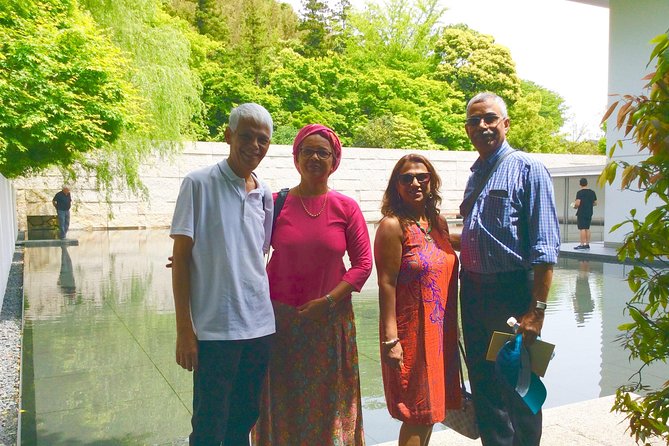
After the castle and garden contrast, the D. T. Suzuki Museum adds a cerebral layer. This is where the day stops being just architecture and becomes about ideas. The museum commemorates Suzuki Daisetsu, a Buddhist philosopher born in Kanazawa, and credits him with helping Zen culture become widely known abroad.
Your visit is around 50 minutes. That is enough time to get the theme, see key exhibits, and connect the dots to the rest of your day. If you are into religion and philosophy, this stop can feel like the “why” behind the tone of the city. If you are not, you still get an easy entry into how people carry local identity across borders.
This museum works especially well mid-tour, when your brain is ready for something different from walking. It also gives your guide a chance to explain Kanazawa as more than a quiet place. The framing is that Kanazawa’s cultural achievements can rival bigger-name cities. Even if you do not measure that claim, the story feels coherent by the time you finish.
Nomura Family Samurai House: daily life in a preserved home
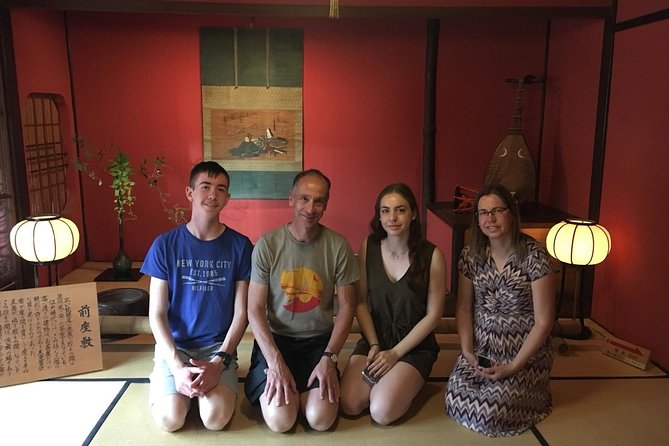
To balance the big public symbols, you visit a samurai house, the Nomura Family Samurai House, with about 50 minutes there. This matters because it shifts the focus from status and power to daily routines.
The description emphasizes displays that help you learn about life in earlier times, plus a lovely garden attached to the house. That combination is what I look for in these kinds of stops. You are not just seeing objects, you are getting a sense of how space was used, where people moved, and what mattered to ordinary household life.
One benefit of having it on a private tour is pacing. Your guide can point out what to pay attention to based on your interests, whether you care more about architecture, family life, or the objects and what they represent. If you are traveling with kids or a mix of interests, this is also a solid “hands-on attention” stop because houses tend to feel more relatable than formal monuments.
The guides are a big part of the value
The strongest theme in the experience is the guides. Names that stood out include Yumiko (often described as dedicated, knowledgeable, and very fluent in English), Yumika (engaging and kind, with customization for interests and food tastes), Yuri (flexible and good at finding lesser-known spots and handling logistics like bus use), Kazu (informative with a knack for practical additions), Makiko (organized and making the day feel relaxing), and Toshiko (pleasant and ready to arrange extra sights).
This matters because a route like this can turn into a checklist if the guide is just moving you along. Here, the guide role is more like a personal Kanazawa translator. For example, one guide helped with train-station travel arrangements. Another guided you to extra sights and even made a reservation for something like a Ninja temple visit. And there was at least one day where the group caught a local parade. Those moments are not the “main monuments,” but they are exactly how Kanazawa starts to feel alive.
So if you are wondering whether a private tour is worth it beyond the ticket price, this is where you feel it. You get an English guide who can adjust your order, answer questions, and suggest practical add-ons. Even if you only use that flexibility once, it improves the whole day.
Walking, shoes, and winter reality checks
This tour is not a gentle stroll on perfect pavement. It calls out uneven surfaces and mountain paths. You can still do it comfortably if you plan for it, but you should not treat it like a museum-only day.
Bring shoes with grip and consider an extra layer. The itinerary can shift during severe winter weather, so do not assume every exact stop will run as printed. The good news is that the tour is structured around major Kanazawa priorities, so even if the order shifts, the day’s “story” should hold.
Physical fitness matters too. The tour asks for moderate fitness, which is a polite way of saying you should be able to walk for extended stretches. If that is you, you will enjoy it. If not, you might find the pace tiring, even with a friendly guide slowing down when you need it.
Price and value: what you really pay for at $171.73
At $171.73 per person, the ticket is not cheap, but it also is not just paying for walking. You are paying for a chain of conveniences plus paid access.
Included items cover the big friction points:
- English guide
- Hotel pickup and drop-off
- All fees and taxes
- Bus tickets
- Admissions at key stops like Kanazawa Castle, Kenrokuen, D. T. Suzuki Museum, and the Nomura Family Samurai House
Food and drinks are not included, so you will still spend money on lunch and snacks. But you avoid paying separately for multiple attractions and you avoid transport confusion.
If you are comparing against DIY travel, the biggest hidden cost is time. Time spent hunting bus routes and ticket machines is time you could be in Kenrokuen. If you are traveling as a couple or small group, the private format also tends to feel more reasonable because you spread the guide’s cost.
One other value signal: it is popular enough that it is booked around 42 days in advance on average. That does not mean you must plan months ahead, but it does suggest availability can tighten.
Who should book this Kanazawa private tour
I think this is a great fit if:
- You want the main Kanazawa sights without turning the day into logistics
- You like history but also enjoy the human angle, how people lived, not just dates
- You care about gardens and cultural context, not only photos
- You want a small group with a guide who can answer questions in good English
- You prefer hotel pickup rather than starting at the station and coordinating trains and buses
I would reconsider if:
- Your mobility is limited, because the tour is not recommended for walking disabilities due to uneven surfaces
- You hate walking and want a more sit-down schedule
- You are on a very strict food budget, since you will need to plan meals since food is not included
Should you book this tour?
Yes, if you want a coherent, guide-led Kanazawa day that mixes castle, garden, philosophy, and samurai home life. This is the kind of itinerary that works best when a human guide stitches it together, and the guide quality shows up strongly in the way days get customized, questions get handled, and extra moments like reservations or a local parade get folded in.
Before you book, do a quick self-check on footwear and stamina. If you can walk for hours on uneven ground with a few changes in weather, you will get a lot from it. If that sounds stressful, you might choose a shorter or less walking-heavy option instead.
Overall, for a first trip to Kanazawa, this is a solid way to get both the big highlights and the quieter meaning behind them, without spending your day figuring out how to get from place to place.
FAQ
How long is the Kanazawa private tour?
The tour runs about 7 hours.
What is included in the price?
It includes an English guide, hotel pickup and drop-off, all fees and taxes, and bus tickets. Admission tickets for the listed stops are included. Food and drinks are not included.
Is this tour really private, and how many people are in a group?
Yes. It is a private tour where only your group participates, with a maximum of 8 people per booking.
Where does the tour start?
The start point is Kanazawa Station area in Kanazawa, Ishikawa, Japan. The tour ends back at the meeting point.
Can the tour accommodate vegetarian diets?
A vegetarian option is available. You should advise the operator about dietary requirements at the time of booking.
Is the tour suitable for people with walking disabilities?
It is not recommended for those with walking disabilities due to uneven surfaces. You should also expect walking on mountain paths and have a moderate physical fitness level.
Blade Work and Stagecraft

A Kanazawa Afternoon


Newest Kanazawa write-ups from the Loving Japan desk


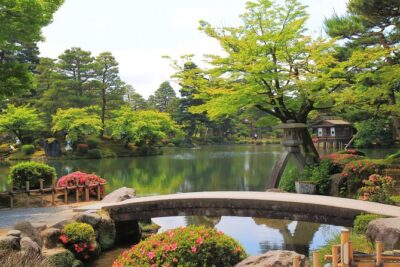

Kanazawa and Kenroku-en Garden, side by side.
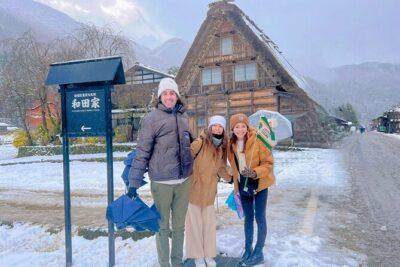 ★ 5.0World Heritage Shirakawa-go and Experience Tours from KanazawaFrom $1224,049 reviews
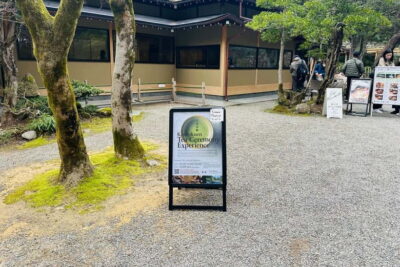 ★ 4.8Kenrokuen Tea Ceremony ExperienceFrom $351,139 reviews
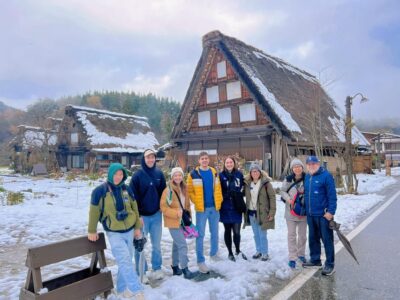 ★ 4.9World Heritage Shirakawa-go Morning Guided TourFrom $77988 reviews
 ★ 5.0Kanazawa Half Day Tour (Private Guide)From $134361 reviews
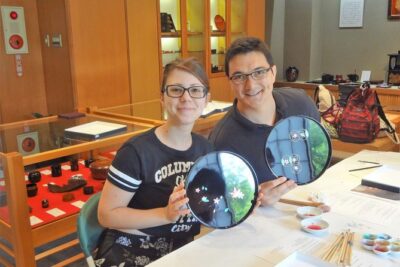 ★ 5.0Kanazawa Full Day Tour (Private Guide)From $183323 reviews
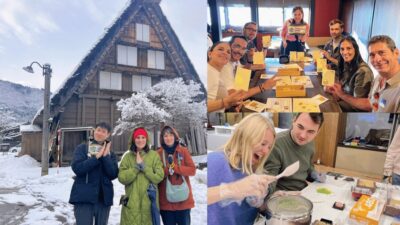 ★ 4.9World Heritage Shirakawa-go & Two Local ExperienceFrom $116274 reviews
 ★ 5.0[One-day bus tour departing from Kanazawa Station] Shirakawa-go and Gokayama – Two World Heritage Villages Enjoyable Bus TourFrom $88253 reviews
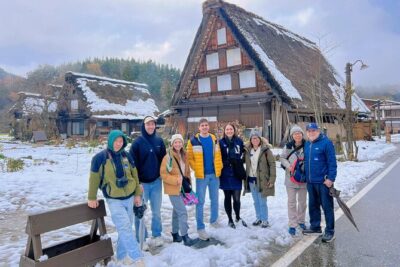 ★ 5.0World Heritage Shirakawa-go Perfect Guided Tour from KanazawaFrom $81220 reviews
Filed on these lists too