
REVIEW · KANAZAWA AND KENROKU-EN GARDEN
Try Mindful Calligraphy Near Kanazawa’s Ninja Temple
A brush feels too small for big feelings. In this Kanazawa studio, Japanese calligraphy turns into a calm, hands-on hour rather than a show. You learn the tools, practice basic movements, then write something that actually looks like you meant it.
Two things I especially like: the real practice in a proper classroom, and the chance to make one finished piece you can take home. You also get English-friendly help, which makes the cultural context and techniques easier to grasp without slowing you down.
One consideration: it is a quiet, focused class, so if you want nonstop sightseeing energy, this may feel slower than you expect.
In This Review
- Key points to know before you go
- A Quiet Hour in a Kanazawa House That Feels Lived-In
- Your First Lesson in Strokes, Ink, and the Three Scripts
- Choosing a Word and Making It Yours on a Scroll or Fan
- English-Friendly Tutoring That Keeps the Class Moving
- Price and Value: Why 44 Dollars for a Real Craft Lesson Makes Sense
- Finding the Studio Near Kanazawa’s Sights, Without Stress
- Who Should Book This Calligraphy Trial Lesson?
- Should You Book Culture Lab Nomachi for Calligraphy in Kanazawa?
- FAQ
- How long is the Japanese calligraphy trial lesson?
- What will I create during the class?
- What language is the instruction offered in?
- Where is the meeting point in Kanazawa?
- Is the class suitable for young children?
- Is it suitable for vegans?
- Can I cancel and get a full refund?
- Does the booking let me pay later?
Key points to know before you go
- A real classroom setting where brush technique matters more than performance
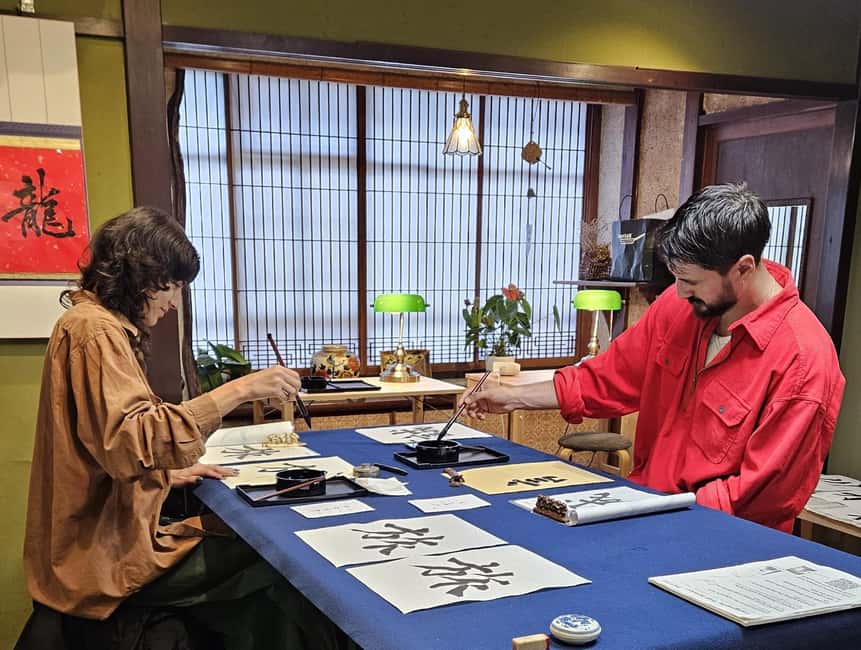
- 100-year-old house atmosphere, the kind that naturally lowers your voice
- Pick your own word, so your final scroll or fan feels personal
- Learn the strokes first, then you create, not the other way around
- English support from the instructor when you need clarification
- Small, private group feel, with plenty of patient guidance
What else fills a Kanazawa afternoon
- World Heritage Shirakawa-go and Experience Tours from Kanazawa
★ 5.0 · 4,049 reviews - Kanazawa: Kenrokuen Tea Ceremony Experience
★ 4.8 · 1,139 reviews - Kanazawa Half Day Tour (Private Guide)
★ 5.0 · 361 reviews - Kanazawa Full Day Tour (Private Guide)
★ 5.0 · 323 reviews
A Quiet Hour in a Kanazawa House That Feels Lived-In
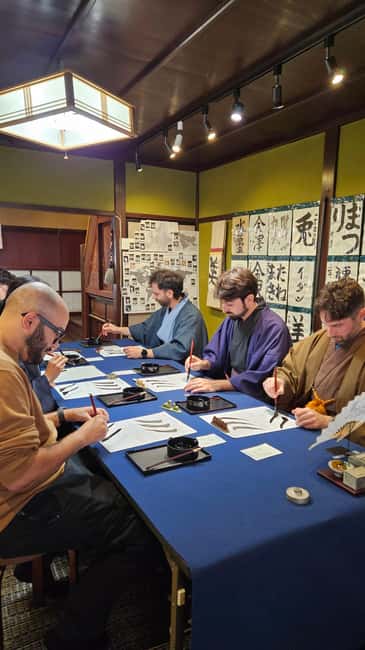
This is not a calligraphy skit. It is structured like a lesson, with you practicing fundamentals and then producing a final work. The setting helps. Expect a traditional 100-year-old house vibe, so the whole experience feels more like stepping into everyday Japan than visiting a themed activity.
For me, the best part is how quickly your brain settles once the brush hits the paper. There is something oddly satisfying about controlling pressure, angle, and speed, and realizing you are building the character one stroke at a time. The class is designed to feel meditative, not performative.
You might notice other people in the studio at certain times, especially Thursday and Saturday after 3:00 PM, when local children may also be there. That is not a problem, but it is good to know if you are hoping for total silence.
Your First Lesson in Strokes, Ink, and the Three Scripts
Japanese writing has three scripts, and you get the basics in a way that makes it make sense. The class introduces Kanji, Hiragana, and Katakana, with the idea that Kanji are picture-like characters with deep meaning, while Hiragana and Katakana are phonetic scripts with their own flow. Even if you only write one script during your session, this context helps you stop thinking of calligraphy as just drawing letters.
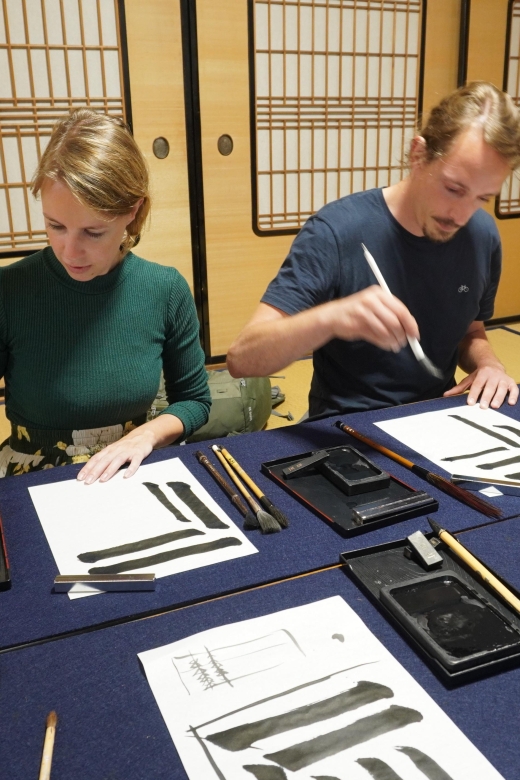
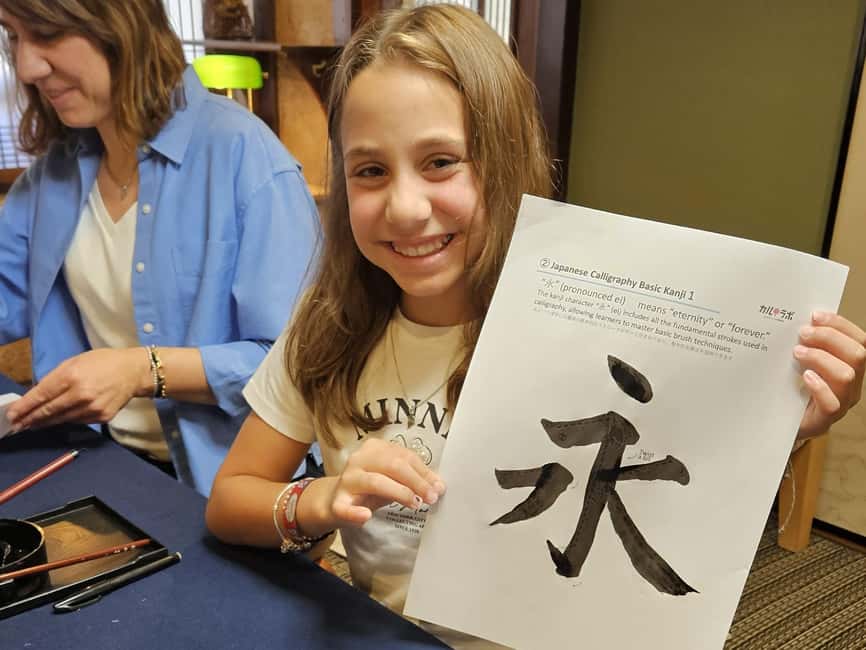
The lesson starts with the tools: brush and ink. You learn what to do with them, not just what they are. Then you practice basic strokes and brush techniques using guide sheets, which is the smartest way to build control fast without needing years of practice.
One practical note: traditional brushes and ink can contain animal-derived materials. The activity is not suitable for vegans, so if that matters to you, plan on skipping this class. (If you are fine with traditional materials in general, this is still worth knowing, because it affects who can participate.)
Choosing a Word and Making It Yours on a Scroll or Fan
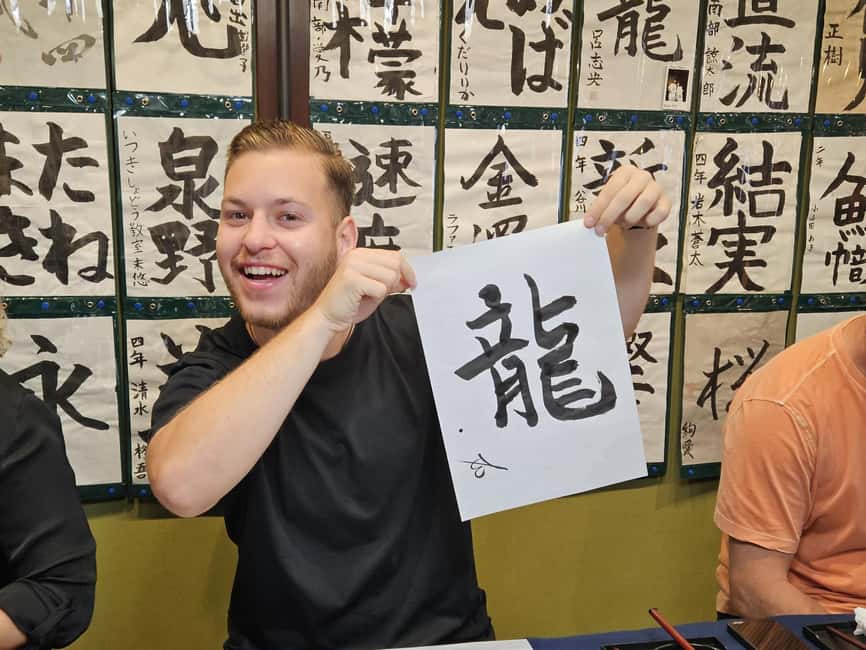
After you get the hang of the strokes, you choose a word you like. This is where the class shifts from technique to personality. You practice again, then write your final piece. The finished artwork is created directly on a hanging scroll or a folding fan, and you take it home as a souvenir.
That take-home detail is more valuable than it sounds. If you only learned brush movements, you would still be proud, but you would have nothing tangible to show for it. A scroll or fan is a real object with real cultural weight, and it is a great way to remember what you felt while writing.
You also get guidance on how to use the tools to get cleaner lines and better balance. The instructors support you while you are writing, so you are not just left to struggle through a final character. If you have ever tried an art class where the teacher demonstrates and then disappears, you will appreciate the opposite approach here.
Blade work and stagecraft, other sessions
- Kanazawa: Samurai Residence Remains Nomura Family admission★ 4.4 · 111 reviews
- Kanazawa: Samurai, Matcha, Gardens and Geisha Full-Day Tour★ 4.9 · 75 reviews
- Full-Day Tour from Kanazawa: Samurai, Matcha, Gardens and Geisha★ 5.0 · 68 reviews
- Kanazawa Private Tour: Highlights of an Old Samurai Town★ 5.0 · 46 reviews
English-Friendly Tutoring That Keeps the Class Moving
Instruction is listed as English and Japanese, and the vibe from the teaching side is encouraging and patient. In fact, the class is often run by a family team, and names like Naomi and Daiki come up in real sessions. You may also hear extra explanation from a master calligrapher connected to the school. That matters because calligraphy is not only motor skills. It is also meaning, aesthetics, and intent.
The pace is built for beginners. You learn tools, practice strokes, then create. That sequence prevents the common beginner problem of getting rushed straight to the artwork without skill. You should finish the hour with a real sense of progress, not just a blurry first attempt.
Because it is a private group, the instruction tends to fit your pace. If you are traveling with a friend or partner, you also get a calmer classroom feel, which is exactly what you want for a mindful activity.
Price and Value: Why 44 Dollars for a Real Craft Lesson Makes Sense
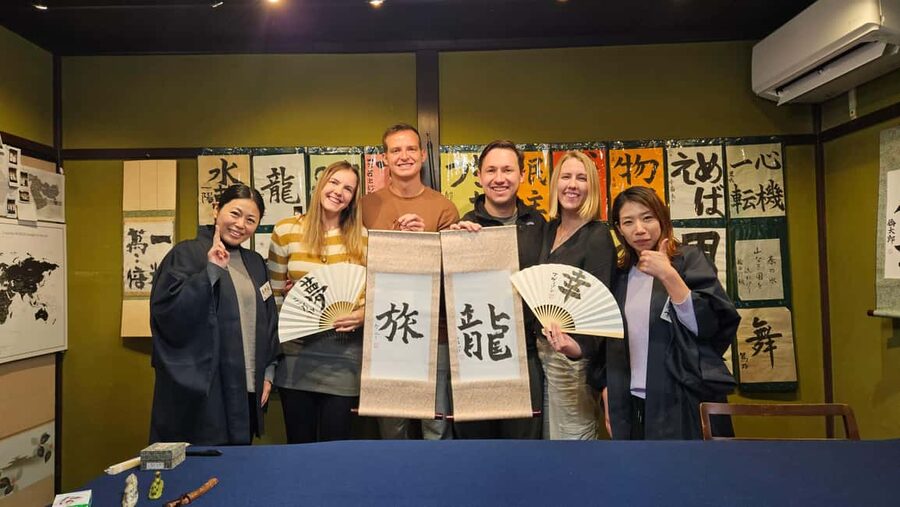
At $44 per person for about an hour, this is not a cheap snack-sized activity. But it is also not overpriced for what you get. You are paying for real coaching, tool training, guided practice, and a finished souvenir made on a hanging scroll or folding fan.
A big part of the value is that you do not leave empty-handed. Art workshops that stop at practice can be forgettable. Here, the goal is a completed piece. That means you walk away with something you can display, gift, or keep as a conversation starter.
You also get the cultural framing, including the different scripts and what they represent. That turns calligraphy from a craft into an experience with context. For many people, that is the difference between something you did, and something you actually remember.
If your budget is tight, treat this as your one creative anchor during a sightseeing day. It is a clear block of time, and it breaks up the constant walking without turning into another museum sprint.
Finding the Studio Near Kanazawa’s Sights, Without Stress
The meeting point is in Nomachi, Kanazawa: 1-1-26 Nomachi, Kanazawa, Ishikawa 921-8031. The good news is the location should be easy to spot. Calligraphy works are visible from outside the building, so you are not hunting for a hidden door.
There is also a bus stop nearby, served by the Kanazawa Loop Bus. That helps if you do not want to plan a dedicated taxi ride for a one-hour activity. Still, if you are already walking around the city, it can be a nice short detour.
Plan timing with the hour in mind. This class is long enough to learn strokes and finish a piece, but short enough that you can still do another visit afterward. If you want the room to feel extra quiet, consider going earlier in the day, since Thursday and Saturday after 3:00 PM may include local children in the studio.
Who Should Book This Calligraphy Trial Lesson?
This experience fits best if you want something calm, hands-on, and genuinely cultural. If you like crafts, enjoy taking classes abroad, or simply want a break from screens and crowded attractions, you will likely love the structure: tools, strokes, then a personal final artwork.
It is also a good match for families with older kids, with one important limit: it is not suitable for children under 5. And it is not suitable for vegans due to traditional materials used in brushes and ink.
If you are the type of traveler who likes meaningful souvenirs, this is a strong choice. A scroll or folding fan made during your session is personal, and it gives you something to remember the feel of the brush and the patience required to do it well.
If you are expecting a loud, entertaining performance, manage your expectations. This is focused art practice. The best part is the quiet.
Should You Book Culture Lab Nomachi for Calligraphy in Kanazawa?
Yes, if you want a thoughtful activity that produces a real result. I think the decision is simple: you get English-friendly instruction, real stroke practice, and a finished hanging scroll or folding fan you can take home. For $44 and an hour, that is solid value.
Book it if you:
- want a break that is calming and creative, not exhausting
- like hands-on learning with patient coaching
- care about getting a souvenir you made, not just bought
Skip it if you:
- need a fast-paced, action-heavy experience
- cannot participate due to vegan restrictions from traditional tool materials
- are traveling with a child under 5
FAQ
How long is the Japanese calligraphy trial lesson?
It lasts 1 hour. You can check availability to see starting times.
What will I create during the class?
You practice basic strokes, then choose a word you like and create your own piece. The completed work is made directly on a hanging scroll or a folding fan, and you can take it home.
What language is the instruction offered in?
The instructor provides guidance in English and Japanese.
Where is the meeting point in Kanazawa?
You meet at 1-1-26 Nomachi, Kanazawa, Ishikawa 921-8031. The calligraphy works visible from outside the building make it easier to find, and a bus stop is nearby on the Kanazawa Loop Bus route.
Is the class suitable for young children?
It is not suitable for children under 5.
Is it suitable for vegans?
No. It is not suitable for vegans because traditional calligraphy tools like brushes and ink can contain animal-derived materials.
Can I cancel and get a full refund?
Yes. You can cancel up to 24 hours in advance for a full refund.
Does the booking let me pay later?
Yes. You can reserve now & pay later, which means you can book your spot and pay nothing today.
Blade Work and Stagecraft

A Kanazawa Afternoon



Newest Kanazawa write-ups from the Loving Japan desk

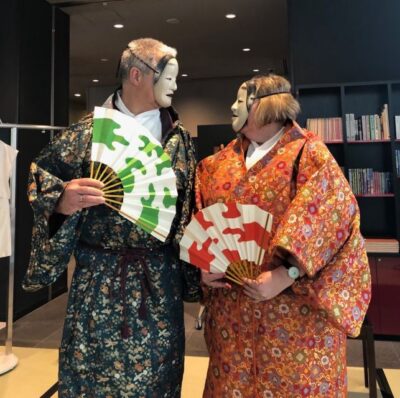
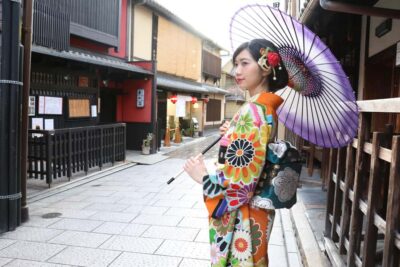
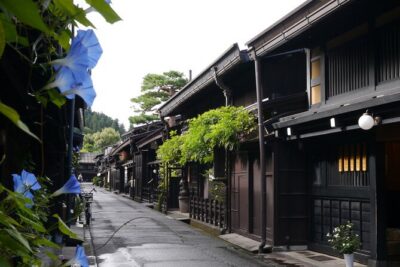
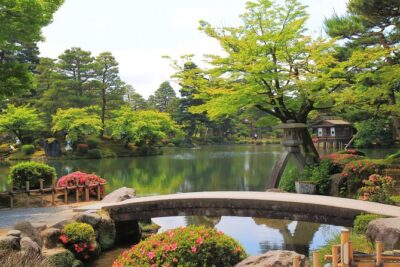

Kanazawa and Kenroku-en Garden, side by side.
 ★ 5.0World Heritage Shirakawa-go and Experience Tours from KanazawaFrom $1224,049 reviews
 ★ 4.8Kenrokuen Tea Ceremony ExperienceFrom $351,139 reviews
 ★ 4.9World Heritage Shirakawa-go Morning Guided TourFrom $77988 reviews
 ★ 5.0Kanazawa Half Day Tour (Private Guide)From $134361 reviews
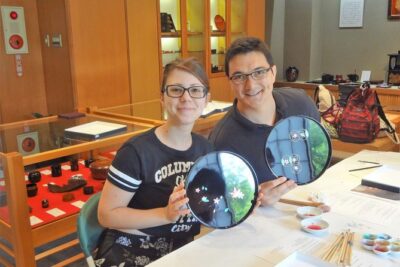 ★ 5.0Kanazawa Full Day Tour (Private Guide)From $183323 reviews
 ★ 4.9World Heritage Shirakawa-go & Two Local ExperienceFrom $116274 reviews
 ★ 5.0[One-day bus tour departing from Kanazawa Station] Shirakawa-go and Gokayama – Two World Heritage Villages Enjoyable Bus TourFrom $88253 reviews
 ★ 5.0World Heritage Shirakawa-go Perfect Guided Tour from KanazawaFrom $81220 reviews