
REVIEW · TOURS
Kyoto Full Course Tour: Explore 10 Must-See Sights & Hidden Gems
Kyoto can feel like a puzzle, but this full day route makes sense fast. You get a 10-stop sampler across the city, from Arashiyama’s bamboo to Gion’s streets, with expert local guidance that helps you ride the confusing transit without wasting time. I also really like that the tour mixes famous highlights with practical city-walking so you learn where to go next. One thing to consider first: it is a long, hard day with more than 20,000 steps, so it is not the pick for anyone who wants to stroll slowly.
The best part is the pacing. You spend short, focused chunks at each site, so you see more than you would on your own in a single day. The guides, including names like Megumi and Masako from recent tours, tend to keep things moving and clear. If you have limited time in Kyoto and you want structure, this works. If you hate crowds or want deep, unhurried temple time, you may feel rushed.
In This Review
- Key things I’d pack into your decision
- Why This 9.5 Hour Kyoto Route Works When You Have Limited Time
- The Morning in Arashiyama: Bamboo, Mountain Air, and Getting Oriented
- Kinkaku-ji and Ryoan-ji: The Classic Temples, Explained Without the Guesswork
- Kinkaku-ji (Golden Pavilion)
- Ryoan-ji (Rock Garden)
- Fushimi Inari: Torii Gates, Straight Lines, and Smart Expectations
- Kiyomizu-zaka, Sanneizaka, and the Charm of Walking Streets
- Kiyomizu-zaka Street
- Sanneizaka
- Kiyomizu-dera: The Nail-Less Wood Stage You Can Actually See
- Hokan-ji and the Yasaka Pagoda Look: A Perfect Photo Stop With Context
- Gion at the End: What You Gain When Your Guide Leaves You Close to Home Base
- The Real Story: Pace, Footwear, and the 20,000+ Step Factor
- Lunch at a Sushi-go-round: Convenient, Fun, and With Vegetarian Limits
- Price and Value: What $98.83 Really Buys in Kyoto
- Who Should Book This Tour (and Who Should Skip It)
- Final Take: Should You Book This Kyoto Full Course Tour?
Key things I’d pack into your decision
- Short stops, big coverage: You rotate through Kyoto’s A-list spots without spending your whole day figuring out logistics.
- Local guide advantage: Guides are trained and familiar with the areas, routes, and etiquette, so you are not guessing in a complex transit network.
- Temple and shrine variety: You hit golden icons, rock gardens, torii paths, and classic slopes, all in one continuous day.
- Group size stays small: The tour caps at 10 travelers, which helps with coordination and questions.
- Lunch is arranged but not fully flexible: Lunch is at a sushi-go-round setup, and vegetarian options are limited to what is on the menu that day.
- Comfort matters: Plan for 20,000+ steps and time on buses, so shoes and pacing are your real success factors.
Still weighing up options in Kyoto? These are the ones our reviewers rated highest.
- PERFECT KYOTO 1-Day Bus Tour
★ 5.0 · 13,518 reviews - Kyoto: Fushimi Inari, Kinkakuji, Bamboo Grove 1 Day Bus Tour
★ 4.8 · 4,316 reviews - Kyoto: Tea Ceremony in a Traditional Tea House in Kiyomizu
★ 4.9 · 3,519 reviews - Kyoto Geisha Walking Tour: Gion District & Hidden Gems
★ 4.7 · 3,273 reviews
Why This 9.5 Hour Kyoto Route Works When You Have Limited Time
Kyoto is famous for being photogenic, but it is also famous for being spread out. This tour tackles that problem head on with one clear goal: see the major highlights in a single day, while still giving you a sense of how neighborhoods connect.
You start in Arashiyama and finish in Gion, so you are effectively moving through Kyoto in a way that makes sense. The whole experience runs about 9 hours 30 minutes, and it is designed to keep you from losing half your day to transit confusion. You also get a mobile ticket, which cuts down on paperwork stress.
The value question is not just the $98.83 tour fee. The value is what you buy with your time: a set route, trained guidance, and a plan that strings together temples, shrines, streets, and viewpoints without you needing to map everything yourself.
The Morning in Arashiyama: Bamboo, Mountain Air, and Getting Oriented
You meet at JR Saga-Arashiyama Station (the meeting is listed as 8:50, and the program starts on time). This matters more than you might think. Kyoto transit is busy, and once the group is moving, the guide cannot wait for late arrivals.
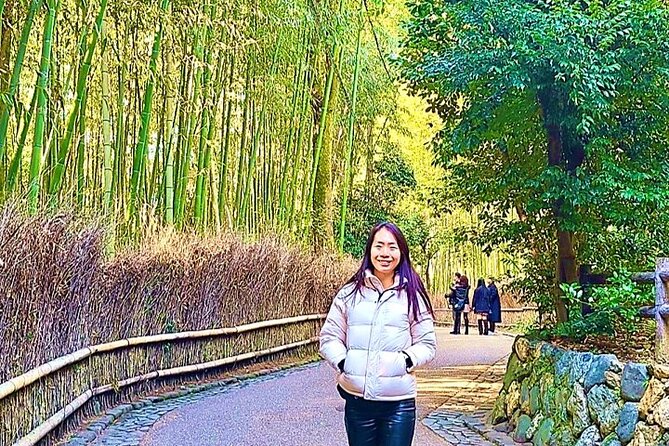
Arashiyama is the right first stop. You get that immediate Kyoto feeling, bamboo and forested mountain scenery that sets the tone for the day. The time you spend here is about 30 minutes, and that is enough to take photos and soak in the atmosphere without burning your whole morning.
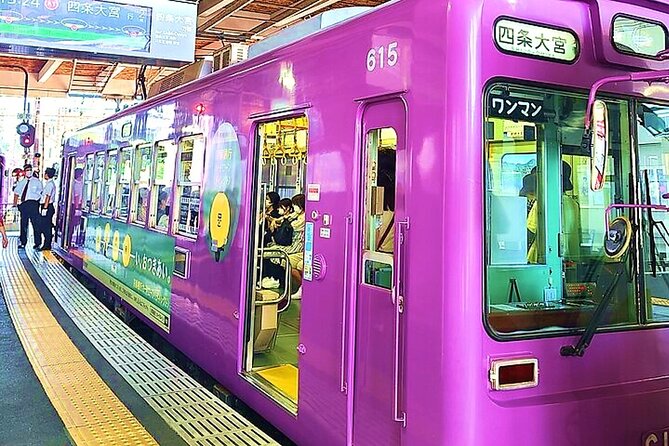
One practical bonus: the tour is set up for walking and transit, including a stop that references the Randen Tram Line. Even if you are not going to memorize tram routes, you learn how transit fits between sights. That helps later when you want to return to one place for longer.
If you are the type who loves to linger, you might feel the time pressure in Arashiyama. But if your goal is coverage, this opening stop hits hard.
Kinkaku-ji and Ryoan-ji: The Classic Temples, Explained Without the Guesswork
After Arashiyama, the route jumps to two of Kyoto’s best-known temple experiences: Kinkaku-ji and Ryoan-ji.
- PERFECT KYOTO 1-Day Bus Tour★ 5.0 · 13,518 reviews
- Kyoto: Fushimi Inari, Kinkakuji, Bamboo Grove 1 Day Bus Tour★ 4.8 · 4,316 reviews
- Kyoto: Tea Ceremony in a Traditional Tea House in Kiyomizu★ 4.9 · 3,519 reviews
- Kyoto Geisha Walking Tour: Gion District & Hidden Gems★ 4.7 · 3,273 reviews
- Kyoto: Tea Ceremony Ju-An at Jotokuji Temple★ 4.9 · 3,207 reviews
Kinkaku-ji (Golden Pavilion)
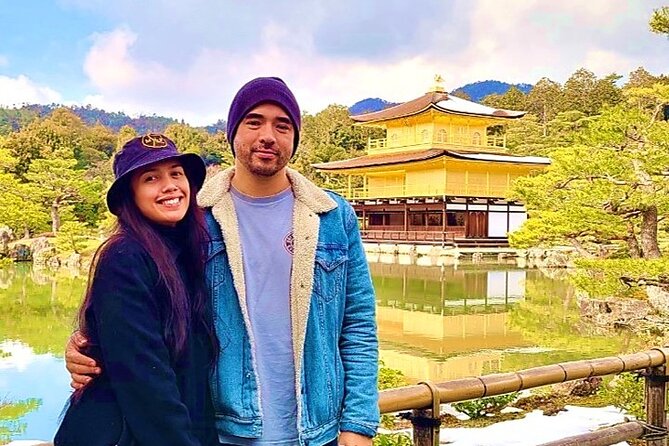
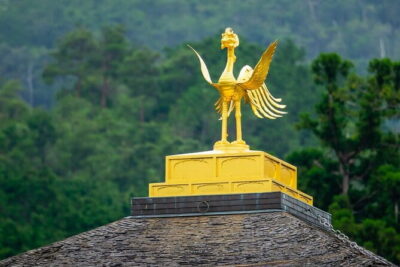
This is the place you already know from photos, the famous golden temple. You get about 30 minutes here, and entrance is not included in the tour price. In real terms, this means you should be ready to pay at the gate if you want the full visit.
What makes Kinkaku-ji work on a one-day plan is its visual clarity. Even without deep study, it lands instantly. If you are traveling with someone who wants the must-do highlights, this stop usually delivers fast.
Ryoan-ji (Rock Garden)
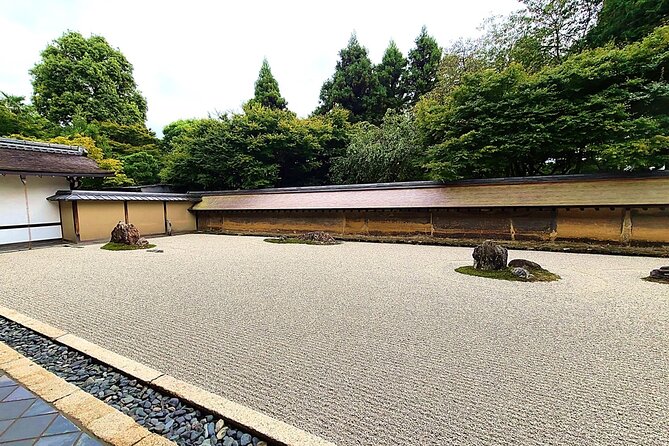
Then you shift from gold to stones. Ryoan-ji’s rock garden is famous for its minimalist arrangement and the way it invites you to look repeatedly. The description you are given ties it to a notable historical visit, saying that Queen Elizabeth visited and praised it. That kind of detail makes the garden feel more than just pretty rocks.
Ryoan-ji is also one of those places where 30 minutes can be either perfect or too short, depending on your style. If you like quiet focus, you may want more time. If you want to keep moving and let each stop be a highlight, the tour timing fits.
Fushimi Inari: Torii Gates, Straight Lines, and Smart Expectations
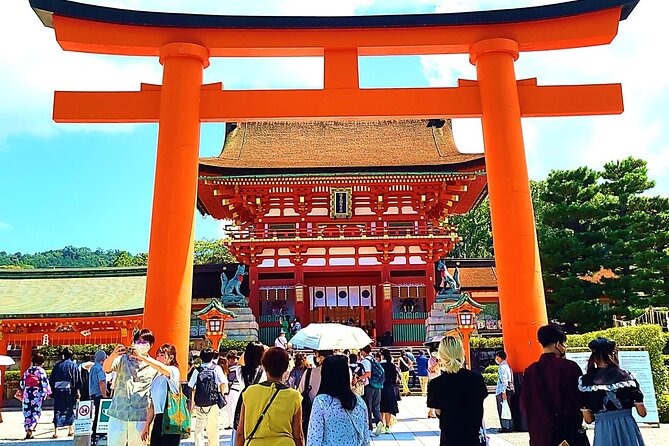
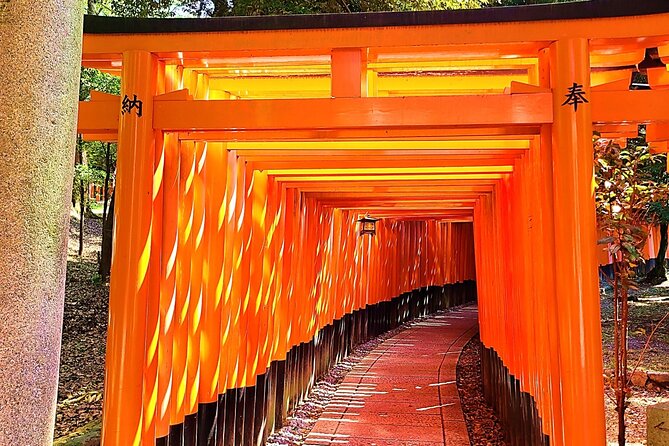
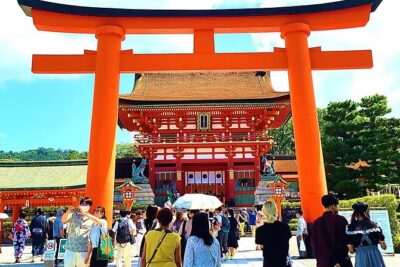
Next comes Fushimi Inari-taisha Shrine, the torii-gate star of Kyoto. The big draw is the more than 1,000 red torii gates that line the path, creating that iconic tunnel-like walk.
You only spend about 30 minutes at the shrine, which is the key tradeoff for doing it in a full-day course tour. You can absolutely enjoy the experience within that time, but you will not explore every nook of the longer routes. If you want to hike up farther and linger at side areas, you will likely plan a second visit later.
Still, for first-time Kyoto visitors, Fushimi Inari is the right kind of stop for a guided day. The route gives you structure, and the guide helps you understand how to move through the space with the right etiquette, so you do not feel like you are cutting through a crowd blindly.
This is also where you learn something important for your own future days: Kyoto sights tend to reward repetition. You might see the main gate path on day one, then return with time for the longer climb another day.
Kiyomizu-zaka, Sanneizaka, and the Charm of Walking Streets
Now you start sliding into the classic Kyoto street experience: slopes, shopfronts, and viewpoints. The tour includes stops at Kiyomizu-zaka Street and Sanneizaka, each with about 30 minutes.
Kiyomizu-zaka Street
Kiyomizu-zaka is full of souvenir shops and local eateries, and it is easy to treat it like a quick browse. The tour’s structure keeps you from getting lost in side lanes or getting stuck in one storefront too long. Entrance is free here, and that makes it a low-cost way to get atmosphere.
My advice: use this time to decide what you actually want to buy or eat later. Kyoto streets can tempt you, but you can also plan better if you are not making decisions while you are walking fast.
Sanneizaka
Sanneizaka is described as a beautiful local slope with lined-up pedestrian storefronts. It is the kind of place where the views and the feel of the street matter more than a single attraction.
Because the tour moves quickly between sites, these street stops are less about shopping for hours and more about getting your Kyoto postcard moment plus a feel for how the neighborhoods look at human walking speed.
Kiyomizu-dera: The Nail-Less Wood Stage You Can Actually See
After the slopes, you arrive at Kiyomizu-dera Temple, one of the most popular spots for both domestic and international visitors. You spend about 30 minutes, and entrance is not included.
The tour description includes a detail that helps you notice what is special: the wood stage is said to use no nails. Even if you do not get a builder’s-level explanation, this kind of fact changes how you look around. You start noticing structure and craftsmanship instead of just scenery.
This is also one of those stops where crowds are part of the experience. The guided timing does not promise a crowd-free visit, but it does prevent you from wasting time at the wrong edges or in dead-end lines.
If you are someone who likes to read every sign and study temple halls closely, you may want more than 30 minutes. If you are trying to see the big Kyoto icons and learn enough to choose a deeper return later, this stop is a strong use of your day.
Hokan-ji and the Yasaka Pagoda Look: A Perfect Photo Stop With Context
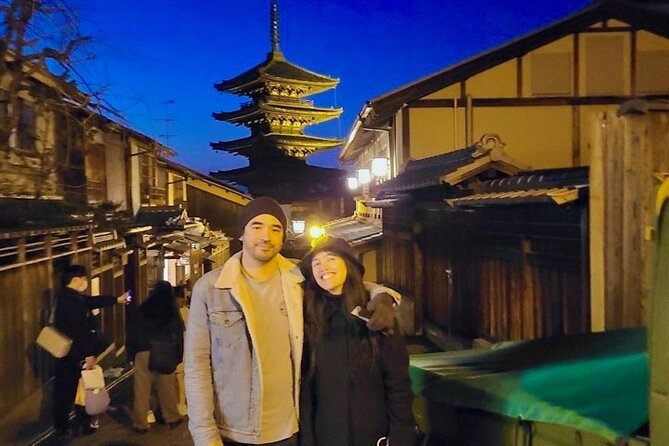
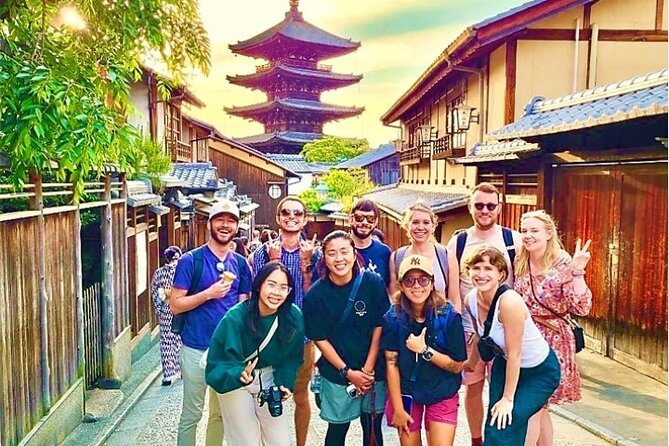
Next is Hokan-ji Temple, where the tour highlights the Yasaka Pagoda as a major Kyoto symbol. You get about 30 minutes here, and entrance is free based on the tour notes.
This is a smart pairing for the route. After the slopes and Kiyomizu-dera, you get a classic landmark view that feels like Kyoto shorthand. It is also a helpful contrast to the earlier temple styles in your day. Golden pavilion, rock garden, torii path, and then a pagoda symbol. That variety keeps the day from blending together.
The downside is the usual one: 30 minutes is short. You are not there long enough to fully meander or linger over every side area. But as a photo-and-context stop in a packed day, it works well.
Gion at the End: What You Gain When Your Guide Leaves You Close to Home Base
The final stop is Gion, ending at the Gion Shopping Street Promotion Associates area. This is classic Kyoto in motion, the neighborhood people think of when they picture geisha-era streets and traditional atmosphere.
Even though you get only 30 minutes in Gion as part of the course tour, that time is valuable. You finish your day where you already want to be for evening strolling, food, and planning.
In the reviews I saw names like Masa and Megumi mentioned as guides who took good care of groups, including answering questions and helping people navigate. That matters here. Ending in Gion is not just about seeing it once. It is about learning where your next steps can be.
If you want a longer Gion night, this tour is a good starter. It gives you bearings fast, then you can return later without feeling like you have no clue where you are.
The Real Story: Pace, Footwear, and the 20,000+ Step Factor
Here is the deal breaker for some people: this tour is intense. The notes call out over 20,000 steps, and the walking shows up in multiple reviews as a common theme. The route is designed to cover many sights in one day, so you trade comfort for speed.
If your idea of a great day is slow wandering and long temple pauses, you might feel stretched. But if you want to cover a lot, this tour is built for that.
What I recommend:
- Wear comfortable shoes you trust for long wear.
- Bring water and small snacks if you can, since food options are separate and lunch has its own menu limits.
- Accept that each site is a “see it, enjoy it, move on” format.
The plus side of fast pace is clarity. By day’s end, you understand how Kyoto neighborhoods connect, and you know where you want to spend more time on your own.
Lunch at a Sushi-go-round: Convenient, Fun, and With Vegetarian Limits
Lunch is arranged at a conveyor belt sushi style spot, and the menu is described as including sushi, vege-sushi, ramen, kara-age, beer, and mochi. You also get mention that some menu might be okay for vegetarian.
The important catch is that food is not included in the tour price. So you are paying for what you order, and your options depend on what is on the conveyor belt that day.
I like sushi-go-round lunches for a day tour because it is fast, casual, and usually easy to handle when a group is moving on schedule. But if you have strict vegetarian needs, you should plan your expectations. The tour can help point you toward items that may work, yet it cannot guarantee your ideal meal choices beyond what is available.
Price and Value: What $98.83 Really Buys in Kyoto
The tour fee is $98.83 per person, and it includes the tour fee and consumption tax. To judge value, you need the add-ons.
Based on the tour details:
- Transportation: about $10 USD (¥1,340)
- Food and beverages: about $6.8 to $14 USD (¥1,500)
- Entrance fees: about $11 USD (¥1,600)
In practical terms, you are looking at roughly the high-$110s to low-$120s in total spending, depending on what you eat and which paid entrances you choose.
Does that feel worth it? Often yes, because you are buying time and navigation help. Kyoto transit can feel like a maze, and temples are clustered in ways that are not intuitive when you first arrive. A day like this turns that headache into a guided route with a clear plan.
If you were going to visit most of these spots anyway, then paying for structure becomes a bargain. If you only care about one or two sites, you might save money by building your own route.
Who Should Book This Tour (and Who Should Skip It)
This tour is a strong fit if:
- You are short on time in Kyoto and want a fast introduction to the city.
- You like seeing a variety of sights in one day, not just one neighborhood.
- You value a guide who can explain how to handle Kyoto etiquette and transit planning.
- You are okay with a serious walking day.
It is a weaker fit if:
- You want slow temple time and lots of quiet.
- You dislike heavy walking and do not want 20,000+ steps.
- You have strict dietary needs beyond what is available at a sushi-go-round.
Also, the tour starts on time and late arrivals are not allowed to join, with no refunds mentioned. So build in buffer time and arrive early at the meeting point.
Final Take: Should You Book This Kyoto Full Course Tour?
If you want a one-day Kyoto crash course, I think this is a smart book. The route hits the big names, plus street experiences like Kiyomizu-zaka and Sanneizaka, and you end in Gion where your evening can stretch out.
Just be honest with your body and your expectations. This is not a sit-and-savor tour. It is a do-it-all in one day plan, with a fun lunch setup and local guide help that makes the whole thing feel manageable.
If you can handle the pace and you want structure, you will likely leave with Kyoto’s layout in your head and a short list of what to revisit next.
Newest Kyoto write-ups from the Loving Japan desk

Tours, side by side.
 ★ 5.0Mt Fuji and Hakone 1-Day Bus Tour Return by Bullet TrainFrom $16326,383 reviews
 ★ 5.01-Day Tokyo Bus TourFrom $12914,250 reviews
 ★ 5.0PERFECT KYOTO 1-Day Bus TourFrom $12913,518 reviews
 ★ 5.0Shinjuku Food Tour (13 Dishes at 4 Local Eateries)From $866,603 reviews
 ★ 5.0Peaceful Hiroshima & Miyajima UNESCO 1 Day Bus TourFrom $1295,309 reviews
 ★ 4.4Tokyo Mt Fuji 5th St & Hakone Cruise Bus Tour w/Bullet TrainFrom $1545,024 reviews
 ★ 5.0Flagship 2-Hours Official Street Go-Kart Tour – Tokyo Bay ShopFrom $644,974 reviews
 ★ 4.8Fushimi Inari, Kinkakuji, Bamboo Grove 1 Day Bus TourFrom $1224,316 reviews