
REVIEW · JAPANESE GARDENS AND ZEN MEDITATION
Kyoto: Zen Meditation and Garden Tour at a Temple with Lunch
Zen meditation in Kyoto sounds simple, then it gets real. This small-group visit blends a Zen garden walk with practical zazen guidance at Tofukuji, one of the city’s key Zen training temples. I loved the way the local guide explains how to hold posture and focus your breathing without turning it into a mystery. I also liked the ending, shojin ryori lunch, with traditional vegetarian dishes that monks have used for centuries. A possible drawback, since zazen is about quiet, is that you will lose a bit of casual conversation time during the meditation session.
You’ll also want to respect the schedule, because these temples run on strict timing. Some parts of the experience can feel quietly strict, especially during zazen where private chat is discouraged and you use silent reading materials instead. And even with a small group, the meditation space may include more people, so it can feel less private than you might hope.
In This Review
- Key highlights at a glance
- Zen Garden First, Then Real Zazen at Tofukuji
- Kōmyō-in Garden Walk, Where Zen Starts Without You Sitting Yet
- Tofukuji Temple Highlights: Sanmon Gate, Dragon Ceiling Paintings, Oldest Toilet
- Shōrin-ji (Bishamon-dō), Slower Temple Time in the Complex
- Zazen in a Smaller Practice Hall, Silence and Posture Guidance
- Shojin Ryori Lunch, Vegetarian Monastic Food With Real Flavor
- Price and Value: What $107 Gets You in Kyoto
- Getting There and Staying On Time at Tofukuji Station
- Who Should Book This Kyoto Zen Meditation and Garden Tour
- Should You Book This Zen Meditation and Garden Tour?
- FAQ
- Where is the meeting point for this tour?
- How long is the Kyoto Zen meditation and garden tour with lunch?
- What language is the live guide?
- How many people are in the group?
- Is the zazen meditation session silent?
- Is there a lunch break, and what time does lunch happen for the 10:45 start?
- What is included in the lunch?
- Is the tour suitable for children?
- Can I join if I have a gluten intolerance?
- What should I bring depending on the season?
Key highlights at a glance
- Tofukuji Zen Temple focus, including Kōmyō-in and a Bishamon-dō site in the complex
- Garden first, then practice, so the ideas of Zen show up in the scenery before you sit
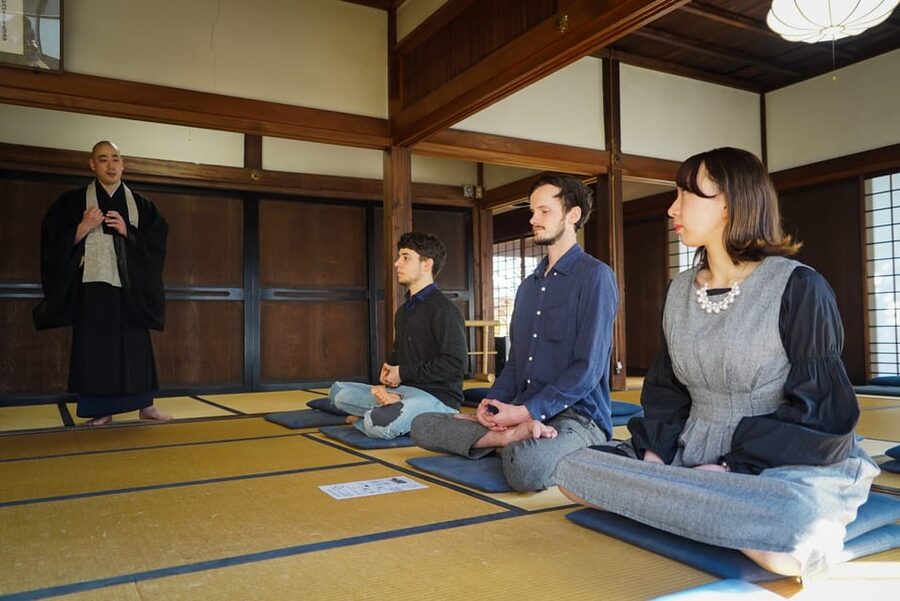
- Zazen in silence with posture and breathing guidance, plus silent reading materials
- One-hour seated session in a smaller zazen-focused area
- Shojin ryori lunch that includes dashi and a small amount of dairy, served after your meditation
- Small group of up to 7, led in English by a local guide (often named Yutaka, Louis, Eri, Yukata, or Tammy)
Still weighing up options in Kyoto Prefecture? These are the ones our reviewers rated highest.
- Kyoto: Zen Meditation and Garden Tour at a Temple with Lunch
★ 4.9 · 86 reviews
Zen Garden First, Then Real Zazen at Tofukuji
Kyoto has plenty of temple tours that feel like a photo mission. This one starts differently. You begin with a guided walk through a garden that connects you to Zen principles before you ever sit down to meditate. That order matters. You are not just learning words, you are learning how attention feels when the space asks for calm.
What I like most is that the guide’s approach is practical. Zen can sound abstract, even in Japan, but the session is grounded in what your body does: posture, breathing, and the simple discipline of paying attention. Your guide may also share clear context on symbols and what they mean in Zen and Buddhist practice.
The other big win is the setting. Tofukuji is a major Zen training site, with structures and details that pull you past the postcard version of Kyoto. You walk through parts of the temple complex, then you slow down again for zazen, and only after that you eat. It feels like the day has rhythm, not just stops.
Kōmyō-in Garden Walk, Where Zen Starts Without You Sitting Yet
Your tour begins at Tofukuji Station, outside Exit 2 next to a Family Mart. From there, you head to Kōmyō-in Temple for about 40 minutes. This is your warm-up, and it’s a smart one.
In the garden, your guide gives you a way to look. Instead of rushing to identify rocks, lanterns, or arrangements, you learn what to notice and why. Zen gardens are often misunderstood as purely decorative, but the point here is attention. You get a foundation for how to appreciate the garden and how that mindset ties into meditation.
This part also helps you settle before the zazen portion. If you are coming from busy Kyoto streets, the garden quiet can feel like a switch. You’ll still be guided, but you’ll be allowed to experience the stillness, not just hear about it.
Practical note: temples and garden areas can get cold in winter, and summer heat in Kyoto can be intense. Wear layers in the cold months, and bring water plus a hat in hot weather.
Tofukuji Temple Highlights: Sanmon Gate, Dragon Ceiling Paintings, Oldest Toilet
Next you explore Tofukuji Temple itself for a short, focused visit. Even with that limited time, the key sights are specific and memorable.
Here are the details you will want to look for:
- San-mon gate (the main gate area)
- Dragon ceiling paintings, the kind of craftsmanship that changes how you feel inside a temple building
- The oldest surviving toji (toilet), a quirky but real historical detail that makes the place feel human and lived-in, not just ceremonial
A short visit can feel like a blur if you treat it like sightseeing. The trick is to use your guide’s pacing. Pause when you are told to. Look up when ceiling art is mentioned. These places reward attention more than speed.
One more point: if you like temple history, you’ll enjoy the fact that this site has long been used for monk residence and Zen practice. It’s not just a backdrop for visitors. You can feel that training tradition in the way the spaces are set up and in the expectations around silence.
Shōrin-ji (Bishamon-dō), Slower Temple Time in the Complex
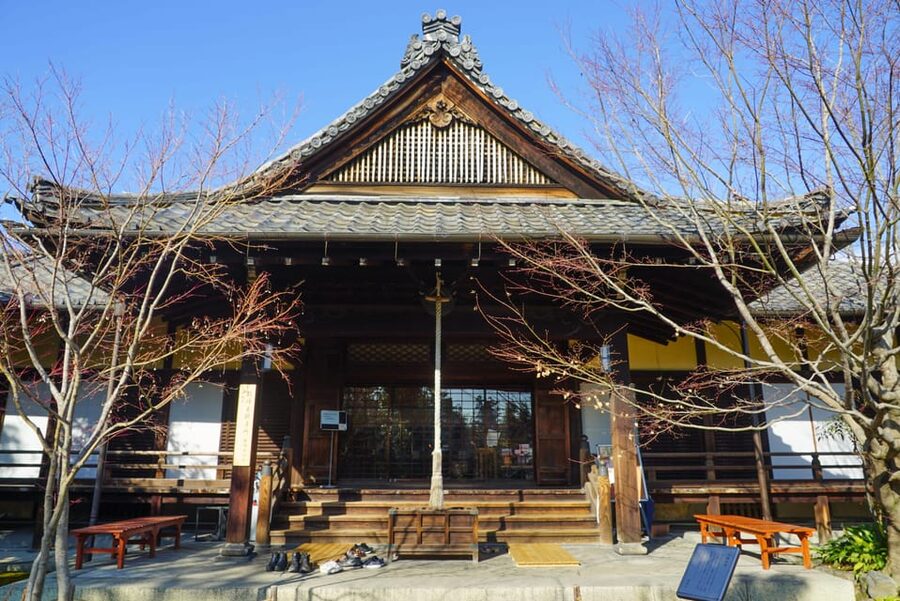
After Tofukuji, you visit Shōrin-ji (Bishamon-dō). This stop runs about 70 minutes, which is unusually generous for a temple hop.
Bishamon is tied to guardianship in Buddhist tradition, and your guide’s commentary helps you connect the artwork and temple meaning to the practice side of Zen. Even if you do not memorize every symbol, you’ll likely leave with more than you arrived with. The longer time window matters, because it gives you breathing room to ask questions and to notice how the complex feels different from place to place.
A small caution here: the longer temple blocks are great for immersion, but you still have a formal schedule later for zazen. Comfortable shoes help, because you’ll walk and stand more than you might expect.
Zazen in a Smaller Practice Hall, Silence and Posture Guidance
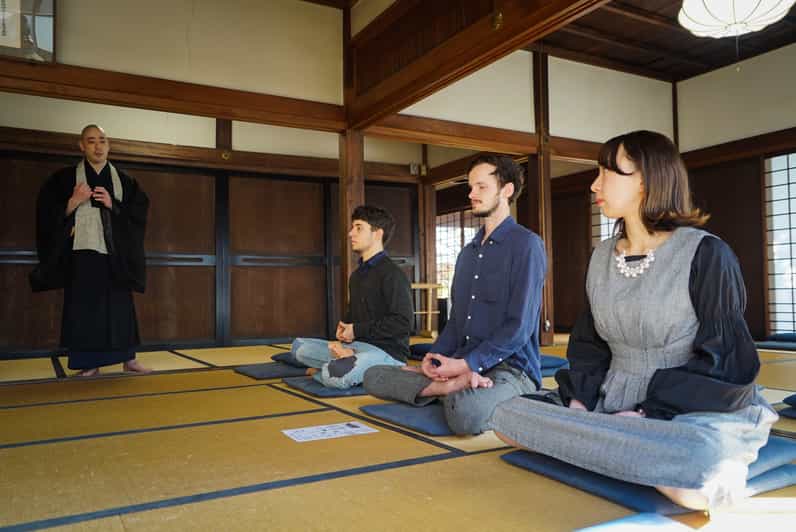
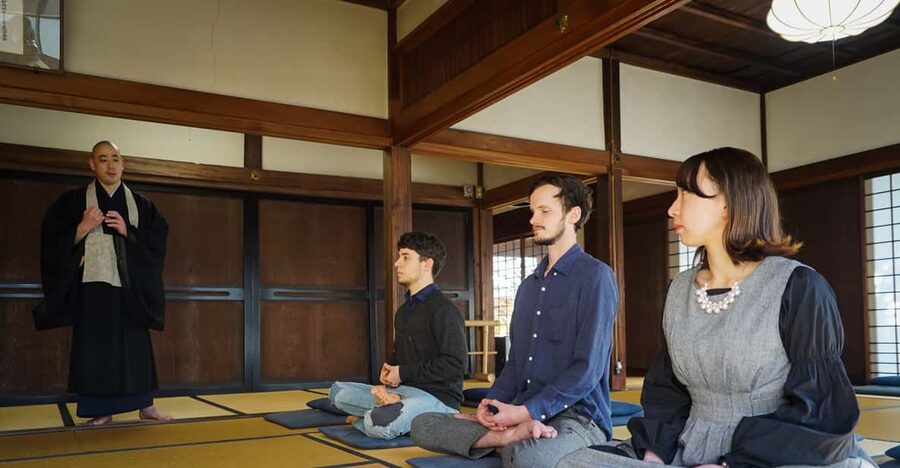
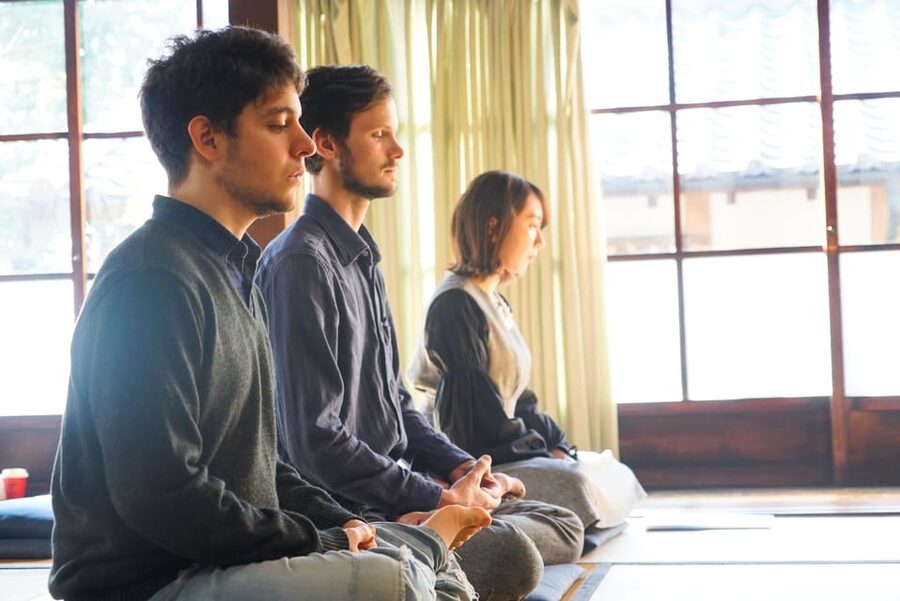
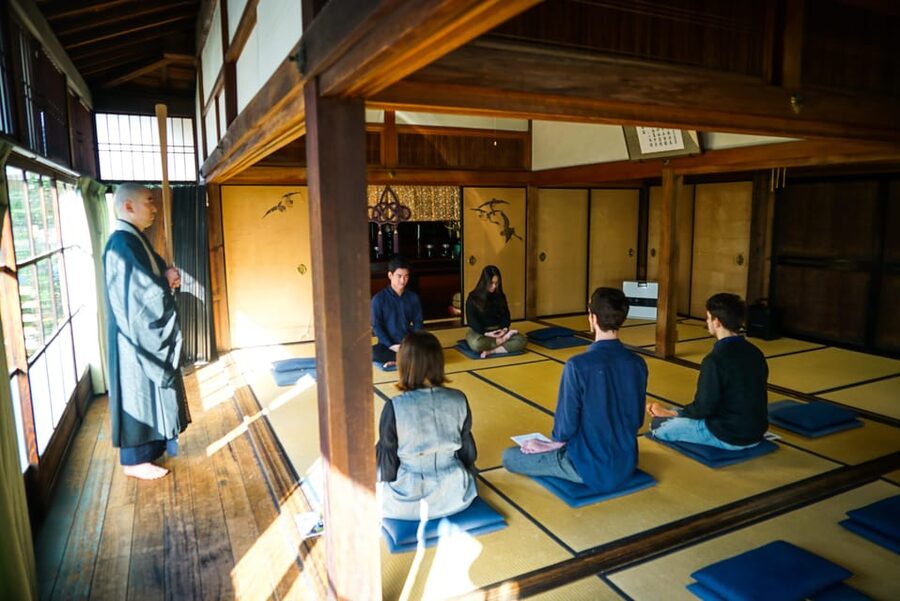
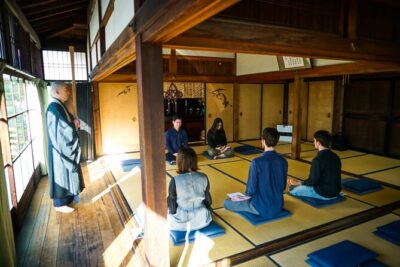
This is the core experience, and it has clear rules. After the garden, you go to the temple area dedicated to zazen practice. During your one-hour seated session, your guide will keep silence and you will be given silent reading materials for the tour.
That structure is important for two reasons:
- It helps your mind settle. You cannot fill quiet with talk.
- It gives you something to do without breaking the mood, especially if sitting still feels uncomfortable at first.
You will be guided on posture and breathing techniques. The session focuses on the mechanics of sitting: how to hold yourself, how to breathe, and what to do with your attention when your mind wanders.
After that, you get a brief discussion with the monks. This is where you can ask questions and share what you felt. Some sessions may involve reading or written materials instead of direct English conversation, so expect that the zazen moment is mostly quiet and the later discussion is brief.
One drawback to consider: even though your tour group is small (up to 7), the meditation space can still include additional people. I’d plan for that possibility. For some, it’s totally fine. For others, it slightly reduces that private feeling.
Shojin Ryori Lunch, Vegetarian Monastic Food With Real Flavor
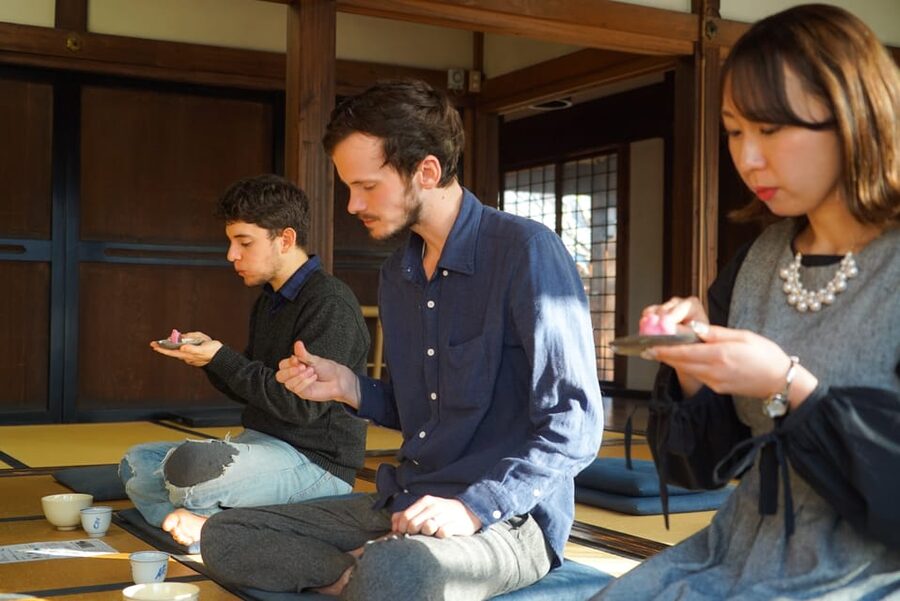
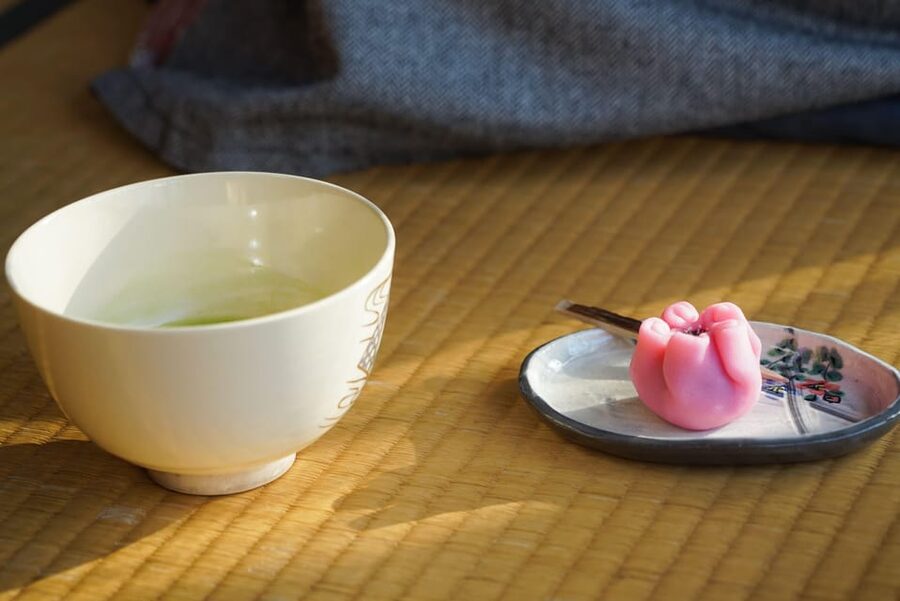
After zazen, you walk to the vegetarian meal area and eat shōjin ryōri, a monk-style cuisine tradition. This lunch is included, and it’s a highlight for people who thought Zen would mean only tea and silence.
The food is vegetarian, centered on vegetables, mushrooms, and seaweed, and it avoids meat and fish. The tour’s lunch details note dashi-fish broth is included, plus a bit of dairy. That combination is worth knowing in advance because it is not fully vegan, even though it’s vegetarian in the classic shojin sense.
You eat in an area tied to training monks, once home to as many as 1,200 Buddhist monks. That historical connection turns lunch into more than a meal. You’re eating in the shadow of a training space, which is exactly what makes it feel authentic rather than touristy.
If you have a sensitive stomach, go easy on the spicy or rich components and drink water. You are doing a seated practice earlier, and Kyoto can also dehydrate you fast in summer.
Also, the tour is not suitable for people with gluten intolerance, so if you have celiac or strict gluten needs, you’ll want to skip this one.
Price and Value: What $107 Gets You in Kyoto
At $107 per person for about 270 minutes, this tour is not cheap in absolute terms. But it’s not just paying for “temple entry.”
You’re paying for:
- A live English guide who connects Zen ideas to what you do in your body
- Entry to temple areas and the garden experience
- A structured zazen session with silent materials
- A traditional shojin ryori lunch afterward
- A small group size limited to 7, which usually means better pacing and more chance to ask questions
For me, the best value is the pairing: you get the garden context, you get one hour of seated practice, then you get food that matches the day’s theme. Many tours show temples and call it “Zen.” This one is more like a half-day routine in how training might feel.
If you want maximum flexibility and you only care about sightseeing, you could probably do something cheaper on your own. But if your goal is to learn zazen posture and breathing with guidance, this format is a strong deal.
Getting There and Staying On Time at Tofukuji Station
Logistics sound boring until you are trying to catch up to a group in Kyoto. Then it matters a lot.
Your meeting point is outside Tofukuji Station, Exit 2, next to a Family Mart. Arrive a little early. The tour must start on time, and if you’re late and miss the group, you won’t be able to join or reschedule for that tour.
From Kyoto Station, you’ll use JR lines, rapid or local trains. From the Keihan side, use Keihan line trains but avoid express trains. You do not need to memorize every detail. Just do a quick test route in advance so you don’t guess on the day.
Because the tour wraps up at Kyoto (the finish point is listed as Kyoto), it’s a good mid-day option, but it helps to plan dinner after, not before.
Who Should Book This Kyoto Zen Meditation and Garden Tour
This tour fits best if you want a calm, guided introduction to Zen practice, not just a temple checklist.
You’ll likely enjoy it if:
- You want practical help with zazen posture and breathing
- You prefer a small group and structured pacing
- You like connecting history and setting to present-day practice
- You genuinely want lunch that belongs to the theme, not an afterthought
You might reconsider if:
- You need nonstop conversation. Zazen is a silence-based experience, with private conversations discouraged during that time.
- You want a fully private meditation setting. Even with a small tour group, the meditation space can include others.
- You have dietary limits beyond vegetarian, especially gluten intolerance.
Also, it’s not suitable for children under 12, so families should look for another option.
Should You Book This Zen Meditation and Garden Tour?
If your Kyoto trip includes at least one moment of stillness, I think this is one of the better ways to make it meaningful. The best part is the flow: garden first, guided zazen next, shojin ryori last. It’s not just what you see, it’s how you experience the day.
Book it if you want a guided zazen practice with real context at Tofukuji, plus a traditional monk-style lunch you’ll remember. Skip it if you get impatient with silence, or if your schedule is tight around late lunch timing.
One last practical tip: check which start time you choose. If you book the 10:45 start, lunch comes later at 14:15, so you’ll want enough breakfast or brunch to stay comfortable until then.
FAQ
Where is the meeting point for this tour?
You meet outside Tofukuji Station Exit 2, next to a Family Mart.
How long is the Kyoto Zen meditation and garden tour with lunch?
The total duration is 270 minutes (about 4.5 hours).
What language is the live guide?
The tour has a live English guide.
How many people are in the group?
The group is limited to 7 participants.
Is the zazen meditation session silent?
Yes. The guide maintains silence during the zazen session, and you are provided with silent reading materials.
Is there a lunch break, and what time does lunch happen for the 10:45 start?
Lunch happens after the meditation and walk to the restaurant. For tours starting at 10:45, lunch time is 14:15.
What is included in the lunch?
Lunch is shōjin ryōri, a vegetarian Buddhist meal. It includes dashi (fish broth) and also notes that a bit of dairy is included.
Is the tour suitable for children?
No. It is not suitable for children under 12 years old.
Can I join if I have a gluten intolerance?
No. The tour is not suitable for people with gluten intolerance.
What should I bring depending on the season?
For summer, bring water and wear a hat due to hot and humid conditions. In winter, consider thick socks because temple floors can be cold.
Newest Kyoto Prefecture write-ups from the Loving Japan desk
Japanese Gardens and Zen Meditation, side by side.
 ★ 4.5teamLab Botanical Garden Entry TicketFrom $111,710 reviews
 ★ 5.0Kyoto Arashiyama Walking Tour: Bamboo, Monkeys, Gardens & SecretsFrom $651,216 reviews
 ★ 5.0Imperial Palace East Garden and Edo Castle Walking Tour in TokyoFrom $25510 reviews
 ★ 5.0Zen Meditation at a Private Temple with a MonkFrom $55510 reviews
 ★ 5.0Kyoto Zen Meditation & Garden Tour at a Zen Temple with LunchFrom $110441 reviews
 ★ 5.0Zen Experience in a Hidden TempleFrom $109437 reviews
 ★ 5.0Kyoto Arashiyama Bamboo forest & Garden Half-Day Walking TourFrom $129413 reviews
 ★ 4.8Tea Ceremony Meditation – Make Matcha with Tea MasterFrom $45406 reviews
Filed on these lists too