
REVIEW · HIROSHIMA AND MIYAJIMA DAY TRIPS
Miyajima Highlights: Itsukushima Shrine & Island Nature
Tides change everything at Miyajima. This private walk gives you a guide’s context as you move through the UNESCO world of Itsukushima Shrine, plus the calmer temple side of the island. I love the private guide attention and the freedom to ask questions and adjust your pace as you go.
You’ll also like how the timing matters. The floating torii gate changes with the tide, and the itinerary can shift between Miyajima and the Peace Memorial Park area to help you catch the look you want. One practical bonus I really appreciate: you get photo data to take the pressure off figuring out the perfect angle.
Here’s the main consideration: it’s a walking tour using public transportation, so you’ll pay transit separately and you should plan for a day of steps plus island ferry time. Also, lunch is on your own, so build in snack breaks when Omotesando is in front of you.
In This Review
- Key highlights you should know before you go
- Why Miyajima’s Itsukushima Shrine is more than a postcard
- Hiroshima to Miyajima: how you actually move through the day
- Entering the island: deer welcomes and early spiritual cues
- The floating torii at Itsukushima: high tide, low tide, and your best angle
- Inside Itsukushima Shrine: UNESCO, national treasures, and tide-led atmosphere
- Daishoin Temple: the island’s older, nature-centered side
- Senjokaku: wall-less spaces, Hideyoshi’s legacy, and quiet in plain sight
- Omotesando shopping street: snack timing and Miyajima must-buys
- Moving toward Peace Memorial Park: ferry, JR, and an optional faster shortcut
- Price and value: what $141.23 buys you in real terms
- Guide quality is the difference-maker here
- Who this private Miyajima tour suits best
- Should you book? My practical call
- FAQ
- How long is the Miyajima highlights tour?
- What does the tour include in the price?
- Do I need to pay for transportation during the tour?
- Is lunch included?
- Does the itinerary depend on the tide for the floating torii?
- Is this tour private or group-based?
- What if the weather is bad?
Key highlights you should know before you go
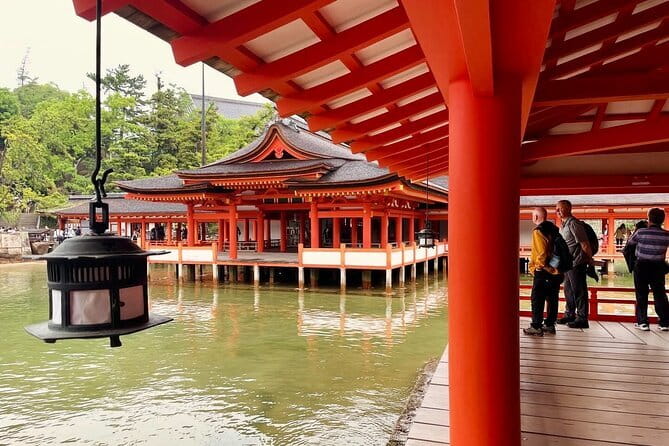
- Floating torii timing: high tide puts the gate over the water, low tide lets you walk by it
- Daishoin Temple on an active nature day: an older temple experience, not just a photo stop
- Senjokaku’s quiet, wall-less spaces: peaceful and different from the main shrine area
- Deer at the start of the island walk: Miyajima’s famous messengers are right there when you arrive
- Guide-led context and Q&A: you’re not stuck with one-way explanations
- Photo data included: easier sightseeing if you’d rather just watch and ask
Pairing the city with Miyajima. Other itineraries
- Peaceful Hiroshima & Miyajima UNESCO 1 Day Bus Tour
★ 5.0 · 5,309 reviews - Hiroshima: Hiroshima and Miyajima UNESCO Sites 1-Day Tour
★ 4.9 · 2,330 reviews - Hiroshima / Miyajima Full-day Private Tour with Government Licensed Guide
★ 5.0 · 1,298 reviews - Hiroshima Historical Walking Tour – Why A-Bomb was Dropped
★ 4.8 · 893 reviews
Why Miyajima’s Itsukushima Shrine is more than a postcard
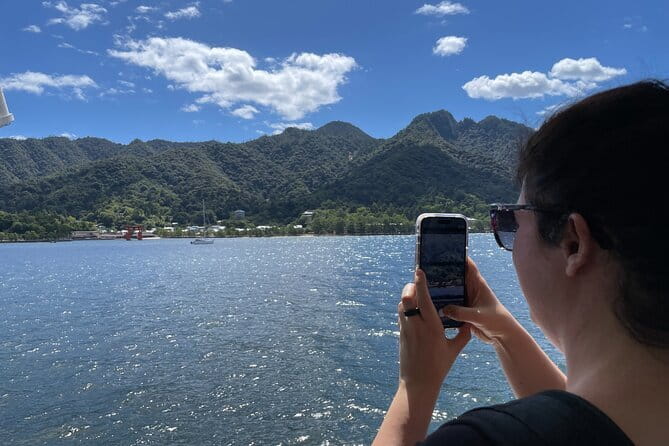
Miyajima is one of those rare places where the setting actually changes the story. The big draw is the floating torii gate at Itsukushima Shrine, and the reason it looks magical is also why you need to experience it in the right moment. When the tide is high, the gate appears out over the sea. When the tide is low, you can get close enough to see scale and detail, and even walk by it.
On a private walking tour, you get time to slow down and understand what you’re seeing. Instead of sprinting from viewpoint to viewpoint, you can ask simple questions like why the shrine is built this way, why the tide matters, and what people consider important on this island. That kind of cultural context is what turns an iconic scene into something you remember, not just something you photographed.
Hiroshima to Miyajima: how you actually move through the day
The tour starts in Hiroshima City, meeting you at your hotel or at a train station area. Pick up is offered, but the tour notes that you’ll also meet on foot. From there, you use public transportation, and the transit cost is not included in the tour price, listed as ¥1,340 per person.
This matters because it affects your planning. Budget that amount, and think of the whole day as part rail, part ferry, part walking. The schedule is flexible in one key way: the order between Miyajima and the Peace Memorial Park side of Hiroshima can be changed so you can better line up with the torii gate tide timing. If you’re hoping for the gate at a specific stage, that flexibility is a real value.
If you want to keep the day feeling smooth, do two small things before you go: wear comfortable shoes (you’ll be walking) and bring something for light snacks, since lunch isn’t included.
Entering the island: deer welcomes and early spiritual cues
Your Miyajima time begins with a spiritual island feeling from the first minutes. The deer are part of the welcome, and they’re not just a cute detail. They reinforce how Miyajima works as a living sacred space, where visitors are expected to share the grounds with animals that are tied to local belief.
You’ll spend a short amount of time early on this island segment, then move toward Itsukushima Shrine. Even with limited time, this early stop helps you shift mindset. Instead of seeing Miyajima as an amusement park of sights, it starts to feel like a place with rules, routines, and meaning that existed long before day-trippers arrived.
- Hiroshima in a Nutshell: Morning Bike Adventure★ 5.0 · 524 reviews
- Hiroshima City 4hr Private Walking Tour with Licensed Guide★ 5.0 · 437 reviews
- From Hiroshima: Hiroshima & Miyajima 1 Day Tour with Lunch★ 4.7 · 395 reviews
- Japanesel Archery Experience HIROSHIMA CASTLE SHARAKU★ 5.0 · 387 reviews
- Hiroshima and Miyajima Day Trip with Itsukushima Shrine & Ferry★ 5.0 · 378 reviews
The floating torii at Itsukushima: high tide, low tide, and your best angle
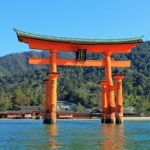
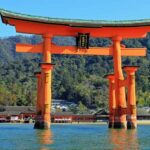
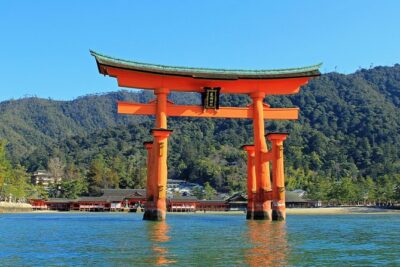
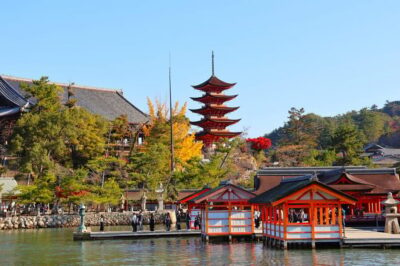
This is the moment most people come for, and the tour is built around it. You’ll get specific time for the torii gate appearance and its changing relationship with the sea. At high tide, you’ll see it visually floating over the water. At low tide, you can walk alongside it and appreciate its size and beauty more directly.
One practical way to get value here is to treat it like a two-part experience. First, look from a distance to understand the full composition. Then, if conditions allow, move closer at low tide to see how the structure sits and how the sea level frames it. Your guide can help you decide where to stand based on the tide and crowd level you’re dealing with.
Also, if you care about photography, don’t just aim for the most dramatic shot. Ask your guide where the shrine look changes with angles, because the gate and shrine buildings can shift how they read visually depending on your position.
Inside Itsukushima Shrine: UNESCO, national treasures, and tide-led atmosphere
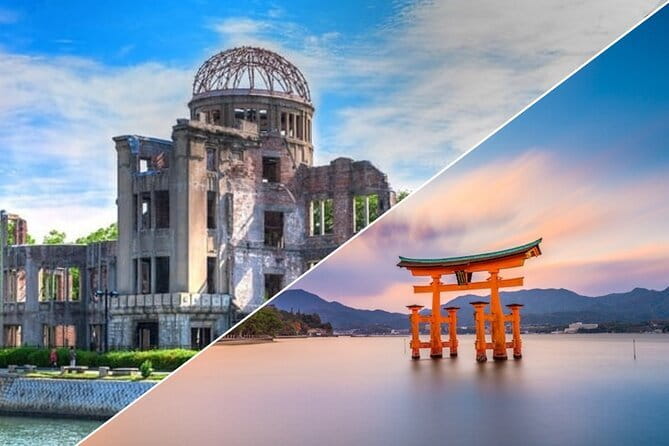
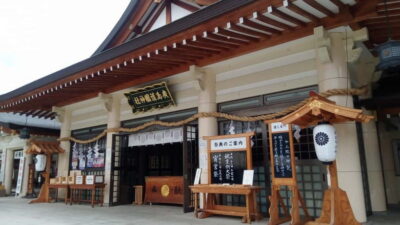
From the torii area, you’ll step into Itsukushima Shrine itself. The shrine is registered as a UNESCO World Heritage site, and it is also described as a national treasure. Like the gate, the shrine’s appearance changes as the tide moves in and out.
This is where I like private guiding most. The shrine architecture can look like “just pretty buildings” if you don’t know what to notice. With a guide, you can understand why the ebb and flow matter, why certain elements are designed for a shoreline setting, and how visitors are expected to move and behave in a sacred context.
A short stop here also works because the overall day includes nature and temple spaces that feel less like a single-photo circuit. You’re not sacrificing variety to get the shrine moment, which is a smart trade.
Daishoin Temple: the island’s older, nature-centered side
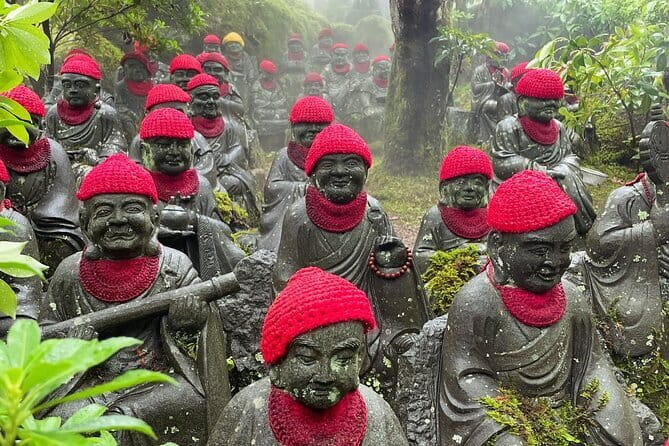
After the main shrine area, the tour heads to Daishoin Temple. This is described as the oldest temple on Miyajima, and it’s set among rich nature. That combination changes the feel of the day. You go from coastal shrine visuals to a calmer, more forest-and-stone mood where the buildings feel integrated into the island rather than dropped onto it.
Daishoin also has its own importance. It’s described as having been loved by Shogun Hideyoshi and many others. In practice, this means the temple isn’t presented like a random detour. It’s a major piece of Miyajima’s long story, and you’ll have time to see several attractions in the temple area rather than just walking through.
The drawback here is simple: it’s a temple stop, and the best experience comes from slowing down. If you’re the type who hates walking between sights, you’ll need to focus on the “why” as much as the “what.” Ask your guide about what makes Daishoin distinct from Itsukushima, and you’ll get more out of the time you spend.
Senjokaku: wall-less spaces, Hideyoshi’s legacy, and quiet in plain sight
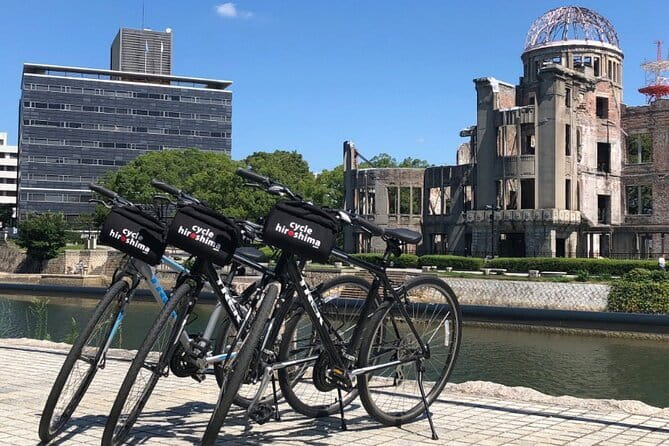
Senjokaku is part of the wider Itsukushima heritage zone, and it’s another UNESCO-listed stop. It was built in the 16th century, and Shogun Hideyoshi is tied to its construction. The description highlights large halls and wall-less spaces, which is exactly why it tends to feel peaceful.
This stop is valuable because it gives you a different rhythm from the main shrine. Senjokaku doesn’t ask you to only look at the sea and the gate. Instead, you notice structure, scale, and emptiness, which sounds strange until you’re standing in a large space where walls do not break sight lines. It’s the kind of place where it’s easier to hear your own thoughts and let the day slow down.
If you like architecture or want a break from crowds, this can be a highlight. If you only care about the biggest iconic photo, you might see Senjokaku as less urgent. Still, its vibe is the point, not just its name.
Omotesando shopping street: snack timing and Miyajima must-buys
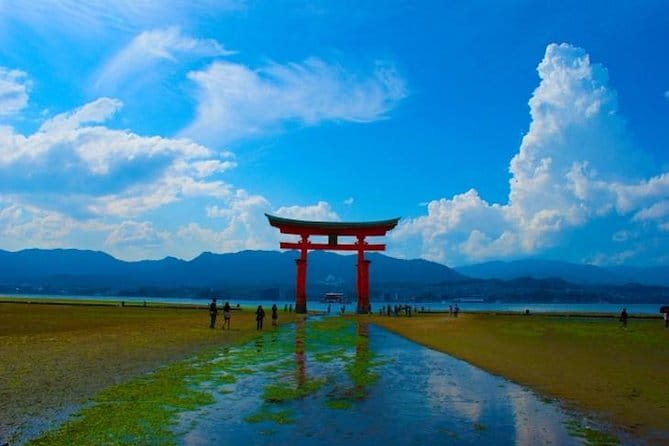
Once you leave the temple and heritage zones, you’ll walk Omotesando shopping street. This is where Miyajima turns practical and delicious. You’ll pass food shops and souvenir stalls that sell local specialties like oysters, conger eel rice bowl, and momiji manju, which are steamed buns.
I like this part because it’s a soft landing. The morning is spiritual and scenic. Omotesando helps you reset with local tastes and small gifts you can actually bring home. Since lunch isn’t included, this is a convenient spot to handle your meal without losing time.
Practical tip: don’t wait until you’re starving. The shops are time-dependent, and once your energy drops, it’s harder to enjoy browsing. If you want to try something, pick one main item and keep it simple.
Moving toward Peace Memorial Park: ferry, JR, and an optional faster shortcut
Near the end, you’ll head toward the Peace Memorial Park area. The plan notes about an hour for this move, using a ferry, JR, or train. There’s also an option to take a direct boat that takes about 45 minutes, if that fits your schedule.
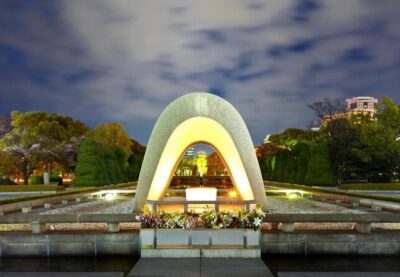
This portion matters because it changes the feel of the day. You’ll connect a sacred island with the historical center of Hiroshima. Even if your main interest is Miyajima, the transition makes the overall itinerary feel purposeful, not like you just took a scenic loop and went home.
One more practical note: if you’re prone to getting motion-sick, treat the ferry and any boat time as part of the day’s effort. It’s not listed as optional in the general plan, so plan accordingly.
Price and value: what $141.23 buys you in real terms
The price is listed as $141.23 per person for a tour about 5 hours long. For private guiding, that’s not unusual. What makes it feel fair here is what’s included versus what you’ll still pay separately.
Included items:
- Entrance fee of Itsukushima Shrine
- Tour photo data
- Advance customization consultation
- Live local tour guide
- Meet up with guide in Hiroshima on foot
Not included:
- Lunch
- Public transportation listed as ¥1,340 per person
- Private transportation options like fast boats, direct boats, or taxis (with a range per one way)
- Tips
Here’s how I think about value. If you did this on your own, you’d pay for ferry and trains anyway, plus you’d lose the timing guidance for the torii gate and the cultural explanations that make the shrine and temples click. Since the tour is private, your questions are not squeezed into group chatter. That’s the key value.
Also, you get flexibility. The route can be adjusted between Miyajima and the Peace Memorial Park side, which is exactly what you want if you’re trying to align with tide timing. For a tourist-friendly iconic site like Itsukushima, that flexibility can save you from the common disappointment of missing the look you wanted.
Guide quality is the difference-maker here
Across the guide names that come up in feedback, a few traits show repeatedly: punctuality, friendliness, strong English, and history that’s explained in a way that makes sense. Specific names mentioned include Aya-san, Yuka-san, Mana, Masa, and Masayo.
One theme you should care about: guides connect Hiroshima and Miyajima with personal and cultural context. For example, one guide highlighted as Mana shared family experiences connected to Hiroshima, which can add weight to the day if you visit both sides of the city. Another guide described as Masa or Masayo is praised for taking care of guests and matching the pace, which is exactly what you feel when you’re walking a structured route but still want room to breathe.
If you’re a history fan or you like religion and how people practice faith in everyday space, this tour is set up for that. You can ask direct questions as you move, rather than trying to piece it together from signage.
Who this private Miyajima tour suits best
This tour fits you best if:
- You want a private guide instead of joining a big group shuffle
- You care about the torii gate tide differences, high water versus low water
- You want more than just the shrine photos, with Daishoin and Senjokaku included
- You like to ask questions and learn the “why,” not only the “where”
It might be less ideal if:
- You dislike walking and time on your feet
- You want a fully self-paced day with no structure at all
- You expect lunch to be handled for you (it isn’t)
Should you book? My practical call
If your day in Hiroshima includes Miyajima, I think this is a smart way to spend it. The tour’s value is not only the famous Itsukushima view. It’s the guide-led context, the tide-driven planning around the floating torii, and the added temple variety beyond the obvious landmark.
Book it if you want the spiritual heart of Miyajima without feeling rushed. I’d especially recommend it for couples, families with older kids who can walk comfortably, and anyone who appreciates history and context. If you’re mainly chasing a quick checklist of photos, you might find a self-guided route cheaper, but you would miss the timing help and the deeper explanations that make the sights feel connected.
FAQ
How long is the Miyajima highlights tour?
The tour runs about 5 hours.
What does the tour include in the price?
The price includes Itsukushima Shrine entrance fee, tour photo data, an advance customization consultation, and a live local tour guide, with meet up in Hiroshima on foot.
Do I need to pay for transportation during the tour?
Yes. Public transportation costs are not included, listed as ¥1,340 per person. You may also choose optional private transportation like fast boats, direct boats, or taxis.
Is lunch included?
No. Lunch is not included, so you’ll need to plan your own food and drinks.
Does the itinerary depend on the tide for the floating torii?
Yes. The floating torii gate appears on the sea when the tide is high, and at low tide you can walk by it. The order between Miyajima and the Peace Memorial Park side can be changed to help with seeing the gate.
Is this tour private or group-based?
This is a private tour, and only your group participates.
What if the weather is bad?
The tour requires good weather. If it is canceled due to poor weather, you’ll be offered a different date or a full refund. Free cancellation is available up to 24 hours in advance for a full refund.
Hiroshima and Miyajima Together
Newest Hiroshima write-ups from the Loving Japan desk

Hiroshima and Miyajima Day Trips, side by side.
 ★ 5.0Peaceful Hiroshima & Miyajima UNESCO 1 Day Bus TourFrom $1295,309 reviews
 ★ 4.9Hiroshima and Miyajima UNESCO Sites 1-Day TourFrom $1222,330 reviews
 ★ 5.0Hiroshima / Miyajima Full-day Private Tour with Government Licensed GuideFrom $2021,298 reviews
 ★ 4.7Osaka/Kyoto: Hiroshima Miyajima Bus Tour & Shinkansen TicketFrom $277919 reviews
 ★ 4.8Hiroshima Historical Walking Tour – Why A-Bomb was DroppedFrom $35893 reviews
 ★ 5.0Hiroshima Peace (Heiwa) Walking Tour at World Heritage SitesFrom $94872 reviews
 ★ 5.0Hiroshima in a Nutshell: Morning Bike AdventureFrom $72524 reviews
 ★ 5.0Hiroshima City 4hr Private Walking Tour with Licensed GuideFrom $122437 reviews
Filed on these lists too