
REVIEW · SHIBUYA, SHINJUKU AND HARAJUKU WALKS
Shibuya Official Street Go-Kart in Shibuya Annex
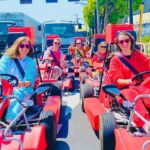
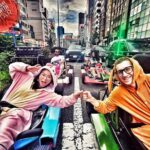
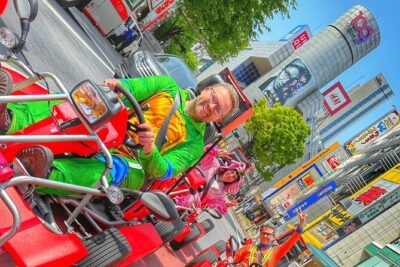
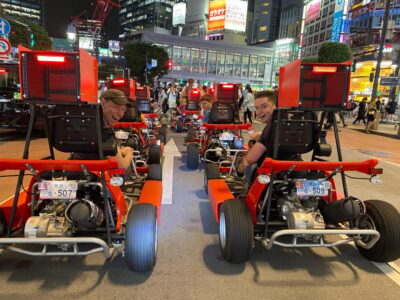
Racing near Shibuya feels like a movie scene. I really liked the hands-on small-group guidance and the fact that you ride through Tokyo sights with a plan, not just a random track. I also appreciated that the experience includes costumes and you get tour photo data from the guide. One possible drawback is the paperwork, because driving requires special documents (you cannot just show your home driver’s license).
If you want Tokyo from a fast, feet-on-the-ground angle, this is a fun choice. Expect a 1 hour 30 minutes ride session, guided from the kart, and paced so you still have time to continue sightseeing afterward. The vibe gets especially good on evening slots, when the city looks extra bright and the crossing gets even more attention.
In This Review
- Quick Hits: What You’ll Love Most
- Entering Shibuya Annex, Then Getting Rolling
- The Shibuya Crossing Runs, Where Attention Is Part of the Deal
- Harajuku And Omotesando: Pop Fashion Meets Real Street Texture
- How Small-Group Tutoring Makes Or Break the Ride
- Price: What $69.64 Really Buys You
- Your Must-Do Paperwork: The Real Gatekeeper
- Gear, Costumes, And Comfort Tips That Actually Help
- Action Camera Upgrade And Photo Memories
- Timing, Night Energy, And How the Ride Feels
- Who Should Book This Kart Tour, And Who Should Skip It
- Should You Book Street Kart Shibuya Annex?
- FAQ
- Do I need a special driving permit to drive in Japan?
- Where do I meet for the Street Kart Shibuya Annex tour?
- How long is the go-kart experience?
- Is the tour suitable for beginners?
- What is the minimum age to participate?
- Can I ride if I do not have a driver’s license?
- Are costumes included, and are there any restrictions?
- Is an action camera included in the price?
- Do I get any photos from the guide?
- What happens if the weather is poor?
Quick Hits: What You’ll Love Most
- Shibuya Crossing from multiple angles, so it feels like more than one photo spot
- Harajuku and Omotesando street mix, pop fashion meets more classic, grown-up Tokyo
- Max 6 riders, so instructions actually reach you and the group stays together
- Guides take lots of pictures, and photo data is included after the ride
- Costumes on-site, plus rules that keep it simple (and copyright-safe)
- Optional action camera upgrade, with the right reminder that micro SD is not included
Other routes through the west side of Tokyo, compared
- Tokyo: Shinjuku Food Tour (13 Dishes at 4 Local Eateries)
★ 5.0 · 6,603 reviews - Tokyo Bar Hopping Tour in Shinjuku (All-You-Can-Drink + Dinner)
★ 5.0 · 3,587 reviews - Official Street Go-Kart in Shibuya
★ 5.0 · 3,435 reviews - Tokyo: Shinjuku Food Tour (15 Dishes and 4 Eateries)
★ 4.9 · 2,033 reviews
Entering Shibuya Annex, Then Getting Rolling
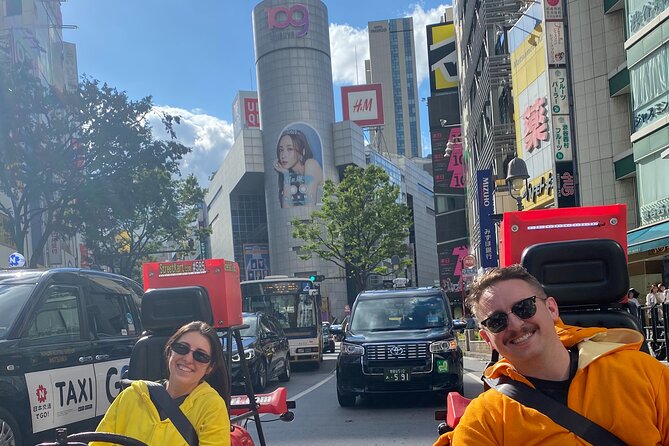
Meeting at STREET KART Shibuya Annex puts you in the Shibuya area fast. The address is in Shibuya, Maruyama-Cho, so you’re not trekking across town with your gear. You’ll get a mobile ticket, and you’re close to public transportation, which matters because Shibuya is not the place you want to waste time getting lost.
Check-in is also part of the experience, and this is where a lot of comfort comes from. In the feedback I read, people highlighted a smooth process with staff who get you sorted quickly, including paperwork steps and the pre-ride briefing. You’ll also get an informative video before you head out. That helps if you’re new to driving in a busy city, because it sets expectations before you step into a kart cockpit.
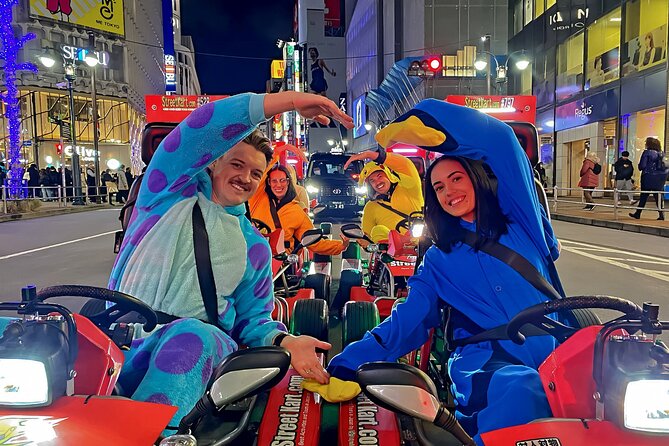
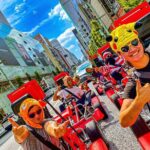
Then comes the fun part: costumes. You pick from the available costume options, and the staff help you get set up so you can focus on driving. You must wear flat, closed-toe footwear, and you should avoid long, flowy skirts or loose dresses. Plan on looking a little silly on purpose. That’s the point, and it usually makes the group photo moment better.
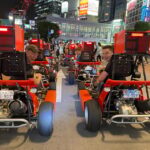
One more practical note: the karts are single-seaters. If you’re hoping to ride as a passenger, this is not that kind of activity. Everyone in the kart needs to be eligible to drive.
The Shibuya Crossing Runs, Where Attention Is Part of the Deal
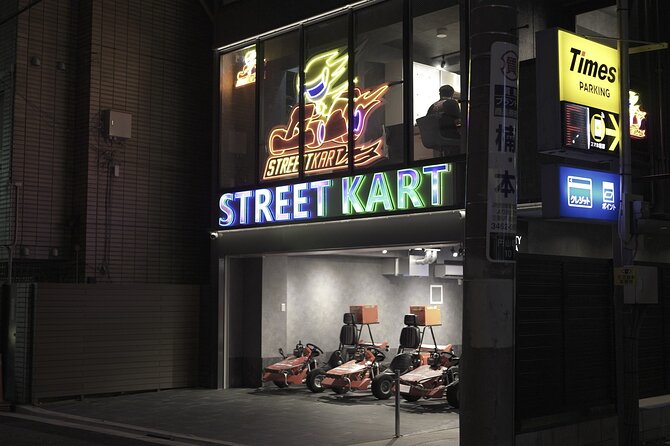
The headline stop is the famous crossing. You’ll cross the world’s busiest crosswalk from different angles, so you’re not just doing one pass and calling it done. What makes this memorable is that Shibuya Crossing is wide, chaotic-looking, and always changing, and the route is designed to show it from multiple perspectives.
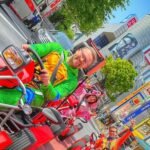
In evening slots, the effect is bigger. Neon reflections, bright storefront lights, and the constant stream of people make the crossing feel like a living set. You’ll also notice something else: the crowd reaction. People do stare and many will record you. That’s normal in Shibuya, and it’s part of why the experience feels uniquely Tokyo.
You don’t need to be a speed demon. One of the most consistent themes in the reviews is that it feels thrilling but controlled. You’re still driving through real traffic conditions with real rules and guide direction. The key is following the instructor cues and watching what’s happening in front of you, especially when the group is rotating for different riding positions.
Expect karts to slow and stop at points so the rotation can happen. If you’re with friends or family, you’ll likely trade turns and laugh at the same moment, because each position gives a different view of the same busy scene.
Harajuku And Omotesando: Pop Fashion Meets Real Street Texture
After the crossing, your route shifts into Harajuku. This part matters because Harajuku is not just one sight, it’s a whole atmosphere. You’ll enjoy ever-changing street views while passing through one of the most famous pop-culture zones in Tokyo.
Then you’ll go where Harajuku meets Omotesando. That boundary is interesting because it shows Tokyo’s contrast in motion. Harajuku can feel loud, youthful, and fashion-first. Omotesando often feels more polished, wider, and more adult in its styling. Driving through the intersection area gives you a moving “before and after” of the neighborhoods.
You’ll also drive through backstreets of Omotesando. That’s where you get a slightly less iconic, more local texture. Big avenues are great for photos, but backstreets are where you can sense how the city actually functions day to day. You may notice the subtle changes in shop types, street widths, and sidewalk rhythm, all while you’re moving, not standing still.
Practical drawback for this section: you’ll be close to other karts and street activity. So if you’re easily overwhelmed by visual noise or crowds, take guidance seriously. Keep your focus on the road and the guide signals, and you’ll enjoy it.
Different circuits, same licence rules. Compare the karts
- Flagship 2-Hours Official Street Go-Kart Tour – Tokyo Bay Shop★ 5.0 · 4,974 reviews
- Official Street Go-Kart in Shibuya★ 5.0 · 3,435 reviews
- Tokyo: Street Kart Experience in Shibuya★ 4.9 · 1,484 reviews
- Shibuya Official Street Go-Kart in Shibuya Annex★ 5.0 · 972 reviews
- Tokyo: Asakusa, Skytree & Akhihabara Go-Kart City Experience★ 4.7 · 761 reviews
How Small-Group Tutoring Makes Or Break the Ride
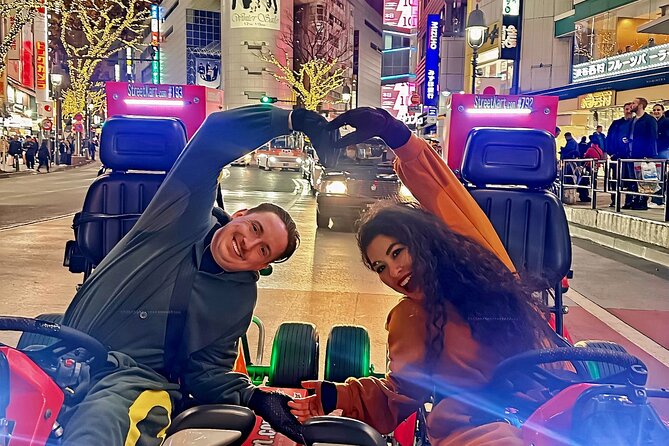
This is capped at a maximum of 6 travelers, which is a big deal. In a group this size, you don’t vanish into a crowd. It’s easier for the lead guide in the kart to keep everyone together, and it’s easier for you to hear instructions without turning your head every two seconds.
The reviews also name a few guides, and that gives you a sense of what people remembered most: Abarrar, Cole, Newaz, and Tomas were mentioned as friendly, patient, and clear with instructions. Even if your guide is different, that pattern suggests the staff style is part of the value. You get more than a route, you get coaching for how to drive safely with traffic right there.
This matters for first-timers. Go-karts feel simple until you hit stop-and-start moments, weaving space, and the mental load of a crowd surrounding you. The guide role is what turns it into an experience you can enjoy without white-knuckling the whole time.
Also, you should expect photos. Many reviews praise that the guide takes plenty of pictures during the ride. That’s not just vanity. Good photos capture angles you would never frame yourself while also driving.
Price: What $69.64 Really Buys You
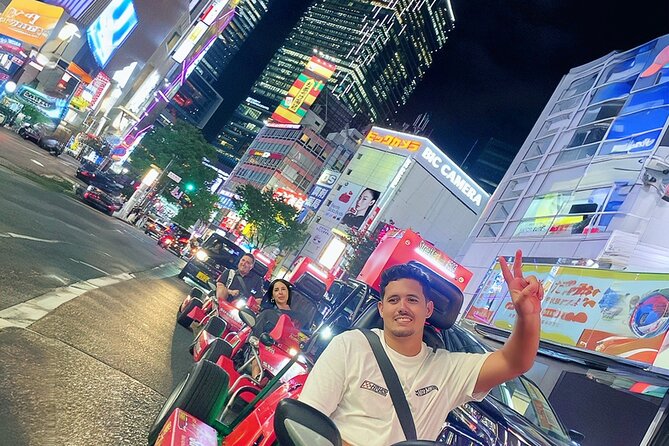
At $69.64 per person, the value depends on what you compare it to. You are not paying for a long museum tour. You’re paying for a structured, guided street driving experience in one of the most recognizable parts of Tokyo.
Here’s what’s included:
- 1 hour kart rental fee
- Lead guide in a kart
- Costume rental fee
- Tour photo data from guide
- All fees and taxes
That’s a solid bundle. A lot of “fun activities” in Tokyo advertise the base price, then nickel-and-dime you for gear and documentation help. In this case, the included items already cover the core experience.
What’s not included:
- Action camera rental fee, if you upgrade
- micro SD card for the action camera
- Full coverage insurance at ¥1,000 per person
If you want a camera upgrade, plan for extra costs beyond the base price because the micro SD is not included. If you’re considering the full coverage insurance, decide based on your comfort level and how you usually handle active experiences.
My practical take: this price makes the most sense if you want a highlight activity that’s genuinely different from the usual Tokyo list. If you hate crowds or you don’t want to drive at all, you might feel the cost more than the fun.
Your Must-Do Paperwork: The Real Gatekeeper
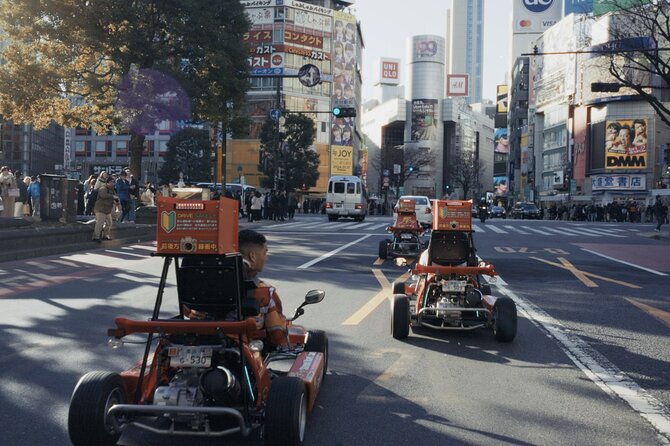
The most important part of this tour is not the kart. It’s the document rules.
To drive in Japan, you need special documents. For most countries, you’ll need an International Driving Permit (IDP) in the booklet format compliant to the 1949 Geneva Convention. You cannot obtain it online while traveling, and it must be issued by the same country that issued your domestic license.
If your license is from certain places like Switzerland, Germany, France, Taiwan, Belgium, or Monaco, you’ll need a Japanese translation from the Japan Automobile Federation (JAF), not an IDP.
And if your license is from countries not covered by the 1949 Geneva Convention, you are not permitted to drive. Also, domestic license alone is not accepted as a legal document to drive. The physical IDP (or required physical domestic license plus official translation for the exceptions) and physical passport are both required.
Street Kart messages you within 24 hours with the exact documents you need, and confirmation is generally received within 48 hours subject to availability. The reason I’m stressing this: people can lose the entire experience if the driving documents are wrong or missing.
Plan to get this sorted before you go to Japan. If you are not sure your country qualifies, ask before the trip so you’re not doing frantic paperwork once you arrive.
Gear, Costumes, And Comfort Tips That Actually Help
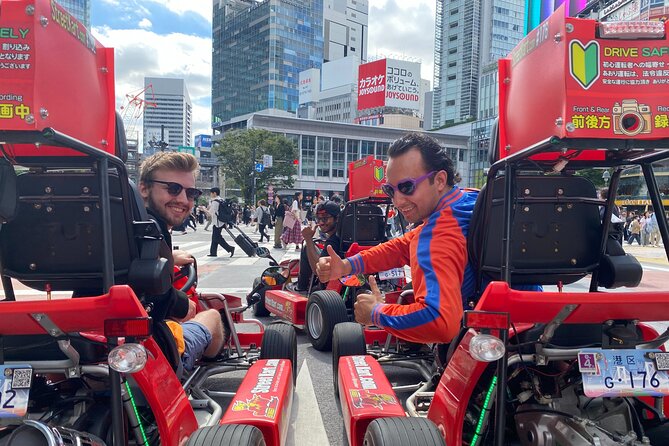
Dress code is simple but important. Wear flat, closed footwear. Avoid long flowy skirts or dresses because you’ll be moving and adjusting in a seated position around a kart.
Costumes can be fun because they make you feel like part of the city chaos. Just know the costume rules are strict about copyrighted characters. Mario or Nintendo-themed costumes are not allowed, along with clothing or items suggesting those characters. The staff provide costume options, so focus on choosing something safe and comfortable, not on trying to bring your own themed outfit.
Also, plan for exhaust. One review noted you may get exhaust in your face. That doesn’t ruin the experience for most people, but it is a real comfort consideration, especially on colder or windier evenings. If you’re sensitive to smells or fumes, keep your expectations realistic and consider how you manage that kind of exposure.
Physical fitness needs are “moderate.” You will be seated and driving, but you should still be comfortable handling the basic physical demands of riding, wearing the gear, and following instructions while moving.
Action Camera Upgrade And Photo Memories
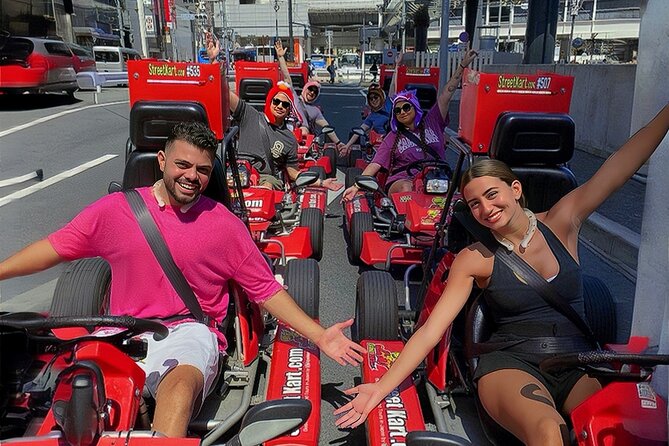
If you want footage, you can upgrade to add an action camera. The tour provides the structure for this, but the micro SD card is not included, so you’ll want to plan that part too.
Even without the camera upgrade, you likely get plenty of value from what the guide captures. Many riders mention that the guide took lots of pictures, and tour photo data is included. That means you can relive the crossing and route later without stopping for a selfie stick in the middle of a traffic moment.
If you bring your own camera setup, note that the rules provided focus on action camera upgrades. The safe approach is to follow the standard upgrade path rather than trying to DIY equipment unless the staff clearly confirms what is allowed.
Timing, Night Energy, And How the Ride Feels
Your total duration is about 1 hour 30 minutes, including setup and the guided drive time. The ride itself is designed to feel like a quick hit of Tokyo highlights, not a slow sightseeing bus tour.
Start times are offered throughout the day. If you can choose, consider evening. Multiple reviews mention night sessions and the neon effect, plus more memorable crossing energy after dark.
Expect the pace to be active. You will drive through the key intersections and then shift quickly into Harajuku and Omotesando. That means you’re trading deep walking time for moving views. If your priority is taking hours to roam and linger, this might feel fast. If your priority is doing one unforgettable, hands-on highlight, it’s a strong match.
One downside that came up: occasionally the ride can feel rushed after check-in if timing doesn’t align perfectly with another group in the schedule. That’s not the typical story, but it is a reminder that slot timing matters in a city activity like this. Arrive on time and focus on the guide instructions so your ride feels smooth.
Who Should Book This Kart Tour, And Who Should Skip It
This is best for you if you:
- Want a hands-on Tokyo activity beyond photos and transit rides
- Like the idea of driving through iconic areas like Shibuya Crossing
- Are comfortable following a guide closely and paying attention while moving
- Prefer a small-group format (max 6) with clear instruction
It’s also good for groups of friends and families. Reviews mention teenagers and multi-generational trips, and the key theme is that staff are patient and help people settle in quickly.
You might skip it if:
- You do not have the correct IDP or translation documents, because you cannot legally drive without them
- You hate crowds and attention. Shibuya Crossing is busy, and you will get stared at and recorded
- You need a calm, quiet sightseeing experience
And if you’re sensitive to fumes, remember the exhaust-in-your-face possibility. Most people still love it, but it’s honest context.
Should You Book Street Kart Shibuya Annex?
My take: if you have the driving documents handled and you want an authentic, unusual Tokyo moment, book it. The value is strong because the base price includes the guide, kart rental, costume rental, and tour photo data. You get Shibuya Crossing plus Harajuku and Omotesando in one guided run, and that combo is hard to match with typical walking tours.
Do book with clear expectations. You’re driving in a busy city environment, not doing a theme-park ride. That means you focus on the guide, keep your body in the right posture, wear the right shoes, and treat the safety rules seriously. Do that, and you’ll leave with the kind of story you can’t get from a bus window.
If your main goal is photos only, you may still enjoy it, but you’ll likely care more about getting the video and picture moments than about slow sightseeing. Choose it when you want movement, not when you want stillness.
FAQ
Do I need a special driving permit to drive in Japan?
Yes. A special document is required. For most countries this is an International Driving Permit (IDP) in the 1949 Geneva Conventions booklet format, issued by the same country that issued your domestic license. Domestic license alone is not accepted.
Where do I meet for the Street Kart Shibuya Annex tour?
You meet at STREET KART Shibuya Annex, Japan, 150-0044 Tokyo, Shibuya, Maruyamachō, 10111011 Maruyama-Cho. The tour ends back at the meeting point.
How long is the go-kart experience?
The duration is approximately 1 hour 30 minutes.
Is the tour suitable for beginners?
The tour is designed for small-group driving with a lead guide in a kart. Travelers should have a moderate physical fitness level and follow the guide instructions.
What is the minimum age to participate?
The minimum age is 18 years.
Can I ride if I do not have a driver’s license?
No. All participants need to obtain the special documents required to drive in Japan, and they must be able to drive since the karts are single-seaters.
Are costumes included, and are there any restrictions?
Costume rental fee is included. Mario- or Nintendo-themed costumes, and clothing or items suggesting those characters, are not permitted due to copyright restrictions.
Is an action camera included in the price?
No. You can upgrade to add an action camera, but the action camera rental fee and micro SD card are not included.
Do I get any photos from the guide?
Yes. Tour photo data from the guide is included.
What happens if the weather is poor?
This experience requires good weather. If it is canceled due to poor weather, you’ll be offered a different date or a full refund.
Karts, Circuit by Circuit
West Tokyo on Foot: Seven More

Newest Tokyo write-ups from the Loving Japan desk
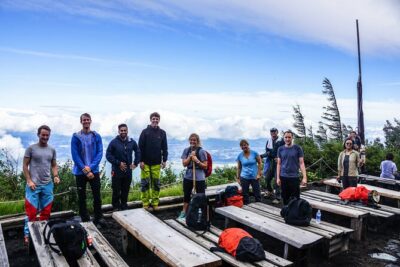
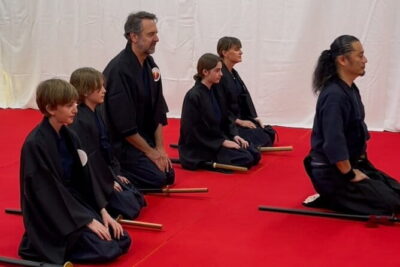
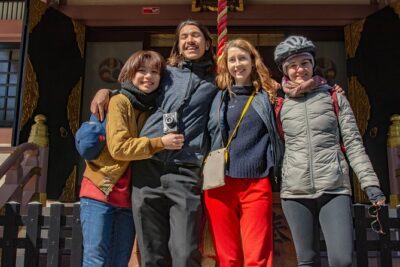
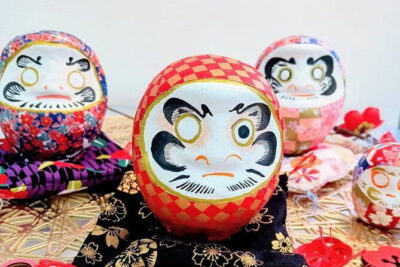
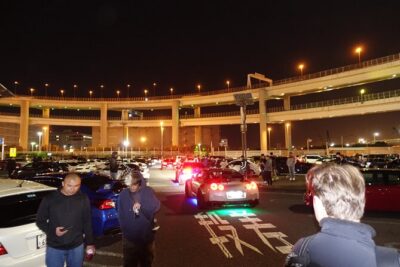
Shibuya, Shinjuku and Harajuku Walks, side by side.
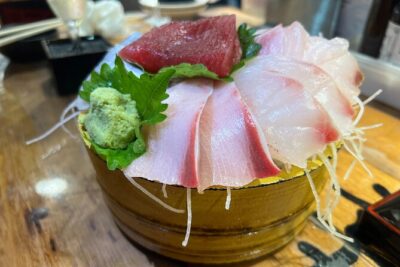 ★ 5.0Shinjuku Food Tour (13 Dishes at 4 Local Eateries)From $866,603 reviews
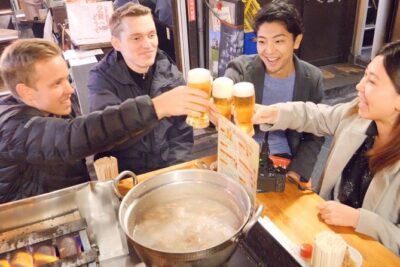 ★ 5.0Tokyo Bar Hopping Tour in Shinjuku (All-You-Can-Drink + Dinner)From $1063,587 reviews
 ★ 5.0Official Street Go-Kart in ShibuyaFrom $763,435 reviews
 ★ 4.9Shinjuku Food Tour (15 Dishes and 4 Eateries)From $852,033 reviews
 ★ 4.9Shinjuku Local Bar and Izakaya Guided Walking TourFrom $341,794 reviews
 ★ 5.0Tokyo Shinjuku Chopsticks Making ClassFrom $201,763 reviews
 ★ 5.0Tokyo Shinjuku Sumo Show & Experience with PhotoFrom $791,750 reviews
 ★ 4.9Street Kart Experience in ShibuyaFrom $741,484 reviews
Filed on these lists too