
REVIEW · WALKING TOURS
Tokyo Architecture and Contemporary Art Walking Tour with a local guide
Tokyo’s best buildings are walkable with a local. I like how this tour turns Tokyo’s architecture into a full day plan, mixing contemporary art stops with classic city landmarks, while you keep a comfortable pace with a private group up to 9 people. You meet your guide outside your hotel, then move efficiently on public transport, with bottled water included to keep you going through the long stretches on foot.
One thing to keep in mind: the routing leans heavily on subway and underground passages, so you may spend more time below ground than you expect.
In This Review
- Key highlights at a glance
- A private architecture day, built for how Tokyo really works
- Price and value: $424.58 per group can be a bargain
- Getting picked up and moving by train (plus the “underground” reality)
- The guide factor: strong English, flexible routing, and good pacing
- Ginza: design-forward streets and architect-led storefronts
- Tokyo International Forum: Rafael Viñoly’s postmodern statement
- Roppongi and the Art Triangle: museums, galleries, and walkable art density
- Omotesando: high fashion meets striking modern design
- Takeshita Street and Harajuku energy: youth style and design chaos
- Shibuya crossing: the world-famous pause button
- Daikanyama: boutiques, cafes, and a slower tempo
- What to pack and how to pace yourself for 6 to 8 hours
- Who this tour suits best
- Should you book this Tokyo architecture and contemporary art walking tour?
- FAQ
- How long is the Tokyo architecture and contemporary art walking tour?
- What group size is this tour limited to?
- Is pickup included?
- What kind of tickets do I get?
- Where does the tour go during the day?
- Are drinks provided?
- When is the tour available and can I cancel?
Key highlights at a glance
- Private pacing for up to 9 people, so the day feels flexible rather than rushed
- Bottled water included, helpful during warm afternoons
- Major modern stops like Tokyo International Forum and Shibuya crossing
- Art Triangle Roppongi area, with museums and galleries in a tight zone
- Fashion-architecture contrast from Omotesando to Takeshita Street
- A guide who adapts to your questions and keeps the day flowing smoothly
Still weighing up options in Tokyo? These are the ones our reviewers rated highest.
- Mt Fuji and Hakone 1-Day Bus Tour Return by Bullet Train
★ 5.0 · 26,383 reviews - 1-Day Tokyo Bus Tour
★ 5.0 · 14,250 reviews - Tokyo: teamLab Planets TOKYO Digital Art Museum Entry Ticket
★ 4.6 · 9,779 reviews - Mt Fuji & Hakone Cruise, Drum Show Bullet Train 1 Day from Tokyo
★ 4.0 · 7,413 reviews
A private architecture day, built for how Tokyo really works
Tokyo can feel like a maze. That’s not a complaint, it’s just the truth. This tour helps you read the city fast, by walking between districts that each have their own building style and cultural mood.
What makes it work is the mix of big-name architecture and everyday urban life. You’re not just looking at famous exteriors. You get the context that makes the shapes make sense, whether you’re staring at a dramatic civic building or scanning storefront architecture in stylish shopping streets.
And because it is private, your guide can slow down when you want photos, or move faster when you’re trying to beat the crowd density in key intersections like Shibuya.
Price and value: $424.58 per group can be a bargain
The price is $424.58 per group for up to 9 people. On paper that looks pricey, but in practice it can be good value if you’re traveling with friends or family who want a guided plan without paying per person.
Think of it like this: you are buying time, routing help, and a local voice that points out details you would likely miss. The tour also saves effort. You do not need to map your own sequence of neighborhoods and then figure out the subway connections between them.
Duration runs about 6 to 8 hours, so you’re paying for a full chunk of attention. The stops are concentrated around central areas, with a mix of walking and short transit hops. If you would otherwise spend half your day figuring out transit and half your day standing around, the guiding fee starts to look more reasonable.
Getting picked up and moving by train (plus the “underground” reality)
You meet your guide outside your hotel and then travel via public transport. That matters because Tokyo public transit is fast and reliable, but it also comes with station stairs, pedestrian underpasses, and occasional walking loops.
In the experience, you should expect a lot of moving. One reviewer mentioned logging 13,000 to 20,000 steps, and the itinerary can easily create that kind of mileage if you keep a steady pace and you’re a photo-stop person.
Also, plan for the underground factor. The route uses the subway frequently, so a chunk of the journey happens under the street grid. If you dislike underground corridors, keep that in mind when you schedule the day.
Practical note: if you use transit like an IC card, your life gets easier. One review mentioned using IC cards to move around town during the tour.
- Mt Fuji and Hakone 1-Day Bus Tour Return by Bullet Train★ 5.0 · 26,383 reviews
- 1-Day Tokyo Bus Tour★ 5.0 · 14,250 reviews
- Tokyo: teamLab Planets TOKYO Digital Art Museum Entry Ticket★ 4.6 · 9,779 reviews
- Mt Fuji & Hakone Cruise, Drum Show Bullet Train 1 Day from Tokyo★ 4.0 · 7,413 reviews
- Tokyo Mt Fuji 5th St & Hakone Cruise Bus Tour w/Bullet Train★ 4.4 · 5,024 reviews
The guide factor: strong English, flexible routing, and good pacing
This is the kind of tour where the guide can make or break the day. The good news is that the guidance here shows up in the feedback again and again.
I’ve seen names like Richie, Riley, and Masa associated with this experience, and the pattern is consistent: clear English, responsive answers, and an itinerary that stays organized even when the weather or your interests shift. One guide was noted for spending an entire day with the group and keeping a strong plan. Another was praised for accommodating requests and guiding with architectural detail.
That translates into a practical benefit for you. You will spend less time guessing what you’re looking at, and more time appreciating it. You also get help managing the day, like when to pause for photos at a building corner and when to keep moving so you do not lose your rhythm.
Ginza: design-forward streets and architect-led storefronts
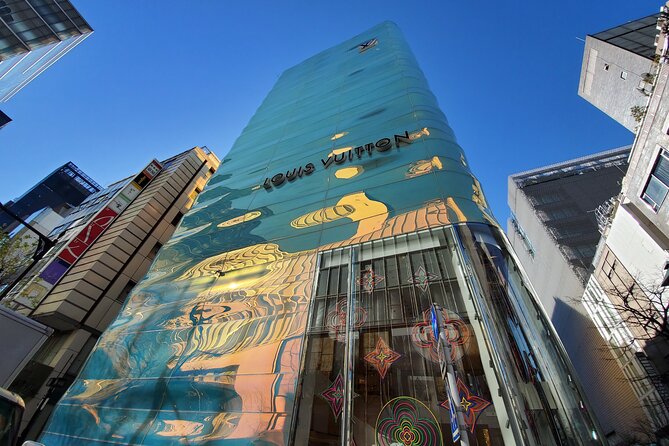
Ginza is one of those Tokyo districts that instantly feels “engineered.” The streets are polished, the shopping is high-end, and the architecture often feels like it was designed for both beauty and crowd flow.
On this stop, you get time to walk among boutiques, intimate galleries, and stylish Japanese stores. The highlight here is not a single building you have to hunt down. It is the density of architecture and design choices across the area.
What to do while you’re there: slow down near building entrances and look at how facades transition between floors. Tokyo often uses subtle changes in materials to guide your eye. In Ginza, that careful design shows up again and again.
This is a good spot to reset your brain before the more art-heavy segments. You can recharge with a drink or quick snack and then head back out ready to notice details.
Tokyo International Forum: Rafael Viñoly’s postmodern statement
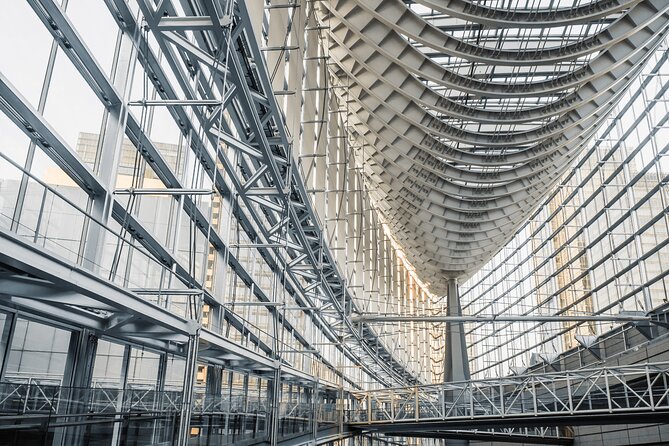
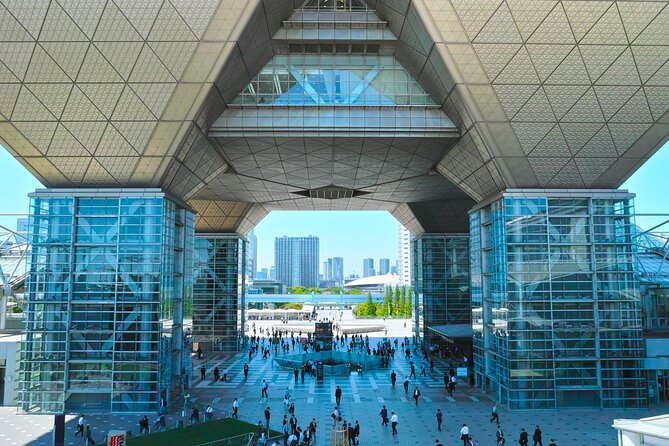
Next is Tokyo International Forum, a major convention and art center. The architecture here gets called postmodern, and you can feel that in the way the structure carries bold lines and theatrical presence.
You only get about 15 minutes here, so you should treat it like a focused stop, not a museum visit. Use your time for exterior observations first. Look for how the building’s geometry frames the street and the plaza around it. Then take quick notes mentally, because when you return to street-level city walking, those shapes influence how you perceive everything else.
If you like architecture that feels like a landmark, this is the kind of building that gives you instant “I’m in Tokyo” energy. Even in a short window, it helps anchor the rest of the day.
Roppongi and the Art Triangle: museums, galleries, and walkable art density
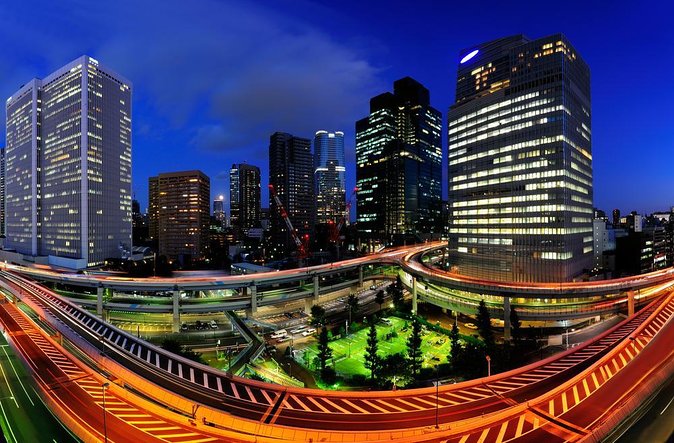
Roppongi is where Tokyo’s contemporary art scene becomes visible in a practical way. The area is linked to what gets described as the Art Triangle, with three big anchors: National Art Center, Mori Art Museum, and Suntory Museum of Art.
You get about 1 hour here, which is enough time to feel the neighborhood’s art identity without turning it into a formal museum day. You can also use this stop to learn the layout, because Roppongi has that “district inside a district” feel. Once you know the basic structure, it is easier to explore on your own later.
What to watch for: how the art spaces relate to surrounding streets. Tokyo’s museum districts often feel connected to business areas, transit lines, and outdoor plazas, not isolated bubbles. When you see those connections, you stop thinking of museums as separate from daily life.
Omotesando: high fashion meets striking modern design
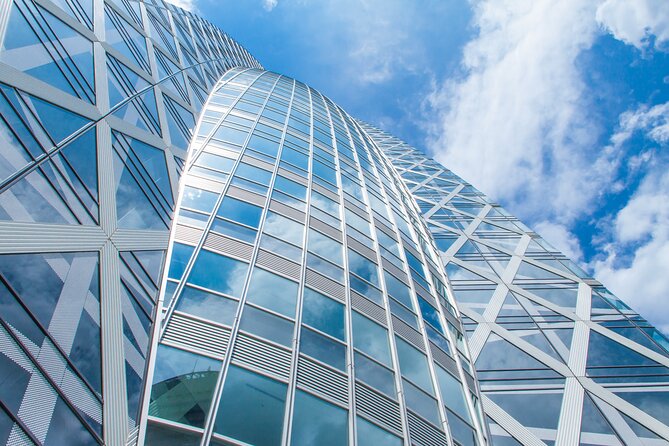
If Ginza is sleek and polished, Omotesando is sleeker with a fashion pulse. This is where Tokyo’s shopping architecture gets more playful and more ambitious.
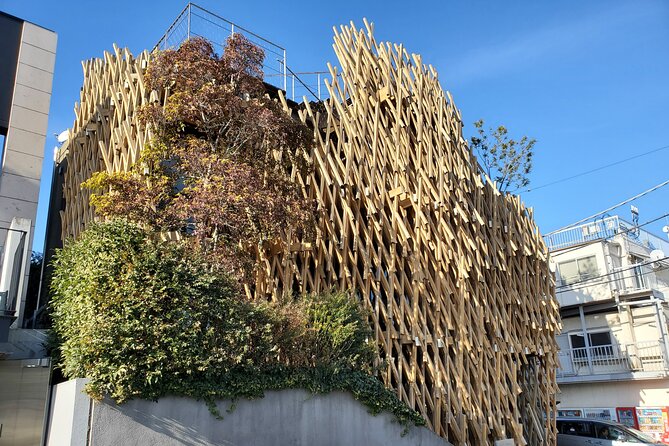
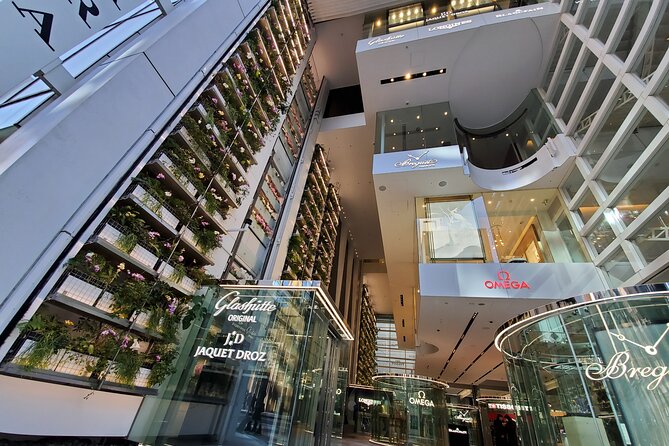
Your time here is about 1 hour, with a strong focus on the building side of the neighborhood. Omotesando has famous shopping and store buildings designed by prominent architects. The stop description specifically references the Prada flagship store and the architects Herzog & de Meuron.
What you can do in this hour: walk slowly and compare facades across blocks. Omotesando often shows a shift from one architectural language to another, almost like the street is a portfolio of design styles. Even if you are not shopping, the area is worth it for the exterior composition.
Keep your expectations realistic. This is a walking and viewing stop. You are not promised a long interior tour here, so prioritize the streetscape experience.
Takeshita Street and Harajuku energy: youth style and design chaos
Then you hit Takeshita Street, in the Harajuku orbit, where youth culture and fashion expression become the main event. You get about 1 hour, and the vibe is famously more loud visually than the earlier stops.
Here the point is not fine architecture in a traditional sense. It is how Tokyo expresses identity through storefronts, signs, and building-adjacent design. You’ll see unique fashion trends and more outrageous design choices. That is the cultural design language in action.
This is also a good place to pick up a snack or a small item if you like people-watching. The visual intensity can be mentally exhausting, so treat your time like a sampling session. Walk, look, then step aside to breathe if the crowd energy gets too loud.
Shibuya crossing: the world-famous pause button
Shibuya crossing is the kind of place that you might think you already know from photos. In person, it hits differently because you experience the scale through motion, not just sight.
You get about 30 minutes here, so the stop is designed for impact, not for wandering all day. You can stand back and watch the crossing flow, or move to a vantage point nearby for a clearer view of crowd timing.
The description calls it the busiest intersection in the world, and it is often compared with other famous squares to show just how intense it gets. Your best use of the time is to watch how people move in synchronized waves, then take a few photos and let it be what it is: a living urban choreography.
Daikanyama: boutiques, cafes, and a slower tempo
Finally, you shift into a calmer-feeling area: Daikanyama. This part of the tour is about contrast. After Shibuya’s crosswalk chaos and Takeshita’s visual noise, Daikanyama feels more relaxed.
You get about 1 hour here, with an atmosphere that is described as less hectic than the more famous nearby areas. It is also tied to Nakameguro for boutique-and-cafe vibes.
One detail worth knowing: Tsutaya book store is mentioned as being located in this area. Even if you only glance inside briefly, it’s the kind of place where you can see how Tokyo mixes retail with culture.
What you should do here: slow down. This stop is your decompression. Look at streets for smaller-scale architecture, not just big monuments. You will appreciate the way the district feels designed for lingering.
What to pack and how to pace yourself for 6 to 8 hours
This is a day where comfort wins. A few practical things will make it smoother.
1) Wear walking shoes
You can rack up serious steps, especially if you stop for photos. Plan for uneven pavement and lots of stair transitions between subway segments.
2) Bring a light layer
Inside stations and underground corridors, temperature swings are common. A light jacket or hoodie can save you.
3) Use the water
Bottled water is provided, which is a relief. Still, take small sips and do not wait until you feel thirsty.
4) Plan for transit time, not just stop time
Some places are short stops. The transit between them is part of the experience rhythm, and it is where the day can feel long.
5) If rain hits, adapt your photo plan
In the feedback, rain did not stop the tour from working. The guide still kept the day moving. If it rains, you might want fewer long exterior shots and more focused angles.
Who this tour suits best
This tour fits you if you like city walking with a smart guide and you want architecture and contemporary art as the backbone of the day.
It also works well if you travel with a group of up to 9 and want one shared plan. Because the price is per group, your unit cost drops as you spread it across more people.
On the other hand, if you hate walking for long stretches or you dislike underground corridors, you should think twice. This itinerary is built around central districts and frequent public transport connections, so it is not a seated, low-effort sightseeing day.
Should you book this Tokyo architecture and contemporary art walking tour?
I think this is a strong booking when your goal is to see Tokyo through buildings and design, not just through landmarks. The private structure keeps it flexible, the bottled water helps during a long day, and the guides named in feedback show real care for pacing and questions.
Book it if you want a day that mixes famous architecture with street-level design, plus contemporary art territory in Roppongi. Skip it if you want minimal transit, minimal walking, or a day that stays mostly above ground.
If you do book, choose your expectations like you would choose your shoes. This is a walk-first, architecture-second, context-always kind of tour. When you match your energy to that, it works really well.
FAQ
How long is the Tokyo architecture and contemporary art walking tour?
It runs about 6 to 8 hours.
What group size is this tour limited to?
It is a private tour for your group, up to 9 people.
Is pickup included?
Pickup is offered, and the guide meets you outside your hotel before moving on public transport.
What kind of tickets do I get?
You receive a mobile ticket.
Where does the tour go during the day?
The tour includes stops in Ginza, Tokyo International Forum, Roppongi, Omotesando, Takeshita Street, Shibuya, and Daikanyama.
Are drinks provided?
Yes, bottled water is provided to help you stay refreshed.
When is the tour available and can I cancel?
The tour runs during two seasonal windows with hours listed as 8:30 AM to 3:00 PM, and it is Monday through Sunday. You can cancel for a full refund if you cancel at least 24 hours in advance.
Newest Tokyo write-ups from the Loving Japan desk






Walking Tours, side by side.
 ★ 4.7Kyoto Geisha Walking Tour: Gion District & Hidden GemsFrom $253,273 reviews
 ★ 5.0Tokyo Tsukiji Fish Market Food and Culture Walking TourFrom $993,184 reviews
 ★ 4.9Gion Magical Night Walking Tour with Geisha TriviaFrom $242,393 reviews
 ★ 5.0Imperial Palace and Shogun Historical Walking TourFrom $222,251 reviews
 ★ 4.7Gion Geisha District Walking Tour – Stories of GeishaFrom $202,187 reviews
 ★ 4.5Night Walk in Gion: Kyoto’s Geisha DistrictFrom $212,003 reviews
 ★ 4.9Shinjuku Local Bar and Izakaya Guided Walking TourFrom $341,794 reviews
 ★ 5.0Tsukiji Fish Market Food and Walking tourFrom $301,724 reviews