
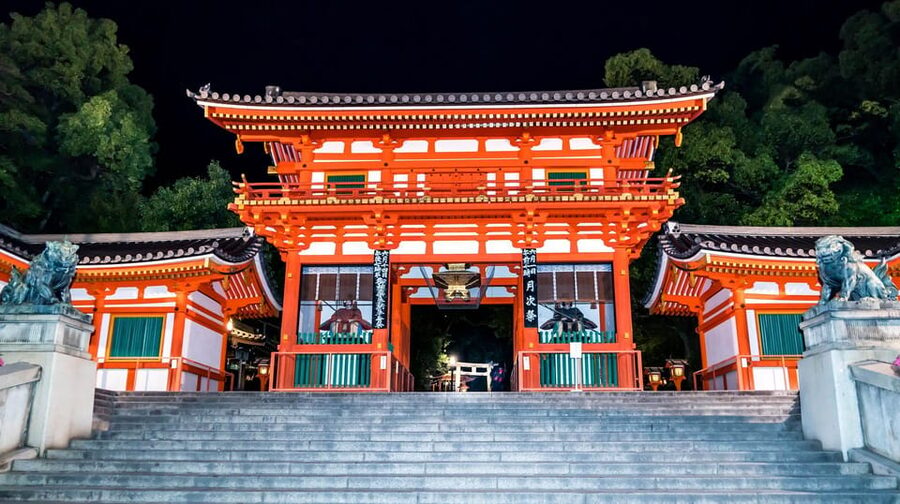
REVIEW · GION, GEISHA AND MAIKO EXPERIENCES
Kyoto: Gion Geisha District Walking Tour – Stories of Geisha
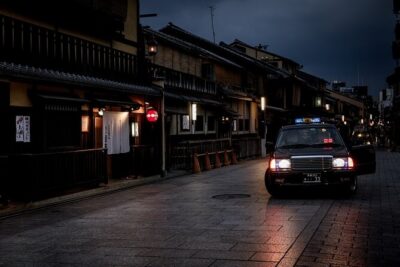
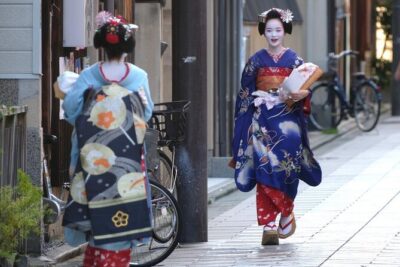
Geisha culture feels close-up at night. This 2-hour walking tour through Gion and Pontocho turns Kyoto into a storybook, with narrow lanes and old wooden teahouse streets that feel made for evening light. I love how the guide connects what you are seeing to the bigger picture of geisha training and tradition, and I also love the real-world vibe of potentially spotting geiko and maiko on the move.
One thing to keep in mind: it is a nighttime stroll, so sightings are never guaranteed, and on some evenings you may see fewer geiko and maiko than you hope. Also note that it is not suitable for children under 10, so plan accordingly if you are traveling with family.
In This Review
- Key Things You Will Love on This Kyoto Geisha District Walk
- Nighttime Gion and Pontocho: Why This Works Better Than Daytime
- Starting Point at Ben’s Cookies Kyoto Shijo, Then the Tour’s Tempo
- Pontocho Alley After Dark: Narrow Streets, Old Wooden Teahouses, Real Atmosphere
- The Izumo-no-Okuni Statue Stop: Kabuki Origins in a Geisha Neighborhood
- Gion District Walking Segment: The Neighborhood Comes Alive
- Yasaka Shrine and Gion Corner: Sacred Place Meets Entertainment Culture
- Hanamikoji Street: Where You Watch, Listen, and Learn the Details
- Guides Who Make or Break the Experience (Names You Will Hear A Lot)
- Price and Value: $20 for 2 Hours of Guided Kyoto Culture
- Who Should Book, and Who Might Want a Different Plan
- Should You Book This Kyoto Geisha District Walking Tour?
- FAQ
- Where do I meet the guide?
- How long is the tour?
- What areas are included on the walk?
- What languages is the guide available in?
- What should I bring?
- Is alcohol allowed?
- Is the tour good for children?
Key Things You Will Love on This Kyoto Geisha District Walk
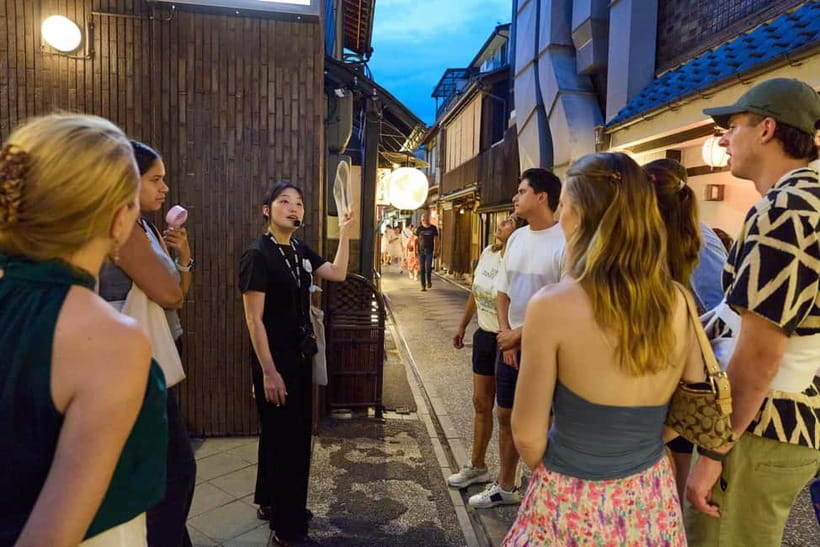
- Meet at Ben’s Cookies Kyoto Shijo with an easy sign-board meet-up and a quick start.
- Pontocho Alley after dark with its classic side-street feel and traditional dining atmosphere.
- Izumo-no-Okuni statue stop that ties the neighborhood to performance arts and kabuki origins.
- Gion highlights in sequence including Yasaka Shrine, Gion Corner, and Hanamikoji Street.
- Geiko and maiko sightings en route timed to appointments, guided with context so you understand what you are seeing.
- Top-rated guides like Manuel, Yukari, Nami, and Yuki are praised for answering questions and keeping the pace comfortable.
Evening walks through the old quarters, compared
- Kyoto Geisha Walking Tour: Gion District & Hidden Gems
★ 4.7 · 3,273 reviews - Kyoto: Gion Magical Night Walking Tour with Geisha Trivia
★ 4.9 · 2,393 reviews - Kyoto: Gion Geisha District Walking Tour – Stories of Geisha
★ 4.7 · 2,187 reviews - Best of Kyoto: Gion, Geisha, Pagodas & Cobblestones
★ 4.9 · 2,058 reviews
Nighttime Gion and Pontocho: Why This Works Better Than Daytime
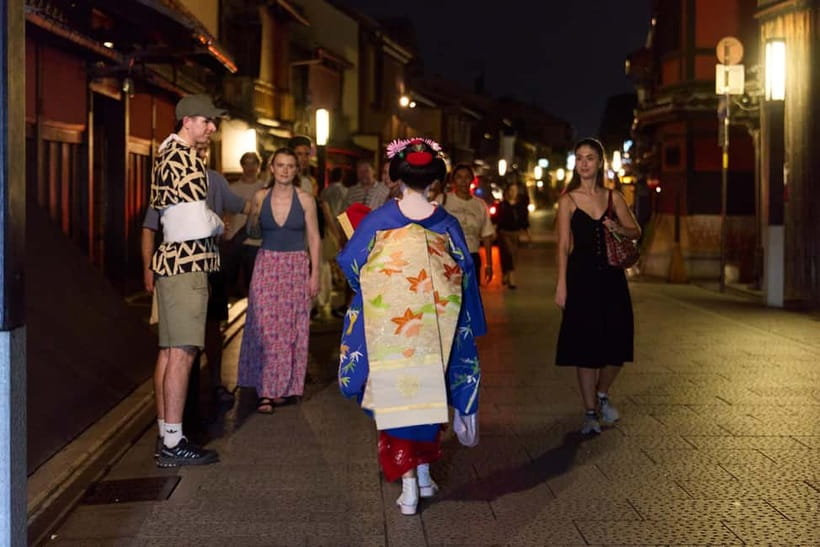
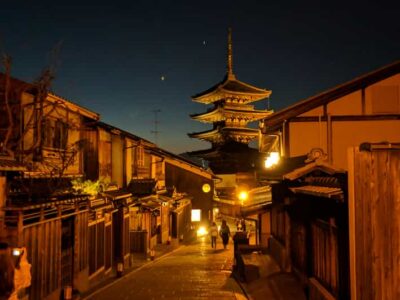
Kyoto’s geisha districts have a different mood after dark. During the evening, the streets feel more like you are stepping into the past instead of just sightseeing buildings. That matters, because the tour is built around atmosphere, not checklists.
You also get a setting where people are actively going to and from appointments. The tour is designed to help you notice details you might miss in daylight, especially around the lanes where geiko and maiko may pass through. I like that the tour does not treat this as a hunt. The guide frames what you are seeing in a way that makes the culture feel understandable, not mysterious.
This is also a smart fit for short stays. With a tight 2-hour route, you get a concentrated look at Gion and Pontocho without losing half your evening to transit.
Starting Point at Ben’s Cookies Kyoto Shijo, Then the Tour’s Tempo
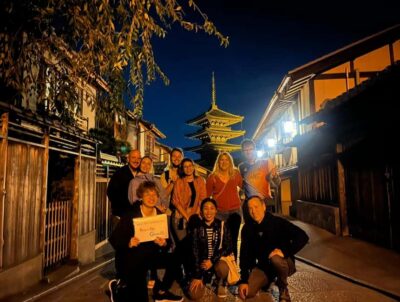
You meet your guide in front of Ben’s Cookies Kyoto Shijo. Your guide will be holding a sign board, so you can spot them quickly and avoid the usual meet-up chaos.
The first part moves fast in a good way. After a brief start, you head out into Pontocho. This helps you settle in right away instead of standing around while the clock burns.
In pacing terms, the tour is structured to keep things moving but not rushed. Many guides are praised for making room for questions and explanations. You also get practical check-ins along the way, so if the walking tempo feels a bit quick, you still have a real chance to ask what is next and why it matters.
Bring water. You are outside at night for a full two hours, and that small detail helps you stay comfortable.
Pontocho Alley After Dark: Narrow Streets, Old Wooden Teahouses, Real Atmosphere
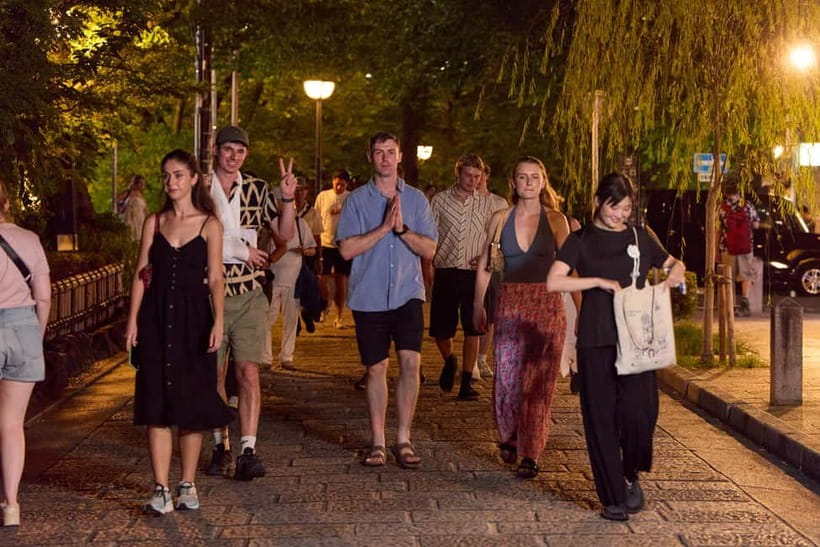
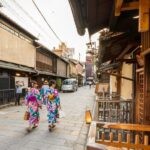
Pontocho Alley is the kind of place that makes Kyoto feel cinematic. You walk along side streets lined with the classic wooden-teahouse style, and it is exactly the kind of setting where the neighborhood’s entertainment history feels present.
This segment is short but focused, and that is a good thing. With about 15 minutes here, you get enough time to take in the alley vibe while your guide layers in context. You are not just looking at lights. You are being taught how to read the street.
Pontocho is also described as a street with traditional eateries and elite clubs. Even if you are not going inside anywhere, just knowing the street’s role in Kyoto’s nightlife history changes what you notice. Suddenly, doors and facades feel like part of a working system, not scenery.
- PERFECT KYOTO 1-Day Bus Tour★ 5.0 · 13,518 reviews
- Kyoto: Fushimi Inari, Kinkakuji, Bamboo Grove 1 Day Bus Tour★ 4.8 · 4,316 reviews
- Kyoto: Tea Ceremony in a Traditional Tea House in Kiyomizu★ 4.9 · 3,519 reviews
- Kyoto Geisha Walking Tour: Gion District & Hidden Gems★ 4.7 · 3,273 reviews
- Kyoto: Tea Ceremony Ju-An at Jotokuji Temple★ 4.9 · 3,207 reviews
The Izumo-no-Okuni Statue Stop: Kabuki Origins in a Geisha Neighborhood
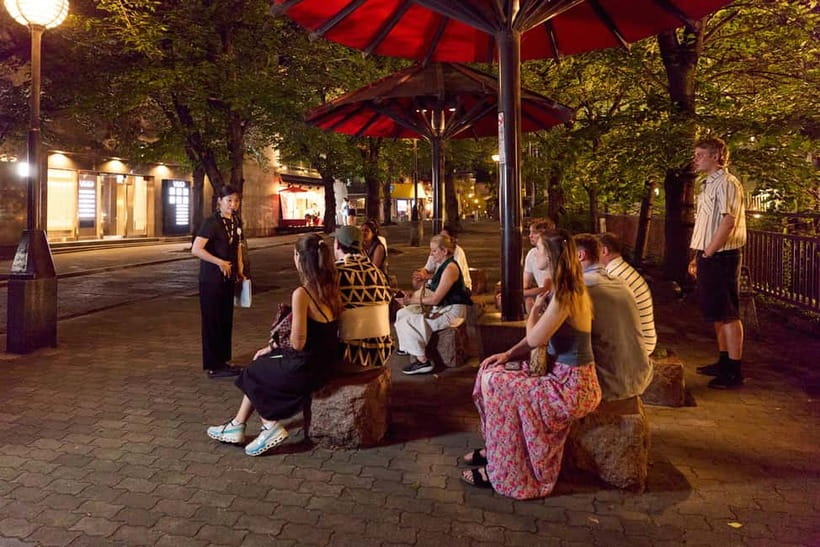
After Pontocho, you stop at the statue of Izumo-no-Okuni. This is one of the tour’s most memorable “story turns,” because it connects the district to the wider world of Japanese performance.
The guide will explain who Izumo-no-Okuni was and why the statue matters, including the idea that she invented the art of kabuki. That might sound like a detour from geisha culture, but it actually fits. The geisha entertainment districts are tightly linked to stage arts, music, and performance traditions. This stop helps you see that overlap instead of treating geisha culture as a sealed-off topic.
One practical benefit: this kind of landmark stop gives you a natural moment to catch your breath and refocus. It also helps when you are traveling with mixed interests, because even if you came for geiko and maiko, you leave with a broader performance-art thread.
Gion District Walking Segment: The Neighborhood Comes Alive
Next is the heart of the walk: Gion. This is the longer block at about 30 minutes, and it is where the tour starts to feel like a real neighborhood stroll rather than a set of photo stops.
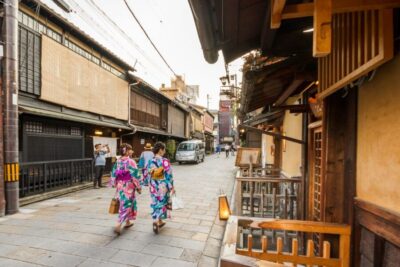
Expect your guide to point out the kinds of old-street details that matter in places like this: narrow lanes, traditional architecture, and the rhythms of people moving around in the evening. Many guides are praised for turning these moments into stories, including how geisha life ties into Kyoto’s social traditions.
This is also where you may encounter geiko and maiko en route to appointments. The key word here is en route. The tour is set up to help you notice them respectfully and with context, so you understand what you are seeing instead of just reacting to a glimpse.
And if you are a first-timer, this segment can be especially valuable. Many guides are specifically praised for tailoring the explanations for people with no background, while still keeping the content interesting for those who know a bit already.
Yasaka Shrine and Gion Corner: Sacred Place Meets Entertainment Culture
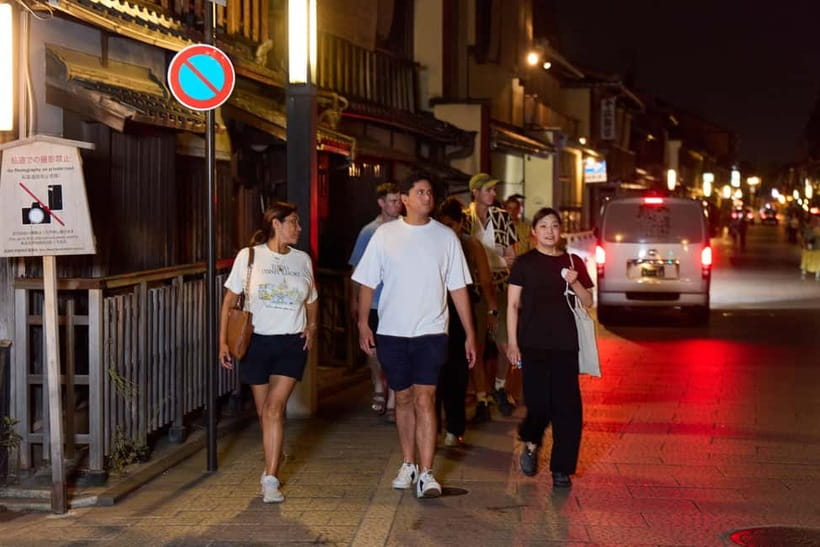
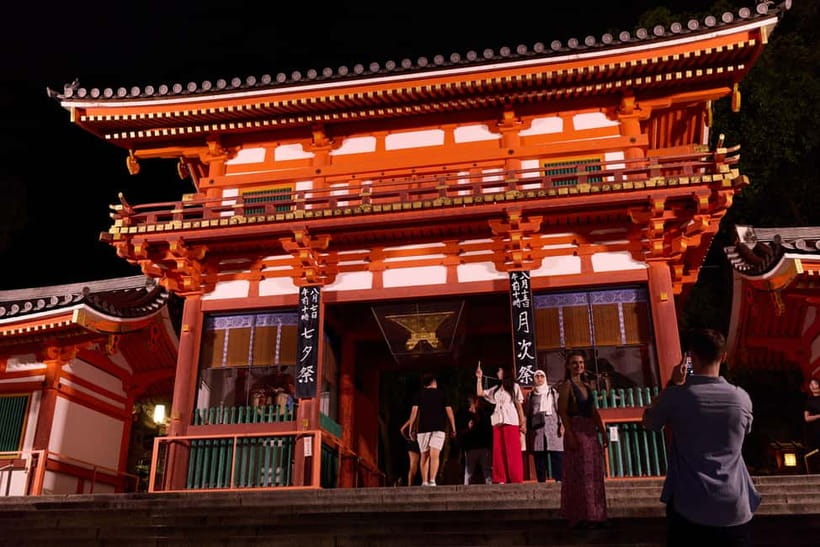
From Gion, you head to Yasaka Shrine for about 25 minutes. This stop is important because it reminds you that Kyoto’s cultural life is not only about entertainment districts. It is also tied to places of worship and local tradition.
Then you continue to Gion Corner for around 10 minutes. Even with the shorter time here, it helps round out the neighborhood picture. Geisha districts are often described as if they are all one thing. This segment adds contrast and shows how the area’s identity is layered.
What I like about pairing shrine and district stops is that it prevents the tour from feeling one-dimensional. You get a sense of how Kyoto’s traditions connect: sacred space, community history, and the performance-world that brought so many visitors here.
Hanamikoji Street: Where You Watch, Listen, and Learn the Details
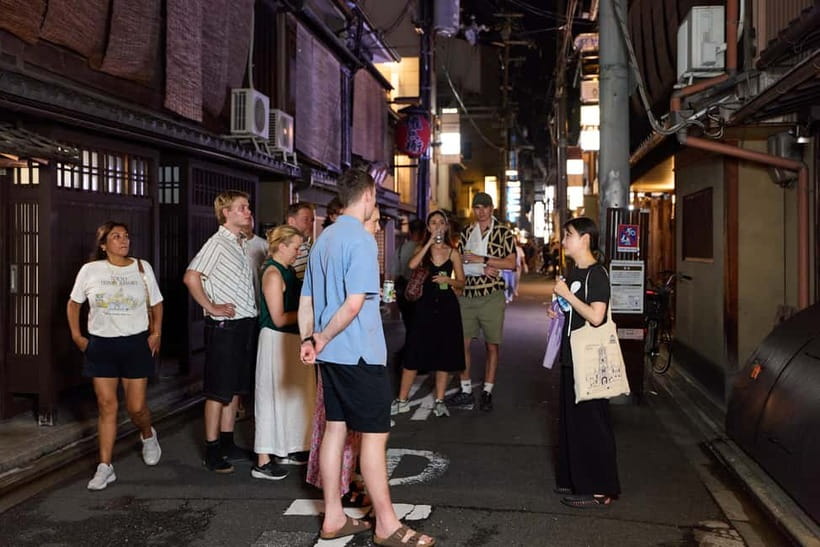
The final walk includes Hanamikoji Street for about 15 minutes. This is a classic corridor for seeing the Gion district in motion. The tour encourages you to keep an eye out for geishas as they travel to appointments.
This is where the guide’s role matters most. If you are new, you might not realize what details to look for, or how to interpret what you see. With a good guide, you learn what signals to pay attention to and how the timing of evening events shapes what you spot.
Hanamikoji also tends to be a place where people naturally want photos. Guides are praised for handling pacing well and making time for photos, and some guides are even mentioned for taking care of group photos. The point is that you should not feel rushed, and you should feel confident asking questions when something catches your attention.
Guides Who Make or Break the Experience (Names You Will Hear A Lot)
A lot of this tour’s quality comes down to the guide. And the strongest feedback you see is consistent: guides like Manuel, Yukari, Nami, Ann, and Yuki are repeatedly praised for turning geisha culture into clear, human stories.
You will also notice patterns in what people love:
- Question-friendly explanations with time to ask follow-ups
- A comfortable pace that does not shove you forward
- Respectful guidance that helps you spot geiko and maiko without turning it into spectacle
Some guides are also praised for adjusting to your background. If you came with zero knowledge, you get a friendly on-ramp. If you already know terms like geiko and maiko, you get richer context instead of basic definitions.
Even practical moments matter. One common theme is that guides handle the real-world weather situation well, including finding sheltered spots when conditions turn rough.
Price and Value: $20 for 2 Hours of Guided Kyoto Culture
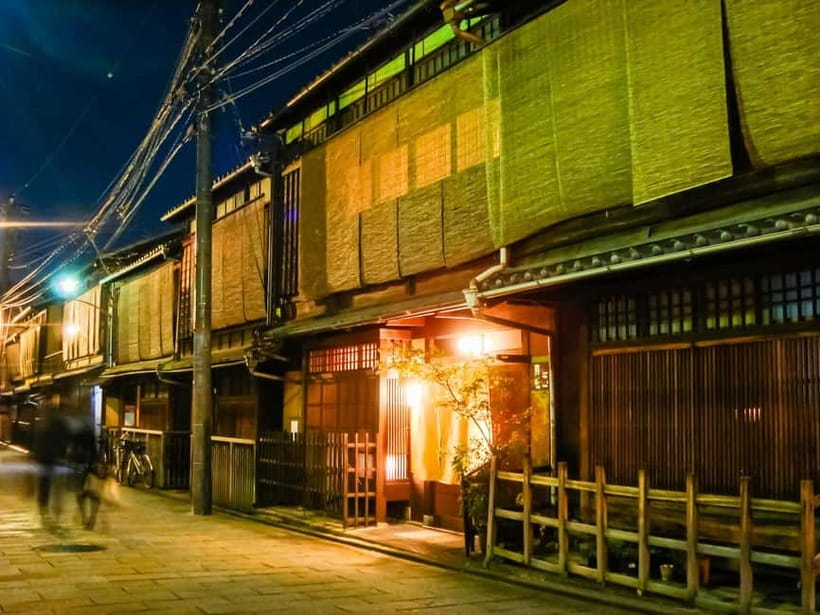
At $20 per person for 2 hours, the value is solid because you are paying for time plus interpretation. You get more than just walking directions. You get a local guide leading you through multiple cultural stops, including Pontocho Alley, a performance-art landmark tied to kabuki, and key Gion waypoints like Yasaka Shrine.
A deal like this usually works best when you use it actively. If you treat it like a passive stroll, you might feel like it is just “cool streets.” If you engage, ask questions, and listen to the connections between the places, the price feels fair fast.
Also, the bilingual options matter for value. You can choose English or Spanish, which helps make sure you get the full story instead of guessing.
Who Should Book, and Who Might Want a Different Plan
This tour is a great match if you want:
- A short, organized evening overview of Gion and Pontocho
- Chances to see geiko and maiko en route to appointments
- A guide who can explain training and tradition in a way that makes sense on the street
It is not the best fit if:
- You are traveling with kids under 10
- You want a fully guaranteed sighting schedule, because even the best-guided evening can vary based on what is happening that night
If your Kyoto schedule is tight, this tour is also a smart “anchor activity.” It gives you context that makes the rest of your Kyoto wandering better, because you start noticing details with more meaning.
Should You Book This Kyoto Geisha District Walking Tour?
Book it if you want an evening in Kyoto that feels like culture, not just sightseeing. The $20 price paired with a local guide for 2 hours is a strong deal, especially because the route hits both the geisha districts and key cultural story points like the Izumo-no-Okuni statue and Yasaka Shrine.
Skip it or consider something else if you need kid-friendly content, or if you are coming only for a guaranteed geiko and maiko sighting. In that case, you could still enjoy Kyoto street life, but you might feel underwhelmed if your evening schedule does not line up with what you hoped to see.
Bottom line: if you like asking questions and walking at night through old Kyoto streets, this is one of the best ways to understand Gion after dark.
FAQ
Where do I meet the guide?
Meet in front of Ben’s Cookies Kyoto Shijo. The guide will be holding a sign board.
How long is the tour?
The tour lasts 2 hours.
What areas are included on the walk?
You will explore Pontocho Alley and the Gion district, including stops at the statue of Izumo-no-Okuni, Yasaka Shrine, Gion Corner, and Hanamikoji Street.
What languages is the guide available in?
The live guide offers English and Spanish.
What should I bring?
You should bring water.
Is alcohol allowed?
No. Alcohol and drugs are not allowed.
Is the tour good for children?
No. It is not suitable for children under 10.
Evenings in the Old Quarters
Newest Kyoto write-ups from the Loving Japan desk

Gion, Geisha and Maiko Experiences, side by side.
 ★ 4.7Kyoto Geisha Walking Tour: Gion District & Hidden GemsFrom $253,273 reviews
 ★ 4.9Gion Magical Night Walking Tour with Geisha TriviaFrom $242,393 reviews
 ★ 4.9Best of Kyoto: Gion, Geisha, Pagodas & CobblestonesFrom $242,058 reviews
 ★ 4.5Night Walk in Gion: Kyoto’s Geisha DistrictFrom $212,003 reviews
 ★ 5.0Kyoto Night Foodie Tour in Gion (9+ dishes + 6 Sake tastings)From $1631,762 reviews
 ★ 5.0Kyoto Gion Geisha District Walking Tour – The Stories of GeishaFrom $251,441 reviews
 ★ 5.0Kyoto Gion: 2-Hour Geisha Culture & History Walking TourFrom $231,186 reviews
 ★ 5.0Chopsticks Making Workshop in Gion with Engraving OptionFrom $15958 reviews
Filed on these lists too