
REVIEW · WALKING TOURS
Tokyo Castle & Imperial PalaceーShogun Walking Tour
Tokyo’s royal grounds can feel surprisingly alive. This small-group walk connects Edo Castle defenses to today’s Imperial Palace without getting lost in textbook talk.
I love how the route keeps you moving, with quick stops that make big ideas feel physical. I also like that you get a real sense of scale, with photo moments and garden time that are built into a tight 2-hour format.
One drawback to know up front: a security check is required at the Imperial Palace, and the tour is English only, so you need to be comfortable navigating in English.
In This Review
- Key moments that make this tour click
- Why the Imperial Palace feels like Edo Castle, not a museum
- Before you go: security check, weather, and what to carry
- Stop 0: meeting at Starbucks near the Wadakura Fountain Park
- Sakurada Tatsumi Yagura: the first taste of Edo Castle’s design thinking
- Ote-Mon Gate: where power announces itself
- Tokyo Imperial Palace grounds: walking through the living center of a 2,600-year system
- Ninomaru Garden: the calm side of hard politics
- Edo Castle ruins and moats: reading defense in the ground
- Imperial Palace East Gardens: koi fish, trees, and a softer landing
- Guides make the difference, and names show up for a reason
- Photo strategy: what to capture and how to not miss the story
- Price and value for $23 in a 2-hour small group
- Who this tour suits best, and who might want to skip it
- Should you book this Shogun walking tour?
- FAQ
- How long is the Tokyo Castle and Imperial Palace Shogun walking tour?
- How big is the group?
- What language is the tour guide speaking?
- Where do I meet for the tour?
- What stops are included during the walk?
- What is included in the price?
- Is there a security check when entering the Imperial Palace?
- Is there wheelchair access?
Key moments that make this tour click
- Up to 10 people, so questions actually get answered without a scramble.
- Edo Castle scale explained through gates, walls, and remaining traces you can see.
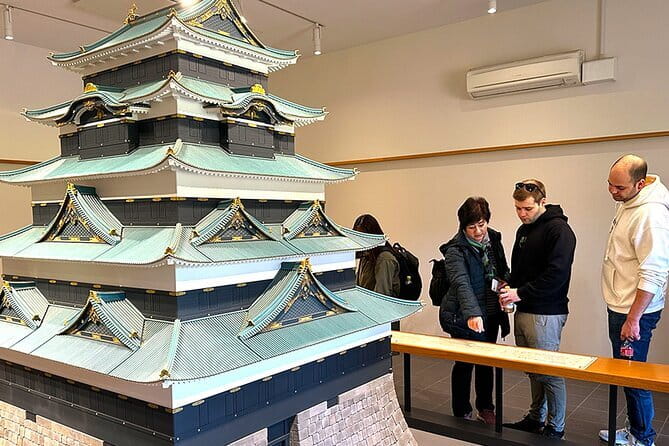
- A miniature structure helps you visualize what the former palace complex looked like.
- Ninomaru Garden and East Gardens balance drama with quiet design.
- Koi fish and trees from across Japan add texture beyond the stone-and-history focus.
- English-only guide means you will always understand what matters as you walk.
Still weighing up options in Tokyo? These are the ones our reviewers rated highest.
- Mt Fuji and Hakone 1-Day Bus Tour Return by Bullet Train
★ 5.0 · 26,383 reviews - 1-Day Tokyo Bus Tour
★ 5.0 · 14,250 reviews - Tokyo: teamLab Planets TOKYO Digital Art Museum Entry Ticket
★ 4.6 · 9,779 reviews - Mt Fuji & Hakone Cruise, Drum Show Bullet Train 1 Day from Tokyo
★ 4.0 · 7,413 reviews
Why the Imperial Palace feels like Edo Castle, not a museum
If you have ever visited the Imperial Palace area and thought, It looks beautiful, but what am I looking at, this tour helps fast. The big idea is simple: Edo Castle was the center of power for centuries, and many parts of that story are still readable in the palace grounds around you. Instead of treating the Imperial Palace like a sealed exhibit, your guide points out why it makes sense that it became the Imperial residence in the first place.
This is also a good way to connect the dots between two different systems that shaped Japan: samurai rule under the shogun and the long-running imperial tradition. Even if you know a little from pop culture, the walking format gives you a clearer mental map. You start seeing defenses, entrances, and gardens as tools that served people, not just scenery.
Before you go: security check, weather, and what to carry
Plan for an outdoor-heavy experience. You will be strolling between major points and gardens, so dress for wind, heat, or cold. If you are the type who hates walking in bad weather, bring a light layer you can manage in a hurry.
At the Imperial Palace, there is a security check. Keep your bag simple and do not bring knives or alcohol. Photography is encouraged, so if you want to capture gates, walls, and garden details, bring a camera or phone with enough battery.
Accessibility is mostly workable. Wheelchairs are available and can be used within the Imperial Palace grounds, but there can be slopes and parts where you still walk on foot. If mobility is a concern, it is worth considering how comfortable you are with short sections of walking.
Stop 0: meeting at Starbucks near the Wadakura Fountain Park
You start in a practical place, right in front of Starbucks Coffee Kōkyo Gaien Wadakura Fountain Park Store. It is an easy meet point, and you can spot the guide holding a sign that says Local Guide Stars.
This matters more than it sounds. The tour moves quickly from the first look at Edo Castle traces toward the main palace area, so starting on time and staying together helps. When the group is capped at 10, it is easier for the guide to manage pace and keep you from drifting behind.
- Mt Fuji and Hakone 1-Day Bus Tour Return by Bullet Train★ 5.0 · 26,383 reviews
- 1-Day Tokyo Bus Tour★ 5.0 · 14,250 reviews
- Tokyo: teamLab Planets TOKYO Digital Art Museum Entry Ticket★ 4.6 · 9,779 reviews
- Mt Fuji & Hakone Cruise, Drum Show Bullet Train 1 Day from Tokyo★ 4.0 · 7,413 reviews
- Tokyo: Shinjuku Food Tour (13 Dishes at 4 Local Eateries)★ 5.0 · 6,603 reviews
Sakurada Tatsumi Yagura: the first taste of Edo Castle’s design thinking
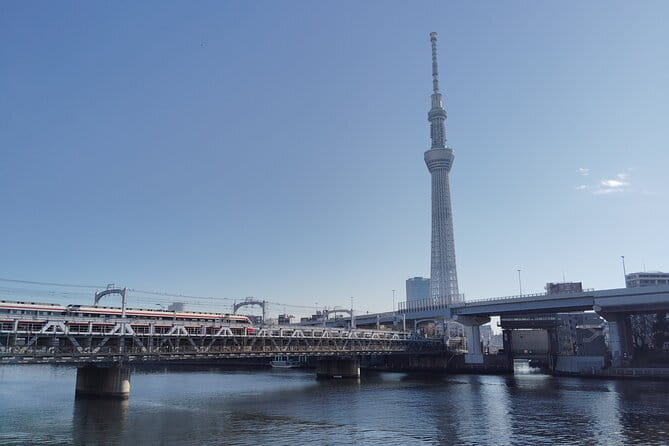
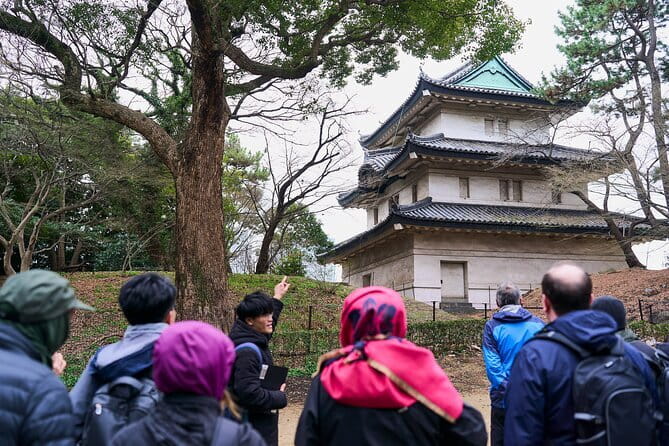
The tour kicks off with a stop at Sakurada Tatsumi Yagura, a short photo and guided walk. Yagura structures are worth your attention because they help you “see” the defensive layout. Even if what you are seeing today is only part of the original story, a good guide will explain what these structures were for and why their location mattered.
This stop is brief by design, but it sets the tone. Instead of asking you to memorize names, it trains your eyes on patterns: vantage points, entry logic, and how walls and buildings worked together. When you understand that, later gates and grounds stop feeling random.
Ote-Mon Gate: where power announces itself
Next comes the Ote-Mon Gate, one of those places where the architecture does more than look good. You get time for photos and a guided explanation, and the key is how your guide links the gate to control and movement. Large entrances like this were not built only for access. They were built to manage who could pass, when, and under what conditions.
If you are a history fan, you may enjoy how this tour frames the Edo period as practical, not abstract. The shogun era is often described as orderly or stable, but your guide pushes you to think about the “how.” Defenses were layered, and gates were part of that system. Once you hear that, the palace grounds start reading like a map of security decisions.
Tokyo Imperial Palace grounds: walking through the living center of a 2,600-year system
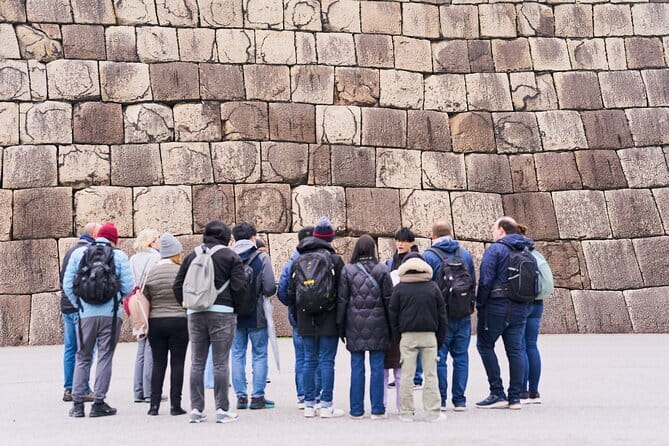
Then you reach the heart of the experience: Tokyo Imperial Palace time for photos, guided walking, and explanations on what makes the area unique today. The tour highlights the Imperial system as a tradition that has endured for about 2,600 years. That is a huge number, and hearing it while you are standing in the grounds makes it feel less like trivia.
What I like here is the balance. The guide is not just telling you that emperors ruled. They connect it to the survival of institutions over time and how political power reshaped itself without fully disappearing. You also get help imagining life for the shogun and retainers, which is where the samurai theme stops being a costume and becomes a daily reality of hierarchy, access, and protocol.
Ninomaru Garden: the calm side of hard politics
Ninomaru Garden is one of the best parts for visitors who want more than stone and structure talk. You get a dedicated stretch of time here, with photos and guided insights. The garden gives you a mental reset after gates and defenses, but it is not “just pretty.” Gardens in Japanese castle and palace spaces were often designed to support viewing, ceremony, and seasonal change.
Expect seasonal beauty depending on when you visit. Your guide may point out layout choices and specific garden features, and the pacing gives you room to slow down and look instead of rushing through. It is also a great stop if you travel with anyone who finds “military history” a bit dry. Gardens make the same story feel human.
Edo Castle ruins and moats: reading defense in the ground
After the garden, the tour turns toward Edo Castle ruins and traces of the older complex. This is where your guide’s explanation matters most because you are not always staring at dramatic leftovers. Instead, you are seeing hints: angles, boundaries, and surviving elements that suggest how massive the castle once was.
Your guide talks through why Edo Castle was described as Japan’s largest castle and how its defenses made it hard to breach. And here’s the practical payoff for you: once you learn the idea of layered defenses, you will look at the next walls and gates in a whole new way. Even if parts are missing, the logic is still visible.
If you love photography, this stop can be a sweet spot for shots that show texture. Think stone edges, waterline impressions near moats, and the way spaces open and narrow. You are capturing the difference between “what’s left” and “what it must have been like.”
Imperial Palace East Gardens: koi fish, trees, and a softer landing

The tour finishes with Imperial Palace East Gardens time for photos and guided walking. This is where you might encounter special koi fish and diverse trees from across Japan. Those details are small, but they make the garden feel connected to the broader Japanese idea of place and seasons, not just the palace grounds as a single, isolated world.
This is also a good point for reflection. By now you have walked through the logic of defenses and the framework of imperial continuity. East Gardens help you understand that the palace grounds were never only about protection. They were also about ritual, leisure, and the daily experience of people living around power.
Guides make the difference, and names show up for a reason
Small-group tours live or die by the guide. This one tends to score high because the guides explain with clarity and answer questions along the way. In the broader set of past experiences, names like Anju, Yuuka, Fuma, Tomo, Yuki, and Koyo show up repeatedly, with praise for friendliness and for pointing out details that you would otherwise walk right past.
If you want to get more out of your walk, ask questions when you have them. For example: what makes this gate different from another, or how does a garden design link to its historical use? With a group up to 10, your guide can respond without rushing. That turns a 2-hour tour into something that sticks in your head.
Photo strategy: what to capture and how to not miss the story
Photography is encouraged, so use your camera. But don’t just shoot wide angles. I suggest a mix:
- One “scale” photo near a gate or key structure, so later you remember where the story starts.
- One close-up showing stone texture or garden detail, because your guide will likely mention specific features.
- One water-related shot if you catch moats or koi, since those elements often become story anchors.
The tour is short enough that you might feel tempted to snap everything. Instead, slow down at stops where your guide is pointing out layout logic. When you review your photos later, those are the ones that will make sense.
Price and value for $23 in a 2-hour small group
At $23 per person for a 2-hour walk, this tour is fairly strong value, mainly because of what you get alongside the sights. You are paying for an English guide who explains the Edo Castle system and its defensive logic, then connects it to the Imperial Palace and Japan’s long imperial tradition. Without that guidance, a lot of the ground can look like beautiful parkland.
You also get included time in the Imperial Palace grounds and eastern garden, plus added context tools like the miniature structure of the former palace. That miniature is the kind of thing that feels minor until you realize it can help you visualize the entire complex.
The value gets even better if you want to pack in one major historical experience without taking on a full-day plan. This tour is short, focused, and designed to keep your attention on the right details.
Who this tour suits best, and who might want to skip it
This tour fits best if you want:
- Samurai and shogun era context, especially the Edo period
- A practical way to understand the Imperial Palace grounds
- A calm but structured walk with time for gardens and photos
- The ability to ask questions in English
It may not be your best choice if you strongly prefer self-guided wandering with minimal talking, or if you do not want to deal with an Imperial Palace security check. Also, since it is English only, you will want to feel comfortable in English explanations.
Should you book this Shogun walking tour?
I think you should book if you want the Imperial Palace area to make sense, not just look impressive. The combination of Edo Castle defenses, the Imperial system perspective, and garden time gives you a balanced experience in a tight window. And if you enjoy small groups, the up to 10-person size helps your guide tailor attention and keep the pace human.
If you are already an absolute palace expert and you enjoy independent exploration, you might not need a guided loop. But for most first-timers, this is a solid way to get your bearings fast and leave with a real understanding of what you saw.
FAQ
How long is the Tokyo Castle and Imperial Palace Shogun walking tour?
The tour lasts 2 hours.
How big is the group?
The group is limited to a small group size of up to 10 participants.
What language is the tour guide speaking?
The tour is conducted in English only, and Japanese language support is not available.
Where do I meet for the tour?
Meet in front of Starbucks Coffee Kōkyo Gaien Wadakura Fountain Park Store. The address is 3-1 Kōkyo Gaien, Chiyoda City, Tokyo.
What stops are included during the walk?
You will visit multiple Imperial Palace related spots, including Sakurada Tatsumi Yagura, Ote-Mon Gate, Tokyo Imperial Palace, Ninomaru Garden, Edo Castle Ruins, and Imperial Palace East Gardens.
What is included in the price?
Included items are an English guide, Imperial Palace grounds and eastern garden access, history insights about samurai and Tokyo’s development, viewing of a miniature structure of the former palace, and encounters with koi fish and trees from across Japan.
Is there a security check when entering the Imperial Palace?
Yes. There is a security check, and you should not bring knives or alcohol.
Is there wheelchair access?
Wheelchairs are available and can be used within the Imperial Palace grounds, but there are some slopes and areas where guests may need to walk or go down on foot.
Newest Tokyo write-ups from the Loving Japan desk



Walking Tours, side by side.
 ★ 4.7Kyoto Geisha Walking Tour: Gion District & Hidden GemsFrom $253,273 reviews
 ★ 5.0Tokyo Tsukiji Fish Market Food and Culture Walking TourFrom $993,184 reviews
 ★ 4.9Gion Magical Night Walking Tour with Geisha TriviaFrom $242,393 reviews
 ★ 5.0Imperial Palace and Shogun Historical Walking TourFrom $222,251 reviews
 ★ 4.7Gion Geisha District Walking Tour – Stories of GeishaFrom $202,187 reviews
 ★ 4.5Night Walk in Gion: Kyoto’s Geisha DistrictFrom $212,003 reviews
 ★ 4.9Shinjuku Local Bar and Izakaya Guided Walking TourFrom $341,794 reviews
 ★ 5.0Tsukiji Fish Market Food and Walking tourFrom $301,724 reviews
Filed on these lists too