
REVIEW · SIGHTSEEING BUSES AND RICKSHAW RIDES
Kyoto: Hop-on Hop-off Sightseeing Bus Ticket
Kyoto spreads out, so take the easy line. This hop-on hop-off sightseeing bus lets you ride past major sights, then get off when you want, with open-top views and 7-language audio keeping you oriented.
I love the flexible hop-on hop-off stops using your mobile voucher, and I also like that the ticket is built for 1- or 2-day exploring with unlimited rides during the validity window.
One consideration: the bus is open to the sky on top, so expect direct sun and plan around weather.
In This Review
- Key points that matter before you buy
- Hop-on hop-off freedom, with audio that keeps you on track
- Where to board at Kyoto Station, and how to start smoothly
- The route in practical order: what each main stop is good for
- Kyoto Station, Nishihonganji (Kyoto Tokyu Hotel)
- Shijo Karasuma / Nishiki-ichiba Market
- Nijo-jo Castle
- Kitano-tenmangu Shrine / Kamishichiken
- Kinkakuji Temple (Golden Pavilion)
- Daitokuji Temple
- Kyoto Imperial Palace (Doshisha University)
- Ginkakuji Temple (Silver Pavilion)
- Heian-jingu Shrine / Okazaki Park
- Gion (Kotowa-Kyoto Yasaka)
- Gojozaka (Kiyomizu-dera Temple / Gion)
- Sanjusangendo / Kyoto National Museum (Hyatt Regency Kyoto)
- Price and value: what $27 buys you in Kyoto terms
- Onboard comfort, rules, and the real weather factor
- Crowds, timing gaps, and how to avoid wasting a day
- Accessibility and who this bus fits best
- Should you book this Kyoto hop-on hop-off bus?
Key points that matter before you buy
- Mobile voucher boarding lets you hop on and off at the listed stops without hunting for ticket counters.
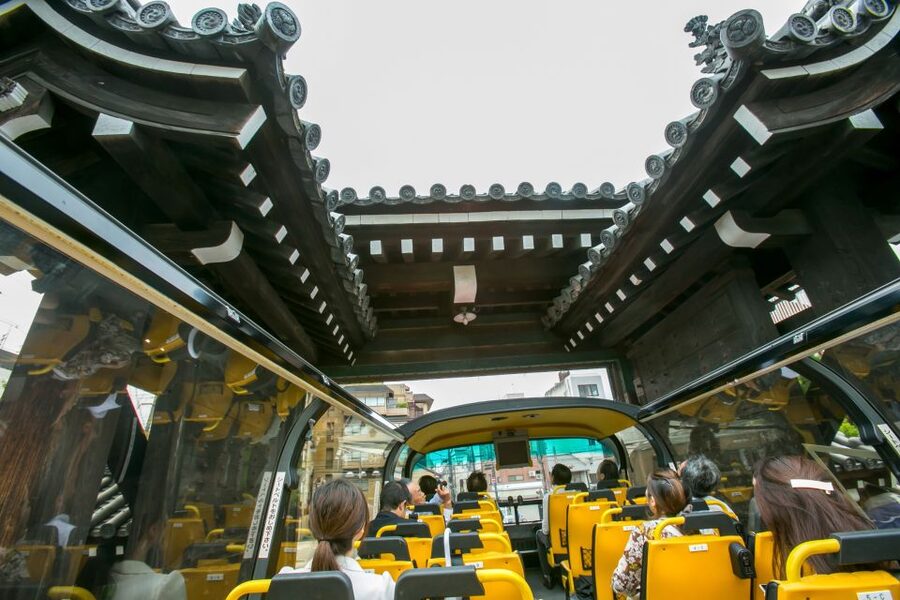
- Open-top panoramic viewing is great for Kyoto’s temple sprawl, but direct sunlight is real.
- 7-language pre-recorded audio gives quick orientation, not a deep lecture.
- Smart city coverage includes key UNESCO World Heritage stops like Nijo Castle, Kinkakuji, and Kiyomizu-Dera area viewpoints.
- Entrance fees are on you, so budget cash or card for the sites you actually go into.
- Timing can be spaced out, so decide your stop strategy early, especially if you only have one day.
Let something else do the walking
- Kyoto: Fushimi Inari, Kinkakuji, Bamboo Grove 1 Day Bus Tour
★ 4.8 · 4,316 reviews - Kyoto: Hop-on Hop-off Sightseeing Bus Ticket
★ 3.9 · 2,034 reviews - Kyoto/Osaka: Nara, Fushimi Inari Taisha, Arashiyama Bus Tour
★ 4.7 · 1,275 reviews - Kyoto: Arashiyama Customized Rickshaw Tour & Bamboo Forest
★ 5.0 · 432 reviews
Hop-on hop-off freedom, with audio that keeps you on track
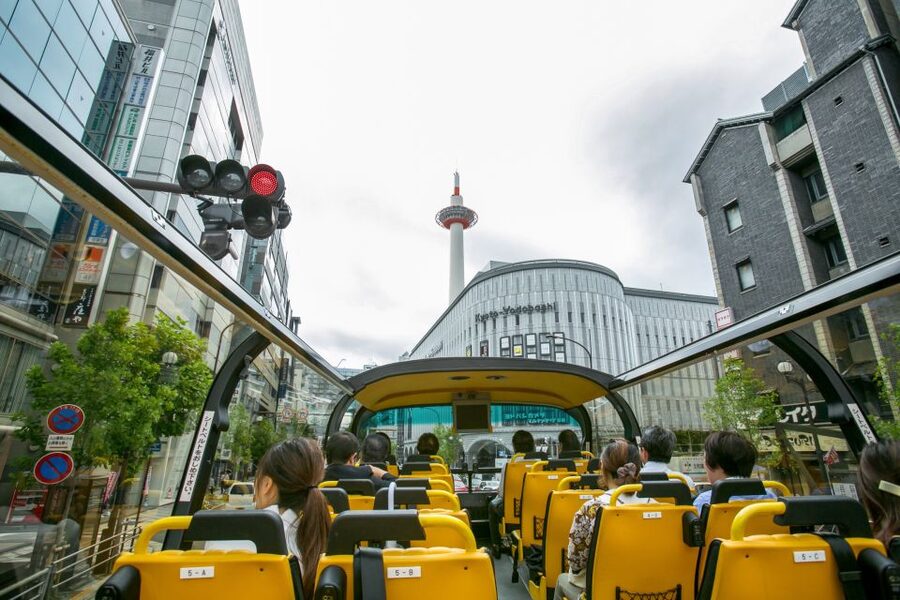
Kyoto can feel like a puzzle the first time you try it. The streets are charming, but the distance between neighborhoods adds up fast. This bus solves that by acting like a moving map. You show your mobile voucher, get on, and ride to whichever stop matches your mood. Want a quick look, a long browse, or a full temple visit? You control the rhythm.
The other big win is the onboard audio. You get pre-recorded commentary in English, French, Japanese, Korean, Chinese, Spanish, and German. It is helpful for first-timers because it tells you what you are approaching and helps you decide whether you want to hop off right there or wait for the next stop.
Just keep expectations practical. This is guidance for orientation. It is not designed to replace a real private guide or a museum label-by-label deep history session. Think of it as a reliable “what am I seeing next?” assistant.
Where to board at Kyoto Station, and how to start smoothly
Your easiest anchor point is Kyoto Station. The first bus stop is at Kyoto Station, using the north central exit. You will find the sightseeing bus stop directly in front of the Isetan department store.
This matters because Kyoto Station is where you can reset your day. If you are coming from another part of Japan, arriving late, or trying to avoid decision fatigue, starting at the same place helps. It also makes it simpler if you want to do one loop to get your bearings, then come back for a second round with a plan.
One more practical tip: there can be some confusion early on because people often talk about route options (for example, red and blue routes). If you are the type who likes to know exactly what is happening, check the sign and the direction before you step on. When you get it right at the beginning, the rest of the day feels easy.
The route in practical order: what each main stop is good for
The bus includes stops that cover Kyoto’s classic temple areas, plus shopping and cultural hubs. You can use the ride to build a “shortlist” day plan, then spend real time where you care most.
Below is how I’d think about the stop list, in the order you’ll see it on the route.
- PERFECT KYOTO 1-Day Bus Tour★ 5.0 · 13,518 reviews
- Kyoto: Fushimi Inari, Kinkakuji, Bamboo Grove 1 Day Bus Tour★ 4.8 · 4,316 reviews
- Kyoto: Tea Ceremony in a Traditional Tea House in Kiyomizu★ 4.9 · 3,519 reviews
- Kyoto Geisha Walking Tour: Gion District & Hidden Gems★ 4.7 · 3,273 reviews
- Kyoto: Tea Ceremony Ju-An at Jotokuji Temple★ 4.9 · 3,207 reviews
Kyoto Station, Nishihonganji (Kyoto Tokyu Hotel)
Start here if you want momentum. Kyoto Station is convenient for transit and it keeps your day from feeling like a long commute. The Nishihonganji stop (near Kyoto Tokyu Hotel) is useful if you want to begin with something close to the station area before you head deeper into the sightseeing zones.
Shijo Karasuma / Nishiki-ichiba Market
This stop is for food and atmosphere. Nishiki Market is the kind of place where you can snack your way through your walk, then still catch the bus back. Just remember: no food on the bus. So treat this as a grab-and-go neighborhood stop, then eat off the vehicle.
Nijo-jo Castle
This is one of the most important stops on the list, and it’s also listed as a UNESCO World Heritage site. If you want to feel like you did something “big” in Kyoto, this is a strong candidate for your one-day itinerary. Build in time for queues, because this is the kind of place people plan around.
Kitano-tenmangu Shrine / Kamishichiken
This area is a nice change of pace from the most crowded temple circuits. A shrine visit plus the nearby historic-street feel makes it a good mid-day stop when you want something calmer. It is also a helpful pivot point if you are thinking about where to spend more time on day two.
Kinkakuji Temple (Golden Pavilion)
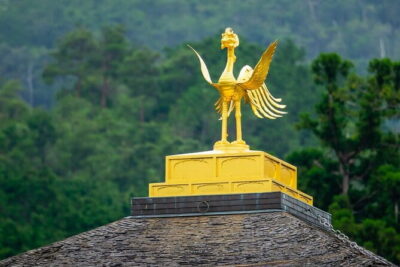
Kinkakuji is one of the star attractions on this bus route, and it’s listed as a UNESCO World Heritage site. The bus stop makes it easy to time your arrival, but plan realistically: it is popular.
Here is a practical heads-up from real on-the-ground experience: the Golden Pavilion can require cash only, and there may not be an ATM on the premise. I strongly recommend carrying enough cash before you reach this stop, so you do not lose time at the gate.
Daitokuji Temple
This stop can work well if you want another temple stop without bouncing around too much. It is also a good place to slow down a bit, because you can spend time simply moving through the grounds and enjoying the Kyoto pace. Entrance fees are not included, so decide in advance whether you are paying for entry or doing an outside-focused visit.
Kyoto Imperial Palace (Doshisha University)
This is a good stop for people who want a different flavor beyond temples, something more palace-and-landmarks oriented. It can also be helpful if you want to break up the “only temples” pattern and still keep your route efficient.
Ginkakuji Temple (Silver Pavilion)
Another major temple stop, and a classic pairing with the Golden Pavilion in many Kyoto plans. If you are doing a two-day ticket, I like placing one of these on each day so it feels special instead of rushed.
Heian-jingu Shrine / Okazaki Park
This is your “breathe a little” stop. It combines shrine energy with a park setting, so it can be a nice break between intense highlights. It is also a smart option if you want to wander for a while, rather than just step in and out.
Gion (Kotowa-Kyoto Yasaka)
Gion is the Kyoto postcard district, and the bus stop makes it practical. This is also where timing matters. If you want that evening glow, consider hopping off here later rather than when everything is still fully daylight busy. Because it is a popular area, plan to walk a bit once you get off the bus.
Gojozaka (Kiyomizu-dera Temple / Gion)
This is your Kiyomizu-Dera area access point. The listing specifically ties this stop to Kiyomizu-Dera Temple and calls out the UNESCO connection for Kiyomizu-Dera as well. Even if you do not go inside every area, this is a key stop for getting into the right neighborhood.
A note on expectations: you will likely do best when you treat the bus as transportation, not a photo platform. Some people find that bus stop viewpoints do not always give dramatic sight lines. The real payoff happens when you get off and walk.
Sanjusangendo / Kyoto National Museum (Hyatt Regency Kyoto)
This stop is for culture and big indoor options. It is also strategically placed near a major hotel area, which can help if you want a lunch reset or a museum day block. As with other sites, entrance fees are not included, so your budget should account for whatever you choose to enter.
Price and value: what $27 buys you in Kyoto terms
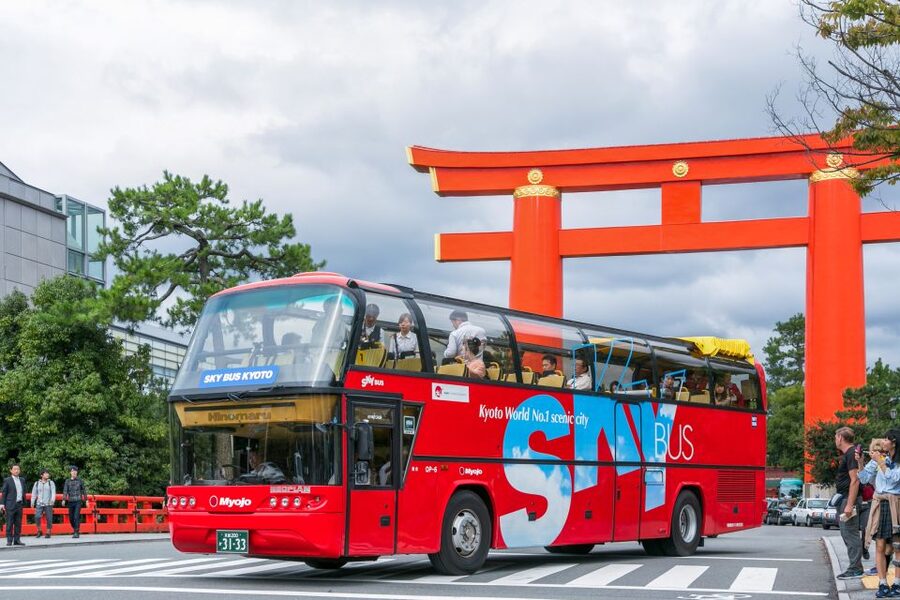
At about $27 per person for a 1- or 2-day ticket, you are buying time and reduced stress. You are not paying to be entertained on a bus. You are paying to eliminate navigation work and connect multiple far-apart neighborhoods in one day.
If you only have one day, the value is best when you use the ride strategically:
- Do a loop, then come back to your top two stops by getting off where you want more time.
- Pick one “big ticket” temple day and one lighter wandering stop.
If you have two days, the value climbs because you can slow down. The simplest approach is day one for orientation and choosing priorities, then day two for deeper visits. That pacing helps you enjoy Kyoto instead of clock-watching.
Also, the bus covers many of the main attractions without you needing to constantly switch train lines. That is especially nice if you are tired, jet-lagged, or just want an easy plan that does not rely on being great at station transfers.
Onboard comfort, rules, and the real weather factor
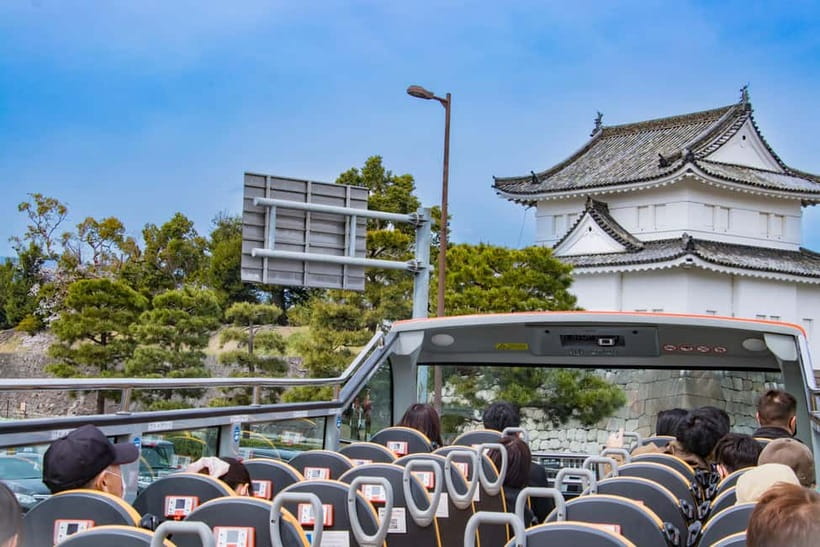
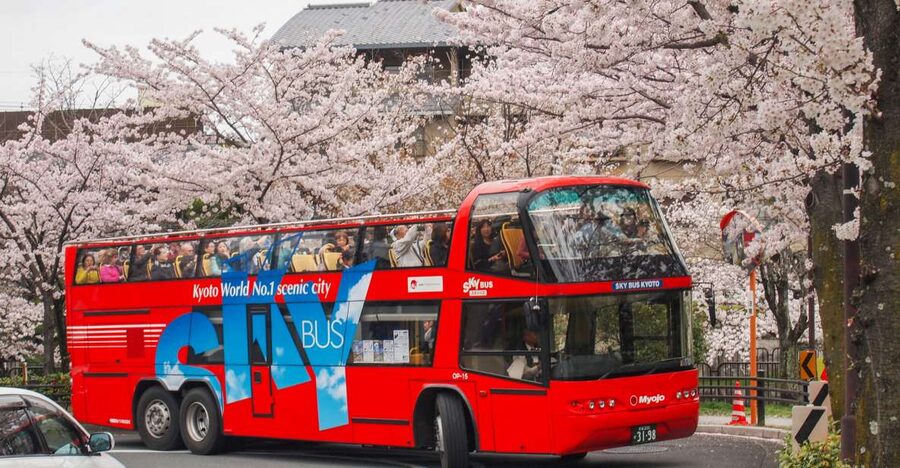
The bus is a double-decker with an open-top option. That is the main reason people love the ride, because you get panoramic views as you travel between districts.
The downside is also obvious: open top means direct sun. Bring sunscreen and something for your eyes. If it is hot, plan extra breaks when you hop off. If it rains, raincoats will be provided. In wet weather, the ride is still doable, but expect it to be less comfortable for photos and for long sitting on the upper deck.
A few rules keep things smooth. On the vehicle:
- No smoking
- No selfie sticks
- No food
- No umbrellas
- No alcohol
Drinks are also regulated. You can bring only soft drinks with lids (like plastic bottles or coffee). Wi-Fi is included in theory, but in practice it is temporarily suspended, so do not count on it to fill gaps in your day.
Crowds, timing gaps, and how to avoid wasting a day
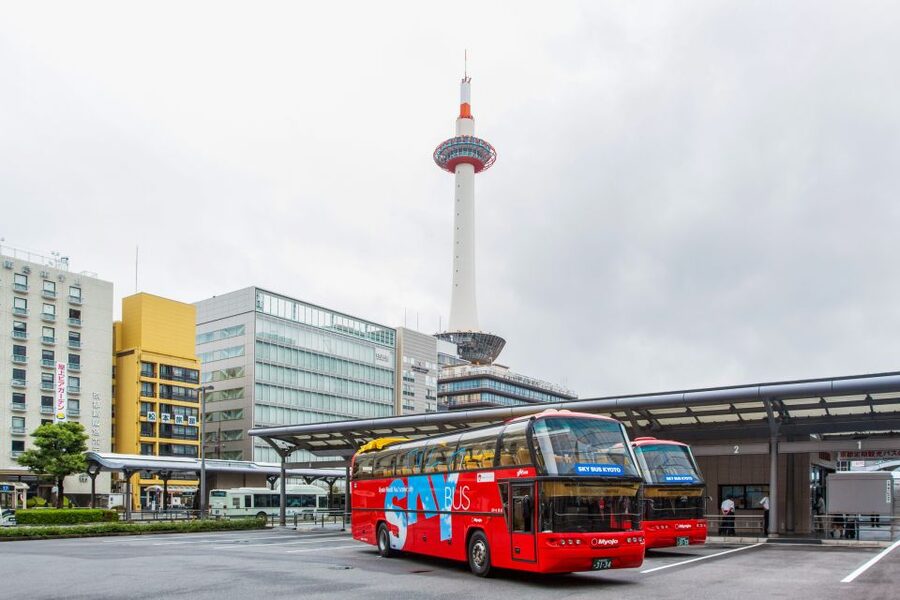
Kyoto’s big sites are busy. This bus does not remove crowds at places like Kinkakuji, but it reduces the risk of missing your chance because you got lost or chose the wrong transport.
Still, you should expect some timing gaps. One theme that pops up is that the service can be spaced out, for example around 45 minutes in some time windows. If you miss a bus and the next one is later, you can lose momentum quickly.
So here is the strategy I recommend:
- Choose your must-do stop first.
- Build buffer time for getting off, walking, and any line you hit at the gates.
- Use the bus hop-offs as “chapters,” not as one rushed sentence.
And about photos: do not assume that the best views will be visible from the bus stop itself. If you want iconic temple photos, you will likely need to walk in closer once you arrive.
Accessibility and who this bus fits best
This bus is ideal if you want:
- an easy first-timer overview
- simple transportation across Kyoto’s spread-out sights
- pre-recorded orientation in multiple languages
- the ability to spend as long or as little as you want at each stop
It may not suit you as well if you:
- want a deep, live guide style explanation of each temple’s story (the audio is an overview)
- are very sensitive to sun or you dislike open-top sightseeing, even with raincoats available
- expect a rigid itinerary with set arrival times at each major attraction
It is also a good pick for families who plan smart with ticketing. Children aged 0-5 do not need a ticket if they sit on an adult passenger’s lap (1 child per passenger with ticket).
Should you book this Kyoto hop-on hop-off bus?
If your goal is to see Kyoto’s highlights without getting stuck in transit logistics, I think this ticket is a smart buy. The mix of easy boarding at Kyoto Station, a practical stop list, and multi-language audio makes it beginner-friendly in a city that can be confusing.
I would book it if you have one to two days and you want flexibility, not a tightly scheduled tour. I would reconsider if you hate open-air sun exposure, or if you want the kind of history delivery that only a live guide or a slower museum-by-museum plan can provide.
If you do book, go in with one mindset: use the bus to move efficiently, then spend your time on the ground where the real Kyoto happens.
Let Something Else Do the Walking



Newest Kyoto write-ups from the Loving Japan desk

Sightseeing Buses and Rickshaw Rides, side by side.
 ★ 5.0Mt Fuji and Hakone 1-Day Bus Tour Return by Bullet TrainFrom $16326,383 reviews
 ★ 5.01-Day Tokyo Bus TourFrom $12914,250 reviews
 ★ 5.0PERFECT KYOTO 1-Day Bus TourFrom $12913,518 reviews
 ★ 5.0Peaceful Hiroshima & Miyajima UNESCO 1 Day Bus TourFrom $1295,309 reviews
 ★ 4.4Tokyo Mt Fuji 5th St & Hakone Cruise Bus Tour w/Bullet TrainFrom $1545,024 reviews
 ★ 4.8Fushimi Inari, Kinkakuji, Bamboo Grove 1 Day Bus TourFrom $1224,316 reviews
 ★ 3.9Hop-On Hop-Off Sightseeing Bus TicketFrom $304,207 reviews
 ★ 4.2Mt. Fuji 5th Station & Hakone Cruise 1-Day Bus TourFrom $1292,381 reviews
Filed on these lists too