
REVIEW · TOKYO TOWER, GINZA AND THE IMPERIAL PALACE
Tokyo Imperial Palace with Kagurazaka Alley Tour
Tokyo has two faces. This tour shows the slower one.
I like the small-group pace, it feels relaxed instead of rushed, and I love how the route links big monuments with everyday alley life. The main drawback is simple: it is a walking tour, so you need comfy shoes, especially on chilly mornings when you stand around for viewpoints.
The payoff is the mix. You start in the Marunouchi side at Tokyo Station, then move through the Imperial Palace grounds and nearby shrines, and finish in Kagurazaka, where old streets and modern cafés share the same blocks. One of the guides, Sho, has been praised for upbeat palace and history storytelling, while Aya has been highlighted for turning photo stops into something you remember, not just snaps on your phone.
If you want Tokyo that feels more like a neighborhood than a highlight reel, this is a smart match. You also get a mobile ticket, so you are not juggling printouts while your train brain is already overloaded.
In This Review
- Key things to know before you go
- Price and time: what $52.84 gets you in Tokyo
- Where the route starts and ends, and why that matters
- Entering Tokyo Station: a quick stop with big context
- Imperial Palace grounds: what you can see and what you should watch for
- Tokyo Daijingu Shrine: Amaterasu and the short stop that clicks
- Nippon Budokan: why it shows up on a classic-to-sudden curve
- Kagurazaka: cobblestones, geisha legacy, and streets you can actually picture
- Geisha Alley: nostalgia you can walk through
- Hyogo Yokocho and the feeling of an older Tokyo block
- Kakurenbo Yokocho: a quieter lane for atmosphere and small pauses
- Ushigome Mitsuke: Edo Castle details that feel like a puzzle
- The guides: how Sho and Aya make the palace-and-alley story click
- Practical tips: shoes, pace, and questions that get good answers
- Who should book, and who might prefer something else
- Should you book this Tokyo Imperial Palace with Kagurazaka Alley tour?
- FAQ
- What is the duration of the tour?
- How much does the Tokyo Imperial Palace with Kagurazaka Alley tour cost?
- How many people are in the group?
- Do I need to buy admission tickets for the stops?
- Where do I meet the guide and where does the tour end?
- Can I get a refund if I cancel?
Key things to know before you go
- Max 8 people keeps questions easy and the pace human.
- 3 hours 30 minutes hits palace area first, then Kagurazaka streets at the end.
- Mobile ticket means less fuss before meeting up.
- Free admission stops are built into the route on the listed sites.
- Kagurazaka alleys include Geisha Alley, Hyogo Yokocho, Kakurenbo Yokocho, plus Edo Castle details like Ushigome Mitsuke.
The central Tokyo landmarks, reviewed one by one
- Flagship 2-Hours Official Street Go-Kart Tour – Tokyo Bay Shop
★ 5.0 · 4,974 reviews - Tokyo: Imperial Palace and Shogun Historical Walking Tour
★ 5.0 · 2,251 reviews - Tokyo: Meiji Shrine, Asakusa, Skytree Bus Tour and Cruise
★ 4.7 · 1,986 reviews - Tokyo Panoramic 1 Day: Meiji Shrine, Asakusa, Odaiba and SKYTREE®
★ 4.5 · 1,222 reviews
Price and time: what $52.84 gets you in Tokyo
$52.84 is not a budget price, but it is also not one of those “pay a lot for nothing” tours. For the money, you are paying for a guided route that strings together several major sights plus lesser-known street lanes, with a group size capped at eight.
The timing matters too. At about 3 hours 30 minutes, you are not stuck all day. You get a morning start at 9:00 am, which is ideal if you like crisp photos, fewer crowds, and easier train connections before the city heats up.
You should also plan that this kind of tour tends to fill. The average booking window is about 42 days in advance, so if your dates are fixed, lock it in early.
Where the route starts and ends, and why that matters
You meet at Shin-Marunouchi Building in Marunouchi, Chiyoda. It is a practical meeting zone because Tokyo Station is right there, so arriving by train is straightforward.
The tour ends around Kagurazaka, near the main street, close to a FamilyMart. That is a big deal for value. You finish in the exact area you want to explore next, instead of getting dropped somewhere far and then having to backtrack.
The end location also helps if you are planning dinner. Kagurazaka is the kind of neighborhood where you can wander a few minutes and still stumble onto something worth stopping for, without planning a whole second itinerary.
Entering Tokyo Station: a quick stop with big context
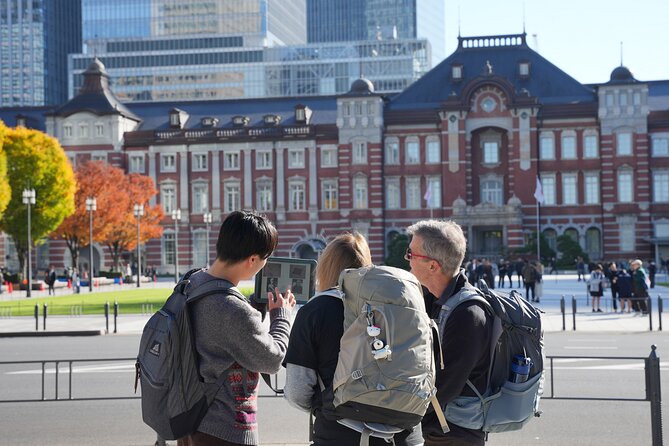
Tokyo Station is one of those places where you can feel the scale immediately, even if you only stand for a few minutes. The tour keeps this stop short, about 5 minutes, which is good. It gives you orientation without turning the day into a station marathon.
Even in five minutes, a guide can do something useful: point out how this hub connects the rest of Japan, then explain why that matters for Tokyo’s modern identity. Then the tour moves on, so you do not burn time admiring architecture while missing the quieter story beats.
If you arrive early, use the time wisely. Step into the station area, get your bearings, then meet your group so you stay on schedule.
- Mt Fuji and Hakone 1-Day Bus Tour Return by Bullet Train★ 5.0 · 26,383 reviews
- 1-Day Tokyo Bus Tour★ 5.0 · 14,250 reviews
- Tokyo: teamLab Planets TOKYO Digital Art Museum Entry Ticket★ 4.6 · 9,779 reviews
- Mt Fuji & Hakone Cruise, Drum Show Bullet Train 1 Day from Tokyo★ 4.0 · 7,413 reviews
- Tokyo: Shinjuku Food Tour (13 Dishes at 4 Local Eateries)★ 5.0 · 6,603 reviews
Imperial Palace grounds: what you can see and what you should watch for
The Imperial Palace stop runs about 55 minutes, and that length is perfect for two reasons. First, it gives you time to slow down and look. Second, it allows for guide pacing, which is where tours usually win or lose.
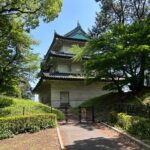
This is an area with gardens and moats and a lot of park space. The palace itself is not open in the way many people expect, so you should shift your mindset. Think “palace perimeter and grounds” rather than “inside the building.”
What to watch for during your walk: the way the grounds create boundaries and sight lines. A guide can also connect structures and layout to older Japanese rule-making and social order, which is where this tour earns its keep. You are not just getting scenery, you are learning how space communicates power.
If you are visiting during seasonal bloom time, this is especially satisfying. One guide experience highlighted a time with lots of blossoms, and that timing made for especially good plant talk tied to tradition and architecture.
Tokyo Daijingu Shrine: Amaterasu and the short stop that clicks
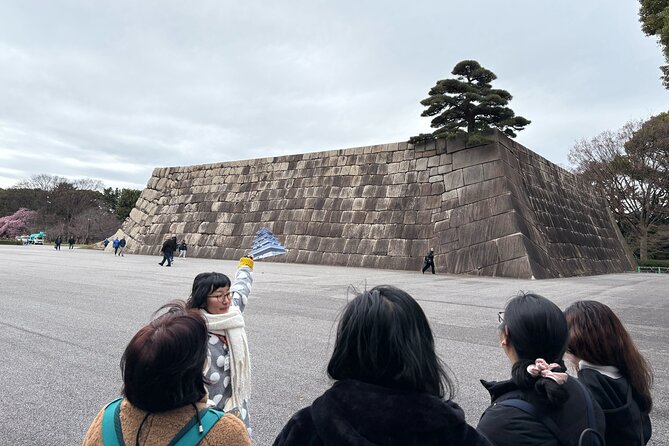
You spend about 15 minutes at Tokyo Daijingu. That short window means the guide has to be focused, and in a good way. This shrine setting is ideal for grounding the day in Shinto belief, especially since it is dedicated to Amaterasu, the sun goddess.
Another thing that helps here is the shrine’s connection to the imperial family. Even if you do not know the full background, you can still understand why this matters: it is a living link between spirituality and Japan’s sense of identity.
Practical tip: keep your expectations simple. This is a brief stop, so take in the basic visuals, listen for the meaning of what you see, then be ready to move. You will get more out of it if you treat it like a chapter opener.
Nippon Budokan: why it shows up on a classic-to-sudden curve
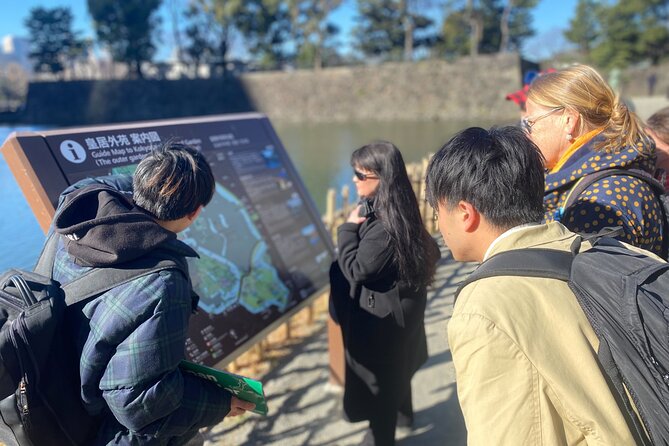
The tour also includes a stop at Nippon Budokan in Kitanomaru Park. The Budokan is famous as an indoor arena, and it was built for the 1964 Olympics martial arts events before becoming a venue for many other events.
So what is the tour value here? It helps you notice the contrast. You start near Tokyo’s historic power center, then you move to a 20th-century landmark that became part of modern culture and large public gatherings.
Even without long time on-site, it gives you a useful mental timeline. Japan’s story is not only old monuments, it is also how modern infrastructure got folded into everyday city life.
If you are the type who likes to “spot the era,” this stop gives you a clean marker.
Kagurazaka: cobblestones, geisha legacy, and streets you can actually picture
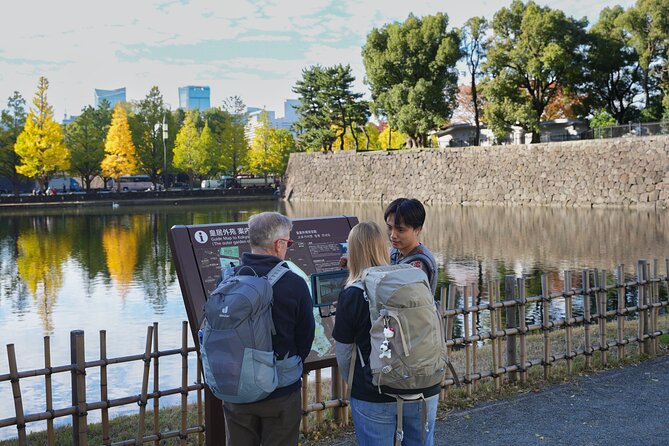
Now for the main event. You spend about 30 minutes in Kagurazaka, and the experience is less about a single viewpoint and more about walking lanes that feel different with every turn.
Kagurazaka is known for the mix of old and new Tokyo. Once it was associated with geisha life, and today many narrow alleys host traditional restaurants, stylish cafés, and small shops. The tour uses that background to guide your attention: it nudges you to notice how the streets stayed tight, while the businesses changed.
A guide can also help you catch the “Edo thread” in places you might otherwise treat as pretty. Kagurazaka’s cobbled backstreets are deeply tied to the Edo period and the Tokugawa Shogunate, and the tour focuses on those connections instead of leaving you with vague impressions.
Geisha Alley: nostalgia you can walk through
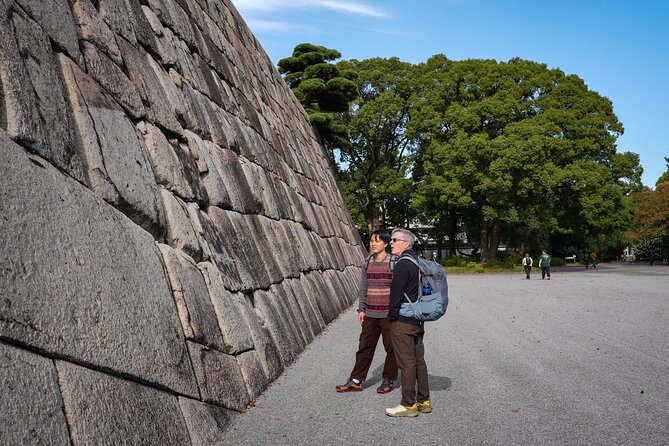
One of the Kagurazaka segments is Geisha Alley. It is a historic street known for narrow lanes and traditional teahouses. Today it keeps a nostalgic feel, which is exactly why it works for a walking tour.
What I like about this stop is that it is small and human-scale. You are not trying to interpret a giant structure. You can read the street itself, the way it funnels foot traffic, the way buildings sit close to each other, and how that shapes the vibe.
Go slowly here. If you walk fast, you miss the point. Let the alley do the talking.
Hyogo Yokocho and the feeling of an older Tokyo block
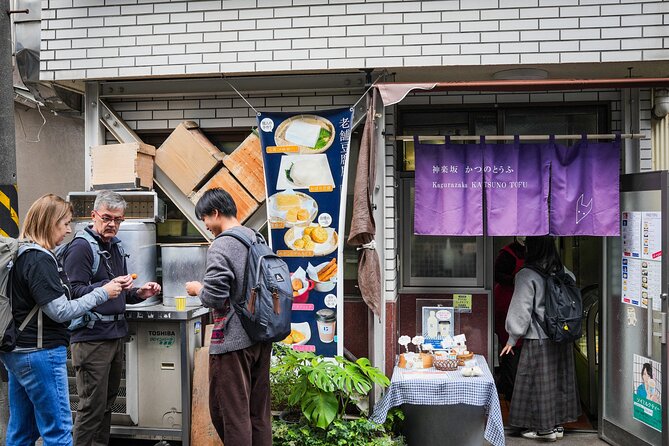
Next up is Hyogo Yokocho, a narrow alley lined with small eateries and traditional shops. This is where the tour turns from “look at history” into “picture everyday life.”
Even if you do not stop to eat, you learn something useful: Tokyo’s older urban patterns still exist, even when the menu changes. The guide’s job is to connect that street layout to older ways of living, not to force a lecture.
If you want to eat after the tour, this is the right zone to remember. The alley layout makes it easy to pick a place without wandering a whole neighborhood for an hour.
Kakurenbo Yokocho: a quieter lane for atmosphere and small pauses
Then you hit Kakurenbo Yokocho, a hidden alley with small bars and eateries. It is described as cozy and intimate, which fits the way you experience it during a walking tour.
This is the stop that helps you avoid the common Tokyo mistake. Lots of people see Japan’s icons, then leave without understanding daily nightlife and neighborhood scale. Kakurenbo gives you a mini sample of what local streets feel like after the main sights.
If you are taking photos, this is a good spot, but be respectful. Narrow lanes look best when people are not bumping shoulders.
Ushigome Mitsuke: Edo Castle details that feel like a puzzle
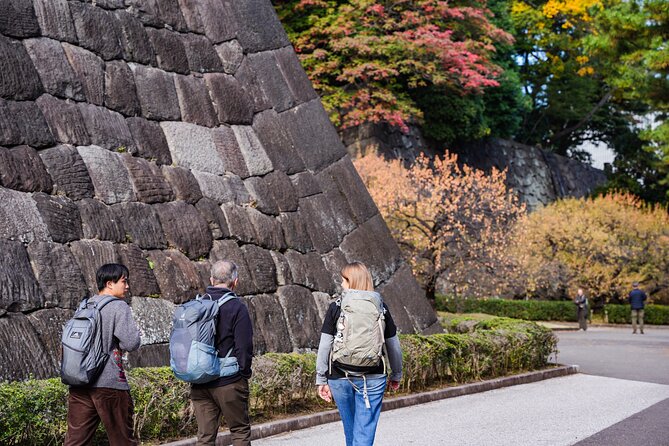
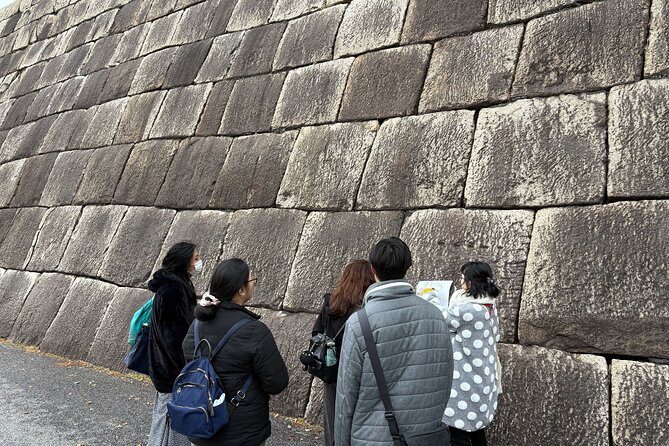
The tour also includes Ushigome Mitsuke, one of the gates of Edo Castle. Even though the gate itself no longer exists, it is part of the defensive structure during the Edo period.
This kind of stop is quietly valuable. In Tokyo, you will see lots of things that are either fully preserved or completely gone. Here you get the in-between case, where you learn how to read a location even when the original structure is not standing.
A guide can help you understand what you are looking at, and that makes a huge difference. Without context, it is just a gate area. With context, it turns into a piece of a larger defensive map.
If you like puzzles and patterns, this is one of the stops you will enjoy most.
The guides: how Sho and Aya make the palace-and-alley story click
This tour’s reputation is strongly tied to guide quality. Sho is mentioned for high energy and strong history connections, not just facts about the palace area but also broader Japanese historical context. Aya is praised for turning photo moments into part of the story, plus careful explanations that make details easier to remember.
There is also a recurring theme from guide performance: they connect what you see to meaning. One guide focus was on plants during a blossom season, tying Buddhist tradition to the architecture you were looking at. Another highlighted architectural symbolism like the meaning of fish on roofs.
You should expect that kind of guidance. The tour is not only walking. It is a guided translation layer from buildings and street shapes to the why behind them.
Practical tips: shoes, pace, and questions that get good answers
This is a walking tour, so plan for real walking time. Even when a stop is short, you will move between areas, and Kagurazaka’s alleys are narrow. Wear shoes you can trust on cobblestones.
Bring your curiosity. The guides can handle questions, and asking matters most when you ask about what you are seeing right now. For example, ask what a roof detail means, why a gate matters even if the original structure is gone, or how the alley layout relates to Edo-era living.
Photo strategy: take photos at a calm pace, then listen while your eyes reset. In the palace grounds area, you will get better results if you pause to frame around trees, moats, and garden geometry instead of chasing one perfect shot.
Weather plan: if it is chilly, you will appreciate moving steadily rather than doing long waits. A morning start helps.
Who should book, and who might prefer something else
Book this if you want Tokyo that mixes “major landmarks” with small street texture, and you like understanding how history shows up in everyday spaces. It is also a good fit if you enjoy guided explanation more than self-guided wandering.
Skip it if you hate walking, or if you only want indoor museums and ticketed attractions. This tour leans toward outdoor grounds, shrines, and streets. It is more about noticing and learning than collecting stamps.
This also works well for first-timers who want a smart sampler of Tokyo, without pretending one afternoon can cover everything. The route gives you orientation in central Tokyo, then hands you off to Kagurazaka for your next steps.
Should you book this Tokyo Imperial Palace with Kagurazaka Alley tour?
Yes, if you want value in the form of a clear route, a small group, and a guide who can explain what you are seeing, not just point it out. The combination of Imperial Palace area context plus Kagurazaka’s alleys gives you variety without long transfers.
Also, the free admission on the listed stops makes the price feel more fair. You pay mainly for the guided walk and local cultural pointers, not for entrance fees stacked site by site.
If you are flexible on dates, aim for seasonable weather. Blossom timing has made the day extra fun for at least one guide experience, and plant-and-tradition talk is the kind of bonus you only get when conditions cooperate.
FAQ
What is the duration of the tour?
The tour is about 3 hours 30 minutes.
How much does the Tokyo Imperial Palace with Kagurazaka Alley tour cost?
The price is $52.84 per person.
How many people are in the group?
The tour has a maximum of 8 travelers.
Do I need to buy admission tickets for the stops?
The listed stops are marked free for admission, including Tokyo Station, the Imperial Palace area, Tokyo Daijingu Shrine, and Kagurazaka.
Where do I meet the guide and where does the tour end?
You start at Shin-Marunouchi Building, 1-chōme-5-1 Marunouchi, Chiyoda City, Tokyo 100-6590. You end at 3-chome-2-202 Kagurazaka, Shinjuku City, Tokyo 162-0825, near the main street of Kagurazaka and close to a FamilyMart.
Can I get a refund if I cancel?
You can cancel for free up to 24 hours in advance of the experience start time for a full refund. Canceling less than 24 hours before the start time does not qualify for a refund.
Central Tokyo Landmarks



Newest Tokyo write-ups from the Loving Japan desk

Tokyo Tower, Ginza and the Imperial Palace, side by side.
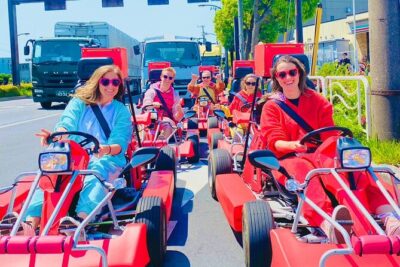 ★ 5.0Flagship 2-Hours Official Street Go-Kart Tour – Tokyo Bay ShopFrom $644,974 reviews
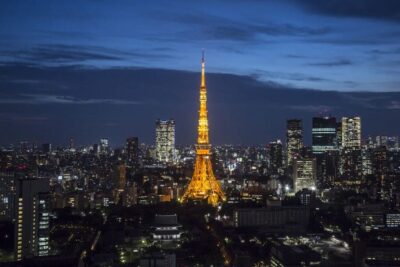 ★ 4.6Tokyo Tower: Admission TicketFrom $93,661 reviews
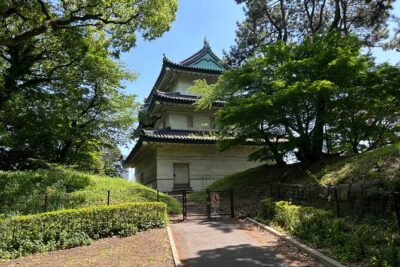 ★ 5.0Imperial Palace and Shogun Historical Walking TourFrom $222,251 reviews
 ★ 4.7Meiji Shrine, Asakusa, Skytree Bus Tour and CruiseFrom $1221,986 reviews
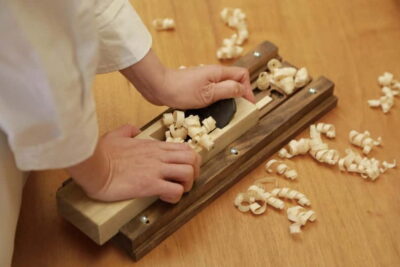 ★ 4.8Chopstick Making Workshop in GinzaFrom $251,366 reviews
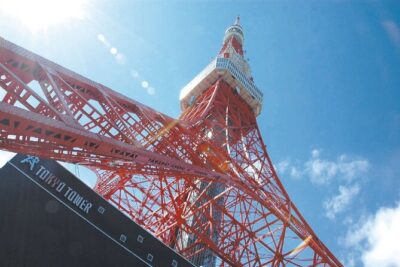 ★ 4.5Tokyo Panoramic 1 Day: Meiji Shrine, Asakusa, Odaiba and SKYTREE®From $851,222 reviews
 ★ 4.9Imperial Palace Japanese History Walking TourFrom $32987 reviews
 ★ 4.9Imperial Palace and Shogun Walking TourFrom $16935 reviews
Filed on these lists too