
REVIEW · MOUNT FUJI DAY TRIPS
Tokyo: Instagram-Worthy Mt Fuji & Lake Kawaguchiko Day Trip
Mt. Fuji in one organized day beats planning. This 10-hour group outing is built for great photos without the headache of figuring out transport and timing yourself. You start at Tokyo Station, then hop between viewpoints around Arakurayama, Oshino Hakkai, and Lake Kawaguchiko, with a final push depending on the season.
What I like most is the focus on the best “Fuji angles.” Guides such as Hikari and Sakura are fun and helpful, and they help you frame shots fast. I also like that the group stays fairly small, up to 21 people, so you are not stuck in a giant mob. The main drawback to consider is that it can feel like a fast photo checklist, and on some days or with some guides it is lighter on history and deeper storytelling. Also, like any Mt Fuji day trip, clouds can play games with visibility.
In This Review
- Key Points I’d Plan Around Before You Go
- The Big Idea: A Photo-First Mt Fuji Day Trip, Not a Lecture Tour
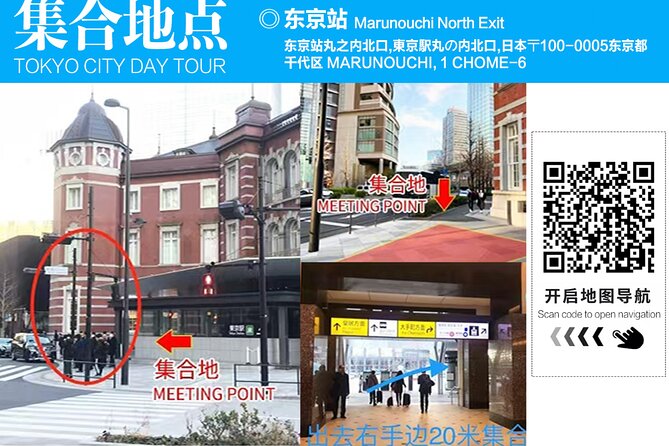
- Tokyo Station Pickup and the Timing Reality Check
- Stop 1: Arakurayama Sengen Park and the Chureito Pagoda Shot
- Stop 2: Hikawa Clock Shop, and Why It Gets Skipped in Cherry Blossom Season
- Stop 3: Oshino Hakkai Springs, Clear Water, and Quiet Minutes
- Stop 4: Lawson Kawaguchiko Station, a Convenience Store Stop That Works
- Stop 5: Lake Kawaguchiko Ohashi Bridge and Oishi Park Flowers
- Stop 6: Maple Corridor in Autumn, Fuji Above Red Leaves
- What the $161 Price Really Buys You (And Where It Might Feel Tight)
- Guides Matter: Hikari, Sakura, and the Art of Getting the Shot
- Weather and Fuji Visibility: Plan for the Cloud Option
- How Much Walking Is Involved?
- Who This Day Trip Is For (And Who Should Skip It)
- Should You Book This Tokyo to Mount Fuji and Lake Kawaguchiko Tour?
- FAQ
- What time does the tour start from Tokyo Station?
- How long is the day trip?
- Do I need to buy tickets for all the stops?
- Where do we go during autumn?
- Is the Hikawa Clock Shop always included?
- How big is the group?
- Can I cancel for a full refund?
Key Points I’d Plan Around Before You Go
- Tokyo Station pickup makes this easy, even if you are still figuring out Tokyo trains.
- Arakurayama Sengen Park + Chureito Pagoda gives you one of the classic Mt Fuji photo compositions.
- Oshino Hakkai springs are calm, scenic, and a break from rushing.
- Lawson Kawaguchiko Station is silly-fun, a convenience store stop that turns into a real view.
- Seasonal switch: Maple Corridor replaces Oishi Park for peak autumn color.
- Small group max 21 keeps the pacing manageable, even if the tour is still “go, shoot, move.”
Fuji from Tokyo: the other approaches
- Mt Fuji and Hakone 1-Day Bus Tour Return by Bullet Train
★ 5.0 · 26,383 reviews - Mt Fuji & Hakone Cruise, Drum Show Bullet Train 1 Day from Tokyo
★ 4.0 · 7,413 reviews - Tokyo Mt Fuji 5th St & Hakone Cruise Bus Tour w/Bullet Train
★ 4.4 · 5,024 reviews - From Tokyo: Mount Fuji Full-Day Sightseeing Trip
★ 4.5 · 4,970 reviews
The Big Idea: A Photo-First Mt Fuji Day Trip, Not a Lecture Tour
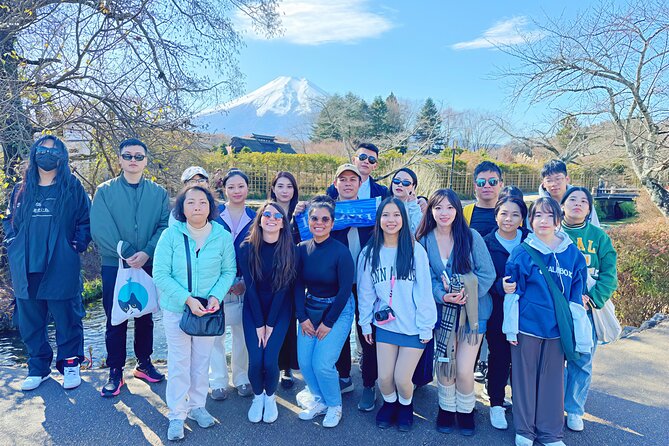
This tour is designed around one goal: getting you to the right places around Mt Fuji and Lake Kawaguchiko, at the right time windows, so you can shoot panoramic views without building your own itinerary. That matters because planning this area is half the challenge. You can spend hours researching routes, seasonal bus schedules, and where the best angles are. Here, you show up at Tokyo Station and let the day run.
You will notice that the day feels like it has a rhythm. People gather, take photos, then move on quickly. That can be great if you want results. If you want lots of deep cultural context at every stop, you might feel slightly underfed.
Tokyo Station Pickup and the Timing Reality Check
The start is 8:00 am, with pickup near Tokyo Station at 1 Chome-9 Marunouchi. That early start is part of the value. Mt Fuji and Lake Kawaguchiko are best when you have daylight and the roads are still behaving.
The itinerary includes travel time, and the whole outing runs about 10 hours. In practice, some days you might be back earlier than you expect if traffic cooperates. One review mentioned returning to Tokyo Station by around 4:30 pm, so the pace can feel slightly flexible depending on the day.
Also keep in mind this is a bus day. Reviews consistently mention the ride is comfortable. Still, if you get motion-sick easily, bring what you need. It is a straightforward day, but you do spend real time traveling between photo stops.
Stop 1: Arakurayama Sengen Park and the Chureito Pagoda Shot
Arakurayama Sengen Park is the headline stop. It is home to the Chureito Pagoda, and the viewpoint gives you that iconic layered view of pagoda against Mt Fuji. If you love classic “postcard” compositions, this is the one.
You get about one hour here, including admission ticket time. You may also face a short hike up to the viewpoint area. One review specifically mentioned a challenging walk up around 400 steps to a shrine. That is a big hint. You do not need athletic gear, but you should be ready for stairs.
Best use of your time here: arrive with your photo plan. Decide what you want first, pagoda with Fuji centered, or wider Fuji panorama from slightly different angles. The best photos usually come from taking a few minutes to test positions, then shooting quickly once you find the framing.
Someone else behind the camera. Other shoots
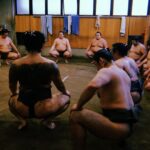
- Tokyo Ryogoku Sumo Morning Practice + Photo Shoot with Wrestlers★ 4.5 · 277 reviews
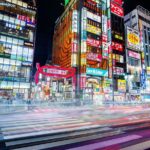
- Tokyo Cyberpunk Street Photo Tour★ 5.0 · 165 reviews
- Tokyo by Night Photography Tour (Private Option Available)★ 5.0 · 151 reviews
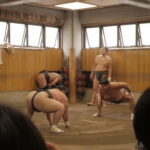
- Tokyo Sumo Morning Practice Tour w/ Ring-Side Seat + Photo Shoot★ 5.0 · 93 reviews
- Tour with Pro Tokyo Photographer and take Edgy Unique Portraits★ 5.0 · 80 reviews
Stop 2: Hikawa Clock Shop, and Why It Gets Skipped in Cherry Blossom Season
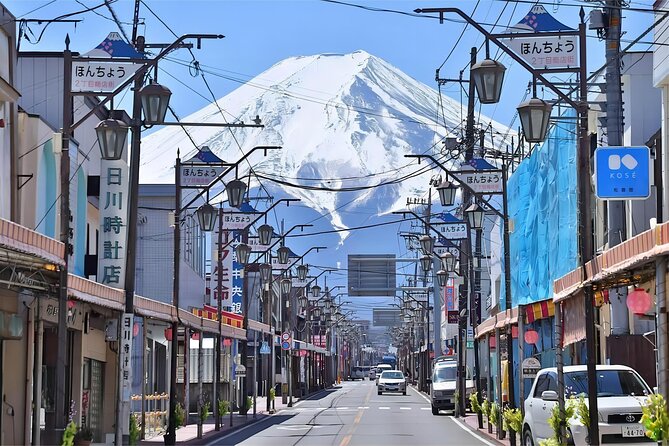
The tour sometimes includes Hikawa Clock Shop, with about 20 minutes on the schedule. But there is a specific seasonal update: for cherry blossom peak traffic regulations (Apr 1 to 18), the tour may skip this stop to maximize time at Arakurayama Sengen Park. The reason is practical. Parking and walking can eat into a day that already has tight photo windows.
If your trip lands in April 1 to 18, do not assume Hikawa is guaranteed. It is still fine, because Arakurayama is the stronger payoff stop anyway. The tradeoff is simple: fewer locations, more time at the one you actually need for the classic shot.
Stop 3: Oshino Hakkai Springs, Clear Water, and Quiet Minutes
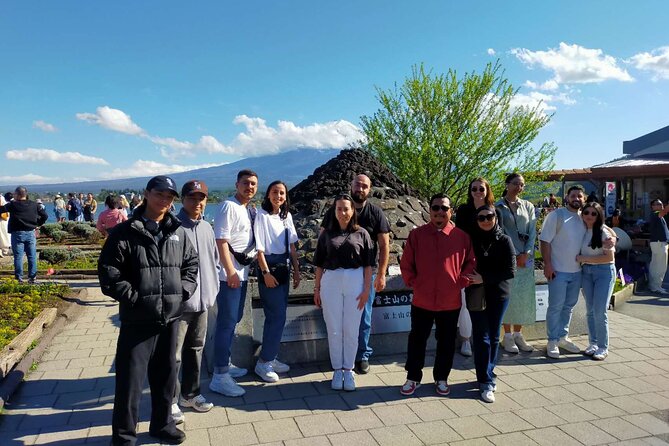
After the pagoda, you head to Oshino Hakkai, a natural monument made up of eight springs fed by snowmelt from Mt Fuji. This is one of those stops where the atmosphere changes from “photo scramble” to “slow down for a moment.”
You get around 1 hour 20 minutes, and the stop is listed as free. The draw is the water. Expect crystal-clear reflections and a serene setting to reset your eyes after bus windows and bright street scenes.
What you should do here: take the photos, then spend a bit of time walking slowly. Oshino Hakkai is not about speed. If Mt Fuji is hidden by clouds, this is the place where the scene can still feel beautiful even without the peak in your frame.
Stop 4: Lawson Kawaguchiko Station, a Convenience Store Stop That Works
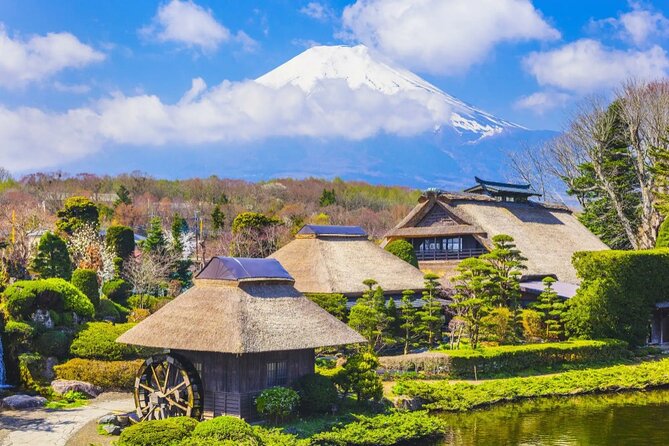
Yes, it is a convenience store. That sounds odd until you see it on a Fuji day.
LAWSON Kawaguchiko Station is a famous photo spot because you can get a view of Mt Fuji from near the store area. The tour gives you about 20 minutes here, and it is listed as free. It is short on purpose, which is typical for a bus route built around photo angles.
How to get more out of this stop: treat it like a photo pit stop. Use the time to line up your shot, then move. If you linger too long, you are stealing time from Lake Kawaguchiko, where the views tend to get bigger and more scenic.
One nice thing is that this stop is low-stress. You are not climbing stairs. You are not stuck in a long line. Just park, look, shoot, and go.
Stop 5: Lake Kawaguchiko Ohashi Bridge and Oishi Park Flowers
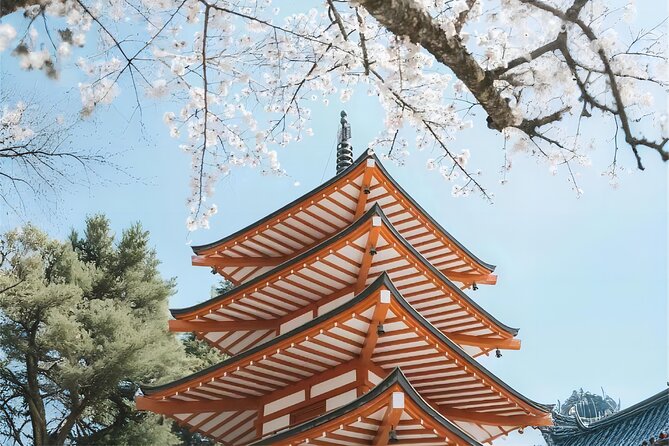
Your Lake Kawaguchiko portion starts with Lake Kawaguchiko Ohashi Bridge. You then finish at a scenic area that usually focuses on flowers, especially Oishi Park.
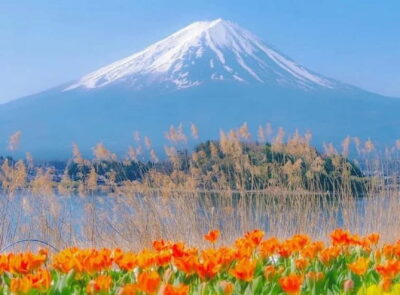
Most of the year, the plan is to visit Oishi Park, which is known for flower fields. The tour schedule calls out lavender, begonia, cosmos, and Japanese blood grass. Even if Mt Fuji is partly hidden, the flower fields can still give you color-heavy photos that do not look empty.
You get about 50 minutes here, and it is listed as free.
Potential drawback: this part of the day depends on the season. If flowers are not at their peak for your month, the color impact might be less than you hoped. Still, the lake setting and Fuji views tend to make up for it, especially on clear mornings.
Stop 6: Maple Corridor in Autumn, Fuji Above Red Leaves
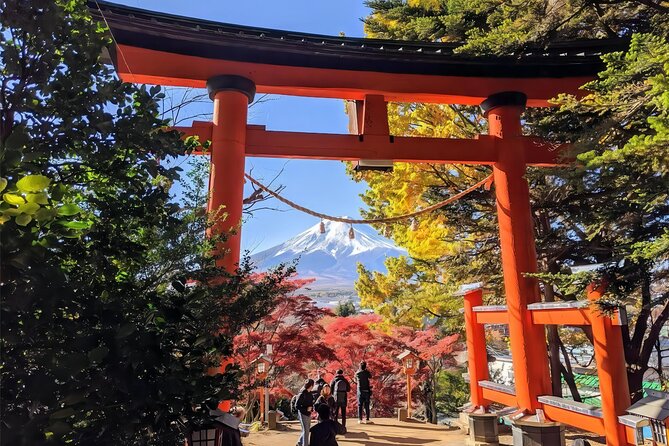
From about Oct 30 to Nov 20, the tour swaps out Oishi Park for the Maple Corridor. More broadly, the tour notes a seasonal limited period from Oct 20 to Nov 20 for the maple experience.
This is the big autumn payoff stop. The idea is snow-capped Mt Fuji against fiery red maple leaves. You get about 50 minutes, and it is listed as free.
If you are visiting in late October or November, this switch is worth planning around. Autumn is one of the only times when Fuji photos can look dramatic even when you do not get the full “clean cone” view. The maple color fills in the emotional punch.
Photo tip for maple season: expect crowds and expect Fuji to change. If the clouds clear for 10 minutes, be ready to shoot right away. The tour pace is built for those moments.
What the $161 Price Really Buys You (And Where It Might Feel Tight)
At $161 for a roughly 10-hour day, this tour is not “cheap,” but it also is not just paying for a bus ride. Your money goes toward convenience and timing: parking fees, and a driver and guide service fee. That matters on a day trip like this, where missing the right timing means missing the best views.
Also, several stops are listed as free, including Oshino Hakkai, Lawson Kawaguchiko Station, and the Lake Kawaguchiko viewpoints. Arakurayama Sengen Park is listed as having an admission ticket included for that stop.
That said, the tour data also notes that admission tickets are not included overall, so you should treat this as a “mostly free stops” day, not a zero-cost day. A quick check before you go is smart.
Value reality check: If you are the kind of person who enjoys collecting scenic stops and moving on, the price can feel fair. If you want more guided storytelling and slower pacing, the value may feel lower, because some reviews mention a “rushed” feeling at certain times.
Guides Matter: Hikari, Sakura, and the Art of Getting the Shot
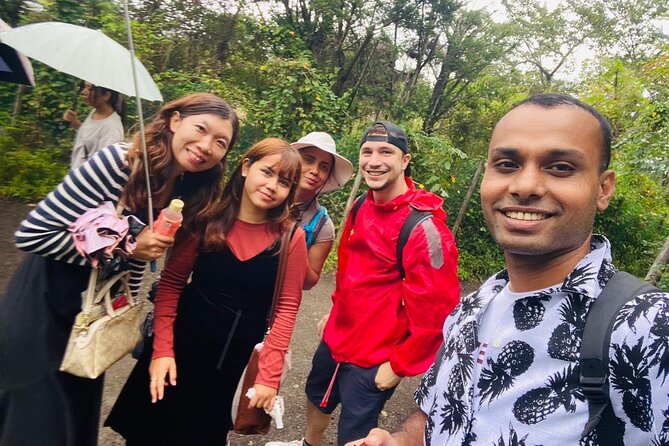
The biggest difference between a so-so day and a memorable day is the guide. Reviews mention multiple guide names, including Hikari and Sakura, and they repeatedly praise helpfulness, humor, and good English.
One reviewer highlighted that the guide showed the best angle for taking Mt Fuji pictures. Another said Hikari was witty, attentive, and kept the group moving with clear explanations.
But not every review is perfect. A few comments point out guides who seemed to rush, or did not provide as much explanation as expected. So here is the practical takeaway: go in expecting “photo guidance,” not a museum-quality lecture.
If you want to maximize your time with any guide, ask quick questions. Things like where to stand for the clearest Fuji alignment or whether there is a better side of the walkway. You will get more out of the day if you steer the questions yourself.
Weather and Fuji Visibility: Plan for the Cloud Option
Mt Fuji is famous for being elusive. Even on clear forecast days, clouds can roll in, or the view may be partial. Several reviews mention cloudy days where Fuji still appeared in brief moments. That is very typical here.
So manage your expectations in a useful way. Do not hinge your entire day on the perfect, snow-white cone. You are visiting multiple stops with different photo strengths.
- Arakurayama is great for structure and iconic framing.
- Oshino Hakkai keeps the scene beautiful even if Fuji is faint.
- Lake Kawaguchiko and the bridge area often provide wider views.
- Autumn maples can save the mood even when the cone is partly hidden.
If you are shooting with a camera or phone, keep your settings ready. The tour pace means you might only get a short window of best visibility, so be prepared to act quickly.
How Much Walking Is Involved?
This is a question that matters more than people think, because it affects comfort and photo energy.
The itinerary includes a short hike up to Arakurayama Sengen Park. That walk can include stairs, and one review mentioned the 400-step climb to the shrine area. Other stops are shorter, like Lawson Kawaguchiko Station and the bridge/viewpoint moments.
What this means for you: if you are comfortable with moderate walking and stairs, you should be fine. If stairs are hard for you, it might still be possible, but you will want to plan for breaks and take it slow.
Who This Day Trip Is For (And Who Should Skip It)
This tour fits best if you want:
- A structured day with a pickup at Tokyo Station and a fixed sequence of photo stops.
- A focus on seeing Mt Fuji from multiple angles without planning every leg of the journey.
- A guide-led rhythm where you can show up, shoot, and move.
It may not be ideal if:
- You want deep, slow cultural explanation at every stop. Some people feel it becomes transport-heavy.
- You get upset when timing feels tight, or when guides keep the group moving fast.
- You rely on constant mental health supervision. The tour data says it is not recommended for travelers requiring constant mental health supervision.
Should You Book This Tokyo to Mount Fuji and Lake Kawaguchiko Tour?
If your priority is photos plus convenience, I think this is an easy yes. The Tokyo Station pickup removes a big stress factor. The stop mix is sensible, and the day is designed to catch multiple Fuji scenarios rather than betting everything on one perfect viewpoint.
Book it if you:
- Want an organized day trip around Mt Fuji with stops like Arakurayama Sengen Park, Oshino Hakkai, and Lake Kawaguchiko.
- Visit in cherry blossom time or autumn and want seasonal changes handled for you.
- Appreciate guides who help you frame shots quickly, with names like Hikari and Sakura showing up in strong reviews.
Consider skipping or switching tours if you:
- Care more about history lessons and slow cultural pacing than about photo logistics.
- Are very sensitive to rushing. Even positive reviews confirm it is an active day.
If you can accept a day that is more “go see, take photos, keep moving” than “linger and learn slowly,” this tour offers solid value and a very efficient way to experience the Mt Fuji area from Tokyo.
FAQ
What time does the tour start from Tokyo Station?
The tour starts at 8:00 am and the meeting point is near Tokyo Station at 1 Chome-9 Marunouchi.
How long is the day trip?
The duration is about 10 hours, and it includes travel time. The tour ends back at the meeting point near Tokyo Station.
Do I need to buy tickets for all the stops?
Admission tickets are not listed as included overall. That said, Arakurayama Sengen Park is shown as having an admission ticket included for that stop, while other stops are listed as free.
Where do we go during autumn?
Seasonal scheduling notes that from approximately Oct 30 to Nov 20, the tour visits the Maple Corridor instead of Oishi Park to show off autumn color.
Is the Hikawa Clock Shop always included?
No. For Apr 1 to 18, cherry blossom traffic rules may cause the tour to skip the Hikawa Clock Shop so it can maximize time at Arakurayama Sengen Park.
How big is the group?
The maximum group size is 21 travelers.
Can I cancel for a full refund?
Yes. You can cancel up to 24 hours in advance for a full refund. If you cancel less than 24 hours before the start time, the amount paid is not refunded.
Someone Else Behind the Camera


Mount Fuji, Three More Ways
Newest Tokyo write-ups from the Loving Japan desk

Mount Fuji Day Trips, side by side.
 ★ 5.0Mt Fuji and Hakone 1-Day Bus Tour Return by Bullet TrainFrom $16326,383 reviews
 ★ 4.0Mt Fuji & Hakone Cruise, Drum Show Bullet Train 1 Day from TokyoFrom $1497,413 reviews
 ★ 4.4Tokyo Mt Fuji 5th St & Hakone Cruise Bus Tour w/Bullet TrainFrom $1545,024 reviews
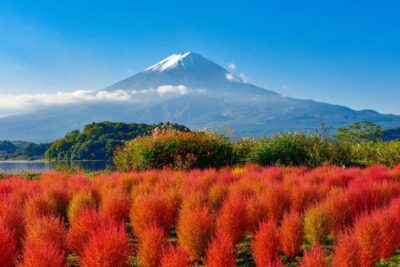 ★ 4.5From Tokyo: Mount Fuji Full-Day Sightseeing TripFrom $684,970 reviews
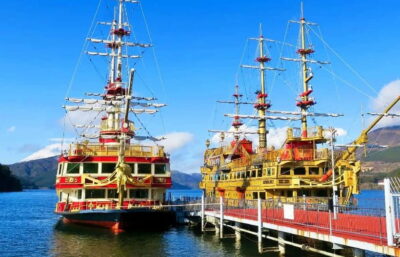 ★ 4.7Mt. Fuji Tour, Hakone Ropeway, Owakudani, Lake AshiFrom $544,002 reviews
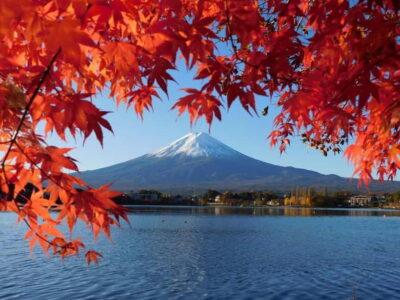 ★ 4.4Mt.Fuji,Kawaguchiko Oishi Park,Arakurayama Sengen ParkFrom $542,682 reviews
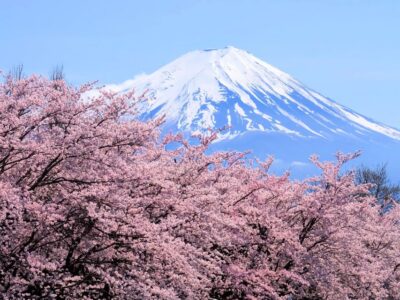 ★ 4.2Mt. Fuji 5th Station & Hakone Cruise 1-Day Bus TourFrom $1292,381 reviews
 ★ 4.7Mt Fuji Top 5 Spots Day Tour: Arakurayama Park,Oshino HakkaiFrom $532,066 reviews
Filed on these lists too