
REVIEW · TOKYO TOWER, GINZA AND THE IMPERIAL PALACE
Tokyo: Meiji Shrine Walking Tour — Shinto & Imperial System
Tokyo noise vanishes under towering trees. In this small-group Meiji Shrine walking tour, you get the quiet, shaded forest feel plus clear explanations of how Shinto traditions and Japan’s imperial system connect at one of the country’s most visited sacred sites. It is guided, paced well, and designed for people who want meaning, not just photos.
I especially love the forest walk that makes the city feel far away, and the stop at Omigokoro (Emperor Meiji and Empress Shoken poems, with English translations) so you can actually understand what you are doing. Along the way, guides like Tomo, Keiko, Yuuka, and Ayaka come through strongly in feedback for turning customs into something you feel confident handling.
One thing to consider: this tour is English only, with no Japanese language support. If you want a Japanese explanation, you will need a different style of tour.
In This Review
- Key things you will notice on this Meiji Shrine walk
- Tokyo’s Meiji Shrine feels like a reset, not a stop
- Passing the torii: Shinto etiquette you can use immediately
- Sacred barrels and the meaning behind them
- The biggest wooden torii gate is the real wow
- Emperor Meiji, the imperial system, and why it shows up here
- Main shrine time: omamori, Omigokoro, and free navigation
- Café Mori no Terrace: tea break plus a chance to reset your brain
- Pacing, timing, and what small-group walking really gives you
- Price and value: why $23 makes sense for what you get
- Should you book this Meiji Shrine walking tour?
- FAQ
- How long is the Tokyo Meiji Shrine walking tour?
- What is the group size?
- Is the tour available in languages other than English?
- Where do I meet, and where do I get dropped off?
- Do I get time at the main shrine for shopping or shrine activities?
- What shrine items or fortunes can I participate in during the visit?
- Is there a cafe stop during the tour?
- Can I cancel for a refund, and can I pay later?
Key things you will notice on this Meiji Shrine walk
- Forest silence in central Tokyo, where birdsong and still air replace traffic noise
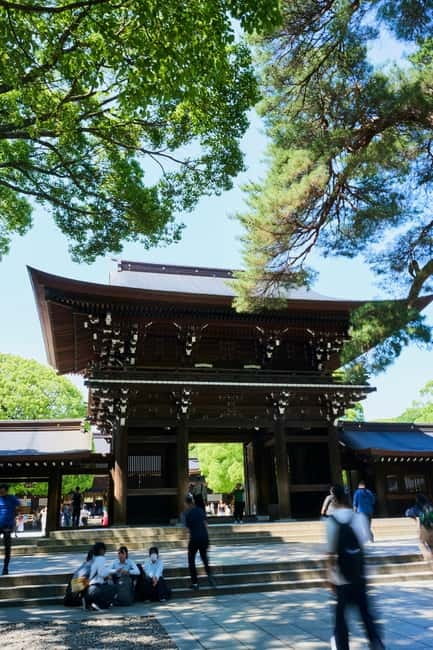
- Japan’s biggest wooden torii gate, a 12-meter gate made from 1,500-year-old Taiwanese cypress
- Shrine etiquette made practical, including where to walk when you pass the torii
- Omigokoro and English translations, with poems by Emperor Meiji and Empress Shoken
- Imperial story points, connecting Meiji-era legacy with Japan’s shift toward modern life
- A cafe and shopping break, at Café Mori no Terrace with tea and light snacks nearby
The central Tokyo landmarks, reviewed one by one
- Flagship 2-Hours Official Street Go-Kart Tour – Tokyo Bay Shop
★ 5.0 · 4,974 reviews - Tokyo: Imperial Palace and Shogun Historical Walking Tour
★ 5.0 · 2,251 reviews - Tokyo: Meiji Shrine, Asakusa, Skytree Bus Tour and Cruise
★ 4.7 · 1,986 reviews - Tokyo Panoramic 1 Day: Meiji Shrine, Asakusa, Odaiba and SKYTREE®
★ 4.5 · 1,222 reviews
Tokyo’s Meiji Shrine feels like a reset, not a stop
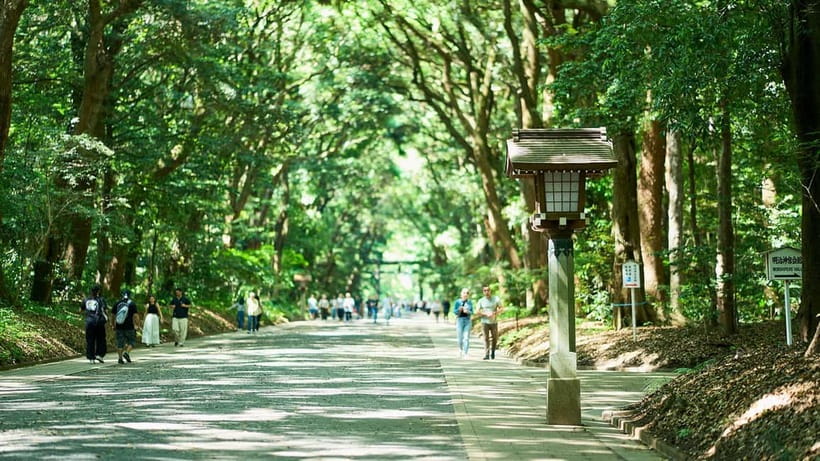
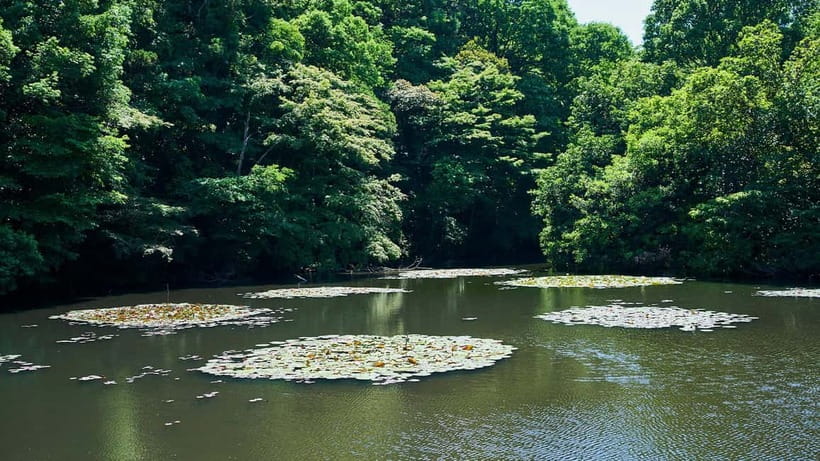
Meiji Jingu is the kind of place where Tokyo suddenly goes quiet. You walk under dense tree cover, and you can genuinely feel the change in atmosphere as you move deeper into the grounds. It is one of the few spots in the city where the setting does half the work for you.
The shrine grounds are surrounded by roughly 100,000 trees, and the walk is part of the experience, not just a corridor to the main building. You will also notice how the sound changes as you go, which is why guides often lead with context before you reach the most famous structures.
This tour makes that “reset” feel purposeful. Instead of wandering and guessing, you get a guided route with short stops that keep you moving but not rushed. That matters at Meiji, because it is popular and easy to get distracted by crowds right at the most photogenic points.
Passing the torii: Shinto etiquette you can use immediately
The first big moment is the Meiji Jingu Ichino Torii. You get a photo stop and a guided introduction before you proceed further, which helps you know what to look for and what the space is asking of you.
One practical custom is what to do when you pass through the torii. It is customary to walk along the edges of the path and avoid the sacred central route (called seichu), which is reserved for the deities. Even if you are not fluent in Japanese, this one rule helps you feel respectful fast, and it also keeps you from doing the one thing most visitors accidentally do wrong.
At the later torii points, you can expect the same approach: brief viewing, then guidance on what is happening around you. This is where a good English guide changes the quality of the visit, because Shinto is visual and symbolic, but not always obvious to outsiders.
If you are the type who likes to do things correctly, you will appreciate that the tour explains customs step by step. Many guides featured in feedback, like Keiko and Ayaka, also focus on helping you navigate the shrine activities in a way that feels natural rather than intimidating.
Sacred barrels and the meaning behind them
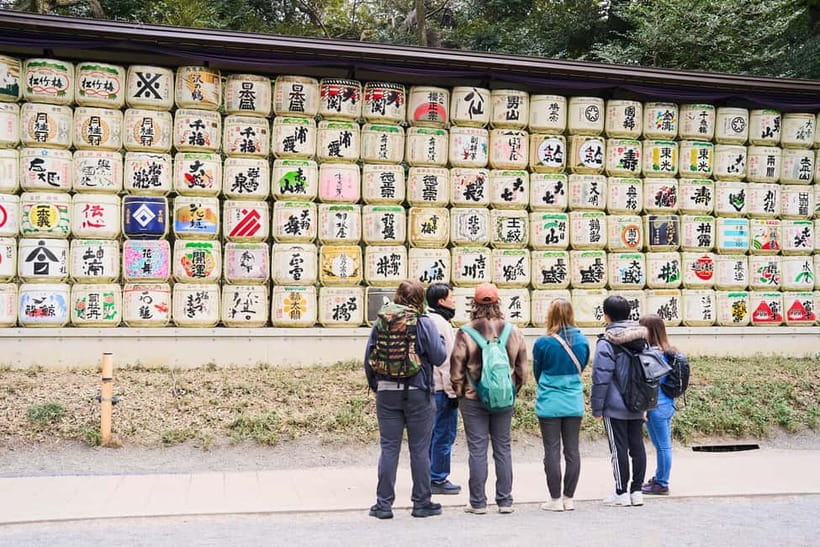
A unique part of this walk is the time spent around the consecrated wine barrels and consecrated sake barrels. These are not just old curios. They are part of Shinto’s ritual world, and the tour’s guided framing helps you understand why they are present and why they matter in the shrine setting.
You will likely pause for photos and short guided segments at each barrel stop. The upside is that these segments break up the walk into digestible chunks, so you do not end up staring at landmarks without understanding what you are seeing.
The main drawback of these short stops is also the trade-off: this is not a slow, long-form worship session. You are here for a guided overview plus respectful shrine time, so you will spend most of your energy learning how to read the shrine rather than sitting for extended ceremonies.
- Mt Fuji and Hakone 1-Day Bus Tour Return by Bullet Train★ 5.0 · 26,383 reviews
- 1-Day Tokyo Bus Tour★ 5.0 · 14,250 reviews
- Tokyo: teamLab Planets TOKYO Digital Art Museum Entry Ticket★ 4.6 · 9,779 reviews
- Mt Fuji & Hakone Cruise, Drum Show Bullet Train 1 Day from Tokyo★ 4.0 · 7,413 reviews
- Tokyo: Shinjuku Food Tour (13 Dishes at 4 Local Eateries)★ 5.0 · 6,603 reviews
The biggest wooden torii gate is the real wow
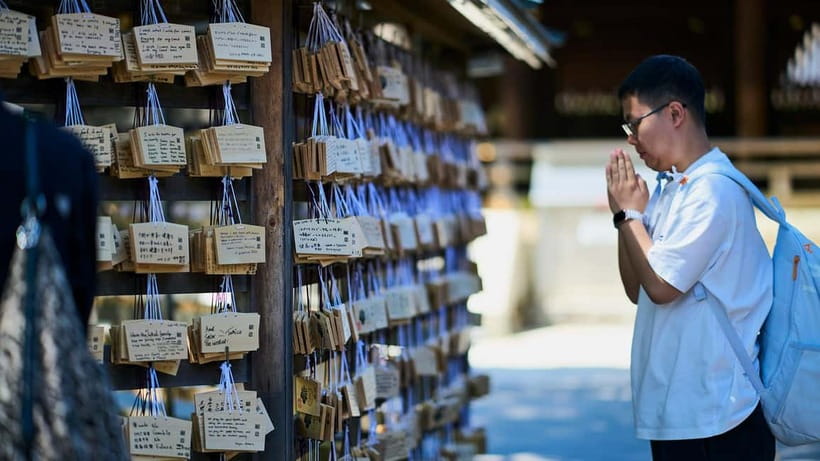
If you only remember one thing from Meiji Jingu, make it this: the Big Torii, a towering 12-meter structure. It is built from a 1,500-year-old Taiwanese cypress, and the scale hits you in a very physical way. Even before you understand the symbolism, the wood and height do the convincing for you.
This tour treats the gate as more than a photo backdrop. You get both a guided look and enough time to take pictures without feeling like you are sprinting. In Tokyo, where everything can feel tight and hurried, this breathing room is a quality-of-life detail.
You will also get context for the moment as you approach and pass. That is important because at Meiji, the space is designed to influence your pace. If you rush through with no guidance, it is easy to miss how the torii line and pathways shape the visit.
Emperor Meiji, the imperial system, and why it shows up here
A major highlight is the tour’s focus on Japan’s imperial system, including its long timeframe and the story behind the Meiji era. The shrine honors Emperor Meiji and Empress Shoken, and the guide connects that with how Japan moved from samurai-era structures into a modern national identity.
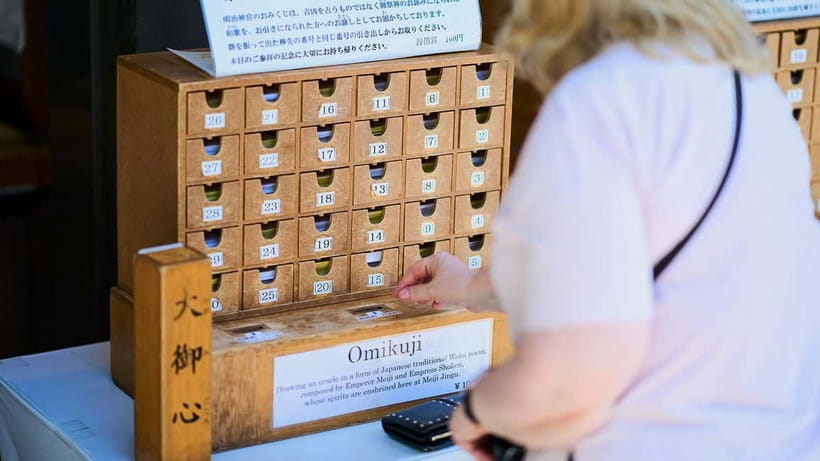
One of the more memorable stops is the Imperial Poetry of Emperor Meiji. You get a photo stop and guided explanation, then you see how poetry and memorial culture are part of the shrine experience. The tour also sets you up for what to do with the literary and spiritual elements once you reach the main shrine.
Here is the value for you: you do not just learn facts about who Emperor Meiji was. You learn why those ideas are visible in daily shrine practice. That is the difference between history as trivia and history as a living system you can recognize on the ground.
Guides referenced in feedback, including Yuuki and Nono, often emphasize that the shrine is not only for tourists. They explain how it holds meaning for Tokyo residents too, which helps you interpret what you are seeing without forcing an outside mindset onto it.
Main shrine time: omamori, Omigokoro, and free navigation
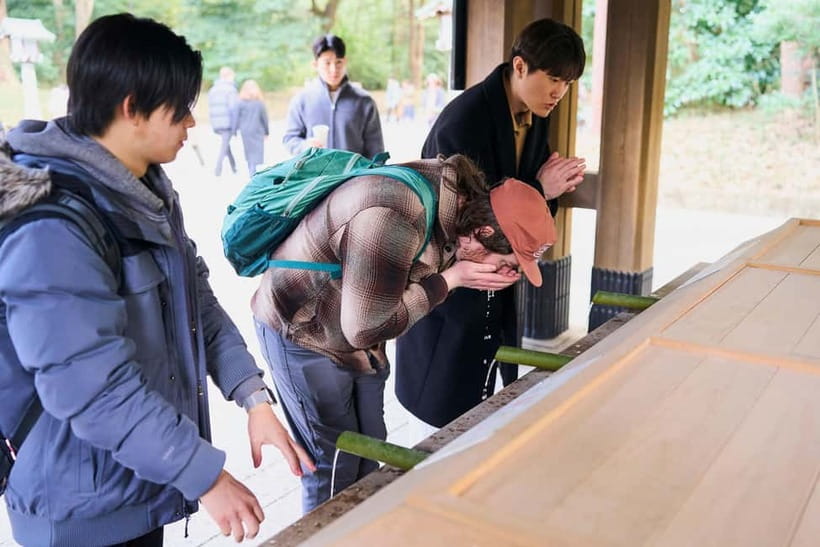
At the core, you reach Meiji Jingu itself, and the tour includes time for you to explore and participate. You get a guided portion first, then about 45 minutes of free time so you can slow down, shop, and handle the shrine rituals on your own terms.
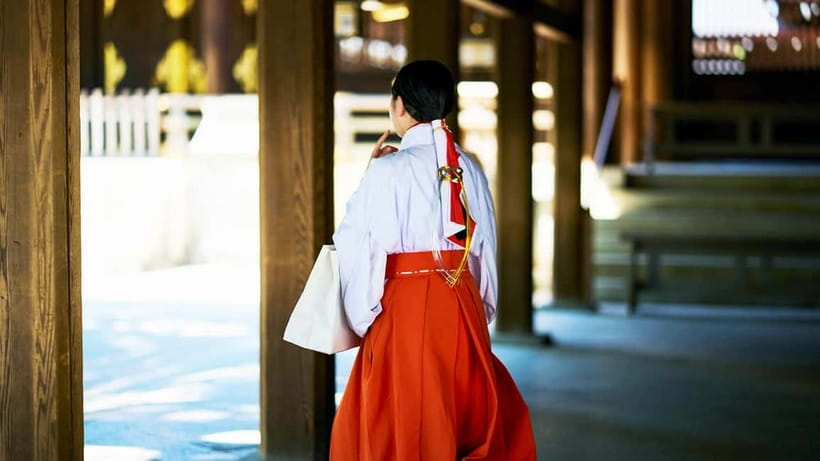
This free time is where you should plan your priorities. If you want souvenirs that feel more meaningful than a random keychain, focus on omamori (protective charms) and the omikuji experience called Omigokoro. Omigokoro stands out because it features poems written by Emperor Meiji and Empress Shoken, with English translations available. That means you can actually connect with what the message is trying to say instead of translating in your head.
You can also use this time to practice respectful shrine movement after your guide shows you what to do. It is one thing to hear rules, and another to use them calmly when you are standing right where it counts.
Some guides also help with small practical issues that make shrine visits easier. For example, one guide in feedback provided coins for offerings when guests did not have them. If you want things to go smoothly, do not be shy about asking your guide if you are missing something.
Café Mori no Terrace: tea break plus a chance to reset your brain

After the shrine stops, you move to CAFÉ Mori no Terrace for a break. You get a photo stop and guidance, then time to enjoy the café setting and the surrounding view. The experience is short on purpose, but it helps you digest everything you just learned.
The tour description highlights Japanese tea and light snacks as part of the cafe stop. Even if you keep your order simple, the break makes a big difference. After walking and focusing on etiquette, your brain needs a pause, and you are surrounded by the same tree-lined calm that defines Meiji Jingu.
There is also time for shopping. In particular, the gift shop offers small, memorable items, including eco-blocks made from fragrant Japanese camphor and miniature barrels of sacred sake. These are the sort of souvenirs that feel tied to the place, not mass-produced and generic.
For value, that shopping time matters too. If you have ever left Japan wishing you bought something smaller and more personal, this is the moment to choose something that fits in a bag without becoming a suitcase burden.
Pacing, timing, and what small-group walking really gives you
This tour runs 90 to 135 minutes, with route stops that include walking and photo moments. It is not a marathon, but it also is not a sit-down lecture. You will be moving through shrine space at a comfortable sightseeing pace.
The group size is limited to up to 10 participants, which is the sweet spot for a place like Meiji Jingu. Big groups can turn sacred spaces into a conveyor belt. Small groups make it easier to ask a question, hear instructions clearly, and follow etiquette without feeling lost.
Starting point options include Harajuku Station, and drop-off is also Harajuku Station. That makes it easier to slot into a day that includes Takeshita-dori or other Harajuku stops. If Meiji is your anchor activity, you can build the rest of your Tokyo day around it.
If you are in the “first day in Japan” mindset, this tour is a smart opener. It gives you cultural context and a practical sense of what to do at shrine sites later. Feedback also highlights that many guides teach people what to do, and just as importantly, what not to do, so you feel respectful without overthinking it.
Price and value: why $23 makes sense for what you get
At $23 per person, the price is low enough that this does not feel like a splurge, but high enough to include real guidance. The biggest value is that you are paying for an English guide who turns symbols, customs, and imperial connections into a story you can follow.
You also get structure. Meiji Jingu is famous, but it can be confusing if you do not know what you are looking at. This tour handles the “what is this?” and “what do I do here?” parts for you, including the torii approach etiquette and the shrine activity expectations.
And you get a time-saving benefit. A self-guided visit can be great, but it often turns into guessing and backtracking. Here, the route keeps you moving from torii to barrels to key shrine moments without you having to research on the spot.
One more value point: the tour includes time at the café and time for shopping, which means you get a complete experience rather than just a quick walk-by. That makes it easier for you to enjoy Meiji Jingu even if you only have a short window in your schedule.
Should you book this Meiji Shrine walking tour?
Book it if you want a guided, English-first way to understand what you are seeing at Meiji Jingu. It is especially worth it when you care about etiquette, want clarity on Shinto rituals, and prefer a story-driven walk instead of wandering alone.
Choose another option only if you want an unstructured, worship-focused visit with no guidance, or if you strongly prefer support in Japanese. Since this tour is English only, you will feel the limitation if you were hoping to practice Japanese or get explanations beyond English.
If you are new to Tokyo and want one place that teaches you how to read Japanese culture in under two hours, this is a strong fit. The forest calm, the giant torii, the imperial poetry moment, and the chance to handle Omigokoro in English make it more than a checklist stop.
FAQ
How long is the Tokyo Meiji Shrine walking tour?
The tour runs about 90 to 135 minutes, depending on the starting time and how the visit flows.
What is the group size?
It is a small-group tour limited to up to 10 participants.
Is the tour available in languages other than English?
This tour is conducted in English only. Japanese language support is not available.
Where do I meet, and where do I get dropped off?
You can meet at Harajuku Station. The drop-off options also include Harajuku Station. The exact meeting point may vary depending on the option booked.
Do I get time at the main shrine for shopping or shrine activities?
Yes. After the guided parts, you’ll have time at Meiji Jingu for free time and shopping.
What shrine items or fortunes can I participate in during the visit?
You can experience Shinto at the shrine and purchase omamori. The tour also mentions Omigokoro, a special omikuji with poems by Emperor Meiji and Empress Shoken and English translations.
Is there a cafe stop during the tour?
Yes. You’ll have a break at CAFÉ Mori no Terrace, with time for sightseeing and shopping nearby.
Can I cancel for a refund, and can I pay later?
Yes. You can cancel up to 24 hours in advance for a full refund, and you can reserve now and pay later.
Central Tokyo Landmarks



Newest Tokyo write-ups from the Loving Japan desk



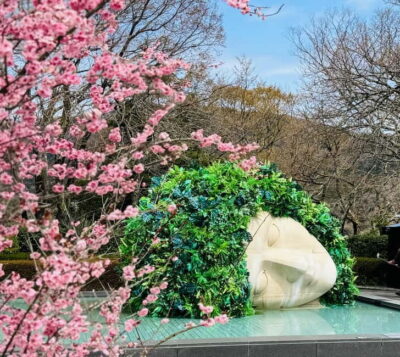
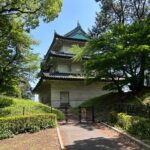
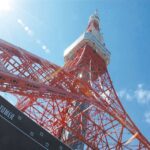
Tokyo Tower, Ginza and the Imperial Palace, side by side.
 ★ 5.0Flagship 2-Hours Official Street Go-Kart Tour – Tokyo Bay ShopFrom $644,974 reviews
 ★ 4.6Tokyo Tower: Admission TicketFrom $93,661 reviews
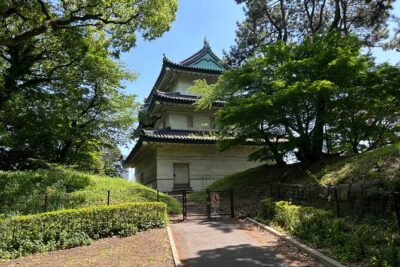 ★ 5.0Imperial Palace and Shogun Historical Walking TourFrom $222,251 reviews
 ★ 4.7Meiji Shrine, Asakusa, Skytree Bus Tour and CruiseFrom $1221,986 reviews
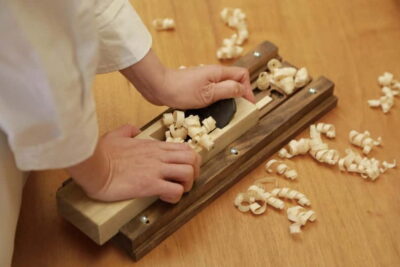 ★ 4.8Chopstick Making Workshop in GinzaFrom $251,366 reviews
 ★ 4.5Tokyo Panoramic 1 Day: Meiji Shrine, Asakusa, Odaiba and SKYTREE®From $851,222 reviews
 ★ 4.9Imperial Palace Japanese History Walking TourFrom $32987 reviews
 ★ 4.9Imperial Palace and Shogun Walking TourFrom $16935 reviews
Filed on these lists too